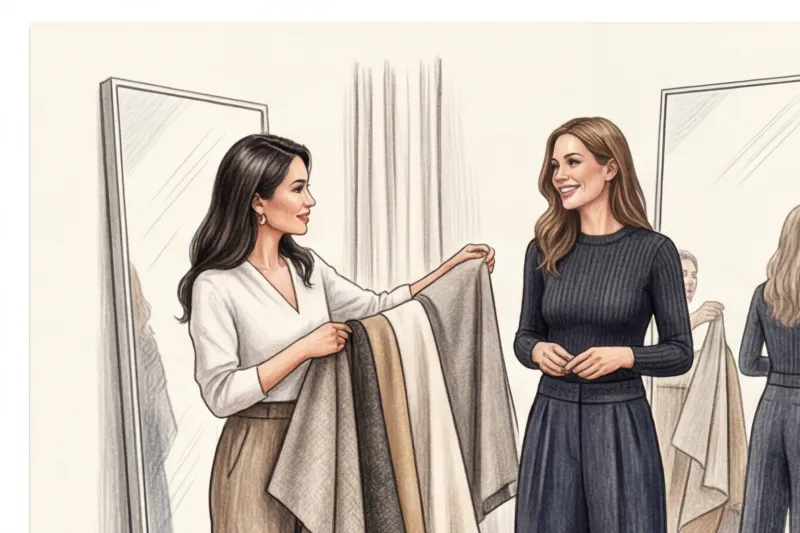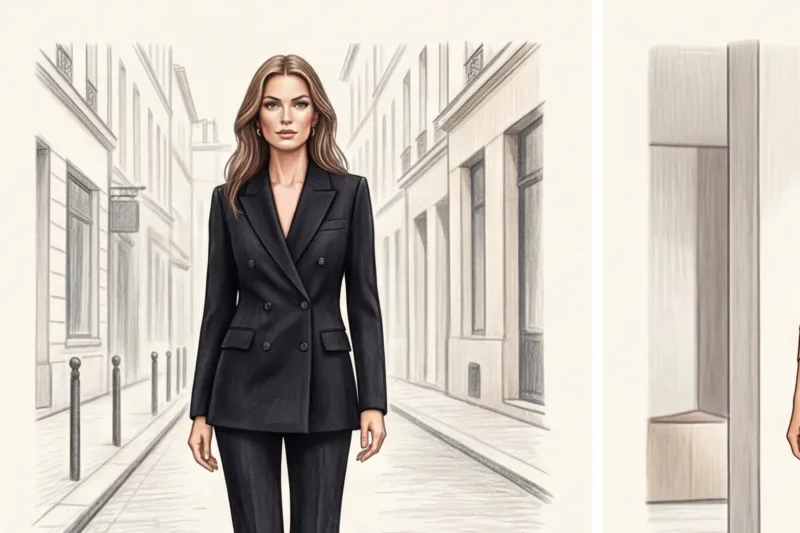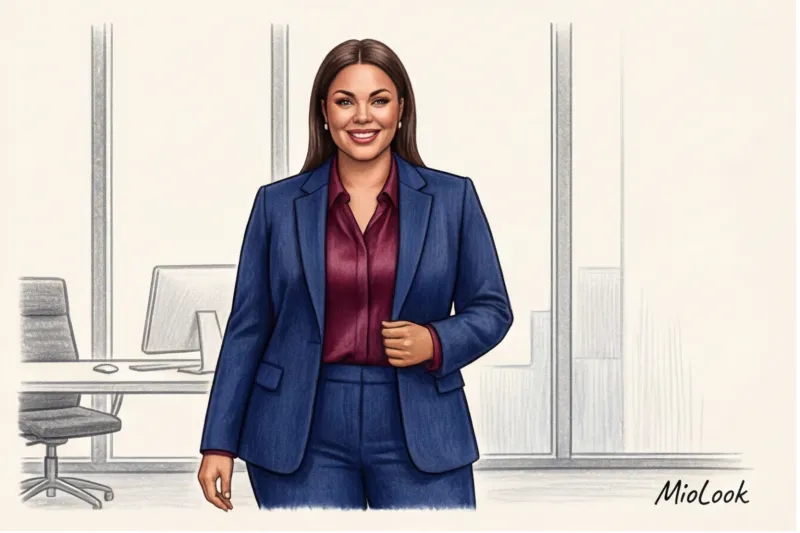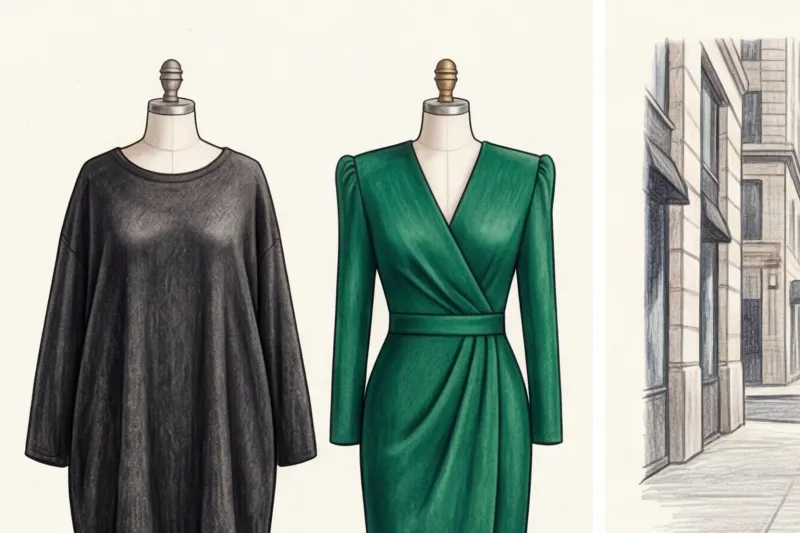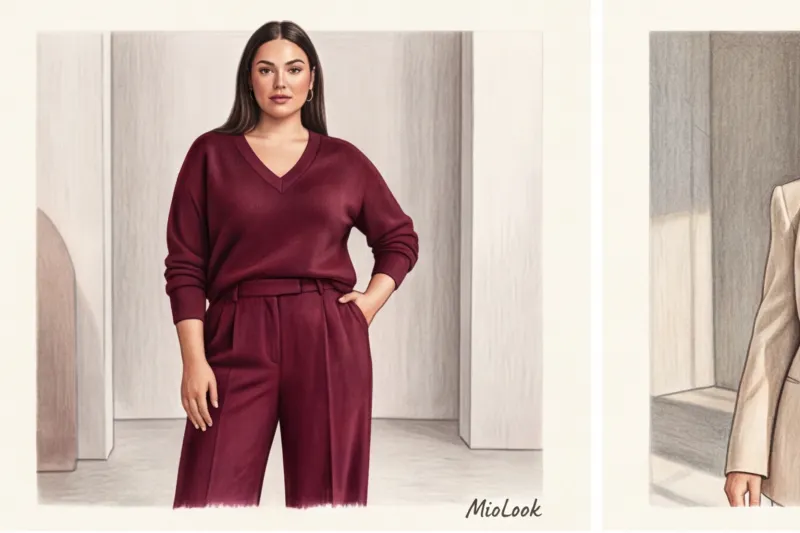
Have you ever put on an all-black dress, looked in the mirror, and realized with horror that you look... bigger than you did in your old gray sweatpants? Welcome to the club. As a textile expert and stylist, I constantly encounter the same paradox: women try to hide their curves with dark colors, not realizing that the fabric and light are playing against them.
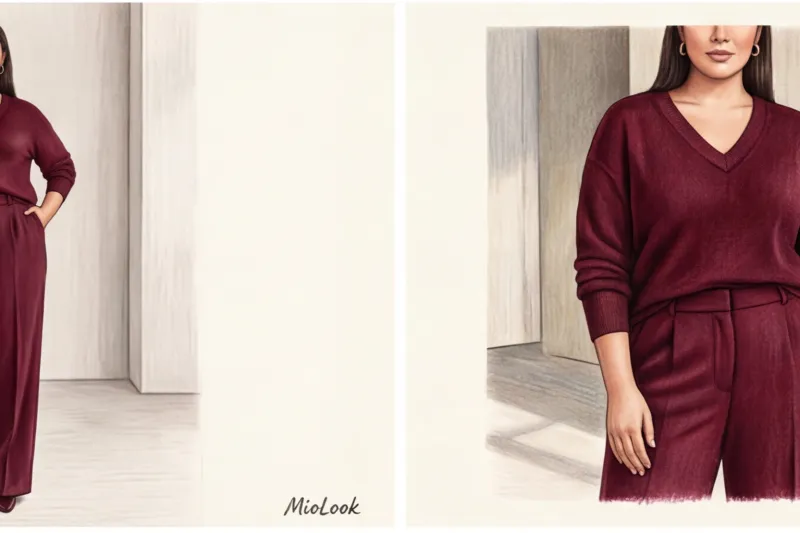
My name is Sophia Müller, and after 12 years of working with patterns and textures, I've learned one ironclad rule: color is only 20% of success. The other 80% depends on how the fabric absorbs light. Well-crafted monochrome looks for plus-size women can visually "shrink" you by up to two sizes, but only if you stop mindlessly wrapping yourself in black.
True magic begins when we apply the laws of optics to the body's architecture. I've already discussed the basic principles in more detail in our the complete guide to creating a stylish capsule collection , but today we'll delve deeper. We'll explore the physics of fabrics and discover why matte beige performs better than glossy black.
The Anatomy of an Illusion: Why Monochrome Looks for Plus-Size Women Actually Work
To understand why a single color elongates a silhouette, we need to look at the physiology of human vision. Research in eye-tracking, particularly data from the WGSN Fashion Vision Report 2023, reveals an interesting pattern. When looking at an object with contrasting color blocks (for example, a white shirt and a black skirt), the gaze makes micro-stops at the line joining them.
Each such stop (saccade) forces the brain to fixate width object. The eye literally "stumbles" over your belt or the hem of your top, assessing the horizontal.
In a monochrome ensemble, this boundary disappears. The eye glides freely from top to bottom, reading the silhouette 20–30% faster. The brain interprets this rapid vertical movement as the illusion of greater height and a narrower silhouette. This isn't magic; it's pure biology. You don't lose weight, you become "faster" in visual perception.
The main myth of style: "Black makes you look slimmer, while light makes you look fat."
I had a classic case in my practice. Elena, a luxurious size 52 (EU 46), came to see me. Her closet was filled with five black dresses, mostly made of thin viscose and elastane. She was convinced that this was the only way to hide her belly. We conducted an experiment: I dressed her in a camel-colored pantsuit made of thick matte wool (it cost about €250 at Massimo Dutti). The effect was astounding: Elena's colleagues seriously asked her what diet she was on.
Why did this happen? Black does absorb light, obscuring the edges of an object. But if it's cheap, shiny synthetics or thin knitwear, the fabric will highlight even the slightest crease in the body, turning the figure into a shapeless, yet textured monolith.
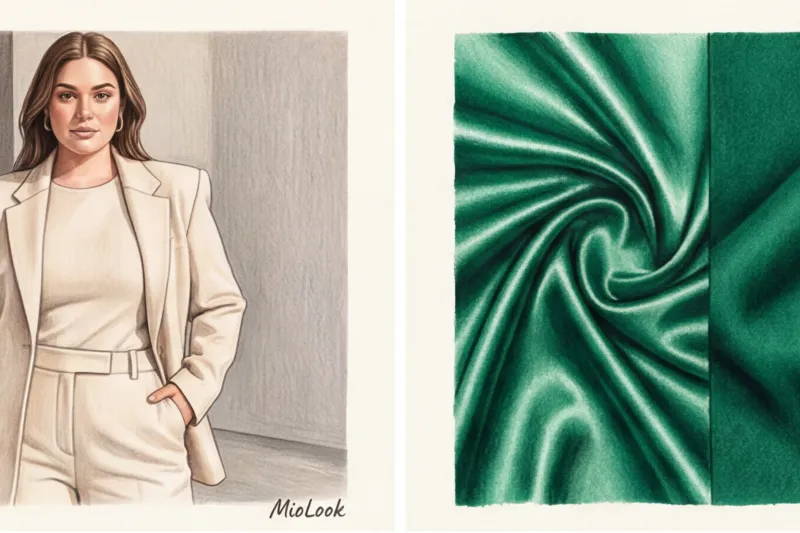
Light monochrome looks (milky, pearl, ecru) dense The fabrics act as a frame. They reflect just enough light to highlight the beautiful line of the shoulder and hip without weighing down the silhouette with a dark spot.
Access to MioLook for €0.99 — one-time payment
A smart AI stylist will analyze your figure and select the perfect monochrome combinations from your wardrobe.
Get access — €0.99 onceThe Role of Fabric Texture: The Physics of Light vs. Extra Centimeters
As an eco-textile specialist, I always urge my clients to read labels. The physics behind it is simple: matte natural fabrics (wool, matte silk, linen, cotton with a weight of 180 g/m² or more) absorb up to 90% of light. They create a deep, even tone that visually "de-emphasizes" volume.
Gloss is your main enemy in monochrome. Satin, sequins, lurex, and cheap polyester reflect light, acting like a magnifying glass. They visually expand an area by 10-15%.
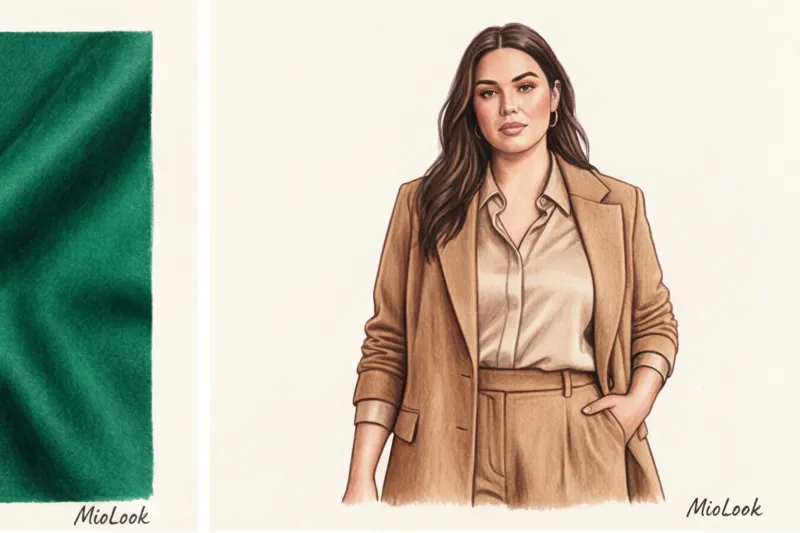
"The texture of a fabric in a monochrome design speaks louder than the color. Shiny silk on a problem area screams out, while matte wool subtly conceals it."
Temperature gradient: sculpting the figure with halftones
Monochrome doesn't mean "dress head to toe in one color." It's a much more intelligent approach that I often use in MioLook When creating looks for clients, it's a temperature gradient. You use different shades of the same color to create a 3D effect.
The "dark zones" rule states that deeper shades are placed on those parts of the body that you want to visually narrow or shade. For example, if you have an apple-shaped figure and want to conceal your belly, use a deep chocolate shade for a jacket or cardigan, and wear a café-au-lait top underneath.
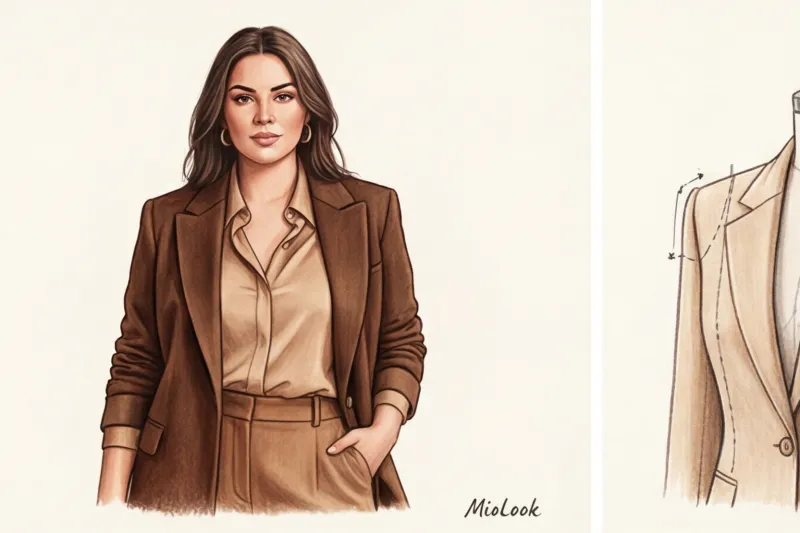
According to the PANTONE Color Institute (2024), complex tonal gradients are currently dominating the premium segment. The light-to-dark color gradient adds depth and status to an outfit that simply can't be achieved by buying a ready-made two-piece suit made from a single bolt of fabric.
Monochrome Cut Architecture: When Color Reveals Imperfections
A monochrome look doesn't have a bold floral print or geometric pattern to hide crooked stitching. When you remove color, the shape takes center stage.
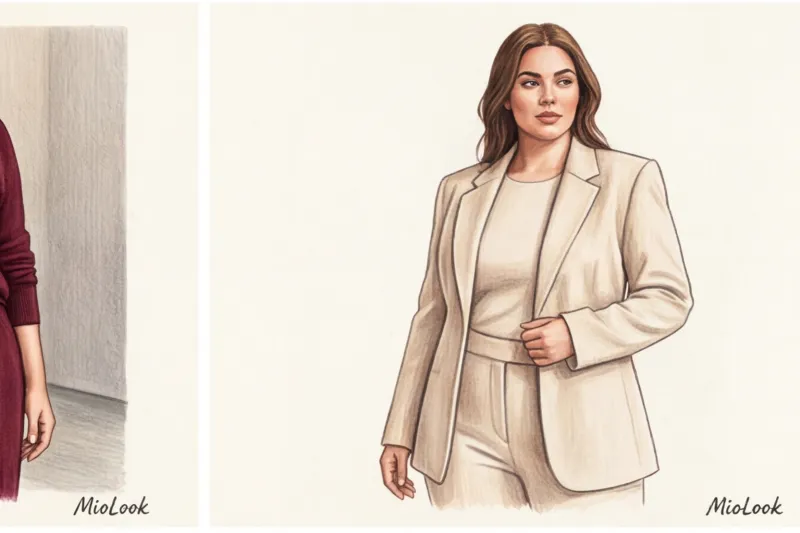
Italian luxury designers like Giorgio Armani have always built their collections on the principles of architectural tailoring. For plus-size women, this means a categorical rejection of shapeless robes. Oversized monochrome clothing requires ingenious tailoring, otherwise you'll look like a mountain of fabric.
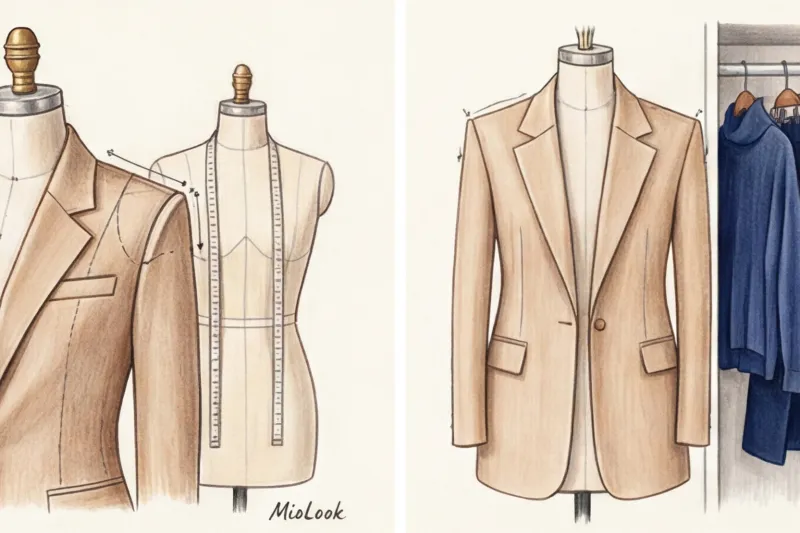
You need hard guide lines:
- Structured shoulders (a little shoulder pad does wonders for your posture).
- Clear darts under the bust.
- The jacket's thick lapels create additional vertical lines.
Checklist: How to Create the Perfect Monochrome Plus-Size Look
Over the years of wardrobe review, I've developed a formula that works without fail. If you're interviewing at an IT company with a smart-casual dress code or simply want to put together a classy look for the city, follow these steps:
1. Start with a tight bottom. Palazzo pants made of suiting fabric (ranging from €80–€150 at brands like COS) or a pencil skirt made of thick cotton. The fabric should not sag or bunch at the crotch.
2. Play with textures. To avoid looking like you're wearing a nurse's or security guard's uniform, mix textures. Pair sleek matte trousers with a chunky knit sweater (without too much bulk at the waist) or a leather jacket in a matching color.
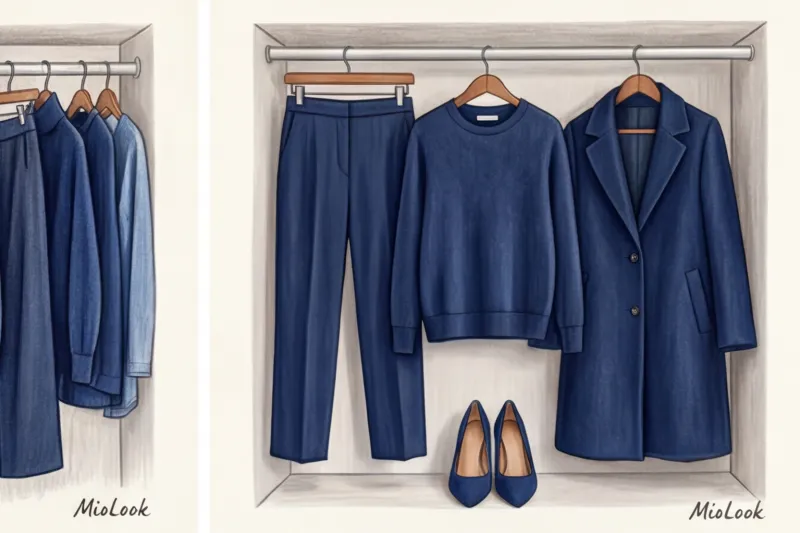
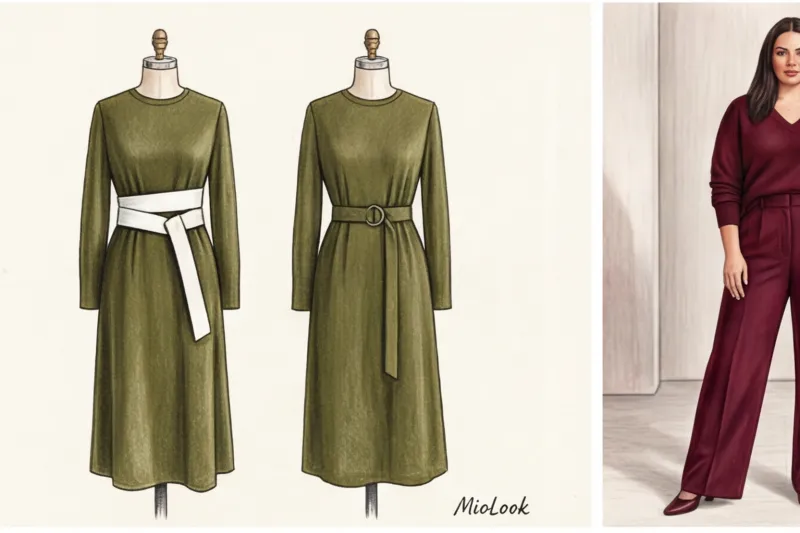
3. Shoes as a continuation of the line. This is a crucial moment. If you're wearing burgundy pants, your shoes should be burgundy, dark brown, or a deep wine shade. Suede pumps or pointed-toe ankle boots will make your legs look infinitely longer.
4. Metallic accents. In monochrome, hardware takes on the role of embellishment. Choose bags and belts with matte or brushed metal (nickel, aged gold) to avoid them cheapening the look with excessive shine.
Organize your monochrome wardrobe
Upload your items to MioLook, and the algorithm will suggest which textures work best together.
Download the appMistakes that ruin the slimming effect of monochrome
I'll be honest with you: there are situations when monochrome just doesn't work. If you have a huge size disproportion (for example, a size 54 on top and a size 46 on the bottom), a total monochrome look in thin fabrics will only highlight this contrast. In such cases, we use color blocking. But if you do choose monochrome, avoid these deadly rookie mistakes:
Contrast belt killer. After putting on a stunning olive jumpsuit, many people, for some reason, decide to cinch their waist with a wide white or black belt. What's happening? You're taking that same slimming vertical line and mercilessly chopping it in half, visually shortening your legs and emphasizing the width of your waist.
"Severed" legs. Wearing thick nude tights with a dark blue dress and dark blue shoes is a crime against your legs. Tights should either match your shoes or blend in completely with your skin (invisible matte 8-15 den).
Temperature conflict. Mixing warm tomato red and cool raspberry in one look is a bad idea. It looks untidy, as if you were getting ready in the dark. Stick to a single undertone (either all warm or all cool shades).
Conclusion: A smart approach to color and shape
Monochrome isn't a way to hide for plus-size women. It's a powerful tool for architectural body shaping. Stop fearing light shades and obsessively buying shapeless black tunics.
The main takeaway I want you to take from this article is: invest in texture and cut, not in quantity of black pieces. One perfectly fitting emerald or beige suit in a thick matte fabric will do a hundred times more for your figure than a dozen cheap dark dresses. Choose quality, embrace your curves, and wear color with pride.