Last October, a client came to me in dismay: her favorite €300 silk blouse was irreparably ruined. No, she didn't spill her morning coffee on it. She simply threw a cheap, high-street waterproof raincoat over it and ran three blocks in the pouring rain. The fabric acted as the perfect greenhouse: the lack of ventilation meant that sweat, combined with friction against the stiff backing, literally destroyed the delicate silk fibers. It's moments like these that make it clear: the right shell jacket for the city isn't a passing fad, but a fundamental necessity and protection for your wardrobe investment.
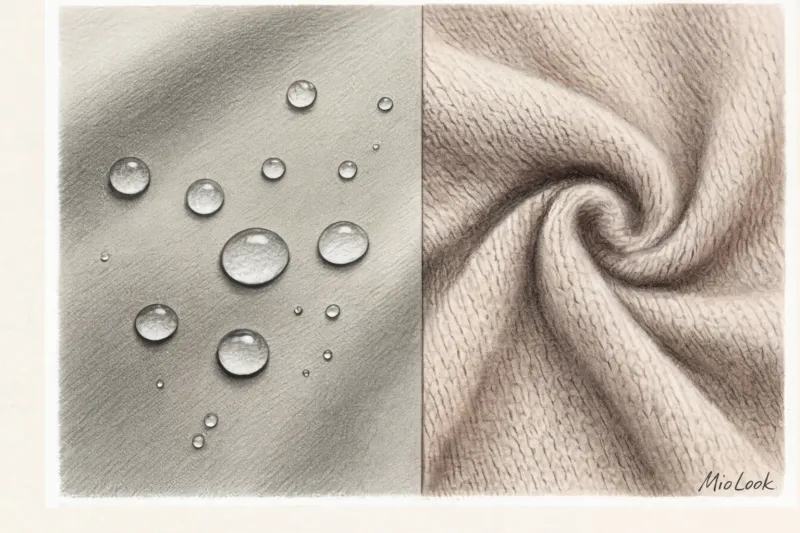
Outdoor aesthetics have long since transcended the confines of mountain trails. We covered in more detail how this phenomenon has taken over the streets of European capitals in our The Complete Guide to Gorpcore Style But there's a gap between the runway image and real life. The biggest mistake I see every season is buying extreme mountaineering gear for the office. Let's break down the physics of fabrics and styling rules to ensure your high-tech top looks classy, not like you're lost on your way to Everest Base Camp.
The Anatomy of Comfort: Why a Membrane Jacket in the City Requires Different Characteristics
The outdoor clothing industry loves to sell us exaggerated numbers. Sales associates proudly proclaim, "This stuff is 28,000 millimeters waterproof!" It sounds great, but for the city, it's a counterintuitive and even harmful purchase.
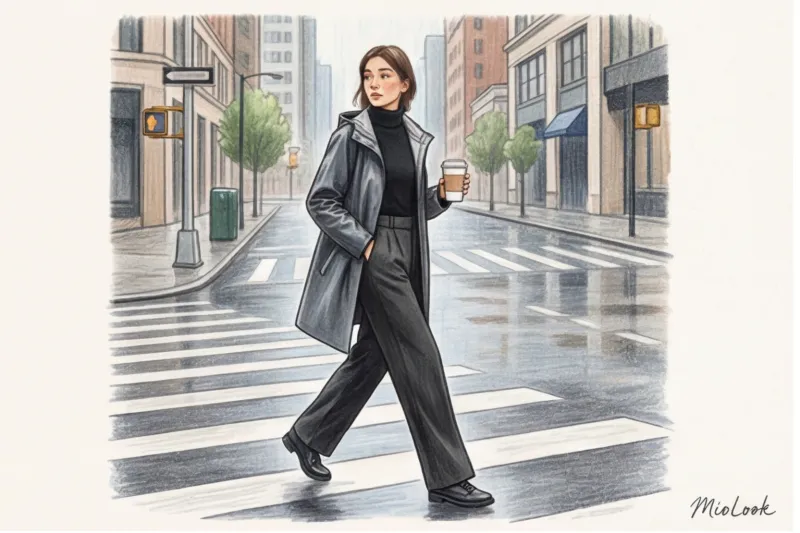
Let's look at the standards. Waterproofness is measured using the Schmerber scale (mm of water column), and vapor permeability is measured using the RET (resistance to vapor transmission) index. For comfortable runs from the subway to the office or an hour-long walk with the dog in the rain, a rating of 10,000 mm / 10,000 g/m² is more than enough. Anything above 20,000 mm is armor for protecting against gale-force winds on a glacier. In urban conditions, such extreme windproof jackets will be too stiff. Due to the high density of nylon (denier), they will bulge unattractively, rustle treacherously with every step, and completely ruin the drape of your everyday clothes.
Urban chic calls for soft 2.5-ply or 3-ply fabrics with a matte finish. They're flexible and contour to your figure, not stiff. Plus, now's the time to focus on sustainability. According to the Textile Exchange 2024 report, leading brands are phasing out toxic fluorocarbons. Look for the label on the tag. PFC-free DWR or mention of an ePE membrane (e-PE foam). This means your jacket leaves no permanent carbon footprint and is safe for your skin.
Your perfect look starts here
Join thousands of users who look flawless every day with MioLook. A smart AI stylist will help you incorporate tech-savvy pieces into your basic wardrobe.
Get access — €0.99 onceThe Contrast Rule: How to Wear Tech Tops with Casual Outfits
The main secret to styling gorpcore, which I constantly repeat to my clients: never wear outdoor with outdoor unless you're in the woods. Trekking pants, a fleece, and a windbreaker will transform you into a geologist on a mission. Urban fashion is built on conflict.
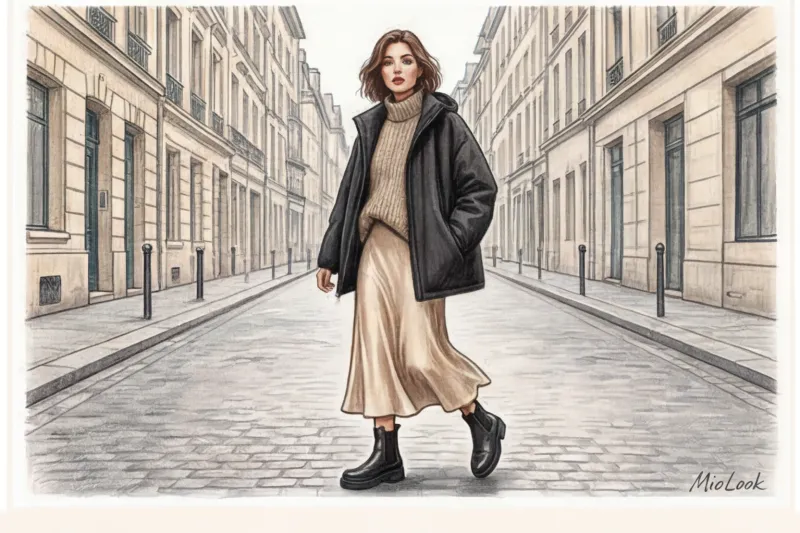
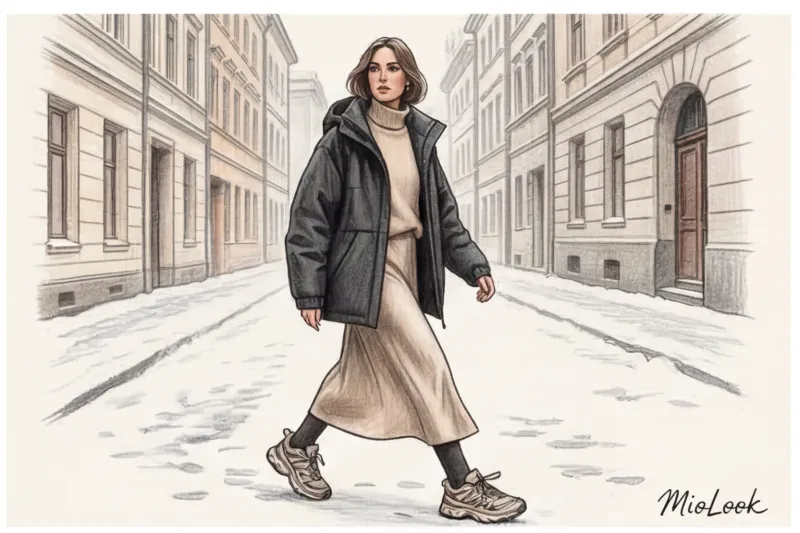
Use the "Rough + Soft" formula. Try pairing a matte, utilitarian membrane with flowing silk, satin, or fine wool. I recently put together a fall capsule collection for a client through smart wardrobe feature in MioLook We took a voluminous black hardshell jacket and layered it over a champagne-colored lingerie skirt and a cashmere sweater. The result exceeded all expectations: the rough texture of the jacket offset the overly elegant silk, giving the look a sophisticated and sophisticated feel.
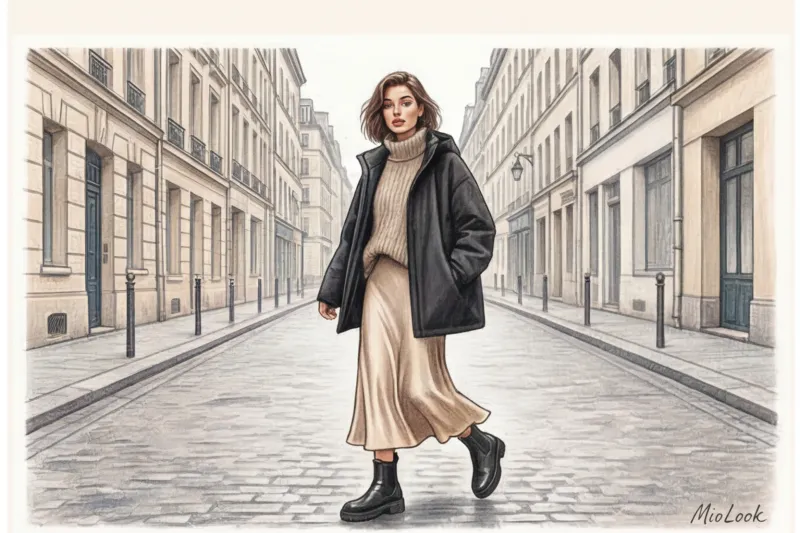
But there is an important limitation here. This rule does not work at all if the jacket fits too tightly. Volume balance is critical: an urban windbreaker must be oversized. Air must circulate between your body and the jacket—this is not only a stylistic device (the "cocoon effect") but also a physical requirement of the membrane for proper moisture wicking.
Shoes serve as a stylistic anchor in these looks. Feel free to swap out trekking boots for Cossack boots, chunky-soled loafers, or minimalist leather sneakers.
Color Palette: Moving Away from Tourist Color Blocking
To make a membrane jacket look like a piece of classy minimalism, you'll have to abandon the DNA of hiking clothing. No neon inserts, no half-back reflectors (save those for cycling), and no contrasting zippers.
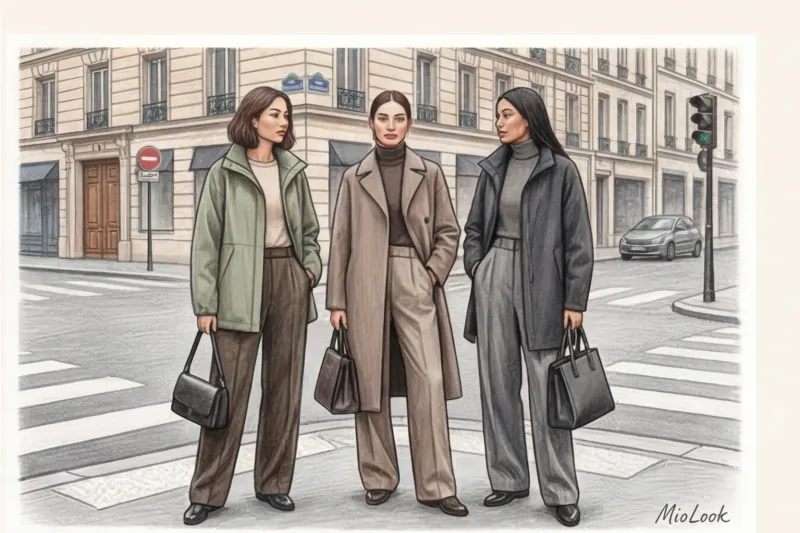
Invest in complex, deep shades. According to the WGSN Color Institute's 2025 forecasts, natural undertones dominate utility fashion: dusty sage, deep graphite, dark chocolate, and ecru. Monochromatic looks work flawlessly. Think: graphite palazzo pants, a dark gray wool long-sleeve top, and a tone-on-tone shell jacket. It looks expensive and sophisticated.
Ready to get started?
Try the MioLook plan for free—no commitments required. Digitize your wardrobe and create stylish monochrome looks in just a few clicks.
Get access — €0.99 onceMembrane and dress code: integration into a business wardrobe
Is a membrane acceptable with a formal business suit? Absolutely. In fact, it's the most modern take on smart casual. When I worked in Copenhagen, I cycled to business meetings every day. I wore a formal wool suit and a minimalist Arc'teryx mac over it. And I wasn't alone: the entire financial district looked exactly like that.
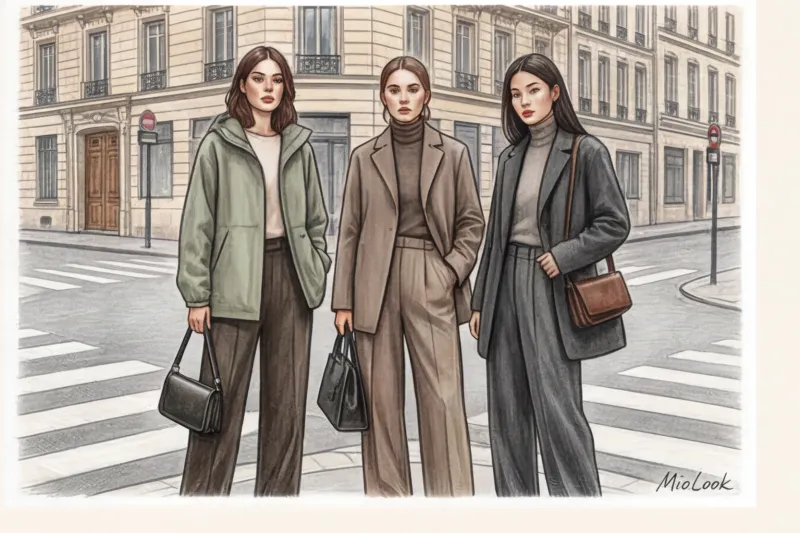
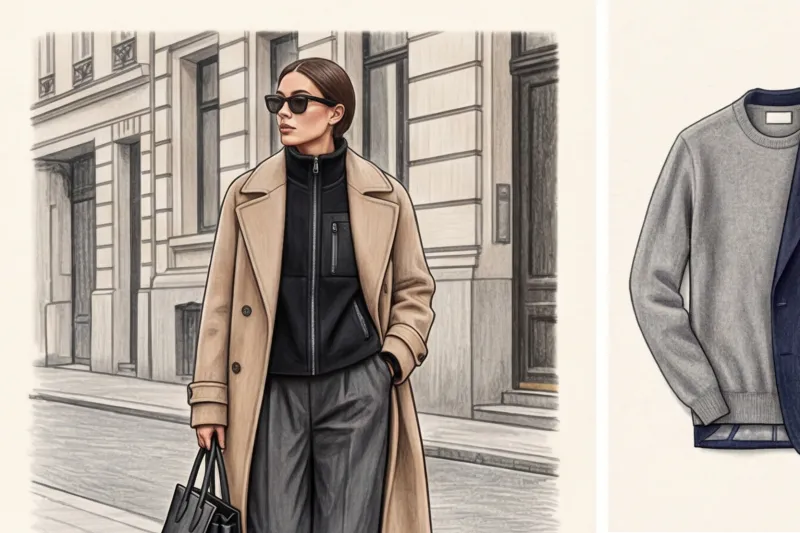
The secret lies in choosing the right silhouette. Instead of short, sporty windbreakers, look for technical trench coats and long raincoats made with Gore-Tex or similar materials. The hallmarks of a high-status garment include hidden hardware, magnetic closures instead of Velcro, and a complete absence of large logos.
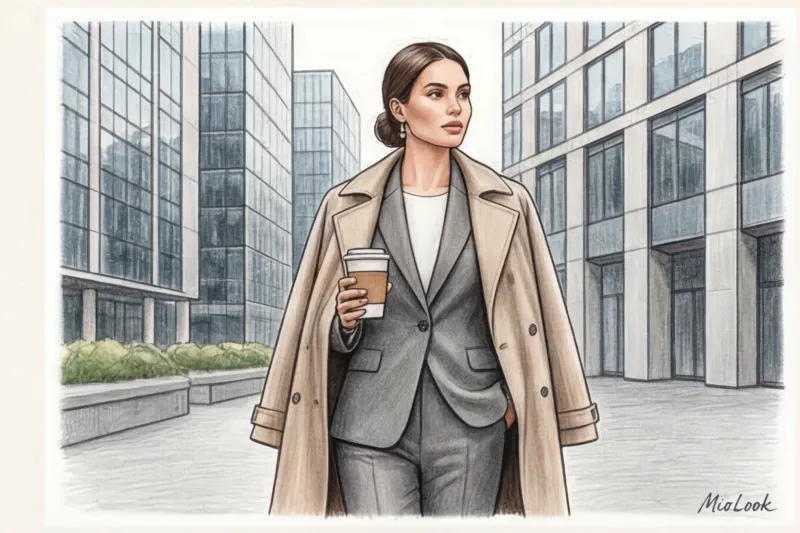
If you wear a membrane over a jacket, it is critical to follow armhole rule The armhole of your outerwear should be at least 3-4 centimeters wider and lower than the shoulder pad of your jacket. If the jacket is too tight in the shoulders, it will compress the suit fabric, leaving creases and ruining the jacket's internal structure. Also, pay attention to the inside: 3-layer membranes (3L) have a smooth inner surface that glides easily over wool without lifting the sleeves as you move. By the way, if you often wear suits, I also recommend studying our article about jewelry dress code in business style so that the image is flawless down to the smallest detail.
Caring for technical fabrics: extending life and water-repellent properties
There's a harmful myth I've been hearing for years: "You can't wash a membrane, otherwise it'll ruin it." This is completely untrue! In fact, it's precisely the lack of washing that ruins a high-tech fabric.
As a textile expert, I'll explain the mechanics: a membrane is a film with micropores that are 20,000 times smaller than a drop of water but 700 times larger than a vapor molecule. When you wear a jacket in the city, sebum, smog particles, and dust clog these pores. The jacket stops "breathing" and begins to act like that greenhouse from the story at the beginning of this article.
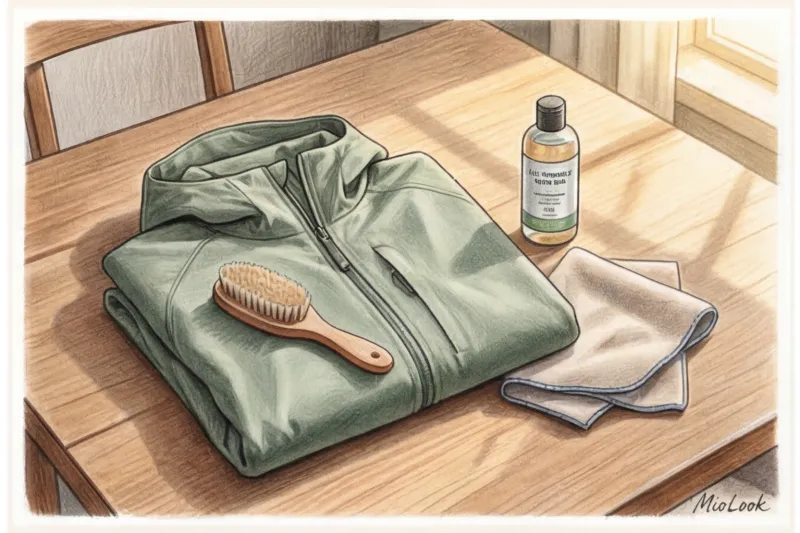
- Give up regular powders. Dry granules physically clog pores, and fabric softeners leave a film that completely destroys the fabric's ability to wick away moisture. Use only specialized liquid products (like Tech Wash).
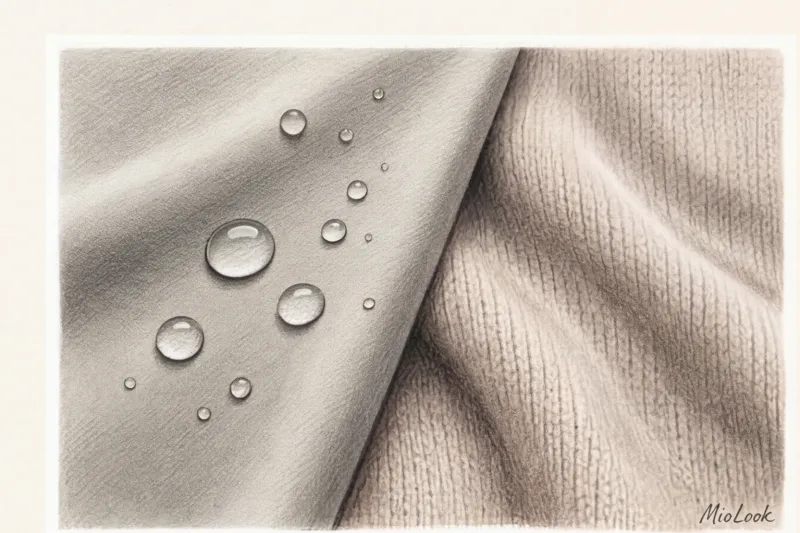
- The magic of DWR reactivation. Have you noticed that over time, water stops beading up and the fabric starts to become damp (darken)? This means the DWR (Durable Water Repellent) finish has worn off. The fluoropolymers in the finish restore their properties when heated. After washing, tumble dry the jacket for 20 minutes (on a delicate setting) or iron it through a towel without steam.
An eco-friendly approach to consumption means not only purchasing items made from recycled materials but also caring for them properly. A high-quality membrane, with proper care, should last 7-10 years.
Stylist Checklist: 5 Signs of the Perfect Urban Jacket
When shopping or ordering online, use this checklist. It will help you weed out overly touristy styles and find that perfect, versatile urban jacket:
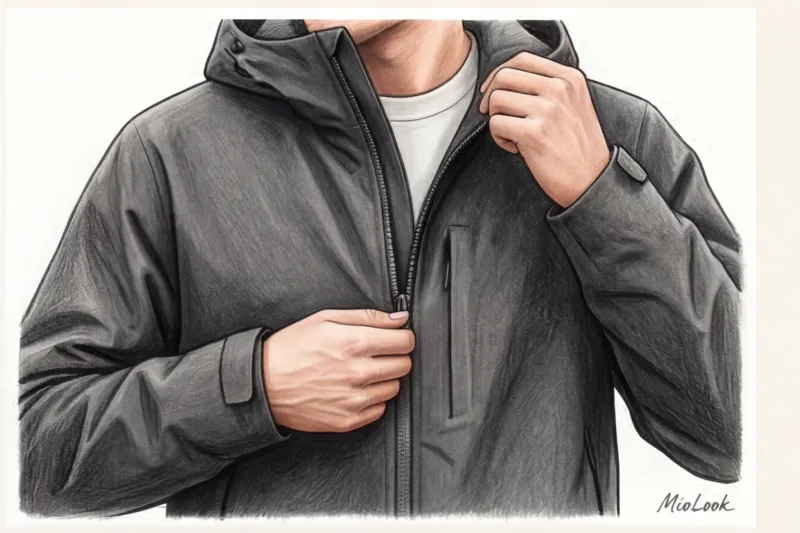
- Matte finish fabric. Feel the material. It shouldn't shine glossyly under the artificial light of the fitting room. Matte finish is synonymous with urban aesthetics.
- Two-way zipper (with two sliders). This is crucial for longer styles. If you're getting into a taxi or the subway, unzip the bottom zipper to create an A-line silhouette. Otherwise, the jacket will bubble up around your stomach.
- Dropped shoulder or raglan cut. A stiff set-in sleeve creates a squared-off shoulder in outdoor wear. The raglan sleeve allows for freedom of movement and allows for layering a chunky knit sweater or jacket underneath.
- Minimalistic pockets. Avoid large patch pockets with flaps on the chest—they visually widen the torso and cheapen the look. Look for slit pockets with water-resistant zippers that match the fabric.
- Architectural hood. A good jacket has a hood with an adjustment system that, when folded, forms a beautiful, voluminous stand-up collar that protects the neck from the wind even without a scarf.
Technological clothing in the city is no longer a compromise between beauty and comfort. It's your personal weatherproof armor, which, when styled correctly, creates a sophisticated, modern, and dynamic look. Stop reserving functional pieces for hikes in the woods. Pair a matte hardshell with your favorite wide-leg pants, add a structured bag, and watch your everyday style reach a whole new level.