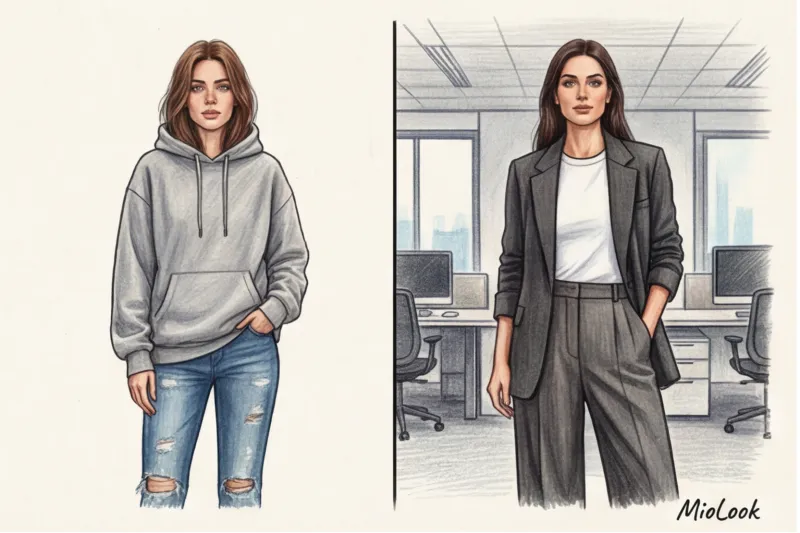
Have you ever noticed that in companies where "anything goes," people paradoxically look almost identical? The absence of a strict dress code is the greatest illusion of modern corporate culture. When rules aren't written down on paper, they become unspoken social markers.
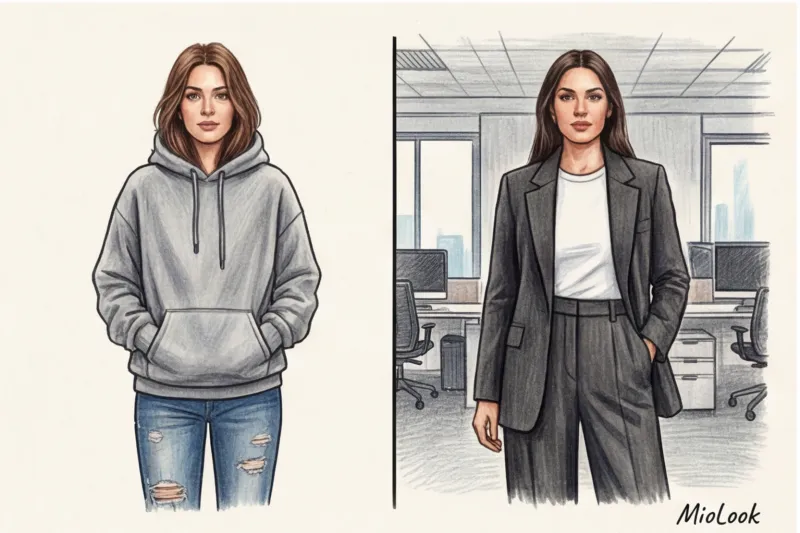
Over 12 years of working as an image maker, I have realized one thing: to build a competent clothing style for IT specialists It's much more difficult to assemble a classic wardrobe for a top bank manager than it is to assemble a classic wardrobe for a creative agency employee. At a bank, the rules are clear. In the IT industry, you have to walk a fine line between "I'm a go-getter" and "I'm a competent expert who can be trusted with a million-dollar budget."
We've already covered the basic rules of corporate attire in more detail in our complete guide. Business Dress Code for Women: From Formal to Casual But today we'll talk about a completely different reality. An environment where a classic three-piece suit will raise eyebrows among colleagues, and an overly casual sweatshirt could cost you a promotion.
The Illusion of Freedom: Why IT Professionals Have the Most Challenging Dress Code
According to statistics, over 70% of IT companies and creative agencies today don't have a formal dress code. It seems like you can wear whatever you want! But that's a trap. There's a dangerous myth: "In IT, no one cares what you look like; what matters is how you code or design."
Reality hits you hard. The lack of rules makes appearance an even more powerful marker of "us" or "them." The human brain is lazy: it reads the visual relevance of your wardrobe and subconsciously transfers it to the assessment of your professional skills. Outdated, shapeless clothing silhouettes are interpreted by colleagues and management as outdated technology or outdated design taste.
I had a very revealing case in my practice. Anna, a brilliant UX designer, approached me. She had been struggling to land a Team Lead position for two years. Her feedback from management had always been vague: "You lack leadership clout," "You're still perceived as a performer." When we reviewed her wardrobe, everything became clear. Anna dressed in a "perpetual student" style: stretched-out gray hoodies, faded skinny jeans, and worn-out sneakers. We didn't dress her in formal jackets, but replaced the hoodies with oversized, tight-knit sweaters and the skinnies with wide-legged pleated trousers. Four months later, she received the coveted promotion. Why? Her visual clout had changed.
This is where the concept comes into play Enclothed Cognition (embodied cognition). What we wear influences not only those around us but also our own cognitive processes. Relaxed, almost pajama-like clothing physiologically reduces your concentration and makes your body language more sluggish.
The Hoodie and Jeans Trap: How to Avoid Looking Like a Perpetual Intern
Many still evoke the image of Mark Zuckerberg in his famous gray T-shirt. But, firstly, the evolution of Silicon Valley's dress code has long since progressed: from the "normcore" of the 2000s to today's "quiet luxury" (just look at today's CEOs). Secondly, copying the deliberate casualness of tech billionaires is a failing strategy for women building a career in 2024.
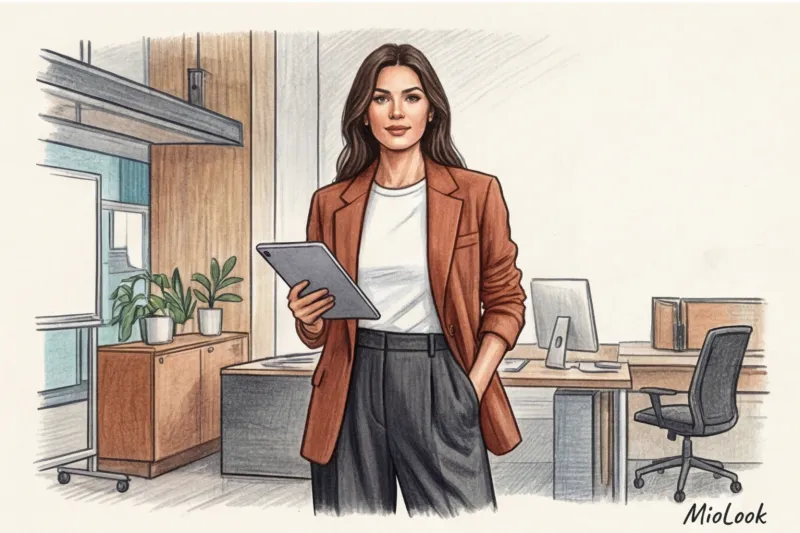
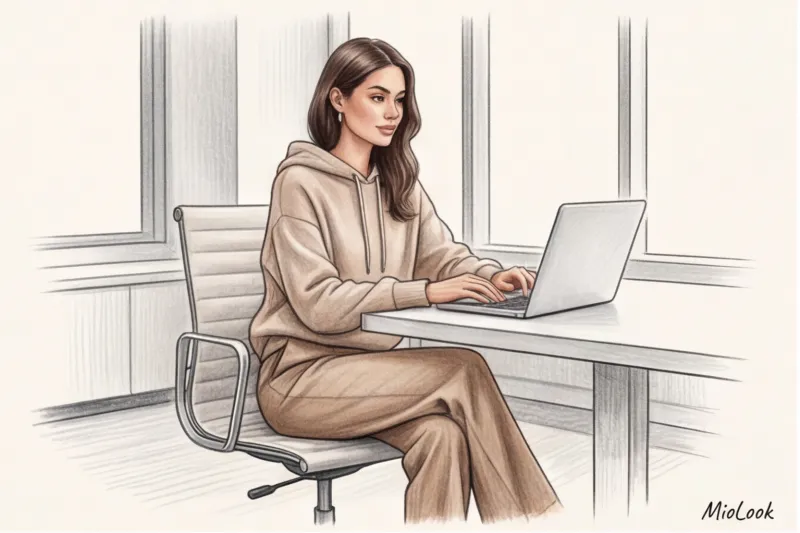
You need to clearly distinguish between "relaxed" and "sloppy." Relaxed is achieved through a loose fit and soft textures. Sloppy clothing is characterized by pilling, stretched knees, thin, flimsy knitwear, and a lack of structure.
Access to MioLook for €0.99 — one-time payment
A smart AI stylist will help you find the perfect office look without a strict dress code. Upload your items and receive ready-made capsule collections every day.
Get access — €0.99 onceCreative Pragmatism Formula: A Balance Between Comfort and Status
If classics don't work and hoodies are damaging your career, what should you wear? The answer lies in the concept. Creative Pragmatism (creative pragmatism). This is a style in which functionality is combined with contemporary architectural design.
Instead of rigid office suits, we embrace architectural tailoring: loose jackets with pronounced shoulders, palazzo pants, and sculpted shirts made of thick cotton. Clothing shouldn't restrict movement (you can still sit in a bean bag chair with a laptop), but it should retain its shape when you stand up.
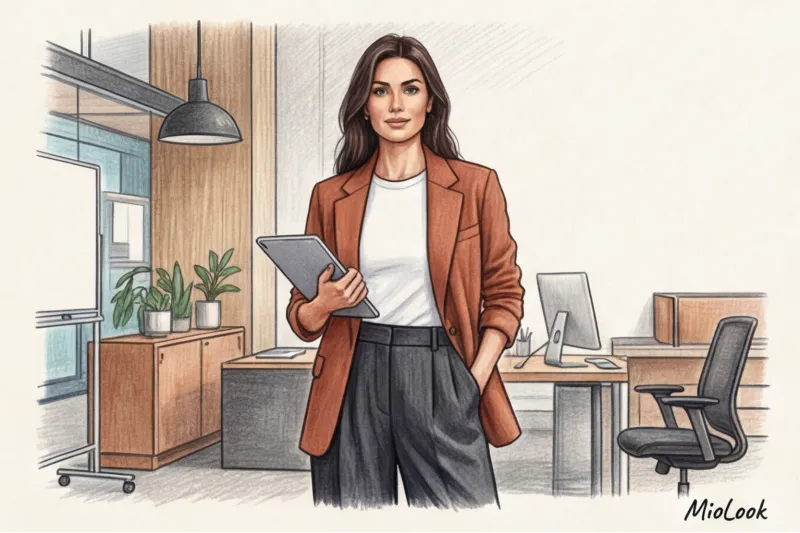
As a certified colorist, I'd like to specifically address color theory in IT. The most common mistake is resorting to all-black or a bland gray melange. Yes, black is practical, but in a conference room, it often looks flat and closed off.
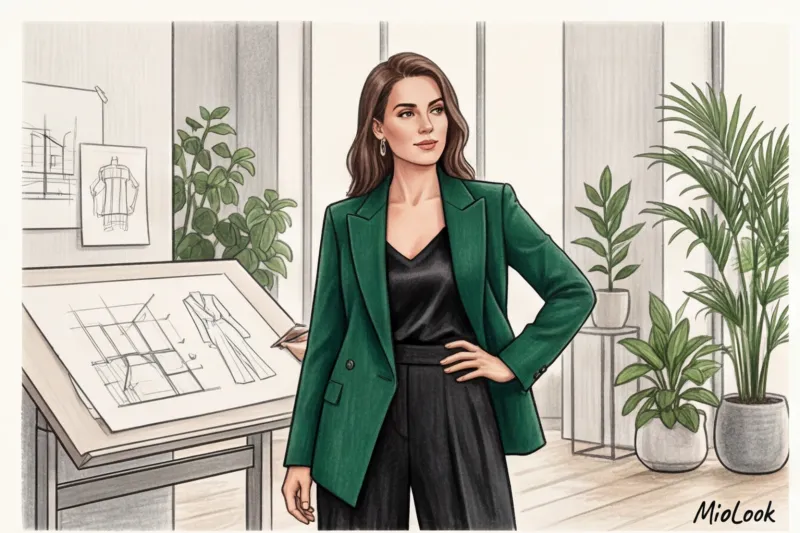
"Replace plain black with 'intellectual' shades: deep navy, graphite, complex terracotta, emerald, or sage. These colors convey depth of thought, calm, and creativity. They make you stand out from the monochromatic crowd without violating the unspoken casual code."
By the way, complex colors combine beautifully with each other. You can check how a terracotta jacket will fit into your current wardrobe using the virtual fitting room feature in the MioLook app This will prevent you from making impulsive purchases.
Basic Clothing Style for IT Professionals: 5 Key Elements of a Capsule
To build a functional wardrobe, you don't need to buy half a store (like COS or Massimo Dutti). Investing in the right textures is enough. In casual style, the quality of the fabric comes first, as there are no distracting details like complex embellishments.
Here are 5 pillars on which the modern clothing style for IT professionals is built:
- Oversized jacket, men's cut. This is your armor. It instantly puts your look together. Throw it on over a simple T-shirt and you're ready for a Zoom call with investors. Choose wool-blend styles that won't wrinkle even after sitting for long periods.
- Premium basic t-shirt. Forget thin, see-through knits. The ideal T-shirt has a cotton weight of 180 to 220 g/m², holds the sleeves' shape, and has a tight, non-stretchy collar.
- Wide-leg trousers with pleats and a high waist. They are more comfortable than jeans (especially if they contain 3-5% elastane or viscose), but visually they look ten times more prestigious.
- Textured knitwear. Thin, tight cardigans with small buttons are a total no-no; they cheapen the look. Swap them for a chunky cashmere sweater, a long-sleeved, thick-knit polo, or a merino wool jumper.
- A status minimalist accessory. This could be a watch with a minimalist design or a structured geometric tote bag made of thick matte leather without flashy logos.
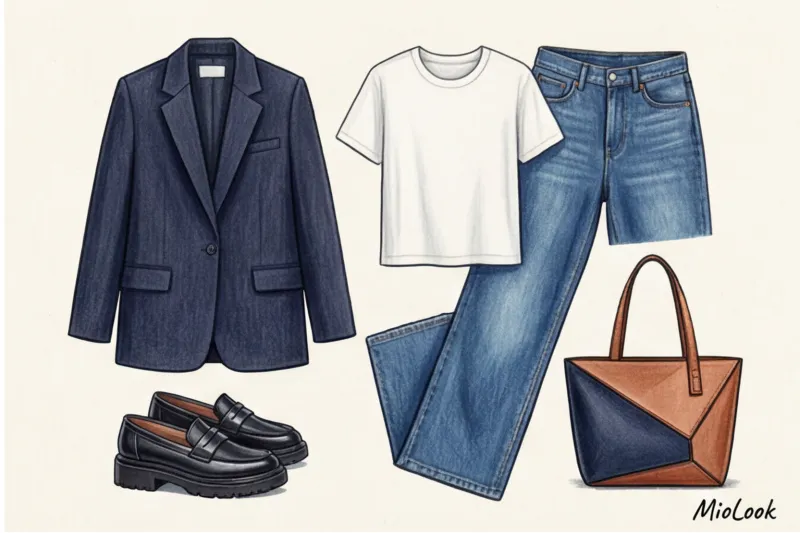
When it does NOT work: If you have a distinctly romantic appearance (soft features, petite stature), a crisp, architectural oversize can make you look like a teenager in dad's jacket. In this case, maintain the density of the fabrics, but choose semi-fitted cuts and cropped jackets.
Footwear in Creative Agencies: When Sneakers Are Appropriate and When They're Not
The biggest myth about the IT industry is: "Everyone wears sneakers here, so you can wear whatever you want." This is a fatal mistake. In creative environments, there's an unspoken rule of "clean shoes." Your sneakers in the office should look like you took them out of the box five minutes ago, maximum.
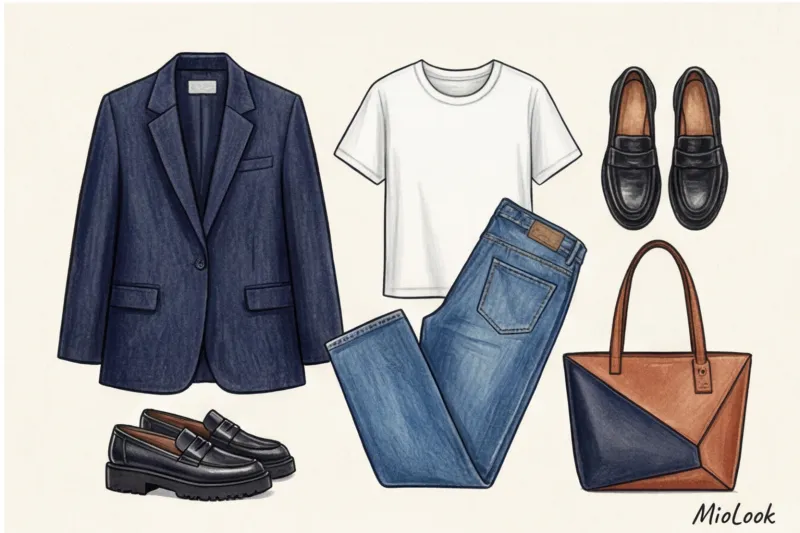
It's also important to distinguish between lifestyle sneakers (urban models with retro designs, leather sneakers with minimalist cuts) and running/training sneakers with neon accents and mesh. The latter are reserved exclusively for the gym.
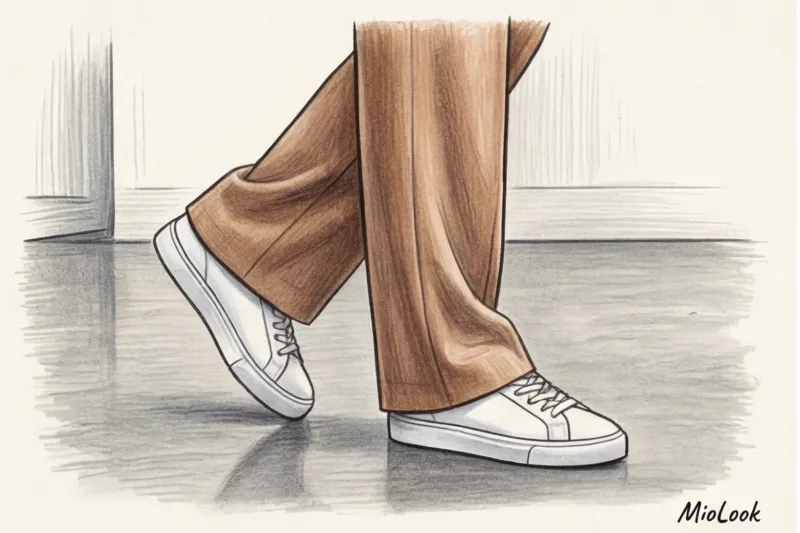
But sneakers aren't the only option for comfort. To instantly elevate your style, I recommend these alternatives to my clients:
- Loafers with a chunky sole: They add a put-together look to your outfit and look great with white socks and cropped trousers.
- Brogues or Derby: A classic that, when paired with relaxed jeans, creates a stylish contrast.
- Mules (in warm weather): More elegant than sandals, but just as comfortable.
- Sock boots: They fit perfectly around the ankle and look great with wide palazzo pants.
Your perfect look starts here
Join thousands of users who look flawless every day with MioLook. AI will analyze your appearance and suggest the best combinations.
Get access — €0.99 onceHierarchy Without Ties: How Style Changes from Junior to C-Level
Even if a company doesn't have formal job descriptions for appearance, visual hierarchy is unmistakable. Research on leadership perceptions in the business world (such as McKinsey data) shows that executives subconsciously choose more structured items and more luxurious textures.
Here's how your wardrobe transforms as you grow up:
Junior / Middle: Focus on relevance, trendiness, and team integration. High-quality jeans, oversized shirts, basic tees, and trendy sneakers are appropriate here. The main goal is to show that you're "in the know" and understand the spirit of the times.
Senior / Team Lead: It's time to add structure and stand out from the crowd. Layering is in vogue (a turtleneck under a shirt, a jacket over a T-shirt), and swapping jeans for loose-fitting trousers is becoming more common. You apply the "dress one job higher" rule—this way, management subconsciously begins to see your potential for further advancement.
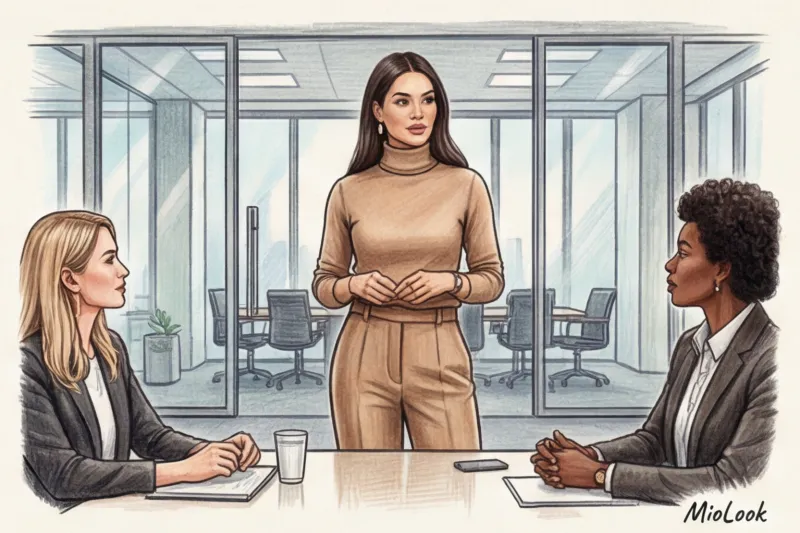
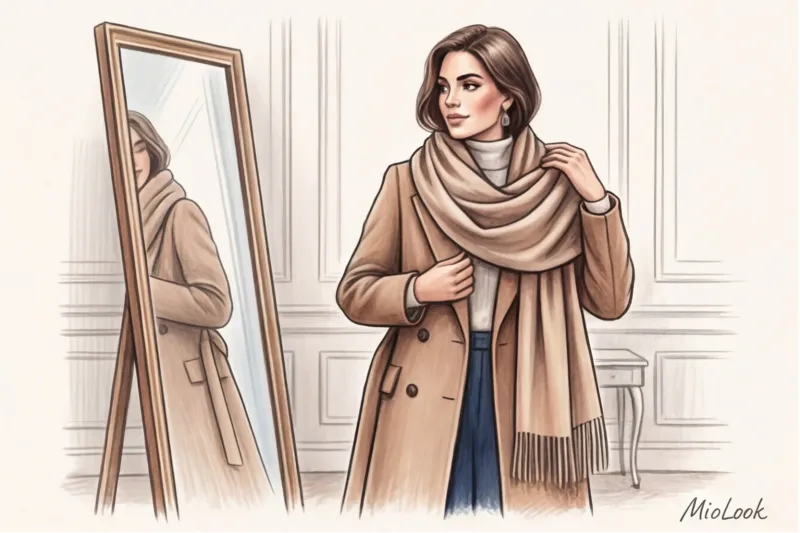
C-Level (CEO, CTO, Art Director): The transition to absolute "quiet luxury." Brands don't shout about logos; status is conveyed through fabric. These include perfectly fitted cashmere sweaters, silk blouses with a matte finish, and impeccably tailored wool coats. The color palette often leans toward elegant monochrome (shades of camel, oatmeal, and graphite). If you want to delve deeper into finding your unique vector at this stage, I recommend studying the material. How to Find Your Clothing Style: A Guide for Women.
Checklist: Putting together an image for a demo day, pitching, or client meeting
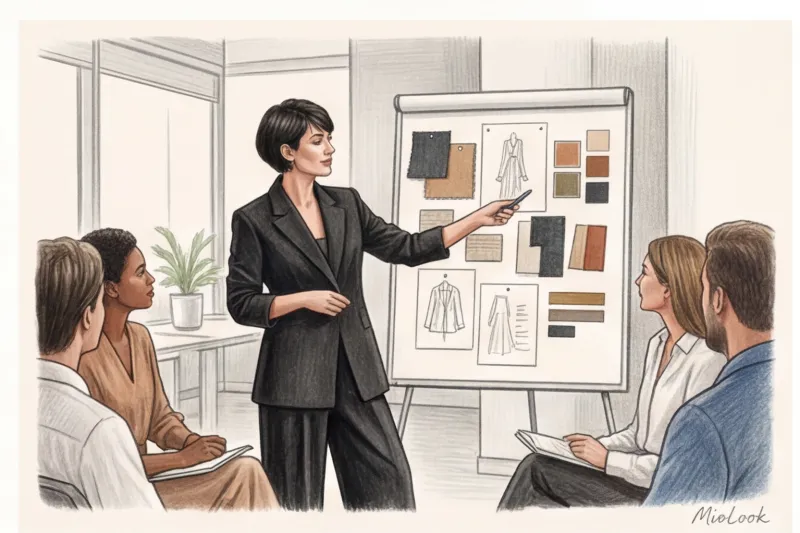
Public speaking and project presentations require a special approach. Your clothing shouldn't distract from the product you're presenting, but it should frame your face and convey confidence.
Use Plus One Rule Dress 10-15% more formally than your audience. If your clients are wearing jeans and a T-shirt, wear jeans, a T-shirt, and a structured jacket. If they're wearing smart casual, choose a relaxed-fit pantsuit.
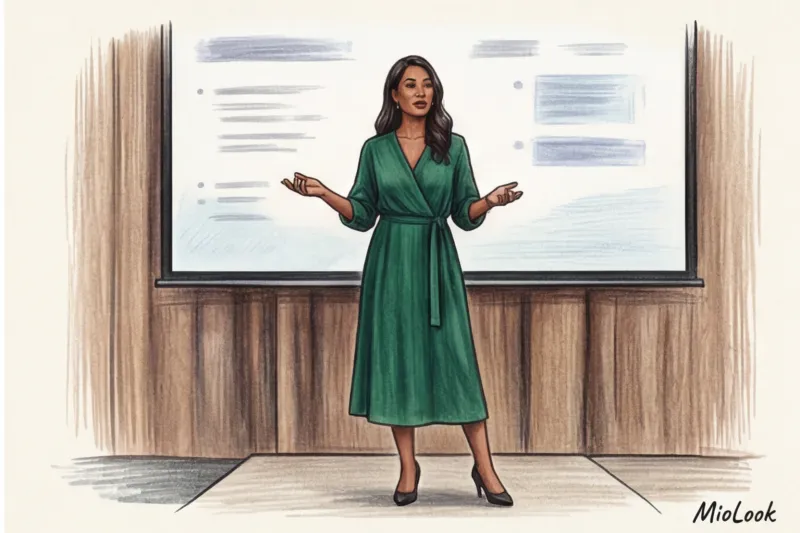
Three golden rules from an image consultant for important meetings:
- Consider the background. If you're presenting online or standing on stage in front of a dark screen with a presentation, avoid wearing black or dark blue—you'll look like a talking head. Opt for contrasting, light, or saturated colors (like emerald or terracotta).
- Test the comfort on the move. Tight jacket armholes that prevent you from raising your arm to the screen or a pencil skirt that requires constant tugging are the enemies of a good pitch. Your brain should be thinking about numbers, not how you look.
- The portrait zone is the main thing. During online meetings, people look at your shoulders and face 80% of the time. Invest in quality shirt collars, interesting (but not loud!) earrings, and a flattering neckline that elongates your neck.
In a world where strict rules have been abolished, your appearance becomes your personal media. Dressing style for an IT professional isn't about boring boundaries; it's about mastering the art of creating impressions through texture, color, and tailoring. Stop hiding behind shapeless pieces. Let your wardrobe be as innovative, smart, and effective as the projects you create.