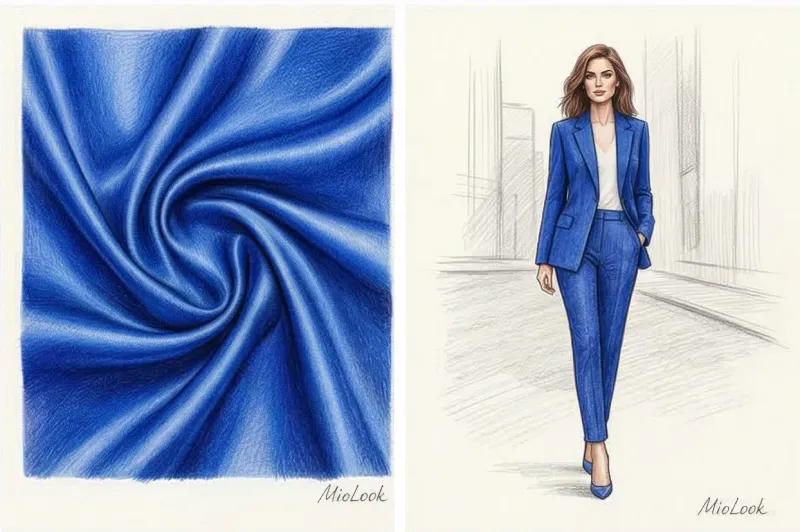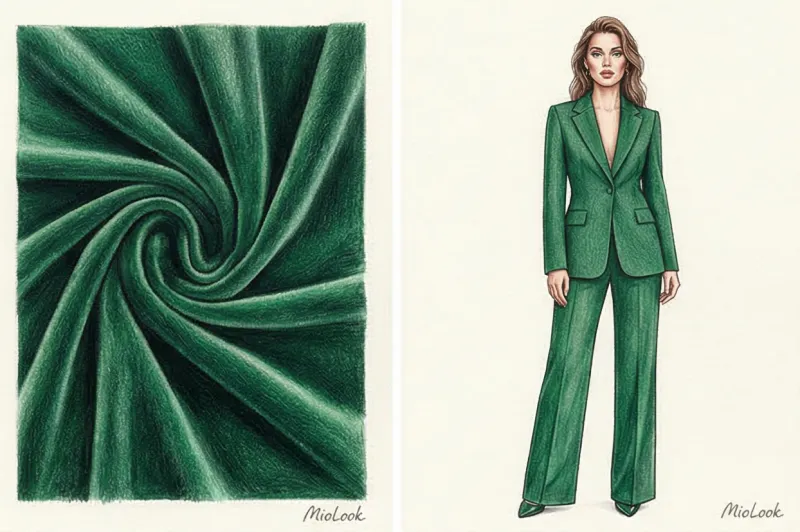
What is the color indigo?
Indigo — is a deep, rich shade located in the color spectrum between blue and violet.
To accurately define the color indigo, it is most often described as a deep blue with a pronounced purple or violet undertone. Historically, the name comes from a tropical plant. Indigofera , from whose leaves a durable natural dye for fabrics has been extracted for centuries.
In modern fashion, this color is firmly associated with classic raw denim and tailored business suits. It has become an essential part of both casual and formal wardrobes.
Distinctive features
The main characteristic of indigo is the complexity of its hue. Unlike classic navy, indigo changes its temperature depending on the lighting, revealing vibrant violet tones in bright daylight.
The color has a high degree of contrast, yet is perceived by the eye as basic and neutral. In smooth textures, such as silk or fine suit wool, indigo looks expensive and formal, often replacing black in conservative business dress codes.

The perception of shade depends heavily on the texture of the material. On matte fabrics (suede, heavy cotton), the color appears more muted and subdued. On glossy surfaces (satin, patent leather), it takes on a subtle neon glow and depth.
What to combine with
Indigo creates crisp, classic contrasts with crisp white, pearl, light gray, and ecru. A typical example of this combination is an indigo pantsuit paired with a white silk blouse.

Monochromatic and related color combinations are used to create complex, layered looks. Indigo looks harmonious next to blue, emerald, and deep violet.
Warm shades like mustard, terracotta, burgundy, and ochre are used as vibrant accent combinations. Straight-leg indigo jeans create a balanced casual look when paired with a mustard cashmere sweater.

Particular attention is paid to textured mixes. The combination of heavyweight indigo denim with lightweight, translucent fabrics in light shades, such as linen or chiffon, helps balance the visual density of the materials in the look.