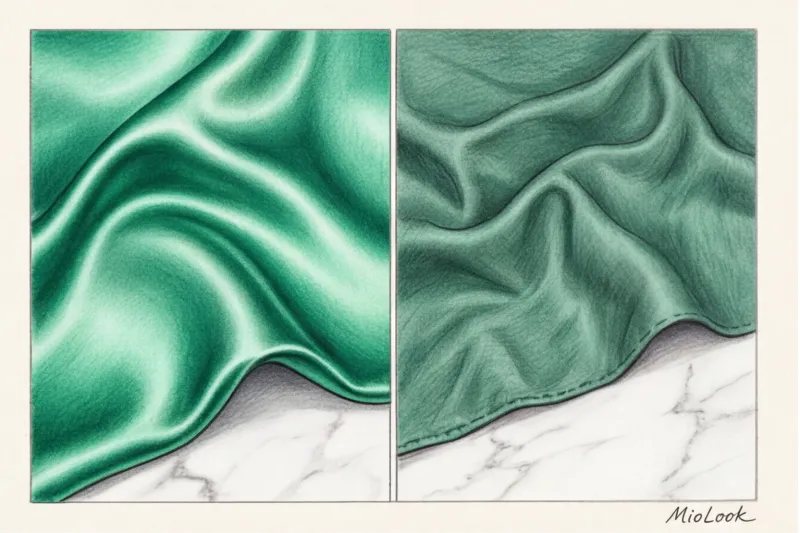
In 2018, at the Parisian flea market Les Puces de Saint-Ouen, I found a true treasure—a vintage emerald Dior blouse from the late 1970s. It was in perfect condition, with that dense, fluid, pearly sheen rarely found these days, even in high-end luxury. My first thought? Take it to the city's best dry cleaner. The garment returned to me having lost half its magic: the silk had become dull, slightly stiff, and somehow lifeless. It was then that I began to deeply study fabric chemistry and realized something counterintuitive: the clothing care industry often advises us on what's best for them, not what's best for our clothes.

Many of my clients refuse luxurious lingerie dresses and flowy tops only because they don’t know, How to wash silk at home, and constantly taking things to the dry cleaner is expensive and a hassle. Over 12 years of working as a stylist, I've learned that 80% of purchased silk slip dresses from Massimo Dutti (in the €100-€250 price range) lose their appearance after the first season due to improper care. We've covered the basic principles of handling delicate fabrics in more detail in our a complete guide to proper clothing care , but silk requires a separate, almost scientific discussion.
This material will dispel the main myth that silk absolutely shouldn't be washed. On the contrary: proper washing literally "nourishes" this fabric. Let's figure out how this works.
The Label Conspiracy: Why Silk Items Are Labeled "Dry Clean Only"
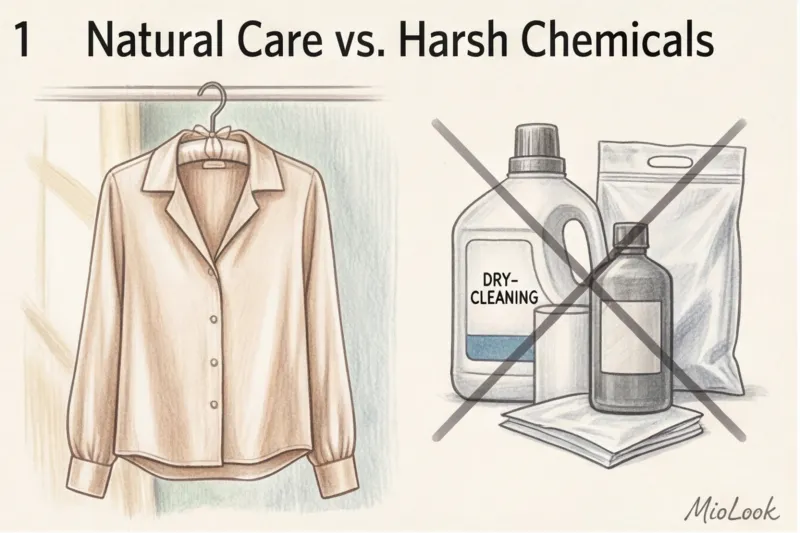
Take a look at your closet and check the labels on silk blouses from Zara, COS, or even premium brands. We bet most of them have a crossed-out basin and a circled "P" on them. Manufacturers are using the "Dry Clean Only" label en masse.
But here's an open secret: about 70% of brands do this purely for legal protection. If you wash an item with laundry soap and boiling water and then return to the store with a complaint and a stretched-out rag, the brand will simply point to the label and say, "We told you so." It's much cheaper and easier for them to ban washing altogether than to educate consumers on the nuances.
The ultimate irony is that regular dry cleaning slowly but surely destroys natural silk. The dry cleaning process uses perchloroethylene, a powerful, aggressive solvent. Experts at The Textile Museum (Washington, DC) explicitly state in their guidelines for preserving historic fabrics that harsh chemicals dry out the protein fibers. Silk loses its natural moisture, its threads become brittle, and its luxurious pearly luster is replaced by a matte dullness.
"It's commonly believed that dry cleaning is a panacea for expensive fabrics. In reality, perchloroethylene degreases natural silk the same way acetone degreases your fingernails. The fabric simply dries out," notes a textile restoration specialist.
However, there are cases, When dry cleaning is really necessary Do not wash silk jackets with stiff shoulders or interlining, or items with complex contrasting linings, heavy beading, or pleating at home. Water will destroy the structural cut, making it impossible to restore without professional equipment.
Basic care: how to distinguish natural silk from artificial silk before washing
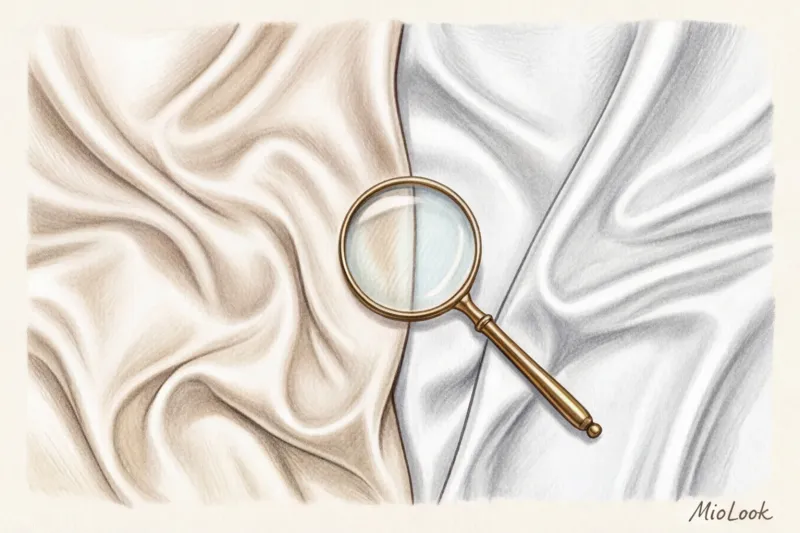
Before you turn on the water, you should know exactly what you're holding in your hands. Caring for natural and artificial silk requires two completely different approaches. Why? Because natural silk is an animal protein, while artificial silk (viscose, cupra) is recycled wood pulp. What's good for one is deadly for the other.
In the appendix MioLook I always recommend that my clients tag their fabric content when digitizing their wardrobe so the app can group items by wash type. But how can you determine the fabric content if the tag is cut off?
- Tactile test (stylist life hack): Place the fabric against your cheek. Natural silk immediately absorbs your body temperature and becomes warm. Synthetic polyester or viscose will stay cooler for a little longer.
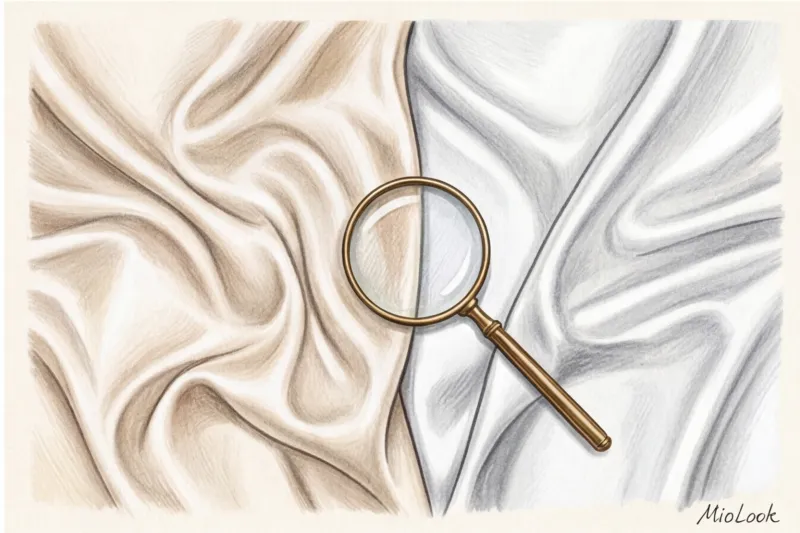
- Visual test: Remember how pearls shine? The light diffuses softly, as if from within. This is natural silk. The synthetic version shines like glass, reflecting light sharply and flatly.
- Burn test (if you have a spare thread from the seam): Set it on fire. Natural silk burns, smells like burnt hair, and crumbles to ash when rubbed between your fingers. Viscose smells like burnt paper, and polyester melts into a hard plastic ball.
Care instructions for natural silk (Mulberry, Tussah)
Natural silk has a unique chemistry: it consists of fibroin, a protein structurally very similar to human hair. This is why conventional powders (even expensive supermarket gels) are harmful to it.
Modern laundry detergents almost always contain enzymes (proteases)—enzymes designed to dissolve protein stains (blood, sweat, food). The problem is that enzymes don't distinguish between the stain and the fabric itself. They literally begin to "digest" the silk, making it thin and promoting the formation of holes. Furthermore, silk requires a slightly acidic or neutral environment (pH 5.5-7), while conventional detergents have an alkaline pH of around 10-11.
How to wash artificial silk (viscose, cupra, polyester)
Rayon made from cellulose (viscose) is resistant to enzymes, but it does have its Achilles' heel: when wet, it loses up to 50% of its strength. If wet viscose is pulled or twisted, it will simply tear or bubble.
Polyester silk is the most durable. You can wash it at 40°C with regular detergent. However, synthetics have another drawback: they instantly absorb body odors and retain them. For polyester, you'll need special sports gels that destroy odor-causing bacteria.
A smart approach to your wardrobe
Tired of forgetting which items require special care? Digitize your closet with MioLook. The app will not only help you create stylish looks but also organize your items by season and material.
Get access — €0.99 onceHow to Hand Wash Silk: A Stylist's Step-by-Step Guide
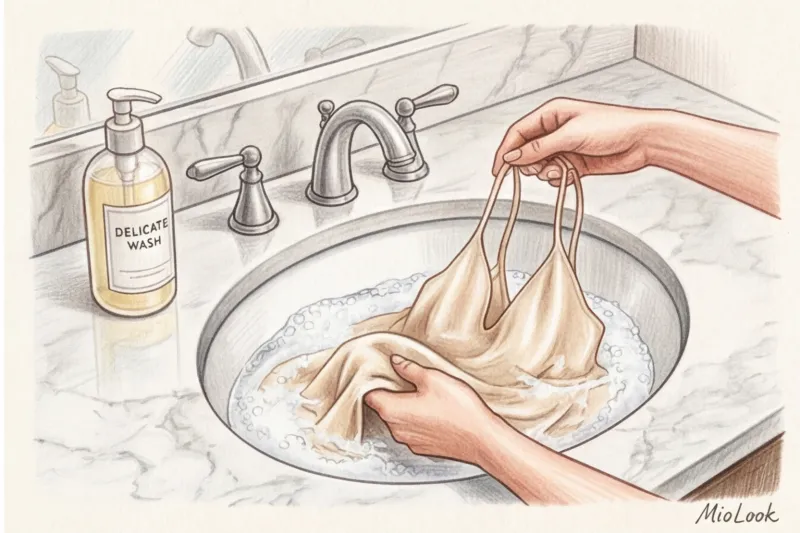
If you want your item to last for decades, hand washing is your best choice. It's not as time-consuming as it seems; the whole process takes about 10 minutes. Here's the process I use myself and recommend to all my clients.
1. The right water and product
Fill a clean sink with cold or slightly cool water (strictly 20-30°C). Hot water will cause silk to fade. Now, the main secret: forget about mass-market detergents for delicate fabrics. The best choice for natural silk is a high-quality sulfate-free baby shampoo or a gentle, moisturizing hair shampoo. Dilute a tablespoon of the product in water until it lathers.
2. Squeezing technique
Submerge the silk item in water. Never rub the fabric against itself! Imagine washing your own hair: you wouldn't rub the strands together too hard, would you? Gently squeeze the fabric with your hands, like a sponge, allowing the soapy water to work through the fibers. Leave the item in the water for no more than 3-5 minutes.
3. The Secret Rinsing Step
Drain the soapy water and fill it with clean, cold water. Now comes the magic: add one tablespoon of regular white vinegar to the water. The vinegar neutralizes any remaining soap lye, restores the acidity balance (that same pH of 5.5), and restores the silk's fantastic shine. After the vinegar bath, rinse the item again in clean, cold water.
Is it possible to wash silk in a washing machine without any consequences?
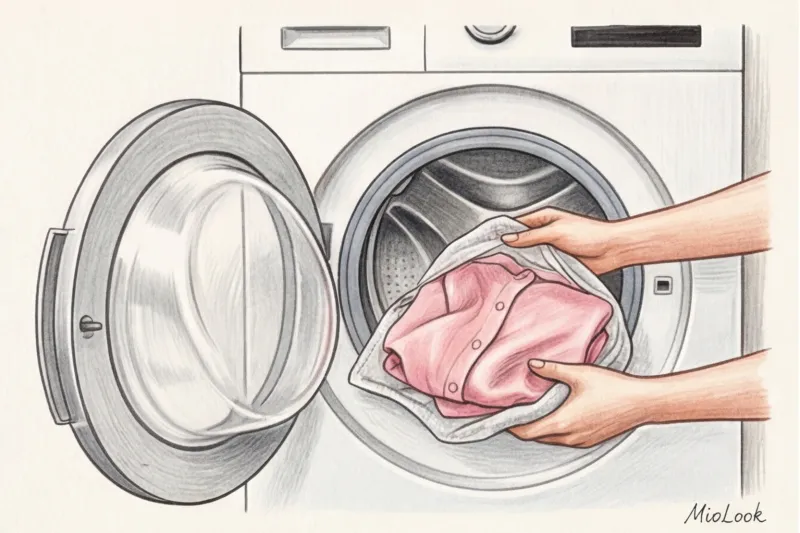
Yes, you can, but only if you strictly follow safety precautions. Machine washing is suitable for basic silk tops, pajamas, pillowcases, and items made of heavy silk crepe. Avoid machine washing delicate chiffon or items with delicate lace trim.
Silk's main enemy in the drum is mechanical friction. To minimize this, place the item in a mesh laundry bag. And herein lies a common mistake: the bag shouldn't be too big! It should be the exact size of the folded item. If the top is flapping around in a huge bag, it will still rub against the walls of the drum.
Machine settings:
- Mode: “Silk” or “Delicate wash/Hand wash”.
- Temperature: 20-30°C (cold).
- Spin: Turn off completely or set to the lowest setting (no more than 400 rpm).
What you should absolutely not do: Wash silk with other fabrics, especially cotton or denim. Wet cotton acts like sandpaper on delicate silk. Even if everything is kept in bags, the cotton microfibers will damage the smooth surface of the silk thread.
Towel Magic: How to Dry and Iron Silk Properly
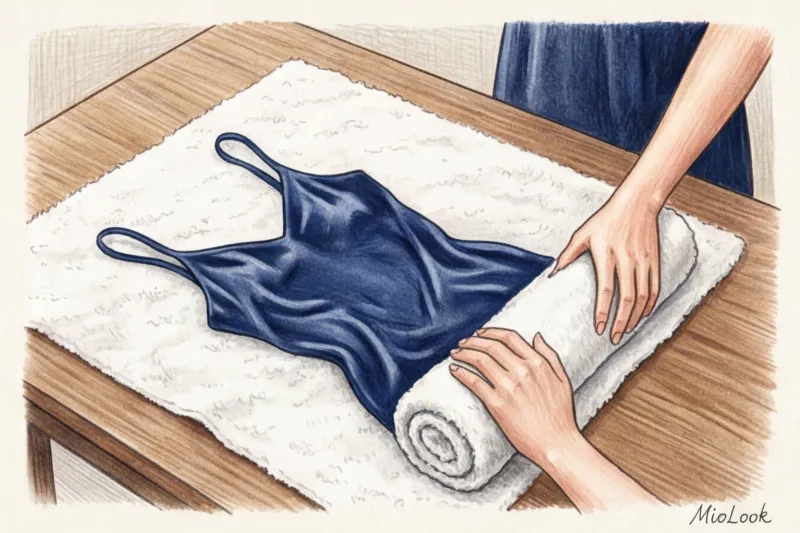
You've taken the wet silk out of the water. What next? Don't wring it out—it'll break the threads. Hang it on a hanger—it'll stretch under the weight of the water.
On fashion shoots, where we often have to urgently wash models' clothes, we use roll method Lay a large, thick terry towel (preferably white to prevent staining) on the table. Place the wet item flat on the towel. Now tightly roll the towel and item into a roll, as if making sushi. Gently press down on the roll. The towel will absorb 80% of the moisture, leaving the silk undamaged.
The item should be dried horizontally, away from direct sunlight (ultraviolet rays destroy fibroin, and the fabric literally falls apart) and radiators.
How to iron:
Silk should be ironed slightly damp. Use an iron only on the lowest temperature (Silk setting), ironing it from the inside out, and preferably over a thin cotton cloth. If the item is too dry, do not spray it with water—this will leave round marks.
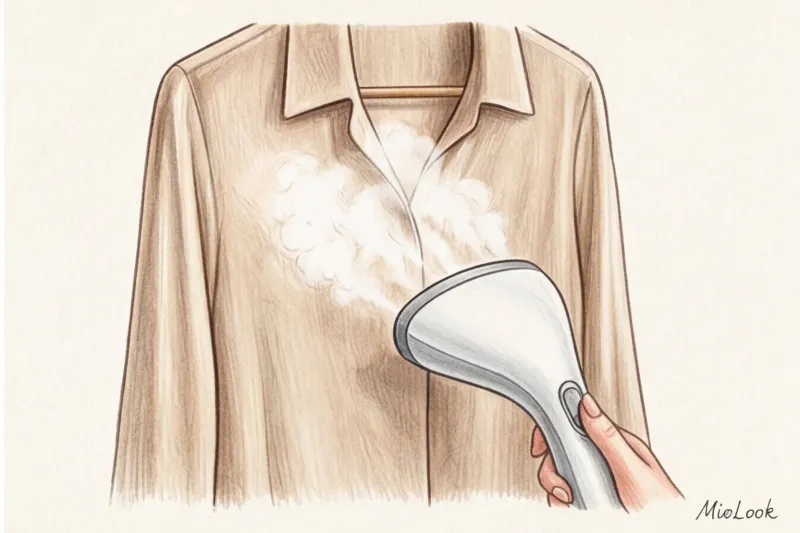
A handheld steamer is a great alternative, but keep the nozzle a couple of centimeters away from the fabric. And be careful: some cheap steamers spit hot drops of water, which can instantly leave permanent water stains on light-colored silk.
Your perfect look starts here
Join thousands of users who look flawless every day with MioLook. Artificial intelligence will create looks from your clothes in seconds.
Get access — €0.99 onceFirst Aid: How to Safely Remove Stains from Silk
The biggest mistake my clients make (and one I once made in a restaurant with that very vintage Dior) is trying to spot-wash a stain on silk with soap and water. Due to the way light refracts, the wet area will dry, but a visible "halo" (ring) will remain around it forever.
If you have planted a stain:
- Grease (from food or lipstick): No water. Immediately sprinkle the stain generously with talcum powder, baby powder, or cornstarch. Let it sit for 10-12 hours. The powder will draw the oil out of the fibers. Then gently brush it off with a soft brush. Only then can the entire item be washed.
- Traces of sweat and deodorant: These stains are alkaline in nature, causing underarm silk to yellow and become brittle over time. Dissolve a couple of regular aspirin tablets in half a glass of water and gently apply the solution to the underarm area with a sponge before washing. Salicylic acid effectively dissolves sweat salts without damaging the silk protein.
- Difficult stains (wine, coffee): This is one case where you shouldn't experiment. Take the item to a professional dry cleaner who specializes in delicate fabrics.
Checklist: 5 Rules for Storing Silk in Your Wardrobe to Make It Last for Years

Caring for your clothes doesn't end after washing. How they hang in your closet determines their lifespan just as much as the composition of the water.
1. Down with plastic. Never store silk in plastic dry cleaners' bags. Plastic releases chemical gases that cause the natural protein to oxidize and turn it irreversibly yellow. Use only breathable, undyed cotton bags.
2. Correct hangers. Forget thin wire, plastic, or even hard wooden hangers. Silk's weight will cause the shoulders to deform. Use only thick hangers covered in satin or velvet.
3. Moth protection. Moths love silk just as much as cashmere (it's also a protein). Avoid using mothballs—their scent will soak into the fabric. Place natural cedar blocks or sachets of dried lavender on the shelves. Lightly sand the cedar every six months to renew the essential oils.
4. The 24-hour rule. Silk needs to "rest." Don't wear a silk blouse or pants two days in a row. Give the fibers at least 24 hours to regain their shape and allow the body's natural moisture to evaporate.
5. Avoid perfume. Alcohol and oils in perfumes can leave discolored stains on silk. Apply perfume to skin 10 minutes before wearing silk.
Caring for silk often seems complicated, but it's actually a matter of habit. By ditching harsh dry cleaning and switching to delicate hand washing, you'll notice a stunning effect: your wardrobe investments will delight you for years to come, without losing their original luster. Treat washing not as a chore, but as a meditative beauty ritual—and your clothes will reciprocate.