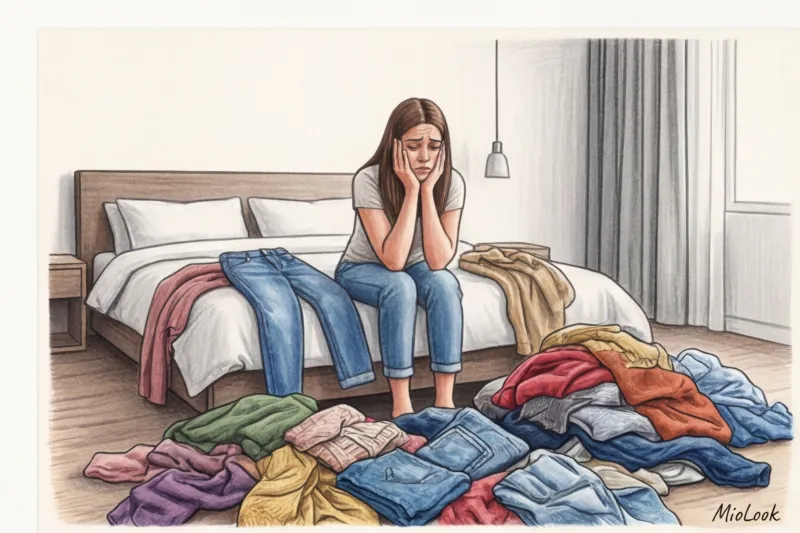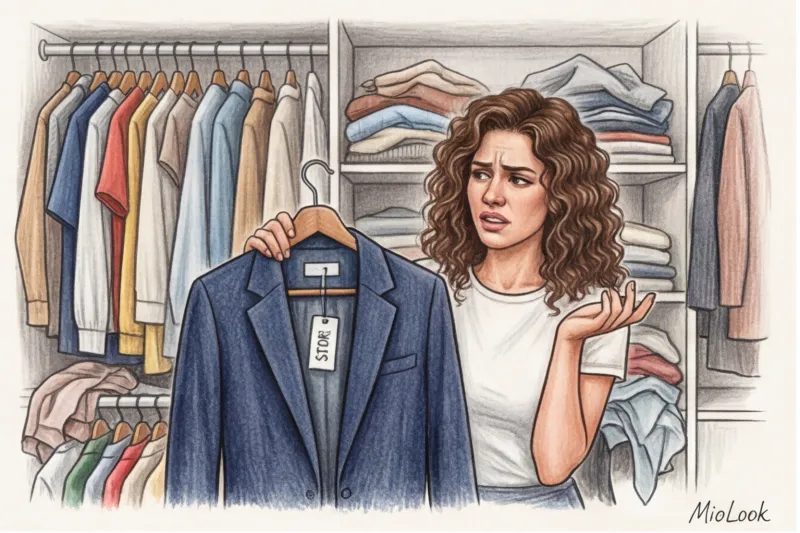
Recently, my client Anna, in tears, showed me her bank statement. In three months, she'd spent almost €600 on Barbiecore-inspired clothes and a leopard-print fur coat for the "Mob Wife" trend. Her closet was literally full, but when I asked her what she'd wear to the IT department meeting the following day, Anna replied, "I have absolutely nothing to wear." Sound familiar?
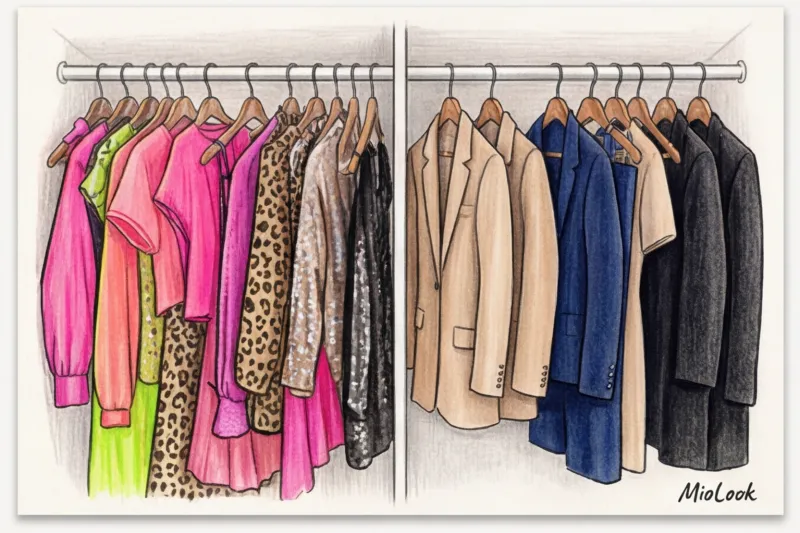
This is a classic symptom of microtrend overdose. In an attempt to keep up with social media algorithms, we buy not clothes, but a short-lived dopamine rush. Breaking this vicious cycle requires a systematic approach. We've covered more about how to build a solid stylistic foundation in our the complete guide to timeless clothing style And today we'll talk about detox.
If you're planning a wardrobe declutter on your own, forget the glossy advice from the 2000s, like "throw everything away in black bags." We'll need math, self-honesty, and the "quarantine" method.
Microtrends vs. Personal Style: How We're Trapped by Algorithms
Macrotrends (such as skinny jeans or puffy shoulders) used to last 3-5 years. This was enough time for the item to recoup its cost. Today, TikTok dictates the rules. According to global platform Lyst's 2024 analysis, the lifespan of a viral microtrend has shrunk to 2-4 weeks.
We buy into the illusion of a new life sold by an influencer in a fifteen-second video. The problem is that this illusion doesn't mesh with our real-life routines at all. McKinsey's "State of Fashion 2024" report cites alarming statistics: today we buy 60% more clothes than fifteen years ago, but wear each item for half as long.
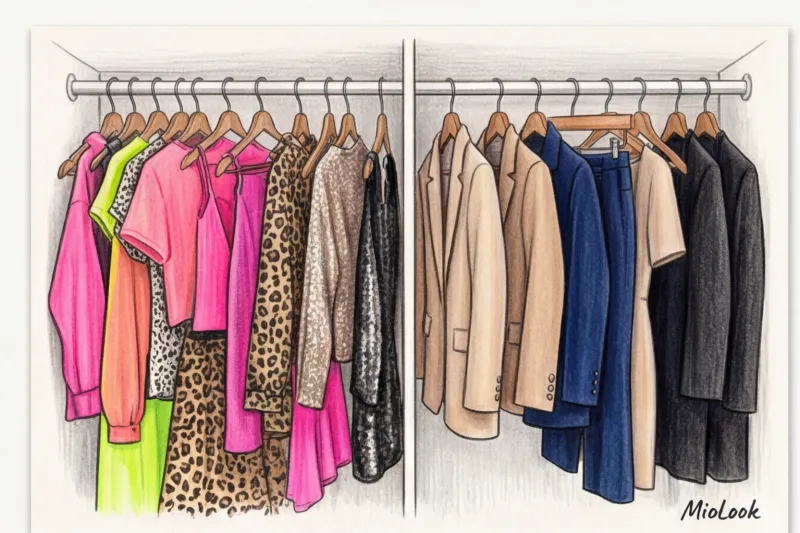
In practice, this translates into a strict 80/20 rule: we wear 20% of our clothes 80% of the time. The rest is a clutter of neon crop tops, mesh flats, and cargo skirts that create visual noise and morning choice paralysis.
Your perfect look starts here
Join thousands of users who look flawless every day with MioLook by digitizing 20% of their favorite things.
Get access — €0.99 oncePreparing for a Detox: 3 Rules Before You Start Decluttering Your Wardrobe
Over 12 years as a stylist, I've learned an ironclad rule: never let a client clean out her closet when she's in a bad mood. The desire to "start fresh" after a tough week at work or a breakup is the worst advice. You're guaranteed to throw out a perfectly basic trench coat simply because it's "boring."
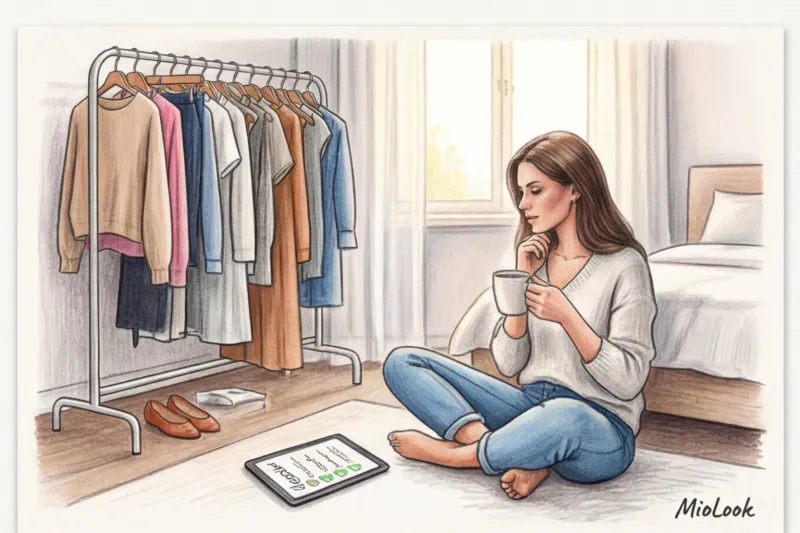
To ensure a successful detox, follow these three preparation rules:
- Collect data. A week before the big day, start taking pictures of yourself in the mirror every day before you go out. You'll be surprised how different your actual uniform is from what you think you're wearing. The mental image of "I wear silk blouses" often shatters when faced with the reality of "I choose a hoodie for five days in a row."
- Allow at least 3-4 hours. Don't try to declutter your closet 40 minutes before bed. It's a physically demanding process that requires a series of micro-decisions. Prepare the space: dust, put on a cheerful playlist, and stock up on water.
- Take off the rose-colored glasses of the “fantasy self”. That girl who goes to yacht parties in sequined dresses is certainly beautiful. But if you work remotely and walk your dog, your wardrobe should cater to your real life, not your fantasy.
Inventory: Why the "Quarantine" Method Is Better Than the Trash Bag
For years, minimalists have been selling us the idea: "If you haven't worn something for a year, throw it away." I declare with all due respect: this rule is hopelessly outdated and even harmful. It completely fails to account for lifestyle changes (maternity leave, going freelance) or seasonal anomalies. Moreover, aggressive purging triggers guilt, which inevitably leads to a breakdown and buying the same things again.
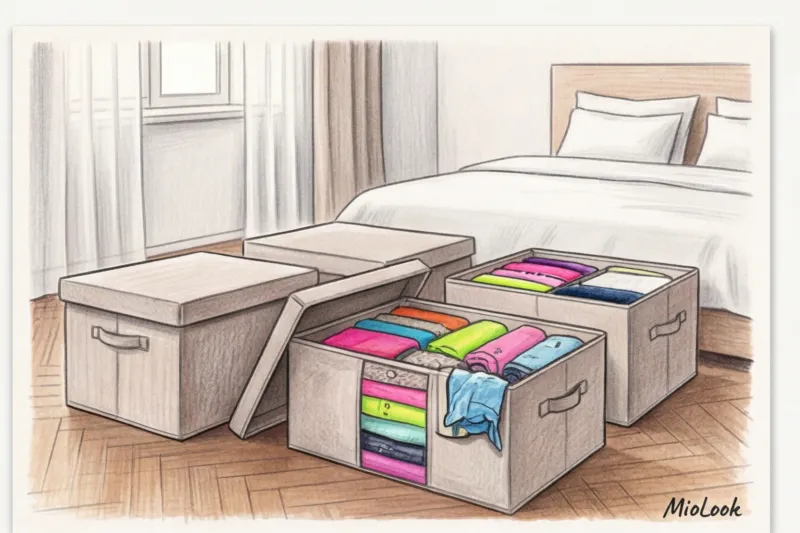
Instead, I propose the concept of "Quarantine".
Get a large, opaque suitcase. Put all your questionable items in there: ultra-short shorts, a mesh top, huge Bratz platform shoes. Close the box, put it on the attic, and set a reminder on your phone for 90 days. If you haven't physically thought about your leopard-print leggings or wanted to take them out for three months, then the trend is dead for you. Now you can safely sell them on resale platforms or recycle them without the slightest regret.
An important exception: the quarantine rule does NOT apply to expensive seasonal gear (ski suits) or eveningwear (bridesmaid dresses). Quarantine is a trap exclusively for everyday microtrends.
Step-by-step wardrobe analysis: the author's algorithm
To avoid getting overwhelmed by things, we will sort them not by the “like/dislike” principle (emotions are deceptive), but by functionality.
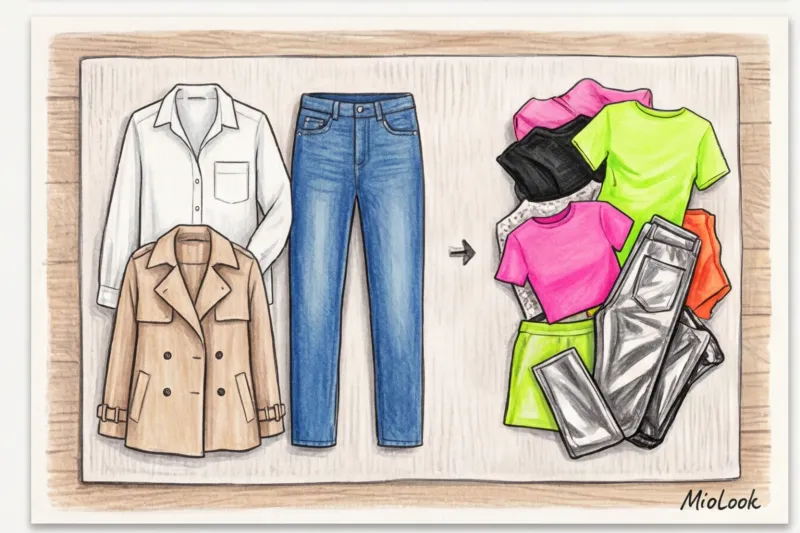
Stage 1. Anchor Audit (Timeless Base)
Find those 20% of items that get you out of any situation. These are your "anchors": a pair of perfectly fitting heavy denim jeans, a structured jacket, an oversized cotton shirt. Check them carefully for wear. If your favorite white T-shirt has yellowed or lost its shape, it needs to be immediately added to your shopping list for a replacement. The mistake most people make is going to the store for a new basic T-shirt and returning with a statement ruffled blouse, leaving a gap in their basics.
Step 2: Identifying and Isolating Toxic Trends
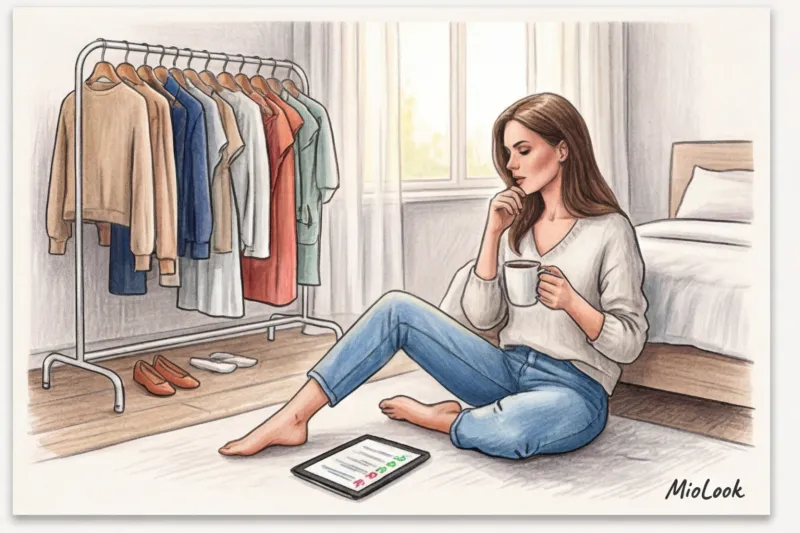
How do you recognize a wardrobe malfunction? It's a wardrobe item that requires three new items to be worn at all. For example, you bought a corset with an open back. It requires a special bra, pants of a specific fit, and a jacket to keep you warm. The result: the corset is still hanging with the tag. We send these malfunctions straight to the quarantine box.
Step 3: Assembling the Survival Capsules
Using proven "anchors," create 3-4 ready-made looks for your key areas of life. Photograph them in good light or upload them to a virtual wardrobe app. In the morning, before your brain wakes up, simply open your phone and choose a ready-made scheme.
Ready to get started?
Try MioLook's free plan—upload your items, and the algorithm will suggest dozens of new combinations from your database.
Get access — €0.99 onceStylist's Secret: How to Save a Trendy Piece (The Neutralization Rule)
I'm not suggesting you dress exclusively in beige cashmere and become an ascetic. Microtrends are like spices. If you eat a spoonful of black pepper, your taste buds will burn. If you add a pinch to a steak, you'll get a masterpiece.

There's an unspoken rule among stylists of neutralization, or the "3 to 1" formula. To integrate a hyped piece without looking like a victim of marketing, combine one microtrend with three absolutely basic, conservative elements.
Let's say you couldn't resist buying a metallic silver bag (a hot trend). Don't wear it with leather pants and a bright top. Instead, try this formula: white men's shirt + straight-leg blue jeans + classic black loafers + your silver bag. In this environment, the trend works as an expensive accent, showing that you're aware of the current trends, but you're in control of them, not them.
Digital Hygiene: How Technology and Cost Per Wear Metrics Protect Against Impulse Buying
My favorite sobering tool when working with clients is the Cost Per Wear (CPW) formula. It instantly eliminates the urge to buy trends during seasonal sales.
The formula is simple: divide the cost of the item by the expected number of wears. Let's compare two scenarios:
- Scenario A (Microtrend): A neon top from a mass market store for €20. You wore it once to a party, washed it, and it lost its shape. CPW = €20.
- Scenario B (Base): A high-quality cashmere sweater for €200. You wear it twice a week for 6 months (about 48 times). CPW = €4.16.
A cheap top cost you five times more than premium cashmere! When you digitize your closet with smart apps like MioLook , you begin to see merciless statistics. The app shows the percentage of items you haven't worn even once this season. When the screen highlights that 40% of your purchases are dead money, your hand instinctively removes yet another "must-have" from your cart.
Checklist: How to stay organized and avoid infecting your wardrobe with trends again
Cleaning out your wardrobe isn't a one-time event, but a lifestyle change. To avoid having to sift through piles of polyester in six months, implement these three digital and everyday habits:
- The "One in, One out" rule. If you buy a new jumper, one old jumper from your collection must go to charity or resale. This severely limits your closet space.
- Basket Quarantine (24-Hour Rule). Added a trendy item to your online shopping cart? Close the tab. Come back to it exactly 24 hours later. In 90% of cases, your rational morning brain will cancel a purchase prompted by evening stress.
- A ruthless reply. Unsubscribe from fast fashion emails and hide the stories of influencers who promote aggressive shopping. You can't want what you can't see.
Conscious style isn't about depriving yourself of joy. It's about shifting your focus from quantity to quality. By clearing your wardrobe of microtrends, you gain the most important thing: 20 minutes less morning stress each day and the confidence that every item in your closet is 100% your best.