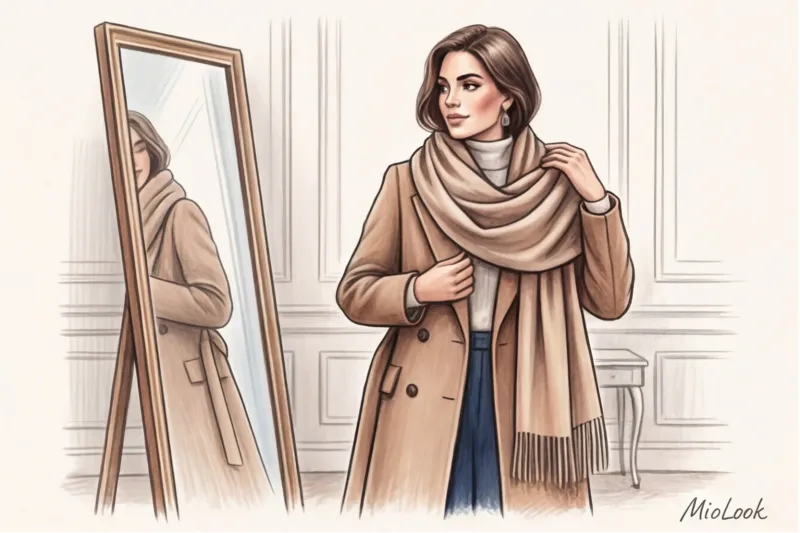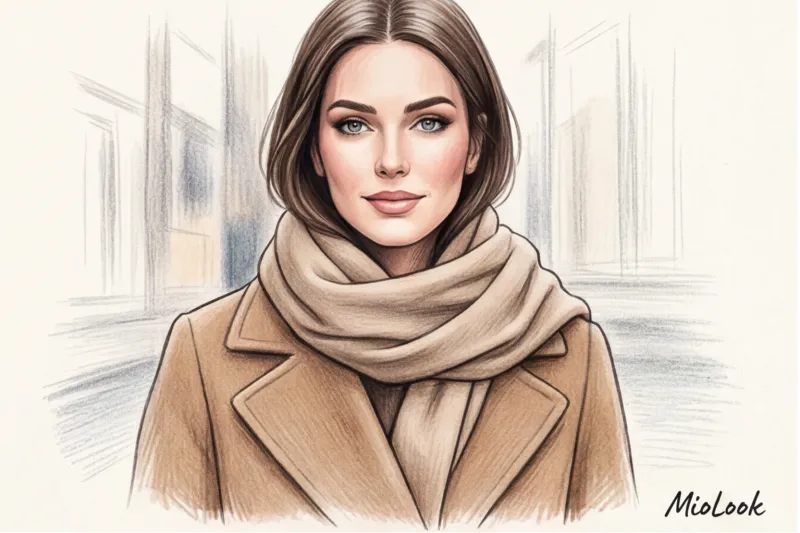
About five years ago, the CEO of a large European IT company came to me for a consultation. She was wearing a luxurious, flowing camel-colored Max Mara coat, costing around €3,000. But the entire look's prestige was ruined by one detail: a thin, acid-mustard-colored acrylic scarf, tightly cinched around her neck with a complex, multi-tiered braided knot. It looked as if plastic buttons from a craft store had been sewn onto premium cashmere.
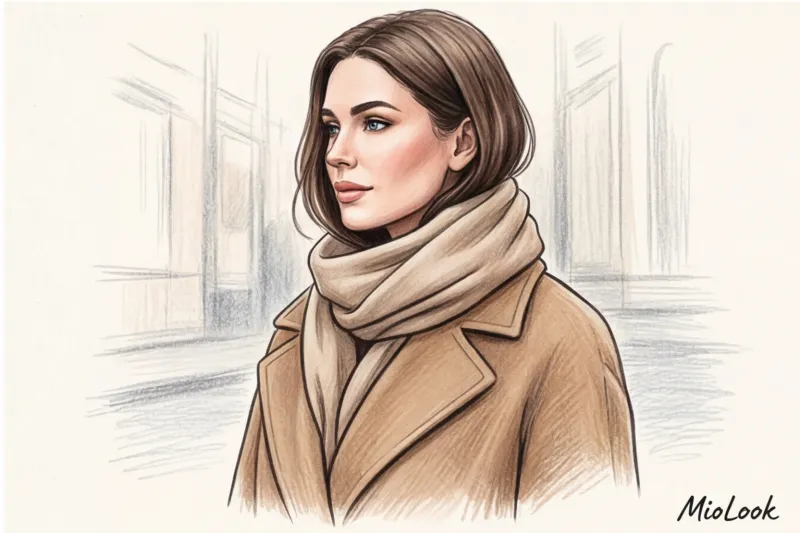
It was then that I was once again convinced: it is not enough to buy expensive outerwear. How to tie a scarf beautifully on a coat , determines the architecture of your entire silhouette. We've already discussed the principles of creating an accessory base in more detail in our The complete guide to essential hats and scarves , but today I want to delve into art sprezzatura — casual Italian elegance that visually increases the value of any set by thousands of euros.
Portrait Zone Architecture: Why the Beautiful Way You Tie a Scarf on Your Coat Changes Everything
In the first three seconds of meeting someone, their attention is focused exclusively on the portrait area: the face, neck, and shoulder line. A scarf in this area isn't just a piece of fabric for warmth. It's an architectural element. It can elongate the silhouette, highlight the skin tone, or, conversely, make the face look tired and the neck appear short.
According to the Lyst Index (2024) report on trends in the "quiet luxury" segment, status today is conveyed not through logos, but through the way fabrics hold their volume. Let's do the wardrobe math (cost-per-wear). A high-quality cashmere stole for €250, worn 100 days a year for four years, will cost you only €0.60 per occasion. A synthetic scarf for €30, which will pill within a month and irritate your skin, will cost you over €1.00 per occasion.
"Investing in a face-catching accessory yields the highest visual ROI (return on investment) in a wardrobe. One basic coat and three premium stoles are more effective than four mediocre coats"—that's my golden rule when working with clients.
The Biggest Styling Mistake: Why Complex Knots Cheapen Your Look
Have you ever noticed how Italian women on the streets of Milan manage to look luxurious even in the simplest black coat? Their secret lies in their refusal to try too hard. Let's debunk the main myth of the Russian Internet: "the more complex the knot, the more elegant." All these multi-layered braids in the form of "roses," "figure eights," "braids," and "ties" betray a provincial approach to wardrobe. They look contrived, old-fashioned, and desperately scream, "I tried so hard to dress up!"
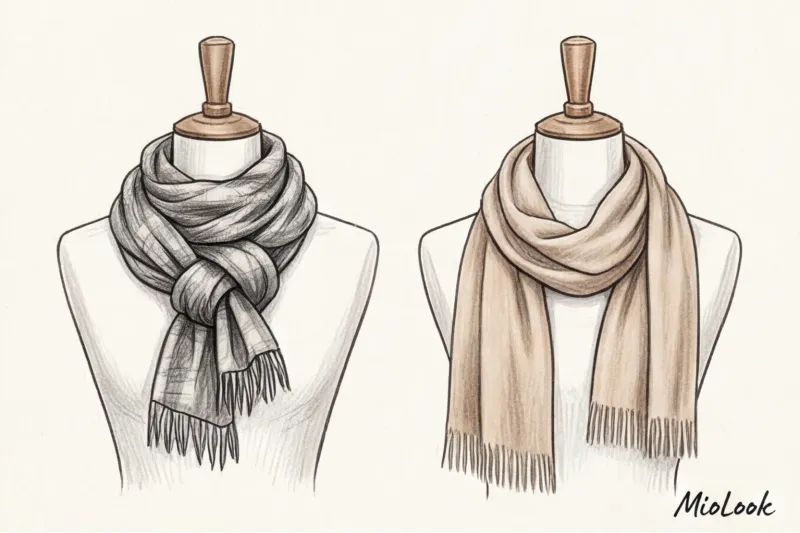
A tight, small knot visually shortens the neck, widens the jaw, and breaks the smooth line of the shoulder. In premium aesthetics, the rule of one accent applies: if the coat has a complex cut or texture, the scarf should be as simple as possible. True luxury lies in the simplicity and quality of the fabric itself, not in the skill of twisting it into origami.
Access to MioLook for €0.99 — one-time payment
A smart AI stylist will select the perfect everyday look and suggest accessories to complement your coat.
Get access — €0.99 oncePreparing the base: how to choose a scarf that will drape, not bunch up
During campaign shoots in Milan, I often observed stylists spend 40 minutes trying to achieve the "random" drape of a stole on a model. But this trick won't work if the fabric is stiff. The way the knot falls depends 80% on the composition and density.
Investment grade materials
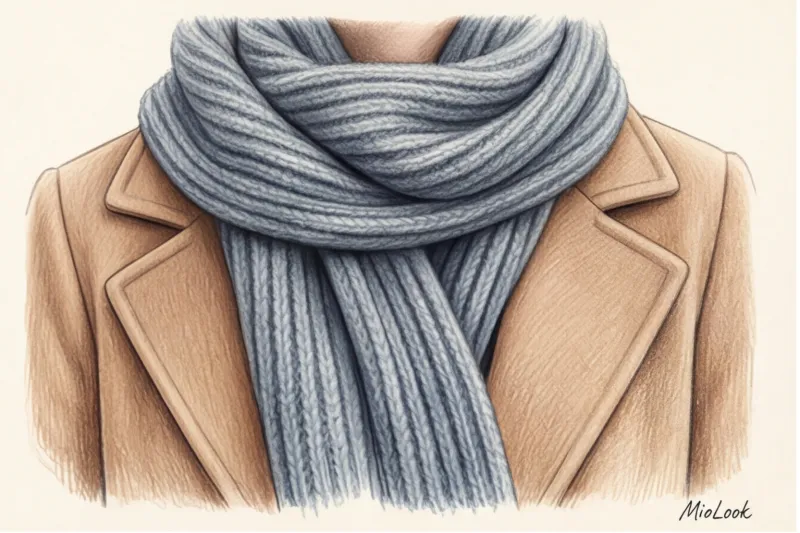
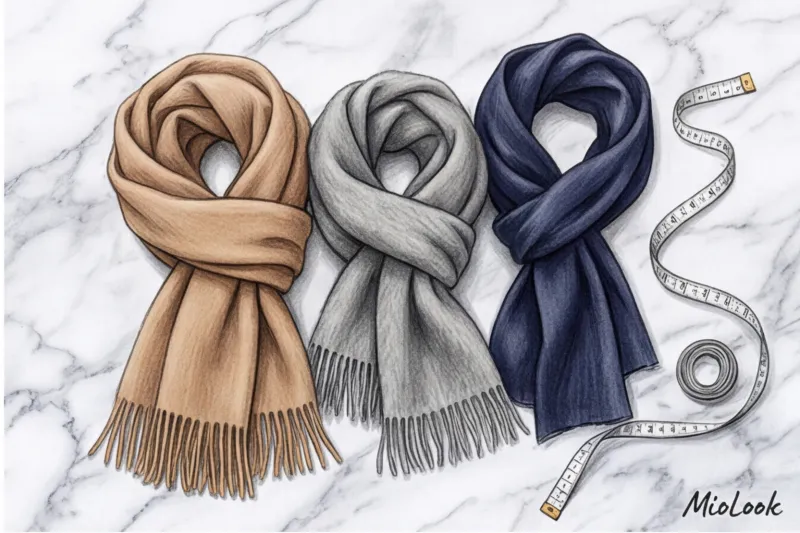
- Combed cashmere: Look for 2-ply (double twist, ideal for fall) or 4-ply (for winter). It provides incredible softness and warmth without the "snowman" effect.
- Silk-cashmere blends (usually 30/70): My favorite for business looks. Silk gives a refined shimmer and allows the fabric to flow, while cashmere provides warmth.
- Baby Alpaca: Indispensable when you need textured fluff and strict shape retention for voluminous oversized looks.
Geometry and Density: Size Matters
A scarf (narrow) and a stole (wide) serve different purposes. Ideal dimensions for stately, voluminous draperies start at 70x200 cm, and the weight of the item should be at least 250 grams, otherwise it will not fall gracefully under its own weight. Fair Limit: A scarf that is too short (less than 160 cm) cannot be tied beautifully over a voluminous coat - the ends will stick out in different directions, resembling a child's bib.
How to Tie a Scarf on a Coat: 5 Classy Ways for a Classic Cut
I recommend these methods for business dress codes (Business Formal and Business Casual), when you wear classic straight-cut coats or fitted silhouettes.
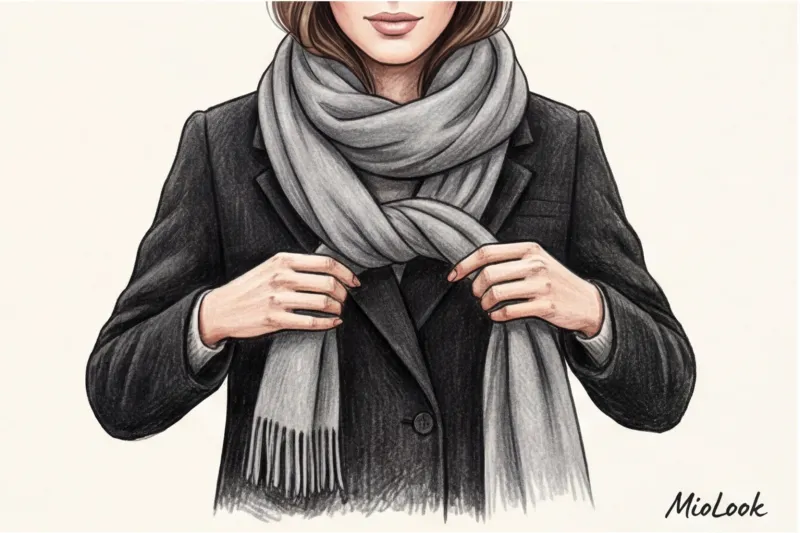
- The Parisian Knot is a classic remastered. Fold the scarf in half, wrap it around your neck, and thread the ends through the resulting loop. The main insider secret: never tighten the loop too tightly under your neck Drop the knot to collarbone level, creating a relaxed V-neckline.
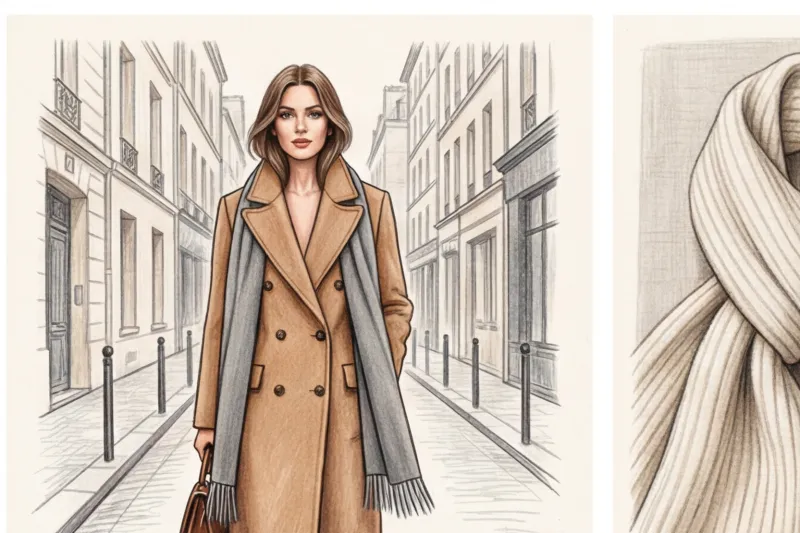
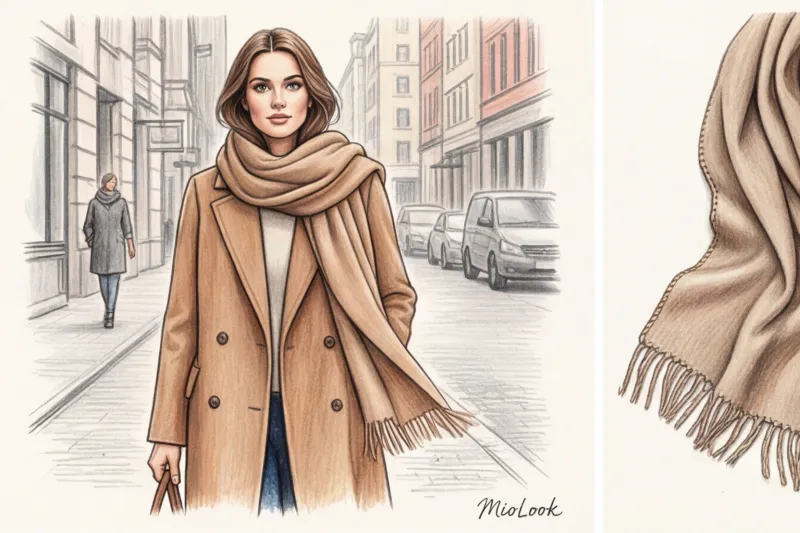
- "Milanese Drapery" (One turn). Simply wrap the scarf around your neck once. Leave the ends hanging loosely in front, but make them different lengths—a slight asymmetry always looks more valuable than perfect geometry.
- The Hidden Knot. Ideal for formal coats with an English collar, tie the scarf in a simple, soft knot at the chest, and tuck both ends neatly under the coat's lapels. Only the textured fabric at the neck remains exposed.
- Free Ascot. Drape the scarf around your neck. Wrap one end (the longer one) twice around the shorter one and thread it through the loop from top to bottom, as if tying a men's tie, but keep the design as loose as possible. Works great with fine cashmere-silk fabrics.
- "The Illusion of Snood". Take a long scarf and tie its ends together in a tiny knot. Place the resulting loop around your neck, twist it into a figure eight, and then slip the second loop over it. Tuck the knot under the folds at the back. This ensures a snug fit with no hanging elements.
Your perfect look starts here
Digitize your accessories and coats with MioLook. Artificial intelligence will help you create flawless combinations for every day.
Get access — €0.99 onceHow to Tie a Voluminous Stole: 5 Ways for an Oversized Coat
Wide stoles work brilliantly with the proportions of oversized clothing. They create additional vertical lines that elongate the height and slim the figure.
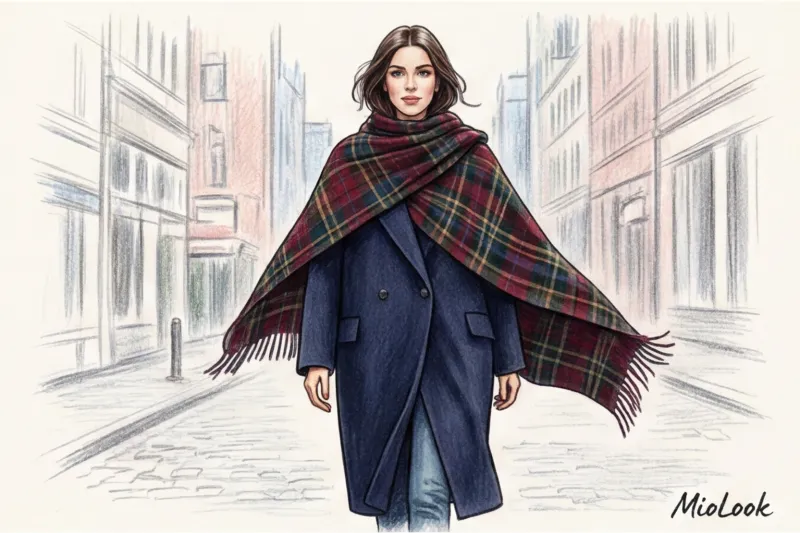
- "Asymmetrical cape". Unfold the stole. Drape it over your shoulders so that one end is significantly longer. Casually drape this longer end over the opposite shoulder. Stylist's secret: To prevent it from slipping down in gusts of wind, pin it from the inside to the shoulder seam of the coat with a hidden safety pin.
- The Belted Drape. An architectural technique beloved at Fashion Week. Drape a stole around your neck, letting the two wide ends hang down your body over your unbuttoned (or buttoned) coat. Place a leather belt over the stole, securing it at your waist. You'll instantly achieve an hourglass silhouette over a straight-leg dress.
- “The Waterfall”. Leave one end of the stole short. Wrap the long end around your neck once, then grab it by the top inner corner and tuck that corner into the resulting loop at your neck. The fabric will fall across your chest in luxurious, wide folds, resembling a cascade.
- "Relaxed Triangle". Fold the stole diagonally (if it's square) or simply grab one corner and tie the ends back, leaving a massive triangle across your chest. Cross the ends at the back and bring them forward, letting them hang loosely underneath the triangle. This is an absolute street style hit for 2024.
- "Drapery on the shoulders." You don't tie anything at all. You simply place the stole over the coat collar, letting it hang in wide stripes along the lapels. This elongates the silhouette and adds movement to your look as you walk.
The collar decides everything: how to choose a knot to suit the style of your coat
The main rule of a professional stylist: the line of your scarf should never clash with the design of your coat's lapels. They should dance together.
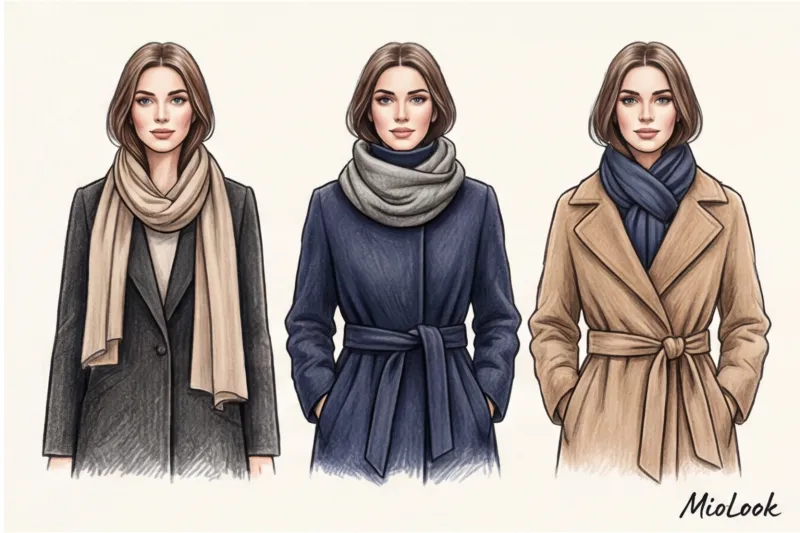
- English collar (deep V-neck): Requires filling empty space. Your best bet is voluminous knots tucked into the lapel (like the Hidden Knot or Waterfall Knot). Leaving your neck open and draping the ends over your lapels will create a "cut" silhouette.
- Stand-up collar: A self-sufficient element. The scarf is needed only for warmth; it's tied over the neckline without disturbing it. Thin cashmere scarves, either a single wrap or a Parisian loop, are ideal.
- Wrap coat: The most relaxed shape that doesn't tolerate tight knots. Choose the "Asymmetrical Cape" or simply drape a stole under your belt.
Checklist: 5 Steps to Perfect Draping Before You Go Out
I spied this insider checklist on set. It's exactly the micro-movements the assistants make before the "camera, action" command.
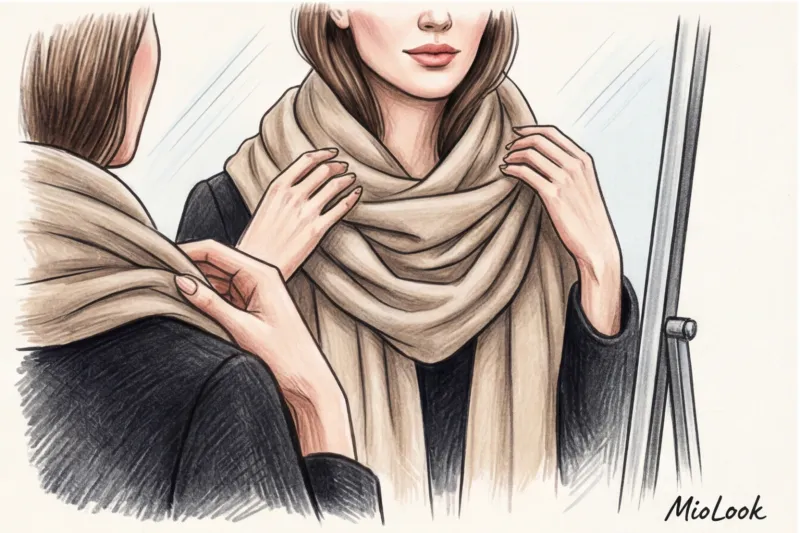
- 1. Shake the fabric: Before putting on the stole, grab it by the ends and shake it vigorously. This introduces air between the cashmere fibers, creating a fuller knot.
- 2. Check symmetry: And immediately ruin it. The slight asymmetry of the ends makes the look lively and dynamic.
- 3. Free your neck: After tying the knot, insert two fingers between your neck and the scarf, pulling the fabric slightly. Leave 2-3 cm of air.
- 4. Straighten the ends: Make sure the fringe is not snagged or tangled.
- 5. Fix: If the fabric is slippery (silk-cashmere), use a hidden pin on the shoulder. Don't adjust the knot every 5 minutes—it shows insecurity.
Investing in the Portrait Zone: Instead of Withdrawal
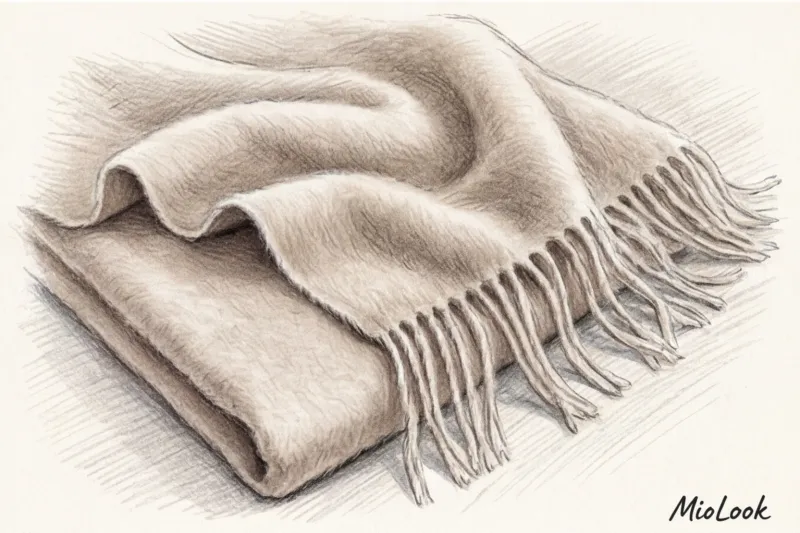
A beautifully tied scarf is a sign of your taste, your attitude toward yourself, and your comfort. You don't have to buy a new coat every season to look fresh. Start collecting a capsule collection of 3-4 premium stoles (camel, graphite, off-white, and one sophisticated accent shade), and your winter wardrobe will be transformed beyond recognition.
Don't try to create complicated braids - let the quality fabric speak for itself. And to MioLook smart wardrobe algorithms We've helped you create dozens of new combinations. Simply take a photo of your coats and scarves and upload them to the app. Artificial intelligence will suggest styles you might not have even considered.