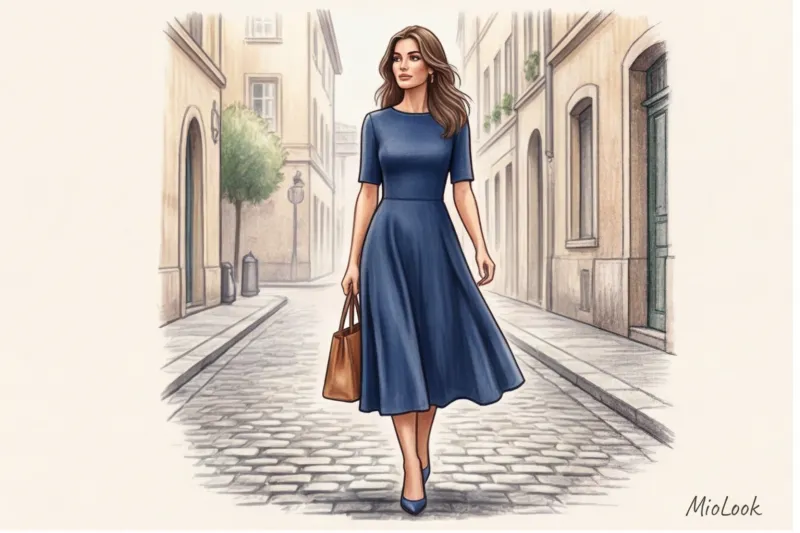
Do you know why a basic €40 cotton dress on a Parisian influencer looks like exclusive couture, while a €1,500 designer outfit on the red carpet sometimes resembles a sad sack? The answer lies not in the brand, not in the price, and not even in the body type. The secret lies in the architecture of the fit. Girls often Google... How to take in the sides of a dress , hoping to solve the problem of a baggy silhouette in five minutes, but instead of the perfect hourglass figure, they get a crooked armhole and a flat chest.
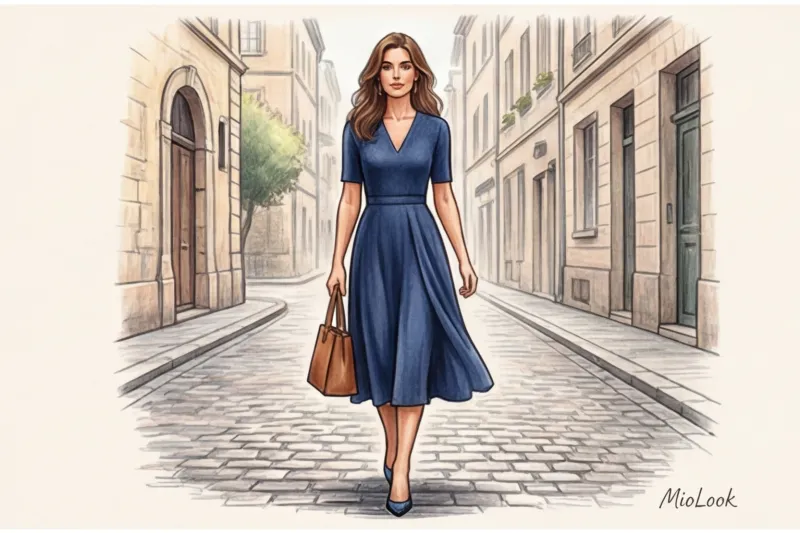
We talked about the architecture of the cut in more detail in our the complete guide to fitting clothes to your body , but today I want to address a specific, common pain point: how to properly fit a garment so that it looks expensive.
Why a Perfect Dress Fit Is More Important Than a Brand Tag
My personal shopping experience has long boiled down to a simple rule: 90% of my mass-market dresses go through the hands of a tailor. And believe me, this visually increases their price several times over. Factory patterns are sewn for an average mannequin (usually 168 cm tall, with a B cup bust and a standard back arch). But your body is a unique architecture.
According to a 2024 study by the analytical agency WGSN, less than 10% of women fit into standard brand sizes without creases, folds, or excessive tension. Clothes should adapt to you, not the other way around.
There is a wonderful term in Italian stylistics - sprezzatura (sprezzatura), which signifies deliberate yet elegant casualness. This effect is impossible if you're constantly tugging at your hem, adjusting a slipping shoulder, or hiding a pouch at the small of your back. A well-fitted dress changes the very biomechanics of your movements: your back straightens, and you project confidence.
Your perfect look starts here
Join thousands of users who look flawless every day with MioLook.
Get access — €0.99 onceHow to take in the sides of a dress: the main mistake everyone makes
"If it's too big, just tuck the fabric into the side seams." This destructive myth is passed down from generation to generation. As an image consultant, I regularly see the consequences of this advice.
One day, a client named Anna came to me wanting to throw out a stunning wool sheath dress by Massimo Dutti. The dress fit perfectly through the hips but bunched up at the waist. Anna took it to the nearest clothing store with the request that they "take it in at the sides." What happened? The side seam had slipped forward, the armholes were digging painfully into her armpits, and the fabric across her chest had stretched so tightly, visually flattening her bust.
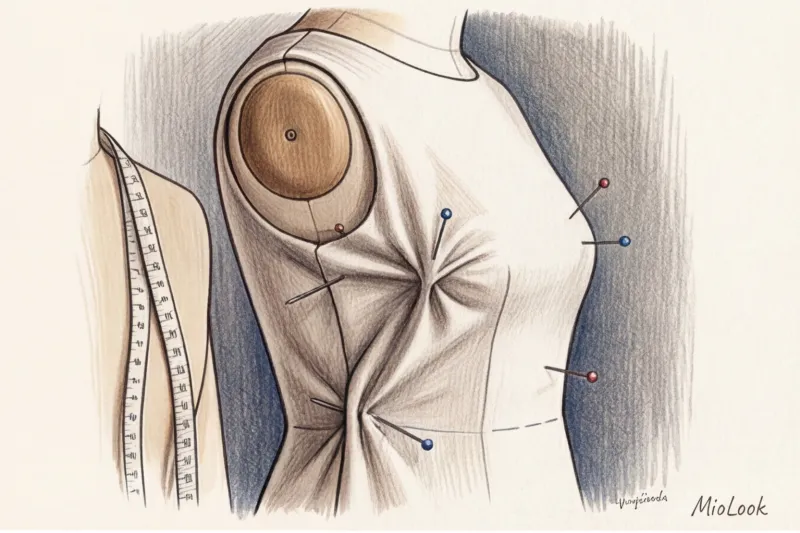
The golden rule for stylists and designers: the side seam should always fall strictly perpendicular to the floor. If it creeps forward or backward, the balance of the garment is off.
By removing all excess volume exclusively from the sides, you ignore the fact that the human body is 3D. Excess tissue is most often found not on the sides, but on the back (in the lumbar arch) or under the bust. Before reaching for pins, you need to honestly assess where exactly the tissue comes away from the body.
Anatomy of the silhouette: darts, reliefs and correction of proportions
Clothing is more than just a piece of fabric. It is a system of geometric lines that guide the observer's gaze. Speaking at the 2023 Bespoke Symposium, leading designers emphasized that verticals are slimming, diagonals create movement, and the correct placement of darts acts as a visual lipolytic.
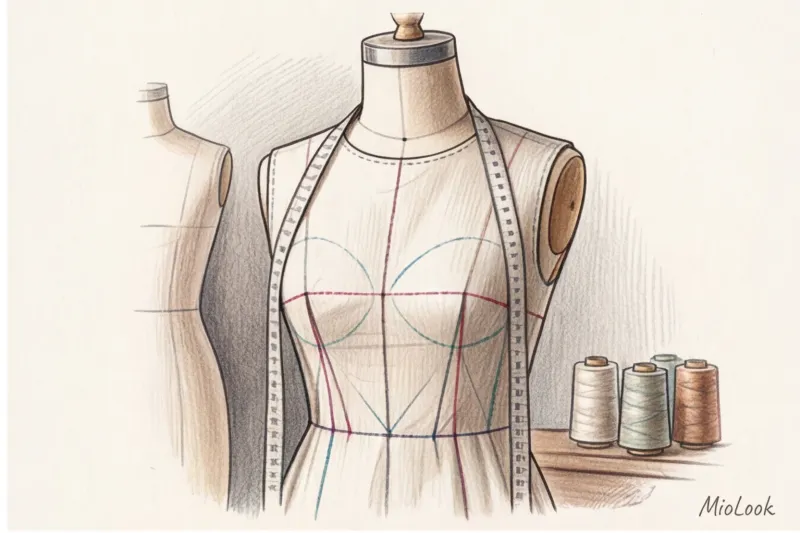
Bust and waist darts: sculpting your body
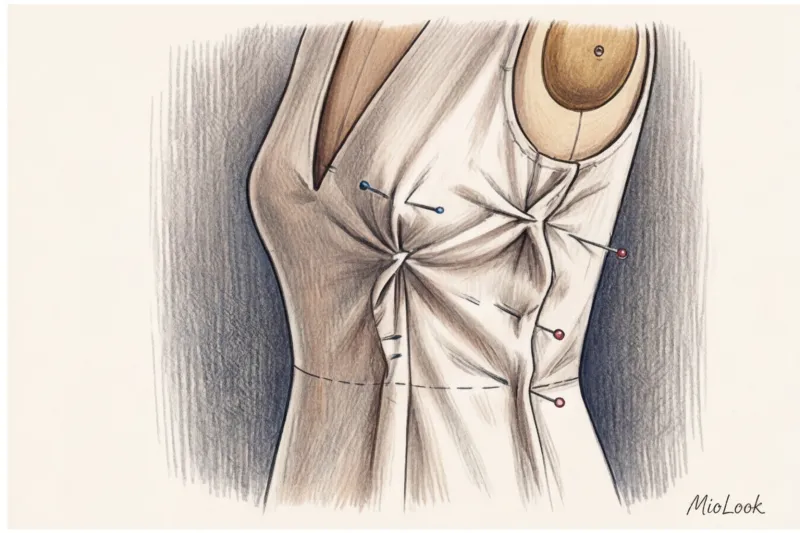
The bust dart ensures that the fabric flows smoothly around the bust, avoiding gaps at the armhole. If you're changing your dress size, sometimes moving the top of this dart by 1-2 cm is enough to visually lift the bust.
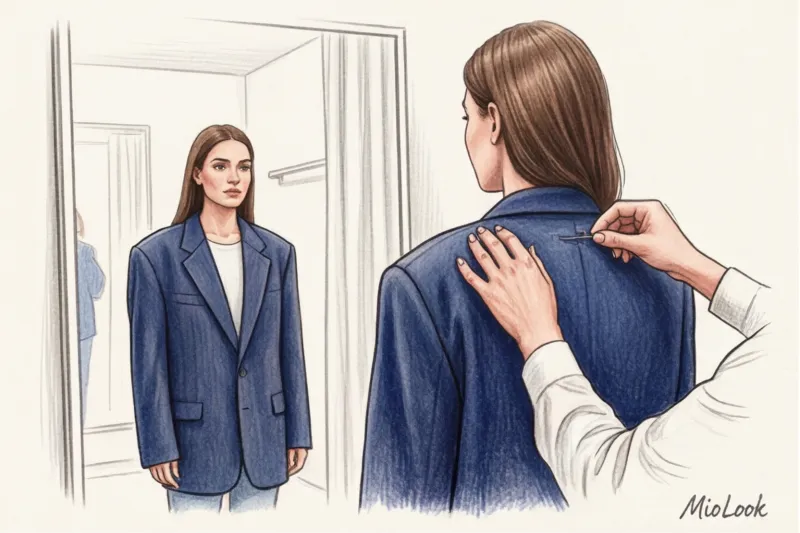
But the main heroes of correction are the waist darts (especially the back ones). If you have a pronounced lordosis (lower back arch) or a large buttock area, any straight dress will hang down your back like a "bubble." Don't touch the sides! Create two vertical darts at the back. This will instantly press the fabric against your lower back and create the illusion of a sculpted waist.
Raised seams ("Princess") for a perfect fit
A relief seam differs from a dart in that it runs the entire length of the garment (usually from the shoulder or armhole to the hem). Dresses with relief seams are an absolute investment if you have a full bust or a waist-to-hip difference of more than 25 cm.
Unlike a rigid dart, a relief dart allows the tailor to take in fabric literally millimeter by millimeter in different areas of the figure, creating a seamless, fluid fit. If you see a dress with relief in a store, try it on—it's the easiest to adjust.
Step-by-step instructions: how to mark a dress before taking it in
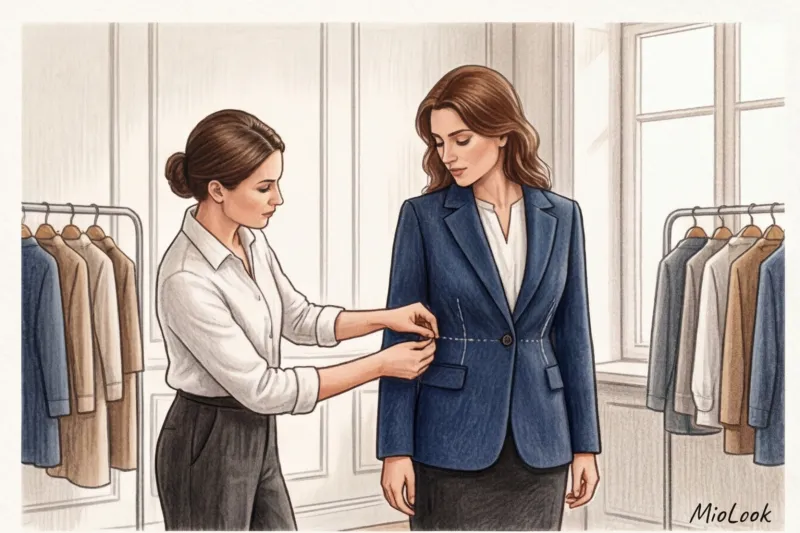
Even if you're taking the item to a tailor, I recommend doing a preliminary marking at home, in front of your mirror. This will prevent you from falling into the "it seemed fine in the fitting room" syndrome.
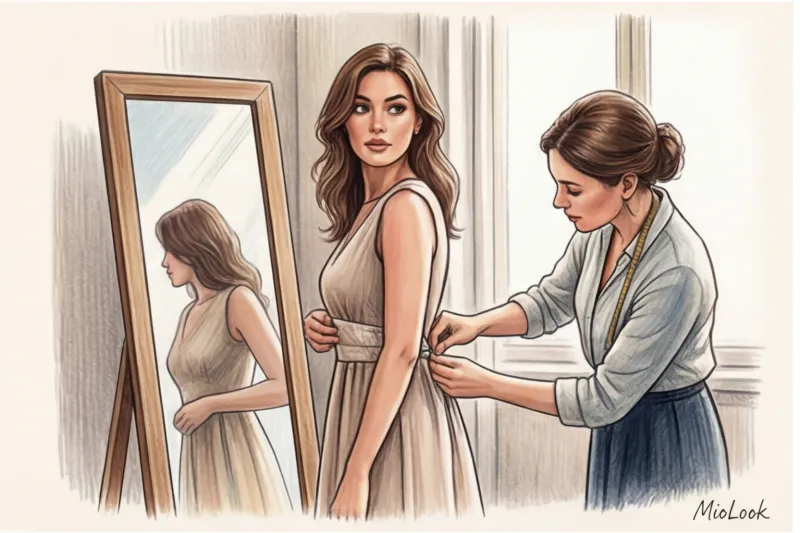
- Preparing the foundation. Wear the same underwear you'll be wearing with your dress. A push-up bra or a shapewear bodysuit can change your waist by 2-4 cm. Shoes are also important—heels can alter your pelvic alignment and back arch.
- The "exhale and sit down" rule. The biggest mistake beginners make is pinning the fabric while standing in front of a mirror, with their stomach sucked in as much as possible. Be sure to sit on a chair! Sitting increases your waist size.
- Pinch technique. Pin the pins symmetrically from top to bottom. Check for ease of fit: your finger pinch at the waist should allow 1.5–2 cm of fabric to fit (unless it's a super-stretchy knit). If the fabric is too tight, you won't be able to dine in the dress.
Secret from the film sets: Over 12 years of working as a stylist on shoots, I've become accustomed to always pinning fabric with the seam facing outward (right on the front side), not from the inside. This allows me to immediately see the future silhouette and assess whether the dress's geometry has been distorted.
Fabric Matters: What Can Be Easily Adjusted and What's Best Left Untouched
Not every dress is worth the hassle. Understanding materials science (thanks to my design background) will save you a ton of time and money.
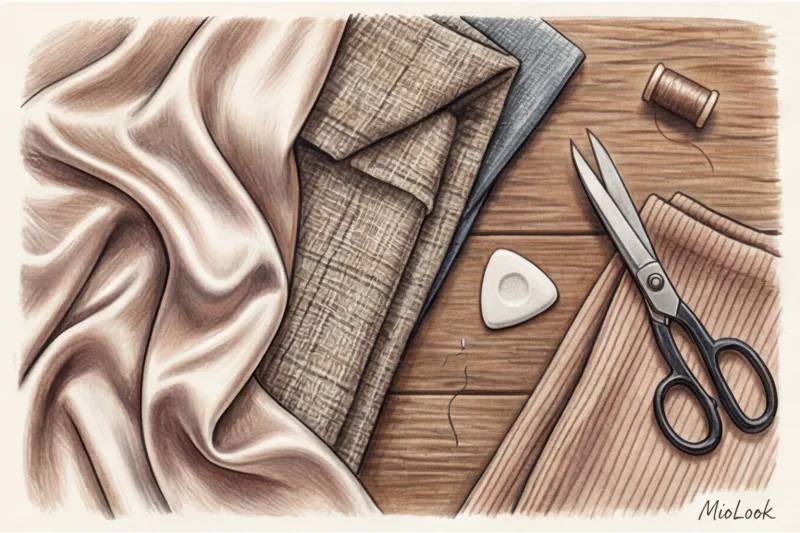
Ideal candidates for customization:
- Cotton (especially poplin with a density of 180 g/m²).
- Thick linen.
- Suit wool or viscose blend.
These fabrics hold their shape, the seams on them are easy to unravel and do not leave holes from old stitching.
When the advice does NOT work (limitations):
Ribbed knits are the most challenging. When sewn in at the sides, the rhythm of the stripes is disrupted—they can begin to converge at an odd angle, creating the effect of a lopsided belly. The same applies to fabrics with bold geometric prints (such as large checkered patterns). If you tuck the fabric into a dart, the checkered pattern will break, immediately revealing the craftsmanship.
And a definite no-no for home experiments are bias-cut silk slip dresses. The warp thread runs at a 45-degree angle. If you try to tailor such a dress along the straight side seam, it will fold over and lose its fluid drape forever. This work is entrusted only to premium craftsmen.
Checklist: take it to a studio or do it yourself?
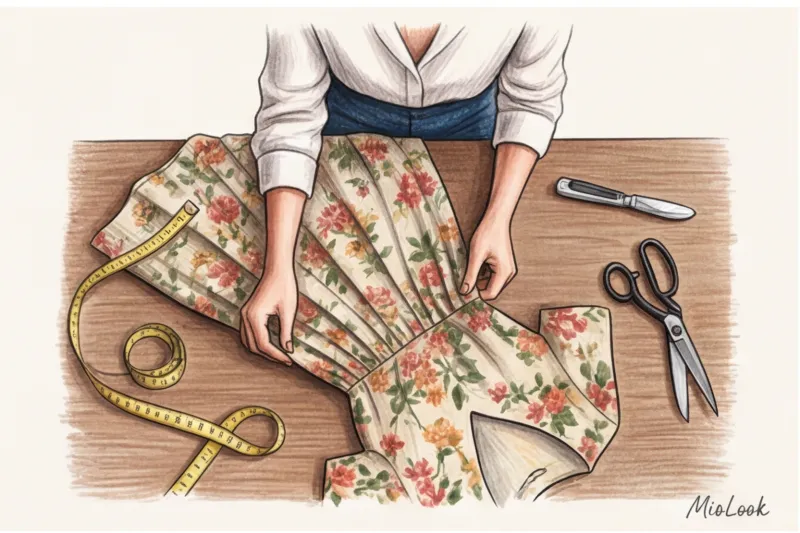
I'm all for conscious consumption and DIY skills, but let's face it. Shortening the hem or taking in the straight side seam on a summer cotton sundress is possible with a home sewing machine.
But to you a professional is absolutely needed , if the dress contains:
- Lining (especially when sewn to the hem).
- A hidden zipper sewn into the side seam (it will have to be ripped out and sewn back in).
- Complex sleeve cut.
- The need to change the shoulder balance.
Let's do the math on style. The average cost of a basic dress alteration at a tailor is around €15-€20. Many people shy away from this expense, thinking, "Why pay €20 when the dress from H&M cost €50? I'd rather buy a new one." It's a trap. You're buying a new dress for €60-€80, which again it doesn't fit perfectly.
By investing €20 in customizing an old dress, you get a piece that looks like it was tailored to your exact measurements. In my experience, after such customization, the frequency of wearing the item increases by 300%—you'll instantly reach for something that makes you look flawless.
Smart Wardrobe: How MioLook Helps You Find Your Perfect Silhouettes
Fitting is a great tool, but it's even better to understand from the start which styles and patterns suit your body structure to minimize trips to the tailor.
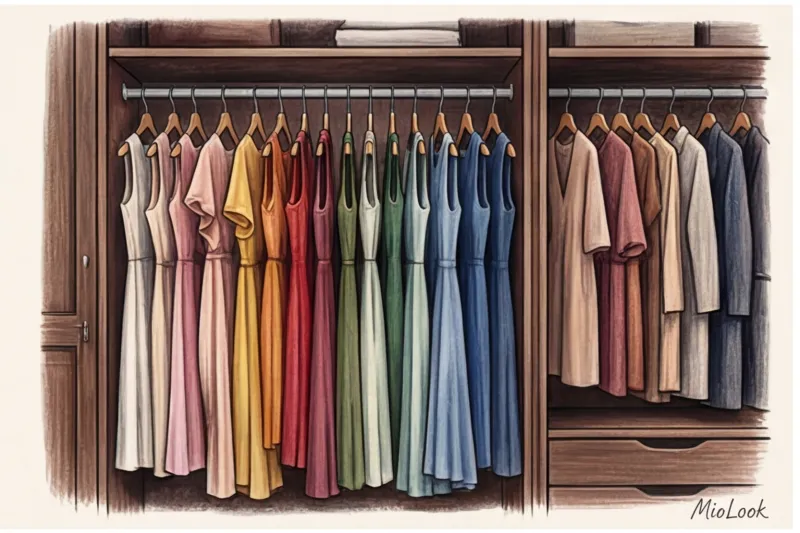
Have you ever noticed that COS patterns fit you perfectly, while Zara always requires a waist adjustment? Keeping these statistics in mind is difficult. This is where the app's digitizing feature comes in handy. MioLook By uploading your successful and well-fitted dresses to the virtual closet, you give the AI stylist the opportunity to analyze your wardrobe.
Artificial intelligence MioLook It analyzes the proportions of the items you wear most often (after all, we wear what fits best) and helps you plan new purchases so they immediately suit your style and figure. It's the same analytical approach used by professional image consultants, only now it's available on your smartphone.
Don't be afraid to tailor clothes to suit your needs. Factory patterns are just a rough draft. Only you, with the help of clever darts or a good tailor, can create the final version of your personal style.