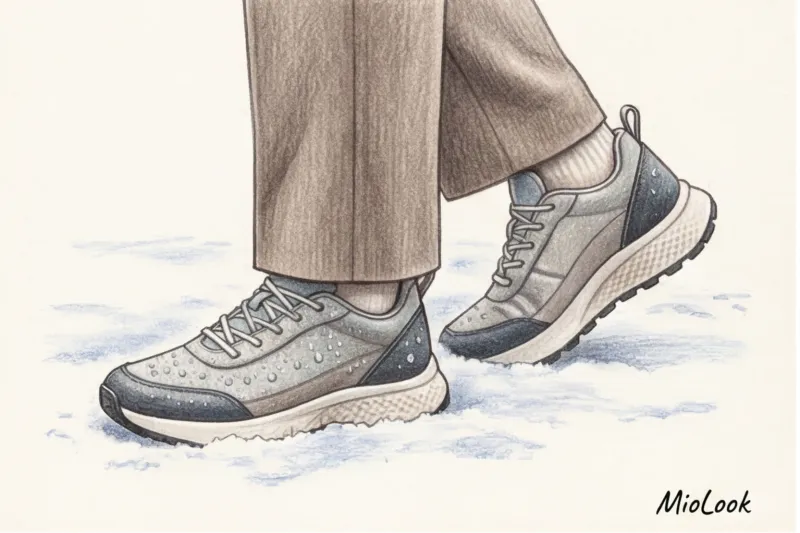
Last December, my client, the creative director of an IT company, exclaimed angrily, "Sofia, I bought high-tech winter sneakers for 400 euros, but my feet are freezing even at -5!" The problem wasn't the brand, the thickness of the sole, or my individual sensitivity to cold. The entire physics of warmth was shattered by one tiny detail—ordinary cotton socks.
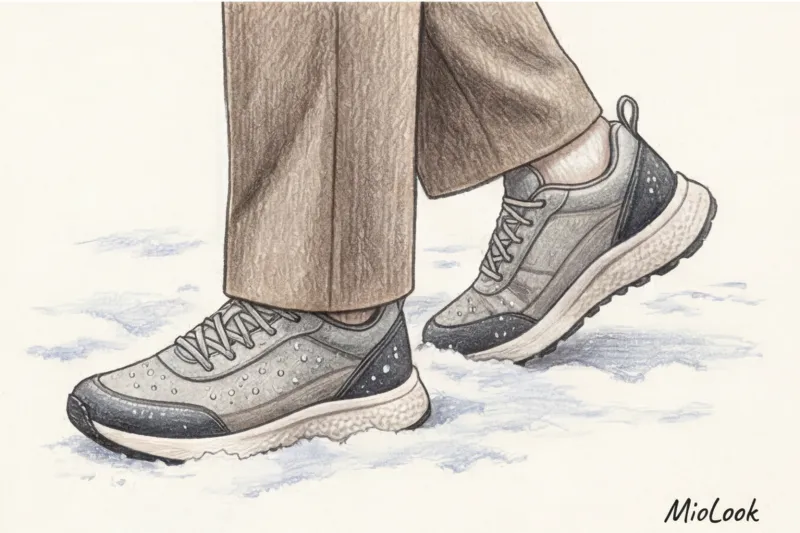
Today the question is, What to wear with women's winter sneakers , down boots, and moon boots, go far beyond the banal "put on a down jacket." Hyper-voluminous athletic footwear has become a fully-fledged element of urban smart-casual. We've already covered the evolution of this aesthetic in more detail in our A complete guide to winter sports style and sport-chic looks for 2024.
In this article, we'll explore the architecture of chunky shoe silhouettes and the physics of modern materials so you can integrate sporty chic into your wardrobe with elegance and without the "I just got off the ski slopes" effect.
The Anatomy of Heat: Why Tech Shoes Are Displacing Leather Classics
The gorpcore aesthetic (from GORP, an acronym for "good ol' raisins and peanuts," a traditional backpacker snack) has transformed outdoor gear into the new urban luxury. But behind the fashionable façade lies rugged textile engineering.
According to the report Textile Exchange By 2024, more than 60% of premium winter footwear brands will have switched entirely to insulation made from recycled PET plastic. Why? Synthetic microfibers (such as PrimaLoft or Thinsulate) mimic the structure of goose down, but unlike natural fur, they don't collapse under the weight of your foot and continue to provide warmth even when wet.
The second critical factor is the sole. Over 12 years of working with winter wardrobes, I've developed an ironclad rule: the thickness of the sole is more important than the amount of fur inside. Classic rubber hardens in the cold and instantly conducts cold from the asphalt to the foot. A dense EVA (ethylene vinyl acetate) sole, filled with micro-air bubbles, acts as a thermal insulator, retaining 40% more heat.
The Biggest Mistake: Why You're Cold Even in Expensive Moon Rovers
Let's get back to my client with the €400 sneakers. The biggest myth about winter footwear is that "shoes are supposed to keep you warm." Shoes don't generate heat; they function solely as a thermos, retaining your body heat.
If you wear cotton socks, this thermos will break. Cotton is a hydrophilic material. It absorbs moisture (sweat) and holds it up to 27 times its own weight. In freezing temperatures, damp cotton instantly cools, creating a "cold compress" effect right on your foot. The Gore-Tex membrane in sneakers simply doesn't have time to wick away this moisture.
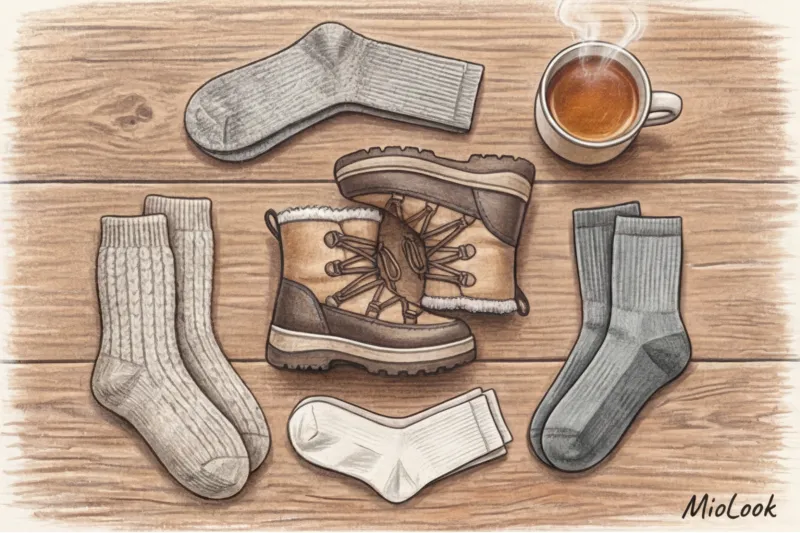
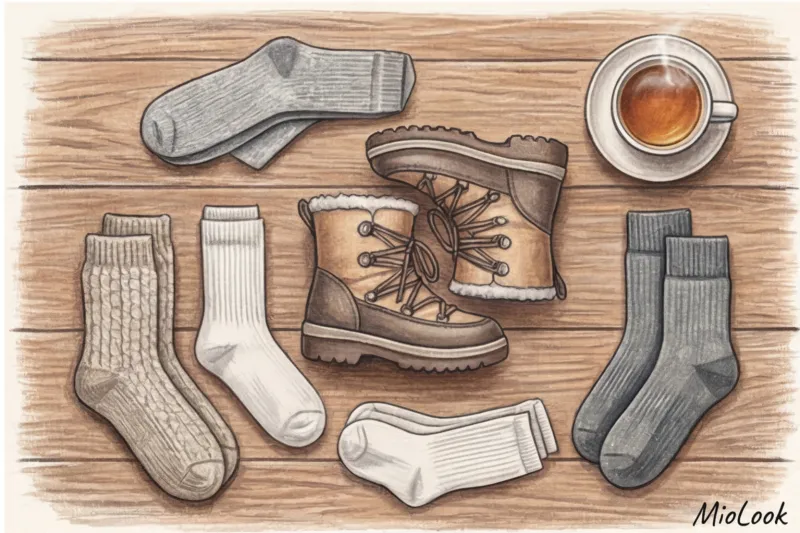
"To ensure that expensive membrane footwear works, follow the base layer rule: wear only socks made of merino wool or high-tech synthetics (such as Coolmax fiber). They wick moisture away from the skin, keeping your feet dry and warm."
Your perfect look starts here
Join thousands of users who look flawless every day with MioLook. A smart AI stylist will help you create a capsule wardrobe with any shoe.
Get access — €0.99 onceWhat to wear with women's winter sneakers: rules of urban proportions
Chunky athletic shoes have a huge visual weight. Pair them with a thin, fitted down jacket and you'll create a Mickey Mouse silhouette—oversized feet against a narrow torso.
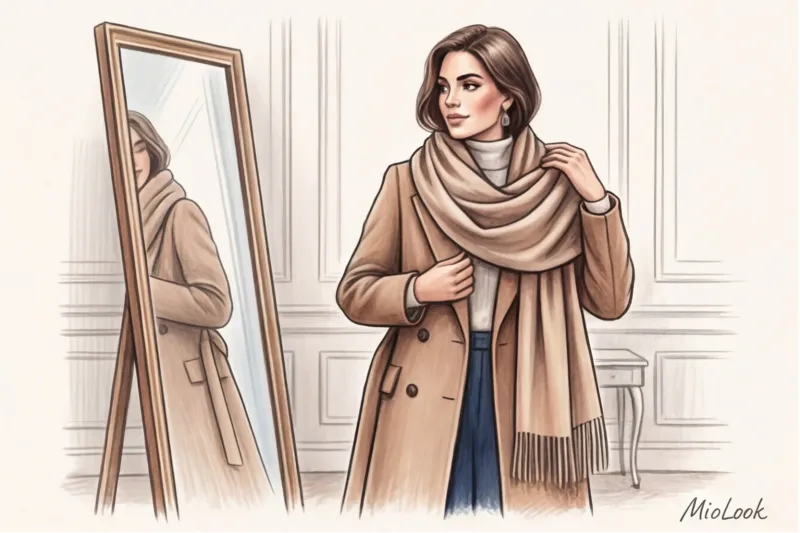
A professional styling technique is called the "inverted triangle rule." A massive base at the bottom requires support at the top. This could be an exaggeratedly voluminous scarf, a structured, flared shoulder on a coat, or layering (a turtleneck, a heavy shirt, and a jacket).
To visually lengthen your legs, use vertical color: match your sneakers to your trousers or thick tights. Black sneakers with black leggings will add a few centimeters of height, while white sneakers with black bottoms will dramatically cut into your silhouette.
Smart-casual integration: mix with coats and knitwear
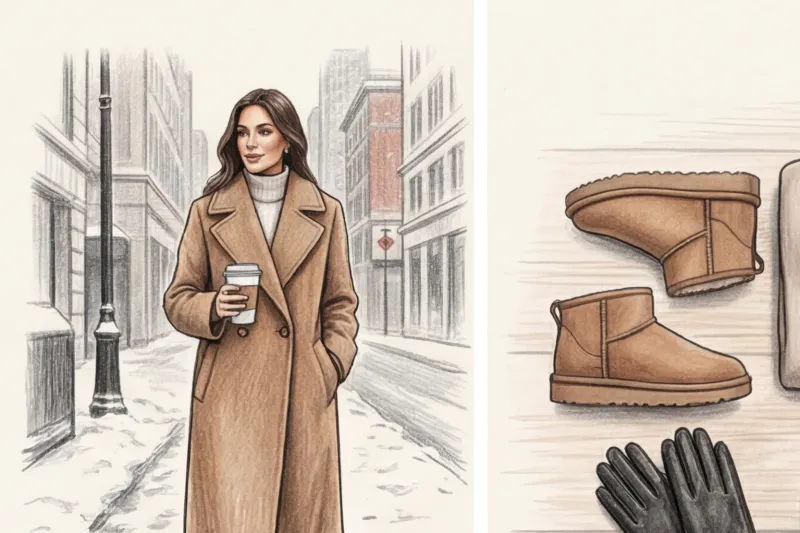
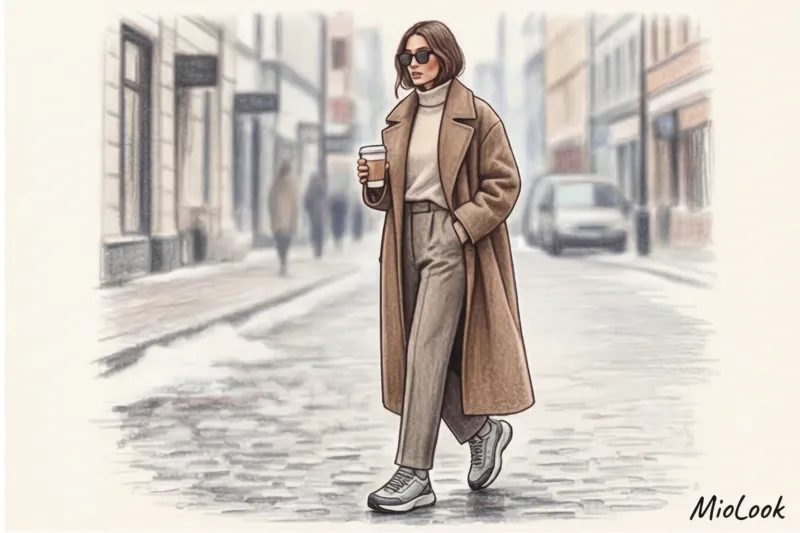
The most delicious looks are built on contrasting styles. The sporty dynamism of sneakers is perfectly balanced by the clean lines of a classic double-breasted maxi coat. This is a great technique that works flawlessly when choosing business clothes for women over 40 , who want to look prestigious, but not old-fashioned.
Heavyweight knit suits made of cashmere or wool blends provide the perfect "bridge" between sport and elegance. Pay attention to the length of your trousers: full-length palazzos (creating a slight, casual pleat above the tongue) or tailored straight trousers with a crease that ends exactly a millimeter from the edge of the shoe look best with winter sneakers.
By the way, in the app MioLook The smart wardrobe feature allows you to visualize in advance how the length of your favorite pants will match the height of your new sneakers, saving hours of morning preparation.
Pillow Boots: How to Style Quilted Boots Without Looking Like a Skier
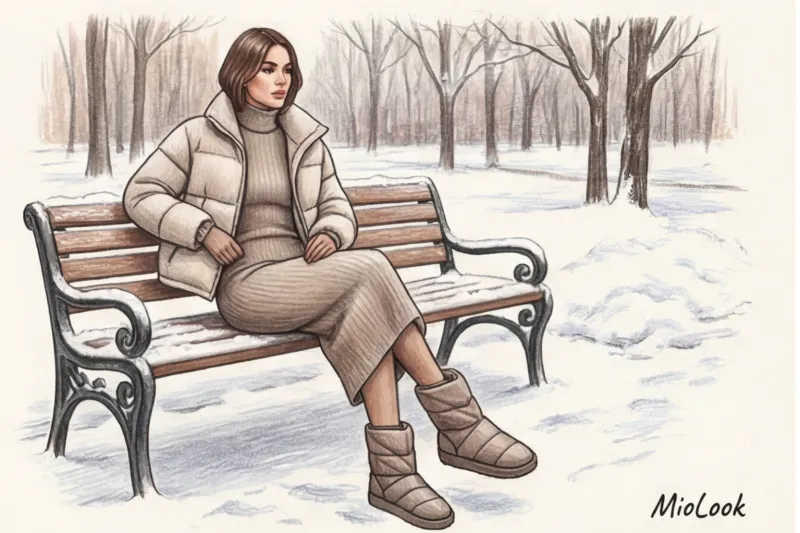
Pillow boots are the pinnacle of comfort, but they also pose the danger of a total look. The worst thing you can do is wear nylon quilted boots with an equally shiny nylon down jacket. You'll look like you're wrapped in a sleeping bag.
The secret to styling puffer boots is a bold play of textures. Combine the matte nylon of the shoe with materials that have contrasting characteristics: smooth leather, rugged, heavyweight denim (14 oz and up), or heavy wool drape.
For the city, I always recommend choosing mid-rise styles (just above the ankle). Knee-high puffers visually cut into the widest part of your calves and severely limit your outerwear options.
Access to MioLook for €0.99 — one-time payment
A smart AI stylist will select the perfect look based on your measurements and the items in your closet.
Get access — €0.99 onceMoon Boots: A Guide to Taming Hypervolume
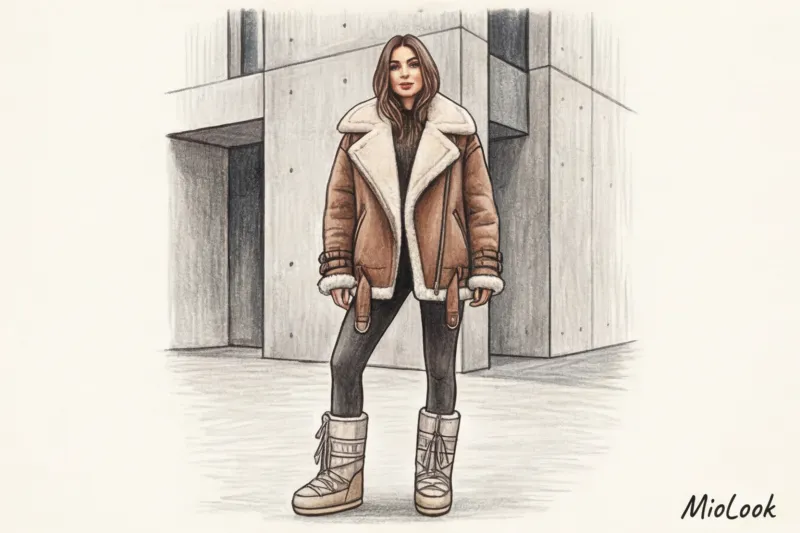
And now for a counterintuitive insight that often sparks controversy. Many women, having bought moon boots, are intimidated by their size and try to "hide" this bulkiness under baggy pants or flared jeans. The result? The figure becomes bulky, rectangular, and shapeless.
Hypervolume shouldn't be hidden, but rather emphasized through contrast. The "pencil in a glass" rule applies here.
Pair moon boots exclusively with form-fitting bottoms: thermal leggings, thick tights, or skinny jeans. The slender line of the leg emerging from the massive "space" boot makes the figure appear fragile and graceful. To balance this bottom, layer it with a cropped aviator shearling coat, a chunky knit sweater, or an oversized puffer jacket.
Eco-friendly Footprint: How to Choose a Quality Pair for Multi-Season Use
Fast-fashion brands have mastered the art of copying high-tech footwear designs, but physics can't be fooled. Cheap leatherette cracks at -10°C, and poorly bonded soles peel off after the first contact with chemicals.
When investing in winter athletic footwear, look for sustainable production certifications (e.g. Bluesign ). Eco-friendly brands today use recycled ocean plastic to create durable nylon that lasts for years.
But even the most expensive membrane will wear out within one season if not properly cared for. Remember: technical footwear should never be dried on a radiator—the membrane pores will melt and permanently lose their ability to breathe. Furthermore, the factory water-repellent finish (DWR) wears off over time. It must be restored with eco-friendly water-based sprays (fluorocarbon/PFC-free) every 3-4 weeks of active wear.
Stylist Checklist: 5 Golden Rules of Winter Sporty Chic
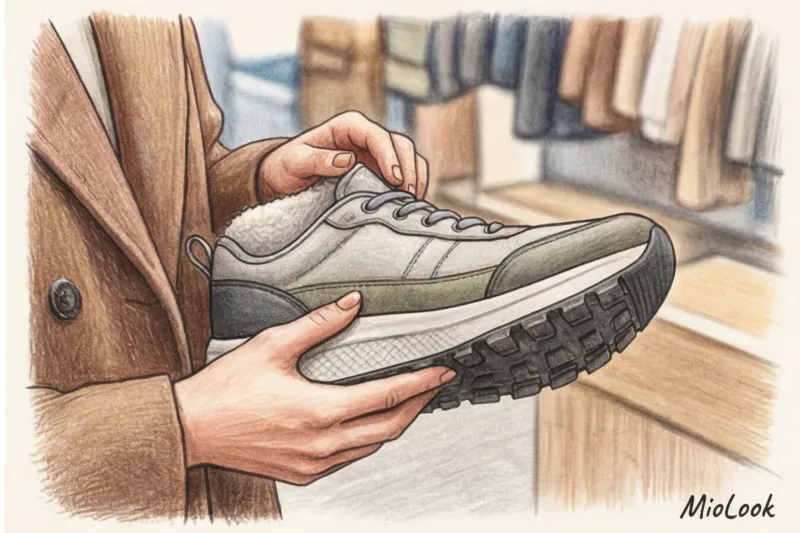
Before you go shopping or do a wardrobe overhaul, check out this checklist. It will save you from bad purchases and cold feet:
- Air gap: Winter athletic shoes should be exactly a half size or a size larger than your summer boots. If the boot fits too tightly, your foot will freeze, even with arctic insulation.
- Sock audit: Avoid cotton in winter. Stick to merino wool (at least 60% wool content) or thermal socks.
- Contrast of styles: Don't wear athletic shoes with tracksuits outside the park. Pair them with classic tailoring (coats, jackets, tailored trousers).
- Contrast of volumes: The more massive the shoes (moon boots, thick down boots), the narrower the bottom (leggings) should be and the more voluminous the top.
- Invest in technology, not logos: When buying, study the composition of the sole (look for EVA and deep tread) and the type of insulation (PrimaLoft, Thinsulate), and not the size of the logo on the side.
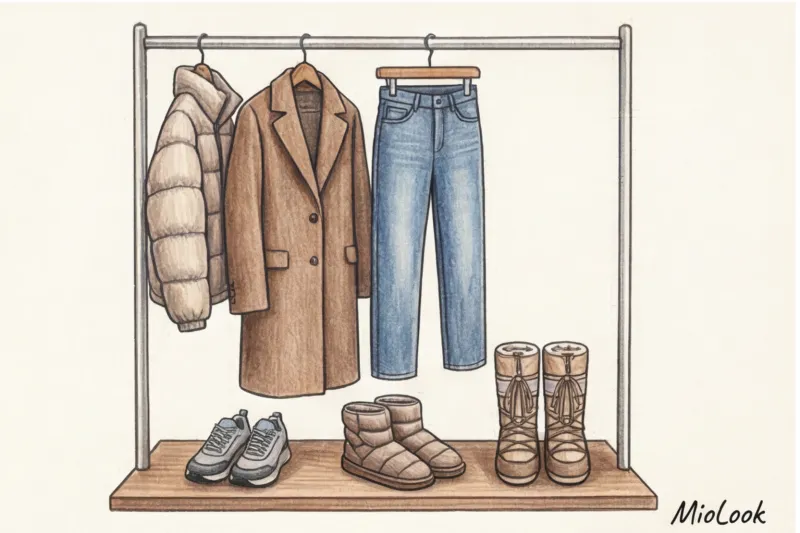
Winter athletic footwear in the city is no longer a compromise between the desire to stay warm and the need to look stylish. By understanding the physics of materials and the laws of visual proportions, you can transform utilitarian duvets or chunky sneakers into the most striking accent of your smart-casual winter look. The key is to embrace contrasts and ditch the cotton socks in freezing temperatures.