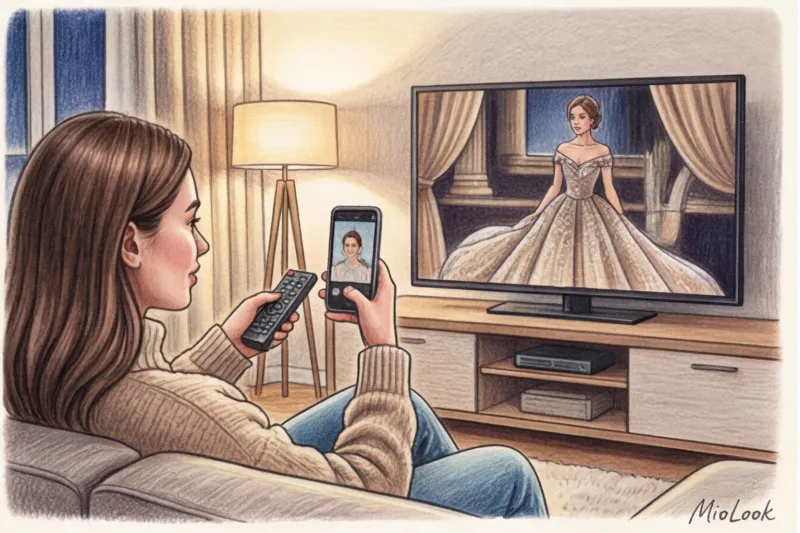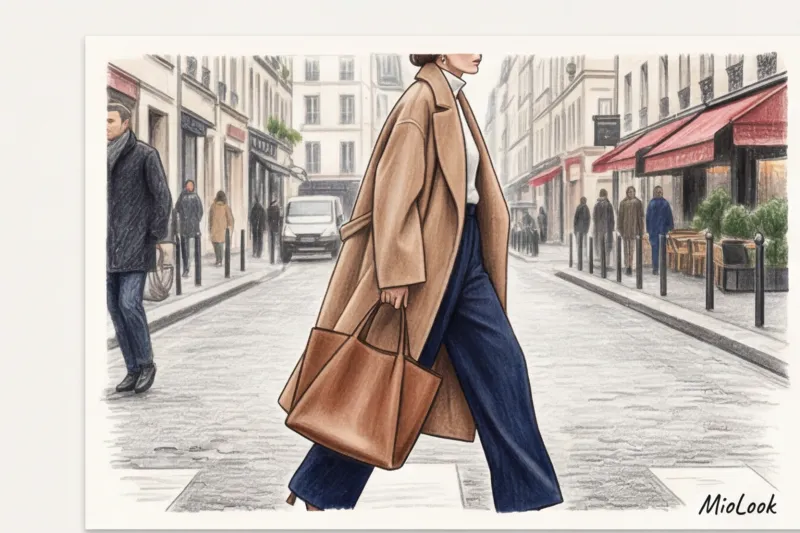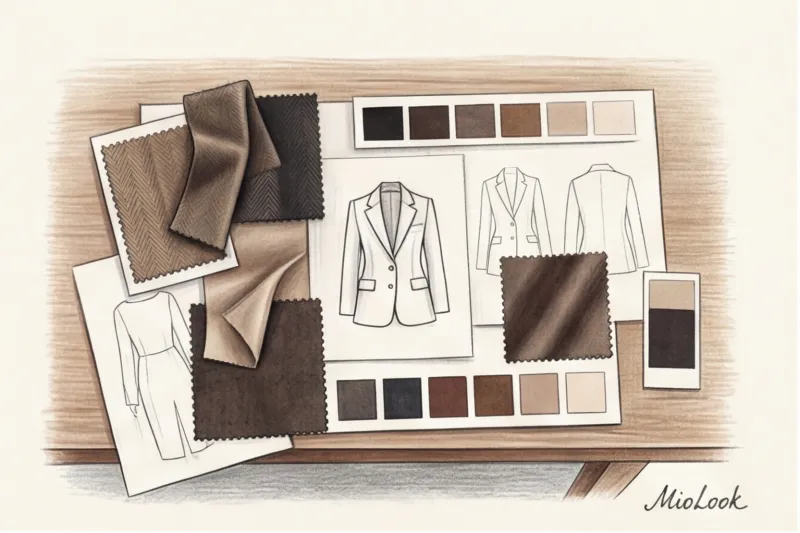
In 12 years of working as a fashion consultant, I've learned one ironclad rule: if a client comes to a meeting with a screenshot from Netflix, we're in for a long and serious conversation. The desire to copy style of TV series heroines — a perfectly natural impulse. When we buy a jacket "like Claire Underwood's" or shoes "like Carrie's," we're not just buying a piece of fabric or a pair of shoes. We're trying to emulate the confidence, audacity, or boundless power that the character exudes. But it's important to understand one bitter truth: screen fashion is a great illusion.
Anatomy of Style: How Costume Designers Create Iconic Heroines
The fundamental difference between your real wardrobe and your on-screen costume lies in their ultimate purpose. Your wardrobe must serve you: withstand a 10-hour workday, sudden rain, and temperature fluctuations in transportation, all while maintaining impeccable form. An on-screen costume is created solely to address dramatic needs. A costume designer works from a storyboard: they consider how the garment will perform dynamically, under warm spotlights (usually around 3200 Kelvin), how it will appear in close-up, and whether it will blend into the set.
The legendary Patricia Field, the brilliant stylist who created the visual worlds of Sex and the City and The Devil Wears Prada, always built her characters on a strict principle of archetypes. She didn't just dress her actresses in beautiful clothes; she created a language that viewers could grasp in seconds. The romantic naivety of Carrie's famous tulle tutu contrasted with Miranda's rigid, almost masculine suits. The clothes screamed character before the heroine uttered her first line. We discussed in more detail how clothing conveys inner conflict and independence in our article about the rebel archetype in a modern style.
Have you ever noticed color coding in big-budget projects? Color palette is a powerful tool that works on a subconscious level. Deep burgundy, emerald, navy blue, and rich camel unmistakably convey a character's status and power without a word. At the same time, pastel, powdery, or washed-out tones are often used by artists to suggest vulnerability, childishness, or the dependent position of a heroine at the beginning of her journey. This is pure color psychology, taken to its extreme.
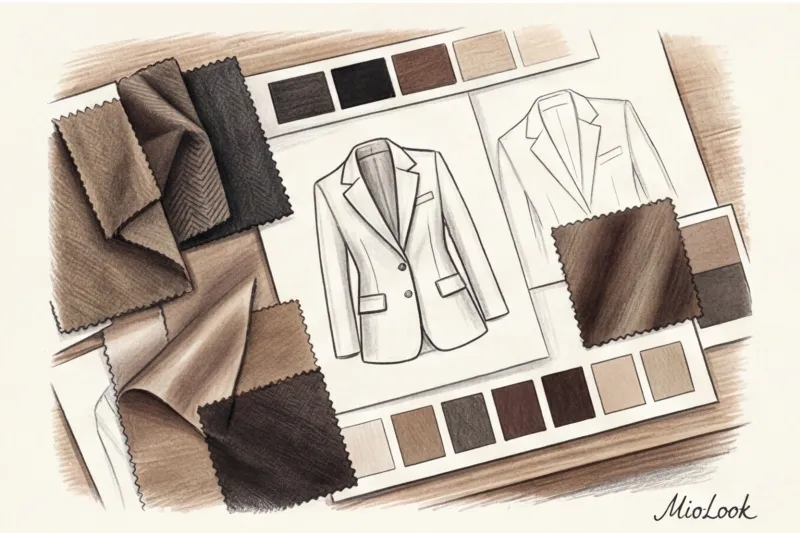
Working with textures is equally important. The use of specific fabrics creates a psychological portrait. Skin in the frame adds aggression and creates visual armor. Natural, flowing silk conveys an unattainable, relaxed luxury—subconsciously, the viewer understands that a woman in light silk clearly doesn't ride public transportation. And classic, heavy tweed, evoking the aesthetics of Chanel, symbolizes traditional "old money," conservatism, and steadfastness.
Why exact copying of things from the screen doesn't work in real life
One of my clients once ordered a heavy polyester dress, a dead ringer for a character from a popular show. On screen, under the neon lights, it looked like luxury avant-garde. In real life, at a restaurant table at midday, it looked like cheap synthetic fabric, unpleasantly staticky and warping with every movement.
The secret is simple: professional studio lighting, expert color correction in post-production, and expensive lenses can work magic. They can make mass-market viscose shine like premium silk. But daylight outside is absolutely merciless. It immediately reveals the quality of the threads, crooked stitching, and the lack of a refined sheen. In real life, the texture of the fabric and the quality of the workmanship make all the difference. That's why I always recommend investing in premium materials. High-quality status accessories and natural fabrics will do a hundred times more for your look than an exact but cheap replica of a screen dress.
The second pitfall of blind copying is temperature and comfort. Think of the autumn looks of soap opera heroines: a turtleneck, a thick shirt over it, then a wool vest, an open cashmere coat, and a voluminous scarf. Perfect, textured layering. But let's face it: on a climate-controlled set, you could only stand to wear that look for a couple of takes. Try wearing this multi-layered "cabbage" on the subway or spending a few hours in a modern office with powerful heating. It's physically unbearable.
My main advice: don't try to recreate a movie look verbatim. Use its DNA. Analyze proportions, color contrasts, and mood. And to intelligently and inexpensively adapt movie looks to your real wardrobe, I highly recommend using the "smart wardrobe" feature in the MioLook app By uploading a reference from your favorite TV series, you can create a similar aesthetic, yet completely wearable and comfortable look using items you already have in your closet.
Quiet Luxury and Power Dressing: The Style of Shiv Roy and Claire Underwood
Have you ever noticed how the most powerful women in the boardroom are usually the most subdued? No coin-sized gold buttons, no flashy monograms. This is the key style secret of on-screen careerists like Shiv Roy from Succession or Claire Underwood from House of Cards. These heroines have become modern icons of what we call new-wave power dressing.
The DNA of female lead characters' style is based on three pillars: absolute minimalism, impeccable architectural cut and a complete absence of logos In the world of big money and high politics, a large logo is seen as a sign of insecurity, a desperate attempt to prove one's belonging to the elite. True power doesn't need a brand name badge on its chest.
"Luxury should be invisible. If someone on the street recognizes your brand, you've chosen the wrong brand."—the unspoken rule of Old Money aesthetics.
In 2021, the CEO of a large IT integrator approached me. Her business wardrobe was replete with items featuring recognizable monograms—she sincerely believed that a belt with a massive logo buckle and a bag with her signature pattern gave her credibility among her aggressive male colleagues. We took Shiv Roy's style evolution as a reference: from the soft, unstructured silhouettes of the first season to the tough, corporate "armor" of subsequent seasons. We completely removed visual noise. A couple of months later, the client shared an insight: "Julia, when I stopped 'screaming' with my clothes, people finally started listening to me." The shift to an 'old money' aesthetic radically changed the dynamics of her negotiations—partners began to intuitively perceive her status, without brand cues.
Investing in basic textures is not a whim of costume designers, but a technical necessity. Why? merino wool, cashmere and thick silk Are denim jackets essential for this style? First, they reflect light in a unique way. Cheap polyester shines and cheapens the frame, while mulberry silk shimmers delicately, and cashmere absorbs light, creating a deep, velvety undertone. Second, the right texture creates a heavy, beautiful drape that doesn't break when you move. And third, it's your personal physical resource. The stress of a multi-hour deal is colossal, and the last thing your mind should be distracted by is an itchy sweater or the greenhouse effect of a jacket's synthetic lining.
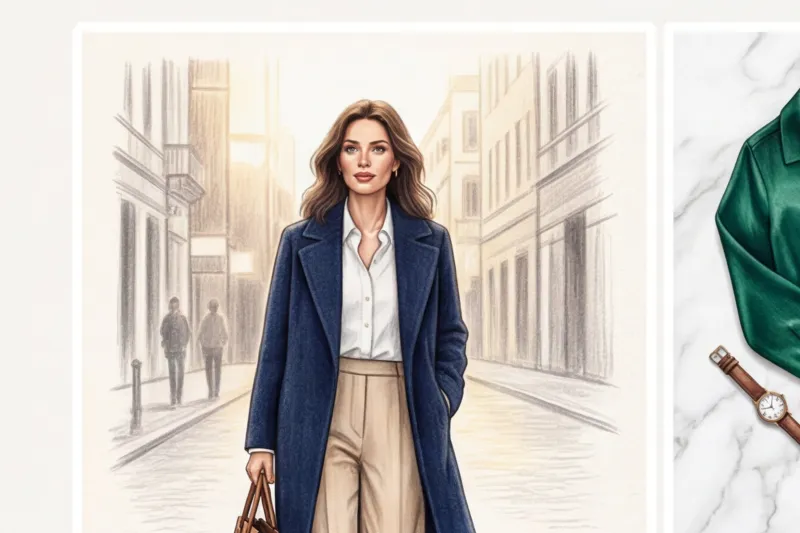
The power color palette is also subject to strict psychology. Forget about fussy prints and neon flashes. Your arsenal is monochrome and deep, noble shades. The foundation is built on the transition from 'rich camel' (a rich camel that looks luxurious with camel wool outerwear) graphite gray and classical navy blue (deep navy blue). According to color psychology research, navy blue is subconsciously associated with unwavering reliability, high intelligence, and stability. It's the ideal choice for presenting an annual report or signing a contract.
Adapting billionaire style to the real business wardrobe
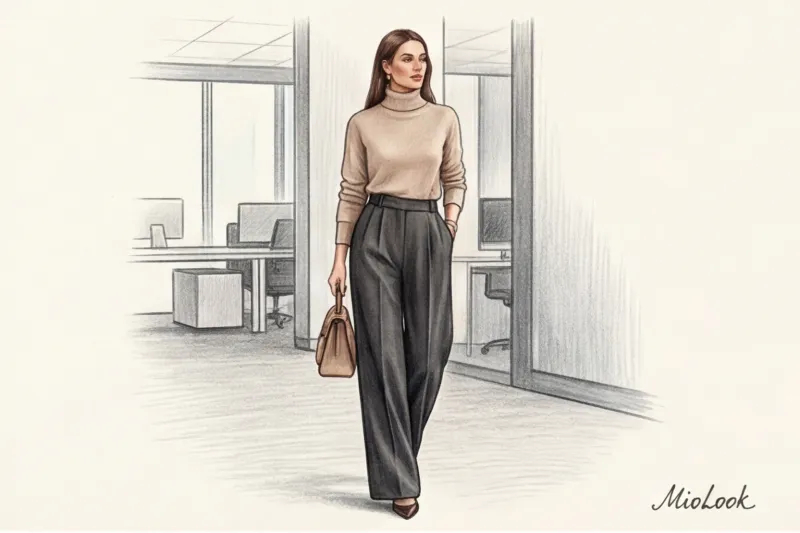
Let's be realistic: few people are willing (or should) buy cashmere collections from The Row or Loro Piana for everyday office wear. The trick is, you don't need that to recreate the on-screen gloss. The secret to adapting is smart budgeting. Where can you save, and where should you invest the most?
My investment wardrobe rule is: We save on what is closer to the body and requires frequent washing, and invest in what lasts for years and keeps its shape. You can easily buy a basic white shirt made of thick cotton or a wool turtleneck at COS or Massimo Dutti for €80–120. But bags, watches, and shoes are the foundation. A classy, architecturally shaped bag (without logos, like those from Valextra or DeMellier), classic leather pumps, and a simple watch (classics like the Cartier Tank) are the hallmarks of quality that will have others scanning your look.
And finally, the main secret to Claire Underwood's impeccable look is how to get a suit to fit. Costume designer Kemal Harris tailored literally every garment to actress Robin Wright's figure. In real life, the importance of a tailor's fit isn't a recommendation, but a strict rule. A mid-priced jacket for €150, tailored for €40 (where they'll trim the waist, shorten the sleeves to reveal exactly 1.5 cm of the shirt cuff, and replace the cheap plastic buttons with horn ones), will look like a €2,000 custom-made suit. Power always means control over the details.
To avoid confusion about which Power Dressing items you already have in your closet and which require investment, it's helpful to digitize your business capsules. By uploading your items through smart wardrobe feature in MioLook , you'll clearly see whether you have enough basic textures and what to pair your new navy blue jacket with.
Access to MioLook for €0.99 — one-time payment
A smart AI stylist will analyze your wardrobe and select the perfect business looks in a "quiet luxury" style.
Get access — €0.99 onceEclecticism and Creative Chic: The Phenomenon of Carrie Bradshaw and Emily Cooper
Have you ever tried wearing a full tutu skirt with a man's jacket, inspired by the opening credits of "Sex and the City," only to realize in the mirror that you looked, to put it mildly, odd? You're not alone. Eclectic on-screen style is the pinnacle of styling, where the line between genius and downright bad taste is as fine as a thread.
Costume designers like the legendary Patricia Field (who created Carrie) and Marilyn Fitoussi (who dressed Emily) use clothing as a celebration. But transferring this carnival of textures to the drab streets of the metropolis without adaptation is a dangerous undertaking. Overall, style of TV series heroines This genre is built on deliberate hyperbole, which in life needs to be carefully dosed.
The art of pattern mixing, vintage, and heavy luxury requires an almost mathematical precision. In our visual styling lectures at Milan's Istituto Marangoni, we often discuss the biggest mistake beginners make: trying to combine three vibrant patterns in a single look without a unifying element. The secret to harmony lies in a neutral base. Think of it as a canvas: if you're wearing a vintage jacket with a vibrant floral print by Dries Van Noten, calm it down with a crisp, raw, straight-cut denim or a crisp white Egyptian cotton shirt. The base serves as an anchor, preventing the look from descending into chaos.
"If your outfit doesn't have a single calm, neutral item, the viewer's eye will tire within three seconds. Creativity needs silence to be heard."
This leads to the golden rule for everyday life: the "one statement piece" rule. On screen, Emily Cooper can wear a neon bucket hat, a Vichy check jacket, and metallic boots all at once. In real life, this is a surefire way to create a "Christmas tree" effect. Want to add some drama to your Tuesday? Let one statement piece take center stage. Either a complex architectural texture (like feathers on the hem of a skirt), an acid color, or an exaggerated silhouette. Before you impulsively buy another crazy item, I strongly recommend uploading a photo of it to MioLook and virtually try it on with your calm base—artificial intelligence will immediately show whether the puzzle fits together.
Status accessories as the basis of a creative image
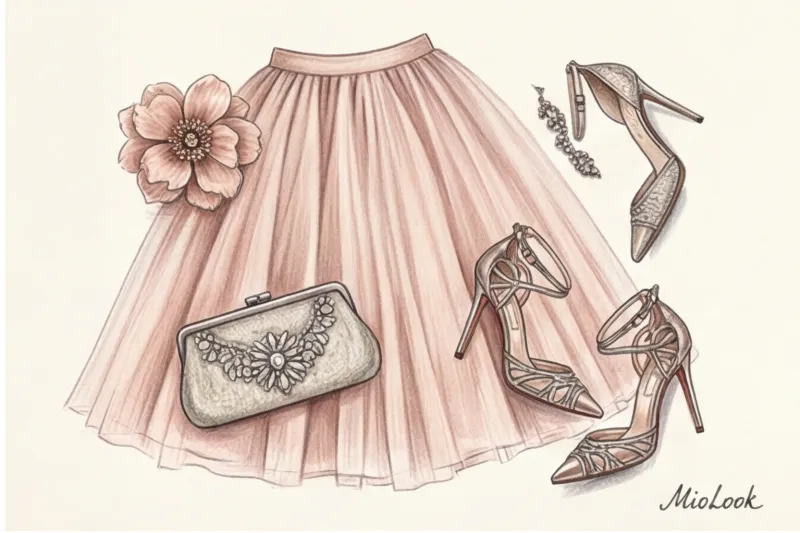
What's really keeping all this creative chaos going and preventing it from looking cheap? There's only one answer: uncompromisingly expensive, statement accessories. They're the ones that let others know your crazy mix is an intelligent fashion statement, not the result of you dressing in the dark.
Let's do the math. A pair of iconic blue Manolo Blahnik Hangisi pumps will set you back around €1,100. A vintage Chanel Classic Flap bag in good condition sells for between €4,500 and €7,000 on resale platforms like Vestiaire Collective. Seems like an astronomical sum for an everyday wardrobe? But here comes the hard math of conscious consumption—cost-per-wear (CPOW).
A high-quality Italian shoe last or hand-tanned French leather will last for decades. If you wear a high-end vintage bag 200 days a year for five years, its real value will be only about €4.50 per occasion. Compare that to buying a fast-fashion replica for $60, which will have peeling plastic hardware and cracked handles after a month of daily wear (its CPW will be many times higher).
I'm categorically against outright fakes and cheap imitations in a creative wardrobe. Invest in genuine, high-quality vintage. The genuine patina of time on a brass clasp or gracefully aged leather will reveal far more about your taste than shiny, mass-market faux leather. A wry, slightly wacky look works only when it's based on genuine craftsmanship.
Architectural elegance and status: Sylvie Grateau (Emilie in Paris)
There's a pernicious stereotype that after a certain age, a woman's wardrobe should become "safe." Neutral cardigans, high collars, and a categorical refusal to experiment with silhouettes are the norm. Analyzing style of TV series heroines Over the past decade, we've seen how on-screen fashion is breaking this mold. Sylvie Grateau is a perfect example.
Her image is built on an absolute and uncompromising rejection of "age-defying" clothing. In an attempt to visually shed a decade, many women make the fatal mistake of buying overtly juvenile trends, low-rise jeans, or infantile miniskirts. The paradox is that attempting to appear younger through clothing often backfires, emphasizing age-related changes in contrast to youthful cuts. Sylvie, however, exudes a deep, confident, and classy magnetism. This is the style of a boss woman who no longer needs to prove anything to anyone. As Caroline de Maigret notes in her iconic works on Parisian aesthetics, true French chic for mature women is always about embracing one's sensuality, not about hiding one's identity.
The basis of this magnetism is impeccable attention-grabbing through architectural cuts. Rather than revealing everything at once, the French approach involves subtle, intellectual play: asymmetry, bold yet mathematically precise cuts, and a perfect balance of proportions. If one shoulder is exposed, the dress's length inevitably veers toward an elegant midi or maxi. If there's a deep neckline, it has a crisp, geometric shape, while the sleeves remain strict and long. Asymmetrical lines work like optical illusions—they visually elongate the silhouette and draw the eye along the exact trajectory you've set.
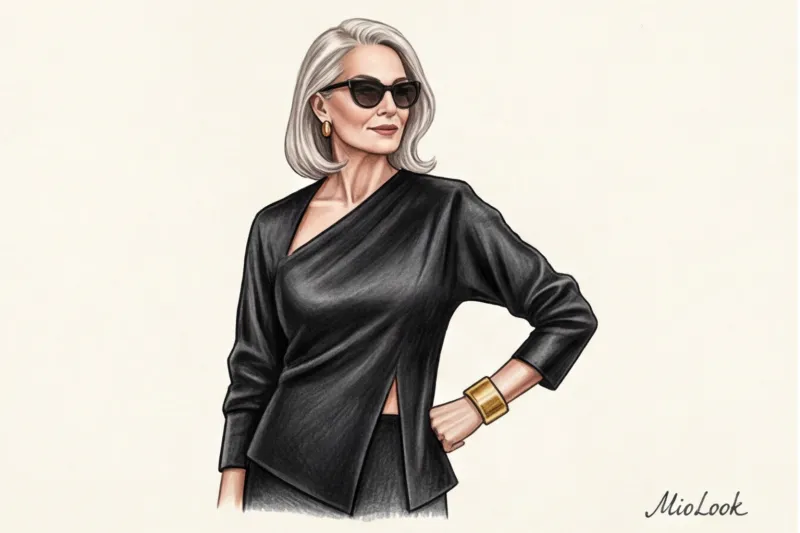
Here lies a crucial technical nuance: to prevent complex silhouettes from looking sloppy, the fabric must hold its shape firmly. Lightweight, loose knits or cheap mass-market viscose will instantly ruin the whole idea, as they sag and highlight the slightest imperfections of the body. When choosing an architectural wardrobe for a status look, I always look for pieces made of thick crepe ( crepe de chine ), double wool ( double-faced wool ), silk gazar, or structured gabardine. A high-quality asymmetrical jacket from Alexandre Vauthier or Rick Owens can cost around €1,500–€2,500, but it's the sculpted dart and sharp shoulder line that create that regal air that's impossible to fake.
Another characteristic feature of this style is a conscious rejection of colorful patterns. In a prestigious wardrobe, large jewelry acts as a full-fledged and much more expensive alternative to bright prints. A small flower or playful polka dot will visually "simplify" the look. At the same time, a massive gold cuff, a sculptural ring, or a statement mono-earring against a black, intricately cut dress speaks of refined taste. Recall the classic Yves Saint Laurent collections of the 1980s: sleek metal, clean lines, and deliberately massive proportions. Such accessories require a blank canvas—black, deep olive, or rich plum.
- Invest in Geometry: Choose items with unusual hemlines, angled collars, or one open shoulder.
- Say no to flimsy fabrics: Architectural cutting exists only where there is density of material.
- Change focus: Replace colorful blouses with monochrome pieces with complex cuts, adding a vintage necklace or chunky bracelets in the spirit of Elsa Peretti for Tiffany & Co.
Try MioLook
for free
Start creating perfect images with the help of artificial intelligence
Get access — €0.99 onceRetro aesthetics and intellectual style: Beth Harmon (The Queen's Gambit)
When the series first aired, the global analytics platform Lyst recorded a phenomenal surge: searches for plaid coats soared 383% in just one month. The 1960s aesthetic was back in fashion, but with an important twist: it wasn't a childishly romantic style, but a mathematically precise, intellectual one. According to the 2023 WGSN report, the global "smart retro" trend continues to hold its own precisely because of its rigorous structure.
Beth Harmon's wardrobe is built on strict geometry. An intelligent geometric print—whether tartan, classic houndstooth, or a contrasting checkerboard pattern—conveys the work of an analytical mind. The checkerboard pattern, which has become her signature, works as a powerful tool for visual correction: the right size of squares can elongate the silhouette just as well as vertical stripes. Unlike frivolous floral patterns, geometry brings a look together, making it appear collected and expensive. However, when choosing items with this print, pay close attention to the scale of the pattern and the quality of the tailoring: a large, contrasting checkerboard requires perfect seam alignment. If the lines where the sleeve and front meet don't align, the item looks cheap, even if the price tag says $500.
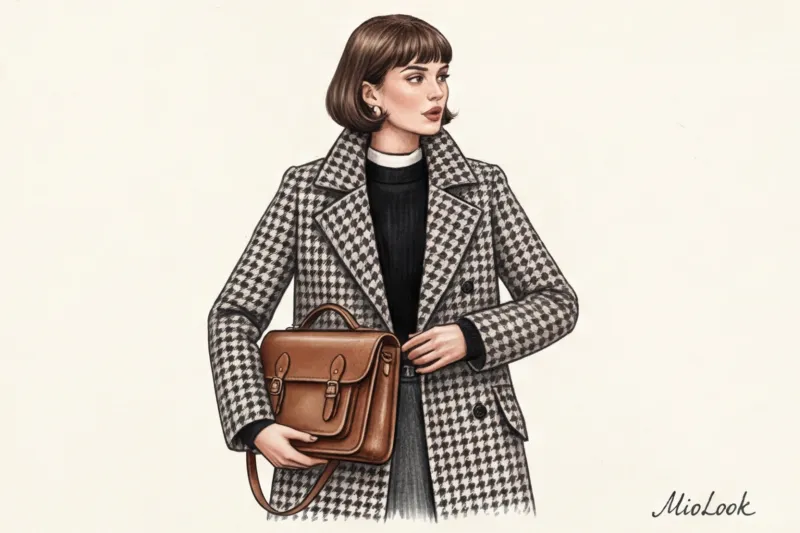
The main challenge is how to integrate vintage silhouettes into our fast-paced modern lifestyle. A-line dresses, touching Peter Pan collars, and structured 1960s coats look stunning in a carefully crafted studio shot. But if you wear all of these at once for a business meeting, you run the risk of looking mothballed. You'll look like you've escaped a costume party or are performing in a school play.
"The secret to successful retro styling lies in stark contrasts. A historical silhouette must always be shattered by a harsh, modern base, otherwise it loses its intellectual appeal and turns into a carnival."
Here's my main practical advice: Always mix authentic vintage with distinctly modern basics Found a stunning vintage tweed jacket in a European boutique? Great. But don't wear it with a pencil skirt from the same era; pair it with modern straight-leg jeans in heavy denim and a simple white T-shirt. If you're wearing a Peter Pan collar blouse, balance its sweet naivety with leather trousers.
Carefully chosen accessories and a beauty look also help modernize a retro look. Feel free to swap classic pumps for chunky loafers with a tractor sole or minimalist leather sneakers. Styling plays an equally crucial role: instead of a polished, hair-on-hair style, opt for a light, slightly tousled texture. A fresh face with minimal makeup and the illusion of a "fresh" hairstyle instantly tone down any overly theatrical look.
Working with vintage silhouettes is difficult—that's an objective fact, and the geometric shapes of the '60s don't suit all body types. Before investing in a complex A-line coat, I strongly recommend uploading a photo of the desired item to MioLook The smart wardrobe feature will show you how this statement retro piece will pair with your everyday modern pieces, saving you from impulsive and costly mistakes.
Cosplay Mistake: How Blindly Copying Style Is Killing Your Personal Brand
Remember that moment when you saw the perfect dress on the screen, typed its description into a search engine, and found a visually identical copy for $35? I often see this temptation in girls eager to quickly try on someone else's charisma. And every time, I'm forced to shatter the illusion: buying a blatantly cheap item "like the heroine's" on marketplaces like AliExpress always turns into a stylistic disaster.
The answer lies in the physics of materials. There's a counterintuitive law at work here that's often forgotten when shopping online: cheap, shiny synthetics and a poor fit instantly negate the full impact of even the most recognizable and ingenious style. The flowing fabric on the Hollywood actress is made of heavy, natural silk ( silk charmeuse ), made of thin polyester, it becomes staticky, clings to the body, and has a treacherous sheen. Studio lighting and color correction in post-production can bring out any texture on screen, but harsh office lighting or daylight won't forgive you for skimping on materials.
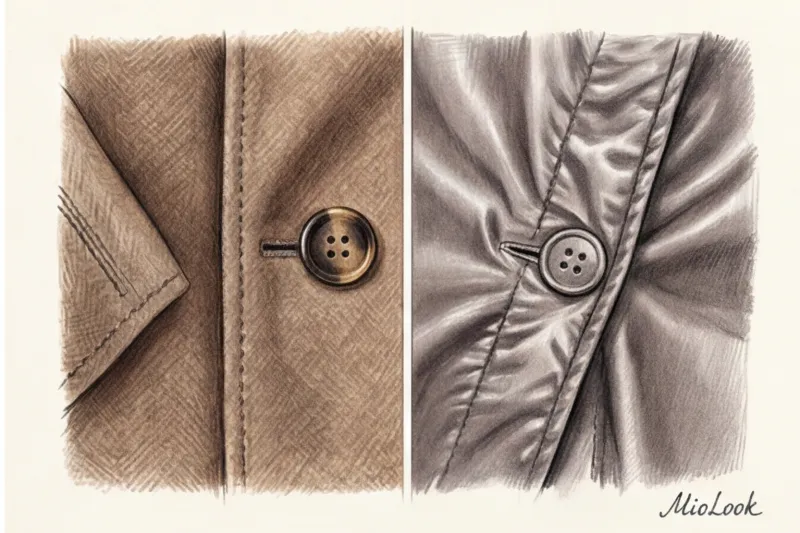
I recently reviewed a top manager's wardrobe. She adored the aesthetic of female politicians on screen and ordered a replica of the famous sheath dress with an asymmetrical neckline. The style was copied down to the millimeter. But the plastic zipper in the back, cheap threads to match, and the lack of a shaping lining transformed the austere, high-status look into a promoter's uniform. Remember the golden rule of an investment wardrobe: The quality of the fabric and fittings is always more important than the style itself It's better to buy a basic, straight-cut dress made of a dense wool blend for €250 than a lopsided polyester replica of a couture masterpiece for €40. You can buy a standard jacket from a mass-market store, but by replacing the plastic buttons with horn or cast metal, you'll visually elevate the garment to the premium segment.
"A suit should serve you, not you the suit. The moment your clothes start to conflict with your lifestyle, you become an actress in a burnt-out theater."
But even if you're willing to spend €2,000 on an original Balmain jacket to look exactly like your favorite character, stop. The most important step in styling is ensuring your look perfectly matches your archetype, your real-life lifestyle, and the climate. On-screen heroines don't ride public transportation during rush hour or brave slush on their way to a meeting. Heavy layers and velvet look great on camera, but in a hot or humid climate, they'll look out of place.
If your inner archetype is the relaxed "Explorer," and you work at an IT company with a casual dress code, an aggressive tweed suit with pagoda shoulders will make you look like a reserved cosplayer. A personal brand is built on authenticity and comfort. You don't have to play a role—you should take the best tools of costume designers (palette, proportions, textures) and adapt them to your unique reality.
Your ideal image
it begins Here
Join thousands of users who look flawless every day with MioLook.
Get access — €0.99 onceA Practical Guide: 5 Steps to a Wardrobe in the Style of Your Favorite Heroine
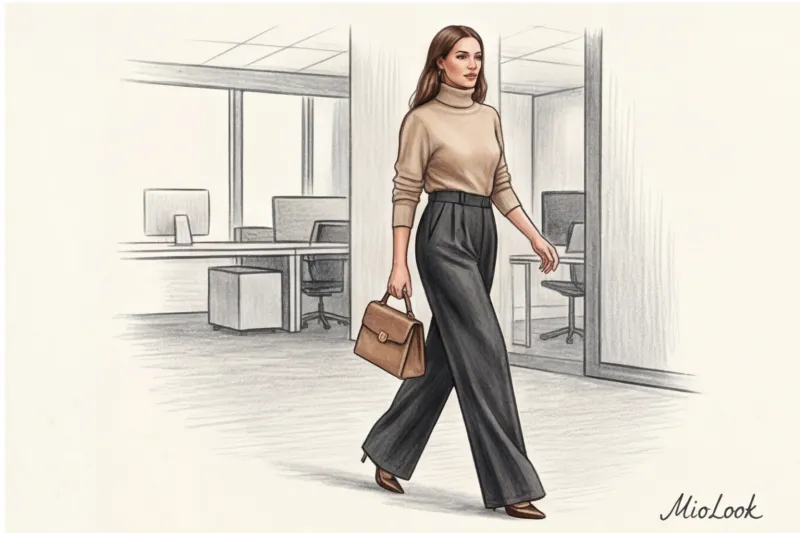
When people approach me with requests for a radical image makeover inspired by the new season of a popular show, we never start with shopping. Many people make a fatal mistake: they buy one or two brightly colored items "like on screen" and try to fit them into their regular wardrobe. The result is stylistic dissonance. Over the years, I've developed a step-by-step method that translates the ephemeral style of TV series heroines into a real, wearable wardrobe. This system takes time to get started, but it's guaranteed to protect you from buying things that won't last.
Step 1: Deconstruction. Forget specific brands; focus on formulas. Write down the key colors, textures, and silhouettes of the character. Your goal is to capture the style's DNA. For example, if your reference is the powerful elegance of a boss woman, your list might look like this: "Thick silk, burgundy color, fitted silhouette, accentuated shoulder line" Break down a complex visual image into simple components.
Step 2: Audit and analyze your color type and body type. This is the most honest stage of the process. What works flawlessly on an actress thanks to studio lighting will clash with your unique natural features in real life. Consider what needs to be adapted. If the character wears a deep black close to her face, but this color makes you look tired, we'll change it to a deep navy blue or graphite, maintaining a clean cut. We'll adapt the aesthetic to you, not force you to fit the aesthetic.
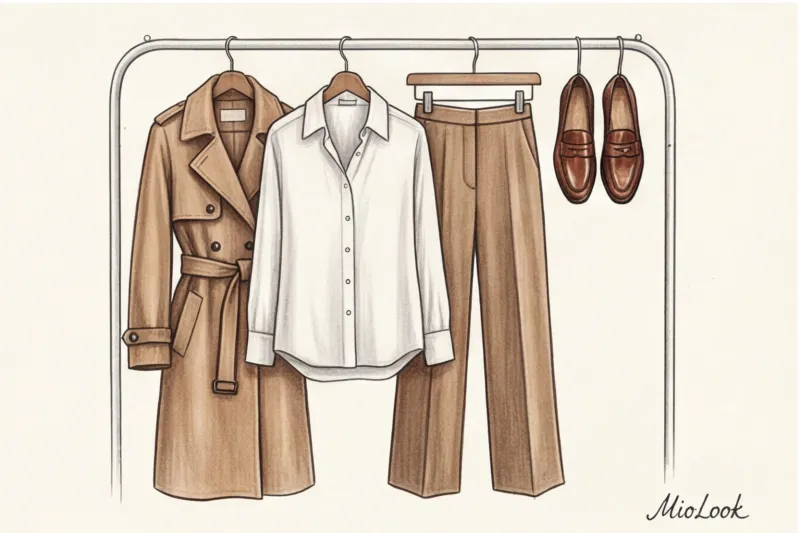
Step 3: Selecting a quality “base” in the spirit of the character (investment purchases). Building on the deconstruction from the first step, we create the foundation of our wardrobe. The investor's rule applies here (and my favorite principle, cost-per-wear). It's better to buy one impeccably tailored 100% Italian wool jacket for $350 than five cheap mass-market copies that will lose their shape after the first dry cleaning. It's the texture of premium fabrics—merino wool, dense cotton, smooth leather—that creates that expensive sheen we see in photos.
Step 4: Integrate signature accessories. Accessories are your spice. Once you've assembled a quality base, it's the details that add the right amount of cinematic flair. It could be a large architectural ring, a vintage Swiss watch with a leather strap, or a rugged bag. Remember how the heroines of French TV series opt for simple clothes but complement them with statement shoes. One right detail can elevate the entire look without turning it into a theatrical costume.
Step 5: Using AI tools for virtual try-on and look assembly. Before spending your budget on updating your wardrobe, I strongly recommend digitizing the process. Modern technology allows you to avoid the "closet full and nothing to wear" effect. Use the "smart wardrobe" feature in MioLook For virtual try-ons. Upload photos of potential purchases and see how they pair with your current items. Artificial intelligence will help you create dozens of combinations in the style of your favorite heroine, using a minimum of elements and ensuring that each item is worth the investment.
Remember the consumer behavior study from McKinsey (2023), which found that over 40% of impulse purchases inspired by social media and pop culture are worn only once? My goal as a stylist is to prevent you from becoming one of these sad statistics.
Cinema offers us magnificent illusions, but your style must work in reality. Treat on-screen images not as a ready-made uniform to be blindly copied, but as a mood board for creating your own unique story.
The style of TV series heroines is a wonderful tool for finding new inspiration, but you are the heroine of your own life. Your wardrobe should serve your personal comfort, your professional goals, and your self-confidence. Choose your clothes wisely, invest in quality, and may every everyday outing be worthy of the highest cinematic award.