Imagine buying a house based solely on the color of the front door. Sounds absurd, right? But that's exactly how most women choose perfume. We fall in love with the bright citrus scent on the store shelf, spend a hefty sum at the checkout, and two hours later, we're sitting in an important meeting, suffocated by the heavy, suffocating musk.
As a personal stylist, I always tell my clients: fragrance is your invisible accessory. It should evolve in sync with your look throughout the day, not live a separate, destructive life. To avoid fragrance disasters, you need to understand the physics of scent. The topic of what is How to read the aroma pyramid Understanding it and how to sync it with your wardrobe is the foundation without which you can't build a cohesive image. We've covered the architecture of scents in more detail in our complete guide to Perfume families: how to blind buy perfumes , and today we will analyze the pyramid not from the perspective of a chemist, but from the perspective of a stylist.
The Anatomy of Perfume: The Fragrance Pyramid, How to Read and Understand the Physics of Notes
Classic French perfumery is built on a three-part structure: top notes, heart, and base. But why don't they appear simultaneously? It's not marketing magic; it's pure physics.
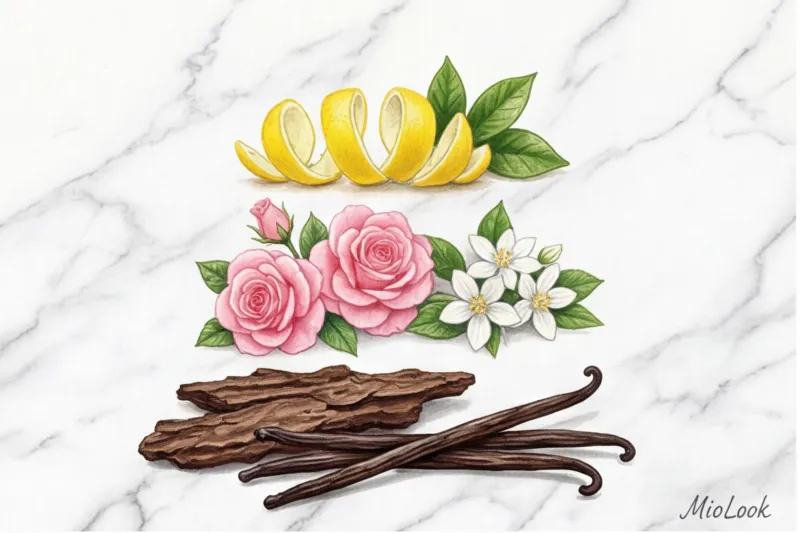
According to IFRA (International Fragrance Association), the volatility of fragrance components is directly related to their molecular weight. Light molecules (such as lemon or bergamot oils) are tiny and agile. They instantly break away from your skin and float away into the air. Heavier molecules (resins, woods, amber) are large and unwieldy. They require hours to warm up and begin evaporating.
That's why, according to Michael Edwards' classification, citrus and green accords are always at the top of the pyramid, while woody and oriental accords are at the base. You physically can't create a perfume where vanilla evaporates in five minutes, while grapefruit lingers for 24 hours.
Top Notes: First Impressions and Marketing Trap
Top notes linger on your skin for 5 to 15 minutes. They include bergamot, mint, basil, light berries, and pink pepper. Their main purpose is to refresh your senses, set the mood, and... get you going at the checkout.
I had a telling case. A client was looking for a light fragrance to pair with a flowing viscose summer dress. At the boutique, she fell in love with the explosive Sicilian lemon. She bought a bottle, applied it generously, and went to brunch. An hour later, the lemon had vanished without a trace, revealing a heavy, dense base of patchouli and sweet vanilla. This thick sillage completely ruined her light, Mediterranean look—she felt as if she'd worn a stuffy wool sweater over a silk dress.

Remember my main rule: making a purchase decision within the first 10 minutes of spraying is the most expensive mistake a beginner can make. Top notes are just a pretty window dressing.
Middle notes (heart): the character of your trail
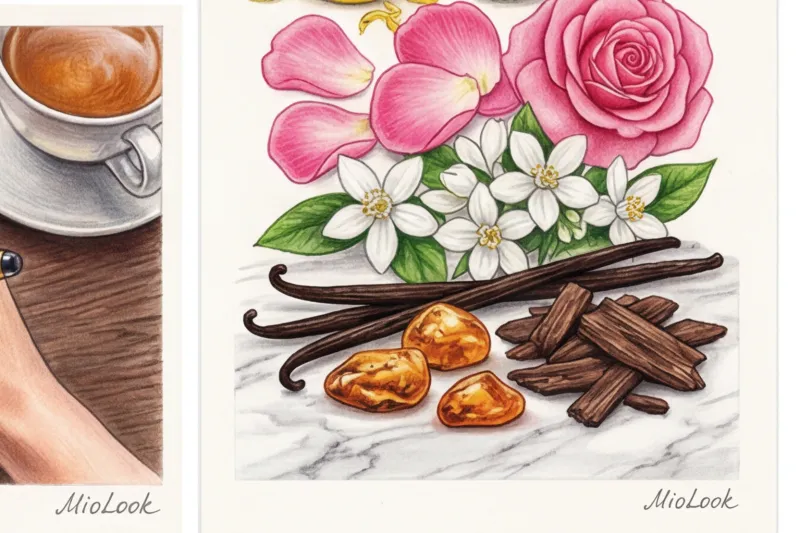
Once the "window display" dissolves into thin air, the heart of the fragrance takes center stage. It lingers for two to four hours. Here, floral notes (rose, jasmine, tuberose), spices (cinnamon, cardamom), and juicy fruits reign supreme.
The function of middle notes is twofold. First, they mask the abrupt transition from light citrus to the heavy base. Second, it's the heart that forms the main theme of the perfume. This is the trail your colleagues notice when you enter the conference room.
"The heart of the fragrance should complement the texture of your clothing. White floral accords (jasmine, lily of the valley) beautifully accentuate the crispness of a white cotton shirt, while warm spices call for the softness of suede or thick knitwear."

If you're putting together an outfit for an important interview or presentation, keep in mind that the heart notes will be the ones that really shine when you're at your most active. A formal pantsuit from Massimo Dutti simply won't tolerate a frivolous strawberry heart—it calls for a composed geranium or a prim iris.
Base notes: aftertaste and foundation
These notes will carry you home, through dinner, and into bed. The base lasts for six hours on skin and several days on clothing. It includes musk, sandalwood, cedar, moss, tonka bean, and amber. They also act as fixatives, preventing the lighter notes from evaporating immediately.
You pay for the base. In my 12 years as a stylist, I've saved clients' wardrobes from ingrained odors countless times. Once, a luxurious Loro Piana cashmere coat had to be dry-cleaned three times! The client sprayed a perfume with an aggressive oud base on the collar. The oud literally fused into the natural nap, and the coat smelled so intensely that it was impossible to wear it with other, lighter fragrances.

Natural fabrics (wool, silk, cashmere) hold base notes like a sponge. Therefore, for a winter wardrobe filled with oversized sweaters and scarves, I recommend choosing perfumes with a clean, elegant base (such as white musk or cedar) that won't clash with your mood tomorrow.
Access to MioLook for €0.99 — one-time payment
A smart AI stylist will select the perfect look and suggest how to combine clothing textures with your perfume wardrobe.
Get access — €0.99 onceDebunking myths: does the aroma pyramid, as we've been taught to read it, always work the same way?
The world of perfume is full of stereotypes. Let's address the three main myths that are preventing you from finding the perfect bottle.
Myth 1: All fragrances have a pyramid.
This isn't true. The renowned perfumer Jean-Claude Ellena and many modern niche brands often create linear fragrances. They smell exactly the same from the first second until the evening. If a perfume description lists only one note (for example, the Iso E Super molecule), don't expect it to reveal much—it will be monolithic.
Myth 2: The scent smells identical on the blotter and on the skin.
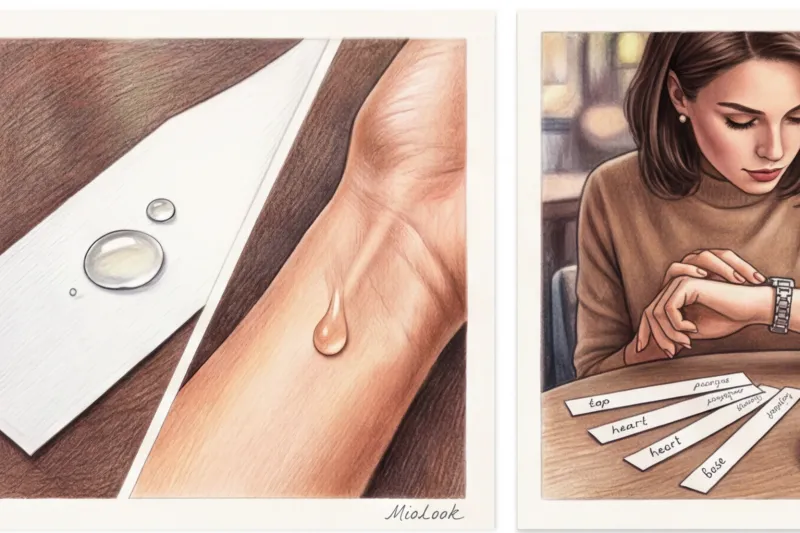
A paper blotter is lying to you. It has no pulse, no temperature, no unique pH. On cold paper, a heavy base may not develop at all, and on your hot skin, it will "explode" within half an hour. Testing perfume on paper is like trying on shoes on a mannequin.
Myth 3: If I can't smell the scent, it suits me.
One of the most dangerous misconceptions! If you can't smell your perfume after an hour, it's not "perfectly blended with your skin." It's olfactory blindness—your brain has simply switched off its receptors to protect itself from the constant irritant. Meanwhile, those around you may be suffocated by your scent trail.
A Stylist's Workshop: How to Test Perfume Without Wasting Money
To avoid adding to the cemetery of bottles on your dressing table, use my professional testing algorithm.
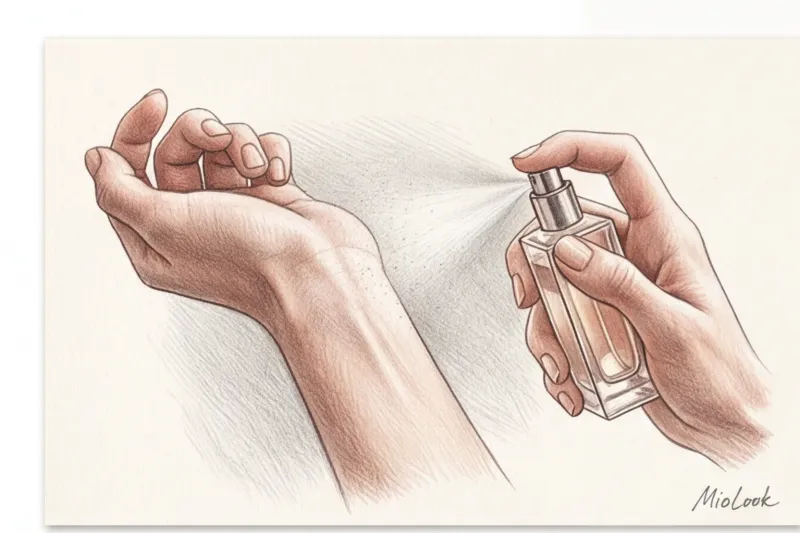
Firstly, 4-hour rule Spray the fragrance on your wrist, thank the salesperson, and leave the store. Have a coffee, take a walk outside (temperature changes are crucial for the pyramid to unfold), and return to a warm room. Only after four hours, when the base develops, will you understand the perfume's true nature.

Secondly, my personal texture test. I often spray clients' perfumes on two pieces of fabric: natural silk and thick wool. On silk, the scent opens up more quickly and is more vibrant, but fades more quickly. On wool, it lingers, muted, and brings the heaviest resinous notes to the surface. This clearly demonstrates why your favorite summer perfume smells flat in winter.
Finally, practice blind tasting. Don't look at the brand, price, or bottle design. Close your eyes and inhale. Marketing often sells heavy luxury, while a masterpiece can be hidden in a simple, mid-priced bottle.
Building an Olfactory Wardrobe: How to Pair Notes with a Dress Code
Perfume should be as appropriate as the height of your heels or the depth of your cleavage. Here's a basic cheat sheet for syncing your pyramid with your schedule:
- Office and Business Casual: Choose pyramids with a short trail. Ideal: citrus top notes, a green or tea heart, and a calm woody base (cedar, vetiver). Avoid heavy white florals (tuberose) and gourmands (vanilla, praline) – they violate the personal boundaries of colleagues.
- Evening outing: Here, you can let the base dominate. Resins, amber, patchouli, and leather accords will perfectly complement a silk slip dress or a tuxedo.
- Sports and recreation: Green and aquatic top notes dominate. The base should be minimal, as musk can develop an unpleasant animalic undertone when the body heats up during exercise.
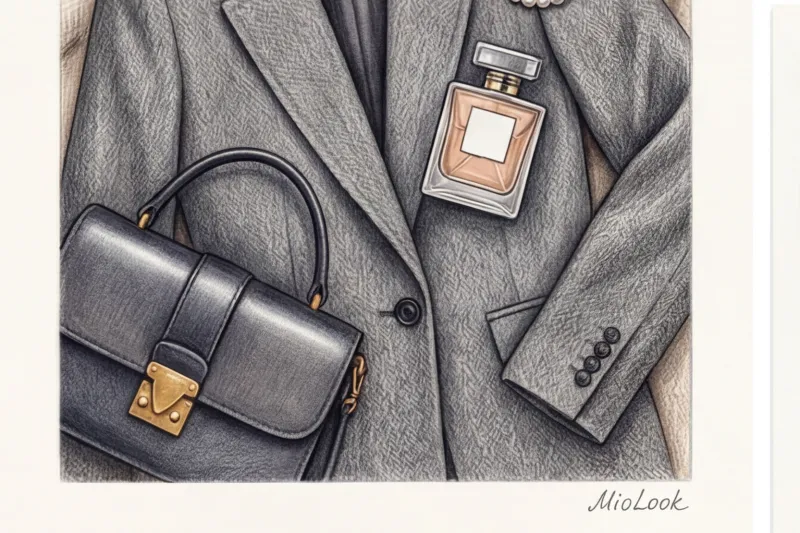
By the way, in the “smart wardrobe” function through MioLook app I always advise my clients to include photos of their perfume bottles. By associating a specific scent with an office or evening capsule, you eliminate the morning doubts about whether this scent will go with this jacket.
Your perfect look starts here
Join thousands of users who look flawless every day with MioLook. Organize your wardrobe in one click.
Get access — €0.99 onceChecklist: 5 steps to consciously buying a new bottle
Next time you decide to treat yourself to a new scent, resist the impulse. Save this checklist:
- Study the fragrance pyramid on specialized websites before going to the store. Understand what kind of base you'll find.
- Apply perfume strictly to clean skin (wrist or elbow), not to paper.
- Take a photo of the bottle with your phone and write down the application time.
- Evaluate the fragrance three times: after 15 minutes (top), after 2 hours (heart) and after 6 hours (base).
- Ask yourself: “Does this basic fit with my current wardrobe and lifestyle?”

Knowing how to read a fragrance pyramid is a skill that saves money and protects your personal brand from inappropriate sillage. Remember: you're not buying the first 15 minutes of citrus delight at the checkout. You're investing in those long hours of base notes that will become your invisible signature to others.