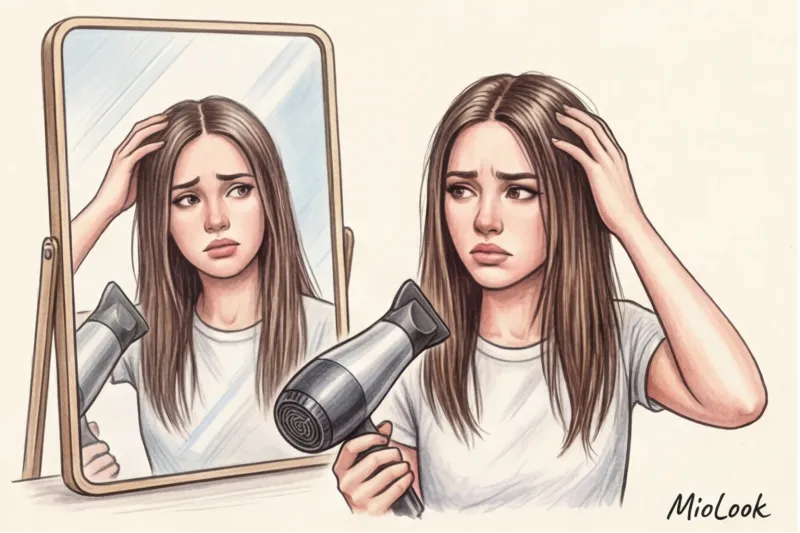
"Just be patient, wash your hair less often, and it won't get dirty so quickly." I bet you've heard this advice dozens of times from friends, moms, or beauty bloggers? As a practicing stylist, I want to officially state: this is one of the most harmful recommendations in the beauty industry. And if you're Googling it right now What to do if my hair is oily at the roots , you've come to the right place.
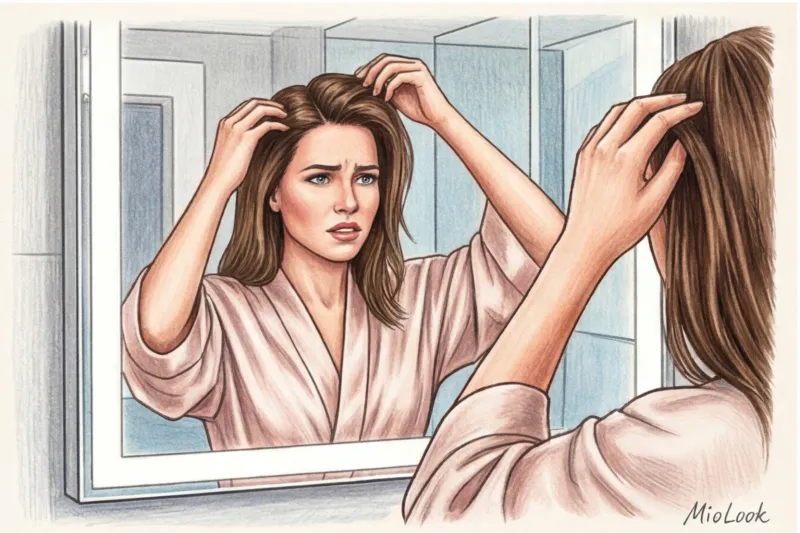
Let's face it. This article debunks the popular myth about "retraining" your sebaceous glands. The problem of oily roots isn't just a matter of morning freshness. It's the main reason why your luxurious hairstyle, which you spent 40 minutes creating, is hopelessly floppy and flat within an hour. Today, we'll explore this aesthetic and physiological problem from top to bottom.
Oily roots: what to do and why does your hair "float"?
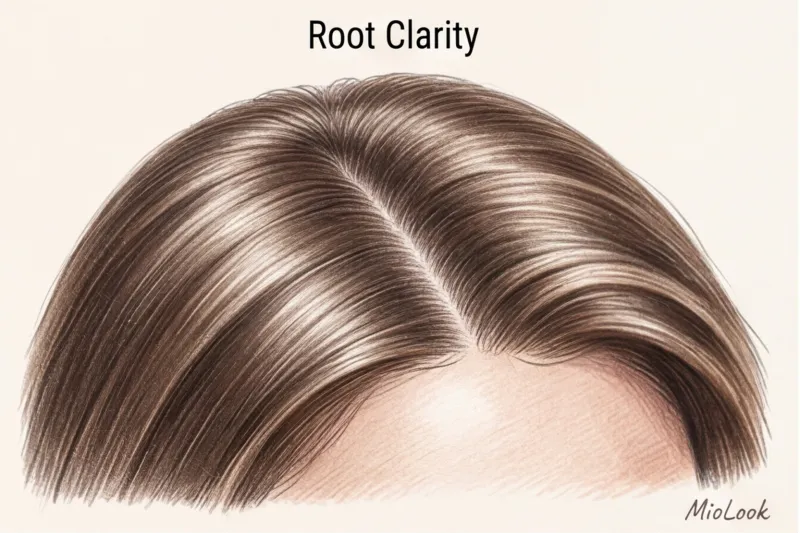
To understand the mechanics of this problem, imagine you're applying your makeup for the evening. You wouldn't apply heavy foundation to a sweaty, unwashed face hoping it would last all day, would you? The same principle applies to your scalp. Fresh, healthy hair at the roots is the absolute foundation for that effortless Mediterranean look we strive for.
Sebum is a lipid layer. In the context of styling, it acts as the perfect anti-fixation agent. The fact is that any fixative product, be it hairspray, mousse, or texturizing spray, is made of microscopic polymers. To maintain volume, these polymers must literally cling to the hair cuticle. But when the root is coated with a layer of sebum, the hair becomes slippery and heavy. The polymers simply slide down, and under the weight of the oily film, the strands fall lifelessly.
A healthy base solves 90% of hair problems. We covered this in more detail in our a complete guide to proper hair care for perfect styling , where the connection between the quality of the hair and the durability of any shape is analyzed in detail.
The biggest mistake: why you can't "retrain" your hair by washing it less often
The main internet myth is that if you wash your hair every day, your sebaceous glands are stressed, so you need to walk around with dirty hair for a week, and your skin will "retrain." This is unscientific.
Sebaceous glands are hormone-dependent. You can't slow them down through willpower or dirt. However, you can easily develop serious health problems. According to trichological research (specifically, publications in the International Journal of Trichology in 2023), sebum left on the skin inevitably oxidizes in the air. It mixes with sweat, dust, and styling product residue, creating a perfect, dense film.
"Under this oxidized film, the lipophilic yeast fungus Malassezia begins to actively multiply. It normally lives on the skin of every person, but when there is excess sebum, it causes micro-inflammation, itching, dandruff, and, ultimately, hair loss."
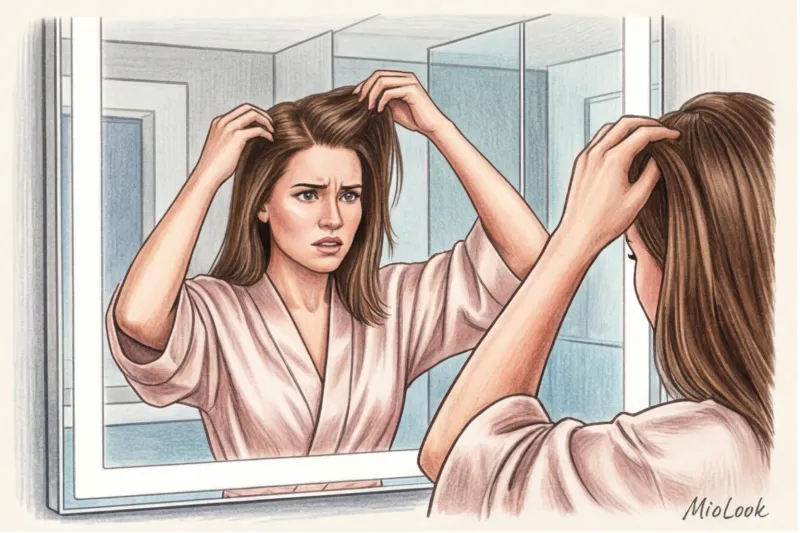
I had an instructive experience. One of my clients decided to radically "retrain" her hair a couple of months before her wedding so she could wash it less frequently during her honeymoon. She heroically wore her buns in stale styles for five or six days. The result? Three weeks before the wedding, she suffered a severe flare-up of seborrheic dermatitis. Her skin was red, her hair thinned and was falling out in clumps, and her wedding hairstyle had to be salvaged with a colossal number of extensions because not a single backcomb would hold on her inflamed scalp.
Your ideal image begins Here
Join thousands of users who look flawless every day with the smart AI stylist MioLook.
Get access — €0.99 onceProper cleansing: how to wash your hair to keep volume for days
Your scalp should be cleansed only when it gets dirty. If it's oily every day, you're washing it every day. But you need to do this with the right chemicals.
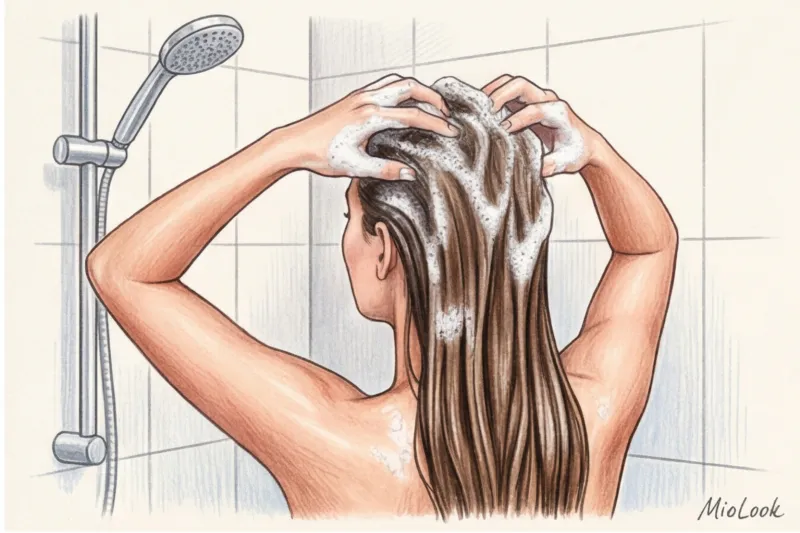
The first rule I never tire of repeating is: wash your scalp, not your hair. Apply shampoo only to the roots and scalp, massaging in with your fingertips. The lengths will be perfectly washed by the lather that runs down them as you rinse.
Mass-market brands often add heavy silicones (such as Dimethicone) to their shampoos. These are meant to make hair feel smooth immediately after washing, but they're a death sentence for oily scalps. The silicone sits on top of your freshly washed scalp, clogging pores and weighing down the scalp. Choose clear, lightweight, oil-free shampoos.
Peels and acids are your new best friends.
Regular shampoo can't dissolve the hardened sebum at the follicle openings. This is where enzyme and acid peels (AHA/BHA acids) come in. I strongly recommend avoiding scrubs with harsh abrasive particles (salt, apricot kernels)—they can damage the skin and leave micro-scratches.
Salicylic acid (BHA) is ideal for oily skin. It's oil-soluble, meaning it penetrates directly into the sebum plug, dissolving it from the inside. Using an acid peel every 7-10 days prolongs the freshness of your hairstyle for at least 24 hours. High-quality peels can be found in both budget-friendly (starting at €15 from brands like The Ordinary) and premium (starting at €45 from Kérastase or DSD de Luxe).
Double Cleansing Technique
If you want volume that won't fade overnight, wash your hair twice. Why is this necessary?
- First soaping: Breaks surface tension, washes away dust, urban smog, and styling residue. There will be almost no foam at this point.
- Second lathering: The shampoo finally reaches the scalp. This time, there will be a lot of lather. Leave it on the roots for 2-3 minutes to give the active ingredients (zinc, tea tree, or niacinamide) time to work.
Moisturizing for oily skin: a paradox that saves the day
Let's move on to a counterintuitive tip that surprises many of my clients: Oily scalps need to be moisturized.
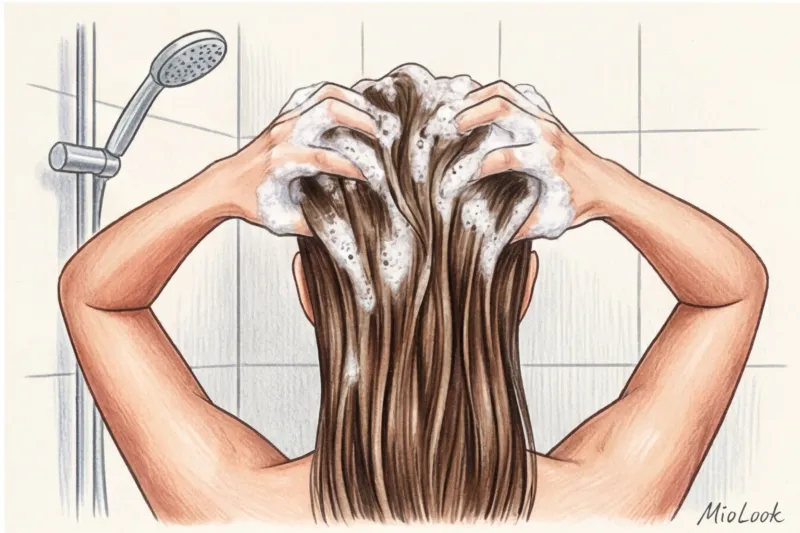
If you use harsh, squeaky-clean sulfate shampoos and neglect moisturizing, you disrupt your scalp's pH balance (normally, it's around 5.5). Dehydrated skin panics and starts producing even more sebum to protect itself. This is called overcompensation. This mechanism is perfectly described in the WGSN report (2024), where the "scalp facial" trend was named the year's biggest breakthrough.
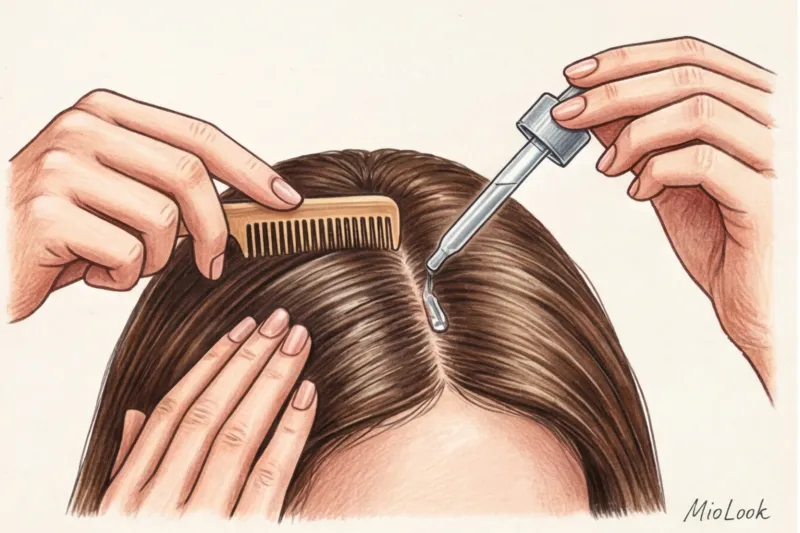
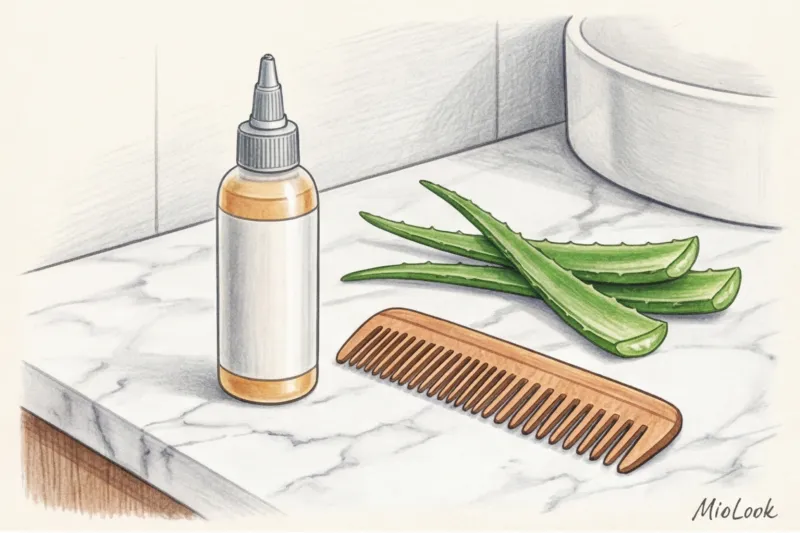
How to avoid this? Use light, watery scalp hydrating serums with hyaluronic acid or aloe. Instead, apply a classic creamy conditioner and masks. strictly retreating 10–15 cm from the roots.
Important limitation: This protocol with active cleansing and acids is NOT suitable if you are currently experiencing an acute phase of psoriasis, eczema, or have open micro-wounds on your skin. In these cases, any acids will only aggravate the inflammation, and you need a consultation with a dermatologist, not a new bottle of serum.
Ready to get started?
Try the MioLook plan for free—no commitments required. Create your perfect capsule hairstyle and style it to suit your face shape.
Get access — €0.99 onceSOS styling: how to stylishly hide stale roots
Even with perfect hair care, there are days when you just don't have time to wash your hair. That's where styling tricks come in handy.
I did a personal test drive on a film set: the difference in root volume between using a standard hairspray and a texturizing spray on second-day hair is colossal. Hairspray sticks together oily strands, turning them into stiff icicles. Dry texturizer (or volumizing powder), on the other hand, coats the oils with microparticles, creating a matte, voluminous effect.
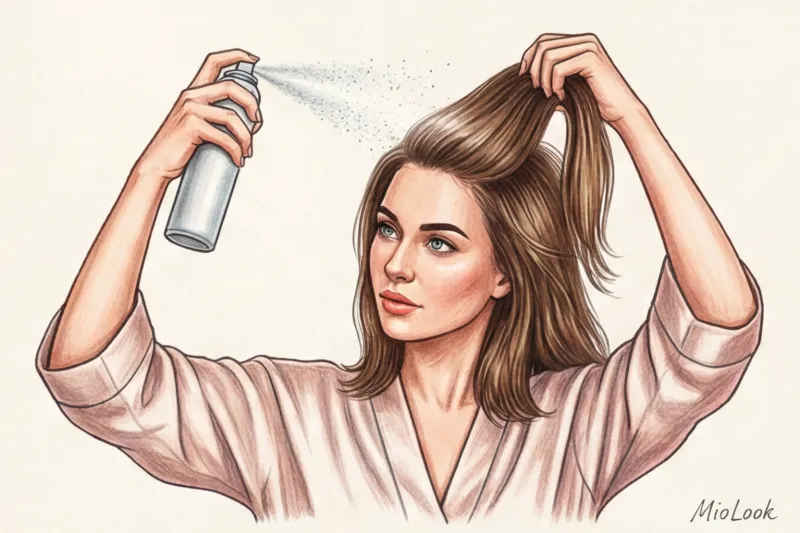
And now my main professional secret. Apply dry shampoo not in the morning, when your hair already looks greasy, but in the evening! Spray it onto clean (or slightly damp) roots before bed. As you toss and turn overnight, the shampoo will distribute evenly, absorbing excess sebum, and you'll wake up in the morning with luxurious root volume and no chalky residue.
Critical rule: Spray dry shampoo from a distance of at least 20–30 cm. If you hold the can closer, you'll create a concentrated talc stain that will clog your pores.
Ideal hairstyles for the "second day"
If you can't save your roots, change the geometry of your hairstyle:
- Transfer of parting. Hair gets used to lying in one position, and that's where it loses volume and gets greasy the fastest. Flip your parting to the opposite side (or make a zigzag)—you'll instantly gain a couple of centimeters of height.
- Sleek Low Bun. Transform this flaw into a trendy "wet look." Comb your hair with alcohol-free gel and gather it into a tight bun at the nape of your neck. It looks expensive and professional (a great option for current strict images ).
- Silk scarves and wide headbands. The '60s style is back. A wide headband will not only lift your hair from your face but also conceal the most problematic area—your hairline.
If you're unsure which hairstyle is right for you, upload your photo to the app. MioLook A smart AI stylist will analyze your proportions and select styling options that will harmoniously conceal any nuances of "second-day" hair.
Checklist: Your New Hair Care Routine for Long-Lasting Volume
Incorporate these simple rules into your routine, remembering that the scalp's cell renewal cycle is approximately 28 days. Don't expect miracles after the first wash—give your scalp a month to adjust.

- Water temperature: Wash your hair with warm water and rinse with cool water. Hot water stimulates blood flow and the immediate release of sebum.
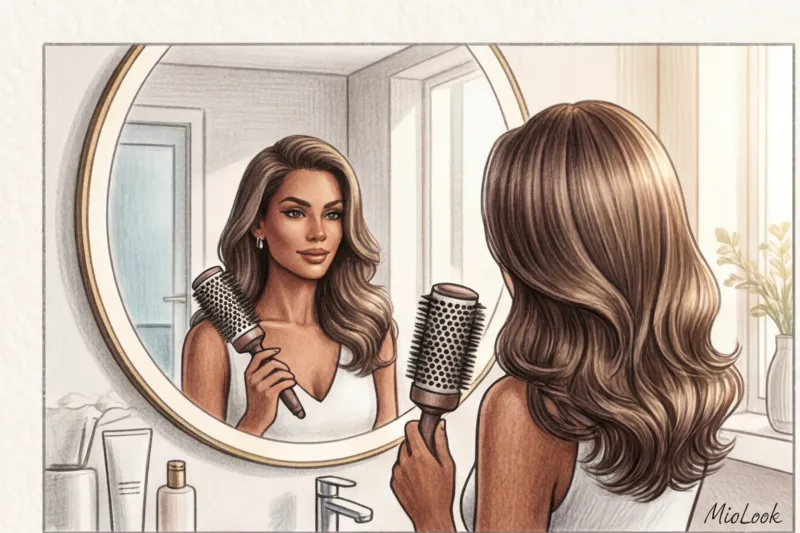
- Inspection of combs: Throw away brushes with plastic balls on the ends of the bristles. They massage the skin too aggressively, stimulating sebum production. Your choice is smooth carbon fiber combs or high-quality nylon brushes without "droplets."
- Instrument hygiene: Wash your brushes with shampoo at least once a week. Combing clean hair with a dirty brush that's coated with oil from previous styling is a surefire way to get flat roots.
- Frequency of changing pillowcases: Change your pillowcase every 3-4 days. It's best to switch to natural silk, which absorbs less moisture and dirt.
Remember this: a healthy, fresh scalp is a canvas on which you can create a masterpiece. Stop fighting your natural hair by trying to "retrain" it by washing it infrequently. Find the right balance of cleansing and moisturizing, and you'll forget about slicked-back roots.