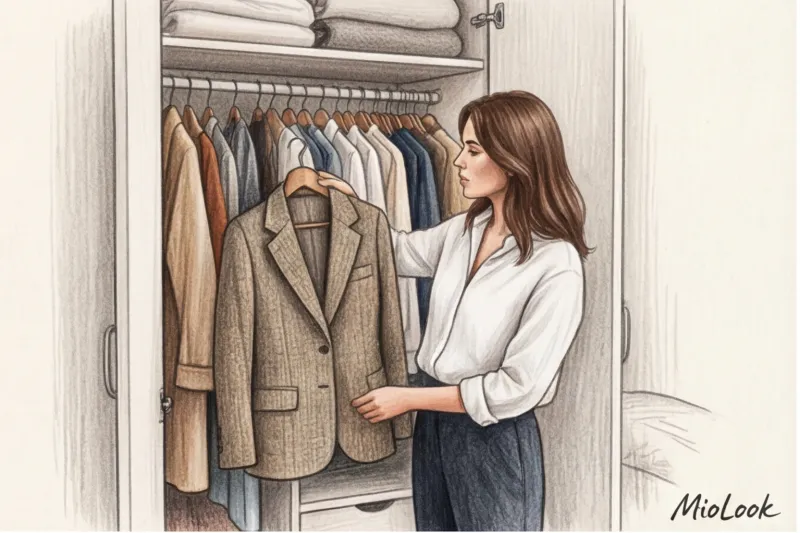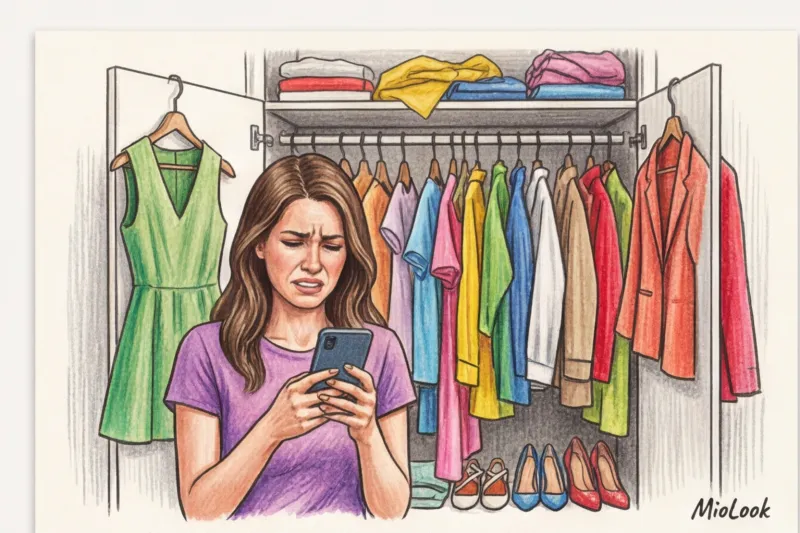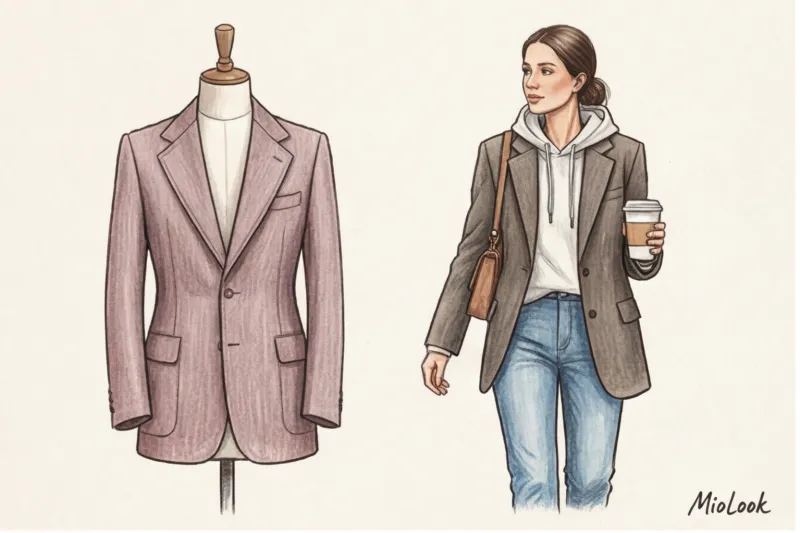
It's a familiar situation: you have a carefully curated Pinterest board dedicated to Parisian chic, but every morning your hand automatically reaches for your old jeans and favorite oversized hoodie. You sigh, buy another tweed jacket that looked so luxurious on the model, wear it once, and then tuck it away in the back of your closet because it's "too big to lift my arms."
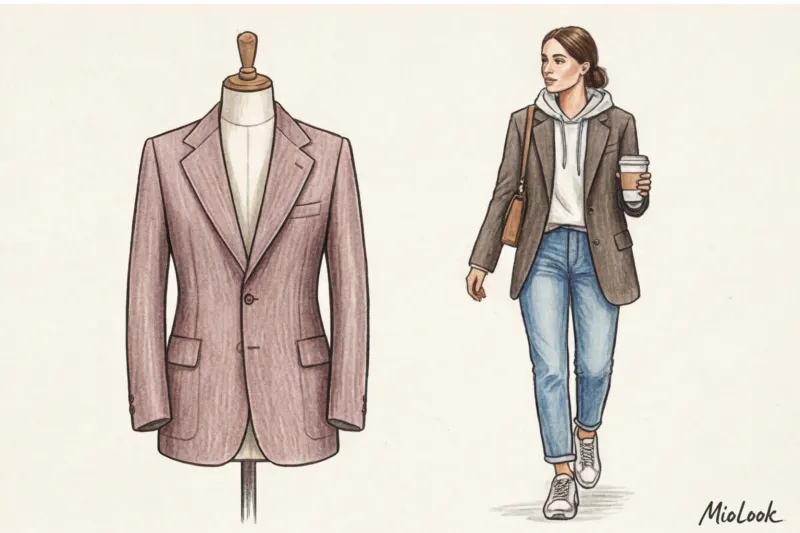
I see this all the time. After 12 years of working as a personal stylist and reviewing hundreds of women's wardrobes, I've come to a paradoxical conclusion: searching for inspiration on Pinterest is the worst first step in creating a look. You're creating a wardrobe for a fantasy life, completely ignoring the actual kinematics of your body and the tactile properties of fabrics.
We talked about academic typologies in more detail in our complete guide to Women's clothing styles: how to find your look , but in this article we'll take a different approach. If you're tired of color type or pear/apple body shape tests and want to understand, How to find your own clothing style In practice, this guide is for you. We'll rely on the mathematics of your time, textile science, and comfort.
Why old tests won't help you find your personal style
The myth of "pure" aesthetics—classical, romantic, or dramatic—is hopelessly outdated. Trying to confine oneself to a single movement is akin to wearing a theatrical costume: beautiful in static form, unbearable in motion.
According to a large-scale study McKinsey State of Fashion (2023) The pandemic and the transition to remote or hybrid work have forever erased the rigid boundaries of dress codes. A tailored menswear jacket paired with knit joggers and sneakers has ceased to be considered a faux pas and has become a new staple. Formality has given way to utility.
"Women who obsessively try to build a wardrobe exclusively in one style (for example, "only feminine romantic") are four times more likely to face the problem of "a full closet, but nothing to wear." Statistics from my personal wardrobe audit experience.
Narrow boundaries lead to wardrobe burnout. You spend money on items that suit your style according to the test, but are physically rejected by your body.
Step 1. Reality Audit: Life-to-Closet Formula
Your style should reflect real life, not fantasy. Before heading to the store, we need to get rid of our fantasies.
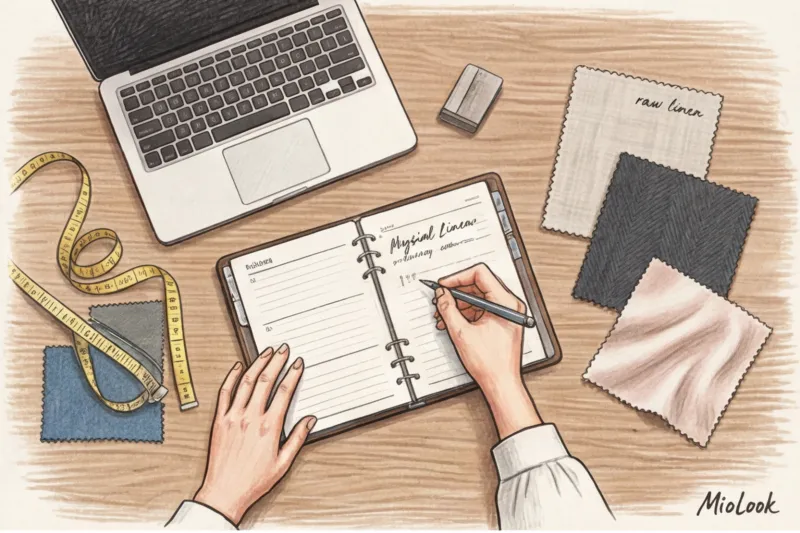
The Life-to-Closet formula is the foundation of a conscious, sustainable approach to fashion. It helps reduce impulse purchases of red-carpet outfits, saving you from unnecessary spending (and the planet from textile waste). To achieve this, create a strict timeline of your week.
List all your activities for 168 hours (week) and convert them into percentages. For example:
- Working from home on a laptop: 40 hours (about 35% of active time)
- Walking with a child/dog: 15 hours (15%)
- Meeting with friends/cafes: 5 hours (5%)
- Office with a strict dress code: 0 hours
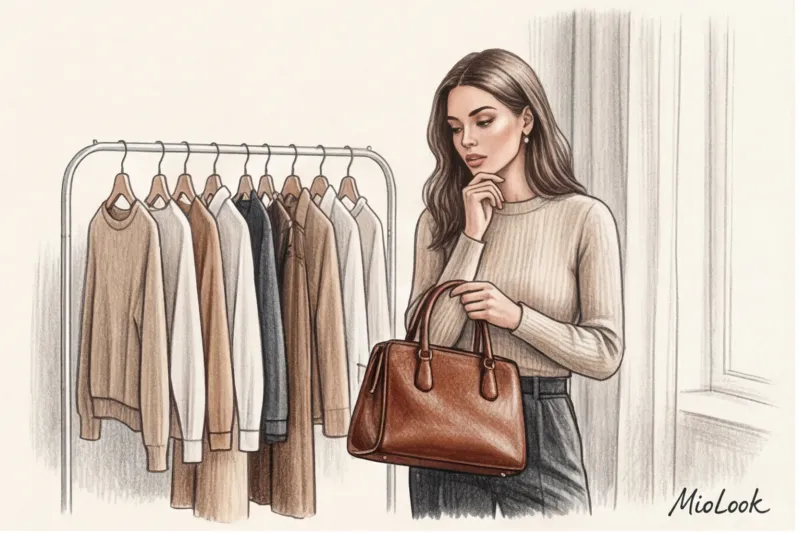
Now open your closet. If 50% of your hangers are taken up by formal sheath dresses and stiletto heels (and you spend zero hours in the office), you have a huge "blind spot." The Pareto principle applies: your clothing style should consist of 80% items for the routine tasks that take up the most of your time. Buying a luxurious €300 dress for one corporate event a year is pointless if you're desperately short of the perfect €150 cashmere sweater you'll wear 200 days a year.
Tired of racking your brains over images?
MioLook's smart AI stylist will analyze your wardrobe and create perfect combinations for real life.
Get access — €0.99 onceStep 2: Find your own style in clothing through tactility and fabrics
Style isn't just a visual image in the mirror. It's the kinematics of your body. The way you move, sit, and gesture is directly influenced by the fabric.
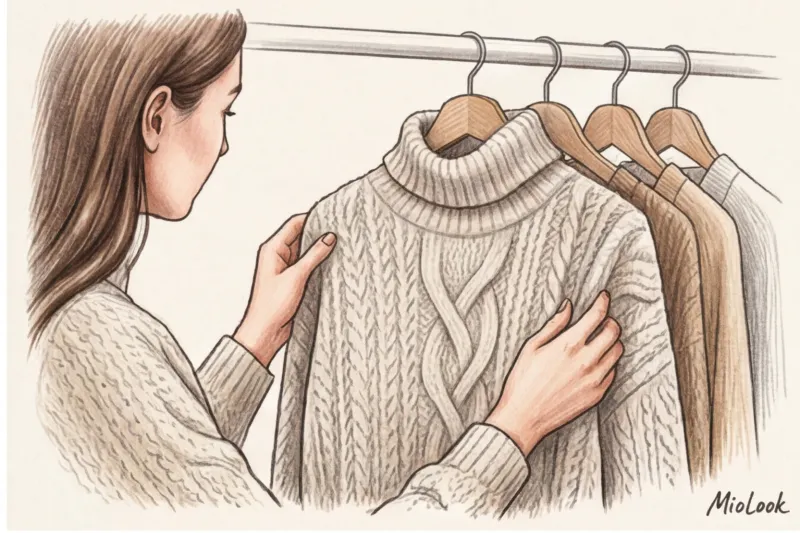
As a textile materials scientist, I always explain to my clients: cheap synthetics will ruin even the most ingenious designer cut. The twist rate of the yarn and the density of the weave dictate how a garment will perform dynamically.
Take the test "structure and air" What is more comfortable for you psychologically and physically?

- Shell (Structure): Do you like clothes that hold their shape, flatter, and protect? Choose from heavyweight cotton (180 g/m² and up), denim without elastane, shape-stabilizing wool, and leather.
- Freedom (Air): Are you irritated by anything that restricts your movement? Do you prefer flowing, enveloping fabrics? Look for silk, viscose (cupro, tencel), fine merino wool, and linen with blends.
Style is born when you don't want to immediately change into your home clothes.
Step 3. The Style Core Method: Putting Together a Personal Mix
As we've already established, "pure" styles don't work. A modern, eye-catching look is always built at the intersection of two or three styles. I use the formula 70/20/10:
- 70% - Base (your canvas, the foundation of your wardrobe, responsible for your comfort).
- 20% - Accent (what sets the mood: color, print or characteristic texture).
- 10% - Irony or Weirdness (a drop of the incompatible that makes the image come alive).
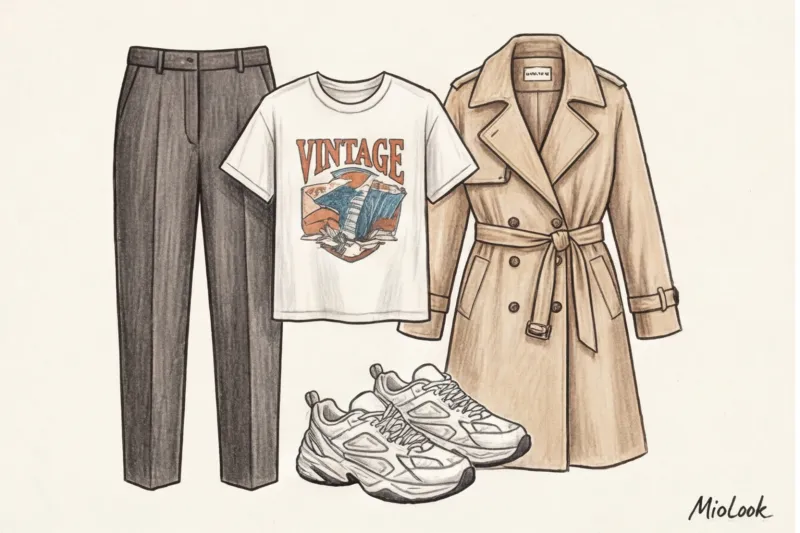
I recently had a client whose wardrobe consisted of 100% high-quality minimalism (the basics). She looked expensive, but completely "invisible" and boring. We added just 10% grunge—rough boots with chunky soles to her silk skirt and perfect trench coat. And the look instantly became her own. It stopped being a store window display; it became her personal style.
How to Choose Your Interest Rates: A Practical Guide
To understand your base (70%), take three items from your laundry basket or chair that you wear to pieces. This is your comfort aesthetic. Accents (20%) are your favorite colors or shapes (for example, a love of ruffles or architectural tailoring). And the 10% "weirdness" can be safely tested through accessories: a vintage brooch on a sweatshirt or neon socks with formal loafers.
Visualize your wardrobe
Upload your items to MioLook, and the app will help you organize your capsules according to the 70/20/10 rule in just a few clicks.
Get access — €0.99 onceStep 4: Practice blind fitting in a store
This is my signature exercise I give to clients to break down psychological blocks. Many women are afraid to enter certain departments (men's, for example) or avoid certain brands due to bias.
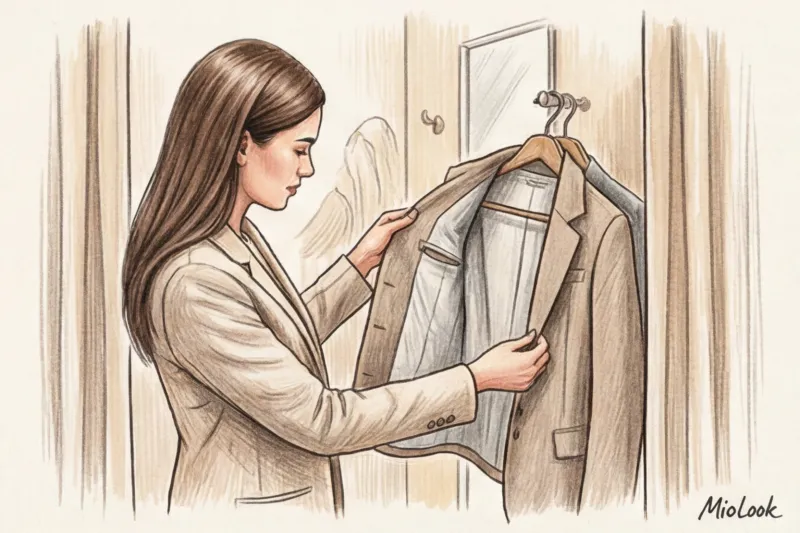
How can you find your clothing style empirically? Go to a large multi-brand department store or a well-stocked boutique (Zara, COS, Massimo Dutti). Here are the rules:
- We walk along the rails and touch things, almost without looking at them. If the fabric creaks, pricks, or feels like a plastic bag, we move on.
- Ignore the size chart. Sizes are a marketing lie. One brand might fit you in a medium, another in an XL. Buy what you like visually, in two adjacent sizes.
- Let's look at the inside. Turn the jacket or trousers inside out. How are the seams finished? Is there any binding? Are there any loose threads? The quality of the patterns and back seams will tell you much more about how the garment will fit than the brand name.
Fair limitation: This blind search method works great for everyday wardrobe. But it it won't work If you are constrained by a strict dress code (for example, if you work in a bank or court), you will have to compromise between regulations and personal tactile preferences.
The biggest mistake newbies make: the "Pinterest illusion" syndrome
Let's go back to where we started. Why do mood boards often hinder progress? The difference between a model's static pose in a photo and your real life is colossal. Models in street style shoots often stand with clothespins on their backs (to make their clothes appear more fitted), they don't carry laptop bags, and they don't run for buses in the rain.
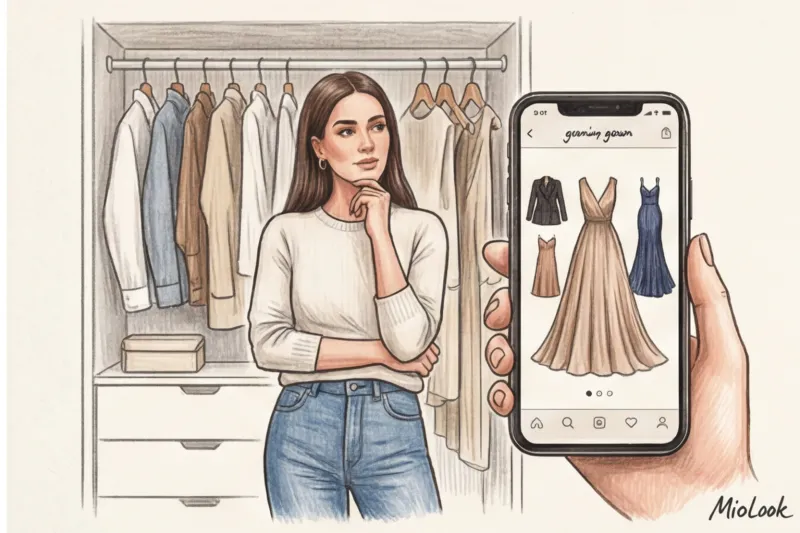
If you are constantly faced with tired of choosing clothes , stop saving pictures of unattainable ideals.
Use your observation skills correctly. Analyze not the thing itself, but principle of stylization Not "I want the same green Prada coat," but "I like how the volumes contrast here: the coat's wide shoulders and narrow hem."
Practical advice: Instead of Pinterest, start taking photos of yourself in the mirror on days when you feel 10/10. In a month, you'll have your own personal, realistic mood board. You'll clearly see your favorite proportions and silhouettes.
Checklist: 5 Signs You've Found Your Style
Finding your personal style isn't a final destination, but an ongoing process that evolves as you do. But there are clear indicators that you're on the right path and your wardrobe has become more conscious:
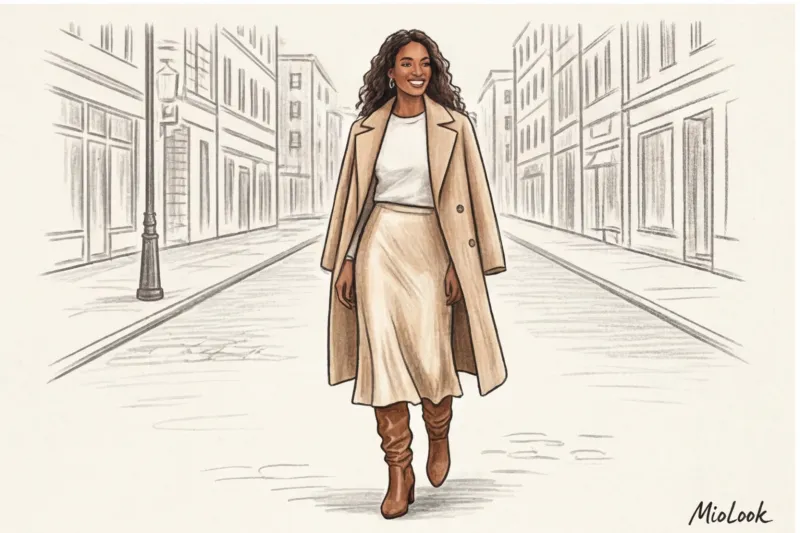
- The ease of combinatorics. You can pull a random top and bottom out of your closet with your eyes closed, and there's a 90% chance they'll match in mood and texture.
- The end of "cloning". You've stopped buying a fifth white t-shirt in the hopes that it will be better than the previous four that fit ill.
- Stress resistance. Your wardrobe covers 100% of life situations (from a trip to the housing office to a date) without panic.
- Physical freedom. Throughout the day, you don't tug at your skirt, adjust your cleavage, or suck in your stomach. Your clothes work for you, not you for them.
- Quality of compliments. People stop saying, "What a beautiful dress you have!" Instead, you hear, "How You "You look amazing today!" The focus shifted from things to the person.
If you want to systematize this process, use an app MioLook It will help you digitize your closet and clearly see which formulas work for your life. Remember: style isn't born in the fitting rooms of glossy boutiques. It comes from understanding yourself, respecting your body, and letting go of things that make you look like someone else.