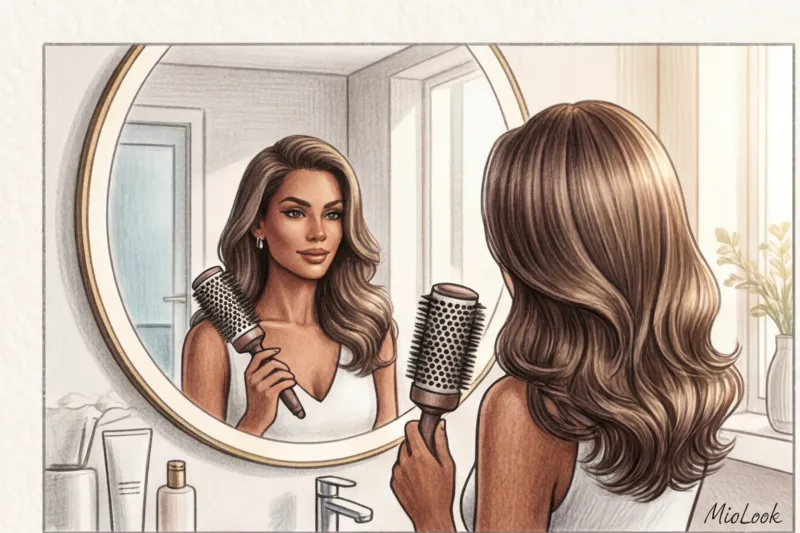
Over 12 years of working backstage at Fashion Weeks—from Paris to Milan—I've seen hundreds of girls with damaged hair. And do you know what was the main reason they cried in the stylist's chair? Not the harsh bleaching. Not the daily use of hot styling tools. The main enemy was the cheap brush used by assistants to comb through their locks between shows.
We readily buy €100 restorative masks, but continue to damage our cuticles daily with plastic tools that cost a couple of euros. This is a fundamentally wrong approach. A comb is more than just an accessory on your vanity. It's a mechanical tool for managing the hair cuticle. If you don't know, How to choose a hairbrush Given your hair structure, any expensive salon treatment will be a waste.
We have already talked about this basic foundation in more detail in our a complete guide to proper hair care for perfect styling Today, we'll explore the physics of brushing: why incorrectly pitched bristles can deplete your volume, while premium natural bristles can literally grind your hair into dust.
Cuticle mechanics: why long-lasting styling starts with the right comb
Think of hair as a pine cone. A healthy cuticle is made up of tightly closed scales. When closed, the hair reflects light (creating that glossy shine) and retains moisture. Damaged hair is like an open, ruffled pine cone.
According to a study published in Journal of Cosmetic Dermatology (2023) Up to 80% of split ends and microcracks along the length of the hair are caused by aggressive mechanical friction. Low-quality teeth with microscopic burrs act like a grater, catching the cuticle scales and tearing them.
"Damaged hair is like a torn canvas. No styling product will hold on it. Your hair will fall out within an hour simply because the porous structure, torn by a bad brush, instantly absorbs moisture from the air and loses its shape."—I repeat this principle to every one of my clients.
You can apply the best heat protectant, but if you've combed your strands with a hard, chipped plastic brush before blow-drying, you've already lost the battle for smoothness.
How to choose a comb for different hair types: breaking stereotypes
The "universal comb for the whole family" is a marketing myth. The choice of tool is dictated solely by physics: the density, porosity, and elasticity of your hair.
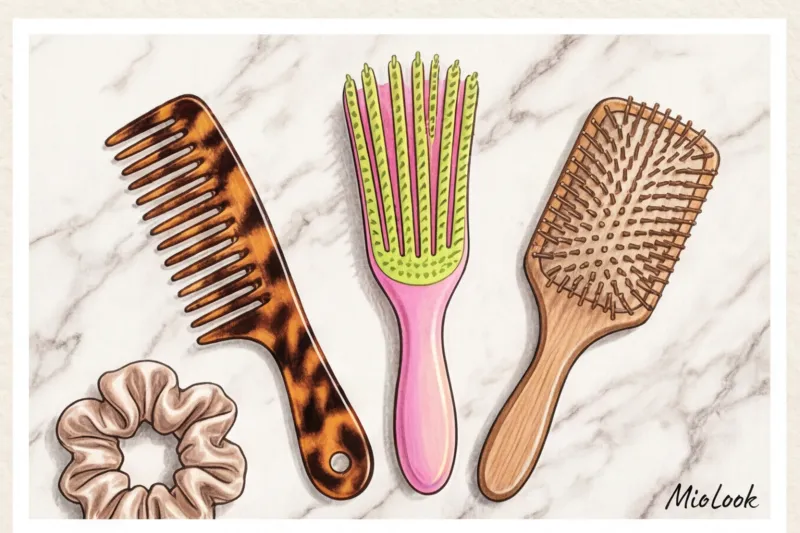
Fine and discolored: no hard bristles
If you have fine, blonde, or fragile hair, your main concern is preventing breakage. Avoid any harsh materials. Look for extra-flexible silicone or nylon bristles. Important: at the ends of the bristles there should be no plastic balls If they're poorly cast, cheap beads with a seam down the middle act like microblades, getting stuck in fine strands.
Thick and porous: Why popular Tangle brushes may not work
This is a limitation that's rarely mentioned. Iconic brushes with short, soft bristles (like the classic Tangle Teezer) are great for medium-length hair. But if you have thick, heavy, Asian, or densely porous hair, short bristles will only smooth the top layer. Tangles will remain underneath, at the roots. You need brushes with long, strong, yet flexible bristles and a wide spacing between them.
Curly Hair: The Slip Method and Brushing Only in the Shower
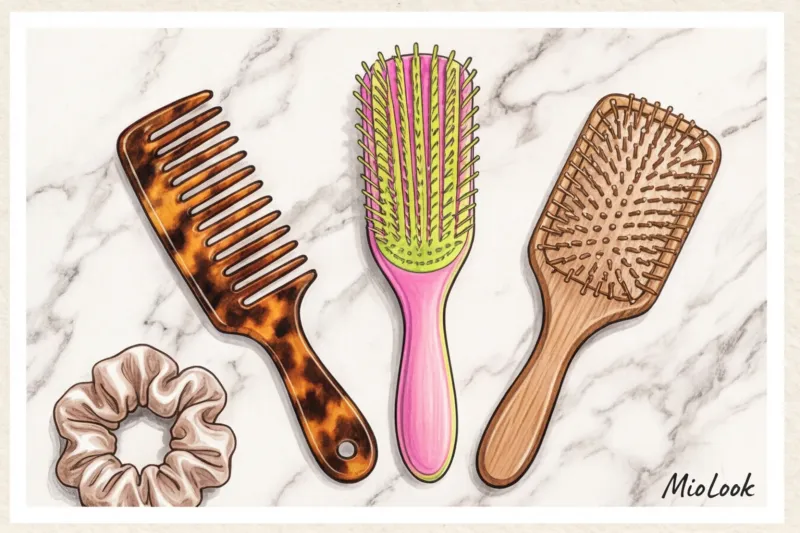
Dry brushing is a crime against texture for curls. It's a guaranteed recipe for frizz and curl breakage. Curly-haired women need wide, smooth acetate combs or specialized brushes designed for detangling wet hair only (the Slip method—brushing through a generous amount of conditioner).
Your perfect look starts here
Join thousands of users who look flawless every day and easily plan their hairstyles with MioLook artificial intelligence.
Get access — €0.99 onceWet vs. Dry: The Biggest Mistake That's Costing You Thickness
For decades, glossy magazines have been preaching, "Never brush wet hair!" As a practitioner, I can assure you this is an outdated generalization. Backstage at fashion shows, we often have to redo hairstyles on damp hair in just 3-5 minutes.
The physics of the process are as follows: when wet, the hydrogen bonds within the hair temporarily break. The hair becomes incredibly elastic and can stretch up to 30% of its original length before breaking. It's vulnerable. But if you leave thick or curly hair to dry tangled, you'll end up with a tangled mess that's impossible to comb dry without breaking.
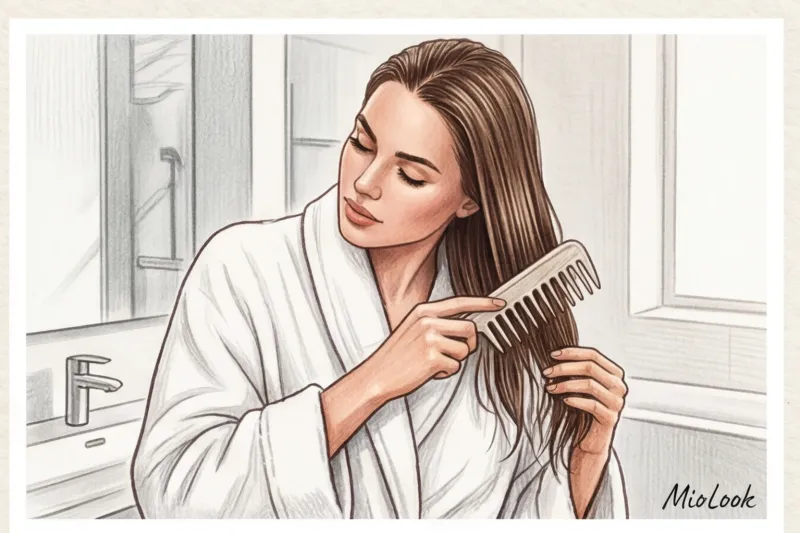
The secret is not in Not combing wet hair, and in that, How Do this. Use wide-toothed combs or special wet brushes. Start strictly at the ends, moving upward 2-3 centimeters at a time. Never pull from the roots—this creates critical tension, which can lead to traction alopecia (hair loss due to mechanical trauma to the follicle).
Styling tools: brushes that hold volume
If you want to create old mane style With expensive volume, you'll need the right brush (round brush). The difference in materials is critical here.
- Ceramic and metal brushes: When heated by a hair dryer, they act like a flat iron. They're ideal for creating long-lasting root volume and tight curls. However, they can easily dry out the ends.
- Wooden with natural bristles: They don't heat up as much. Their job is to smooth the cuticle, create a glossy shine, and soft waves. They're a great choice for sleek, polished office styles.
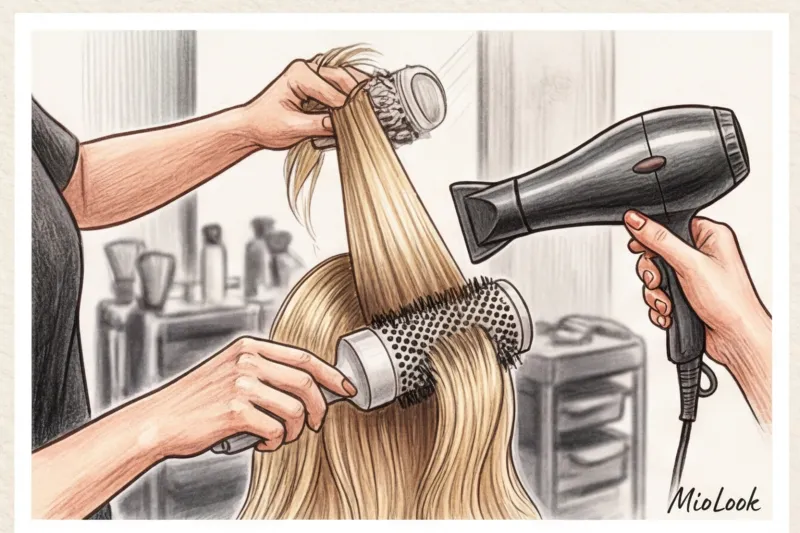
Size (diameter) matters. If you want to straighten your hair or create a slight curl at the ends, choose the largest diameter (65 mm or more). If you want a bouncy curl, choose 35–45 mm.
A separate category are skeletal (air-blown) combs with holes in the body. They are indispensable for quickly drying roots and creating a natural, slightly tousled texture. Hot air passes through them without overheating the scalp.
Natural Bristles vs. High-Tech Plastic: Is Natural Really Better?
It's time to bust one of the biggest beauty myths. For decades, brands have been selling boar bristle brushes in the premium segment (from €50 to €200) as a panacea for healthy hair. Yes, boar bristles perfectly distribute natural sebum from roots to ends, polishing healthy, dense and uncolored hair.
But here's what marketers won't tell you: if your hair is fine, bleached, or porous, natural bristles will ruin it. Under a microscope, boar bristles have a non-uniform, scaly structure (like human hair). When they rub against the weak cuticle, they cling to it, splitting the already fragile strands.
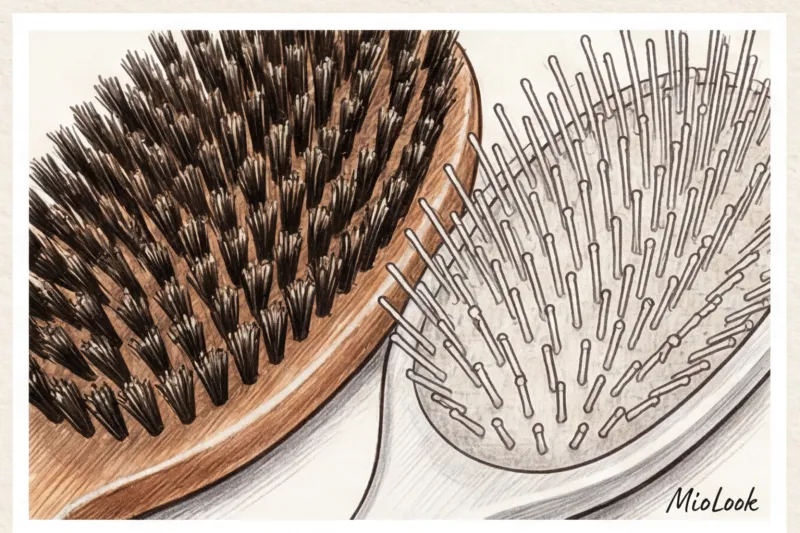
Modern high-tech plastic—a patented blend of nylon and silicone—is absolutely smooth at the micro level. It glides over the cuticle without resistance. layered haircuts For hair that requires frequent textured styling and is subject to dyeing, high-quality polymer is much safer than "organic" hair.
Access to MioLook for €0.99 — one-time payment
A smart AI stylist will not only help you find the perfect hairstyle for your face shape but also create a complete wardrobe for every day.
Get access — €0.99 onceChecklist: Audit Your Comb Right Now
Right now, grab your main comb and do a simple test that I give to everyone during my personal consultations.
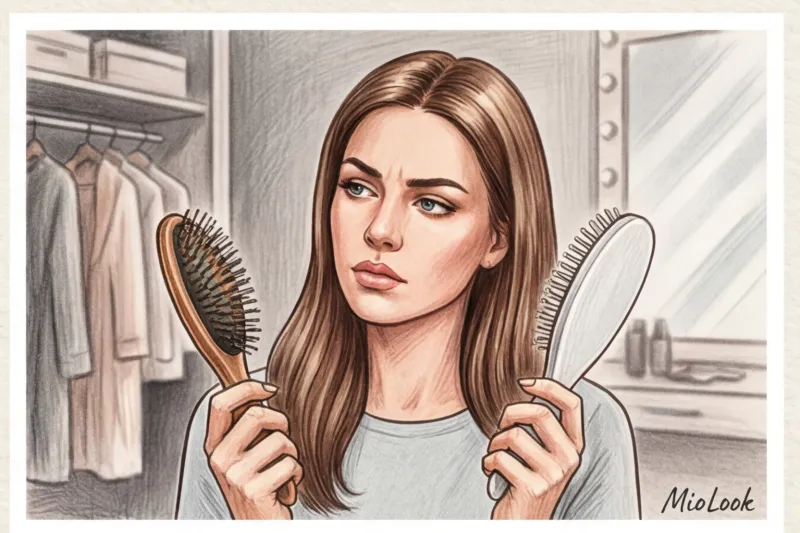
- Scratch test. Run the teeth along the inside of your wrist with gentle pressure. Does the skin turn red? Do you notice white streaks or an unpleasant scratching sensation? Throw it away. This comb does the same to your scalp, causing micro-inflammation and growth problems.
- Checking the balls. If you have a massage brush with plastic balls on the ends of the teeth, check to see if they've fallen off. A lost ball exposes a sharp plastic core that acts like a knife, cutting the hair cuticle with each stroke.
- Condition of the pad. Has the rubber base collapsed? Is there a sour or musty odor? Rubber tends to dry out, and moisture accumulates inside—an ideal breeding ground for Malassezia fungus, which causes dandruff.
Instrument care: why a freshly washed head gets dirty quickly
One of my clients' frequent complaints is: "I wash my hair in the morning, but by evening my roots are already greasy, even though I use scalp exfoliants." When I ask them to bring their own brush, the answer usually becomes obvious.
A brush is a magnet for sebum, urban dust, hairspray residue, heat protectant, and dead skin cells. Running a dirty brush through freshly washed hair literally pushes this mixture back into your clean roots. No amount of exfoliation will save you if you don't wash your tools.
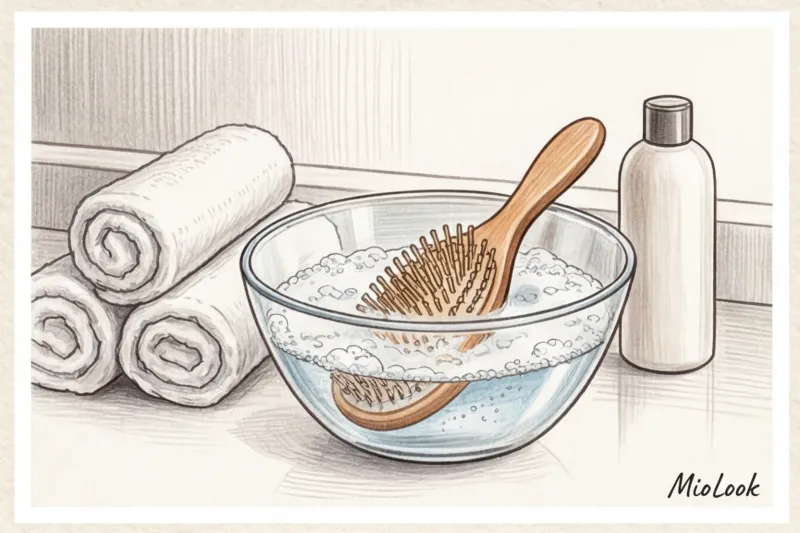
Make it a rule to wash your brushes at least once every two weeks (or once a week if you use a lot of styling products).
How to do it correctly:
- Remove all hair with your fingers or a special cleaning comb.
- Lather a drop of regular clarifying shampoo in warm water (sulfate-based shampoo is best—it dissolves oils and silicone residue from skincare products well). Avoid using harsh soaps, as they will dry out the rubber pad.
- Leave the brush in soapy water for 10-15 minutes, then rinse under running water.
- Critical: Dry massage brushes only with the bristles facing down on a dry towel. Drying them with the teeth facing up will cause water to seep into the pads, causing mold.
By the way, to help you remember to regularly care for your tools and plan your beauty routines, I recommend using the app's functionality. MioLook , where you can systematize not only your images, but also your self-care schedule.
Remember: shiny, voluminous, and healthy hair isn't always the result of genetics or expensive salon treatments. More often than not, it's the result of a gentle daily routine. Invest in the right tool with high-quality bristles (excellent professional options are available in the €25-€60 range), take care of it, and you'll be amazed at how much your hair's quality will improve in just a couple of months.