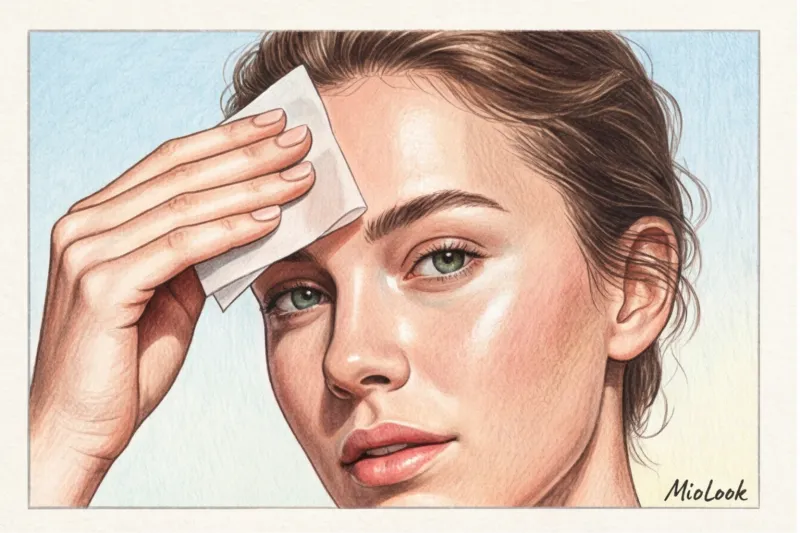
Summer 2022, Madrid. My client, the CFO of a large IT company, was presenting on an open stage to investors. The thermometer read 32°C. After just ten minutes, her seemingly flawless makeup began to literally peel off, leaving whitish streaks and settling into her pores. The reason wasn't the cheap foundation—she was wearing luxury. The disaster stemmed from a simple lack of knowledge about how sunscreen's chemical filters react with the silicone base of her foundation in the sun.

For me, as a stylist, the architecture of a high-status look doesn't end with a perfectly tailored jacket. How your skin looks under spotlights or harsh daylight is immediately apparent to those around you. And herein lies the main beauty dilemma of the warm season: How to apply SPF under makeup so that your face doesn't turn into a layer cake, but the protection remains functional?
Let's examine the physics and chemistry of this process. By the way, proper skin preparation is the foundation. We covered this in more detail in our The Complete Guide to Basic Facial Skin Care: The Secret to Long-Lasting Makeup.
The Two-in-One Illusion: Why Foundation with SPF Isn't Enough for a Status Look
Let me be categorical: foundation labeled "SPF 30" is the most dangerous illusion in the modern beauty industry. It gives a false sense of security and leads women to forgo proper protection.
The American Academy of Dermatology (AAD) clearly defines the recommended dosage in its guidelines: to achieve the level of protection stated on the packaging, you need to apply 2 milligrams of the product per square centimeter of skin. Translated into human terms, that's about half a teaspoon on your face alone.
"If you try to apply half a teaspoon of even the lightest fluid costing €150, you'll get the effect of a thick theatrical mask that will settle into your expression lines within five minutes" – this is a law of physics that cannot be circumvented.
In reality, we apply a pea-sized drop of foundation. At this volume, your SPF 30 becomes, at best, an SPF 4. The result? Unnoticeable photoaging. Uneven skin tone, visible pigmentation, and a dehydrated network of wrinkles "cheapen" a look far more than a bag from a previous collection or poorly cut trousers.
Access to MioLook for €0.99 — one-time payment
A smart AI stylist will select the perfect look based on your individual characteristics and weather conditions.
Get access — €0.99 onceHow to Apply Sunscreen (SPF) Under Makeup: The Formula for Flawless Adhesion
My personal Mediterranean experience taught me the key to layering: textures should be weightless, and the application technique should be gentle. Forget the sweeping motions we're used to when applying moisturizer.
Here's a proven layering formula for a busy morning:
- Cleansing and toning.
- Lightweight antioxidant serum (Vitamin C works great in combination with SPF to enhance protection).
- Moisturizing cream — only if necessary! If your sunscreen has a cream base, feel free to skip this step. Congested skin will inevitably push out your makeup.
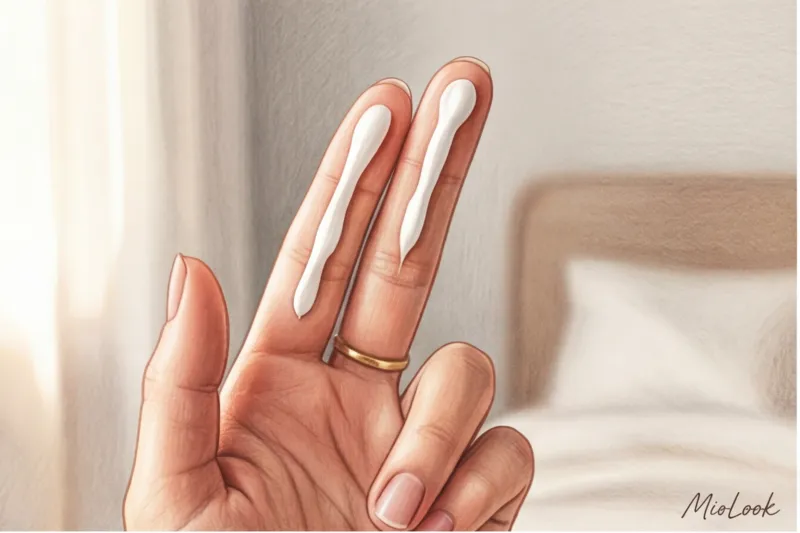
- The SPF cream itself. Use the two-finger rule (squeeze strips of cream onto your index and middle fingers).
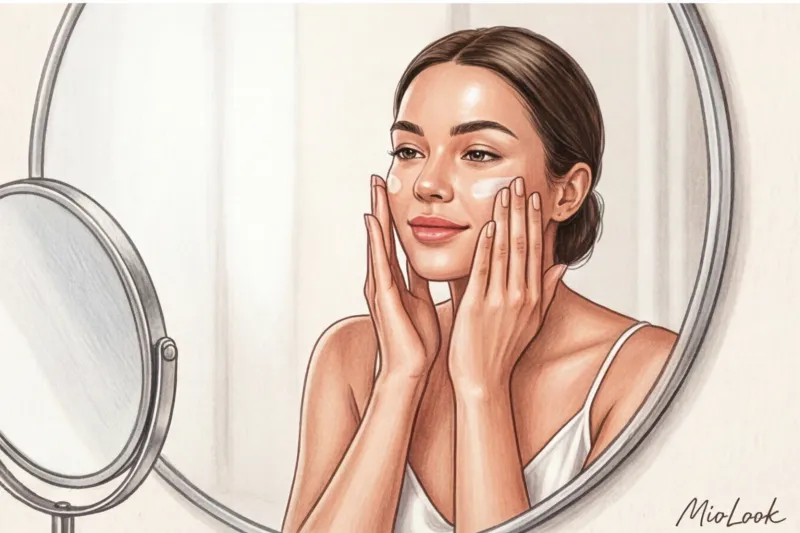
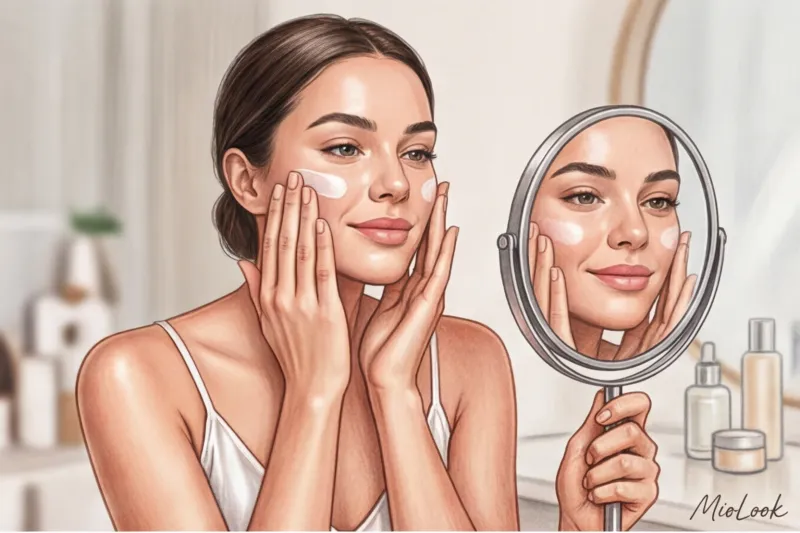
The secret lies in the technique pressing (imprinting). Rub the cream between your palms and apply it to your face using gentle, sweeping motions. This creates an even, protective veil without stretching the skin or causing micro-rolling. And for heaven's sake, don't forget your neck and décolleté, especially if your dress code requires you to leave the top buttons of your silk blouse unbuttoned!
Texture Conflict: Why Makeup Clumps and How to Avoid It
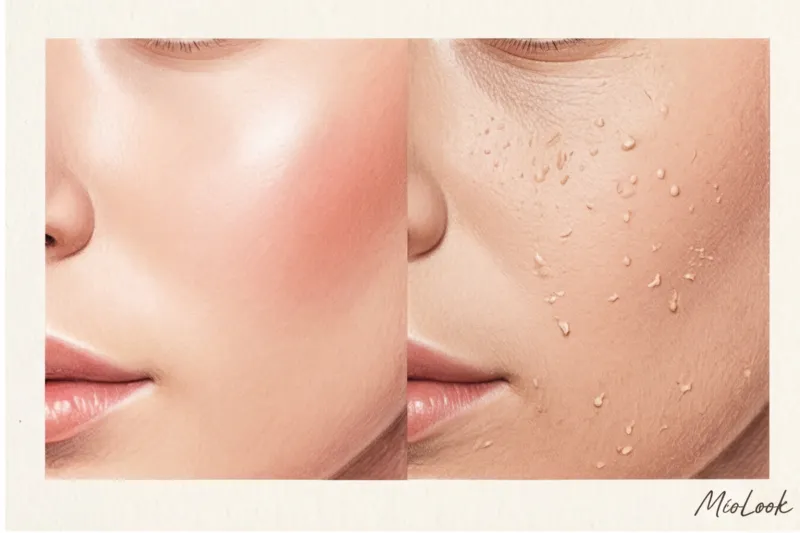
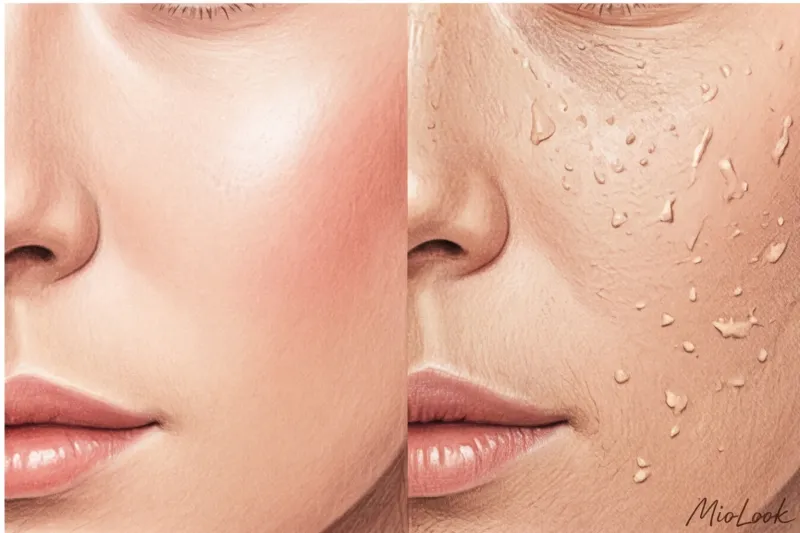
Have you ever experienced this: you apply an expensive foundation over a high-end sunscreen, only to see unsightly lumps form on your cheeks? This doesn't mean the makeup is damaged. It's a basic chemical conflict.
In cosmetic chemistry (and as confirmed by research from the Lab Muffin Beauty Science platform in 2023), there's a strict rule: like attracts like. If your sunscreen is water-based (Aqua is the first ingredient) and your primer or foundation is heavily loaded with silicones (Dimethicone, Cyclopentasiloxane), they will repel each other, just like oil and water.
Physical vs. Chemical Filters:
- Physical (mineral) filters - zinc oxide and titanium dioxide. They work like a mirror, reflecting rays. The downside? They often whiten the face (white cast). If you have to... event with photographers , the camera flash will reflect off the minerals, and in the photo your face will look sickly white against the background of your body.
- New generation chemical filters (Tinosorb S, Uvinul A Plus) absorb ultraviolet light. They are transparent, lightweight, and ideal for layering under foundation, preventing glare during business photo shoots.
The secret ingredient is timing.
The most common mistake I see backstage at fashion shows and in dressing rooms is trying to apply foundation immediately after sunscreen. This is detrimental to protection.
Any sunscreen requires 8 to 12 minutes to polymerize. During this time, the volatile ingredients evaporate, and the active filters form an invisible protective mesh on the skin. If you start brushing your face after a minute, you'll simply tear this mesh, leaving 60% of your face exposed to the sun.
A life hack for busy women: use those 10 minutes wisely. While the cream is setting, I advise my clients to open the app. MioLook , check your digital wardrobe, and finalize your look for the day. Choose accessories, steam your suit, and have an espresso. And only then return to the mirror.
Your perfect look starts here
Join thousands of users who look flawless every day with MioLook. Plan your wardrobe without stress.
Get access — €0.99 onceHow to apply SPF under makeup: choosing the right foundation tool
Once the 10 minutes are up, the moment of truth arrives. How do I apply the color without ruining the protection?
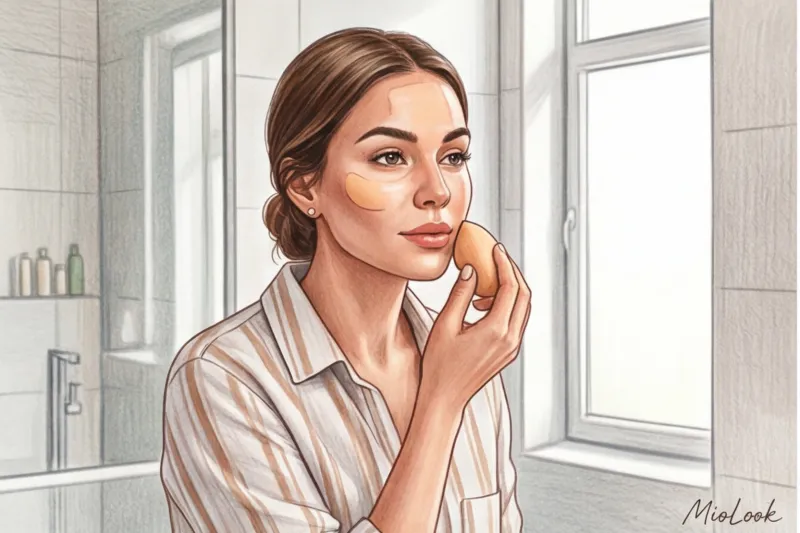
Immediately put away tightly packed brushes. Stiff bristles act like a micro-spatula, scraping SPF from the skin. Our best friends are clean fingertips or a damp sponge (a beauty blender).
The damp sponge is a brilliant invention. Firstly, it absorbs excess product, preventing your face from becoming overloaded. Secondly, its porous texture allows you to apply foundation using strictly vertical stippling motions. You don't drag the pigment across your face; you gently layer it over the polymerized protection.
I must make an important caveat: This technique doesn't work if you're trying to use very thick, opaque matte foundations. For the perfect combination with SPF, choose lightweight fluids and cover up any redness with a concealer. For information on how to choose your perfect shade, read this article. How to choose a foundation online using AI.
How to Refresh Your Skincare Throughout the Day: A Guide for the Business Woman
My morning routine is flawless. But dermatologists are adamant: SPF needs to be reapplied every 2-3 hours of sun exposure. And then the obvious question arises: I'm at a meeting, wearing full makeup, contour, and powder. Should I wash my face in a restaurant restroom?
Of course not. Over 12 years of work, I've put together an optimal "on-the-go" protection kit for my executive clients that fits into a tote bag or even a small clutch (the average price for such bags ranges from €30-€60).
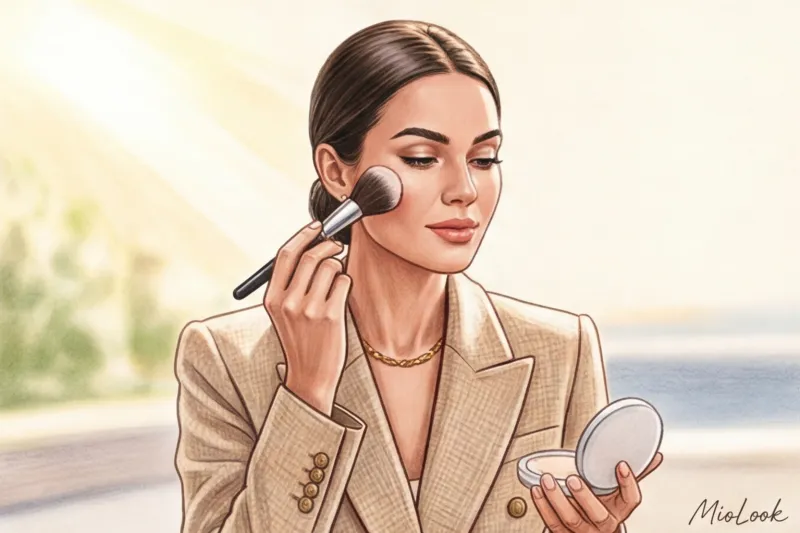
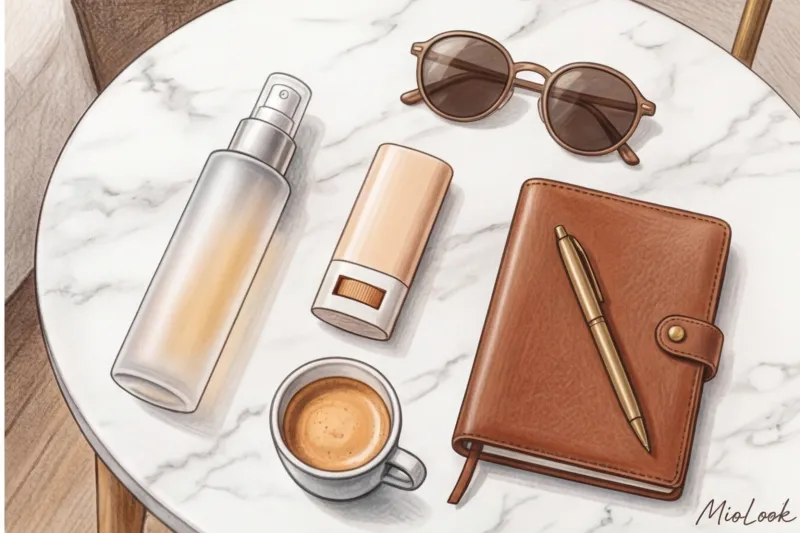
- Sunscreen powders with brush (Mineral SPF powders). An absolute must-have for everyday office wear. The bottle contains mineral powder with titanium dioxide and a built-in brush. You simply dust it on your face right at your desk. It mattifies and renews protection. Perfect for refreshing before lunch.
- Spray-mists with SPF. If your skin is prone to dryness and powder accentuates flaking, choose clear sprays. Close your eyes, hold your breath, and spray a cloud of product over your makeup. Important: don't touch your face with your hands after spraying; let the drops dry on their own for 30 seconds.
- Sticks with SPF. Ideal for targeted rejuvenation of the most prominent (and easily burnt) areas: cheekbones, bridge of the nose, forehead. Simply apply the stick with a patting motion.
Checklist: The Perfect Canvas for Business Makeup
Let's put all of this together. To ensure your makeup goes on flawlessly tomorrow morning and survives even the longest workday, follow this algorithm:
- Cleansing and light moisturizing. Avoid heavy oils in your morning routine.
- Applying SPF. We use new generation chemical filters with a volume of two fingers.
- The 10-minute rule. A coffee break and wardrobe selection (perfect time to check out MioLook ). No brushes at this time!
- Database compatibility. Make sure your foundation and sunscreen match in base (water to water, silicone to silicone).
- Applying tone. Only use a damp sponge, using pressing movements only.
- Update. Pack some SPF powder or mist in your bag to renew your protection every 3 hours when outdoors.
Think of SPF not as an annoying medical necessity, but as a crucial step in your styling routine. Beautiful, protected, and even skin is a status symbol that others can detect subconsciously. By mastering the art of layering textures, you'll stop fearing the bright sun and prevent your makeup from awkwardly melting during your most important events.