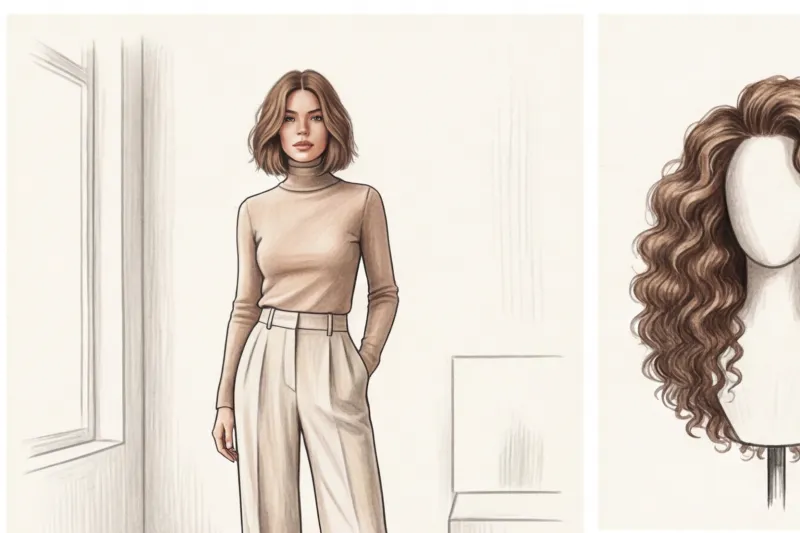
A couple of years ago, a client came to see me. A successful model, 178 cm tall, with a stunningly graceful, asthenic build—narrow collarbones, a long neck, and slender wrists. She spent about €800 on 100 centimeters of thick Slavic hair extensions. Why? "I want to appear a little fuller and more feminine, but my thin hair makes me look thin," she explained. But looking in the mirror, we both saw a paradox: under the weight of her massive "lion's mane," her fragile figure appeared even more emaciated. Her neck visually turned into a thin stalk, barely supporting her disproportionately heavy head.
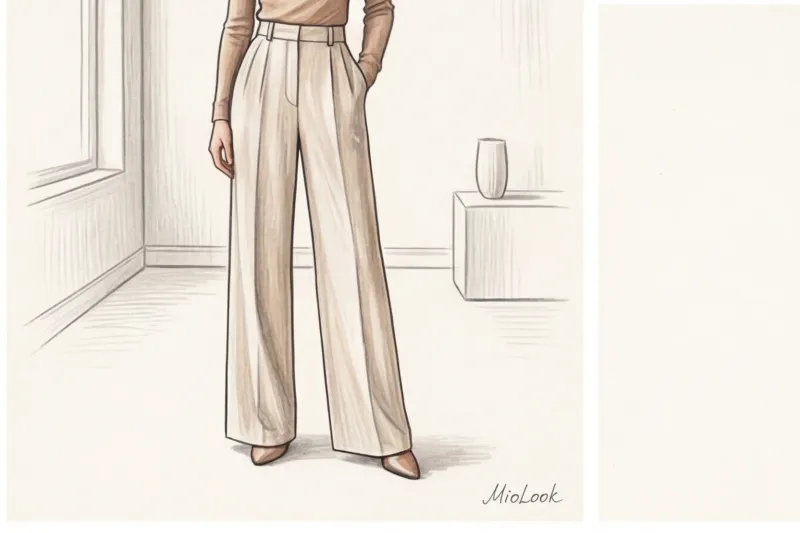
This is the most common and most costly mistake I see in my practice. Studying haircuts for thin girls Many people try to compensate for a lack of volume with extreme backcombing or extreme length. But the laws of physics and visual perception work differently. We've covered the silhouette architecture in more detail in our a complete guide to haircuts by body type , and today we will analyze the mathematics of ideal proportions specifically for an asthenic physique.
Silhouette architecture: why you should choose a haircut based on your figure, not just your face
Remember the golden rule: others perceive our entire appearance. You walk into a room, and people see your silhouette, not just the outline of your face.
This is based on the laws of Gestalt psychology. As the WGSN Trend Research Institute (2024) notes in its report, the human brain instantly evaluates the so-called "visual weight" of objects. Hair isn't just a frame for your face; it's a full-fledged architectural element of your figure. If you have an asthenic body type (thin bones, long limbs, and weak muscles), your natural visual weight is quite light.
In classic composition, the rule of thirds applies: ideally, the head and hair should make up no more than 1/7 to 1/8 of the total visual volume of the figure. When a thin woman creates a gigantic '80s-style bouffant or thick, heavy hair extensions, she drastically disrupts this balance. The hair begins to "outweigh" the body.
"If you put a huge, massive sofa in a tiny room, the room will seem even smaller. The same law of contrast applies to shoulder width and volume."
The Chupa Chups Effect: The Main Mistake in Creating Volume
A common myth is that very thin women need maximum, voluminous hair to create balance. This is completely counterintuitive, but hypervolume against narrow shoulders has the opposite effect.
A massive head of hair next to a slender collarbone acts like a magnifying glass, highlighting your fragility. In the industry, we call this the "lollipop" effect. Static, heavy volume, coated in hairspray, deprives the figure of dynamism.
Have you ever noticed the difference between static (heavy) volume and dynamic (moving) texture? Static volume is like a helmet of hair. Dynamic texture is the air between the strands that allows your hair to move with you. It's this air, not a rigid shape, that's needed for a slim figure.
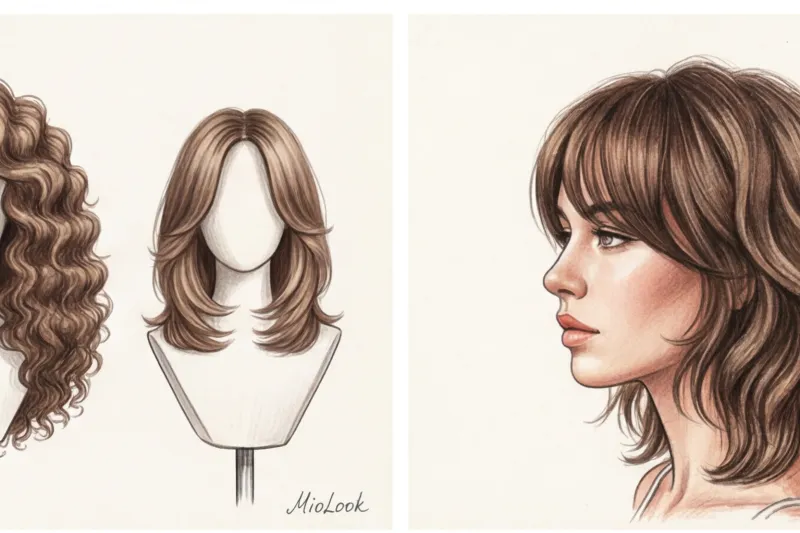
Overly sleek, sleek hairstyles are the other extreme. They create a "small head effect," which, when compared to a tall figure, makes the figure look disproportionate. The truth, as always, lies in the clever horizontal distribution of texture. By the way, to avoid guessing, in MioLook You can upload a photo of yourself and try on different hair densities—artificial intelligence will show you how the geometry of your shoulders changes.
Your perfect look starts here
Join thousands of users who look flawless every day with smart hairstyle and wardrobe selection.
Get access — €0.99 onceThe Right Haircuts for Skinny Girls: Top 4 Options for an Asthenic Body Type
The main goal of a haircut for a petite figure is to create horizontal lines along the collarbone and neck, visually widening this area without overloading it. We don't hide your graceful neck (it's your main asset!), we create a worthy frame for it.
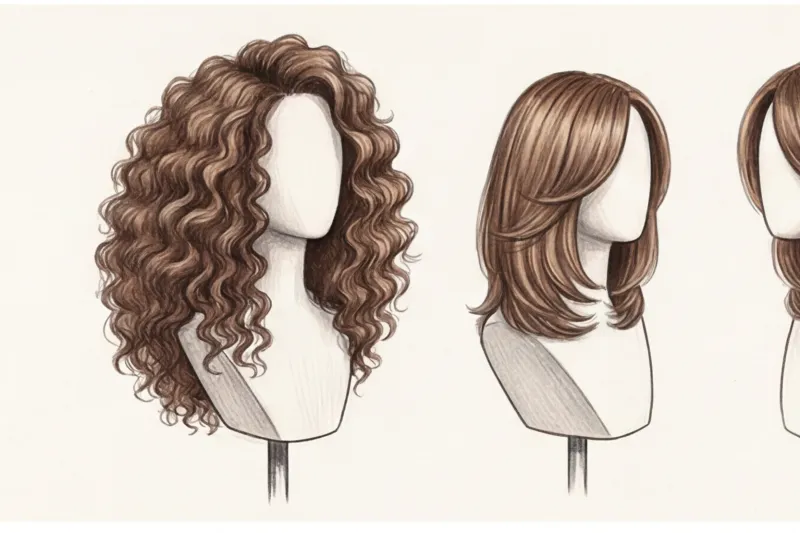
Textured bob and long bob (Lob)
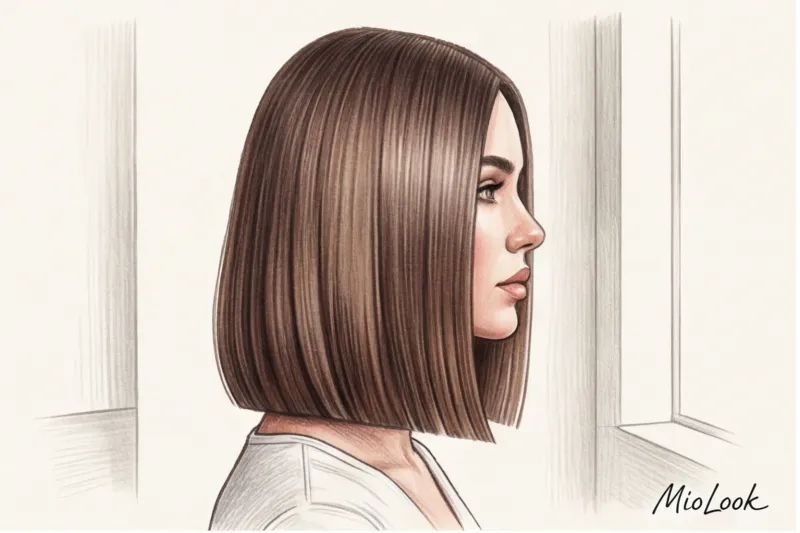
A length that reaches the collarbone or a couple of centimeters above is the "golden ratio" for thin girls. An elongated bob creates a clear horizontal line directly above the shoulder line.
I always ask my stylists to give my clients a smooth, tight cut at the bottom. Why? A tight cut visually thickens the ends, creating the illusion of natural thickness. We also add subtle texture to the face. A bob exposes the collarbones, highlighting your delicate fragility, but the tightness of the ends prevents the neck from appearing painfully thin.
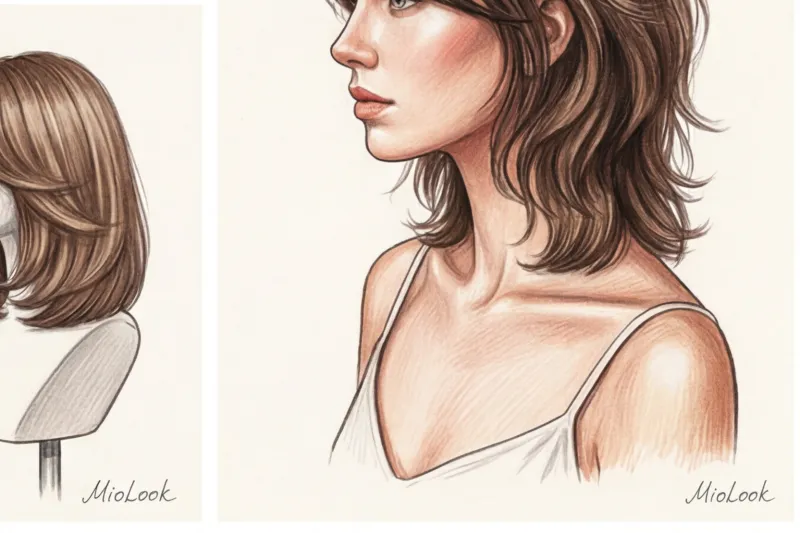
Shaggy and cascading haircuts
If you have naturally hollow cheeks and sharp cheekbones, straight lines can make your face look too severe. This is where Shag comes in.
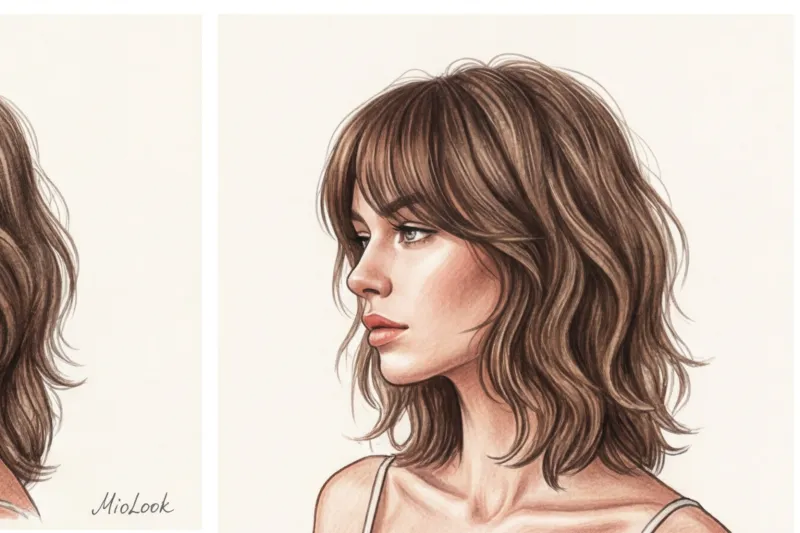
This layered mid-length cut adds that airy flair without the faux-backcombing. Choppy ends and the essential curtain bangs widen the face and conceal the hollows at the temples.
Important limitation: Be careful not to start the layers too high on the crown. Otherwise, the bottom edge of the hair will thin out into "rat tails," and we'll lose all the density.
Pixie: How to Wear Short Haircuts Without Risks
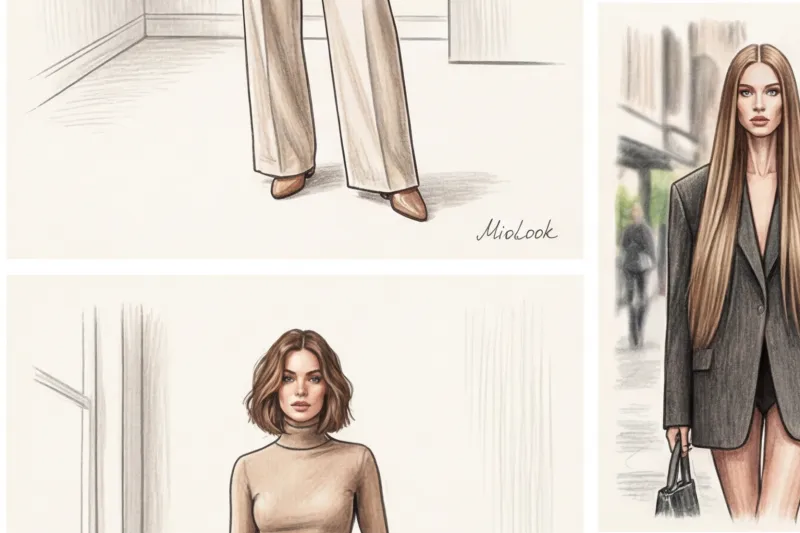
I have to make a disclaimer here: ultra-short, sleek, boyish pixie cut don't work For tall, asthenic women (over 175 cm). They dramatically reduce head size, transforming the silhouette into a pinpoint silhouette.
But if you're petite and thin, a pixie cut can look luxurious. The secret is in the elongated shape: leave volume on top and opt for asymmetrical, long bangs that fall across your cheekbones. This softens angular features and maintains feminine proportions.
What lengths and shapes should you absolutely avoid?
Geometry is unforgiving. Some hair shapes work against your figure, no matter how trendy they are.
- Straight hair below the waist. The vertical line effect. A long, straight line draws the eye downward, visually elongating and narrowing an already slender silhouette. You appear taller and thinner.
- A blind straight parting without volume at the roots. If your hair is long and just hangs down on either side of your face, it will highlight every hollow in your cheeks and make your nose look bigger.
- Graphic haircuts with shaved temples. A harsh undercut or extreme asymmetry emphasizes angularity. An asthenic body type typically lacks softness, and such shapes make the look aggressive and spiky.
Not sure which length to choose?
Try MioLook for free: A smart AI stylist will select the perfect look based on your facial and body proportions.
Get access — €0.99 onceEco-Friendly Styling: How to Thicken Fine Hair Without Damage
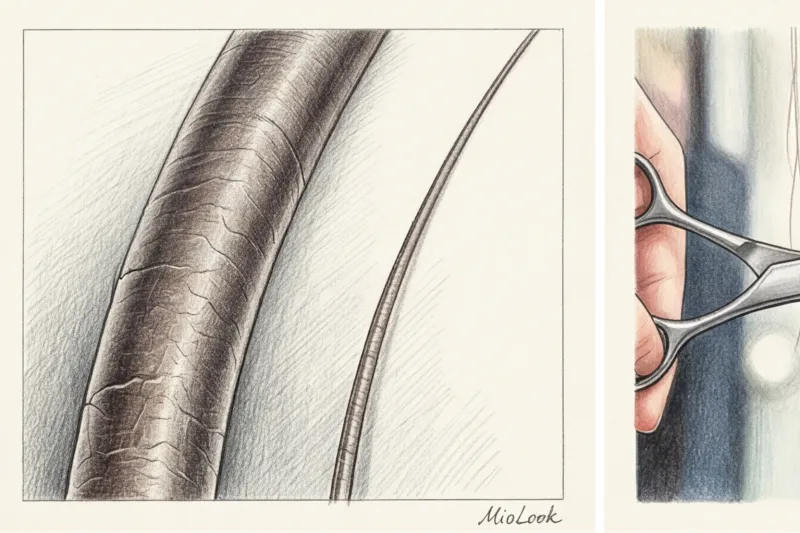
According to statistics, about 85% of women with an asthenic body type have naturally thin, porous hair. This is due to genetics and the thickness of the dermis where the hair follicles are located. Daily backcombing, root crimping, and strong-hold hairsprays simply destroy this cuticle.
According to the International Society of Trichology (2023), the mechanical strength of fine Slavic hair is 40% lower than that of Asian hair. By tugging out tangles from backcombing, you're systematically losing thickness.
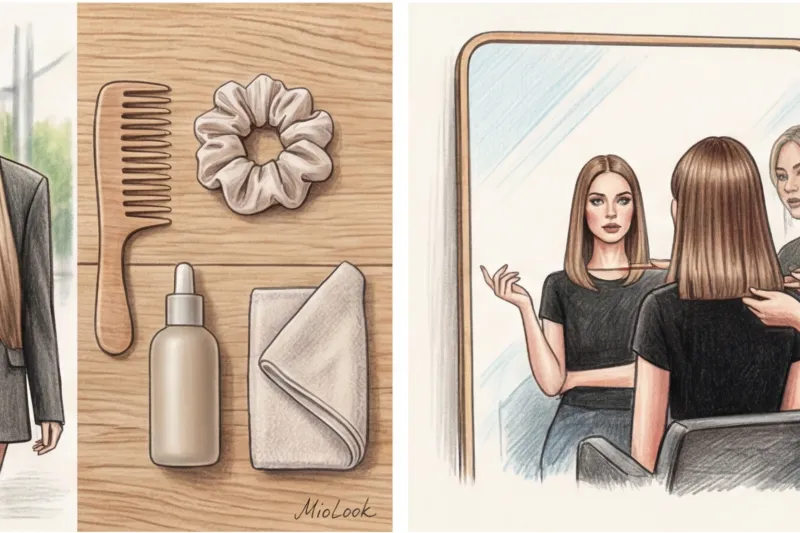
As an expert in textiles and fibre structure, I advocate an eco-friendly approach:
- Salt sprays and powders. Instead of using a hot curling iron, apply a basic texturizing spray with sea salt to damp hair (good mid-range options cost between €15 and €30) and dry your hair by squeezing it between your palms. This creates volume thanks to the microcrystals of salt that coat the hair.
- Leave-in firming lotions. Look for hydrolyzed keratin and silk proteins in the ingredients. They fill the voids in porous hair, making it physically thicker.
- Silk scrunchies. Forget tight elastic bands. Replace them with natural silk accessories with a density of 22 mm (approximately €20–€35). The smooth texture of silk prevents mechanical friction and protects fine hair ends from breaking.
Checklist: How to Set the Right Task for a Hairdresser
Even a brilliant hairdresser can make a mistake if you're discussing a haircut while already sitting in a chair, wrapped in a shapeless negligee.
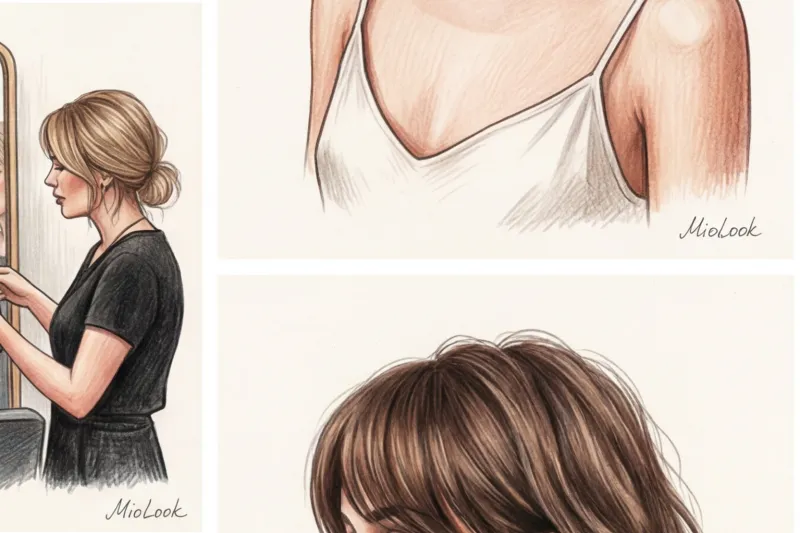
To save yourself from an unsuccessful salon visit, implement this checklist into your life:
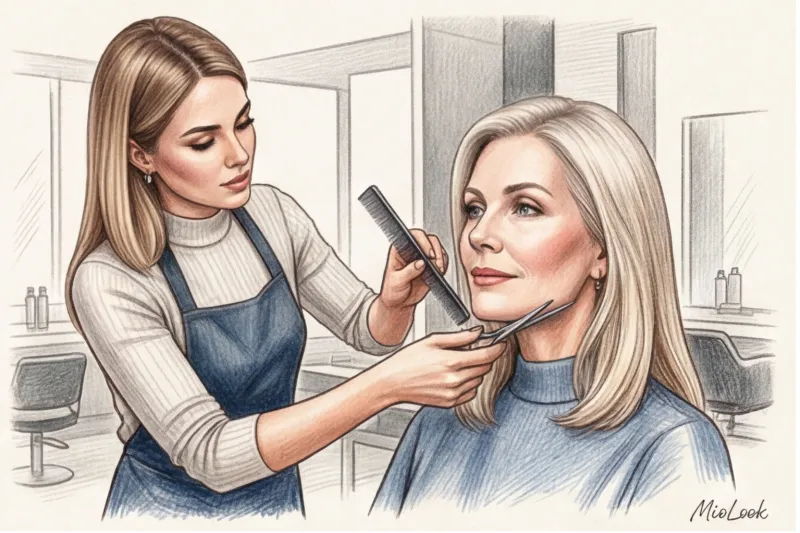
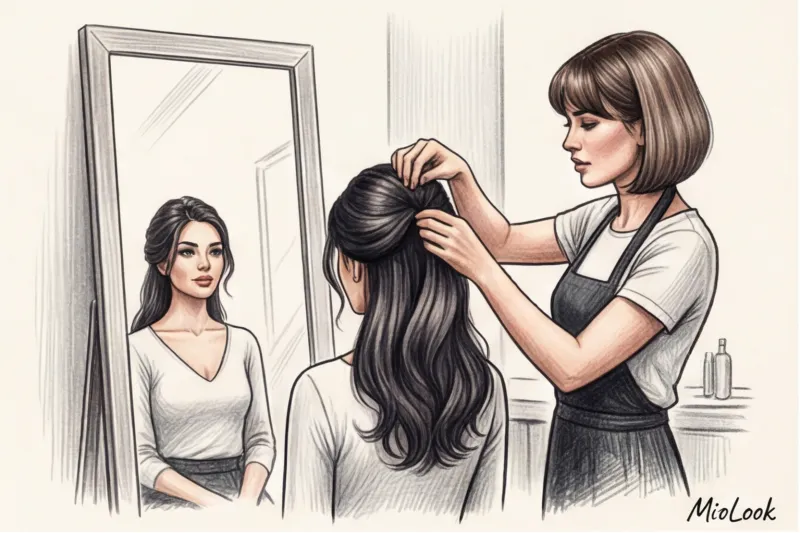
- Communicate while standing. Ask your stylist to assess your figure, height, and shoulder width in front of a mirror before putting on the cape. What flatters a slim woman 160 cm tall will look too short on a woman 180 cm tall.
- Correct wording. Never ask for "thicker"—you'll get an old-fashioned backcombing. Ask for "inner texture and a tight, blunt cut."
- Lazy styling test. Let your stylist know right away: "I won't spend an hour brushing this." The haircut should look beautiful after a regular blow-dry, embracing the natural flow of your hair.
A smart approach to beauty isn't about trying to hide your thinness with pounds of someone else's hair. It's about finding proportions that make your natural fragility look like a catwalk aesthetic, not a cause for concern.