According to statistics from the British organization The Waste and Resources Action Programme (WRAP), 70% of evening accessories are purchased for a single occasion, after which they hang hopelessly in the closet for years. Now think back to your last gala. You spent weeks searching for the perfect outfit, did your hair intricately, but just before you left, you glanced at the thermometer and, in a panic, threw on the first stole you could find. Sound familiar?
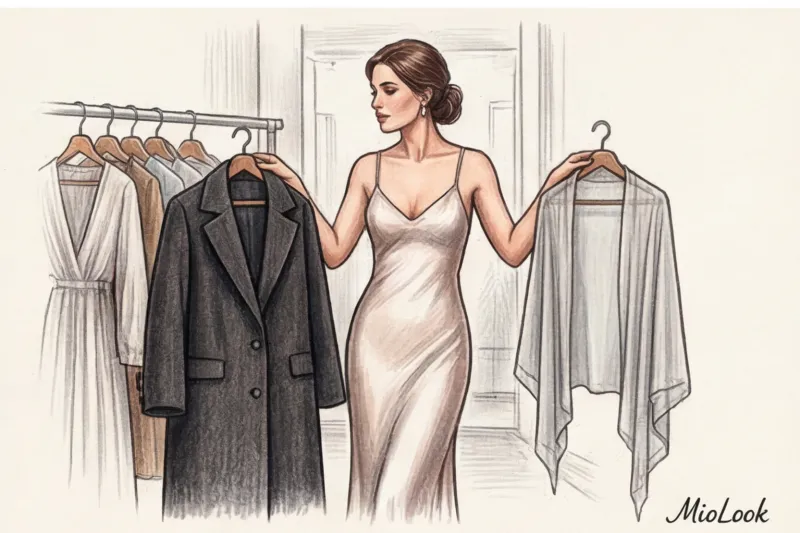
One of my clients once made this classic mistake. She bought a luxurious dress made of thick, heavy cady silk, but decided to skimp on the top layer. The cheap viscose-polyester stole not only ruined the entire silhouette with its cheap sheen—it created such static electricity that the hem of the dress stuck to her legs all evening, ruining the design of the expensive garment. It was then that I finally realized: cape for an evening dress — this is not a utilitarian piece of fabric “to keep warm,” but a full-fledged architectural element that can either save or destroy the entire image.
Moreover, the top layer directly dictates the choice of accessories and shoes underneath. We discussed the rules of this balance in more detail in our The complete guide to the perfect shoes for an evening dress Let's figure out how to stop buying disposable items and learn how to choose a top layer that will become a long-term investment in your wardrobe.
The Law of "Visual Weight": Why a Cape on an Evening Dress Changes Everything
In styling, there's a concept called "visual weight." This refers to how massive, heavy, or dense a garment appears to the eye, regardless of its actual weight in grams. Smooth silk has minimal visual weight, while velvet, brocade, or thick wool have the greatest. Adding a top layer dramatically shifts the emphasis in the silhouette.
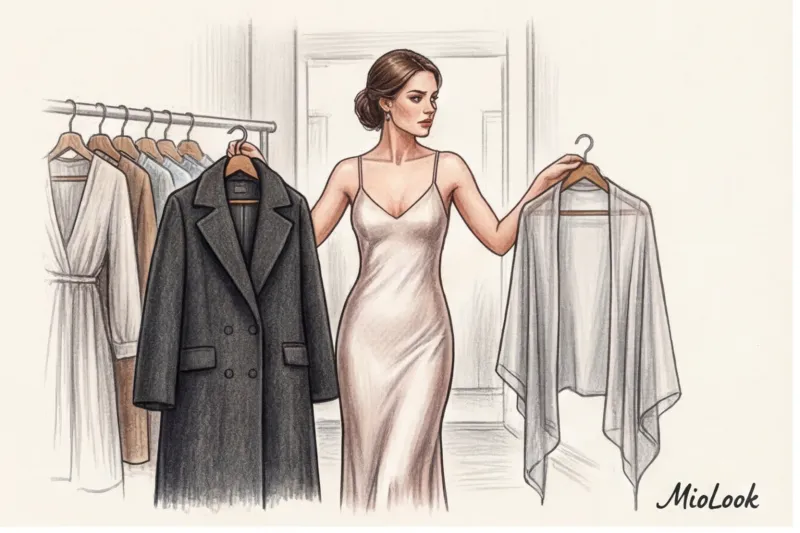
Layering a heavy textured wool jacket over a lightweight slip dress can add bulk to the top. To avoid overpowering the look and making you appear shorter, support this weight with closed-toe suede pumps or ankle boots. Conversely, a translucent chiffon cape calls for lightweight sandals with thin straps.
"A common mistake is to consider a cape without considering the shoes. The top and bottom of an outfit always communicate. If you're wearing a thick tuxedo on top and thin open sandals on the bottom, the silhouette risks becoming an inverted triangle," is a rule I always emphasize during fittings.
To avoid getting confused in these nuances, you can upload your things to MioLook A smart algorithm will analyze the density of fabrics and tell you if your outfit is out of balance.
Forgetting the Bolero: 3 Fatal Mistakes When Choosing a Top Layer
For years, the eveningwear industry has been pushing stereotypes that are long overdue for abandonment. If you want to look classy, here are three things you should ditch right now.
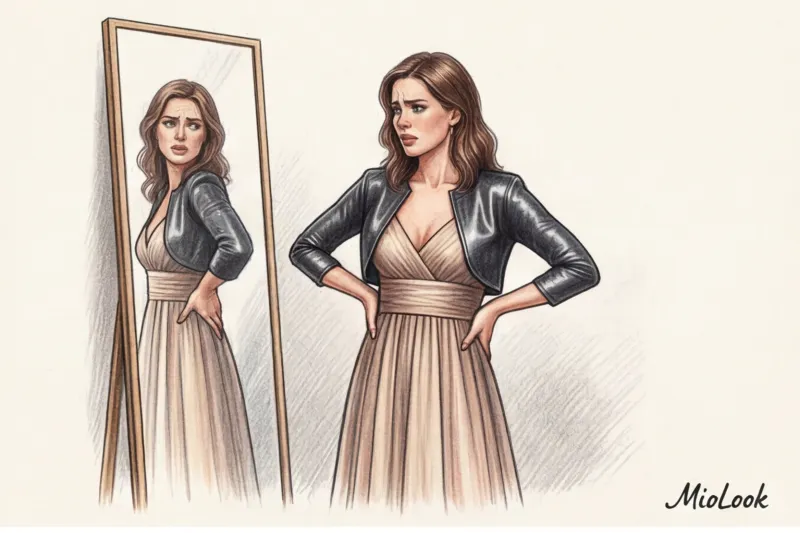
- Mistake 1: Knitted boleros. There's a myth that a bolero makes you look more feminine by covering your arms. In reality, it's the most insidious item of clothing. The rigid horizontal line of a bolero cuts your waist exactly in half, often at the widest point of your back. It turns even the most graceful figure into a rectangle.
- Mistake 2: Synthetic translucent scarves. 100% polyester is a plastic. Its melting point is around 250°C, making it completely non-breathable. Wearing such a scarf on the dance floor creates a greenhouse effect, and friction against tights and silk creates static electricity, which ruins any beautiful drape.
- Mistake 3: Tone-on-tone matching from cheap fabrics. Trying to match a satin cape exactly to a satin dress, but using a lower-quality fabric, is a surefire way to fail. The difference in textures under the spotlight will scream out that the items were bought in different places. It's better to go for a radical contrast than to be off by half a shade.
Access to MioLook for €0.99 — one-time payment
A smart AI stylist will select the perfect look for any event.
Get access — €0.99 onceCut Architecture: Choosing a Jacket or Tuxedo
According to a 2024 report from the Lyst platform, searches for "men's tuxedos for women" increased by 41% ahead of the holiday season. And this is the most sensible decision in evening fashion. The strict geometric cut of men's clothing, paradoxically, best accentuates a woman's fragility.
In tailoring there is a rule of the golden ratio (proportion 1/3 to 2/3). Ideal cape for an evening dress The jacket should not divide the figure 50/50. The jacket should either end at the waist (taking up 1/3 of the silhouette) or extend below the hips, covering the buttocks.
My personal method for checking the quality of an evening jacket in the store is the shoulder seam test. Pinch the shoulder between your fingers: you should be able to feel a dense interlining (interfacing) inside that holds its shape even on a hanger. If the shoulder is soft and saggy, the jacket won't flatter your silhouette.

Oversized blazer with a slip dress
The sexiest yet safest styling trick. The wide shoulders of an oversized blazer create a powerful contrast with the thin lingerie straps of a silk dress. An important rule: it's best to drape the blazer over your shoulders rather than wear it with the sleeves. This maintains a dynamic gait, and the voluminous fabric makes your arms appear slimmer. The ideal length for this blazer is mid-thigh or slightly lower, so it completely covers the widest part of your hips.
A cropped spencer jacket: how to maintain proportions
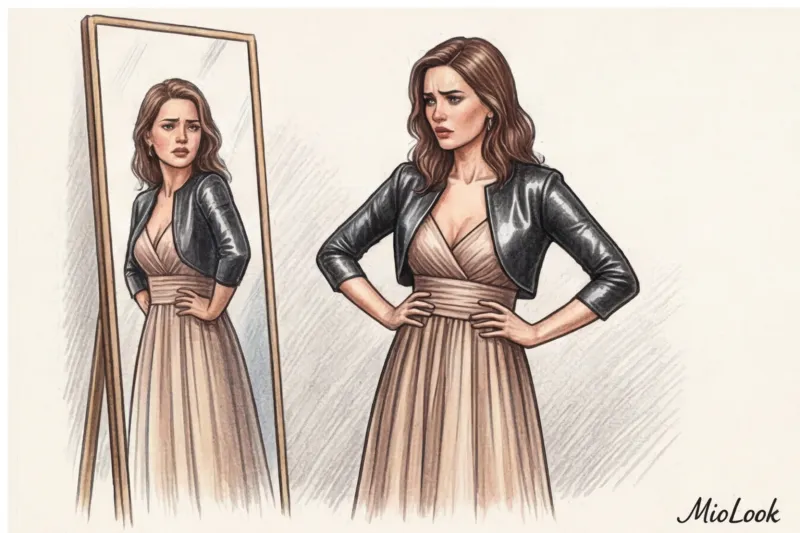
If your dress has a full A-line skirt (like the New Look), a long blazer will bunch up the skirt and create a voluminous "hump" at the hips. A spencer jacket, which ends sharply at the waist, is the solution. The key is structural rigidity. A spencer jacket shouldn't be clingy; it should stand up straight, like a box, creating a contrast with the flowing fabric of the skirt.
The Art of Drapery: Stoles, Shawls, and Capes
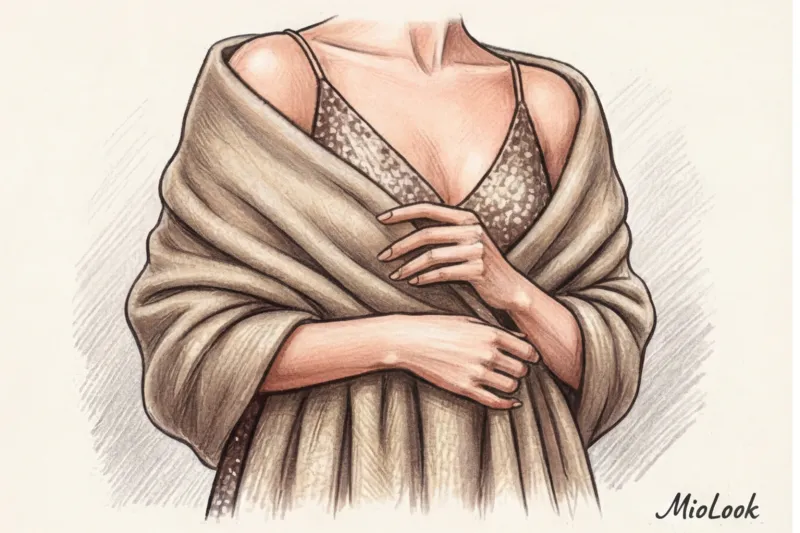
What if your dress has complex, accent sleeves (puffed, puffed, or voluminous ruffles)? Any jacket will crush them mercilessly. In such cases, the only solution is a cape—a sleeveless cape with armholes. Capes create a regal static effect and elongate the silhouette with their vertical lines.
If you choose a classic, wide stole, you need to solve the main problem: constantly busy hands adjusting it. I'll let you in on a professional stylist secret: on the red carpet, we secure stoles to our shoulders with double-sided tape or tiny hidden pins that clip to the dress strap. Another elegant trick is to tie a long stole with a thin belt at the waist over the dress. This gives you a sophisticated, layered look and leaves your hands completely free for a glass of champagne.
Textile cheat sheet: how to distinguish noble fabric from cheap one
No cut can save a look if the material looks cheap. How can you check fabric right in the store?
- Crease test: Squeeze the edge of the stole in your fist for 10 seconds and release. High-quality merino wool or silk velvet will instantly straighten out, leaving only slight creases. Acrylic and cheap viscose will remain crumpled.
- Drapability: Place the fabric on your forearm. Fine cashmere (2 ply or more) or silk with a density of 22 momme or more will form heavy, stretchy folds. Cheap polyester will "stiffen" at the folds.
Research by The Woolmark Company's Wool Institute demonstrates the unique thermoregulation properties of natural fibers: wearing 100% fine wool, you won't feel hot in a heated room or freeze outdoors, as the material wicks away moisture. Acrylic, on the other hand, acts like a greenhouse.
Texture contrast: subtle but effective solutions
The most memorable looks are built on the clash of opposites. Forget the "silk on silk, lace on lace" rule. If you're going for a corporate event In a creative agency where a classic dress code seems too boring, play with textures.
- Smooth with fluffy: A simple satin slip dress will take on a whole new look when paired with a cape embroidered with marabou ostrich feathers or a voluminous vintage faux fur jacket.
- Tender with rough: A chiffon or lace maxi dress paired with a voluminous matte leather biker jacket (without unnecessary hardware) is the perfect choice for informal celebrations or a Friday dinner. The leather takes away the childishness of the lace, adding a rock 'n' roll edge to the look.
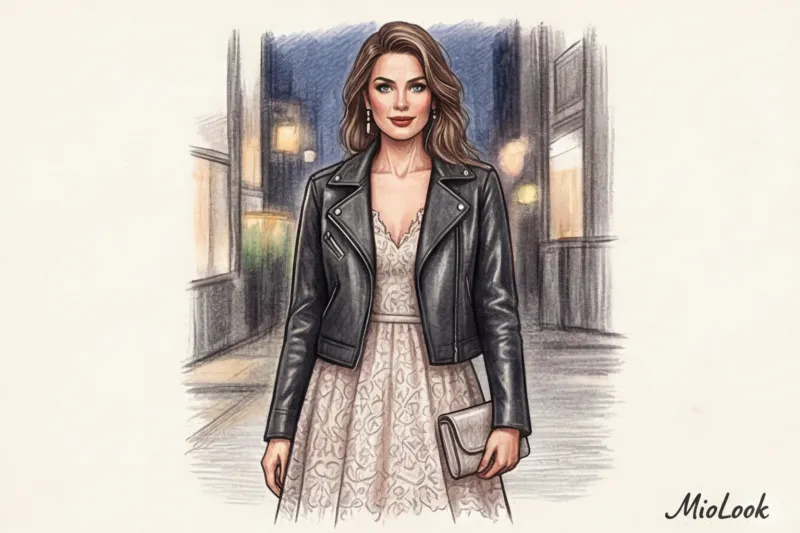
Here, the rule from our pillar material comes into play again: if you've layered a heavy leather jacket over a lightweight dress, be sure to support the visual weight with structured footwear—closed-toe pumps, Cossacks, or ankle boots. Weightless strappy sandals won't visually support a chunky leather upper.
Your perfect look starts here
Join thousands of users who look flawless every day with MioLook. Calculate your cost per wash (CPW) right in the app.
Get access — €0.99 onceAn eco-friendly approach: how to choose a versatile cape that will last for years to come
According to the Global Fashion Agenda report, disposable eveningwear is one of the most damaging to the environment. Buying a shiny synthetic cape for a single evening not only wastes money but also releases microplastics that take hundreds of years to decompose.
Let's calculate the Cost-Per-Wear (Cost Per Outing). Let's say you bought a cheap polyester stole with rhinestones for 3,000 € for one wedding. Its CPW is 3,000 €. It's hot, it gets staticky, and you won't wear it anywhere else.
Alternatively, you could invest 25,000 € in a perfectly tailored black tuxedo made of 100% merino wool from brands like COS, Massimo Dutti, or local premium brands.
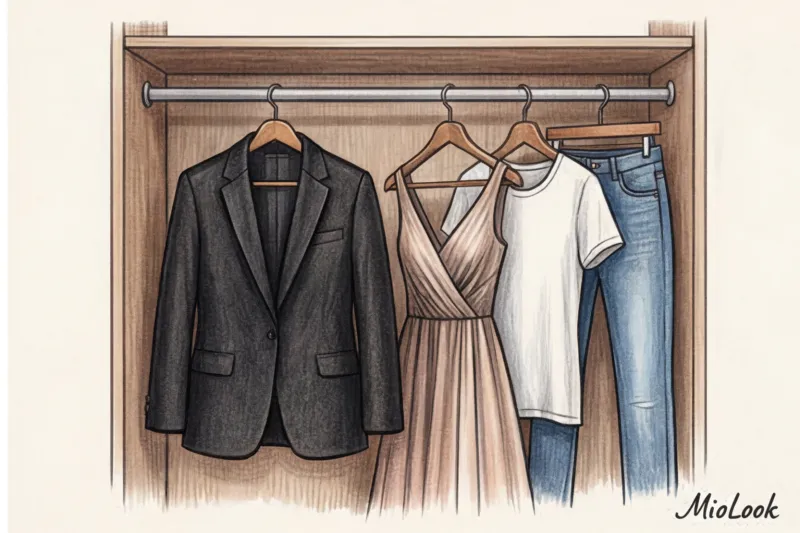
On Friday night, this tuxedo serves as a luxurious cape for an evening dress On Saturday morning, you wear it with a white basic tee, straight blue jeans, and loafers for brunch with the girls. On Monday, it saves your business image In the office. You'll wear it at least 50 times a year. Its CPW is 500 €. That's six times more affordable than a cheap disposable item, not to mention the difference in your appearance.
Stylist checklist: final look fitting
Before leaving the house, do a final test in front of a large mirror. I always give this instruction to my clients to avoid surprises at the event itself.
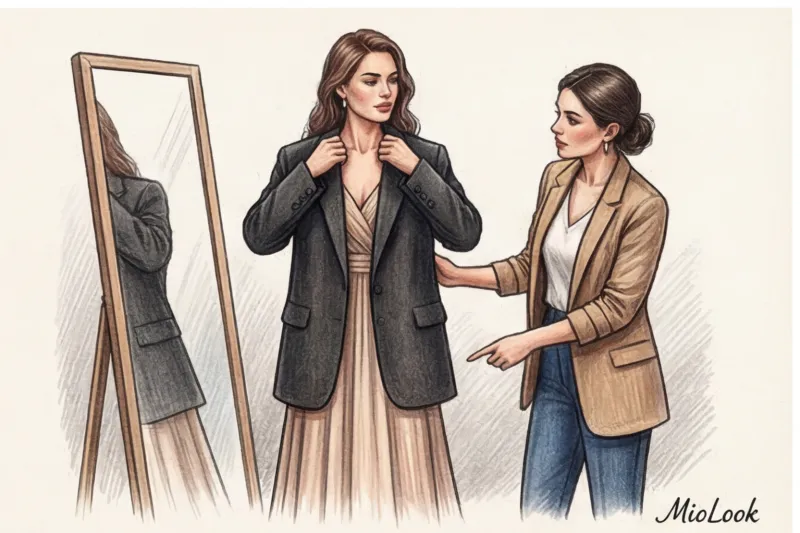
- Length check: Visually divide your height into thirds. The cape shouldn't cut your figure exactly in half (the proportion is 1/1). If it ends at the widest part of your hips, replace it with a shorter or longer style.
- Test in motion: Walk around the room for 2-3 minutes. Is your shawl slipping off your shoulders? Do you have to constantly tug it down? If so, secure it with a hidden pin or belt, otherwise you'll spend the entire evening tense rather than enjoying the festivities.
- Evaluation under different lighting conditions: Take a mirror selfie with a flash. Cheap fabric will instantly take on a plastic sheen in bright light. Natural silk or high-quality wool will be matte or give off a rich, deep glow.
- Harmony with shoes: Take a full look at yourself. If you're wearing a bulky, heavy jacket on top and bare toes in tiny sandals on the bottom, the look falls apart. Balance out the bottom with more closed-toe or textured shoes.
The top layer is the picture frame. It shouldn't distract from the painting itself, but a cheap plastic frame can devalue even a masterpiece. Invest in architecture, choose natural fabrics, avoid half-measures like knitted boleros, and your evening look will look flawless from the first to the last minute of the celebration.