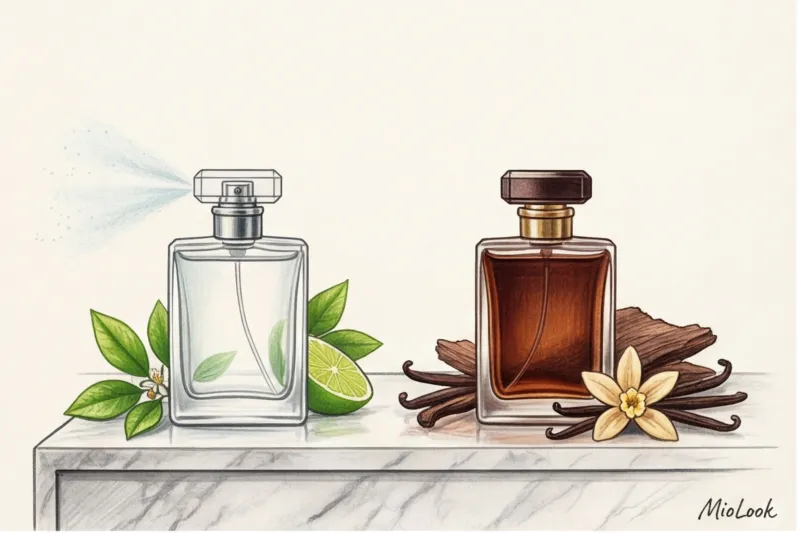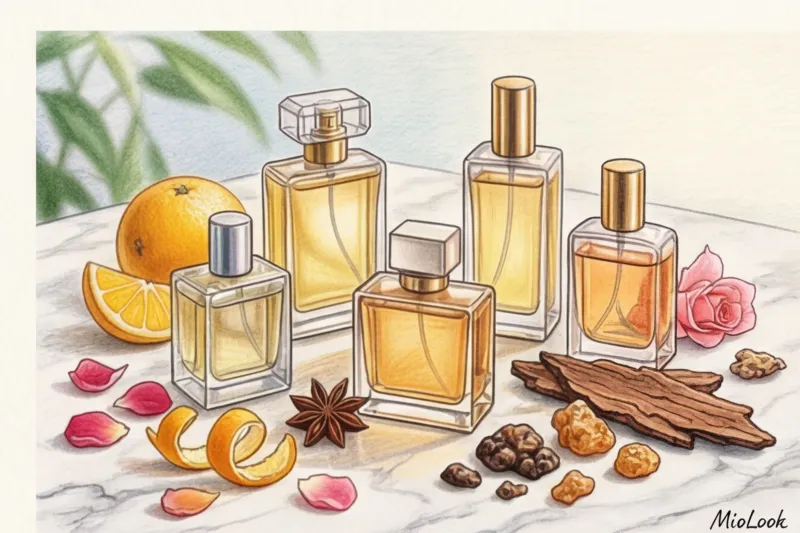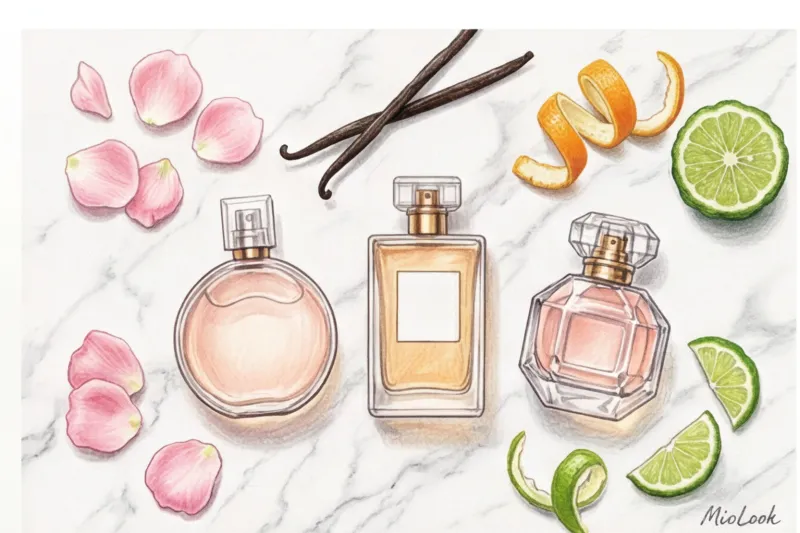
You're standing at the counter of your favorite brand, holding two identical bottles. The only difference is three letters on the bottom of the glass: EDT and EDP. The helpful salesperson recites the well-rehearsed phrase: "Get the eau de parfum; it's just more concentrated and lasts longer." Over the 12 years of working with my clients' premium wardrobes and perfume capsules, I've heard this argument hundreds of times. And every time, I want to politely but firmly intervene.
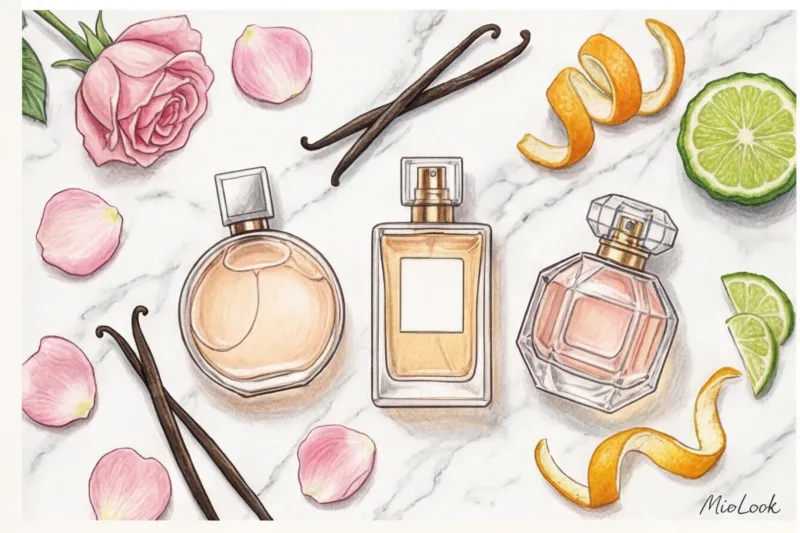
Reducing the difference between concentrations solely to persistence is the biggest misconception in the industry. What is the difference between eau de toilette and perfume? , goes far beyond alcohol percentages. Often, these are completely different compositions, created for different fabrics, different times of day, and different temperatures. To create a competent olfactory profile, you need not only to understand the chemistry of the fragrance but also to know the base. We discussed this in more detail in our a complete guide to perfume families.
Today, I invite you to take an insider's look at perfumery. We'll explore why paying extra for an extract sometimes makes no sense, how fabric density dictates your morning bottle choice, and why your favorite EDP fragrance suddenly feels "foreign."
The Anatomy of Fragrance: How Eau de Toilette and Eau de Parfum Differ Chemically
Any perfume is a complex engineering construct consisting of three basic elements: an aromatic concentrate (a composition of essential oils and synthetic molecules), alcohol, and distilled water. Many people mistakenly believe that alcohol is used only to make the product cheaper. In fact, alcohol is a "lift."
According to the laws of physics, without a volatile carrier, oils would simply remain as a greasy stain on your skin, accessible only to those who nuzzle your neck. Alcohol, evaporating from body heat, captures the fragrance molecules and lifts them into the air, creating that signature sillage. According to strict IFRA (International Fragrance Association) standards, the percentage of oils to alcohol base determines the official classification on a bottle.
Pyramid of concentrations: from cologne to extract (Parfum)
- Eau de Cologne (EDC): 2–5% oils. A historical format built on citrus and herbs. The alcohol evaporates quickly, and the scent lingers on the skin for 1–2 hours. This is a refreshing morning gesture, not an all-day perfume.
- Eau de Toilette (EDT): 5–15% oils. The top notes take center stage here. There's enough alcohol to literally "explode" in the air with a sparkling trail. A perfect balance of volatility and presence.
- Eau de Parfum (EDP): 15–20% oils. The emphasis shifts to the heart notes. The scent is denser, more rounded, and has less sillage in the first few minutes, but it lingers longer on the skin.
- Parfum / Extrait: 20–30% (sometimes up to 40%) essential oils. The top league. Minimal alcohol means the scent has almost no sillage. It sits close to the skin, creating an intimate cocoon, and opens with deep base notes.
Why durability depends on more than just percentages
This is where the main trap for buyers lies. Longevity is a physical property of the ingredients themselves, not just their concentration. Bergamot or sweet orange essential oils are composed of light, small molecules. They will evaporate from your skin within 20-30 minutes, even if you buy them in Extrait concentration (30%).
On the other hand, heavy molecules—synthetic musks, ambroxan, woody resins (oud, patchouli)—will linger on a sweater for 24 hours, even in modest concentrations of eau de toilette. I always warn my clients: don't expect an expensive citrus EDP to last 24 hours; money can't buy the laws of physics.
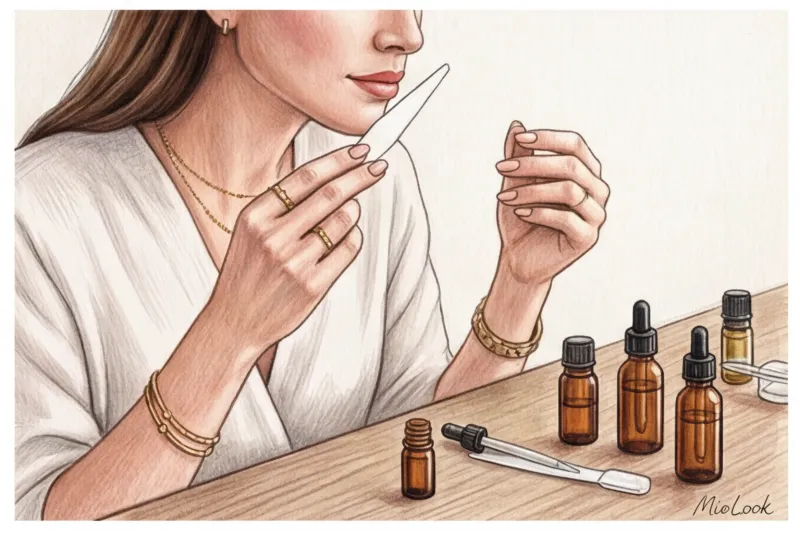
The industry's biggest myth: "It's the same scent, just with different staying power."
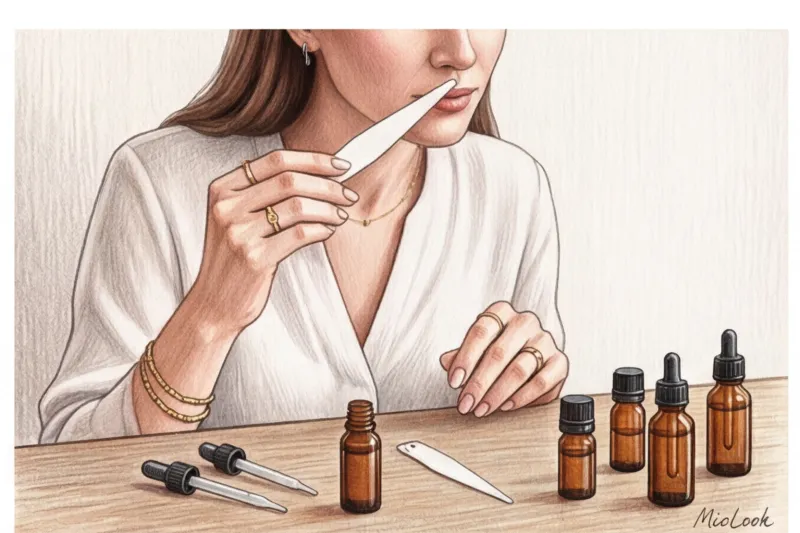
And now the key insight that's being kept quiet at the stands. A brand can't simply take an eau de toilette formula, pour in twice as much of the same oils, and call it EDP. If you do that, the composition will fall apart. The top notes will become suffocating, and the base will turn into a muddled mess.
When changing the concentration, the perfumer is forced to recreate the formula. Often, EDT and EDP versions of the same fragrance are created decades apart, even by different perfumers! A classic example is the legendary Chanel No. 5. The EDT version, created by Henri Robert in 1952, is a sharp, woody-aldehyde scent with a vibrant character. The EDP version, released by Jacques Polge in 1986, is completely different: softer, floral, with a clear emphasis on peach and bourbon vanilla.
"When you buy an EDP instead of an EDT, you're often buying a flanker—a different version of the fragrance where the middle and base notes are enhanced by toning down the top notes. An eau de toilette will always sound crisper and fresher, while an eau de parfum will be sweeter and thicker."
Access to MioLook for €0.99 — one-time payment
A smart AI stylist will create the perfect look and suggest which fragrance will best complement your capsule wardrobe today.
Get access — €0.99 oncePerfume etiquette and dress code: what to wear, where, and with what fabrics
I had a telling case. One of my clients, a top manager at a fintech company, complained that her colleagues avoided sitting next to her during morning meetings. It turned out she'd been liberally applying Baccarat Rouge 540 Extrait concentration outside the office. The heavy resins and burnt sugar in the confined space of the morning were literally depriving everyone of oxygen. Once we switched her to a light EDT with a woody-tea profile, the problem disappeared, and her image only increased in status.
Perfume is a wardrobe staple, just like a jacket or a bag. And it follows the rules of texture:
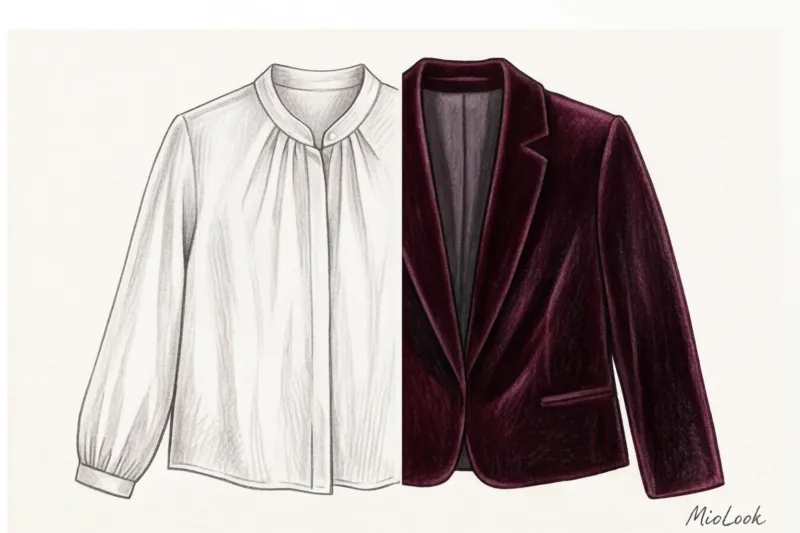
- Lightweight fabrics (silk, chiffon, thin cotton, linen): Requires concentration EDT Eau de toilette has the same airiness as these materials. Furthermore, it contains fewer oils, meaning the risk of leaving a permanent grease stain on an expensive silk blouse (as once happened to my favorite Loro Piana piece) is minimal.
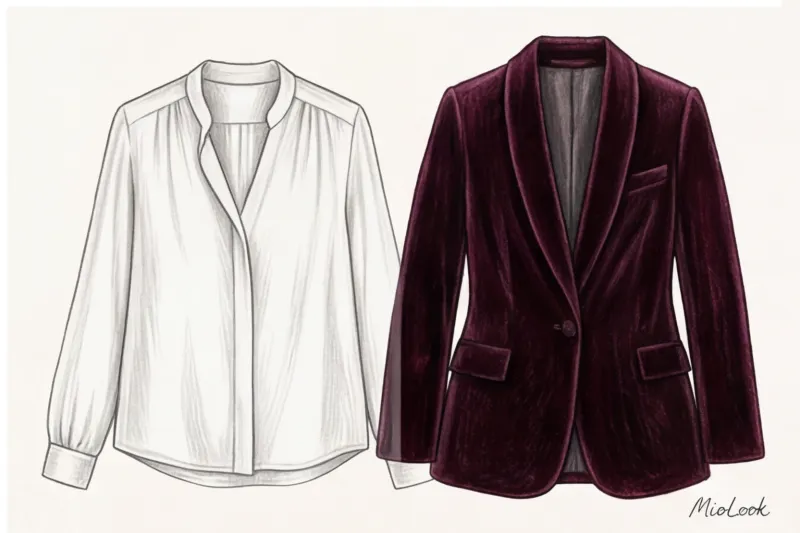
- Dense fabrics (cashmere, tweed, wool, heavy denim): The perfect canvas for EDP Wool fibers perfectly retain the heavy molecules of middle and base notes. Eau de parfum on a cashmere sweater smells expensive, cozy, and classy.
- Evening dress code: Time for Perfume (Extrait) Apply microdoses to pulse points (wrists, sternal notch), not clothing. This is an intimate luxury for private dinners, when the scent should be felt only by those you've allowed into your personal space.
How to Test Different Concentrations Before Buying: A Stylist's Guide
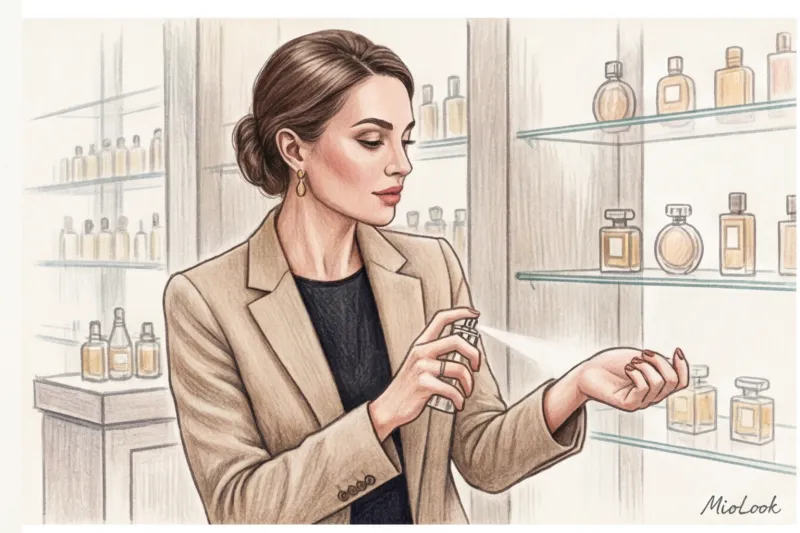
If you're in a boutique looking for an investment bottle, forget about buying it within the first 15 minutes. The paper (blotter) is deceiving. On cold, porous cardboard, EDT smells fantastically bright, while EDP can seem flat and inexpressive because heavy oils require body heat to "awaken."
My step-by-step testing algorithm:
- Apply EDT to your left wrist and EDP of the same scent to your right wrist.
- Don't rub! Friction breaks the molecular structure of the top notes.
- Leave the store. The boutique's perfumed atmosphere distorts your perception.
- Evaluate the start after 10 minutes (at this stage, eau de toilette often wins).
- Evaluate the base after 4 hours. This is the scent you'll be living with for most of the day. Often, a vibrant EDT leaves only a soapy residue by this point, while the EDP unfolds into a luxurious base.
Important limitation: This algorithm works differently if you have so-called "hot skin" (closely spaced blood vessels, you quickly flush and warm up). On hot skin, EDTs can burn out within an hour, so your default choice is denser EDPs.
Your perfect look starts here
Join thousands of users who look flawless every day with MioLook. Plan your wardrobe and shopping in one click.
Get access — €0.99 onceInvesting wisely: when to overpay for EDP and when to save with EDT
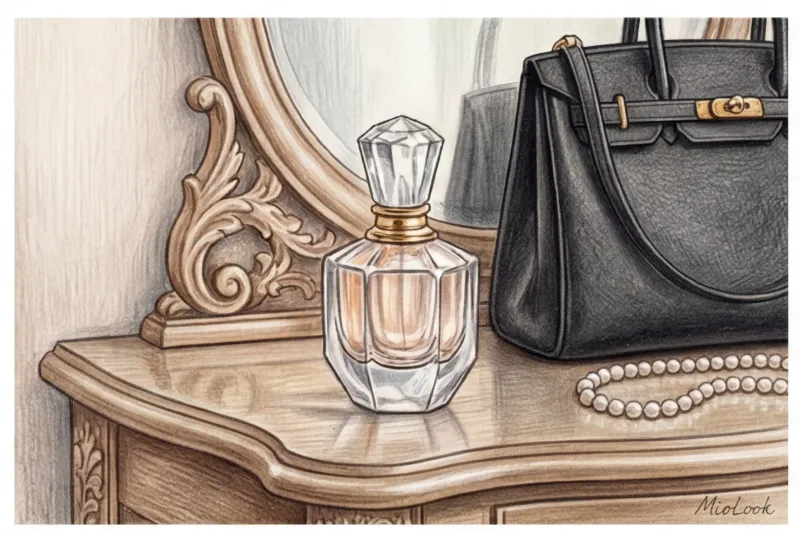
As an investment wardrobe expert, I always analyze cost per wear. An EDP bottle costs 20-30% more than an Eau de Toilette, but often turns out to be a better value. Why? Because for a dense trail, you only need one or two sprays of an EDP, whereas a light EDT requires refills four to five times a day. As a result, the EDP bottle is used up more slowly.
However, there are clear rules when overpaying is pointless:
When to save money and get EDT:
If you choose fresh, aquatic, green, or citrusy scents (like Jo Malone or Guerlain's Aqua Allegoria), their beauty lies in their volatility. Trying to intensify the citrus by adding oils often results in the scent smelling like household chemicals or losing its crystalline freshness.
When to invest in EDP or Parfum:
If you're choosing oriental, gourmand, leather, or complex woody compositions (Tom Ford, Amouage, Kilian), consider the depth of the base—resins, vanilla, tonka bean, tobacco—in these families. In eau de toilette concentrations, they sound flat and don't reveal their full potential.
To avoid buying unnecessary things and to see what scents are missing for your current clothes, I recommend using smart wardrobe feature in the MioLook app When you see your capsules visually, it becomes clear: your formal suits need a statement EDP, and your summer linen dresses are long overdue for a light, citrusy EDT.
Checklist: How to Choose the Perfect Concentration for Your Fragrance Wardrobe
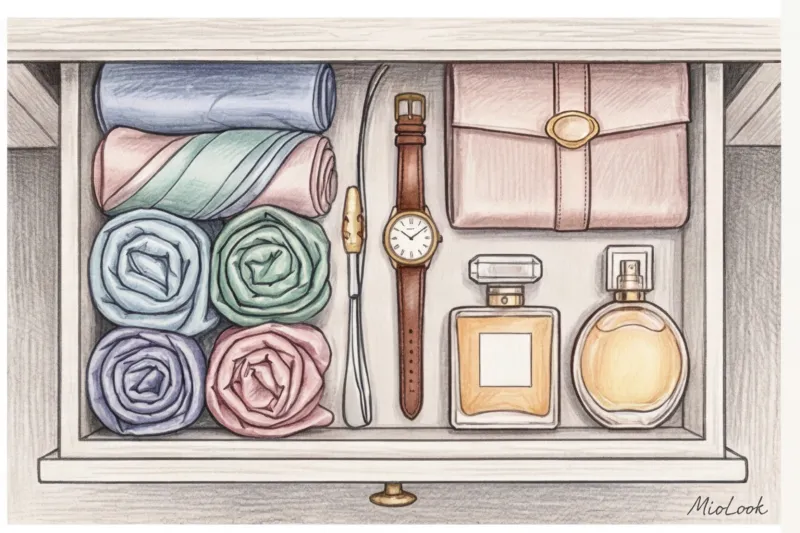
To summarize, forget the rule "the more concentrated, the better." Choose a format that suits your specific needs. Before purchasing, ask yourself three questions:
- What is my goal? If you want a long, flowing trail that will fill a hallway without suffocating, go for the EDT. If you're looking for a dense, status-conscious cocoon, choose the EDP or Extrait.
- What dominates my wardrobe? For lovers of silk blouses, flowing viscose, and light cotton, the EDT is safer. For fans of heavy denim, structured jackets, and cashmere, the EDP is ideal.
- What season is it now? In the summer heat (25°C and above), dense eau de parfum begins to melt on the skin, revealing heavy animalic or cloying notes. In summer, we wear EDTs. In winter, on the contrary, in the cold, eau de parfum shrinks and becomes prickly, giving way to warming EDPs.
Perfume is an invisible accessory that enters the room a second before you and lingers long after you leave. Don't let marketing gimmicks dictate your choice. Test fragrances on your skin, consider the texture of your clothing, and remember: sometimes the subtle understatement of an eau de toilette sounds much more valuable than the flashy luxury of a thick extract.