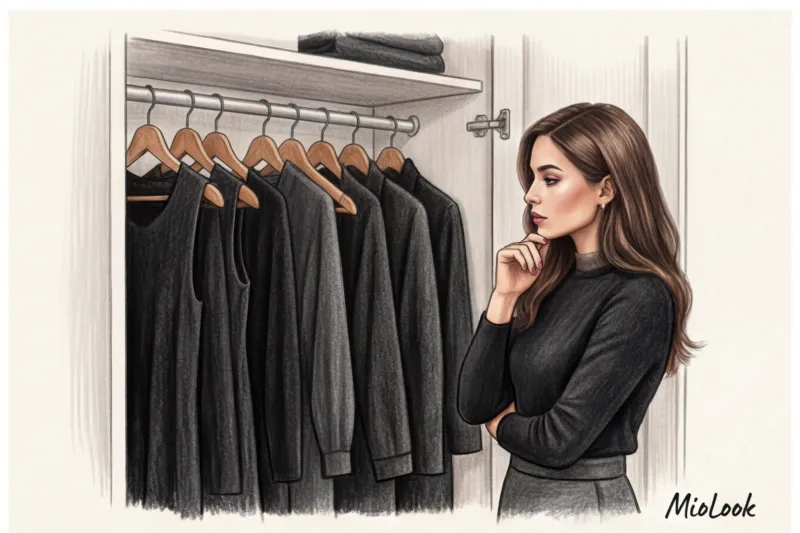
How many times have you bought a stunning, bright item, brought it home, tried it on with your usual basics, and… left it hanging in your closet with the tag still attached? We've all been there. A bright color is tempting on the hanger, but in reality, it often leaves you stunned. We think that to wear bright colors, you either have to possess Anna Wintour's innate gift or be prepared to look like a traffic light at an intersection.
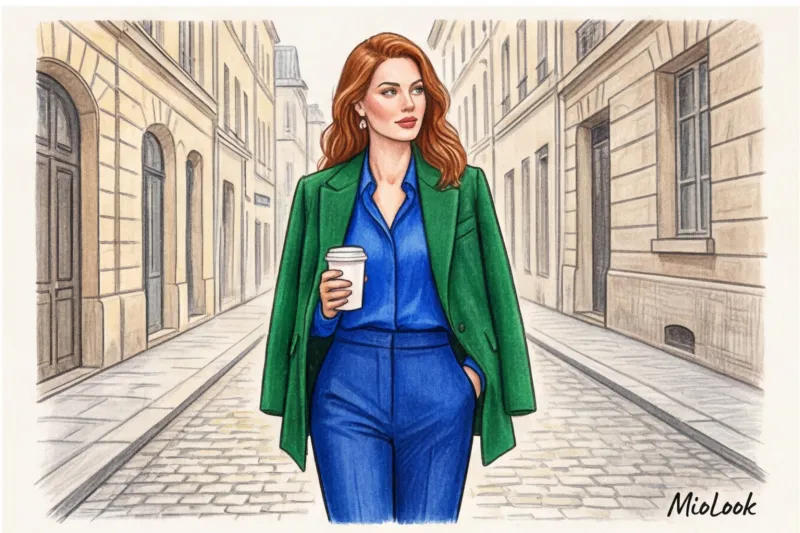
But after 12 years of working as a personal stylist in Europe, I have developed a different formula. Studying color blocking in clothing, rules Its application isn't about shock value, but rather about mathematically calculating proportions and understanding your natural contrast. Today, we'll explore color blocking not as an abstract play with Itten's color wheel, but as a physical wardrobe management tool.
What is color blocking in clothing: rules that work in real life
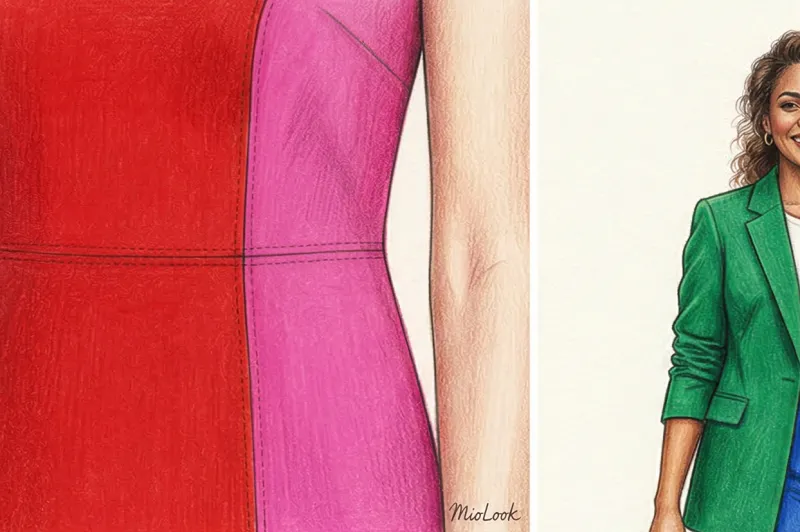
The term "color blocking" entered history thanks to Yves Saint Laurent's iconic "Mondrian" dress in 1965. But let's leave fashion history to the theorists. In today's street style, color blocking is the use of localized, pure colors in large areas without prints, gradients, or patterns.
The main myth my clients bring to me is that color blocking is always about neon and loud shades. This is absolutely untrue. The most elegant European color blocking can consist of just two colors or be based on a combination of one accent shade and a deep base (for example, classic camel and a rich electric blue).
According to WGSN's 2024 data, the "dopamine wardrobe" trend (overly bright, chaotic combinations) is on the wane. It's been replaced by architectural minimalism. We're no longer mixing five crazy shades. We're taking a clean cut and filling it with color, like a shape.
Why facial contrast is more important than the color wheel
You can perfectly match complementary colors and wear perfectly tailored pieces, but the look will still fall apart if you don't consider your natural level of contrast. We've covered this in more detail in our the complete guide to appearance contrast.
One of my clients in Warsaw, with a soft Slavic complexion (light brown hair, fair skin), bought a trendy fuchsia suit at Zara. It was impeccably tailored. But during the fitting, she nearly cried: "I look tired and sick in it." The problem wasn't the suit itself, but rather that the high saturation of the color simply "devoured" her low-contrast face. The suit dominated, and the woman was lost.
The color block shouldn't be brighter than your appearance. If your natural contrast is low, your color block should be pastel.
How it works in practice:
- High contrast (for example, porcelain skin and dark hair): You can confidently wear a classic color block of high saturation - cobalt blue with tangerine, emerald with ruby.
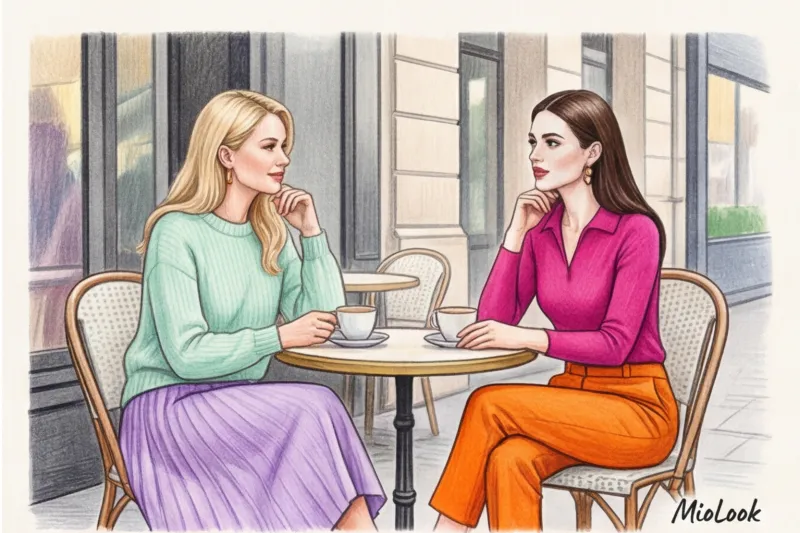
- Low contrast (Light brown hair, subtle brows, even skin tone): Your choice: pastel or muted color blocking. We swapped out the fuchsia for a pistachio jacket and soft pink trousers. The effect was stunning: her face was illuminated, eliminating the tired look.
Access to MioLook for €0.99 — one-time payment
A smart AI stylist will analyze your contrast and select the perfect look.
Get access — €0.99 once3 Win-Win Color Combination Schemes
I won't bore you with complex color terminology. To dress stylishly every day, all you need to do is master three basic techniques.
Analog circuit: an expensive and safe start
This is a combination of shades that lie adjacent on the color wheel. For example: navy blue, light blue, and emerald. Or burgundy, red, and orange. Why do I love this technique so much? Analogous color blocking creates a soft vertical color line that visually elongates and slims the figure. It's the perfect option for those who want to add color but are wary of harsh contrasts.
Complementary scheme: a bold duet
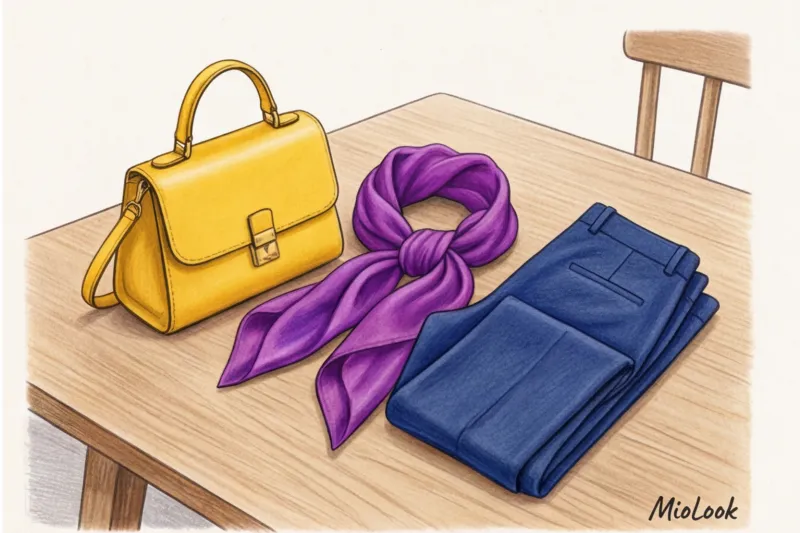
Here we're juxtaposing opposites: yellow and purple, blue and orange. To avoid looking like an animator's uniform, remember this strict rule: the shades shouldn't be equal in area or intensity. If you're using a deep purple suit, only include yellow in the form of a structured bag.
The 60-30-10 ratio: a stylist's secret
This rule came to styling from interior design, and it works flawlessly. The golden ratio in color blocking distributes volumes so the eye doesn't get tired:
- 60% (Base): The main color (for example, a pantsuit or a long coat).
- 30% (Addition): Second color (blouse, turtleneck sweater or large scarf).
- 10% (Accent): A bright flash of a third color (bag, shoes or scarf).
Texture is everything: what makes a bright image cheap
We've reached the most common and most annoying mistake beginners make. A bright color works like a magnifying glass. It instantly highlights any cheap material, uneven seams, or loose texture.
Thin polyester in rich red or green has a treacherous sheen and looks like a carnival costume. Compare a red blouse made of thin mass-market synthetics for €15 and a structured red shirt made of thick cotton poplin (for example, from COS for €69). The color is the same. But the second one has a prestigious and architectural look.

The rule of texture contrast: In color blocking, smooth and textured pieces should be combined. If you have smooth cobalt silk pants, pair them with a chunky knit sweater in mustard. The contrast in texture will add a sophisticated and expensive touch to the look.

Your perfect look starts here
Join thousands of users who look flawless every day with MioLook, choosing textures and colors with just one click.
Get access — €0.99 onceColor blocking in European street retail: where to find the right pieces
Where can I buy color blocking items without going broke, but still get the right, "clean" colors?
IN Zara You need to be extremely careful. Their brightly colored collections are often made from low-quality viscose, which loses its shape after the first wash. Filter your selection: look for brightly colored items only in wool blends, heavy denim, or lyocell lines. Avoid their thin knits in neon shades.
Brands COS And Arket — these are the absolute kings of "grown-up" architectural color blocking in the mid-price segment. They're the go-to for basic color blocking: crisp T-shirts, structured midi skirts, and tailored shirts. Their color palette is always subtly muted, making combinations more refined.
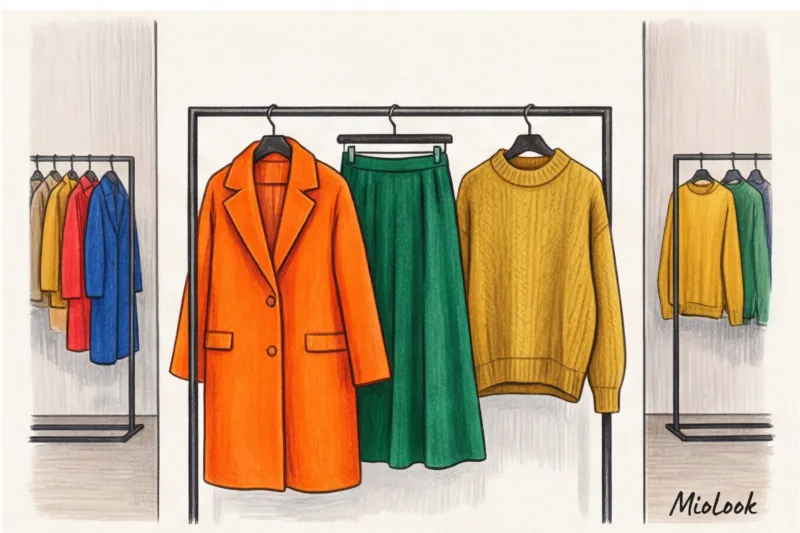
If we are talking about autumn-winter wardrobe, my favorite is Massimo Dutti Here you need to look for deep, "precious" shades: emerald, sapphire, dark ruby, mustard.
Advice from practice: Adding color through two accent accessories (a good leather belt and bag from Massimo Dutti will cost you around €100-€120) is a much smarter investment for a beginner than buying a new bright coat (from €250) that you will quickly get tired of.
Color Blocking in a Business Wardrobe: How to Stay Dress Code-Compliant
What if you need to dress for a Friday dress code at the office, where everyone wears jeans, but you want to look a little more put-together? Or you have an important video conference?
Color blocking does exist in the business environment, but it's shifting from open neons to muted, darkened blocks. Combinations of burgundy and navy (deep blue) or emerald and graphite gray look luxurious.

Have you ever noticed how clothing affects your appearance on Zoom calls? On camera, we only see your "talking head" and shoulders. If you wear a blouse with a small, colorful print, the camera often creates a blurry effect (moiré effect), and your face disappears. A solid, saturated color block near your face (for example, a terracotta turtleneck under a navy jacket) focuses your interlocutor's attention on you and makes your features stand out.
In a formal, conservative office, use micro-color blocking. Let a formal gray pantsuit and white shirt be your base (90% of the look), and fuchsia shoes or an electric blue bag be your bright 10%. Dress code is respected, but the level of boredom is reduced to zero.
Checklist: How to Create Your First Color-Block Look
Ready to give it a try? Stand in front of your closet and follow these 4 simple steps:
- Assess the contrast of your face. If you're Snow White (fair skin, dark hair), choose pure, bright colors from your closet. If you have a soft, non-edgy look, put away the neon and reach for pastels or deep, muted shades.
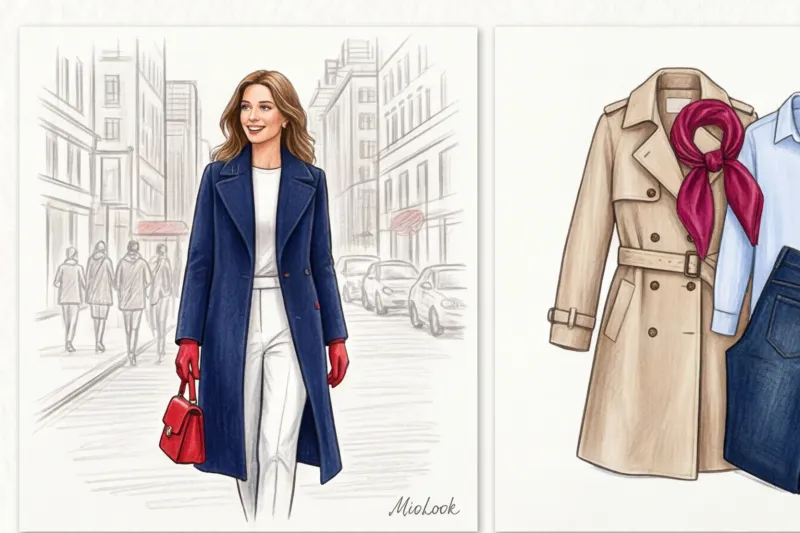
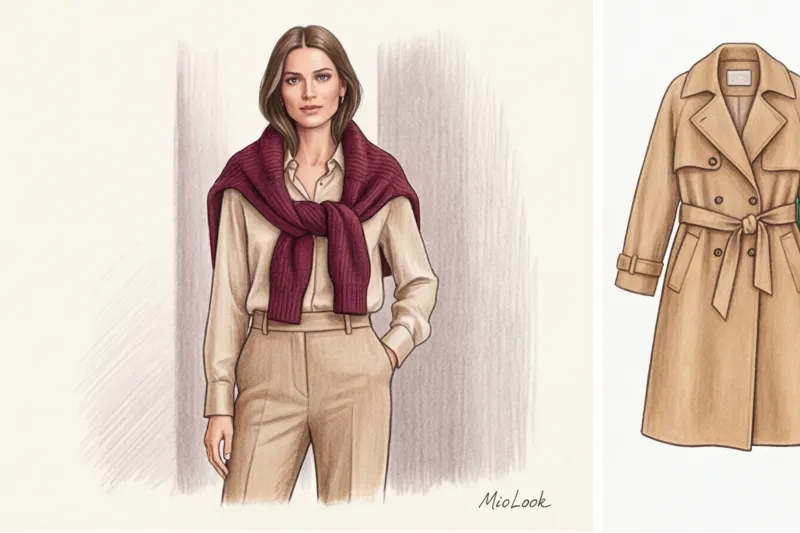
- Choose a base neutral color (your 60%). Let it be a beige trench coat, blue straight jeans or a dark gray suit.
- Add one bright block through the "safe zone". The safe zone is the area away from your face (like pants, a skirt, or shoes). A bright color near your face can highlight dark circles under your eyes if you haven't slept well. However, emerald pants or red shoes won't ruin anything.
- Complete the look with a bun. To prevent bright shoes from looking out of place, repeat their color in a micro-accent: lipstick, glasses frame, or watch strap.
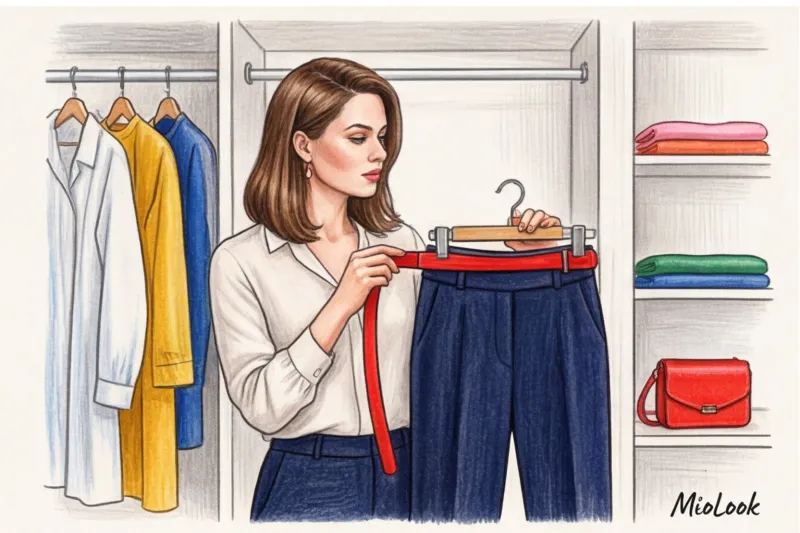
And the most important limitation for those who are just starting out: three-color rule Never use more than three strong shades in a single look (black, white, and gray don't count—they're achromatic). A fourth color is guaranteed to turn a well-thought-out color block into chaos.
Color blocking isn't about being the loudest in the room. It's about managing attention and creating body structure with color. Start with one bright bag against a calm trench coat, evaluate how you feel, and move on. Your wardrobe deserves a break from its gray-and-black slumber.