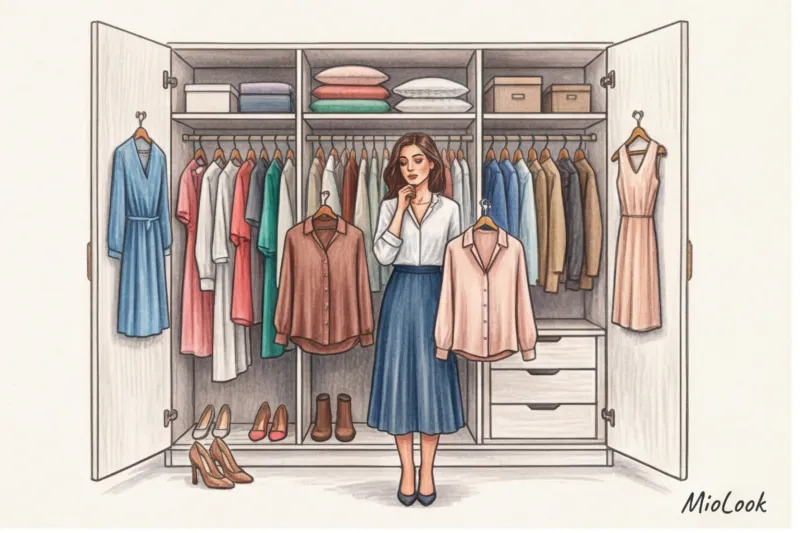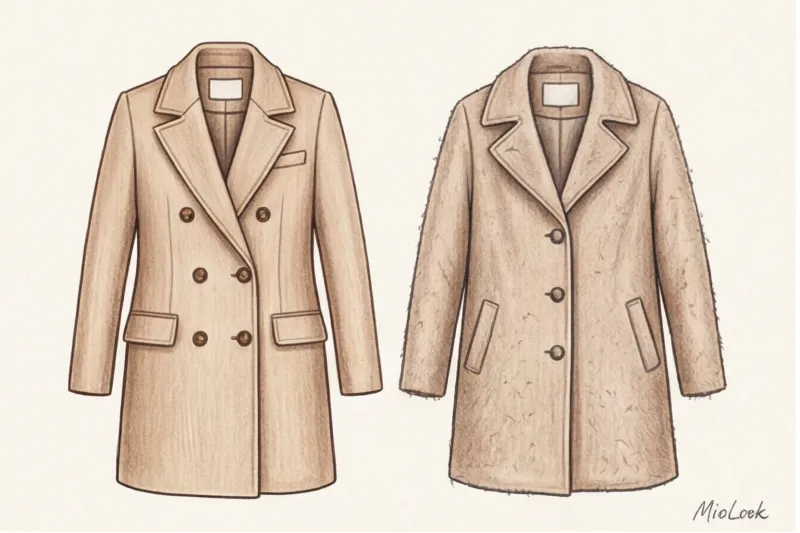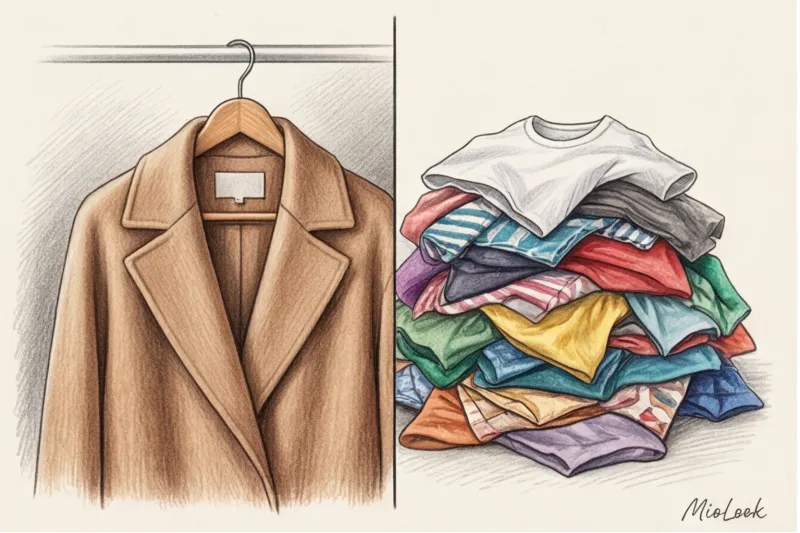
Let's conduct a thought experiment. Take a look at your closet right now. What's the most expensive item there? I bet your eyes immediately fell on the cashmere coat, the designer bag, or the silk evening dress. But as a stylist with ten years of experience, I have to disappoint you: your intuition is wrong.
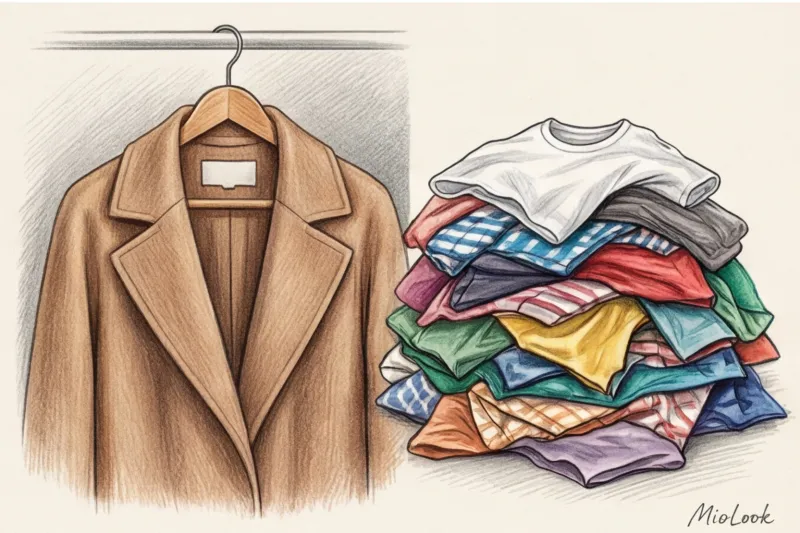
The most expensive item in your wardrobe isn't the one with the most zeros on the price tag. It's that neon pink blouse you bought on sale for 70% off and never wore. The mathematics of fashion are merciless: if the number of wears is zero, the real value of that item approaches infinity. To avoid this financial trap, savvy fashionistas use the Cost Per Wear (CPW) metric. And today, the best tool for this is clothing tracker app , which takes care of all the routine calculations. We discussed in more detail how to properly digitize your things and organize them into a single system in our A complete guide to the digital wardrobe base.
In this article, we won't be offering platitudes like "buy less." We'll explore CPW as a powerful psychological scanner that will reveal what kind of life you're actually living and what kind you're just imagining.
The Illusion of Value: Why Our Intuition Doesn't Work When Buying Clothes
According to a large-scale study by the Ellen MacArthur Foundation (2022), the lifespan of clothing has decreased by 36% over the past 15 years. Today, the average item is worn only 7-10 times before ending up in a landfill or the back of a closet. How did we get here?
Dopamine and the way our brain evaluates benefits are to blame. Seeing a red "-70%" price tag sends us into a frenzy of euphoria. At that moment, critical thinking shuts down. We focus on the initial receipt, not the potential lifespan. American psychologist Barry Schwartz, in his "paradox of choice" theory, brilliantly demonstrated that an abundance of cheap and accessible options doesn't make us happier; it only paralyzes our ability to make good decisions.
"A discount is an anesthetic under which you're sold something you didn't need in the first place. The true price of an item isn't determined at the checkout, but rather through wear."
That's why the Cost Per Wear concept is so sobering. It shifts the focus from the moment purchases to the process use.
The CPW Formula in Action: The Mathematics of a Conscious Wardrobe
The classic formula is ridiculously simple: (Price of item + care cost) / Number of wears But the devil, as always, is in the real-life examples.
Let me tell you a story from my experience. One of my clients, a partner at a law firm, was terrified of expensive purchases. Over the course of a year, she bought five pairs of "budget" black pumps from a mass-market store for $60 each. The result? The heels of some wore out within a week, others rubbed until they were bloody blisters, and the faux leather of others cracked. She wore each pair maybe three or four times.
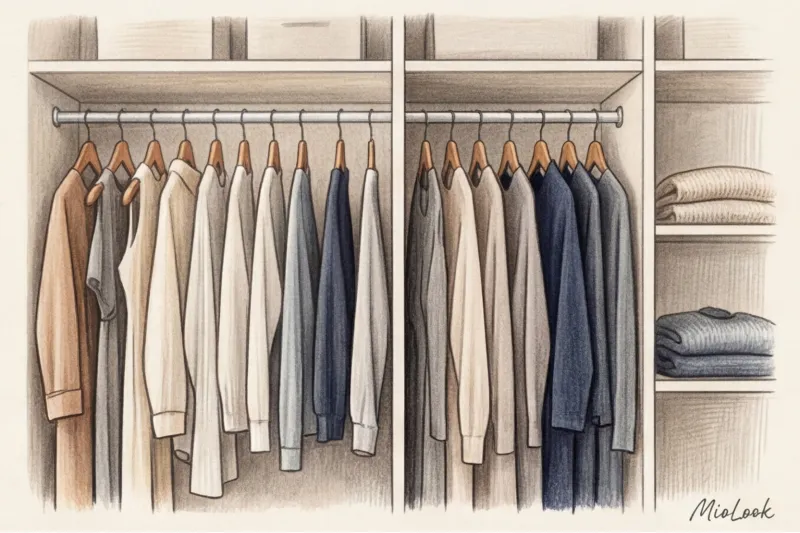
Let's calculate her CPW: $60 / 3 outings = $20 per workday in pain and discomfort. She paid $300 for five pairs. During our next shopping trip, we bought her a pair of perfect premium leather pumps with the right last for the same $300. She wore them almost every workday for two years (about 300 outings), plus $50 for preventative care and cream. Her new CPW: $350 / 300 = $1.16 per outing. A comfortable, high-status outing.
It's a similar story with outerwear. A high-quality 100% wool coat for $1,000 that you wear for 60 days across three seasons (180 times) will cost you $5.50 per outing. A trendy polyester jacket for $100 that will go out of style after a month (worn 10 times) will cost you $10 per outing. The cheap jacket turned out to be twice the price of the Max Mara coat.
Your ideal image begins Here
Join thousands of users who look flawless every day with MioLook.
Get access — €0.99 onceClothing Tracker: An App That Acts as a Financial Analyst for Your Closet
I know what you're thinking. "Camilla, should I start an Excel spreadsheet and cross it out every time I put on jeans?" Nope. I've tried giving clients spreadsheets—99% give up on them by the fourth day. It's too boring.

Here comes the stage clothing tracker (app) Digitalization of the wardrobe completely automates this process. When my clients start using MioLook , the magic happens automatically. You simply collect outfits in the planner, and the algorithm automatically calculates how many times a particular sweater or skirt has been worn over the course of a month.
Integrating statistics with a digital wardrobe
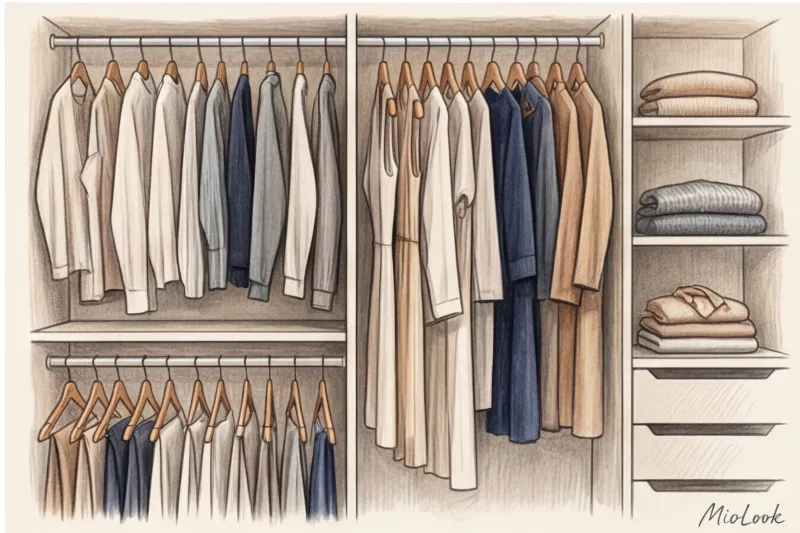
The real fun begins after a month of using the tracker. The algorithms show the real ROI (payback) of each item. If your basic sweater has an absurdly high CPW (because you don't wear it), that's a clear sign your capsule isn't working. The app identifies "blind spots"—items you can't wear with anything, or categories where you're clearly short.
Style Diagnostics Through Numbers: What High CPW Screams About
Cost of exit isn't just a financial metric. After 12 years of wardrobe analysis, I've learned one thing: a high cost of exit is a symptom of a disconnect between your reality and your illusions.

In style psychology, there are concepts of the "Real Self" and the "Fantasy Self." We often buy clothes for a version of ourselves that doesn't exist. I recently audited a 35-year-old client's closet. She works remotely 90% of the time, is raising two children, and her routine consists of school, a laptop at home, a park, and the occasional cafe with friends. Guess what her wardrobe consisted of, 60%? Sequin dresses, silk slippers, and 10-centimeter stiletto ankle boots. Her "Fantasy Self" is a bohemian party girl. But her real life demands comfortable cashmere, heavyweight cotton (180 g/m² and above), and comfortable loafers.
Items from the "Fantasy Self" wardrobe always have a disastrously high CPW. They hang around for years, causing feelings of guilt.
Three Types of Items That Are Ruining Your Wardrobe
- "Disposable" TikTok trends. The aesthetics of Mob Wife or Coquette Core last in your feed for a maximum of three months. You wear a leopard-print coat of dubious quality twice, take a photo, and forget about it.
- Compound things without reason. That dress with its intricate draping that requires special seamless underwear, a specific hairstyle, and waiting for the perfect weather. It's too complicated to live with.
- Shoes "just stand up straight." If you can't walk two bus stops in shoes without crying, you'll subconsciously avoid them, opting for your usual sneakers.
Access to MioLook for €0.99 — one-time payment
A smart AI stylist will choose the perfect look for you.
Get access — €0.99 onceEmotional Cost Per Wear: When a High Exit Price is Justified
Now here's a counterintuitive insight: Not all things should strive for zero output cost. If we judged our wardrobes solely by dry mathematics, we'd all be wearing identical gray hoodies.
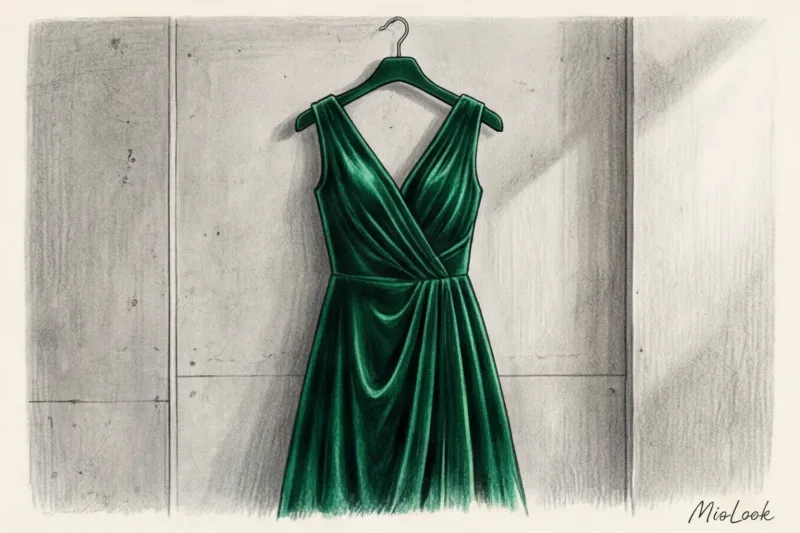
There are exceptions when a high CPW is absolutely justified. I call this the "Emotional Cost Per Wear" or Joy-to-Wear ratio. These include clothes for public appearances, evening gowns, wedding dresses, or status suits.
Imagine buying a luxurious three-piece suit for $1,500 for a single presentation at a keynote IT conference. You wear it once. The CPW is $1,500. By basic logic, it's a failure. But if this suit gave you rock-solid confidence, you delivered a brilliant presentation, were noticed by investors, and signed a $100,000 contract, it was the best investment of your life. The purpose of such things is to create emotion and status at a specific, critical moment. And they pay off in a different way.
How to Reduce Exit Cost: 5 Steps for Tracker Users
For everything else in your closet, the rule remains: the more you wear it, the better the purchase. As an expert, I offer five concrete steps to make your wardrobe worth your investment.
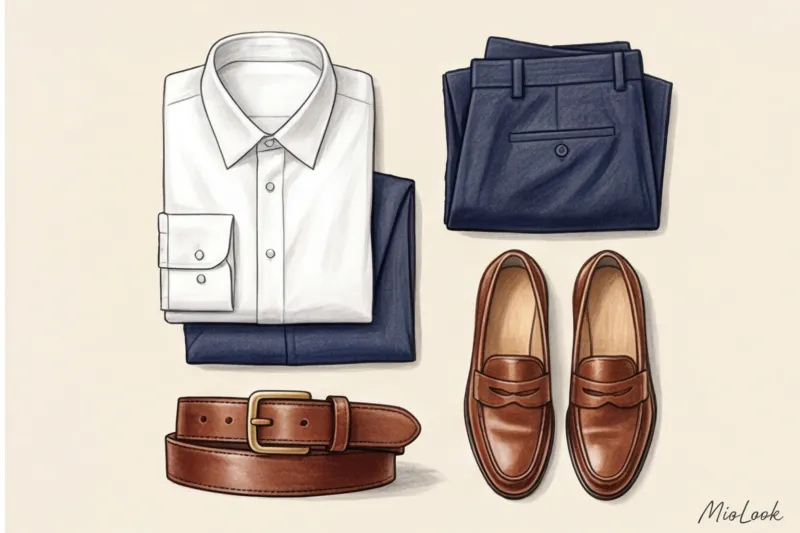
- The rule of three bows. Never buy an item until you can come up with at least three completely different looks for it right in the fitting room (or in the app) already hanging in your closet. If you need a new top and shoes to go with your new skirt, leave it at the store.
- Styling Dress up / Dress down. Learn to tone down the pretentiousness of dressy pieces. A silk midi skirt looks great in the evening with heels (dress up), but it'll also look chic during the day with a chunky knit sweater and chunky boots (dress down).
- Timely care. A $15 leather sole care sticker on new shoes will extend the life of the pair for years. And washing wool sweaters with a liquid detergent without a harsh spin cycle will prevent them from losing their shape. The price of the item includes care—don't neglect it.
- Pareto seasonal rotation. The 80/20 wardrobe principle means we wear 20% of our clothes 80% of the time. The rest just hangs there, an eyesore. Store out-of-season items in vacuum-sealed bags. When you take them out in six months, your brain will perceive them as new, and you'll start wearing them more often.
- Rental for one-off events. If you're invited to a wedding with a strict dress code (for example, black tie), don't buy a dress for just one evening. Rent one. The cost of renting will always be lower than buying one for just one photo.

Stylist's Summary: Invest in your looks, not your clothes.
The main paradigm shift that needs to happen in your mind is the transition from the mindset of "I have a lot of things" to the mindset of "I have a lot of looks." These are completely different metrics. You can have a closet full to the brim and zero variety.
Digitizing your wardrobe isn't just a nod to technology. It's the key to understanding your true needs. When you see the numbers, you stop fooling yourself during sales. You begin to understand that a $200 cashmere sweater you'll wear 100 times is a good deal, while a $15 synthetic cardigan you'll only wear once is a waste.
My top tip: install a tracking app today. Don't try to add everything at once. Start by simply tracking your daily looks. In a month, the statistics will tell you more about your style than any fashion magazine. Digitize your closet, and you'll see how it starts working for you.