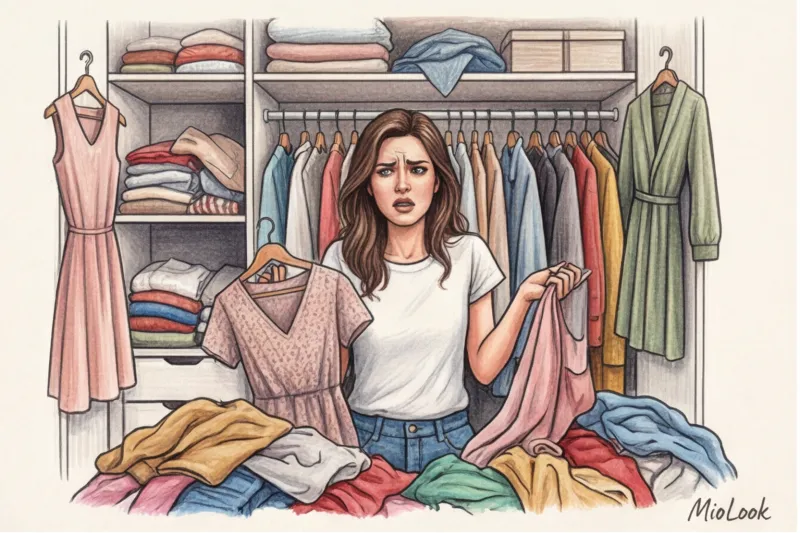
It's a familiar scene: you open your closet, a veritable avalanche of fabric spilling out onto you, but a treacherous thought throbs in your head: "I have nothing to wear again." Your hand reaches for your usual black pants, and your brain is already planning a trip to the mall for "something new" to save the day. Stop. The problem isn't that you don't have enough clothes. The problem is that you don't know your own collection. We've covered the mechanics of smart shopping in more detail in our The complete guide to creating a smart shopping list.
Over 14 years as a stylist and colorist, I've seen hundreds of closets like this. Today, we're not going to be mindlessly decluttering. This guide approaches a wardrobe audit as strategic data collection. We'll analyze your shopping patterns, identify color biases, and spot cutting errors. If you're looking for a step-by-step guide on how to declutter your closet before shopping so you can stop buying random items forever, you've come to the right place. We'll transform visual chaos into precise math for the perfect shopping list.
Why a Full Closet Is an Illusion: The Psychology of Blind Shopping
Sensory overload isn't just a trendy term. When your gaze glides over a jumble of disparate textures, prints, and crumpled sleeves, your brain literally blocks your ability to assemble harmonious images from them. It chooses the path of least resistance: what's on the edge.
A 2022 study by the British organization WRAP (Waste and Resources Action Programme) confirmed the brutal truth: on average, we only wear 20% of our clothes regularly. The remaining 80% is clutter, creating the illusion of choice. In fact, most women live in a "work pod" paradigm of 5-7 items that constantly shuttle between the washing machine and the bedroom chair. Do you recognize yourself? You can read more about how to build a working pod in our article about capsule wardrobe of basic items.
"Making a shopping list without an honest inventory inevitably leads to buying yet another pair of 'third pair of blue jeans.' You go to the store looking for a solution to a problem, but you bring home a symptom."
In my experience, nine out of ten new clients have hidden duplicates of basic items. One time, my client Anna and I found three identical Levi's straight-leg jeans in the same shade of blue in her dresser. She'd bought them six months apart simply because she'd forgotten the existence of the previous pairs under a pile of sweaters. This is why blind shopping is so expensive.
Preparation: What to do before you clean out your closet before shopping
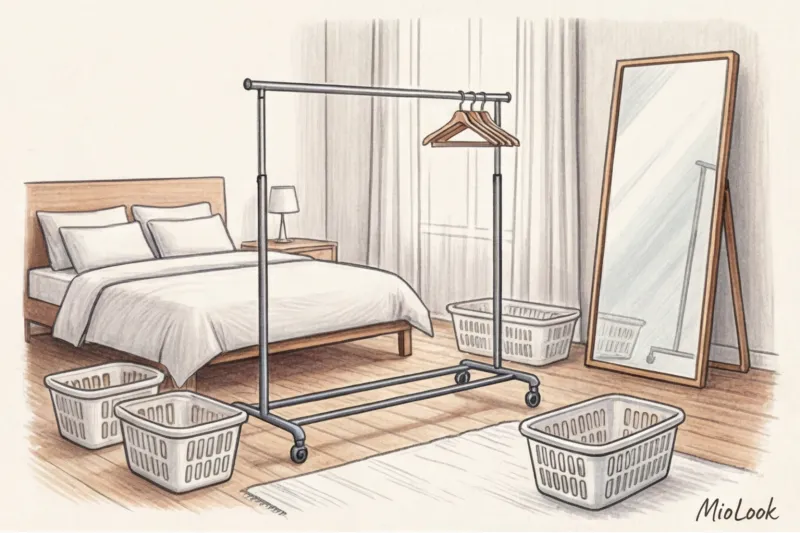
Spontaneously pulling out a couple of sweaters before bed isn't a proper inventory. A full-fledged audit requires preparation.
- Find the right time: You'll need at least 3-4 hours of undistracted time. Turn on a podcast or some upbeat music.
- Gather your inventory: A floor mirror (full-length), 3-4 large boxes or baskets for sorting, good lighting in the room.
- Buy the right hangers: Replace all the mismatched plastic and wire from the dry cleaner with identical thin velvet hangers.
As a colorist, I insist on matching hangers not for the sake of Pinterest aesthetics. According to the laws of visual composition, hangers of different thicknesses and colors create a lot of visual noise. They trip your eyes, preventing you from properly assessing the color and silhouette of the garment itself. Items on matching hangers create a smooth shoulder line, which instantly reduces the stress of searching for clothes.
Step-by-step instructions: how to properly disassemble a closet using a stylist's method
Now the most important rule that almost all beginners break. Remove 100% of the items from the closet. You absolutely mustn't declutter your wardrobe piece by piece, sorting through the stacks on the shelves. Why? Because you won't get a macro picture of your inventory. You need to physically free up space.
Throw everything on the bed and start sorting things into three rigid categories:
- "I wear it all the time": items you've worn at least once in the last month (or this season).
- "I don't wear it, but it's a shame": expensive purchases, items with tags, clothes "for a special occasion" or "when I lose 3 kg."
- "For disposal/recycling": stretched knitwear, pilling, stubborn stains, hopelessly outdated styles.
While your closet is empty, be sure to clean the shelves and dust the hanging rod. This is a powerful psychological anchor: you're clearing the canvas before creating a new painting.
Color Audit: Finding Gaps in Your Palette
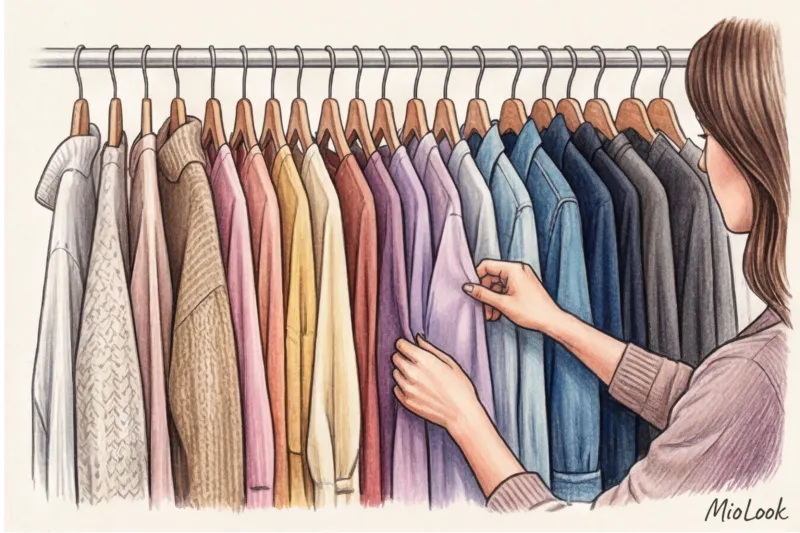
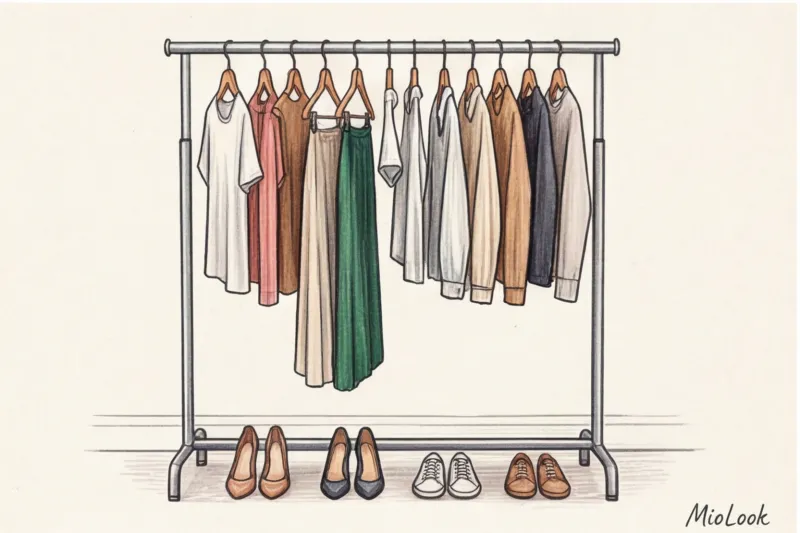
Take the "I Wear It All the Time" pile and hang it on a railing by color: from white and light pastels to dark shades, ending with black. This is my clients' favorite step because it's where the biggest insights come from.

Hanging your clothes in a gradient will immediately reveal your comfort zone and dominant shades. One of my clients had 15 gray sweaters of varying textures. If your palette looks like a monolithic blob of black or gray, you're clearly lacking transition colors. According to Johannes Itten's color theory, to tie together a basic wardrobe with bright accents, you need intermediate tones: for example, deep burgundy, camel, emerald, or complex dove gray.
The fitting method: why things on a hanger are deceiving
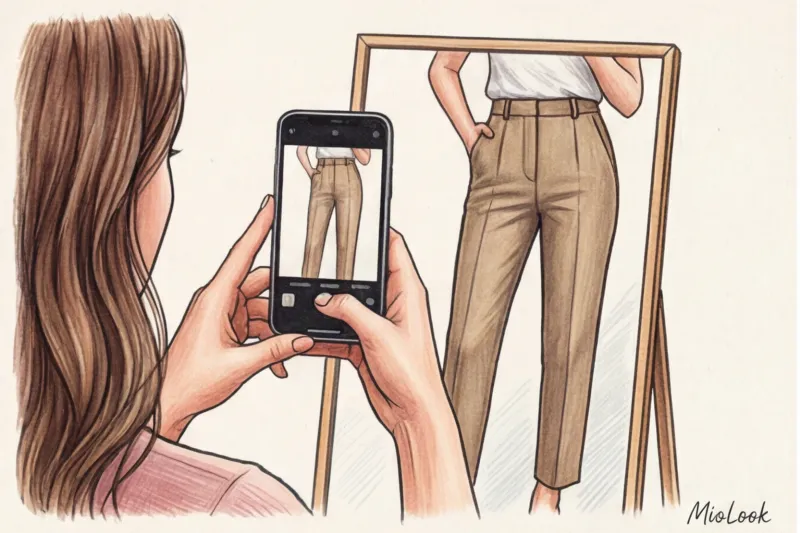
Let's move on to the dangerous "I don't wear it, but it's a shame" pile. There's only one rule here: always try on questionable items. What looks amazing on a Massimo Dutti hanger may be completely unsuitable for your current body shape.
Put on the item and take a photo of yourself in the mirror with your smartphone. A camera sees things differently: it removes your emotions about the brand or price and produces an objective, flat image. You'll immediately notice if a jacket distorts your proportions or pants create unnecessary folds in the crotch area.
The Main Myth of the Analysis: Why the "One-Year" Rule Doesn't Work
It's time to dispel one of the most pernicious myths in pop music: "If you haven't worn something for a year, throw it away." This rule is fundamentally wrong and leads to a senseless waste of money.
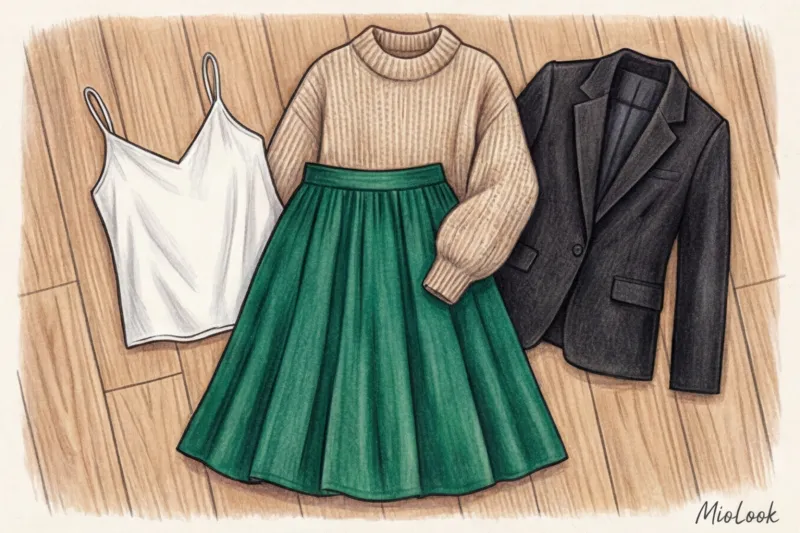
Wardrobes often become solitary. For example, a stunning emerald midi skirt in thick silk (let's say, bought for €150) that fits perfectly. You haven't worn it for two years. Does that mean you should get rid of it? No! Analysis shows that it's only unwearable because your closet lacks a connecting element of the right color temperature or texture. Smooth, cool silk begs for a textured contrast—for example, a voluminous, chunky knit cardigan in a creamy shade.
These "single items" should form the basis of your future shopping list. We save a quality item by adding just one key item to your purchase.
Your ideal image
it begins Here
Join thousands of users who look flawless every day with MioLook.
Get access — €0.99 onceSurvivor Analysis: Transforming Leftovers into a Smart Shopping List

Once you've eliminated the clutter and identified the "single players," you're left with a working core. Now we look for systemic gaps. According to a McKinsey analytical report (2024), modern shoppers most often experience a shortage of quality "bottoms" (pants, jeans, skirts), constantly buying up "tops" (T-shirts, blouses) because they're easier to try on.
Check your essentials. Do you have a trendy bottom that pairs with most shoulder pieces? Do you have a structured jacket that can pull together a relaxed look? Your shopping list should be based on filling these gaps, not on microtrends from TikTok.
The golden rule for shopping: every new item you plan to buy should mentally pair with at least THREE items already hanging in your cleaned-out closet. If there are fewer combinations, cross the item out.
To never lose control of your wardrobe again, I highly recommend digitizing your “surviving” items. Using an app for digitizing things , such as MioLook smart wardrobe , you create a pocket-sized database. While in a store's fitting room, you simply open the app and visually compare a potential purchase with your actual wardrobe. This saves you thousands of euros in the long run.
Checklist: 5 steps to stay organized until next season
The decluttering is complete, the shopping list is complete. How can you avoid returning to chaos in a couple of months? Implement these 5 rules:
- Rule “One in - one out”: Bought a new sweater for €80? Donate it to charity or sell an old one. This is a hard limit that will prevent your closet from growing ever larger.
- The Inverted Hanger Trick: A classic, yet foolproof life hack: Hang all the hangers in your closet with the hooks facing you (backwards). When you put something on and return it to the closet, hang it with the hooks facing away from you, as usual. At the end of the season, you'll be able to see which items you haven't touched yet.
- Hanging by ready-made images, not categories: Try hanging items that already make a great outfit next to each other. This will save you in the morning when you're short on stylistic ideas.
- Seasonal Rotation: Put out-of-season items out of sight. Winter down jackets in the main closet create visual noise and are psychologically overwhelming in the summer. Store them in vacuum-sealed bags on the top shelves.
- Preventive care: Never store pilling knitwear or shoes in need of repair. Maintain your items before storing them.
Your wardrobe isn't a warehouse of random fabrics, but a closed ecosystem that should work for you. A proper decluttering is an investment of time that pays off every morning when you look in the mirror with satisfaction. Treat your closet like a luxury boutique: only let in items that have passed a rigorous audition for color, fit, and pairing.