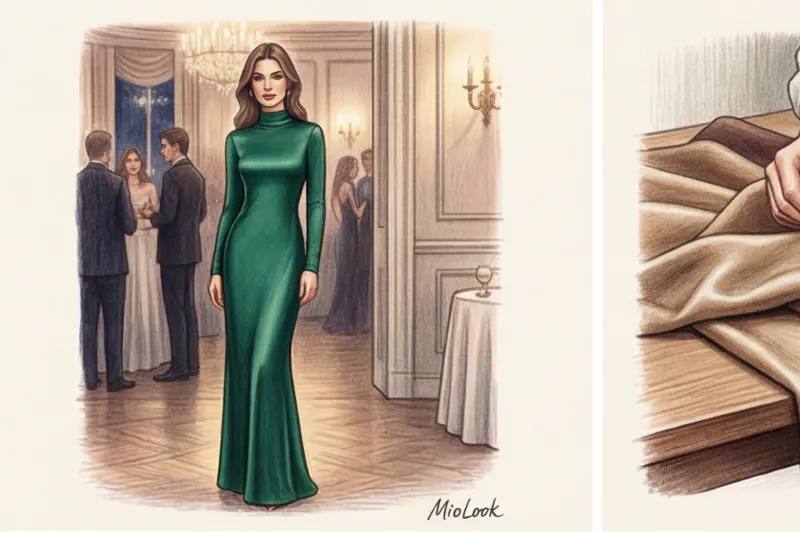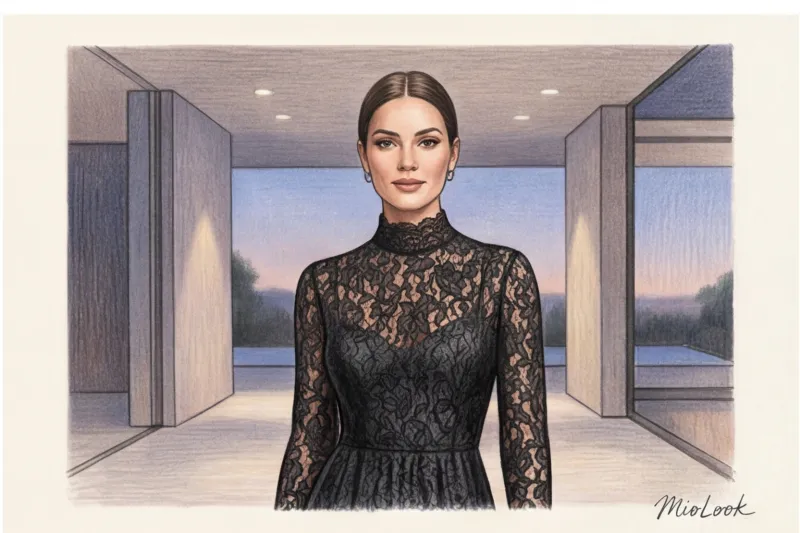
Imagine this: you walk into a room where an evening event is taking place. Around you, a parade of bare shoulders, plunging necklines, high slits, and sparkling sequins. And suddenly, a woman appears wearing a tightly buttoned dress with long sleeves and a stand-up collar. But it's made of intricate, textured lace. The room involuntarily falls silent, and all eyes are focused only on her. In 14 years of working as a personal stylist, I've learned one counterintuitive rule: no neckline is as magnetic as the right one. lace closed dresses.
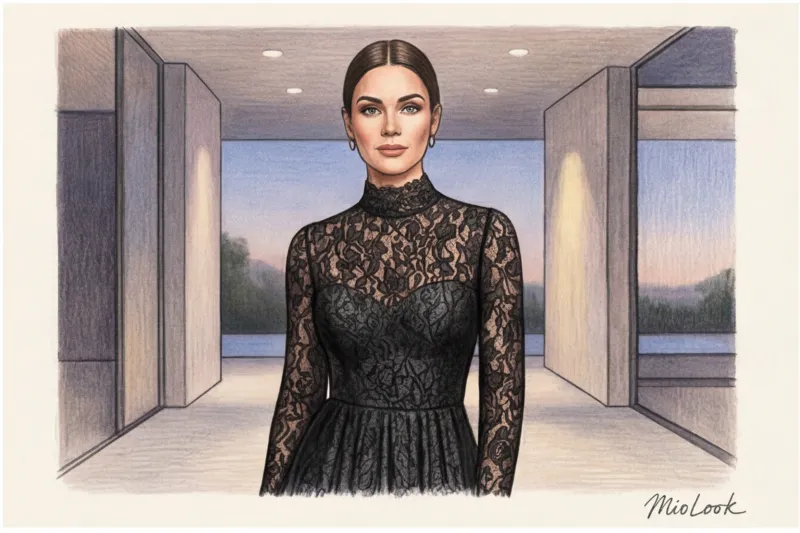
We have already discussed the phenomenon of elegant restraint in more detail in our The complete guide to evening dresses Today, I'd like to explore the most complex material in eveningwear: lace. Historically, this fabric has been strongly associated with lingerie and intimacy. But when placed within a strict, architectural, fully covered cut, a stylistic paradox occurs: vulnerability becomes armor, and the lingerie connotations become a status symbol.
The Architecture of Seduction: Why Lace Dresses Work Better Than Deep Necklines
According to a major report by McKinsey & Company (2024), the global modest fashion market is experiencing record growth, particularly among socialite shoppers and top executives. Successful women are tired of straightforward, aggressive sexuality. They crave intrigue.
Close-fitting lace creates a contrasting sense. The texture subconsciously promises intimacy, but the stand-up collar and long sleeves rigidly establish a distance: "looking is allowed, touching is not." The result is a surprising shift in focus. When your body is completely covered, 80% of your interlocutor's attention automatically focuses on your face. They begin to listen to you more attentively.
"A low-cut lace dress is a test of confidence. It makes a woman look as if she no longer needs to prove anything to anyone with her exposed body," notes the fashion historian and trend researcher.
One of my clients, the CEO of a major fintech company, was looking for an outfit for a charity gala dinner with a strict dress code (our budget was around €5,000). She was used to formal suits and was wary of lace, considering it frivolous. We chose a black column dress by Elie Saab: not a millimeter of skin was exposed, the lining was thick, but the weave was intricate. The next day, she called me and said, "Olena, they talked about business all evening, but at the same time, they complimented my femininity. It's brilliant."
Access to MioLook for €0.99 — one-time payment
A smart AI stylist will select the perfect look for any event.
Get access — €0.99 onceThe Anatomy of Expensive Lace: How to Distinguish a Statement Piece from a "Curtain"
The biggest mistake I regularly see in fitting rooms is buying thin, shiny lace that hangs like a dull rag. A statement piece starts with texture.
Next time you're at the store, try my favorite tactile test: squeeze the edge of a lace sleeve in your fist for five seconds, then release. High-quality thread (cotton, viscose with minimal synthetic admixture) will instantly straighten out, preserving the voluminous pattern. Cheap polyester will remain flat and wrinkled. Expensive thread is always matte—it absorbs light, rather than glaring with a cheap, plasticky sheen.
Another indicator of quality is the edge finish. High-end brands (and even premium mass-market lines like COS or Massimo Dutti in the €150–€250 range) almost always finish the dress hem, cuffs, and collar with scalloped edges ("eyelashes") cut to match the pattern. A straight machine cut with a hem immediately reveals cost savings.
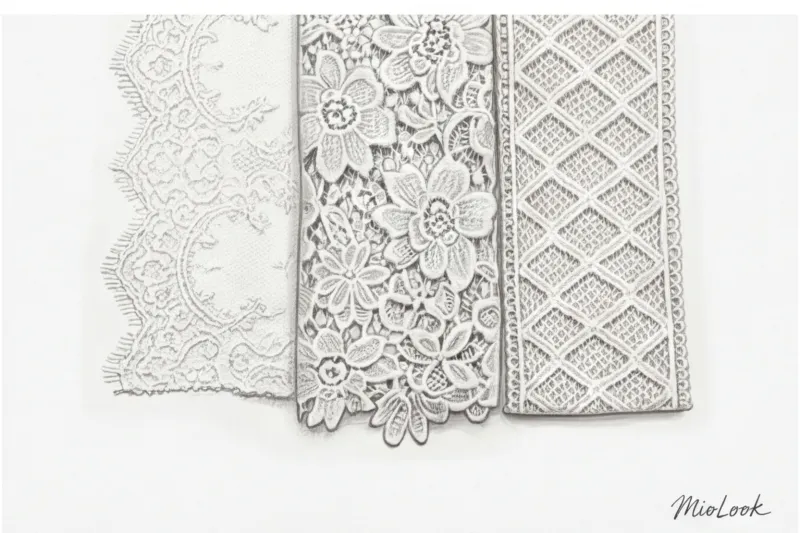
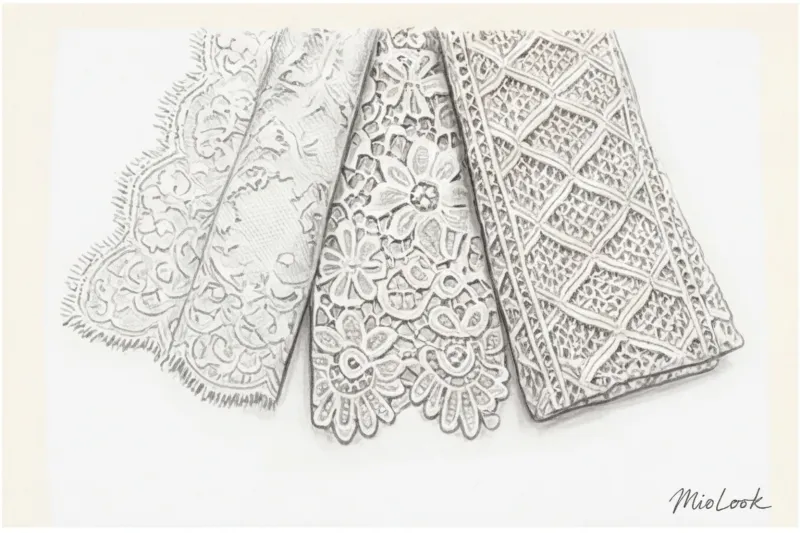
Chantilly, guipure, or macrame: choosing a texture to suit the task
You can't just say "I want a lace dress" without choosing a weaving technique, because they all fit your figure in completely different ways:
- Chantilly: The finest, weightless lace with a small floral pattern on mesh. Perfect for flowing maxi silhouettes and layering. Requires a flawless lining, as it is the most translucent.
- Cordone (cord lace) and guipure: A dense, textured fabric where patterns are connected by thin strands without a background mesh. This is heavy artillery. Guipure holds its shape brilliantly, conceals excess volume, and acts as a soft frame.
- Macrame and cotton embroidery: Geometric, large patterns. This is a daytime option. If you're looking for an outfit for a friend's summer wedding or a daytime cocktail on the terrace, this is your choice.
Dangerous Elastane: Why Stretchy Lace Ruins Your Look
Now let's bust the biggest myth. Women adore stretch lace because it's "comfortable and doesn't pinch." In reality, stretchy lace is the number one enemy of elegance.
As soon as you pull on a dress with a high elastane content, the elegant pattern deforms, stretches, and accentuates the slightest imperfections of your body (even those you don't have). Real, expensive lace is sewn strictly along the darts, not stretched over the figure like a swimsuit. The optimal percentage of synthetics for a classy look is no more than 15-20% (to ensure the thread's strength), and elastane is a maximum of 3-5%.
Lace Dress Silhouettes: Find the Right One for Your Body Type Without Stereotypes
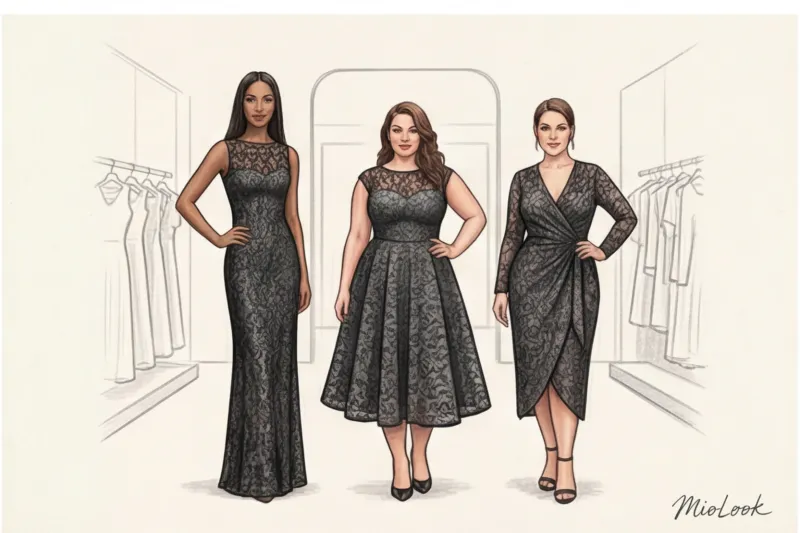
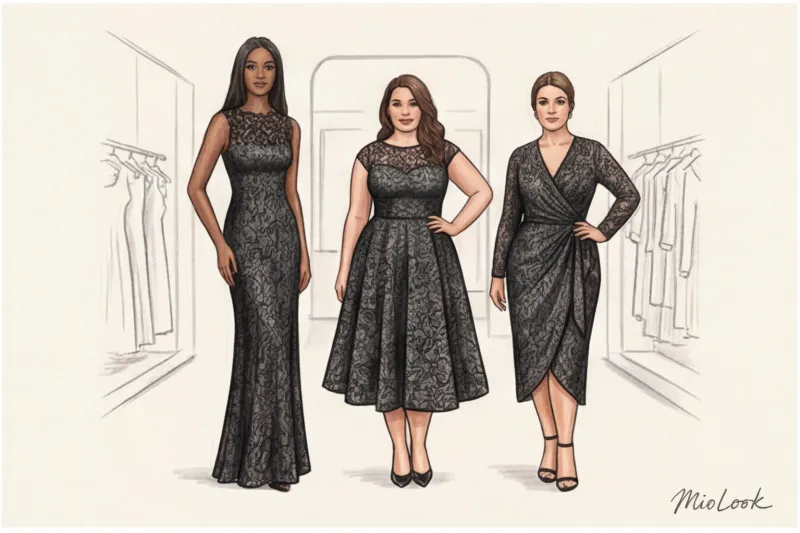
I often hear from plus-size clients: "Lace will make me look bigger." This statement is only true for thin, shiny, tight-fitting guipure. In fact, dense, structured lace on the right sheath works like a delicate corset.
For tall, stately girls, there is nothing more impressive. column dresses. Straight maxi cut, long sleeves, stand-up collar. The vertical pattern visually elongates the height even more. If you have full hips (a pear-shaped figure), choose A-line silhouette with an emphasis on the waist , but it must be made of stiff guipure. The skirt should stand up like a bell, creating an air gap between the fabric and the body.
My favorite styling trick for girls with large breasts is imitation of smell on a full-length dress. The neckline remains covered with a sheer lace mesh all the way to the neck, but the dense elements of the pattern (or the sheath underneath) form a diagonal line. This breaks up the monolithic volume of the chest and makes the upper body appear more graceful. This trick fits perfectly with Old Mane style for women over 40 , where restraint is valued above all else.
Your perfect look starts here
Join thousands of users who look flawless every day with MioLook.
Get access — €0.99 onceThe Illusion of Nakedness: Secrets of the Right Cover (Lingering)
It's the lining (slip dress or slip dress) that determines whether your high-necked dress will look demure or provocative. The lace itself is just the frame.
The nude lining trick is foolproof. Choose a case that matches your skin tone, not just a simple "beige." Under a layer of black or emerald lace, the illusion of naked skin is created. You remain completely within the bounds of propriety, no dress code is violated, but the effect is stunning.
Want to add an avant-garde touch? Use a contrasting slip. A burgundy silk slip under thick black macramé will create a deep 3D effect. And here's where I'll share an insider secret from tailors: if you buy a ready-made dress (especially under €200), take it to the atelier immediately and ask them to replace the standard polyester slip with a viscose or silk lining. Polyester will inevitably create static electricity, the lace will stick to your legs, and all the magic of a loose silhouette will be lost.
And remember the golden rule: the sheath should always be either shorter than the dress itself (to show off the beauty of the translucent edge at the hem) or have a deep slit that is hidden under a solid layer of lace.
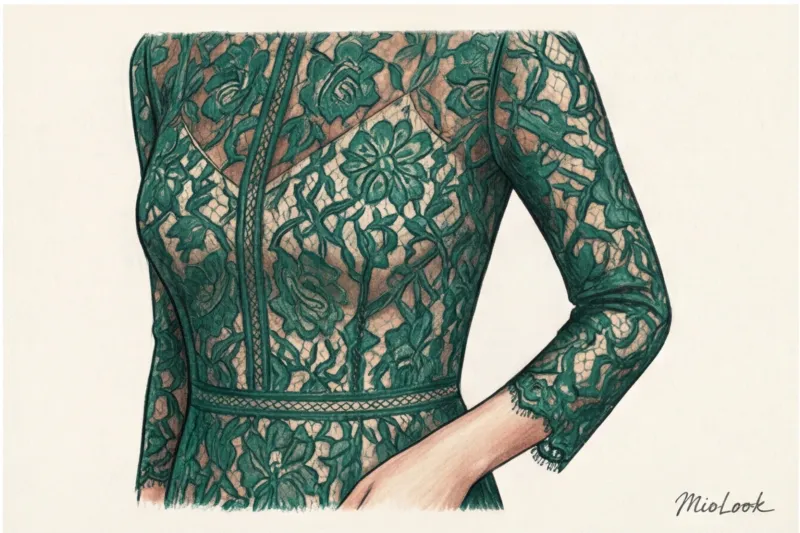
How to Style a Lace Halter Dress Without Looking Dated
Head-to-toe lace is a tricky thing. Add the wrong accessories, and you risk looking like either a "Gothic widow" or a childish "Turgenev-era young lady." Our goal is to tone down the excessive solemnity and historicism of the texture with modern details.
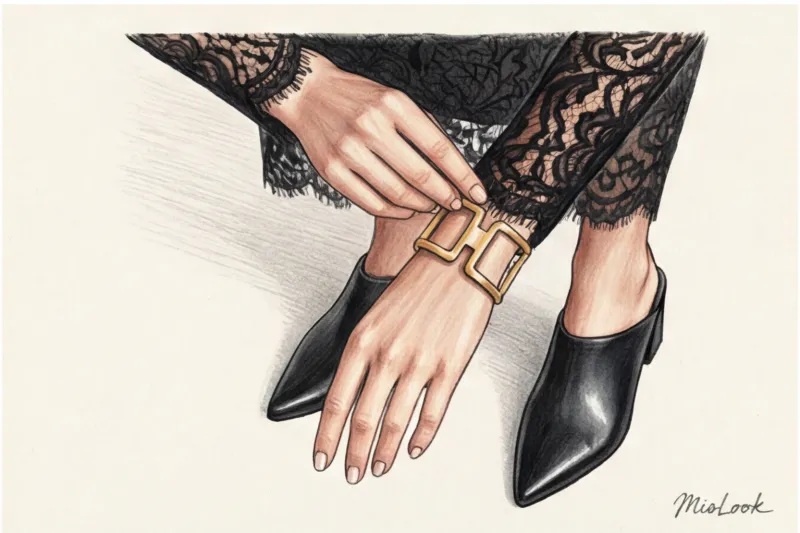
Forget classic beige stiletto pumps, especially those with platforms. They'll cheapen the look. Opt for architectural footwear: square-toe mules, kitten heels, or even chunky leather boots if you plan to wear cotton lace during the day.
By the way, if you're unsure how well your new shoes will go with a complicated dress, just take a photo of them. In the app MioLook The smart wardrobe feature lets you create collages of your items with one click. You'll immediately see if the textures clash.
Makeup and hair are all about balance. The more intricate the dress's pattern, the simpler the hairstyle should be. A sleek low bun, center part, slicked-back hair (wet look), and a "no-makeup" look accentuating radiant skin are the perfect complement to lace. Avoid tight curls and red lipstick, unless you want to look like a provincial theater actress.
When it comes to jewelry, the "one accent" rule applies. Lace itself is a bold statement piece. Avoid filigree, monograms, and pearls (they will enhance the retro effect). The best choice is smooth, solid, solid metal. For example, a wide gold cuff worn directly over a lace sleeve or large, sculptural earrings without stones.
A stylist's checklist: 5 rules before buying a lace outfit
Before you take your dress to the checkout or cut the tag off your online order, run it through my checklist. These 5 steps have saved my clients thousands of euros and a ton of stress:
- Hook test. Turn the sleeves inside out and run your hand along the inner seam. If the seam is prickly or the threads are sticking out, you'll rub your hands red by the end of the evening. The inner side should be perfectly smooth.
- Light (flash) test. Try on the dress in the fitting room and ask a friend to take a photo with a flash. Polyester covers can sneakily "light up" and reveal anatomical details you didn't even know were there.
- Lightning test. Try zipping and unzipping a dress three times in a row without a mirror. Cheap zipper teeth will quickly chew up the lace edge, and you risk getting trapped inside the dress.
- Armhole assessment. In a full-length dress, you must be able to raise your arms at least to shoulder level. If your sleeves pull the entire bodice of your dress down, the armhole is poorly cut. You won't be able to hug friends or hail a taxi.
- Readiness to leave. Lace dresses should not be machine washed (even on a delicate cycle). You should be both mentally and financially prepared to have the garment professionally dry cleaned after every 2-3 wears (the service typically costs between €20 and €50).
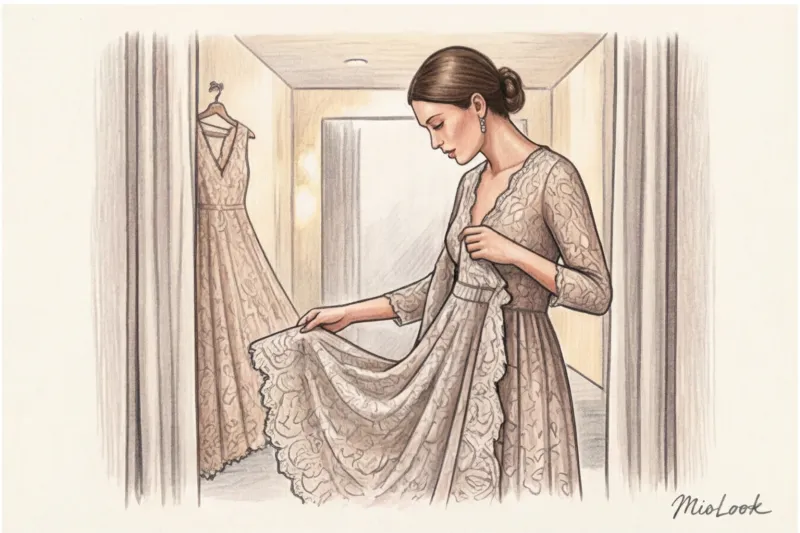
A lace halter dress isn't just a wardrobe staple. It's a statement of your self-image. By choosing a complex texture and a high-cut silhouette, you're telling the world, "I'm confident enough to not play by the clichés of seduction." Find your perfect pattern, swap out the synthetic slip-on for silk, add some formal shoes—and you'll see how not only your reflection in the mirror changes, but also how others perceive you.