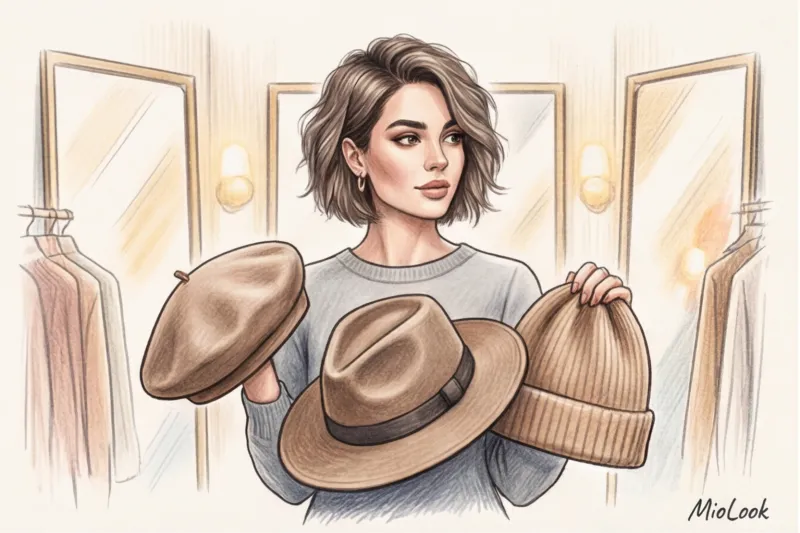
Let's be honest: how many times have you searched for information on how to choose a hat for your face shape and stumbled upon advice straight out of 2005? Classic magazine recommendations continue to tell us: "A hat with a pom-pom for a round face, a beret for a square face." As a practicing stylist, I see that blindly following these outdated rules daily ruins the looks of smart and beautiful women.
Modern styling works differently. Face shape is only 50% of success. The rest depends on the density of the yarn, the volume of your hair, and, most importantly, the design of the outerwear collar. I've already discussed why accessories play a crucial role in winter looks in our complete guide. Basic hats and scarves: a stylish capsule collection In this article, we'll explore the mechanics of choosing the perfect hat—one that will truly flatter you today, not just a decade-old theory.
Facial Geometry and Hat Architecture: Why the Old Rules No Longer Work
Over 12 years of analyzing wardrobes, I've discovered one pattern: the head zone (everything near the face) yields the highest return on investment (ROI) in your style. This is where people look in the first few seconds of meeting you. A WGSN visual perception study (2024) confirms that 70% of attention during initial eye contact is focused on the "head, neck, shoulders" triangle.
A striking example from my practice: a top manager client once came to see me. She was wearing a luxurious, impeccably tailored double-breasted Max Mara coat (around €900). But the look, frankly, was sloppy. The reason was at eye level: a thin, loose acrylic hat for €15, which clung to her head, accentuated the slightest asymmetry, and visually flattened the oval of her face. The expensive base was literally ruined by the cheap accessory.
The new paradigm for stylists is: Face shape + Hair volume + Collar architecture = Ideal proportion We replaced Anna's shapeless acrylic with a structured beanie made of thick merino wool. The tight brim of the hat created a smooth diagonal line, added just the right amount of volume at the crown, and instantly visually lifted her face.
It's important to understand the concept of Cost-per-Wear. A good merino wool hat that costs €80 and you'll wear it 100 times a season will cost you €0.80 per wear. It will retain its shape and color. A €15 acrylic hat will pill in two weeks, make your scalp sweat, and cause static in your hair. A hat is not the place to skimp on texture.
How to choose a hat for your face shape: a modern guide
Modern fashion strives for geometry and clean lines. We no longer try to "hide imperfections" under awkward draping. We create precise lines that create harmonious balance. The key to the fit of any basic hat is to leave some air between the crown of your head and the brim of the hat.
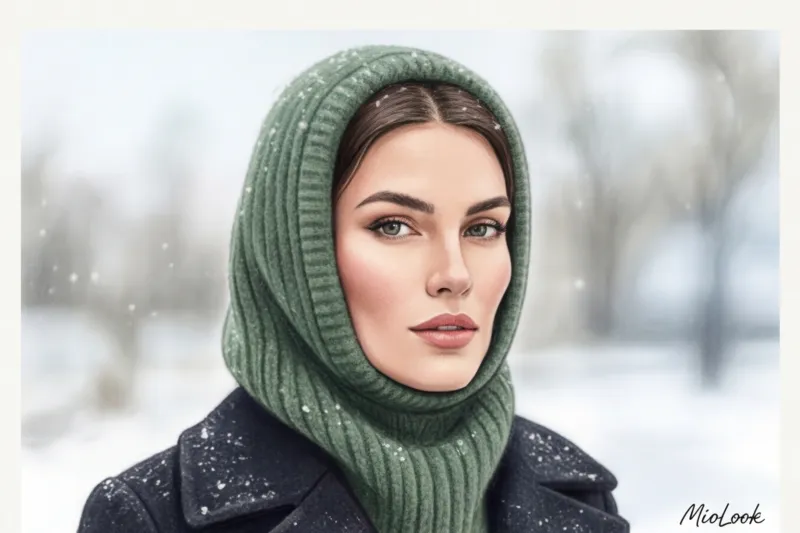
Please don't pull your hat down to your eyebrows—it visually lowers the upper third of your face and makes your eyes look heavy. Leave at least a couple of centimeters of forehead exposed above your eyebrows.
Your perfect look starts here
Tired of wondering if something will suit you? Join thousands of users who create flawless looks every day with the help of an AI stylist.
Get access — €0.99 onceOval and elongated faces: taming the vertical
Classic theory calls the oval shape universal. But let's be realistic: if your face has a pronounced vertical line (an elongated oval), a classic high beanie with a prominent crown will make it appear endless. This is precisely the case when the "air on the crown" rule applies. doesn't work.
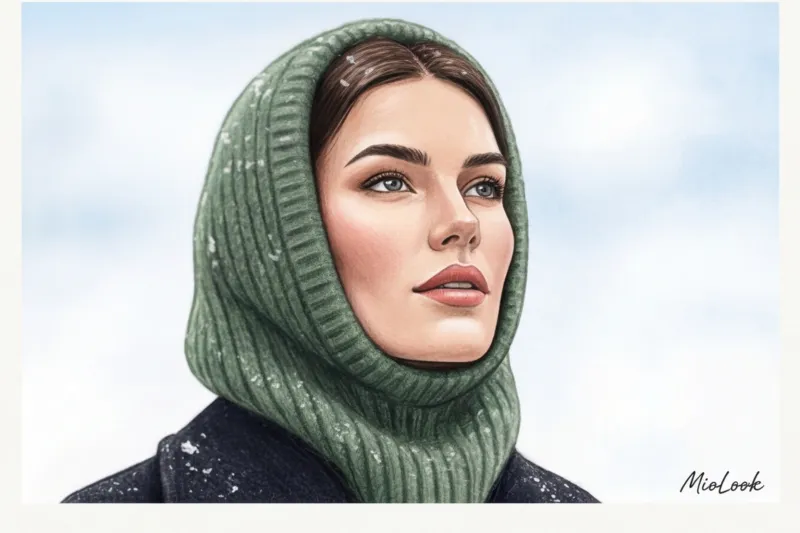
You need horizontal lines. Cropped beanies (so-called custo caps) and styles with a wide, tight cuff that visually widens the cheekbones are ideal. Also, consider trendy hoods and balaclavas with a soft fit—they perfectly conceal excessive length by framing the neck horizontally.
Round Face: Adding Angles and Verticals
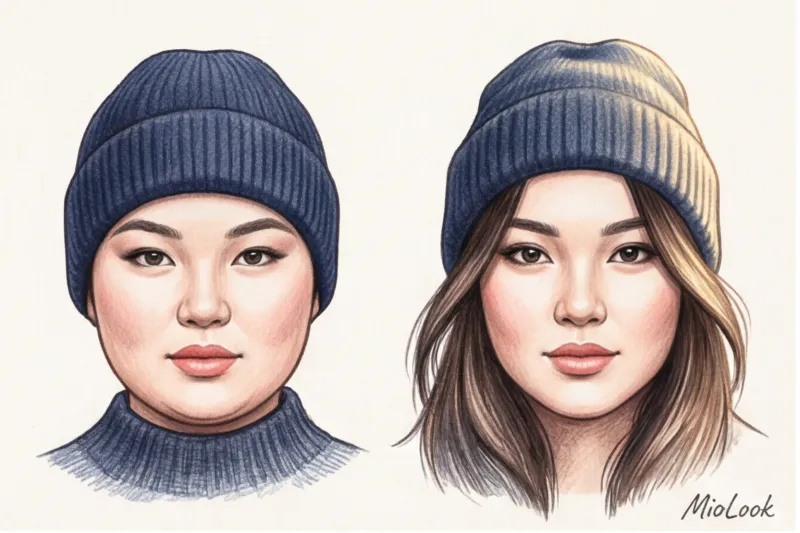
The biggest mistake women with round faces make is wearing thin, tight-fitting hats. They literally turn your head into a billiard ball, emphasizing every curve of your cheeks. This is where the "3-centimeter rule" comes in handy.
The hat should have a firm, distinct shape and rise at least 3-4 centimeters above the crown. This creates a balanced proportion. Another effective life hack from stylists: an asymmetrical fit. A slight shift of a tight beanie back or to the side breaks the rounded geometry, adding the desired dynamism to the look.
Square and Rectangle: Softening the Lower Jaw
A square face has a stunning, expressive jawline (think Angelina Jolie or Keira Knightley). Our goal is not to overload this geometry. Avoid hats with hard, sharp angles and straight horizontal lines directly above the eyebrows.
Texture is key here. Choose a voluminous yet soft knit. Cashmere or alpaca blends are ideal; they form soft folds when draped lightly at the nape of the neck. Bonnets that don't cling tightly to the neck are also your best friend. They softly frame the jawline, creating a cozy and relaxed effect.
Triangle and Heart: Balancing a Narrow Chin
There's one obvious danger with a heart-shaped face (wide forehead, narrow chin): if you create enormous volume on top of your head (for example, by choosing a chunky knit hat with a huge brim), your chin will visually become even sharper, and your face will appear disproportionate.
Choose medium-weight, smooth-knit hats without exaggerated lapels. Be sure to leave loose strands of hair around your face. This will compensate for the lack of volume in the lower third and soften the transition from the cheekbones to the chin.
Texture Matters: How Hat Material Changes the Contour of the Face
Even if you've mastered the art of choosing a hat to suit your face shape, the wrong material will ruin all your efforts. I can't stress this enough: 100% acrylic is the worst enemy of your portrait. It has no structural memory, deforms after the first rain and snow, and imparts an unhealthy, dull sheen to the skin due to the specific artificial sheen of the thread.
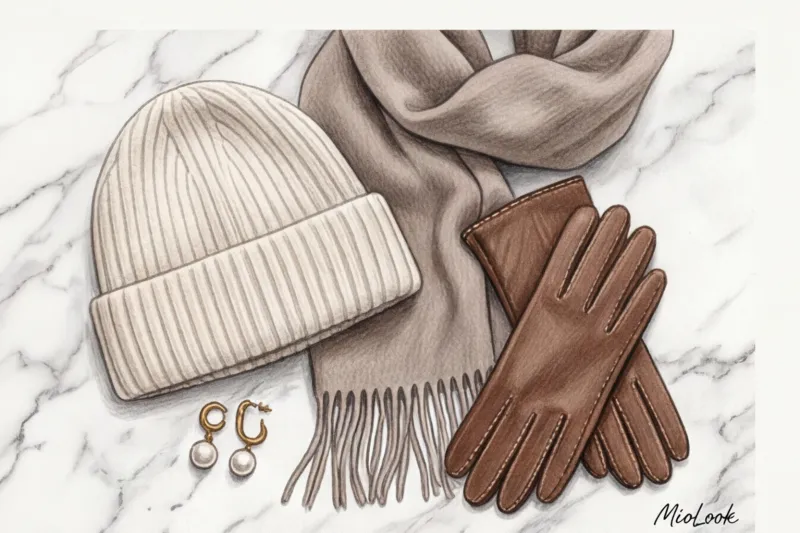
I once conducted a practical test for a client in the fitting rooms. We used a basic beanie from a mass-market store for €15 and a combed wool hat from COS for €45. Combed wool is a knit that has combed fibers that are laid parallel to each other. This knit is smooth, elastic, and holds its shape beautifully, like an architectural framework. Cheap acrylic "runs" down the head, highlighting the unevenness of the style, while the wool from COS created a perfect, expensive contour. The €30 difference provided a completely different level of presentability.
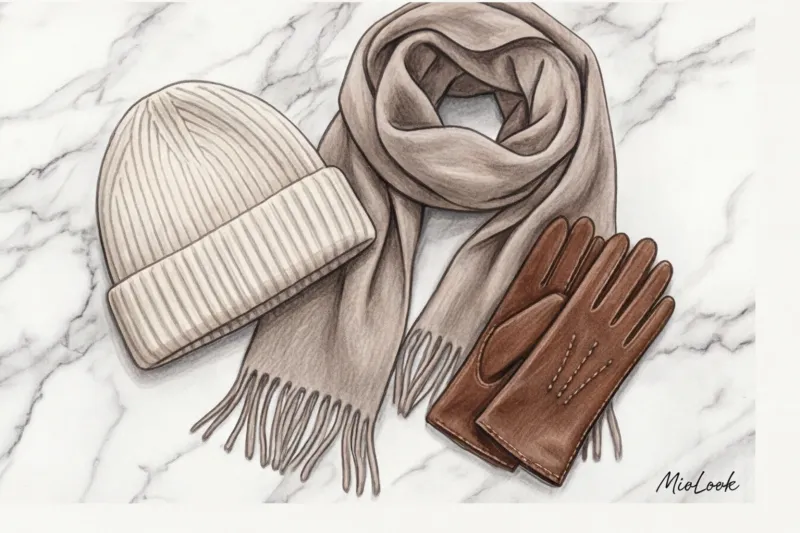
If you're going for a classy, put-together look (for example, with a classic coat), look for a smooth, dense knit. If you're aiming for a relaxed, casual look (for down jackets and aviator shearlings), choose fluffy textures with alpaca or mohair. But always pay attention to the garment's ability to hold its shape.
The Mistake 90% of Women Make: Hat and Collar Conflict
Let's move on to a counterintuitive insight that most glossy articles gloss over. You can find a hat that perfectly complements your face shape. But if it's not proportionate to your outerwear, you'll ruin your look.
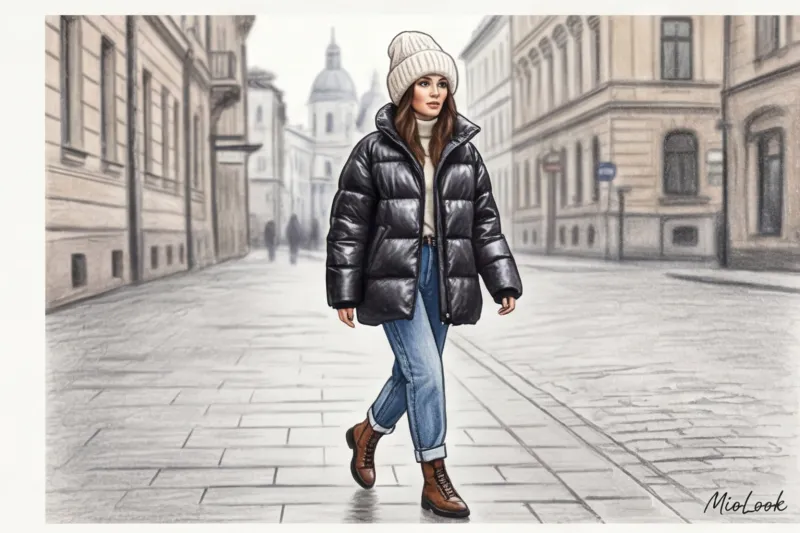
It's the law of proportions. If you wear a voluminous winter down jacket (for example, the popular oversized styles) with a thin, tight-fitting hat, you'll create a "microcephaly" effect. Your head will appear tiny, and your figure will appear massive and bulky. A voluminous down jacket requires a chunky knit hat or a hat with a double, wide cuff.
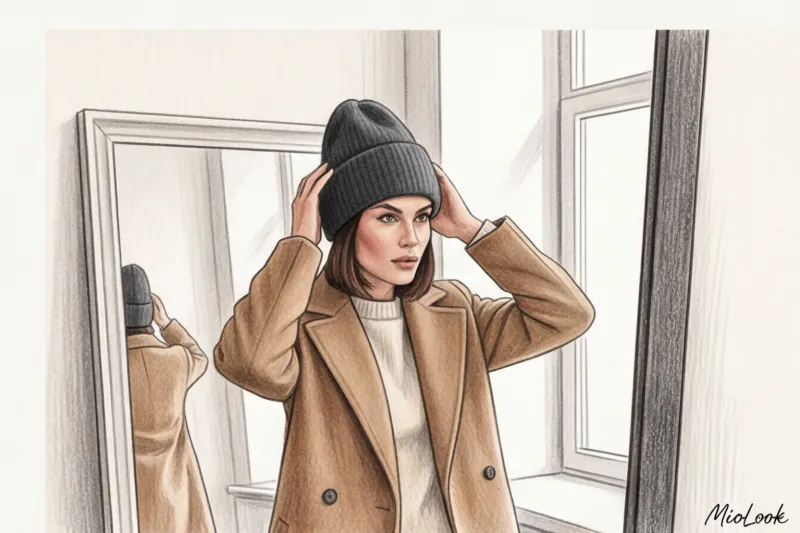
Conversely, an elegant double-breasted wool coat requires simplicity. A huge, fluffy hat in a chunky ribbed knit (or, even more so, one with cables and bobbles) wouldn't work here. A basic, plain-knit beanie that maintains the clean lapel is ideal for the coat. The scarf in this pattern serves as the connecting link—it should match the hat's "texture" (the density and style of the yarn).
A smart wardrobe on your smartphone
Not sure how to pair a hat, down jacket, and scarf? Upload your items to the app and let the algorithms create stylish capsule outfits for you.
Get access — €0.99 onceHat color and color type: refreshing the portrait area
Let's talk about color. I know many people instinctively buy black hats to go with everything. But as a stylist, I categorically advise against black near the face for those who sleep little, work a lot, and live in low-light conditions. Black acts as a light absorber—it casts shadows on the face, instantly emphasizing nasolabial folds, dark circles under the eyes, and tired skin.
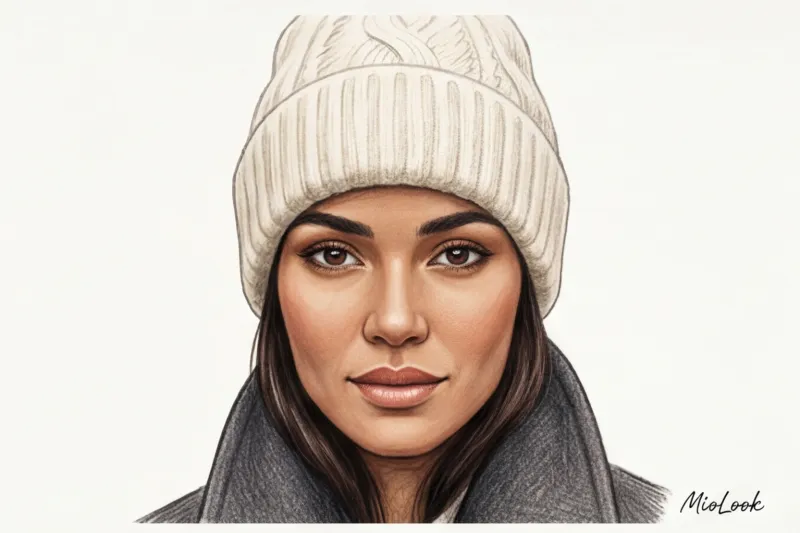
Invest in rich base shades. In its 2024-2025 color reports, the Pantone Institute highlights colors such as soft camel, graphite (an excellent alternative to black), ecru (unbleached wool), and deep burgundy. Light shades—from milky to light gray—work like a photographer's reflector near the face, creating a subtle anti-aging effect and erasing signs of fatigue.
The golden rule of styling: the ideal hat combination should be one or two shades lighter than your coat. If you have a dark blue coat, a graphite or gray-blue hat will look chic, creating the right contrast and brightening up your face.
Stylist Checklist: 5 Steps to Buying the Perfect Headwear
To never again put bad purchases on the back shelf of your closet, use this step-by-step algorithm that I give to all my clients:
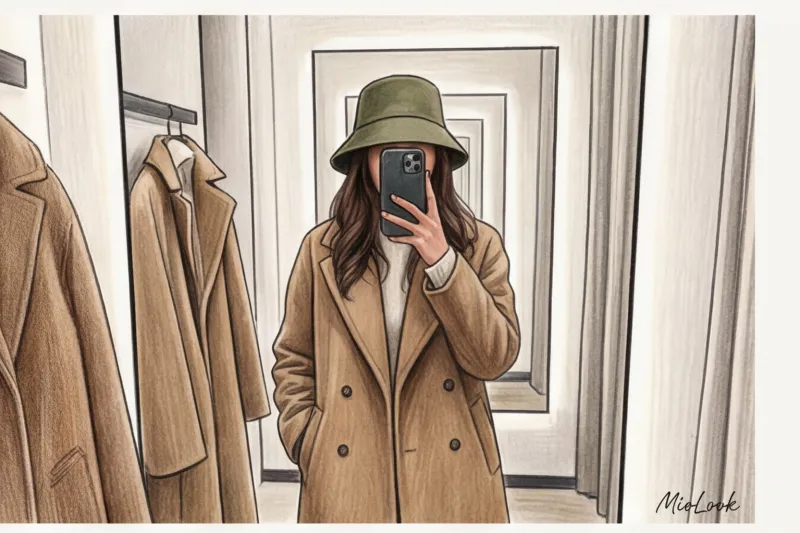
- Go to the store in outerwear. Never try on winter hats while wearing a T-shirt or thin sweater. You simply won't see the true proportions. Hats are only tested with the coat or down jacket you'll be wearing them with.
- Do a rebound test. Right in the fitting room, grab the hat by the edges, gently stretch it outward, and then release it quickly. High-quality wool (€50 and up) will instantly return to its original shape without wrinkling. If the edges remain stretched, the hat will lose its shape after the first week of wear.
- Check the seam at the back of the head. Cheap hats often have rough and inelastic seams. After putting on a hat, look at yourself in profile. If the seam bunches up into an unsightly bulge and sticks out like a rooster's tail at the back of your head, look for a different style.
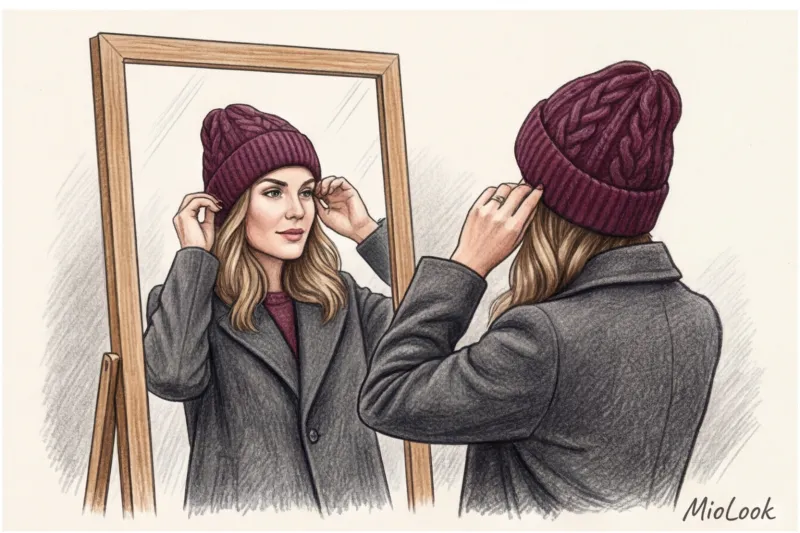
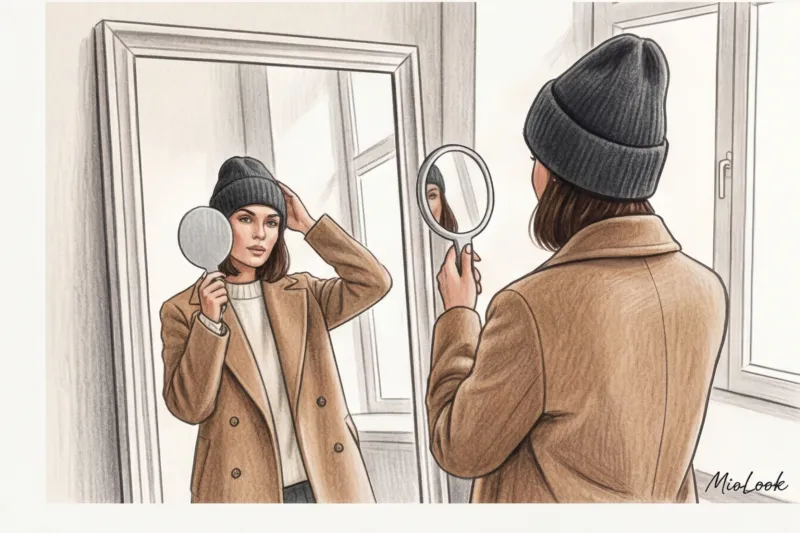
- Evaluate yourself in a full-length mirror. Portrait mirrors can be deceiving. Step back two meters from a full-length mirror and assess your entire silhouette: does your head appear too small or too large relative to the width of your shoulders when wearing outerwear?
- Look for density, not thickness. A thin-to-the-touch, but very tightly knitted 100% merino hat will keep you warmer than a loose, thick acrylic hat.
A hat isn't just a cold shield. In winter, it's the main architectural framework for your face. Invest in the right texture and consider the volume of your outerwear, and then the question of your face shape will disappear. Get your proportions right, and your winter look will always look luxurious and modern.