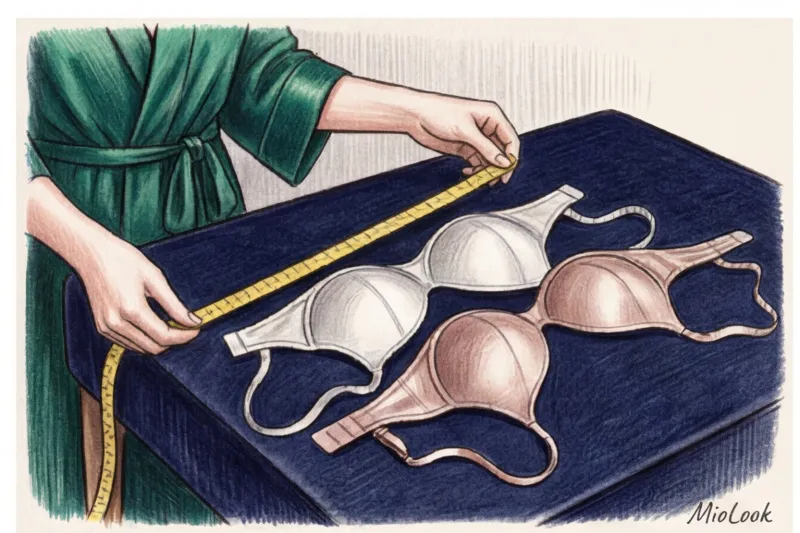
One of my clients, the CFO of a large company, had been complaining for years about straps falling off and aching shoulders by the end of the workday. When we began reviewing her lingerie wardrobe, I saw tags all labeled 80A. Her actual measurements were a 70C. How did this happen? "The store didn't have my size, so the salesperson brought this one, saying the cup size was exactly the same," she explained. Thus, my client fell victim to the most pervasive myth in the lingerie industry.
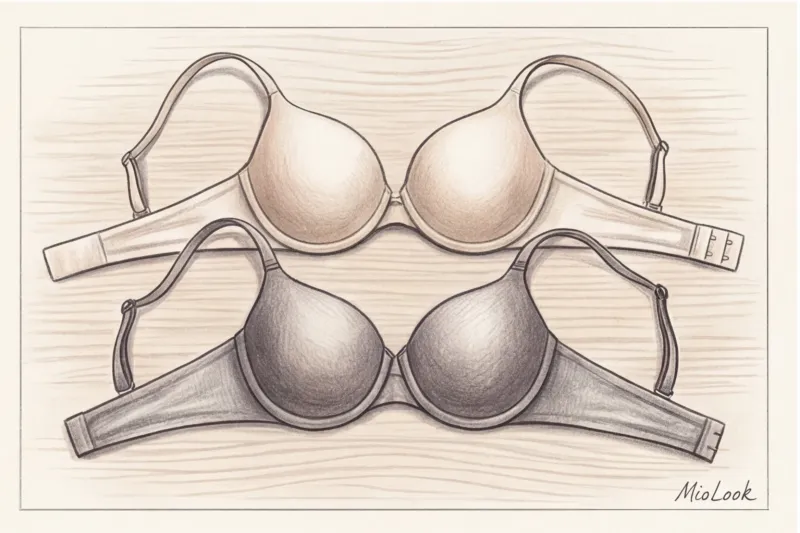
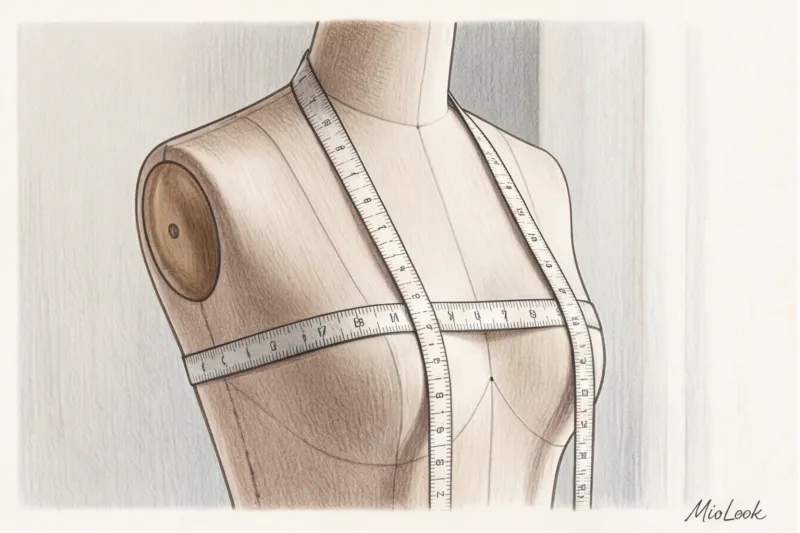
The consultant was only half right. Yes, sister bra sizes They do have the same cup size. But that's where the similarities end. I discussed the basic principles of taking measurements in more detail in our The complete guide to choosing a bra size Today, we'll explore why interchangeable sizes are an architectural compromise, not a magic solution to all fit problems.
What Are Sister Bra Sizes (And Why They're Not Magic)
First, let's dispel a major misconception: the letter in a bra size doesn't indicate a fixed breast size. A "B" cup in a 75B bra size and a "B" cup in an 85B bra size are completely different measurements.
The letter means only difference Between the bust and underbust measurements. This is a relative measurement. Therefore, when you change the band length (number), the actual cup capacity changes, even if the letter remains the same.
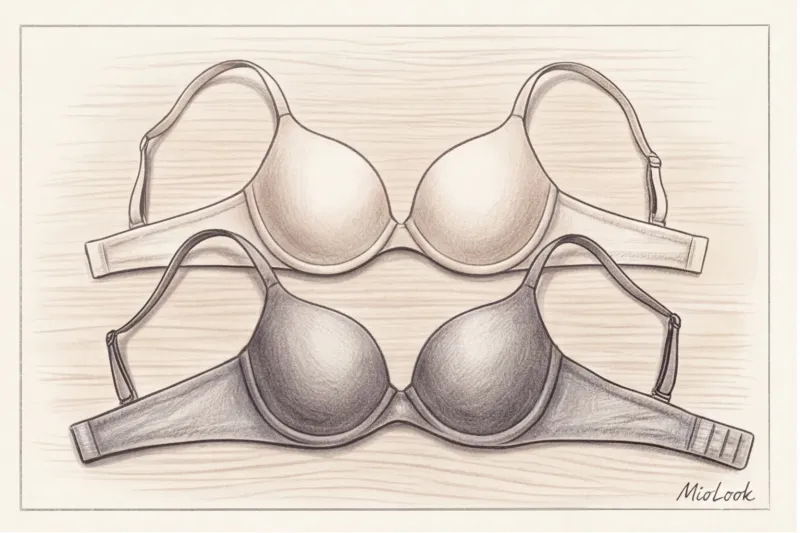
Sister (or adjacent) sizes are sizes that have the same actual cup size but different band lengths. This coordinate system allows you to maneuver in the fitting room if the base size doesn't fit perfectly.
Over 12 years of working as a stylist, I've realized that knowledge of this system is your main shield against incompetent salespeople and the trap of "universal 75B," which for some reason they're trying to sell to half the female population of the planet.
Bra Fitting Math: How the Interchangeable Size Chart Works
The principle for calculating sister sizes is based on a simple diagonal rule used by professional bra fitters. It's easy to remember: increase the band - decrease the cup (and vice versa).
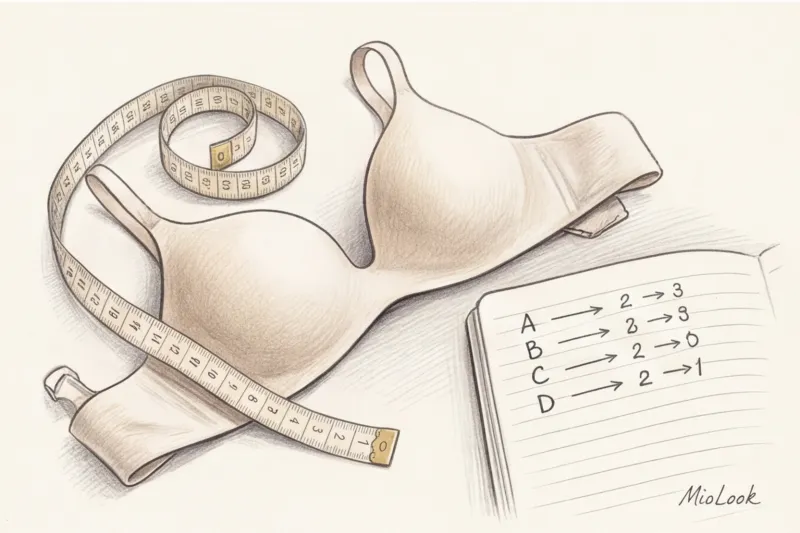
Let's say your base size is 75C. You try it on in the fitting room, the cups fit perfectly, the fabric doesn't bunch up, and your breasts don't bulge. But the belt digs mercilessly into your ribs, leaving red marks.
What's most women's instinct? Ask for an 80C. But an 80C will have a larger cup than a 75C! The band will fit properly, but the cups will appear empty. The correct action is to ask for an 80B. The band will go up one notch, but the cup size will remain the same as a 75C.
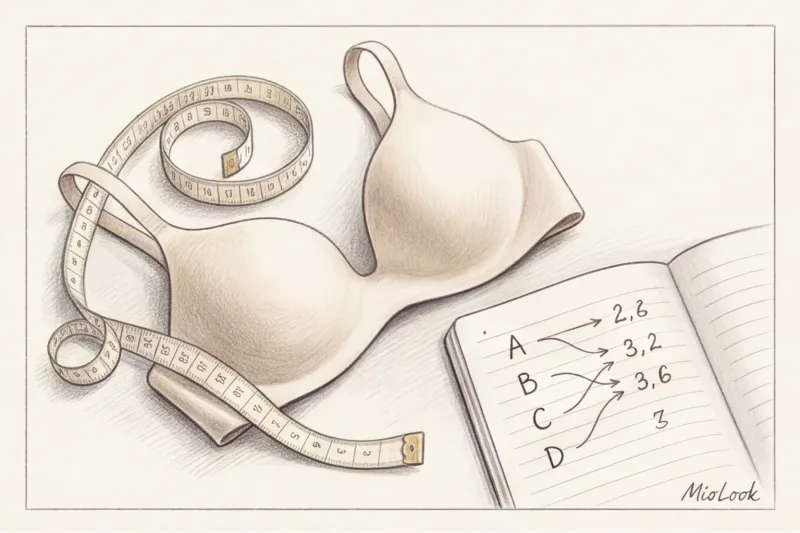
The opposite situation: a 75C is creeping up the back (the waistband is too big), but the cup size is fine. Your sister size in this case is a 70D (the waistband was reduced and the cup size was increased to maintain the volume).
Sister Size Cheat Sheet (Basic Examples)
I always advise my clients to write down their "three" size in their phone notes before shopping. The center size is your base size, the one on the left is the one with a loose waistband, and the one on the right is the one with a tight waistband.
- For base 75B: 80A (freer) – 75B – 70C (tighter)
- For base 80C: 85B (freer) – 80C – 75D (tighter)
- For base 70D: 75C (freer) – 70D – 65E (tighter)
Your perfect look starts here
Join thousands of users who look flawless every day with MioLook. Your smart wardrobe assistant.
Get access — €0.99 onceThe Truth: Why Sister Sizes Aren't Twin Brothers
Now, about what the fashion magazines don't tell you. The myth is, "Sister sizes fit exactly the same." The truth is, while they have the same cup size, they have completely different geometry. They're not twins; they're cousins at best.
Producing a high-quality bra requires up to 40 individual components. Patterns are created for specific chest proportions. When a manufacturer creates an 80A (the sister of a 70C), they're expecting a woman with a wider chest and, consequently, broader shoulders.
"Changing the band size changes the entire architecture of the garment. It changes the width of the underwire, the depth of the darts, the angle of the straps, and the distance between the cups," notes the Institute of Contour Lingerie Design at De Montfort University (2022).
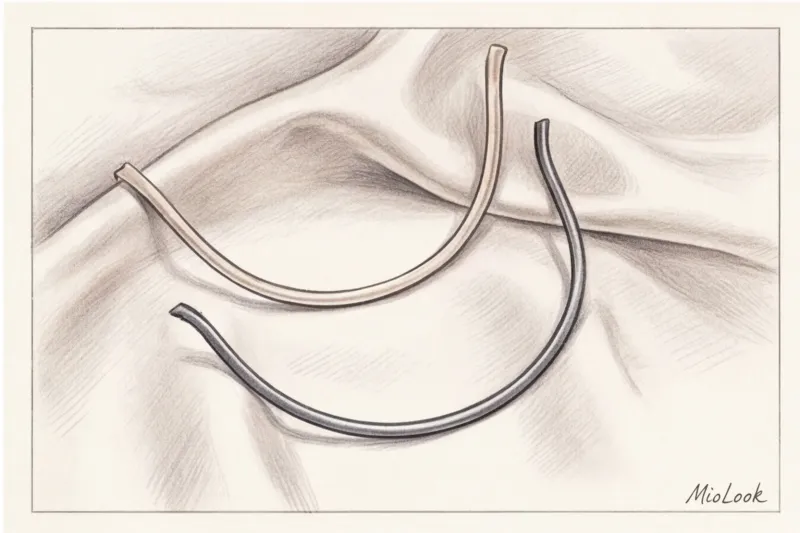
What does this mean in practice? A size 80A bra has wider straps than a size 70C. If a woman with a narrow chest (70 cm) wears an 80A bra, the straps will constantly fall off her shoulders, no matter how tightly she cinches them. Furthermore, the underwire of an 80A bra is flatter and wider, so it won't wrap tightly around the narrow base of the bust.
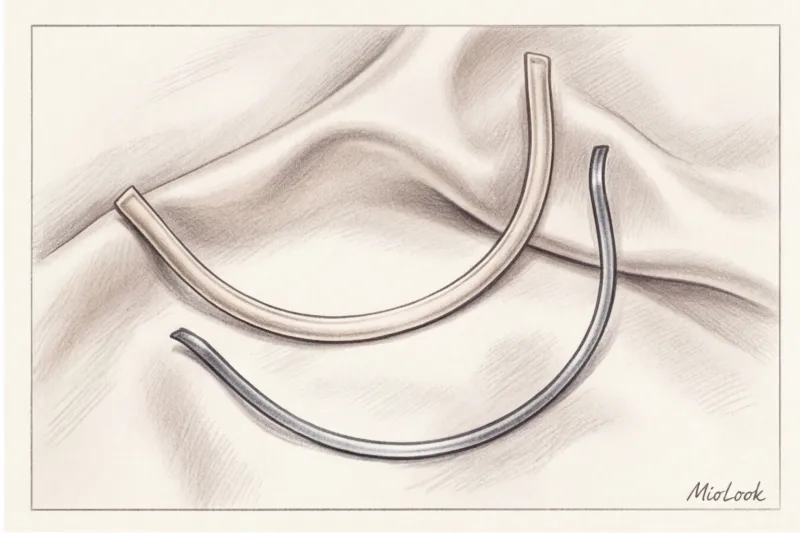
That's why I strictly forbid my clients from going down more than one size. Going from a 70D to an 85A is mathematically possible, but anatomically, it's disastrous for your posture and appearance.
Marketing Trap: How Mass Markets Use Sister Sizes Against You
Have you ever wondered why it's so hard to find a size 65E or 70F at Zara, H&M, or Massimo Dutti? The answer is simple: production optimization. A lingerie brand's full size range includes 60-70 variations. Fast fashion brands reduce it to 12-15 popular sizes.
And that's where the marketing comes in. The salesperson, who needs to meet a quota and can't find your 70D, confidently brings you an 80B, saying, "This cup fits, take this one!"
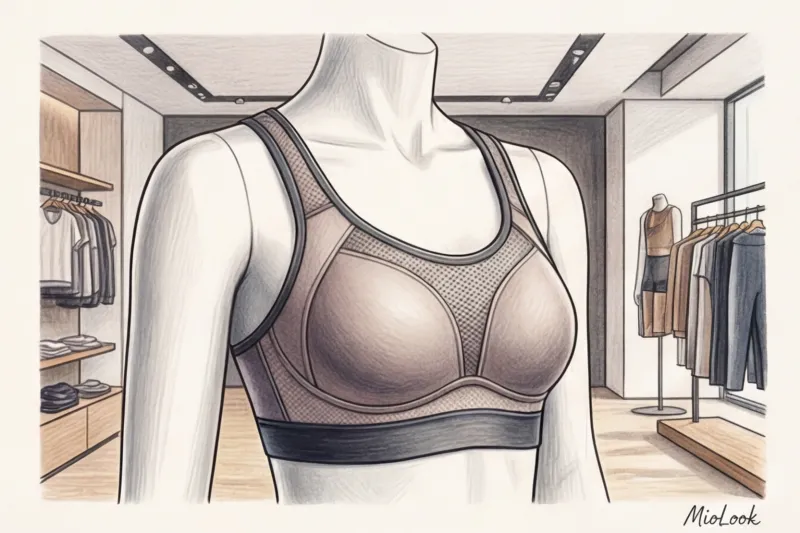
By agreeing to this compromise, you violate the most important rule of weight distribution. According to breast biomechanics research (Research Group in Breast Health, Portsmouth, 2023), 80% of the support should come from a tight-fitting band, and only 20% from the straps.
When you wear a belt 10 cm wider than your actual waist size, it inevitably slides up onto your shoulder blades. The entire weight of your breasts is transferred to the straps. This results in deep red ridges on your shoulders, slouching, headaches in the evening, and a complete lack of flattering silhouettes in your clothes.
Try MioLook
A smart AI stylist will select the perfect look for you and help you organize your wardrobe.
Get access — €0.99 once4 Situations When Sister Bra Sizes Really Save You
Does all of the above mean that the interchangeability chart shouldn't be used? Not at all. It's a brilliant tool when used consciously. Here are situations when moving toward a sister size is justified and even necessary:
- Patterns of a specific brand. Italian lingerie often runs small in the waistband, while British lingerie runs large. If you always wear a 75C but the waistband of a new brand is difficult to fasten, consider its sister brand, an 80B. (See the appendix.) MioLook It's convenient to leave notes on items: I teach clients to write down which brand requires which size shift.
- Fluctuations in weight or cycle phase. During the second phase of your cycle, your chest may swell slightly. Your usual 70D cup may begin to feel tight under your breasts, even though the breasts themselves fit in the cup. During these days, a 75C cup will be your best bet.
- Fabric characteristics. A bra made of stiff, non-stretchy lace (like Corbeil) won't stretch as well as a basic microfiber bra. With stiffer styles, you often have to go up a size with a looser band.
- Search for discontinued models. If your ideal bra is no longer in production and only your sister's size is available, you can get it, but you'll need to have the band adjusted at a tailor's.

Stylist's Checklist: How to Check the Fit When Upsizing
If you do decide to buy a sister size, don't rely solely on the feeling that "it seems fine." Use the professional checklist I use to check the fit of lingerie during fittings:
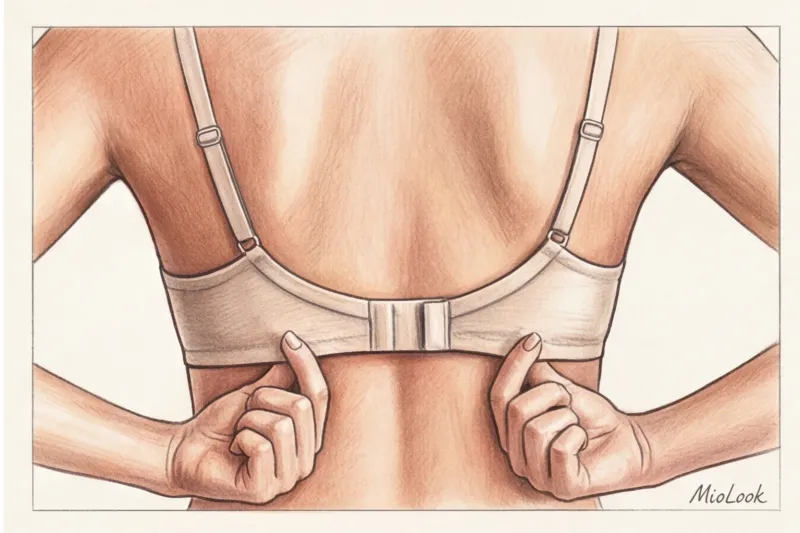
- Belt test. New bra obliged Fasten with the loosest (outer) hooks. The waistband should be strictly parallel to the floor. If it rides up, the size is not right; this is not negotiable.
- Guy line test. Try pulling the belt down your back. It shouldn't be more than 4-5 cm away from your body.
- Bone test. They should rest exactly on your ribs, encircling all breast tissue. If the underwire digs into your armpit or, conversely, rests directly on your breast, the sister size is not the right fit.
- Gore tacking test. The center section between the cups (the bridge) should fit snugly against the sternum. A finger shouldn't fit between it and the body. The only exception is bralettes (bralettes).
- Raised hands test. Raise your arms sharply and stretch. If the bottom of the band or underwire begins to encroach on your chest, remove the bra immediately.
Conclusion: Your comfort is uncompromising.
Sister sizes are a wonderful navigational tool in the world of lingerie shopping. They allow you to adapt to different fits, fabrics, and body changes. But they should never become a reason to endure discomfort just because the size you need isn't on the rack.
Properly chosen underwear is the foundation of your status image. No one expensive silk top or perfectly tailored business suit it won't fit perfectly if you're wearing underwear with a waistband that slides up and straps that cut in.
Find your true, basic size. Study its geometry. And use sister sizes only as a backup plan, controlled by you, not by a specific boutique's sales plan.