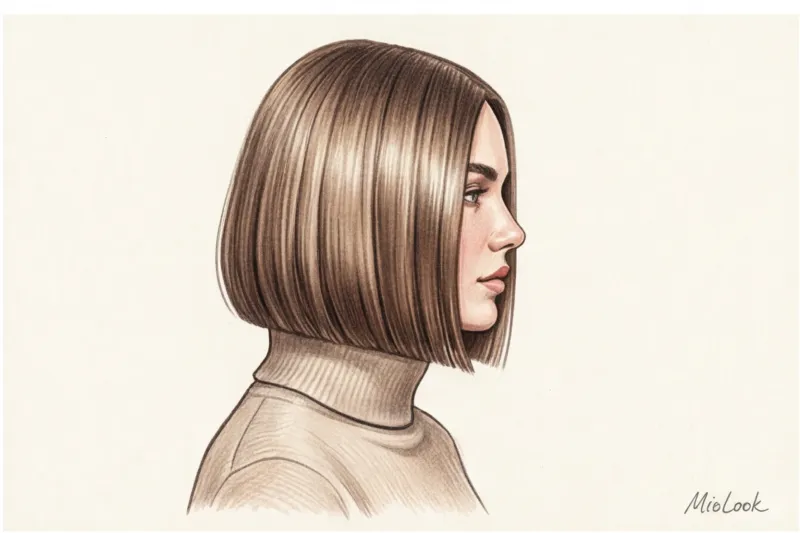
Backstage at a Jil Sander show a few seasons ago, I witnessed a remarkable scene. The lead hairstylist wasn't using curling irons or gallons of strong-hold hairspray. All he had were scissors, a comb, and a seawater spray. The models were given precise, almost architectural cuts at chin level. It was then that I finally realized: a great haircut isn't just a beauty treatment. It's a full-fledged wardrobe staple that should perfectly match the lapels of your favorite jacket.
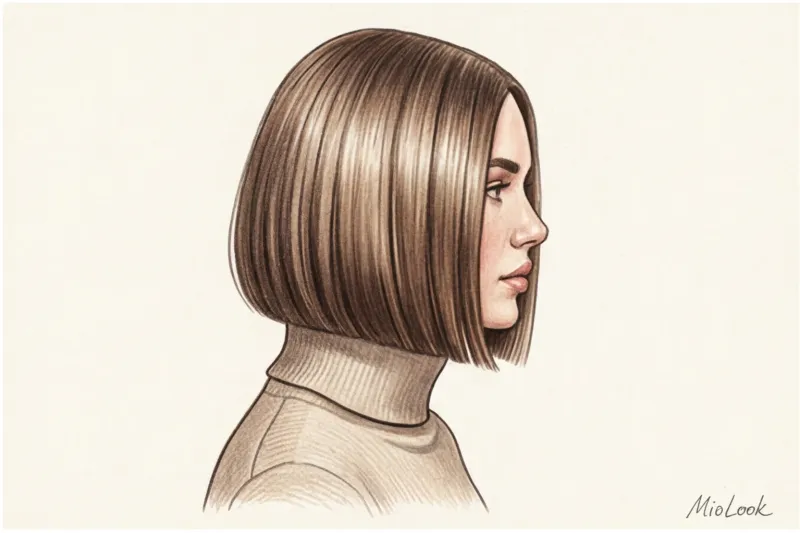
Today we will look at types of bob haircuts from exactly this angle. When choosing a shape, we'll consider not only your hair structure but also your everyday clothing to maintain that "quiet luxury" aesthetic. We've covered the global context of this trend in more detail in our complete guide. Fashionable women's haircuts: key trends and current hairstyles , and here we'll focus on the anatomy of the perfect bob.
The Architecture of Style: Why Bob Haircuts Became a Symbol of "Quiet Luxury"
Tracing the history of fashion, the bob has always been a marker of change. From the suffragette revolt of the 1920s to Vidal Sassoon's absolute geometric revolution in the 1960s, who demonstrated that a haircut should "work" for its own sake. Sassoon called it wash-and-go. Today, this philosophy has evolved into the concept of a "smart" cut.
According to a large-scale Dyson study from 2023, 71% of women worldwide complain of irreversible hair damage due to the daily use of heat tools. The solution to this problem lies not in buying a dozen repair masks, but in a skilled hairdresser's chair. A smart bob with the right weight distribution allows you to practically completely abandon the use of straightening irons.
"True luxury today is time. A haircut that requires 40 minutes of styling every morning doesn't look classy, but rather labored. Expensive hair means healthy shine and a perfectly shaped cut that holds its shape even after sleep," notes stylist Guido Palau.
That's why we see soft yet precise shapes on the runways of Jil Sander, The Row, and Bottega Veneta. The hair hangs as if no effort was put into it, but behind this casualness lies the mathematical precision of the cut's angle relative to the collarbone.
Classics and trends: the most popular bob haircuts this season
The industry offers dozens of variations, but there are only four basic architectural forms that truly enhance a person's image. Let's break them down without further ado.
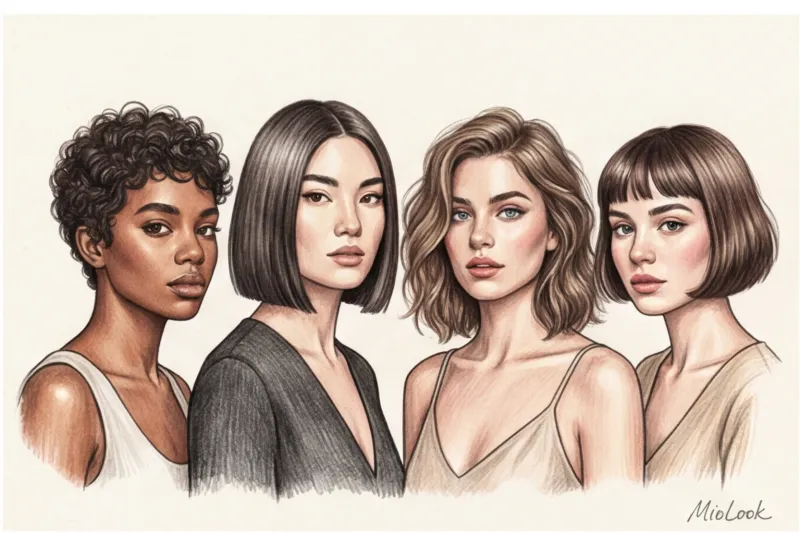
- French Bob: The length falls exactly to the lip line or cheekbones. It's often paired with short bangs and subtle texture. This style exudes an aesthetic of intelligent, casual chic. Ideal for women with prominent cheekbones and those who enjoy wearing oversized turtlenecks and trench coats.
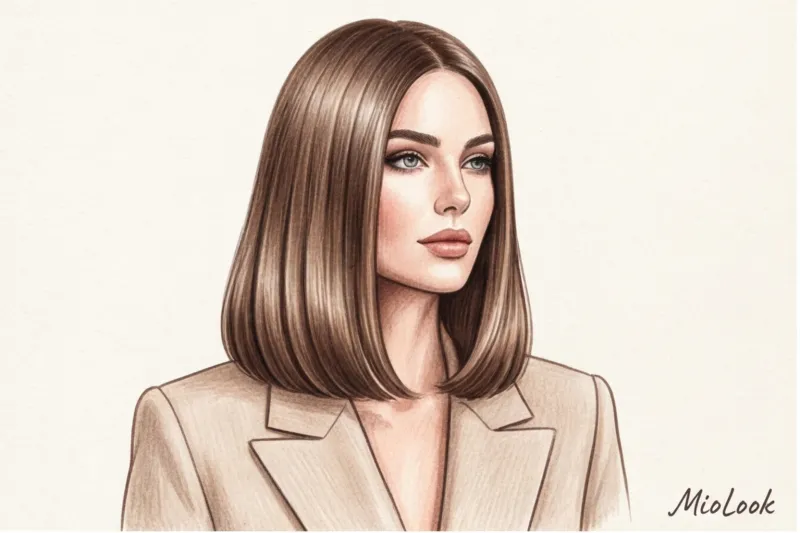
- Blunt Bob: A tight, absolutely straight cut with no thinning at the ends. The length typically ranges from the chin to mid-neck. This is the ultimate in formality and class. The hair appears twice as thick.
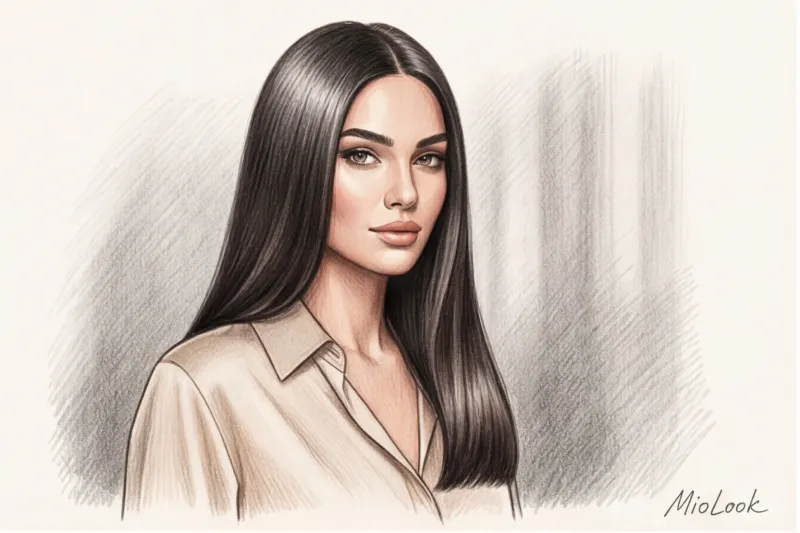
- Long Bob or Lob: A safe haven. Length to the collarbone or just below. A salvation for those who are afraid of radical changes but want to get rid of thinning ends of long hair.
- Textured/Layered Bob: It maintains the overall square shape but features hidden layers. It creates movement and volume on fine hair without turning it into a dated, 2000s cascade.
Taking it apart fashionable hair accessories , I often catch myself thinking that a thick blunt bob only needs one minimalist leather headband to make the look look like it was created by a glossy stylist.
Access to MioLook for €0.99 — one-time payment
A smart AI stylist will select the perfect bob style based on your facial proportions.
Get access — €0.99 onceThe Oval Myth: How to Choose a Bob Haircut for Your Face and Neck
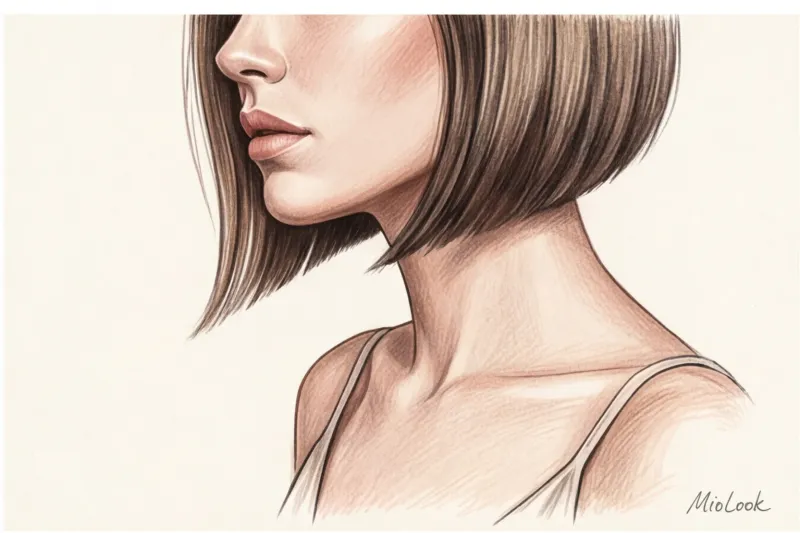
The popular magazine advice to "choose a haircut based on your face shape—oval, square, or round" is hopelessly outdated. In reality, an experienced stylist looks at completely different markers: the density of your jawline, the length of your neck, the width of your shoulders, and even your posture.
As a personal stylist, I developed the "portrait zone" rule. If a client has a short neck, a straight cut at mid-neck will make it appear even wider and shorter. In this case, we use a diagonal line: the hair is shortened at the back, revealing the nape, while the hair at the face is left longer, reaching past the jawline. This diagonal line acts as an optical illusion, elongating the neck by at least 3-4 centimeters.
When the classics don't work: If you have a prominent, strong jawline and broad shoulders, a blunt, jawline-length bob will create a "boxy" effect. This will make your face appear heavy. In this case, the length should either end two fingers above the jaw (French bob) or fall to the collarbone (forehead bob).
To experiment with length without risking your nerves, I recommend my clients use AI. You can upload your photo to MioLook and visually try on where exactly the cut line should end in relation to your neck anatomy.
Texture Matters: Which Bob Haircuts Suit Different Hair Types
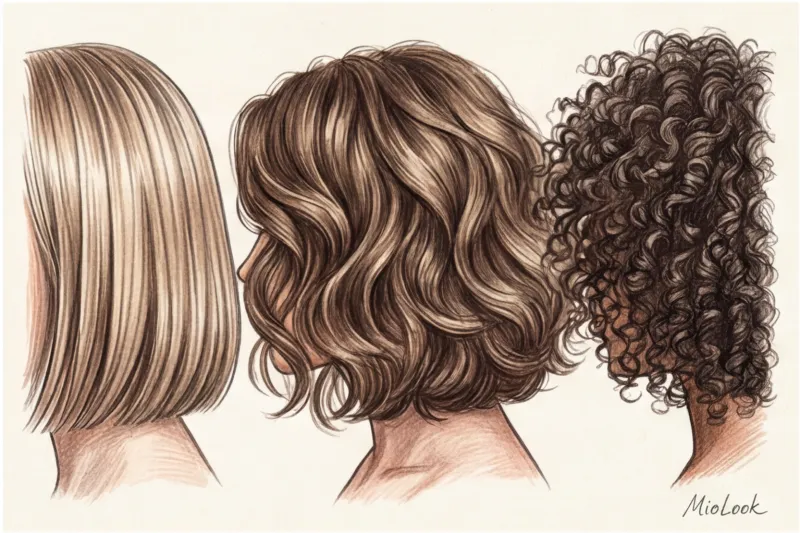
The most common salon mistake is bringing in a photo of Hailey Bieber with a perfectly sleek bob when you actually have porous, frizzy hair. The results will be disappointing, and it's not the stylist's fault, but the natural state of your hair.
For thin and straight hair A blunt cut is ideal. No thinning! The stylist should create a monolithic line that visually thickens the hair. We discussed this technique in more detail in the article about haircuts for thin hair for volume.
WITH thick, heavy and porous hair The math is different. If you cut it evenly along the bottom edge, the hair will form a triangle (the "mushroom" or "tent" effect). This requires undercutting—creating hidden, shorter layers at the nape and on the underside of the hair. These layers remove excess volume from the inside, allowing the top strands to lie smoothly.
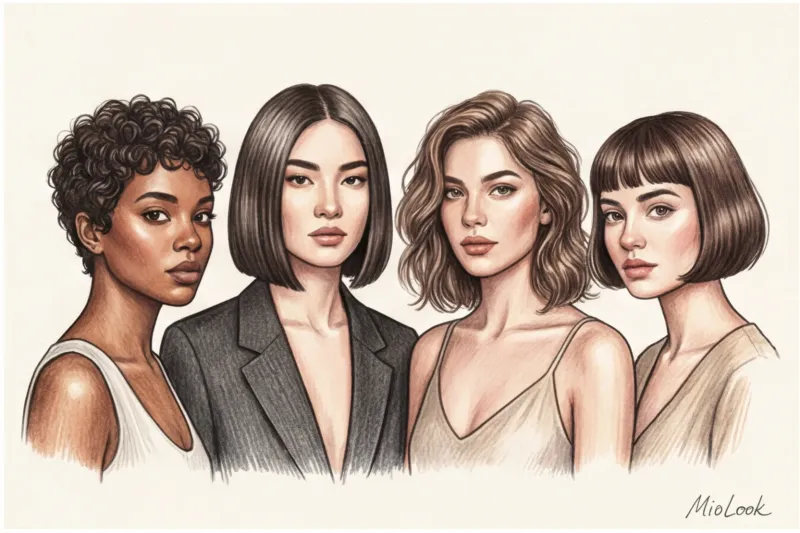
For curly hair (Curly Bob) A dry cut is used. Curly hair is a few centimeters longer when wet. If a stylist cuts it wet, holding the strands taut with a comb, the hair will bounce as it dries, turning your bob into a micro-bob. Curls should be cut only in their natural, dry state, creating a round or triangular shape.
Your perfect look starts here
Join thousands of users who look flawless every day with MioLook, choosing haircuts to suit their hair type.
Get access — €0.99 onceHaircut and Wardrobe: Why Your Bob Should Match the Collar
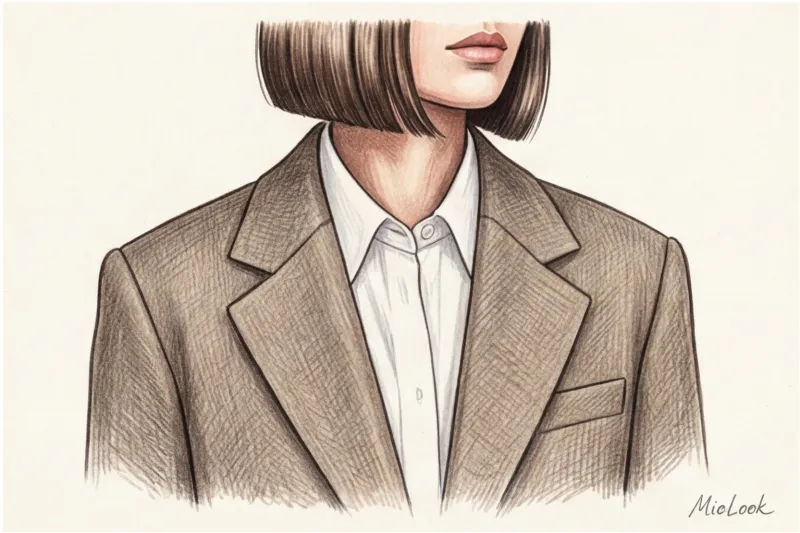
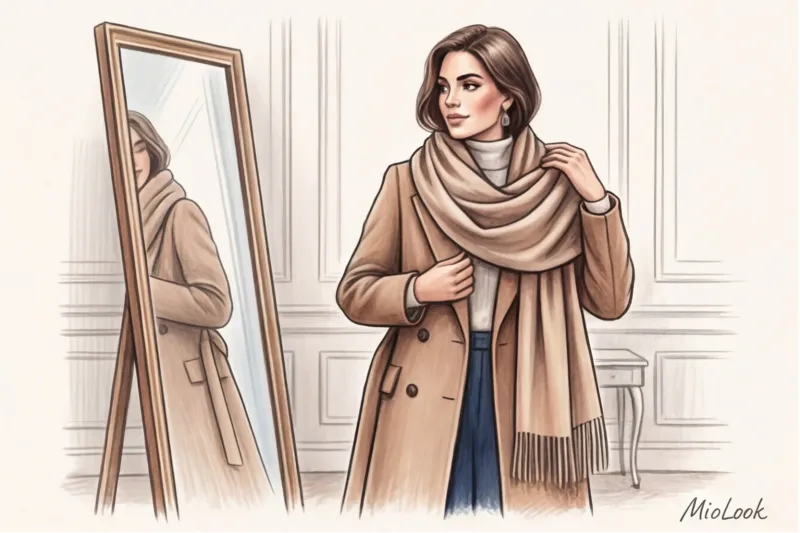
It's a subtle fact, rarely discussed by hairdressers but often considered by wardrobe stylists: the length of your haircut should match the clothes you wear 80% of the time. Hair is your permanent accessory.
A year ago, a client named Anna, a top manager at an IT corporation, came to me. Her wardrobe consisted of impeccable Massimo Dutti and COS suits, but her look wasn't working. The problem was her haircut: her hair ended exactly where the stiff lapels of her jackets began. Because of this, the ends were constantly curling out, breaking, and looking untidy. We shortened her bob by just 2 centimeters. And a miracle happened—air appeared between the collar and the hair. The silhouette became cleaner, and the suits instantly looked more expensive.
The golden "rule of air": There should be at least 1-2 inches (about 3-5 cm) of space between the ends of your hair and the edge of your clothing (jacket lapel, shirt collar, hoodie neckline). Hair should not rest on the shoulders of your jacket, unless it's a deliberate long bob that extends past your collarbone.
If you are building expert image If your dress code calls for shirts and tailored jackets, opt for a mid-neck bob or a short French bob. If your uniform is turtlenecks and chunky knit sweaters, a blunt bob cut just below the chin will be ideal, as it won't clash with the sweater's collar.
Checklist: How to explain to your stylist exactly what kind of bob you want
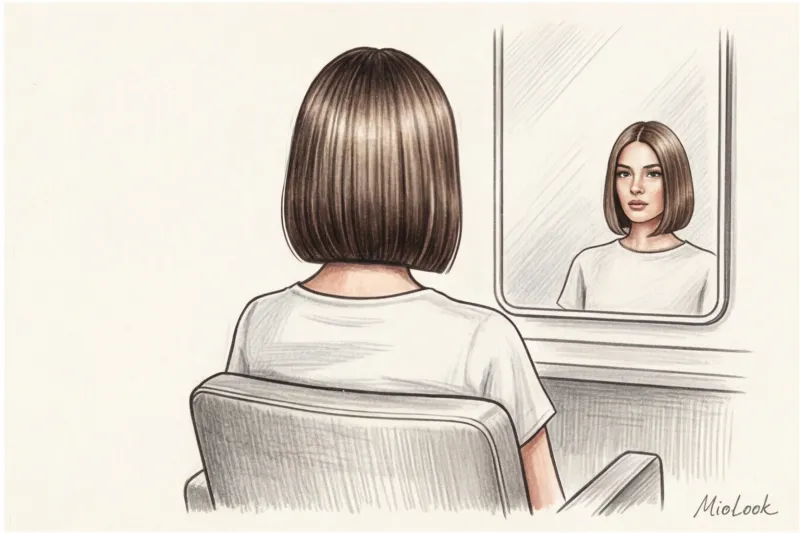
Bringing references from Pinterest is a good idea, but with one caveat: look for models with your bone structure (cheekbone width, neck length) and hair texture. To avoid the typical '90s "grandmother cut" with excess volume on top, learn three key terms:
- "A precise cut instead of thinning scissors." Ask your stylist not to use thinning scissors on the ends—they'll thin the edges and make them look fluffy. If you need to tone down the thickness, have them use point cutting (cutting with straight scissors).
- "Internal graduation instead of cascade." If you want volume, ask for invisible layers inside, keeping the outer line of the bob straight.
- "Balance of form." Be sure to discuss your parting. Do you part your hair down the middle or to the side? Your haircut should be tailored to your daily habits, otherwise the shape will be out of place.
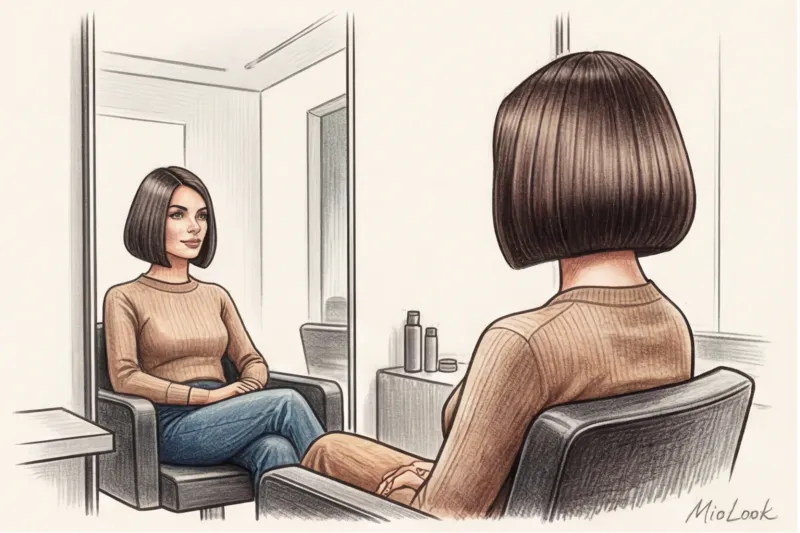
Before the technician picks up the scissors, ask a security question: "How will this length behave when I wear a turtleneck?" If the hairdresser is thinking, you're on the right path to the right dialogue.
Care and maintenance: invest in shape, not styling
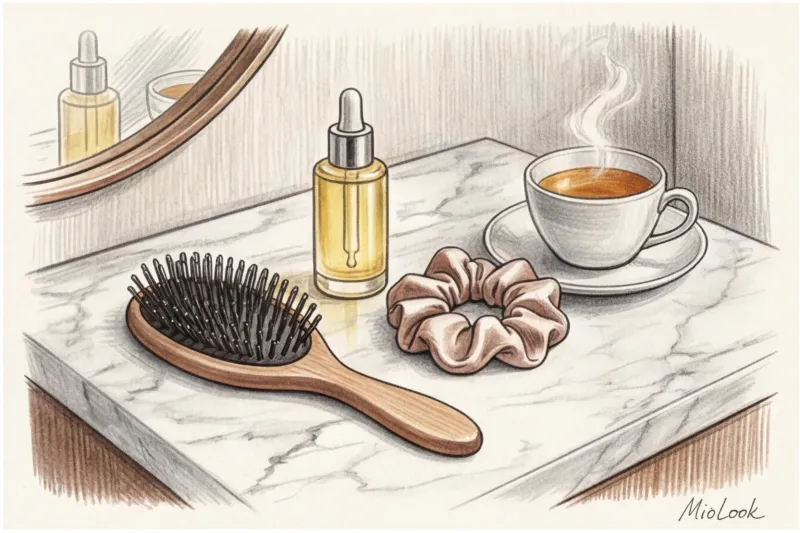
The mathematics of the architectural bob are inexorable: the ideal shape renewal cycle is 6 to 8 weeks. Hair grows unevenly, and after two months, that very line that once stretched your neck will recede, weighing down your proportions. A bob isn't a one-time expense; it's a subscription fee for your style.
But there's good news, too. By investing in a skilled stylist, you'll save a fortune on styling products. A perfect bob doesn't require strong-hold mousses or sticky hairsprays. Your basic hair kit will be reduced to three items:
- High quality moisturizing shampoo.
- Smoothing conditioner or mask.
- Light heat-protective oil or cream for ends (in the European segment, a quality product can be found in the range of €30–60).
Apply a drop of oil to damp ends and simply blow-dry your hair downwards, gently combing with a flat brush. Properly created geometry will cause the hair to curl inward or lie flat without the need for a brush.
A bob haircut is a story about self-respect. It's about eschewing complicated, time-consuming designs in favor of clean lines that work for you from morning to night. Choose the right length for your proportions and your favorite jackets, ditch the jagged, thinned ends, and you'll have the most powerful and classy accessory in your look that will never go out of style.