How many times have you heard someone say in the hairdresser's chair, "Oh, your hair is so thick and heavy, we're going to thin it out to make it easier to manage"? If you have thick locks, I bet you experience this all the time. The result is usually the same: for the first two days after your salon treatment, everything looks fine, but after your first wash, you're a dandelion. Sound familiar?
I'm Isabella Garcia, and after 12 years as a stylist, I've learned one crucial thing: coarse hair doesn't need to be fought. It doesn't need to be "tamed," straightened to the point of crunch, or mercilessly trimmed. The right haircuts for coarse hair work like an expensive, architectural cut. We've covered this approach to different textures in more detail in our complete guide: Smart Haircuts for Your Hair Texture: The Secret to Shape Without Styling.
Today we'll talk about how to stop fighting your natural skin and turn dense texture into your main asset.
Why Coarse Hair Is Your Ultimate Styling Stretch
Let's shift the paradigm. In image-making, I often compare hair to fabric. Fine, soft hair is like silk chiffon. It flows beautifully, but doesn't hold its shape at all without a complex framework (in the case of hair, without gallons of styling product). Coarse hair, on the other hand, is like thick tweed, neoprene, or brocade. These fabrics produce the most striking, structured designer pieces.
Let's look at the numbers. According to the International Association of Trichologists (2023), the diameter of fine hair is approximately 50 microns, while coarse hair reaches 100–120 microns. The cuticle of coarse hair has more layers of scales, which are more tightly packed together. Yes, this makes coarse hair more difficult to curl. But on the other hand, it holds its shape brilliantly.
While fine hair hangs like icicles from humidity an hour after going outside, a properly cut coarse hair retains its shape all day. The secret lies solely in the angle of the strand during the cut.
The Main Enemy: Why Thinning Kills Haircuts for Coarse Hair
A popular myth, still propagated by many stylists, is that thick, coarse hair needs to be heavily thinned to reduce volume. This is completely counterintuitive, and here's why.
I had a client named Elena in my practice. She came to me in despair: her beautiful, heavy hair was shaped from the very crown down. The stylist wanted to "remove the heaviness." As a result, short, chopped-off hairs, trying to grow, began pushing the longer strands outward. The result was a frizzy helmet effect. It took us eight months to grow out this "texture" and restore the hair's integrity.
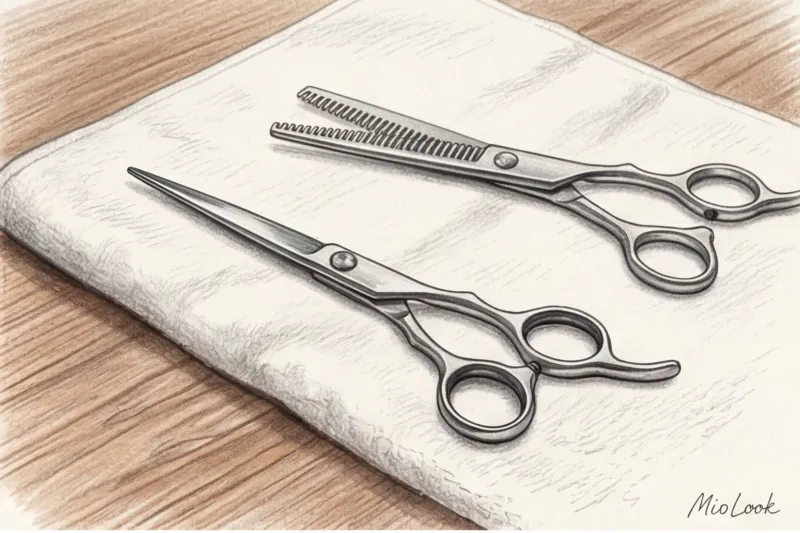
Thinning scissors (serrated) create a jagged cut, disrupting the integrity of the cuticle. This allows moisture from the air to instantly penetrate the hair, causing frizz. So why do hairdressers love this tool so much? Let's be honest: thinning is great at concealing the imperfections of an uneven cut and significantly speeds up the process.
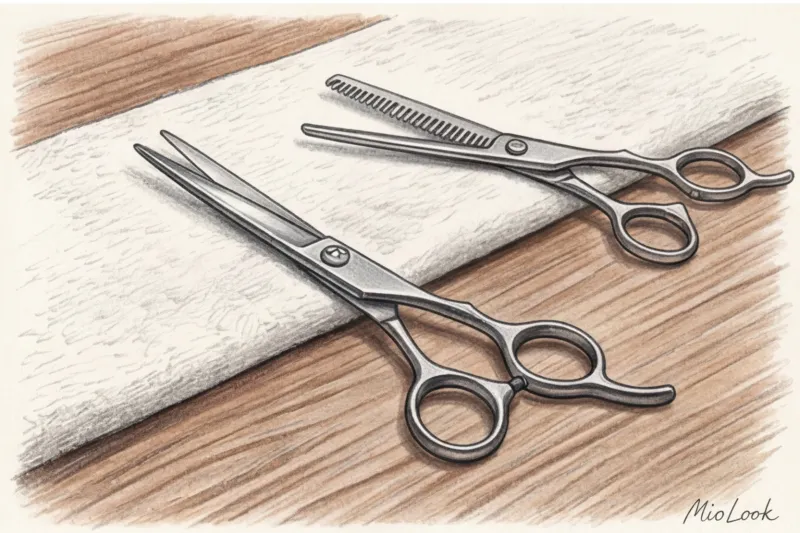
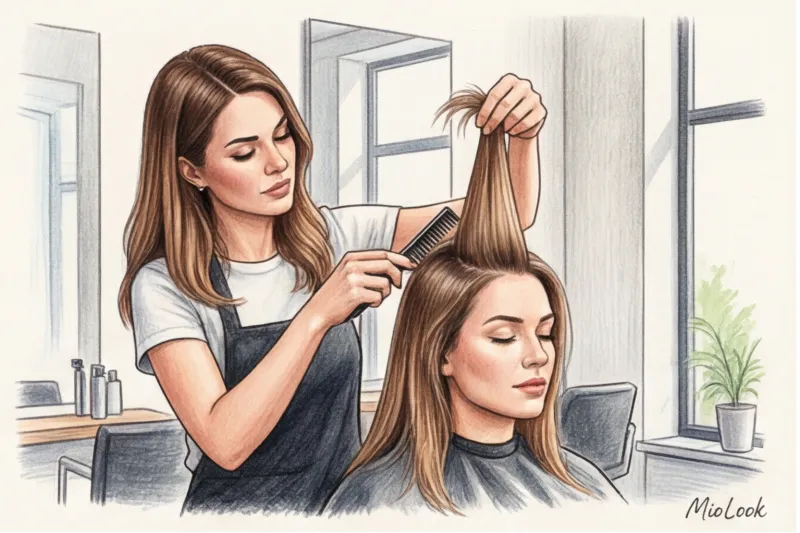
What to do instead? Ask your stylist to use straight scissors and a technique called internal invisible layering (slicing or point-cutting). This allows you to remove excess volume from the inside while maintaining a smooth outer surface.
Your perfect look starts here
Join thousands of users who look flawless every day with an AI stylist.
Get access — €0.99 onceSmart Haircuts for Coarse Hair: Rules of Shape Architecture
The concept of "smart haircuts" has its roots in the philosophy of the legendary Vidal Sassoon. In the 1960s, he revolutionized haircuts by proposing that their shape be maintained through precise geometry rather than backcombing and hairspray.
For coarse hair, the "wash and go" principle works flawlessly if the stylist takes into account the anatomy of your scalp and the natural flow of your strands. However, there's an important caveat: a smart haircut won't work if the stylist ignores your cowlicks at the hairline.
Short haircuts for coarse hair: pixie and garcon
Many people are afraid to cut coarse hair short, fearing a "hedgehog" effect. The key rule here is to always leave the crown and bangs longer. The weight of the strands will help them lie flat.
- Risk zones: The sides and back of the head should be trimmed as short as possible with clippers or a tight, blunt cut (fade technique) to prevent hair from sticking out.
- Who is it suitable for: women with expressive cheekbones and a clear jawline.
- When it does NOT work: If you have a round face with a soft jawline, an ultra-short pixie cut on coarse hair will visually weigh down the lower third of your face.
Medium length: long bob, lob and shaggy
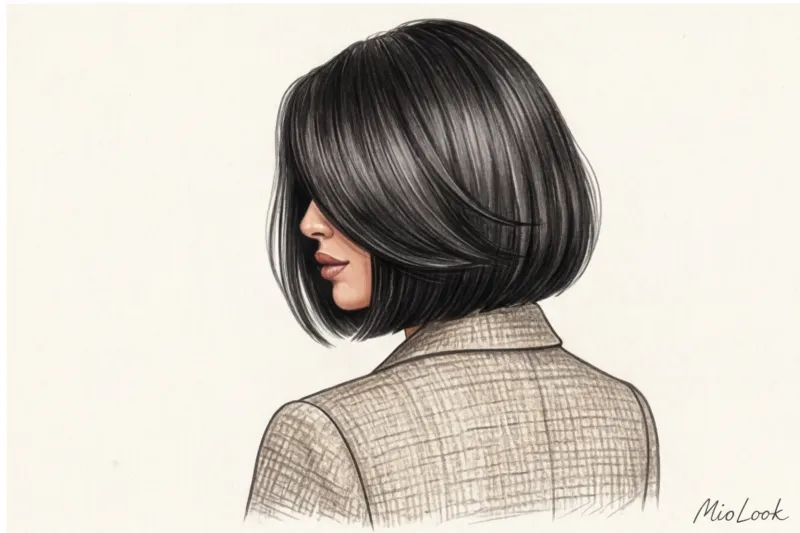
My favorite length for a Mediterranean-inspired, thick texture. A straight bob with no bangs and subtle graduation at the nape is a classic that looks expensive.
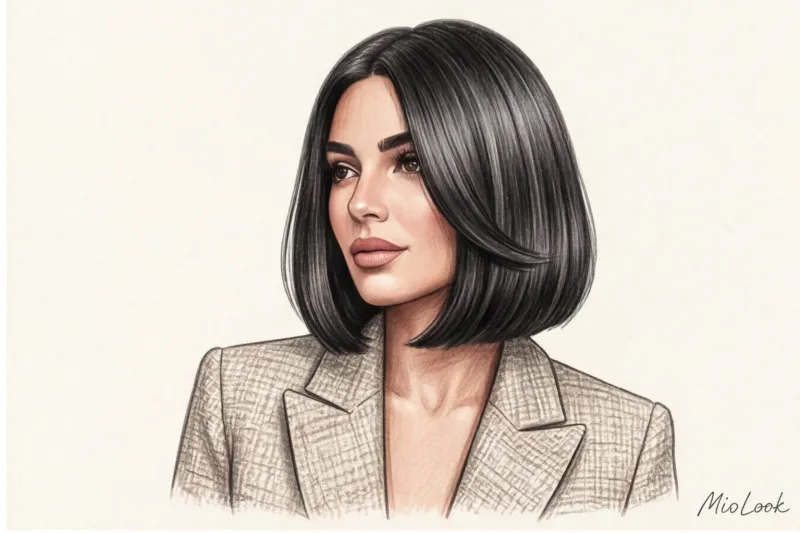
If you prefer an effortless chic style, try a textured lob (long bob) or a shag. Important: the layers in a shag on coarse hair should be long, otherwise you'll end up with a lion's mane. This haircut fits perfectly into a business dress code, provided you know How to style a beautiful bob in 5 minutes for the morning meeting.
Long haircuts: cascade without sharp transitions
Long, thick hair cut straight across can look like a heavy cape, visually pinning the hair down to the ground. To add movement, ask your stylist for a U- or V-shaped cut at the back.
Use the Ghost Layers concept. The outer layer of hair is left long, while the inner strands are slightly shortened, creating an airy look without visible layers. Shaping the strands around the face also requires a special approach—I recommend exploring this. Secrets to styling curtain bangs , to adapt it to the heavy structure.
Ideal cut formulas: straight, porous and wavy
Coarse hair can behave completely differently. What works on glassy Asian hair can be a disaster for porous Slavic hair.
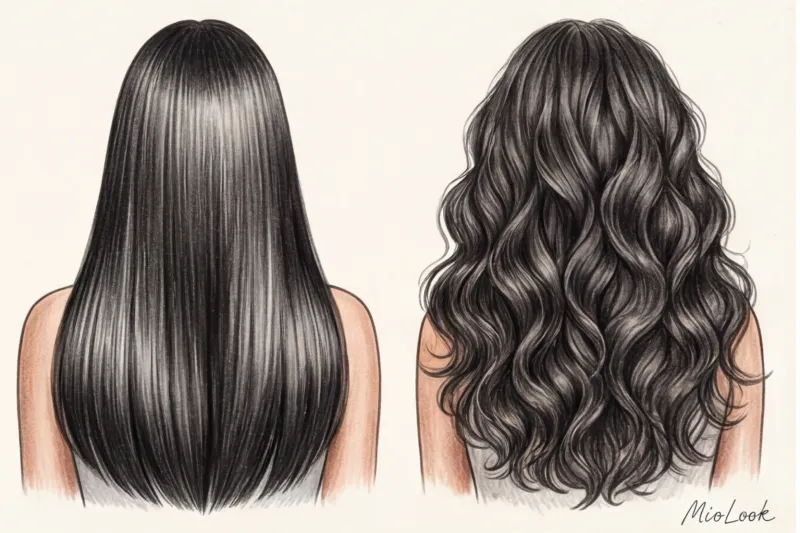
- Asian type (straight, glassy, heavy). Formula: acute draw angle + absolutely straight blunt cut. No thinning. Just pure geometry.
- Porous type (hard, matte, fluffy). Formula: deep inner layers + weight retention at the ends. If the ends are too light, porous hair will immediately frizz in humidity.
- Curly and coarse. Formula: Dry Cut. Wet curly hair can stretch up to 30% of its length. Cutting such hair wet is like playing Russian roulette. The stylist needs to be able to see how each curl falls in its natural state.
Ready to get started?
Try a free plan—no commitments required. Start managing your wardrobe with MioLook.
Get access — €0.99 onceInstructions: How to correctly set a task for a salon specialist
Half your success depends on how you communicate with your stylist before they even pick up the scissors. Forget abstract phrases. Be as specific as possible.
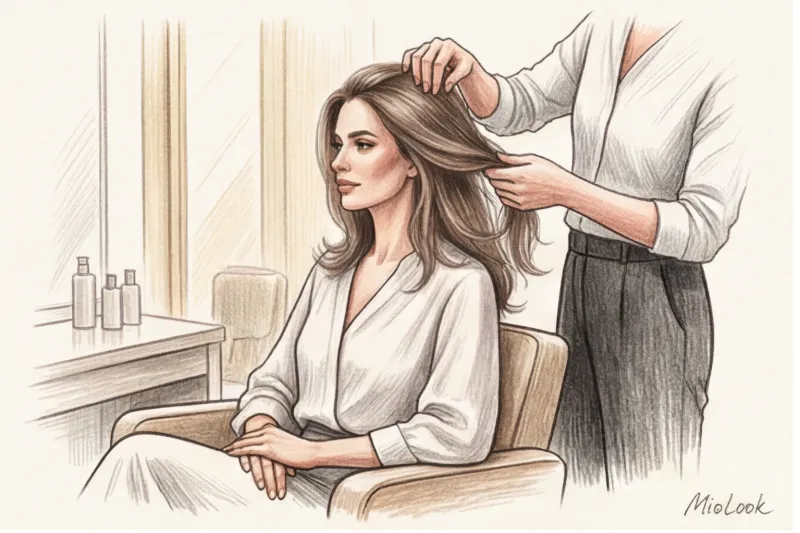
I always teach my clients one simple test: if you sit down in the chair and the stylist immediately sends you to the sink, run. A competent stylist will always analyze your dry base first. They should run their fingers through your hair, check the direction of your cowlicks, and assess the density of the back and sides.
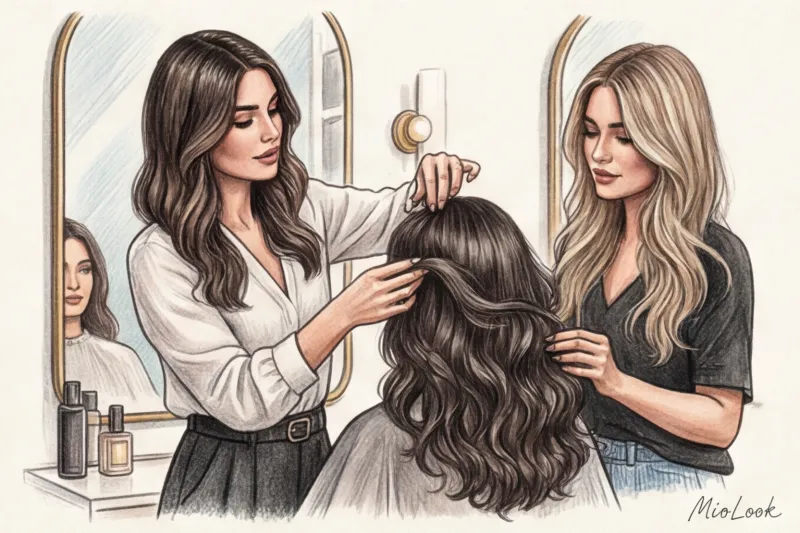
- Taboo words: "thin out", "make it lighter", "remove density", "thinning out".
- Marker words for good results: "straight geometric cut", "inner layers without thinning scissors", "point cut to soften contours".
If you want to visualize your future look before going to the salon, you can upload your references to MioLook - this will help you match the new haircut geometry with your everyday wardrobe.
Styling and care: highlight your shape without ironing
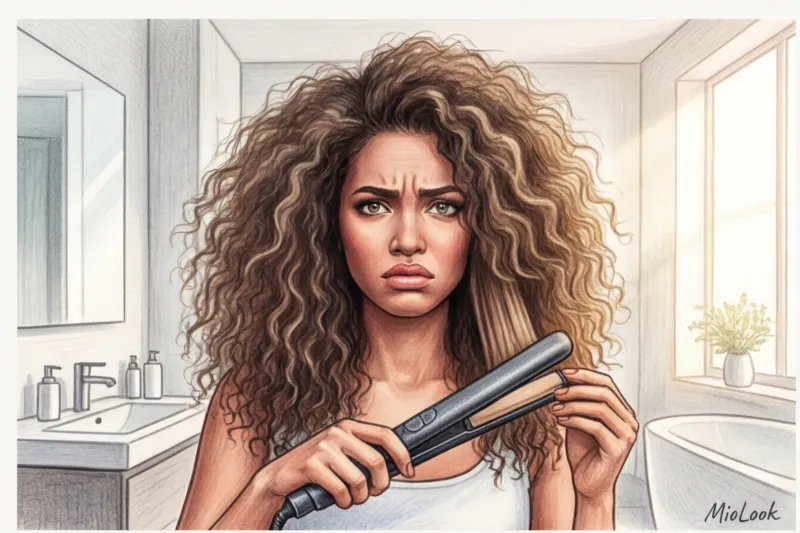
Daily straightening with a flat iron slowly destroys the dense cuticle. At temperatures above 180°C, the moisture inside the coarse hair literally boils, creating micro-tears that make it even more unruly.
The secret to hair care lies in understanding hair chemistry. Many people buy restorative masks with keratin (protein), not realizing that protein makes coarse hair even coarser, leading to breakage! What you need isn't proteins, but lipids (fats) and powerful hydration.
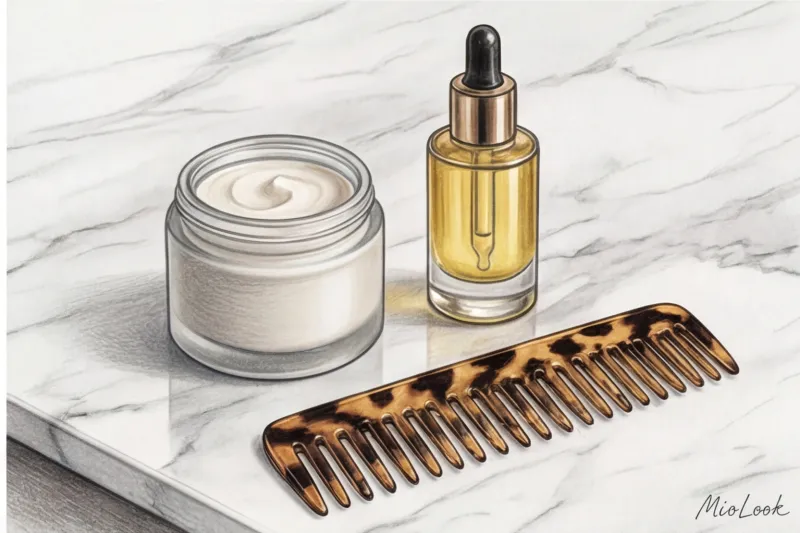
My basic skincare routine looks like this:
- Proper drying: Dry your hair with a hairdryer strictly from top to bottom, in the direction of hair growth. Avoid chaotic blowing with hot air.
- Leave-in cream-livin: Apply to damp hair. A high-quality professional livin will cost around €20–€45, but it will save you hours of styling time.
- Sealing: 2-3 drops of light oil (argan or macadamia) on dry ends to close the cuticle.
If you establish the right routine, you'll forget about problems with your hairstyle. By the way, here are more tips on How to make your hairstyle last longer , we discussed this in a separate guide.
To sum it up: stop viewing your hair's thickness and coarseness as a punishment. When you find a stylist who knows how to create the perfect architectural shape with straight scissors, you'll realize you have the most luxurious hair material, one that doesn't require hours of morning styling.