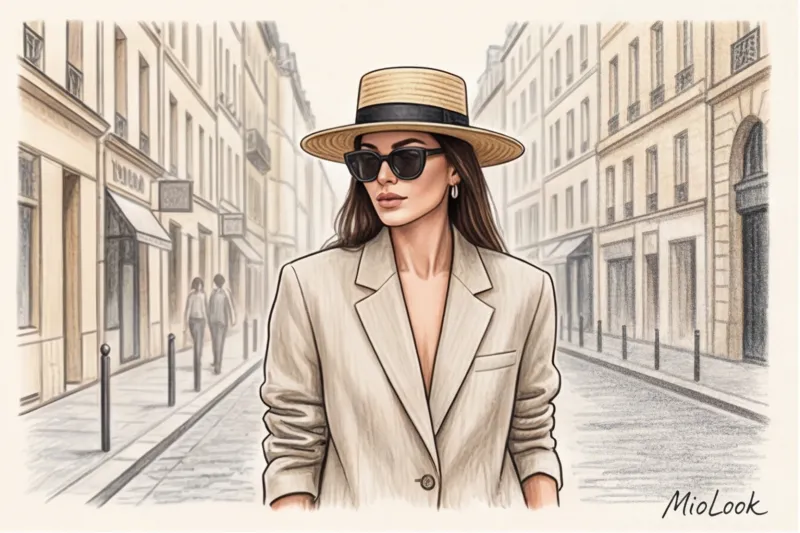
I remember my client Anna calling me in a panic from Milan. A sudden June downpour had literally turned her luxurious €120 Italian hat into a shapeless, sticky papier-mâché in just 10 minutes. It was a simple mistake: she'd bought cellulose straw, thinking she was investing in a status symbol.

In 12 years of working as a personal stylist, I've learned one thing: basic summer headwear — they're not a beach souvenir you can buy at the first stall you see on the waterfront. In the big city, they act as a solid architectural element, bringing together a relaxed summer look. We discussed this in more detail in our The complete guide "Basic Hats and Scarves: A Stylish Capsule".
Today, I'm challenging the stereotypes about vacation hats. We'll explore why a heavy cotton Panama hat is smart-casual, how to choose a straw hat that won't fall apart in the humidity, and why a large brim is the worst thing you can buy this summer.
Essential Summer Headwear for the City: Why It's Not a Beach Favor, but a Necessity
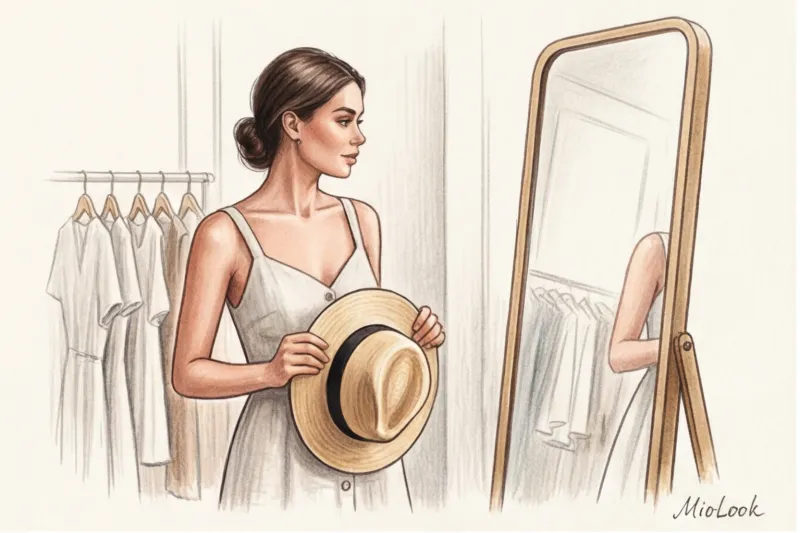
In the summer heat, we instinctively reduce the number of layers. Jackets, heavy textures, and layering disappear. The look becomes flat. This is where a hat or Panama hat comes into play—it shifts the focus to the portrait area and works according to the rules of "quiet luxury." A structured headdress instantly makes it clear: you didn't just leave the house in whatever was cooler; you assembled the outfit.
A summer hat in the big city is a sign of high style acumen. It replaces makeup on "bad hair days" and serves as a physical shield. According to the American Academy of Dermatology (AAD, 2023), to prevent photoaging of the face, a thick hat with a UPF 50+ rating is essential, and sunscreen is only a supplement.
Let's look at this through hard mathematics - the very same true cost-per-wear formula (price per one exit):
- Scenario A (emotional): You buy a huge beach hat for €90 before your vacation. You wear it twice for poolside photos. Exit price: 45 €.
- Scenario B (rational): You buy a basic thick Panama hat from COS for €35. Wear it around town with jackets, on weekends with jeans, and on vacation—for a total of 60 days over the summer. Exit price: 0.58 €.
Straw Hat: Investing in the Right Texture and Shape
The main function of a city hat is to set the tone. Soft, flowing summer fabrics (linen, viscose, fine cotton) require a strong contrast. The shape of the crown (the base of the hat) is much more important here than ribbons and embellishments.
For a basic wardrobe, I recommend two shapes:
- Boater: A flat crown and a completely straight, stiff brim. It pairs perfectly with urban architecture, formal linen suits, and slip dresses.
- Fedora: A classic dent in the crown and a slightly upturned brim at the back. This is a more masculine shape that looks chic with Bermuda shorts and oversized white shirts.
Anatomy of straw: raffia, toquilla or cellulose?
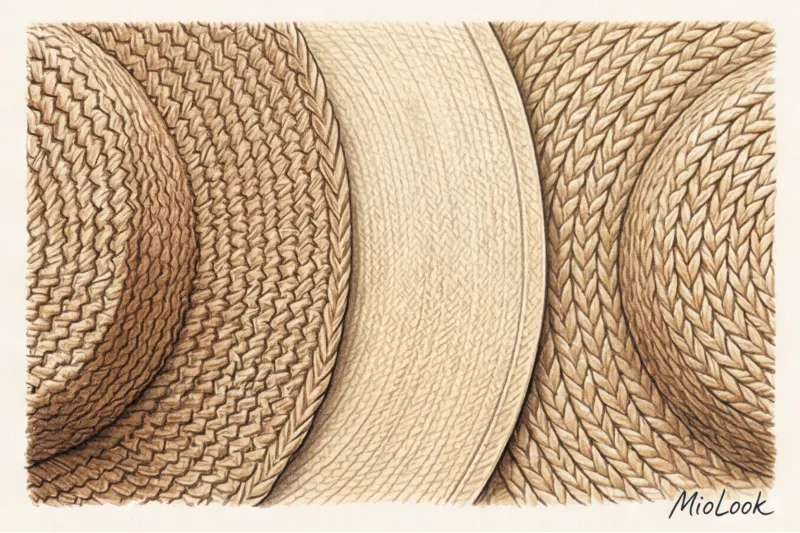
Herein lies the main trap of mass-market products. Turn your hat inside out and read the ingredients:
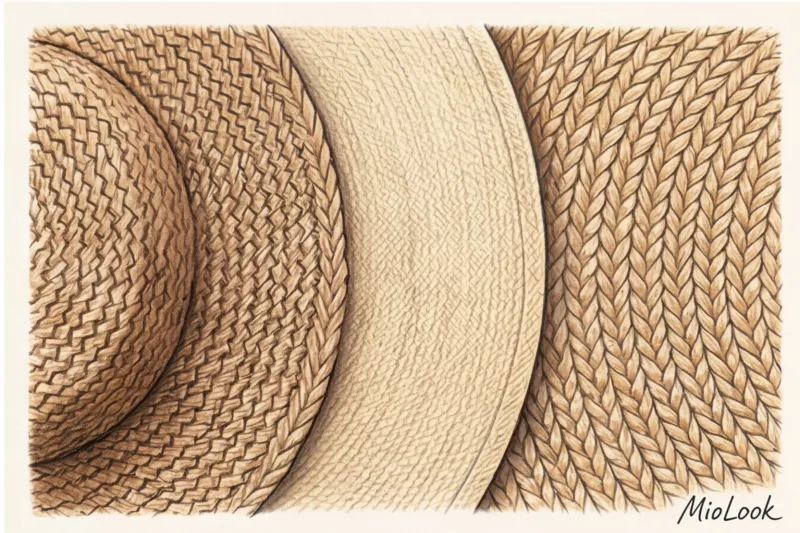
Paper straw (Cellulose). This makes up 90% of the assortment at Zara, H&M, and Mango (price range: €20–€35). The paper is rolled into bundles and glued. Pros: low price. Cons: it's sensitive to even the slightest moisture. Just get caught in a lawn sprinkler, and the hat will lose its shape forever. Lifespan: 1–2 seasons at most.
Natural raffia. Palm fiber is unbreakable and moisture-resistant. In the mid-price segment (Massimo Dutti, & Other Stories), a raffia hat will cost €60–€90. It's a worthwhile investment—it will last you 5+ years and age beautifully, acquiring a refined softness.
Toquilla. Legendary Ecuadorian straw, used to make authentic Panama hats (yes, the original Panama is a straw hat, not a fabric one). This premium item, starting at €150, is distinguished by its phenomenal lightness and tight weave.
The Myth of the Wide-Brimmed Hat (and Why I Ban Them)
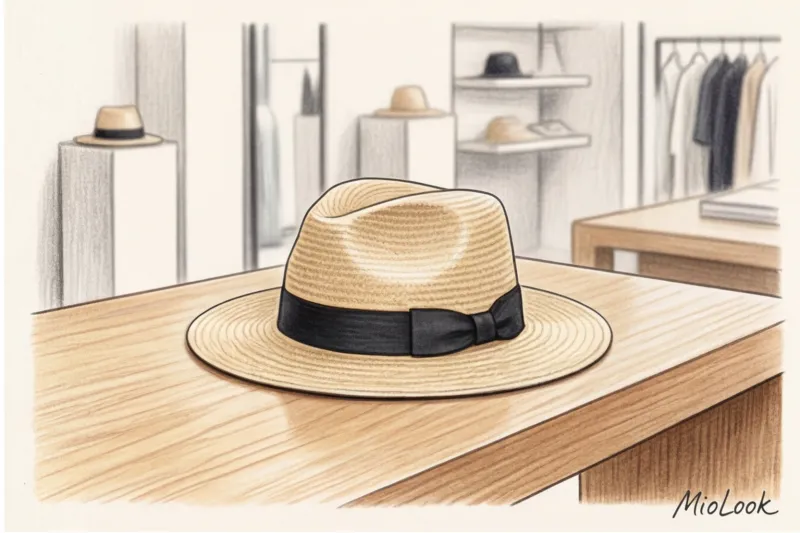
I know Instagram has been selling us the image of a mysterious woman in a giant floppy hat, the brim draping gracefully over her shoulders, for years. In reality, it's the worst investment you can make in your closet.
A soft, flexible brim inevitably cheapens the look—it looks limp and unkempt. In the city, such a hat becomes a nightmare: the brim catches on subway doors, obscuring the view, and at the slightest wind (which is always present in a metropolis due to the wind tunnel effect), the hat flies under the wheels of cars. An alternative is a medium-length brim (up to 7–8 cm), which holds its straight shape like ironclad concrete.
Ready to get started?
Try the MioLook plan for free—no commitments required. Artificial intelligence will help you integrate new accessories into your wardrobe.
Get access — €0.99 onceBucket Hat: From Microtrend to Reinforced Concrete Base
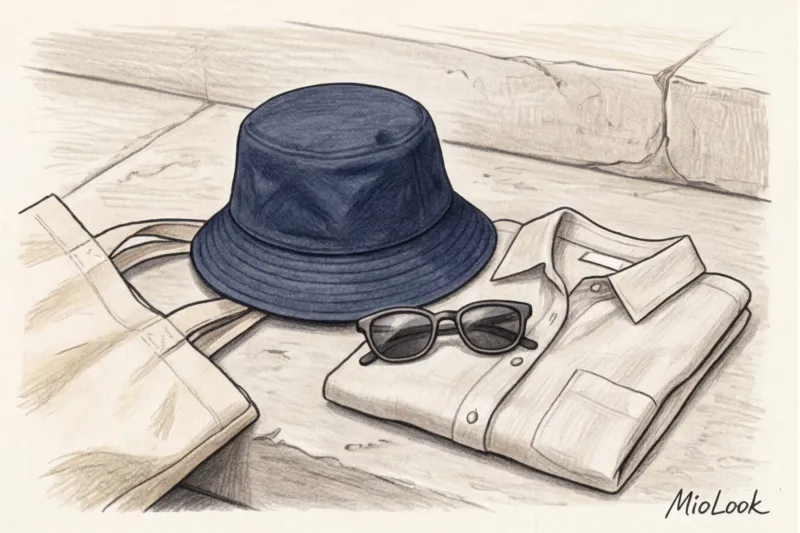
The evolution of the Panama hat is astounding. Over the past five years, it's gone from the uniform of fishermen and '90s rappers to a fully-fledged smart-casual staple. I had a client whose wardrobe consisted of tailored jackets and palazzo pants—she looked too "office-dressy" even on the weekends. We added a minimalist, heavy cotton Panama hat from COS for €35, and the formality instantly dropped to the desired level of fashionable casualness.
To make a bucket hat look expensive, forget about thin, flimsy cotton. Look for thick twill (like classic trench coats), smooth suiting linen, or high-tech cotton with a water-repellent finish (Arket and COS regularly produce excellent options).
How to wear it without looking like a kid at the dacha? Avoid the combination of a bucket hat + printed T-shirt + shorts. Play with contrast: a bucket hat + an oversized light blue men's shirt + a silk midi skirt. By the way, if in doubt, upload a photo of your items to MioLook — a smart wardrobe will instantly generate dozens of stylish combinations with a new Panama hat.
Instructions: How to choose a shape to suit your facial features
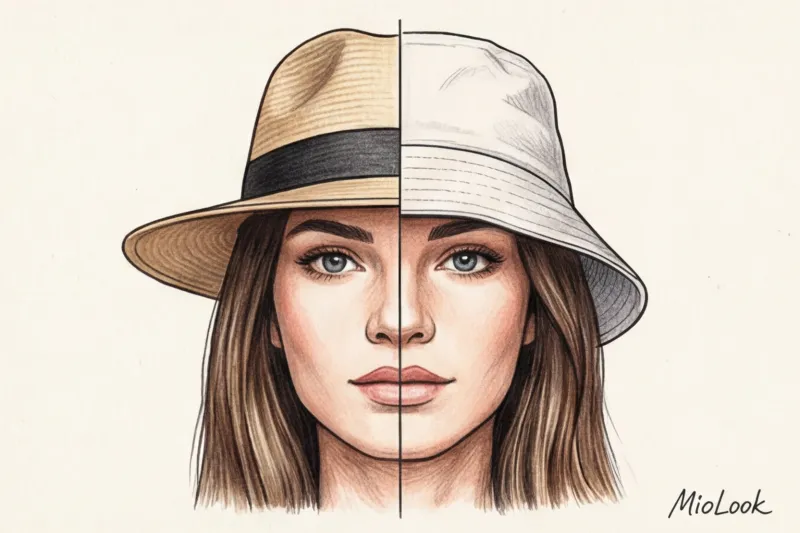
In the fitting room, I often see the same mistake: women choose a hat separately, like a pretty object on a shelf. But two centimeters of crown height can visually add extra weight or, conversely, elongate your silhouette. Remember the golden rule: the brim of the hat should never extend beyond the line of your shoulders If they come out, you appear to be a "mushroom" under which the body is hiding.
- Round face: Your goal is to add angles. Avoid soft, round Panama hats with a drooping brim. A stiff boater hat or a fedora with a high, geometric crown will visually elongate the face.
- Oblong or rectangular face: You want a deep fit that covers your forehead. Smooth, thick twill panama hats or hats with a soft brim will balance out the angularity.
- Miniature height (up to 160 cm): Avoid hats that flatten your height. The crown should be medium-height, and the brim narrow (up to 5-6 cm). Your hat shouldn't dominate your figure.
Your perfect look starts here
Join thousands of users who look flawless every day with an AI stylist.
Get access — €0.99 onceKatarzyna's Checklist: 5 Steps to Take Before Purchasing at the Checkout
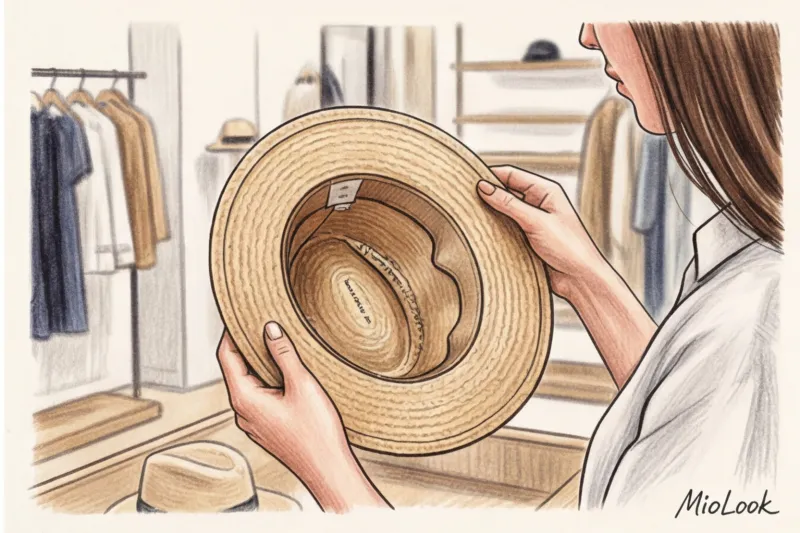
Never take your summer hat to the checkout until you've done this rigorous check:
- Explore sweatband. This is the strip of fabric inside the hat that sits against your forehead. Cheaper hats often have it made of squeaky polyester—your forehead will sweat within five minutes. The band should be 100% cotton or viscose.
- Crease test. Lightly squeeze the crown of a fabric Panama hat in your fist. If the fabric feels like a crumpled sheet of paper and doesn't straighten out, return it to the shelf.
- Translucent test. Hold your hat up to a bright light in a store. If you can read signs through the weave, it won't protect you from UV rays. The weave should be tight.
- The one-finger rule. The hat shouldn't fit tightly (you'll get a migraine), but it shouldn't be loose either. You should be able to fit one index finger between the band and your head with some effort.
- Unfasten the fittings. Mass-market brands love to sew on cheap metal logos, plastic shells, or chains. The first thing I advise my clients to do is carefully remove this home decor with nail scissors. Minimalism looks much more expensive.
Survival Guide: How to Transport Summer Hats Without Ruining Them
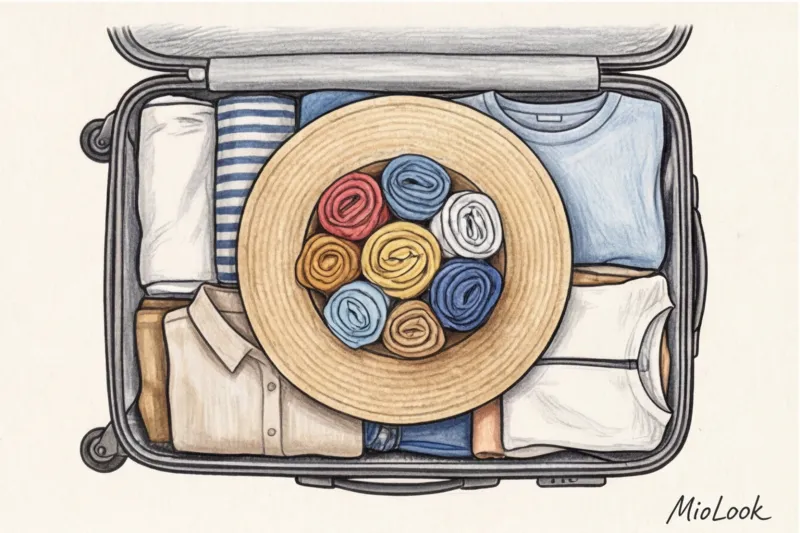
Even if the tag says enticingly "packable," I implore you: never fold a hat with a rigid frame in half. Wrinkles in the straw are almost impossible to smooth out.
When taking clients on business trips and vacations, I always use nest method Place the hat on the bottom of the suitcase, brim down (or up, depending on the shape of the brim). Now comes the most important part: tightly stuff the inside of the hat with rolled-up T-shirts, underwear, or socks. The hat should be as stuffed as a drum. Then surround it with things on the outside so that it is centered in the suitcase.
If the brim is slightly warped after a flight, try this hotel life hack: hang your hat in the bathroom while you take a hot shower. The steam will soften the fibers, and you can press the brim back into perfect flatness by hand (or lightly iron it through a damp cotton cloth at the lowest setting).
Think of summer hats not as disposable decoration, but as a full-fledged investment in your style and health. A basic hat or Panama hat doesn't just protect you from the sun—it completes your look, bringing it together. Choose thick textures, pay attention to the geometry of the crown, and remember: a truly classy piece is one you'll want to wear to the beach or to a business lunch on the summer terrace.