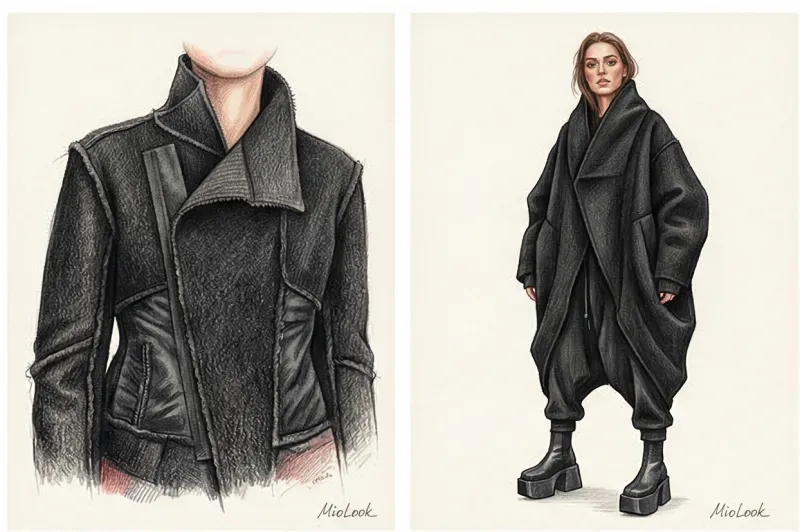
Avant-garde fashion is an experimental movement that rejects traditional functionality in favor of conceptual art. The garments feature deconstructed cuts, asymmetrical lengths, and unconventional materials. This aesthetic is worn on runways and in bold everyday street style.
What Is Avant-Garde Fashion Style?
The term avant-garde translates from French as "advance guard," originally a military concept describing the troops that march ahead of the main army. When applied to clothing, it describes designers and wearers who push boundaries and challenge the status quo. Avant-garde fashion style operates as a direct protest against commercial mass production and classical beauty standards. Instead of focusing on flattering the human figure, this approach transforms garments into complex sculptural objects. Clothing becomes a medium for profound self-expression rather than mere utility.
Those who adopt this aesthetic view their wardrobe as a curated art exhibition. The garments demand attention and provoke thought. While mainstream trends shift every season, avant-garde pieces remain timeless because they exist outside the standard trend cycle. They require confidence and a willingness to step away from conventional expectations of symmetry, fit, and color. The wearer becomes a participant in a continuous artistic dialogue, using their body as a canvas for structural experimentation.
The Origins of Avant-Garde Style
The modern interpretation of this aesthetic took shape in the early 1980s. Japanese deconstructivist designers Rei Kawakubo and Yohji Yamamoto brought their groundbreaking collections to Paris, shocking audiences accustomed to glamorous, body-conscious silhouettes. They presented garments that completely subverted European notions of symmetry and fit. Their designs featured distressed fabrics, oversized shapes, and a heavy reliance on the color black, which critics initially dubbed "post-apocalyptic."
Following this initial wave, European conceptualists expanded the movement and solidified its place in contemporary culture. Martin Margiela introduced an aesthetic of unfinished design, exposing the inner workings of garments by placing seams, darts, and shoulder pads on the outside. Later, Rick Owens popularized a darker, more grunge-infused take on the style, blending luxurious fabrics with raw, elongated silhouettes. These creators proved that clothing could be intellectually stimulating while remaining deeply personal and wearable.
Key Features of Avant-Garde Clothing
Avant-garde style is built on a deliberate rejection of utility and conventional forms. Designers rely on several core principles to create these striking pieces, ensuring each garment stands apart from traditional retail offerings.
- Deconstruction: This involves the intentional disruption of a traditional cut. Designers utilize open seams, raw edges, and severe asymmetry. You will often find sewing details in unusual places, such as extra sleeves draped across the back, collars shifted to the shoulder, or hems that appear violently shredded.
- Distorted proportions: The natural contours of the human body are either completely concealed or radically altered. Hypertrophied volumes, dropped crotches, and architectural silhouettes create a new physical outline, challenging the viewer to reconsider the shape of the human form.
- Non-standard materials: The movement embraces unconventional textiles. Creators experiment with plastic, metal, recycled materials, and industrial fabrics. They also rely on the stark contrast between opposing textures, such as pairing coarse, heavy wool with fine, translucent silk, or stiff leather with delicate organza.
- Subdued palette: The color scheme is notoriously restrained. Black, white, and graphite dominate the collections. The intentional absence of bright prints allows the viewer to focus entirely on the complex geometry of the cut and the rich texture of the fabric.
Core Elements of an Avant-Garde Wardrobe
Building a wardrobe in this aesthetic requires specific foundational pieces. The table below outlines the typical characteristics of these garments, highlighting how they differ from standard apparel.
| Item | Fit & Cut | Material | Season |
|---|---|---|---|
| Deconstructed Jacket | Asymmetrical, oversized shoulders, raw hems | Heavy wool, distressed cotton | Autumn/Winter |
| Architectural Tunic | Elongated, draped, irregular hemline | Stiff poplin, linen, sheer silk | Spring/Summer |
| Drop-Crotch Trousers | Voluminous top, tapered ankle | Boiled wool, heavy jersey | All seasons |
| Sculptural Coat | Cocoon shape, exaggerated collar | Felted wool, treated leather | Winter |
How to Wear Avant-Garde Fashion in Real Life
Adapting this highly conceptual trend for everyday wear relies on a careful balance of complexity and simplicity. You do not need to dress head-to-toe in runway pieces to achieve the look. A highly effective approach involves pairing one statement avant-garde piece—such as an asymmetrical jacket or a heavily deconstructed shirt—with basic straight trousers or classic, plain jeans. This grounds the outfit and makes the experimental piece stand out even more without overwhelming the wearer.
Complex layering serves as the foundation of the style. A successful look is often created by combining garments of varying lengths and weights. For example, you might wear a long, sheer cotton tunic over wide, heavy wool trousers, and then complement the combination with a cropped, rigidly structured vest. This interplay of lengths creates visual depth and movement, turning a static outfit into a dynamic composition.
The look must always be completed with distinctive footwear and accessories. A standard sneaker or classic pump will disrupt the aesthetic entirely. The avant-garde silhouette calls for chunky shoes with geometric soles. Platform boots, heavy combat styles, or split-toe models like the famous tabi boots are ideal choices. When it comes to jewelry, keep it minimalist but impactful. Cast metal pieces with a brutalist, unpolished aesthetic perfectly match the raw energy of the clothing. Avoid delicate, traditional jewelry, as it will clash with the aggressive lines of the garments.