In 14 years of working as a stylist, I've learned one hard and fast rule: a corporate event is not a party with friends. It's a minefield of unspoken etiquette. The story of my client Anna, the CFO of a large IT company, illustrates this perfectly. A week before New Year's Eve, she almost bought a silk dress with an extremely open back. "Olena, I wear formal suits all year long; I want to be a femme fatale for once!" she argued passionately during a consultation.
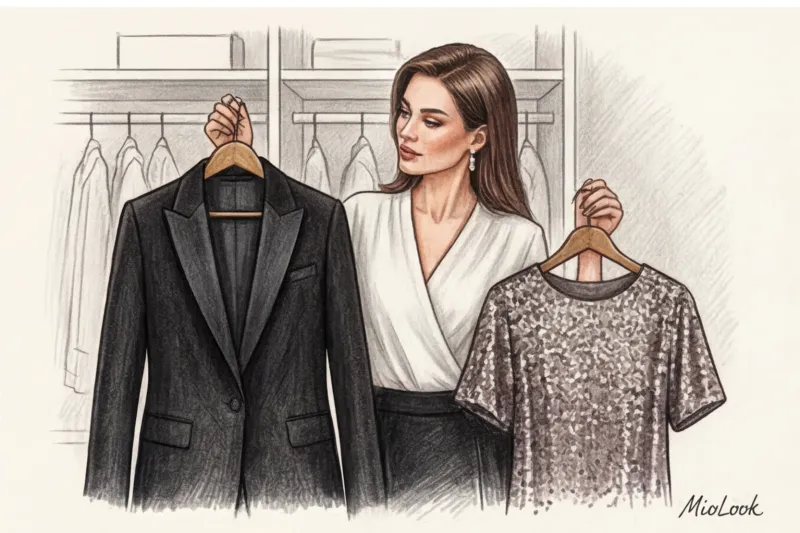
We didn't argue. We simply uploaded the dress to the MioLook virtual fitting room. When the algorithm generated a realistic image and placed it in the context of a business dinner with colleagues, Anna herself recognized the dissonance. The dress was magnificent, but it would destroy her professional credibility in front of the board of directors in one evening. Ultimately, we decided to use the neural network to select an outfit for the corporate event, based on her existing wardrobe. And it worked brilliantly.
We have already discussed the intricacies of the unspoken business dress code in more detail in our a complete guide to choosing an outfit for a corporate event But in this article, I want to give you a completely different, mathematically precise tool. We'll explore how to digitize your office database and, using AI algorithms, create a flawless image, saving you stress, time, and money.
Why the question of "what to wear" can no longer be left to chance
A corporate event is strategic networking in a festive setting. The stakes here are much higher than they initially appear after a few glasses of champagne. According to a large-scale study of corporate culture by McKinsey (2024), 68% of HR directors anonymously admit that an employee's appearance and behavior at informal company events directly impacts their future career advancement.
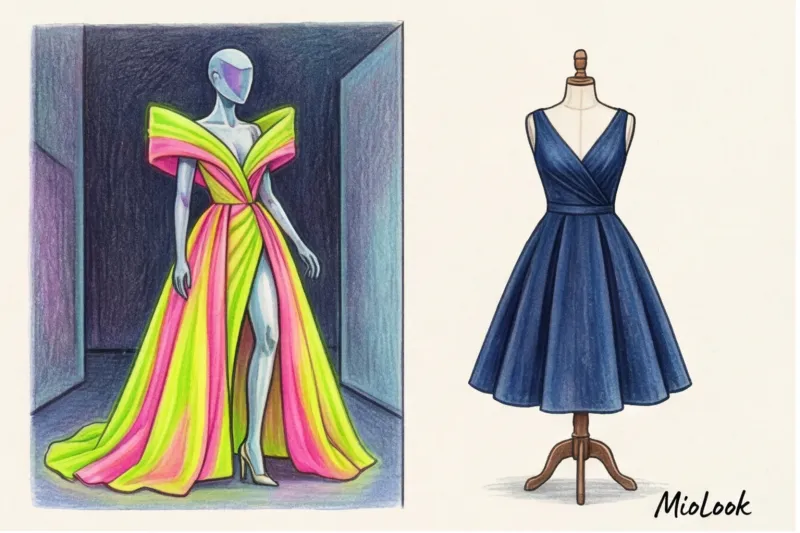
Extremes are equally dangerous here. Showing up in the boring gray suit you wore to defend your quarterly report yesterday is a sign of disrespect for the formality of the event. Dressing up in a disco ball dress with head-to-toe sequins is a sign of questioning your professional competence.
Remember the high-profile incident at Paris Fashion Week a couple of years ago, when a talented PR director lost a contract with a luxury house for attending a private gala dinner in a revealing club outfit. A dress code error can cost you your reputation. That's why an AI assistant becomes your personal image consultant: it eliminates emotional and impulsive purchases, relying solely on your appearance and the event's parameters.
Access to MioLook for €0.99 — one-time payment
A smart AI stylist will create the perfect look for your corporate event without risking your reputation.
Get access — €0.99 onceHow to choose a corporate look: The MioLook neural network in action
The main insight I share with all my clients: you don't need to buy a special "festive" dress This is the worst investment in your wardrobe. The MioLook neural network doesn't just combine random, beautiful items. It operates according to strict laws of color, composition, and visual body contouring—the very same rules that professional stylists have studied for years.
First, the algorithm analyzes your natural characteristics. You can read more about it here. How to choose a style based on an archetype using AI To understand the mechanics, artificial intelligence takes into account your appearance contrast, dominant color type, and body contours. This is why the algorithm often breaks stereotypes.
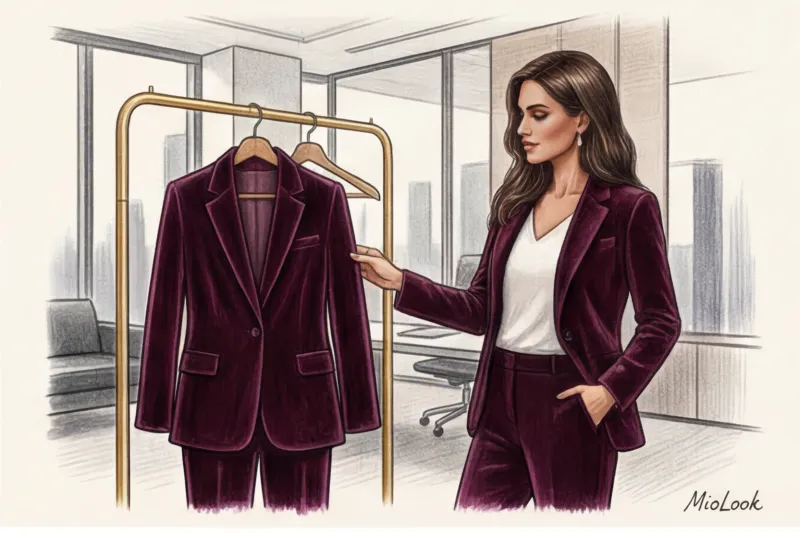
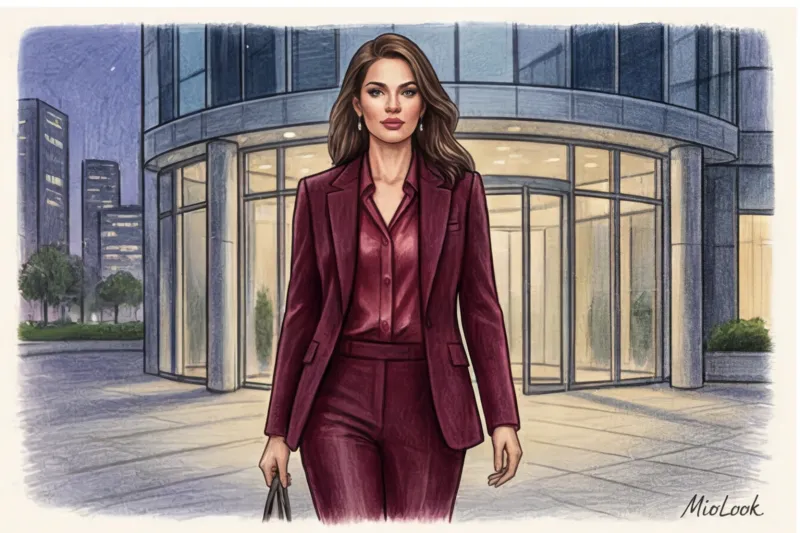
For example, instead of a familiar but obliging sheath dress, AI might suggest a velvet pantsuit in a deep wine or emerald shade. Why? Because velvet absorbs light and always looks classy and expensive, unlike budget satin, which has a treacherous sheen and highlights even the slightest imperfections in the silhouette.
Step 1. Digitizing the database and searching for hidden potential
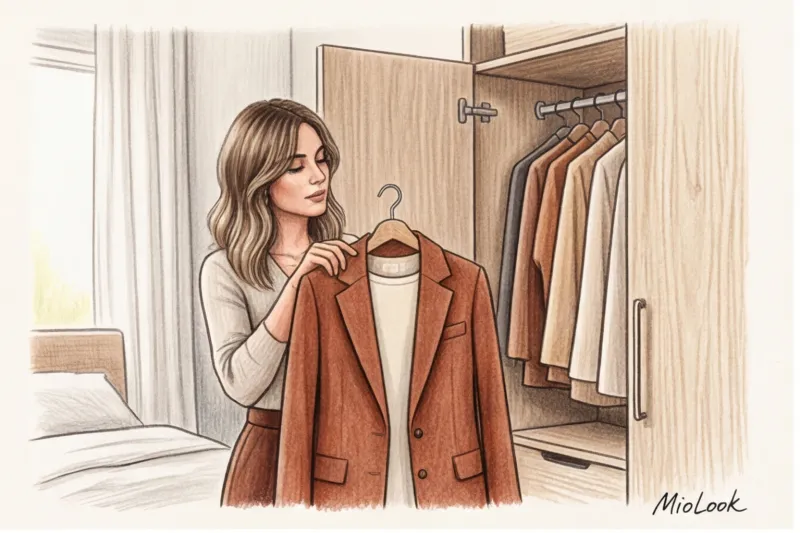
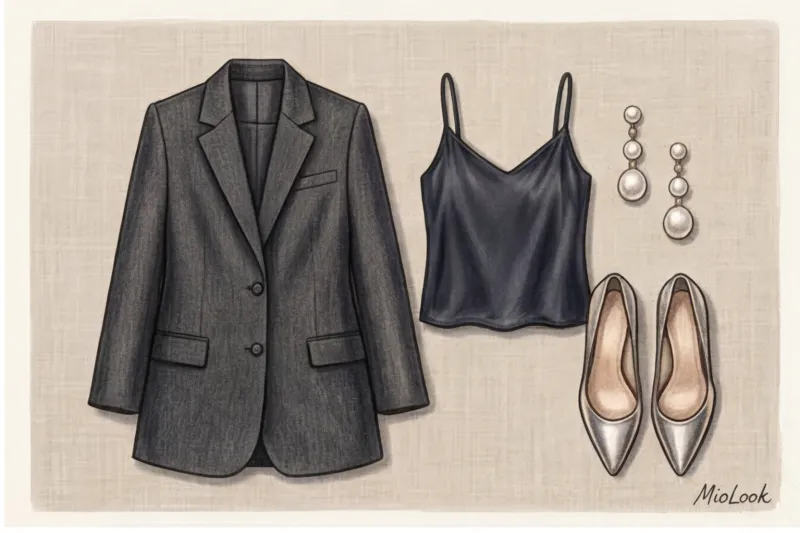
Over 12 years of practice, I've noticed that women often don't see the evening potential in their everyday clothes. Upload your current business wardrobe to the MioLook virtual fitting room. The magic of the algorithms is that the neural network takes your favorite wide-leg, pleated suit pants (the kind you wear to the office) and shows how they'll look with a silk top with thin straps and statement earrings.
Step 2: Setting up the event format
A corporate bowling alley party and a black-tie dinner at a restaurant require fundamentally different solutions. You enter the event parameters in the app. The algorithm understands the differences between the formats and filters the results. For a country quest, it will put together a stylish layered look with a cashmere sweater, while for an office reception, it will suggest swapping a formal shirt for an organza blouse.
The 20% Rule and How Artificial Intelligence Helps Us Follow It
My favorite styling trick, which is the foundation of MioLook's algorithms, is the "20% Rule." The ideal corporate look should consist of 80% of your typical business attire and exactly 20% of evening, festive pieces.
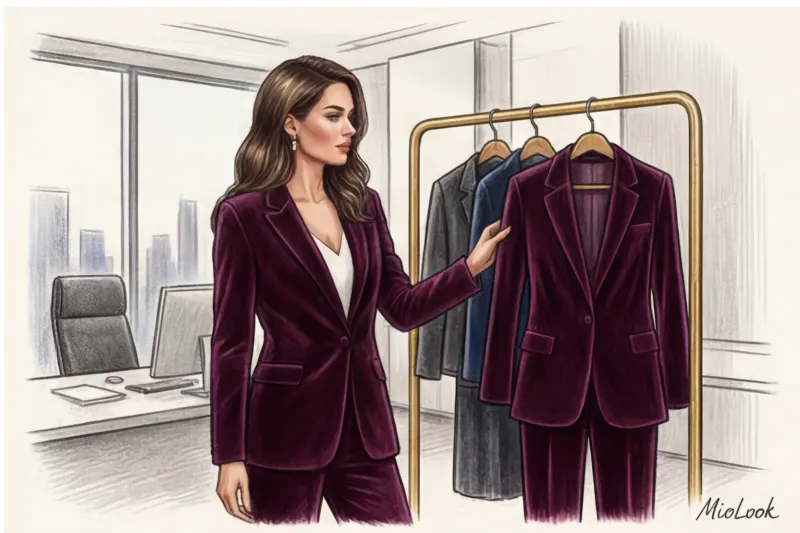
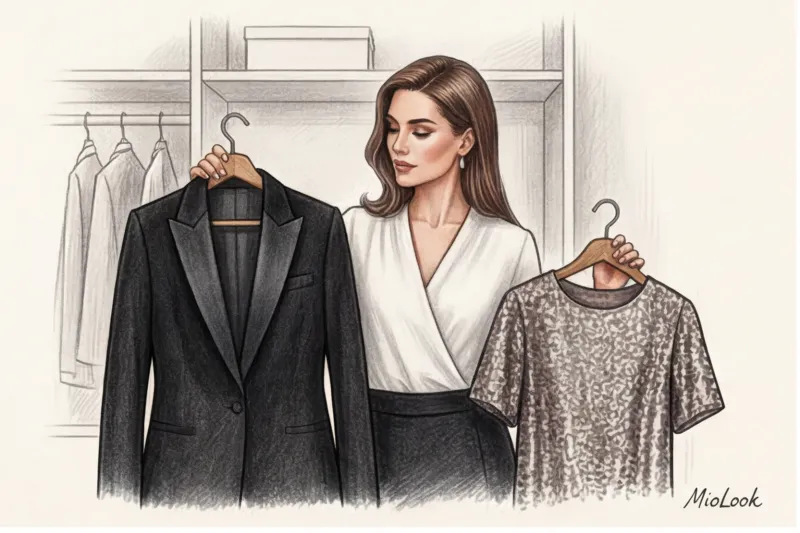
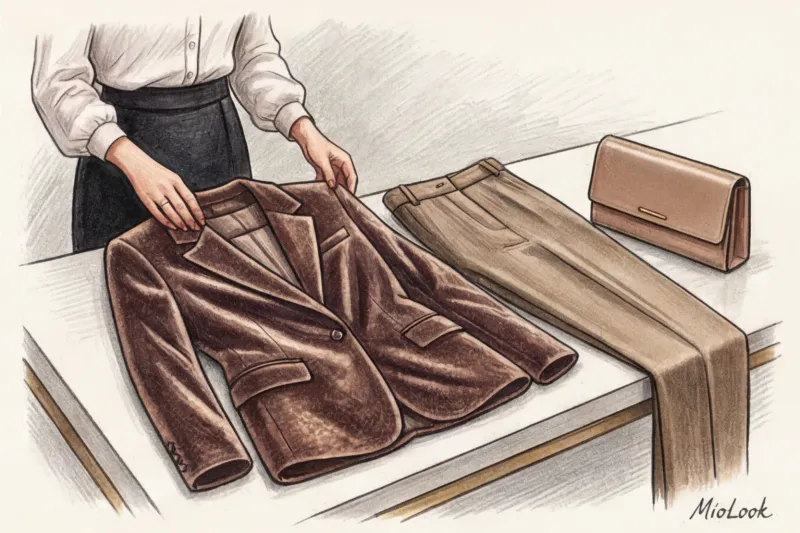
What does this look like in practice? Let's take your favorite double-breasted jacket made of thick wool. That's 80% of the base. The neural network adds a silk top with a minimum weight of 22 momme (never thin linen polyester!), large metal earrings in a complex geometric shape, and metallic leather pumps. That's the 20% of the holiday.
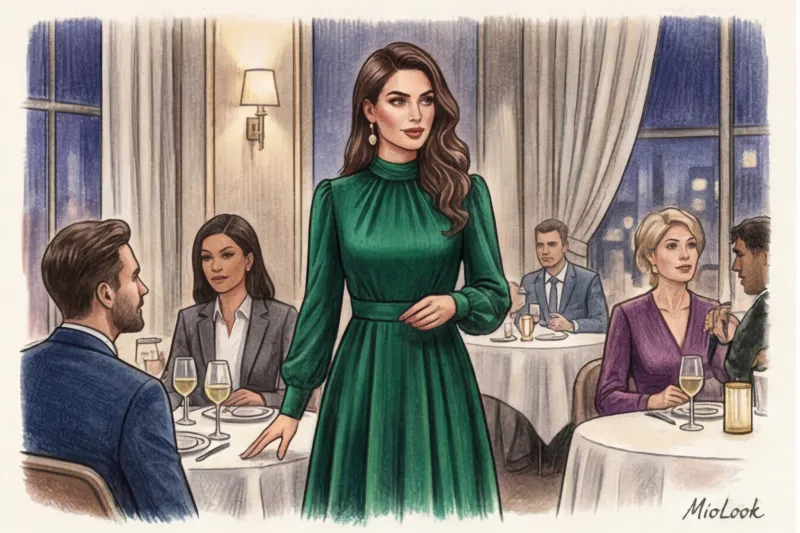
And now for a counterintuitive insight that often surprises my clients: the sexiest and most alluring thing at a corporate event is a high-necked outfit made of expensive, flowing fabrics, not a tight minidress. When you're wearing flowing palazzo pants and a silk blouse with a closed collar but exposed wrists, you project confidence and status. Artificial intelligence accurately calculates this proportion, dosing sequins, velvet, or silk so you look luxurious but not overdressed.
Your perfect look starts here
Join thousands of users who look flawless every day with MioLook, without spending hours trying on clothes.
Get access — €0.99 onceTop 3 Holiday Dress Code Mistakes the Algorithm Blocks
Having worked with over 500 clients, I've compiled an anti-rating of corporate looks. The neural network is programmed to prevent you from making these typical mistakes.
- Mistake 1: Too much exposure. The combination of a plunging neckline, a miniskirt, and high heels is taboo for business events. The MioLook algorithm offers an elegant balance: we reveal only one area. If the dress has an open back, it should be as low-cut as possible in the front, with long sleeves. If we expose the legs, the top should be covered. To be fair, this rule does NOT apply if you work in show business or a nightclub, but for 90% of traditional companies it is ironclad.
- Mistake 2: The "Christmas tree" syndrome. This is when lace, rhinestones, sequins, and leopard print all come together in one outfit. The AI assistant is strict: it selects only one striking texture for the entire look. If you have a sequined skirt, the algorithm will tone it down with a chunky knit sweater or a matte men's blazer.
- Mistake 3: Inappropriate shoes. There's nothing sadder than a woman who sits in a corner all evening because her new stilettos turned out to be a torture device. Because AI takes the party format into account, it will never suggest 12-centimeter heels for a busy corporate event with dancing or quests, replacing them with stylish loafers with chunky soles or elegant kitten heels (heel 3-5 cm).
Smart Shopping: From Virtual Generation to Purchase
Did you know that, according to statistics from the international analytical agency WGSN (2023), approximately 80% of women wear a dress bought for a corporate event exactly once? It simply hangs in the closet as a token of the money spent. This is an environmental and financial crime against one's own wardrobe.
MioLook has built-in Cost Per Wear analytics. If you buy an evening dress for 20,000 € and wear it once, your CPW is 20,000 €. If you buy a luxurious classic jacket for the same 20,000 €, wear it to a corporate event, and then wear it to the office twice a week for the entire year (about 100 times), your CPW is 200 €.
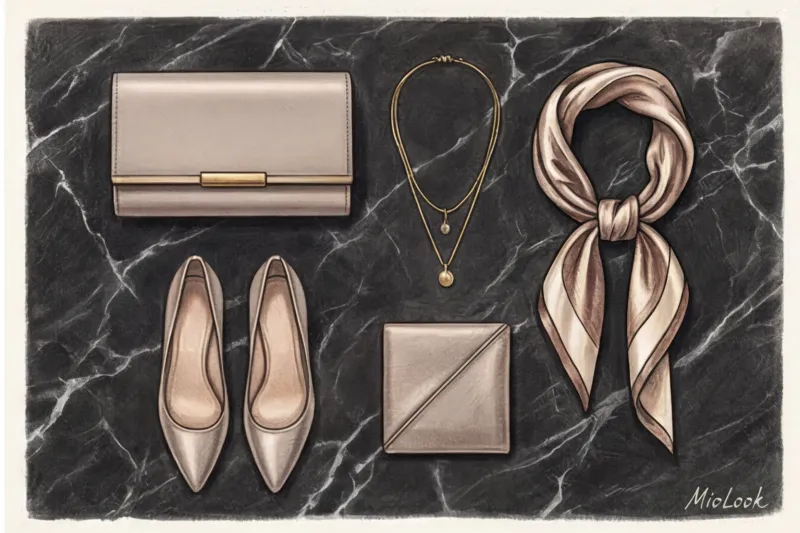
Using the similar search function, the algorithm finds exactly those missing 20% of accents in real stores (from mass-market brands like Mango to premium ones)—for example, the perfect minaudière evening bag or a statement top that will breathe new life into your existing essentials. This approach to conscious consumption (sustainable fashion) saves you tens of thousands of euro.
Checklist: Is your look ready for a corporate party?
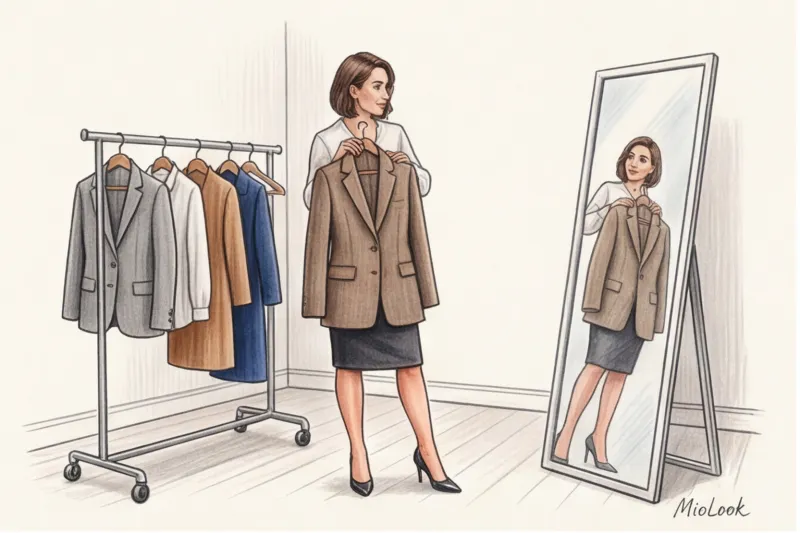
Before leaving the house, I always ask my clients to do a quick self-check in front of the mirror. This practical checklist will save you from embarrassing situations:
- Relevance test (CEO test): Imagine approaching the CEO or a key investor in this outfit to discuss a serious work matter. Will you feel confident? If you feel like tugging your skirt down or covering your cleavage, the look isn't right.
- Comfort test: Raise your arms, sit on a chair, and do a few dance steps. Clothes made of high-quality fabrics (cotton with 3-5% elastane, good wool) shouldn't restrict movement or bunch up.
- The 20% Rule Test: Count the number of shiny, sheer, or velvet pieces. They should be in the minority.
- Final AI check: Take a selfie and run the final look through the AI evaluation feature in the MioLook app for final confirmation.
Ready to get started?
Digitize your wardrobe and create the perfect corporate look with the free MioLook plan—no hidden fees or obligations.
Get access — €0.99 onceSummary: Invest in your reputation, not in one-night stands.
Let's summarize. The perfect corporate look isn't someone else's fancy dress. It's your own, familiar professional avatar, but with a clever festive twist. You shouldn't lose yourself and your professional credentials for the sake of sequins.
Trust the math of style to artificial intelligence. Try downloading the MioLook app, upload your favorite basic suit or perfect pair of trousers, and let the neural network find those perfect 20% of accents. You'll not only be the star of the evening, but also maintain the image of a competent professional who knows her worth in any situation.