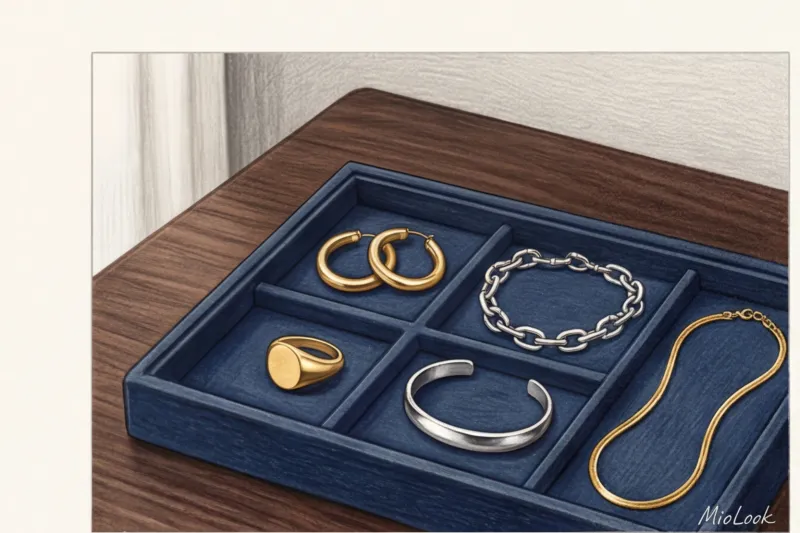
Buying cheap jewelry at fast-fashion stores is a luxury you simply can't afford. Sound counterintuitive? Make some coffee, I'll prove it to you with a calculator.
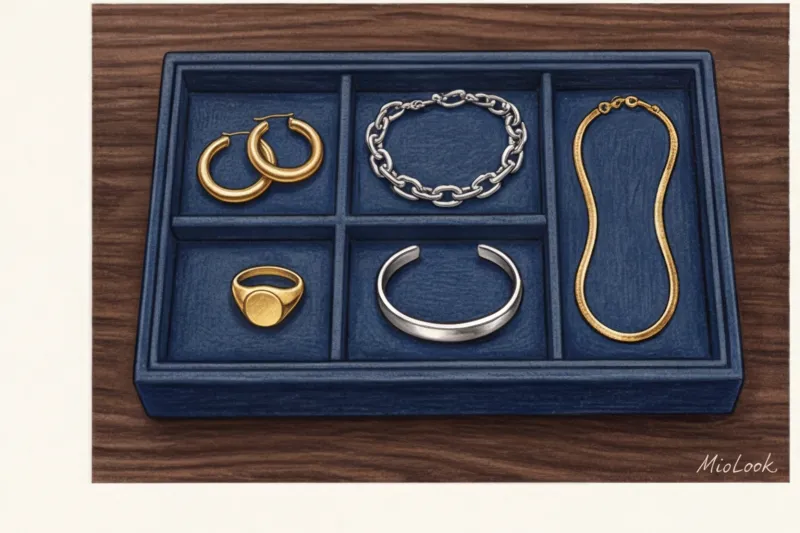
Over my 12 years as a stylist, I regularly clean out clients' jewelry boxes filled with tarnished metal, fallen rhinestones, and broken clasps. We spend €15-20 on impulse purchases at the checkout, thinking we're saving money. In reality, these "disposable" items are the ones that drain our budget, leaving nothing but a green stain on our skin. A competent and inexpensive jewelry capsule is built according to completely different laws.
While basic clothing shapes the silhouette, jewelry defines its status. We discussed this in more detail in our The complete guide to a basic jewelry wardrobe Today, we'll explore the math behind smart jewelry shopping: how to spend a minimum amount and still look like a million.
Why an inexpensive jewelry capsule isn't for the mass market
One of my clients, Anna, adored trendy jewelry. Over the course of a year, she spent about €300 on 15 trendy alloy pieces, which darkened after just a month of active wear in the summer—a reaction to sweat, perfume, and sunscreen. Instead, we could have invested the same €300 in four high-quality basic pieces that would last for years.
The secret lies in the metrics Cost Per Wear (CPW) — the price per output. Let's calculate:
- Trendy earrings from the mass market for 15 €: worn 3 times before oxidation = 5 € per exit.
- Basic gold plated chuppahs for €80: worn 200 times a year = 0.40 € per exit.
Cheap jewelry costs you 10 times more than high-quality jewelry. The category offers a way out of this vicious circle. Demi-fine (semi-precious jewelry). According to a McKinsey research report (2024), demi-fine jewelry has become the fastest-growing category on the market. It's the perfect compromise: it's made from high-quality metal (silver or jewelry-grade steel) coated with a thick layer of real gold or rhodium. The price of one such piece typically ranges from €40–€150.
The Perfect Base Formula: 5 Jewelry Pieces Worth Investing In
The ironclad Pareto rule applies: you'll wear 20% of your basic jewelry 80% of the time. For a capsule collection to work, each piece must complement the others. Basic doesn't mean boring—we're looking for clean, architectural forms and the right volume.
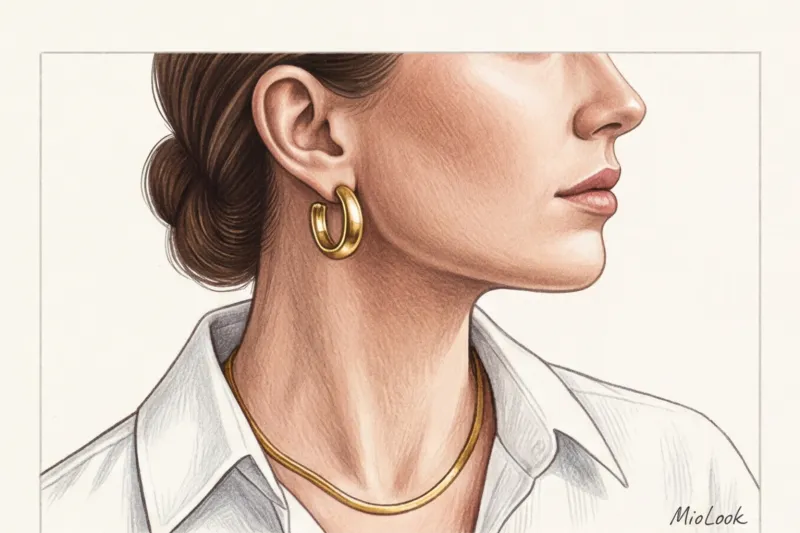
1. Sculptural chuppahs (ring earrings)
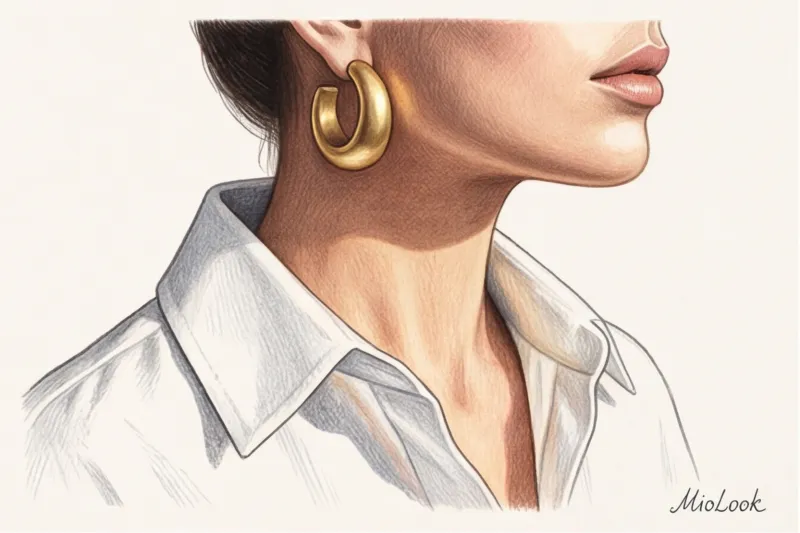
Thin, oversized congo earrings are a thing of the early 2000s. Medium or small hooppahs are a modern classic, but they're essential. wide (from 5 mm to 1.5 cm in thickness). They create a noticeable highlight in the portrait area and visually illuminate the face.
The key here is weight. Look for so-called "puffy" (hollow inside) models. They look massive and expensive, but weigh only 3-5 grams, so they won't weigh down your earlobe by the end of the workday.
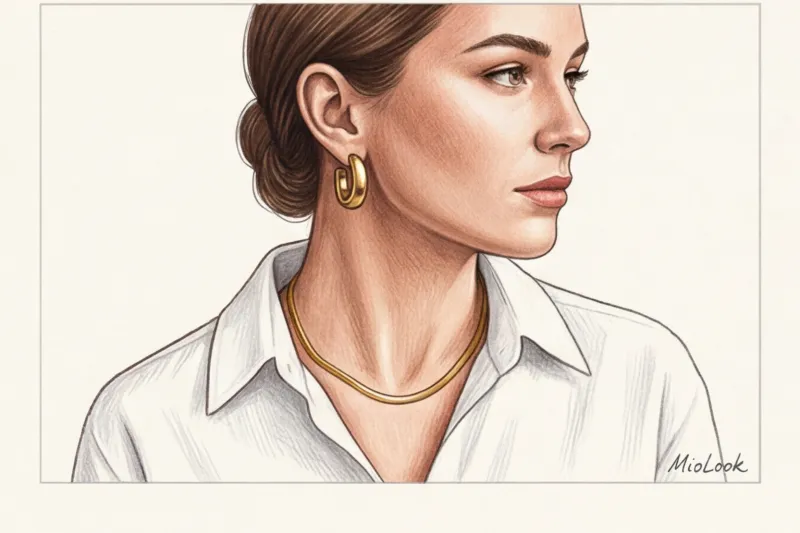
2. Basic chain of anchor or armor weave
Forget about thin chains and strings that constantly get tangled and lost against your clothes. Invest in a medium-thickness chain (around 3-5 mm). The ideal length for a versatile capsule necklace is 40-45 cm. It fits perfectly into a V-neck shirt and looks great over a sleek turtleneck.
3. A sleek signet ring or minimalist headband
Avoid a scattering of small stones. Clean, polished metal always conveys status. A chunky signet ring without engraving on the index or middle finger instantly makes your look more put-together and modern.
4. Men's style watch or cuff
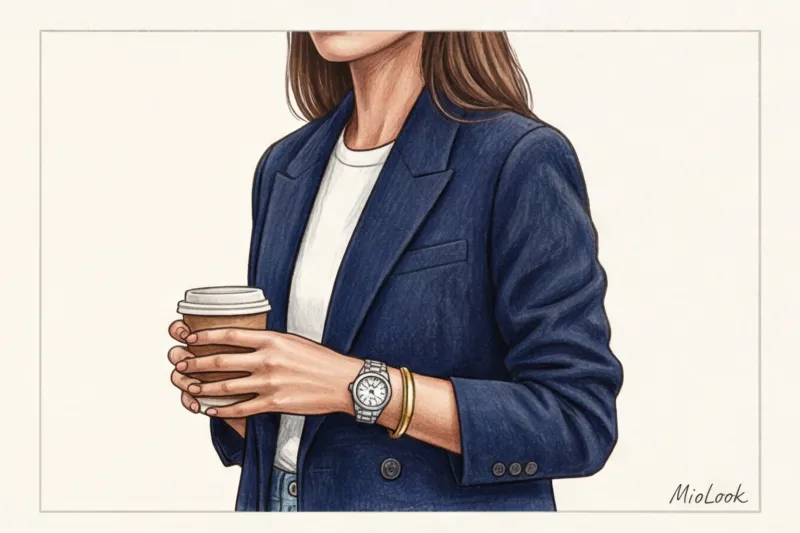
A watch has long since ceased to be simply a timepiece—it's a fully-fledged element of a jewelry collection. A steel chronograph or bimetallic strap (steel and gold) makes a great companion for other jewelry. If you don't wear a watch, consider a cuff bracelet instead. My favorite style trick: wear one directly over the cuff of a shirt or a thin sweater.
Optimize your wardrobe
Stop guessing what to wear. Upload your jewelry and clothing to MioLook, and our smart algorithm will find the perfect combinations for every day.
Get access — €0.99 onceStylist Secrets: Where to Save and Where to Overpay
Creating an affordable capsule collection requires a strategic approach to budgeting. You need to be clear about the details that truly define a piece's value.
"The human eye scans an image in a split second. We may not understand carats, but our brains instantly recognize cheap hardware and the wrong shade of metal as markers of low price."
What you need to pay extra for:
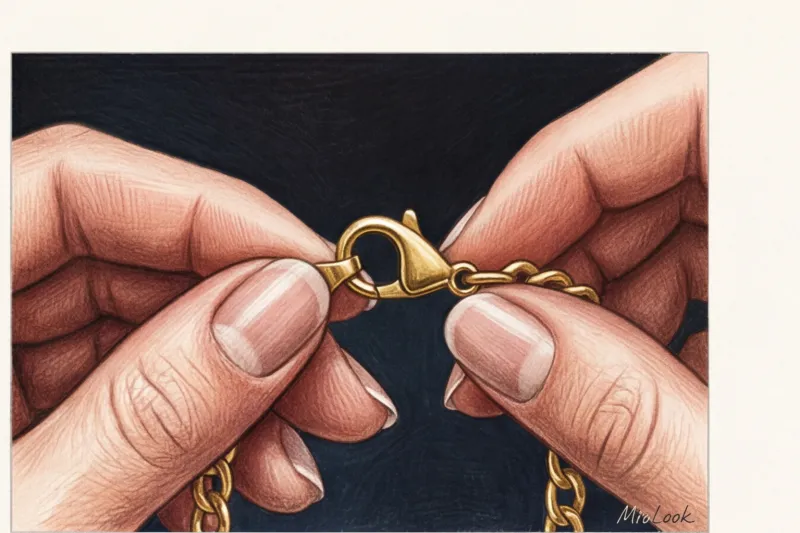
- Quality of locks. Cheap hardware (especially flimsy hooks or thin spring locks) betrays the item's origin. Look for reliable snap hooks, hidden latches, and sturdy English locks. The hardware should be solid and flawlessly smooth.
- The correct shade of gilding. According to the PANTONE Color Institute and jewelry market trends, the most fashionable and "expensive" shade is lemon gold or soft "champagne" (14K-18K). A decidedly red, coppery undertone is associated with old Soviet gold or cheap alloys.
What you can save on:
- No inserts. Avoid cubic zirconia, zirconium, and glass rhinestones in the budget segment. The technology used in inexpensive brands is such that they quickly become cloudy and fall out.
- Brand. You're overpaying up to 60% of the price just for the logo on the box. Local indie brands or niche manufacturers will offer you sterling silver for the same price a luxury house would sell you a piece of brass.
Metals and coatings: how to choose something that won't tarnish
Knowing the terminology is your main defense against marketing gimmicks. "Gold plated" on a label could mean anything. We need specifics.
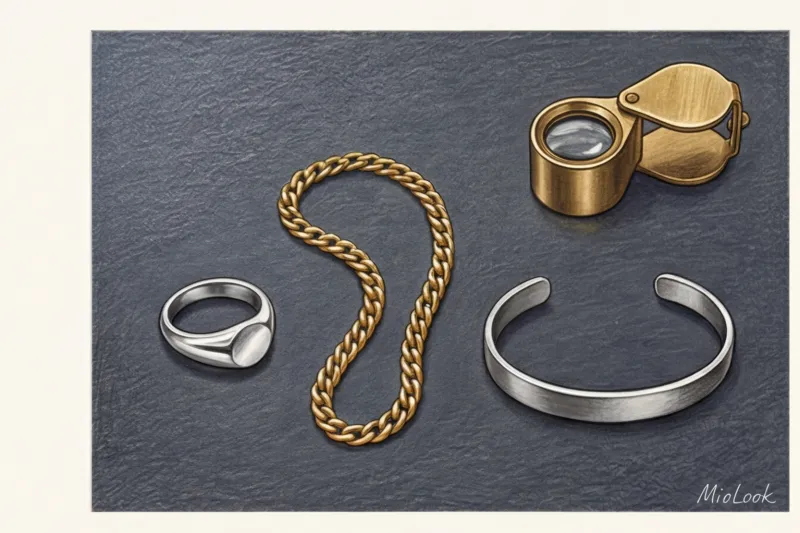
Gold Vermeil — Demi-fine gold standard. According to international rules, this is 925 sterling silver covered with a layer of gold thick not less than 2.5 microns This is five times thicker than a standard coating. These products, priced between €60 and €120, will last for years with proper care.
Rhodium plated silver. If you prefer a cool metal, always look for the "rhodium-plated" label. Rhodium is a platinum group metal. It prevents silver from tarnishing and oxidizing, giving it an expensive platinum shine.
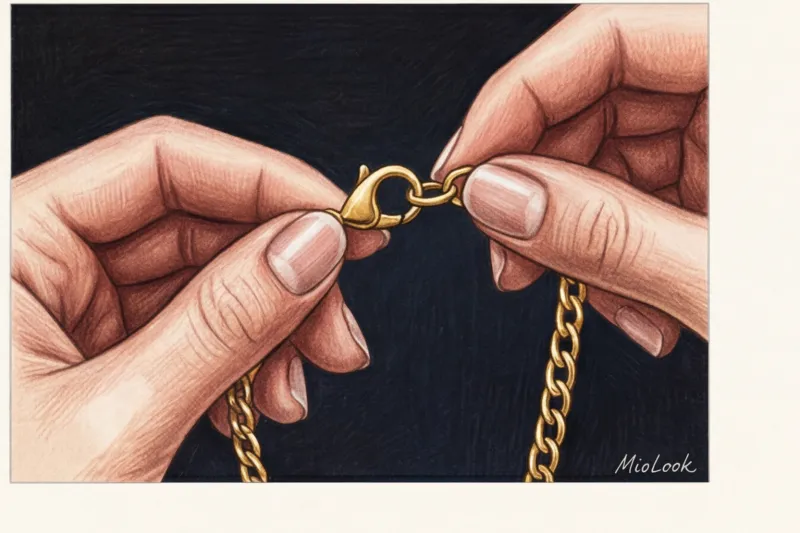
Jewelry steel (grade 316L) and titanium. An ideal choice for a minimal budget (€30–€60). These materials are physically indestructible: they don't rust, oxidize, are hypoallergenic, and don't bend. Basic chains and rings made of steel are the best investment for those who don't want to remove their jewelry in the shower.
When these tips DO NOT work: Let's be honest: even the highest-quality Vermeil will wear off within a year if you regularly swim in a chlorinated pool or liberally spray alcohol-based perfume on your décolleté. In such extreme conditions, only pure titanium or solid gold will survive.
What to avoid: Brass and copper jewelry with so-called "flash plating" (a very thin coating less than 0.5 microns) will peel off after exactly one month, turning your skin green.
Create a digital wardrobe
Upload photos of your jewelry and essentials to the app to always see the full picture of your style.
Get access — €0.99 onceThe main mistakes when creating a budget capsule
Buying matching sets is perhaps the most common mistake. Wearing earrings, a ring, and a pendant with the same design all at once is guaranteed to add 10 years to your age. This rule worked in the 1980s, but now it seems hopelessly outdated. Modern styling is built on eclecticism and a touch of casualness.
Another common misconception is the fear of mixing metals. For many years, wearing silver and gold together was considered bad taste. In practice, however, mixing warm and cool metals adds depth and complexity to an outfit.
Secret from a stylist: To create a harmonious combination of different metals, use the 80/20 rule. For example, 80% of your jewelry should be gold, and the other 20% (one accent ring or watch) should be silver. Bimetallic watches work beautifully as a "bridge," legitimizing the presence of both shades in a single outfit.
Checklist: Assembling an Inexpensive Jewelry Capsule Step by Step
Don't rush to the store right now. Creating a capsule always begins with taking inventory.
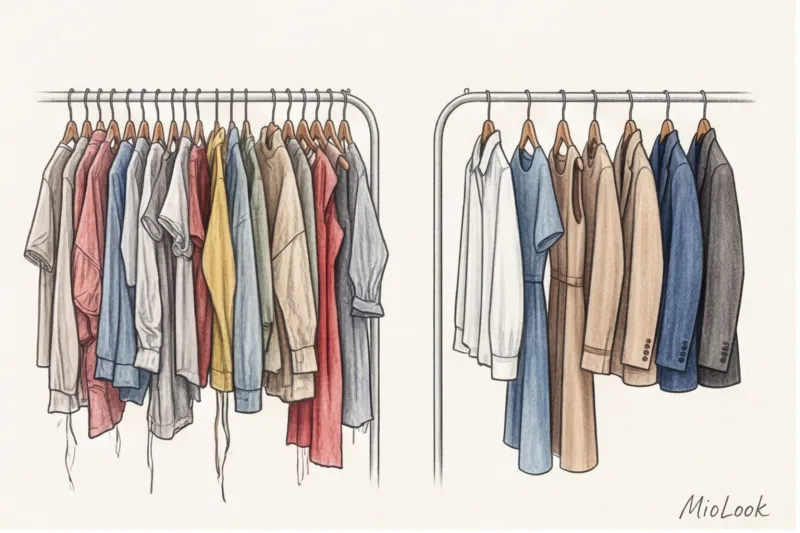
- Strict audit. Empty your jewelry boxes. Ruthlessly discard anything that's green, oxidized, lost its pair, or broken. Keep only items you've worn at least once in the last six months.
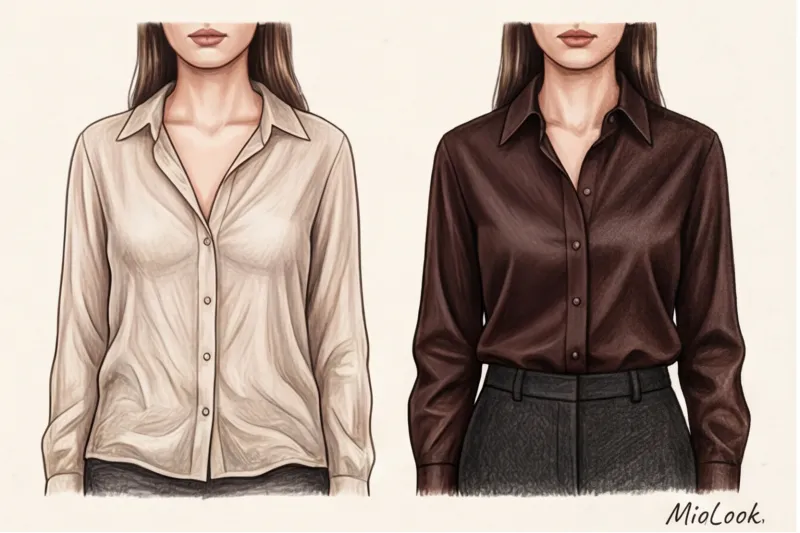
- Determine the base. Look at your clothes. If your wardrobe is dominated by warm tones (beige, brown, olive), gold (vermeil) will be the base. If you prefer gray, black, blue, and cool white, opt for rhodium-plated silver or steel.
- Make a shopping list. Cover the holes one by one. Start with the portrait area—that's where people look first. Buy the perfect basic hoops and one necklace. Only then move on to rings and bracelets.
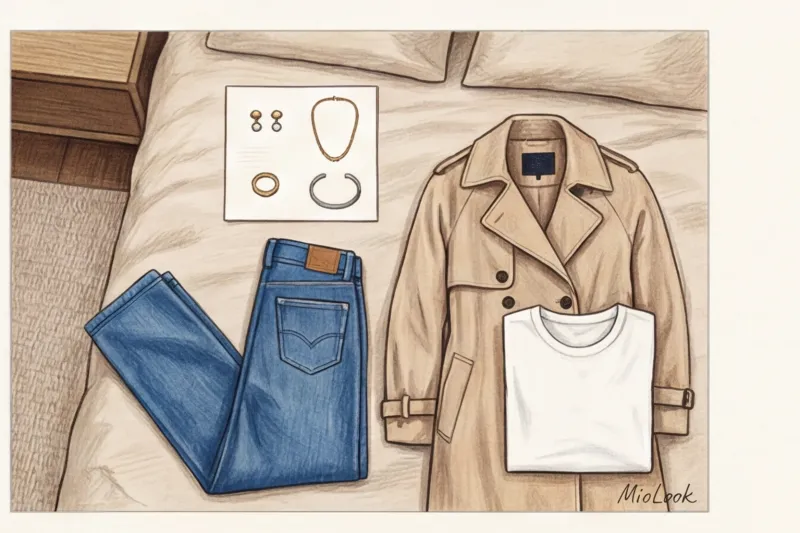
- Digitize the result. I personally use a wardrobe tracker (like the inventory feature in MioLook). When you take photos of your jewelry and link them to specific looks in the app, you eliminate the morning "what to wear" panic. You can see in advance that a chunky watch perfectly balances a bulky jacket, and sleek earrings calm a busy print on a dress.
The main takeaway I want you to take with you is that it's not quantity that determines style, but quality and the architecture of form. Avoid impulse purchases of disposable jewelry. By investing in five impeccable, minimalist pieces from the demi-fine category, you'll eliminate the need for accessories in your everyday wardrobe forever.