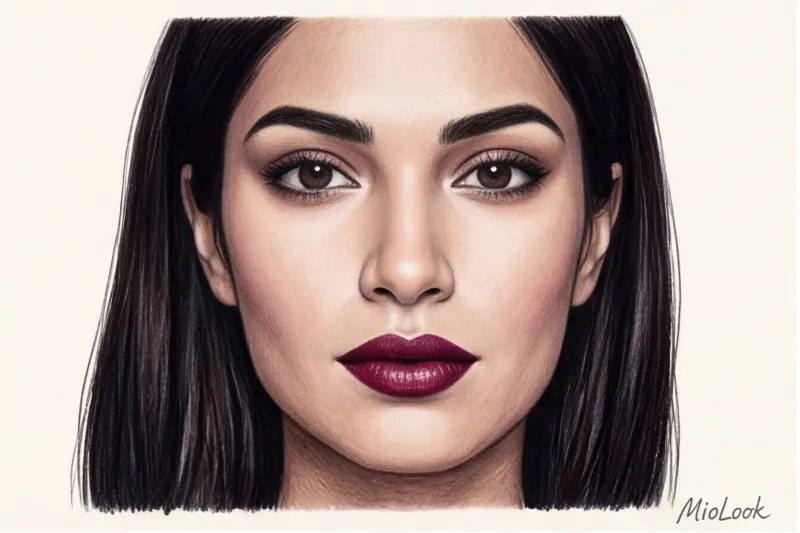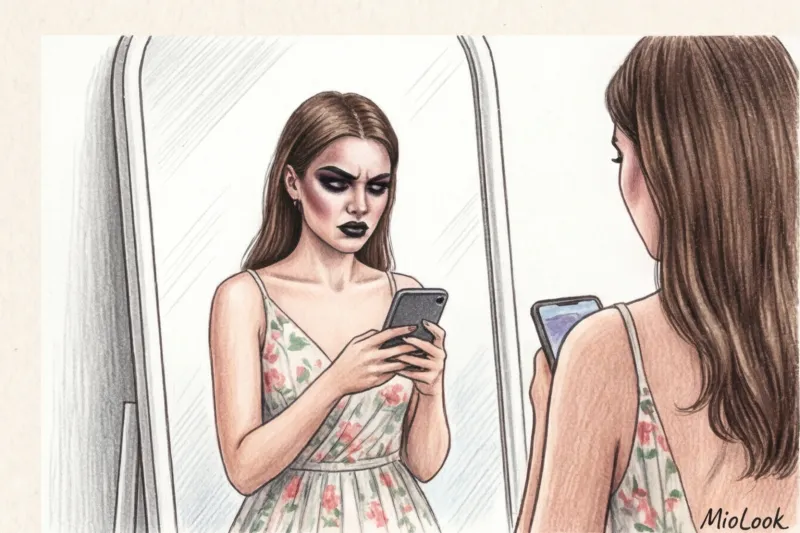
A month ago, a client came to me for a consultation with a printed reference from Midjourney. The piece of paper showed off a flawless grunge makeup look: full, wine-colored lips, heavily contoured lip gowns, and heavy smoky eyes. There was just one problem—she'd bought a weightless, pastel-mint silk organza dress for the evening. While her face looked luxurious on her phone, in person, such an aggressive beauty look would instantly overwhelm the delicate texture of the fabric, making her look a decade older.
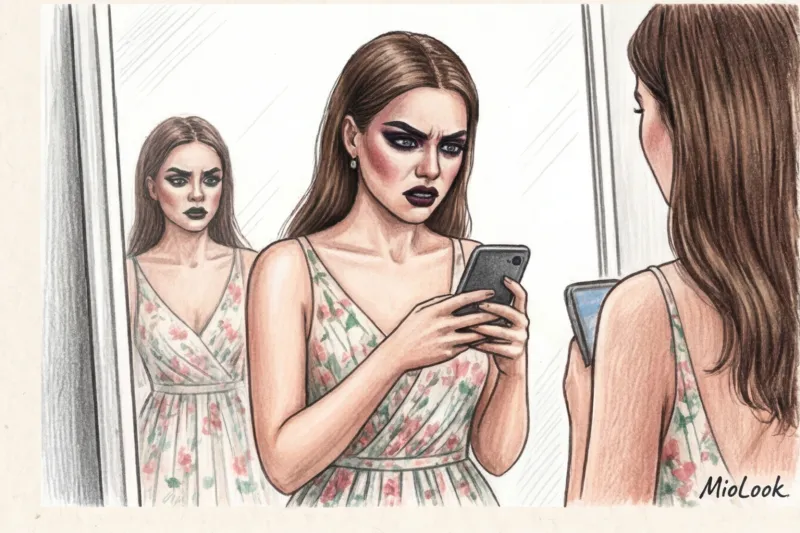
We covered the basic rules of working with the face in more detail in our complete guide. Evening Makeup: Secrets to a Flawless Look , but today I want to talk about technology. Understanding, How to choose makeup from a photo using a neural network 90% of women make a fatal mistake: they focus solely on the face, ignoring the context. In this article, as a practicing stylist and textile specialist, I'll show you how to harness artificial intelligence to think in terms of "Total Look" and consider not only your eye shape but also the reflective properties of your outfit.
The "Floating Head" Trap: Why Regular Beauty Filters Ruin Your Look
According to research by the PANTONE Color Institute (2024), approximately 70% of disappointments in the "expectation vs. reality" category when creating an evening look are due to the difference in lighting and textures between a digital reference and real life. When you upload a cropped selfie (from the neck up) to any app, the AI gives you a generic "Instagram" face. I call this the "floating head" effect.
In proper styling, makeup isn't a standalone work of art. It's an accessory. It should complement the silhouette, color, and, most importantly, the texture of your dress. If the algorithm doesn't "see" what you're wearing, it will default to the trendiest, but often completely inappropriate, option.
How to choose makeup from a photo using a neural network: a step-by-step guide
Over the past year, I've tested over a dozen generative models (from Midjourney v6 to specialized beauty apps) in an attempt to find the perfect tool for my clients. And you know what? None of them work well out of the box. To get a guide for your makeup artist, rather than a plastic mask, you need to manage the process.
Preparing the "source": lighting, angle, and clothing
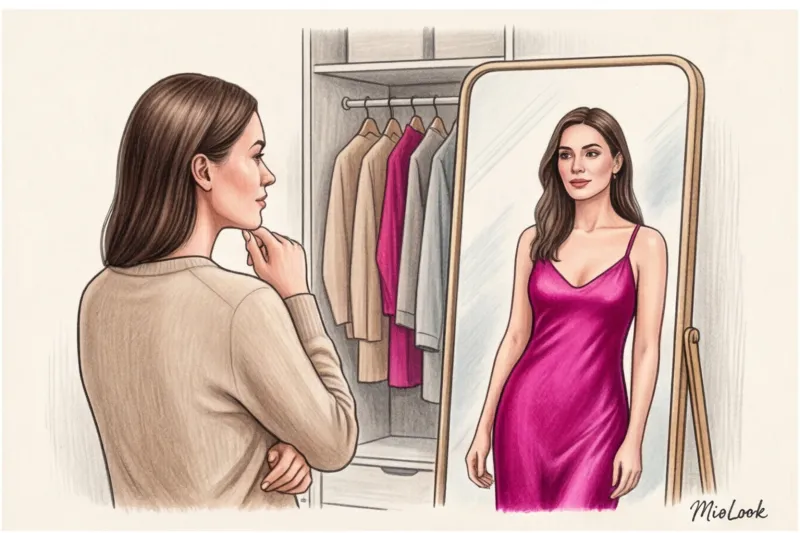
The most counterintuitive advice I can give you is: Never ask AI to choose your makeup if you're photographed in a home shirt. The algorithm reads clothing pixels and adjusts the face contrast to them.
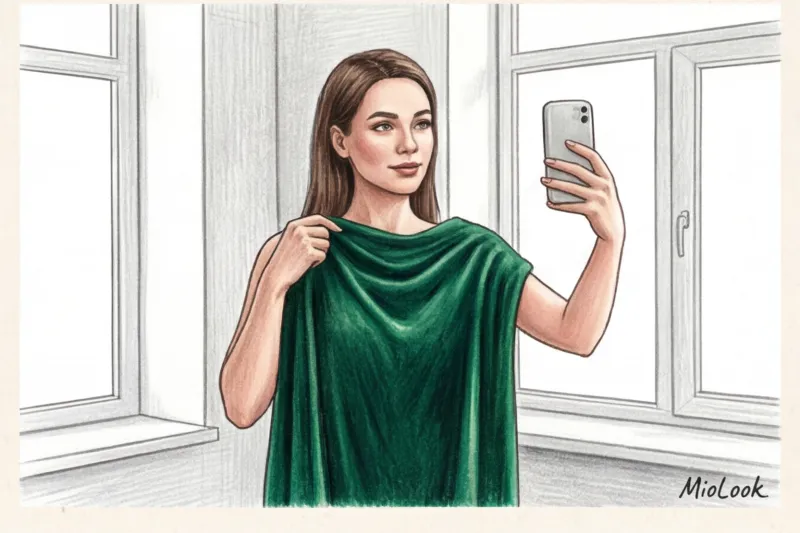
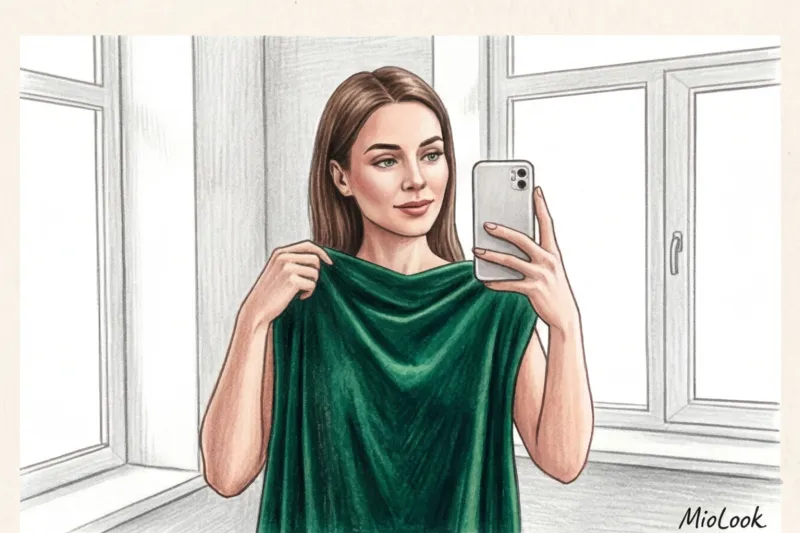
- Fabric rule: Be sure to wear the dress you'll be wearing to the event. If it's still in the studio, simply place a similar fabric over the neckline.
- Open Neck Rule: Pull your hair back and expose your neck and collarbones as much as possible. This will give the neural network the correct basis for assessing the contrast of your skin.
- Light: Only diffused daylight from the window. No ring lights in the original stage—they destroy the real volume of the face.
The Ideal Text Query (Prompta) Formula
If you're using advanced tools (like Stable Diffusion or keyword generation bots), forget about the phrase "beautiful evening makeup." Artificial intelligence requires specificity. The ideal query formula looks like this:
[Makeup style] + [Skin/anatomy features] + [Texture and color of clothing] + [Lighting at the event]
Failed request: "Give me some bright makeup for the party."
Successful request: "Soft monochrome peach makeup, dewy skin finish, accentuated cheekbones. The girl is wearing an emerald silk slip dress. Subdued, warm restaurant lighting."
Your perfect look starts here
Join thousands of users who look flawless every day with MioLook. Upload your AI references and create complete looks.
Start for freeTextiles dictate cosmetics: teaching AI to understand textures
This is my favorite part. Most people don't even think about how the laws of physics influence our wardrobe. As a textile expert, I can guarantee: the fabric of your dress directly dictates what appears on your face.
According to the basic laws of materials science, matte fabrics (such as cotton velvet or heavy wool crepe) absorb up to 40% more light than satin or silk. What does this mean in practice?
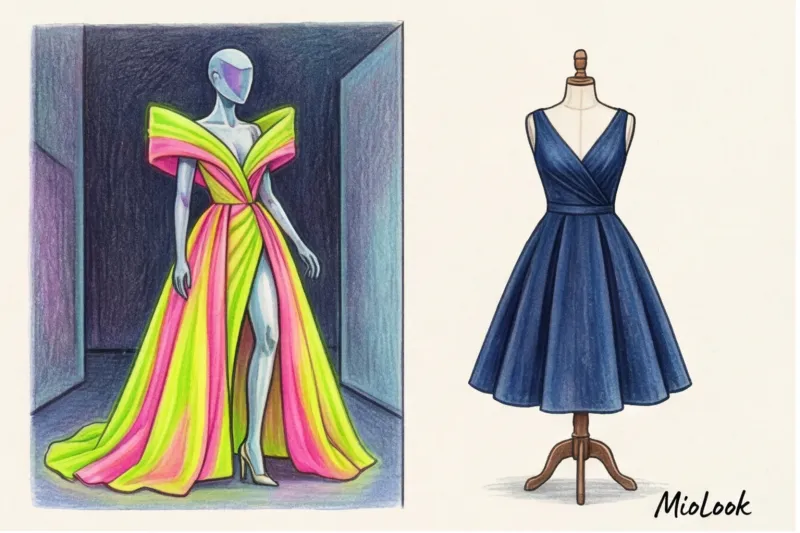
- Silk, satin and satin: These fabrics reflect light. If you ask the AI to give you a completely matte face under a silk dress, the look will fall apart. The face will appear dry and aged against the flowing fabric. Your AI term here is dewy skin (wet shine) or glass skin.
- Velvet, velor and thick crepe: Light-absorbing fabrics require balance. Adding too much highlighter to your face will make you look sweaty. For these textures, ask the neural network for help. soft matte finish (soft matte finish) and clear, graphic lines (for example, classic arrows).
- Sequins, glitter and lurex: The dress itself is the main source of glare. Makeup should be as neutral and calming as possible. Use phrases in the prompts minimalist makeup, neutral tones.
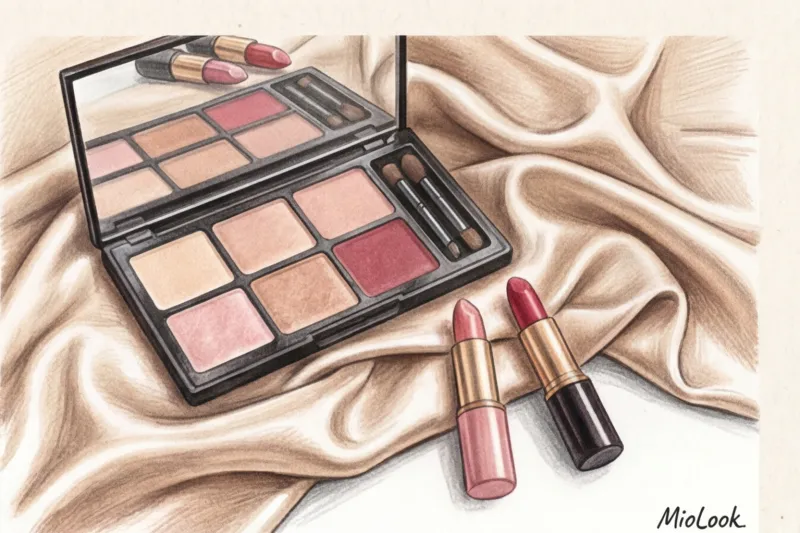
Algorithm Errors: What Neural Networks Are Doing Wrong with Your Color Type
Let's be honest: AI isn't a magic wand. It has serious blind spots that you need to be aware of before you take a photo to a makeup artist.
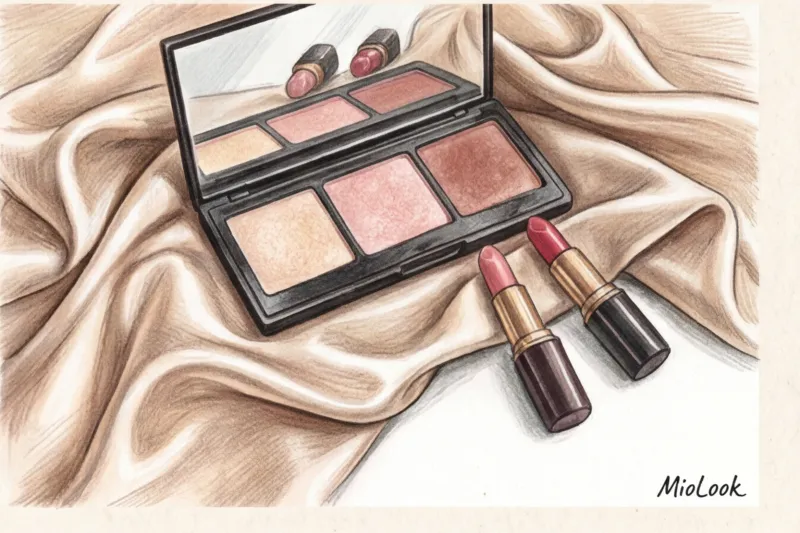
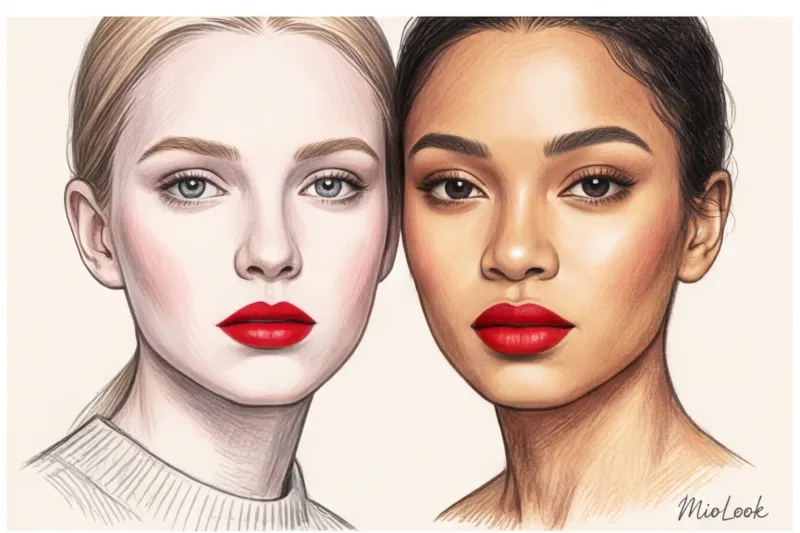
I noticed that almost all popular algorithms tend to overly "warm" skin tones. If you have a cool olive undertone, the neural network will almost certainly try to make you look like a peachy Californian. Moreover, the AI mercilessly ignores real anatomical nuances: it erases drooping eyelids, evens out natural lip asymmetry, and narrows noses to a uniform standard.
When do neural network tips NOT work? If you have deep-set eyes or a pronounced drooping lid, the AI-generated liner might look perfect in a picture, but in reality, it will break at the first crease of your skin. Always treat the generated results as color inspiration, not an anatomical drawing.
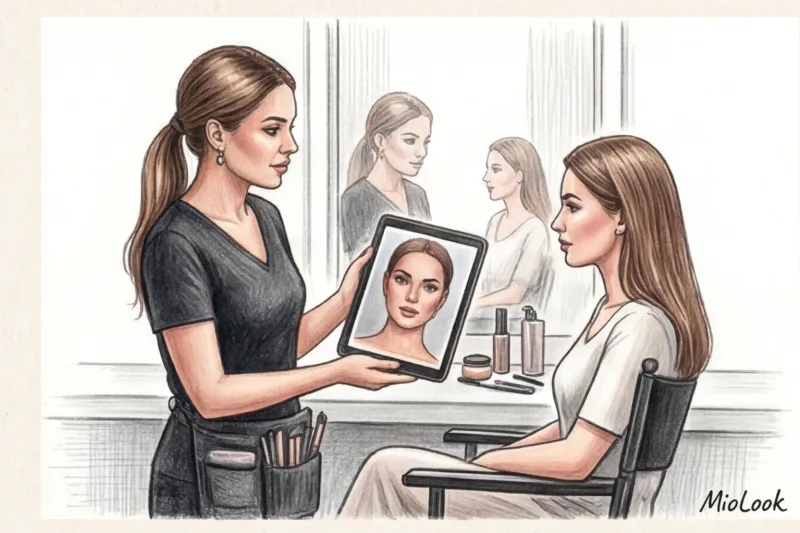
Try MioLook for free
A smart AI stylist will select the perfect makeup and outfit based on your skin tone and appearance.
Start for freeFrom virtual reference to reality in the MioLook smart wardrobe
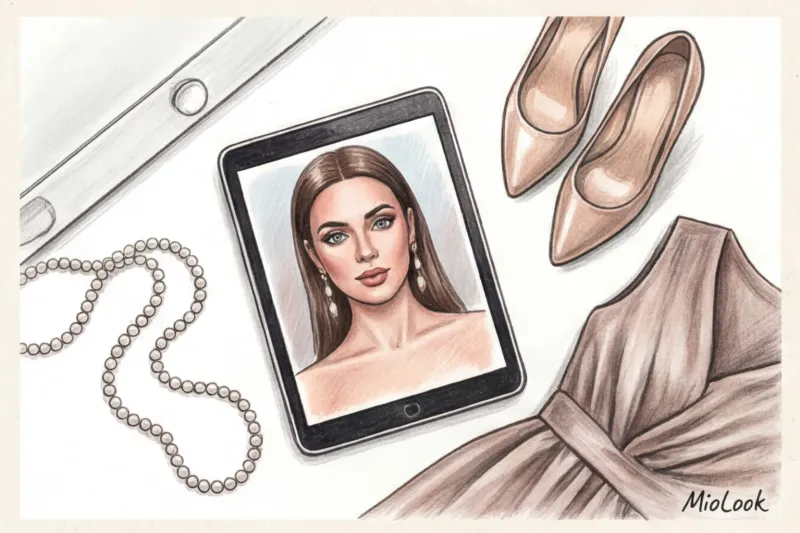
Once you've achieved a successful look, the next problem arises: how do you know if this makeup look is overpowering the other details? To achieve this, I strongly recommend creating a Total Look mood board before spending money on specialists or new makeup.
This is where the smart wardrobe feature comes in. Download in MioLook A photo of your dress, shoes, handbag, planned jewelry, and that very same AI-generated makeup. On one screen, you'll immediately see any conflicts.
For example, if the neural network suggests a bold smoky eye and bright lips, but the collage includes large vintage brass chandelier earrings, the look will be overloaded. You'll have to choose: either tone down the makeup, reducing its "visual weight," or swap the earrings for simple studs.
Checklist: How to Set the Right Task for an AI Photo Makeup Artist
Showing a stylist a picture on your phone and saying, "I want it like this," is a surefire way to disappointment. A makeup artist is like an engineer, tasked with transferring a 2D illustration onto a 3D face with unique facial expressions. To ensure you're pleased with the result, follow this checklist:
- Speak the adaptation: Tell: "I love the color scheme and mood in this photo, but let's tailor this wing/shade to my eye shape.".
- Specify durability: AI doesn't know you'll be dancing for six hours in a stuffy gym. If your reference image shows dewy, glossy skin, ask your stylist to achieve this effect with luminous, dry textures over a long-lasting foundation, rather than with thick, creamy highlighters that will run after an hour.
- Take a test drive: If you're attending a wedding or a super-important gala dinner, a makeup trial (usually priced at €40–€80 in mid-range European salons) isn't a luxury, but a necessity. You should wear the look for at least a couple of hours.
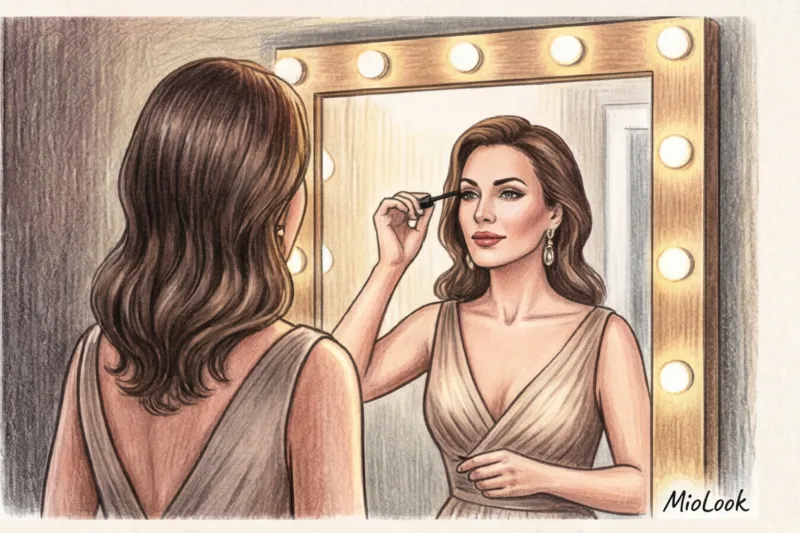
Artificial intelligence has revolutionized the way we find our style. But it's important to remember: neural networks are excellent at translating your desires into visual language, but your natural texture, anatomy, and common sense should always have the final say. Don't force your face to conform to a digital illusion—put technology to work for your true beauty.