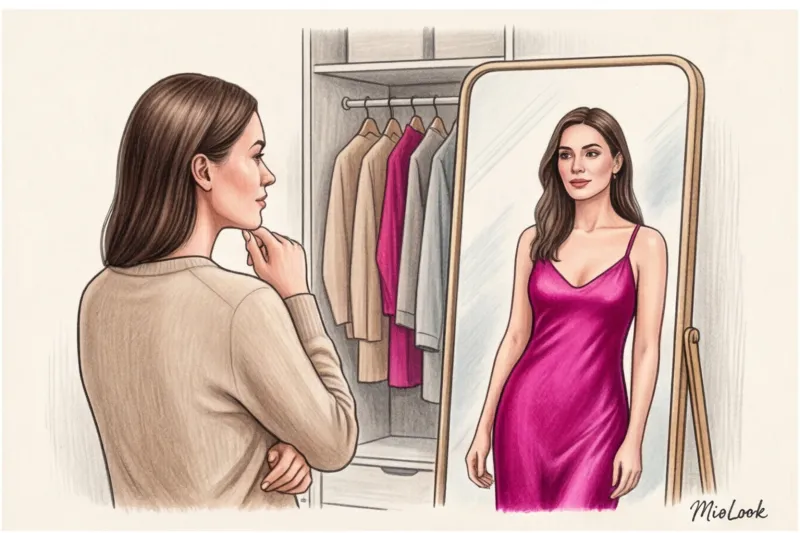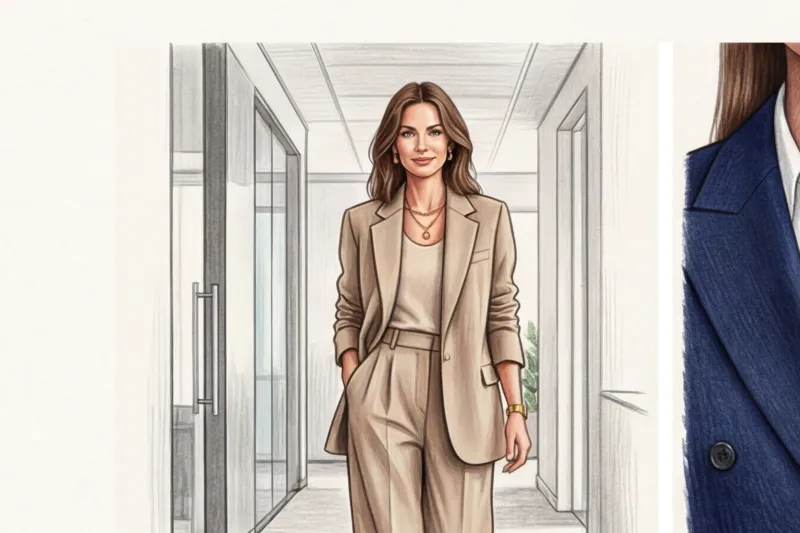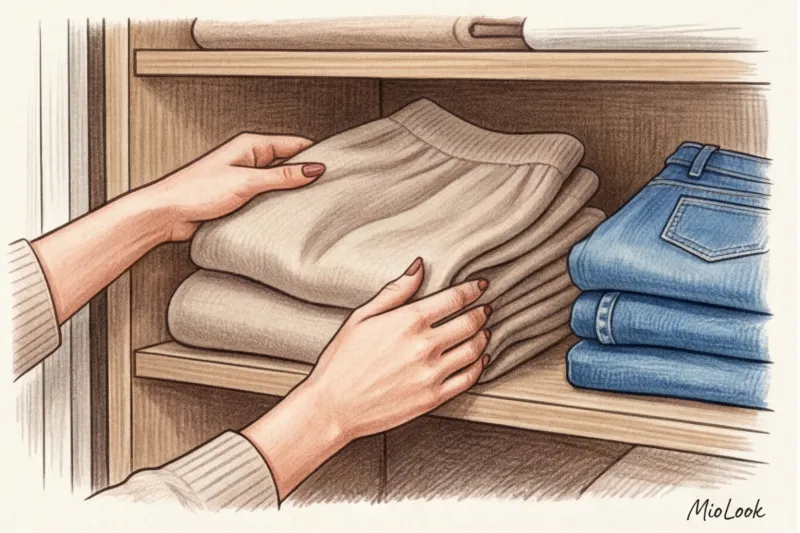
Three months ago, my client Lena called me from her dressing room in tears: she'd ripped her favorite vintage Levi's 501s trying to squeeze into them. "I just wanted to feel like my old self," she said. This is the most common mistake I see in my styling practice: we treat postpartum as an unfortunate mishap, demanding our bodies instantly return to their factory settings. And when that doesn't happen, we punish ourselves with shapeless sweatpants or stiff denim that digs into our stomachs.
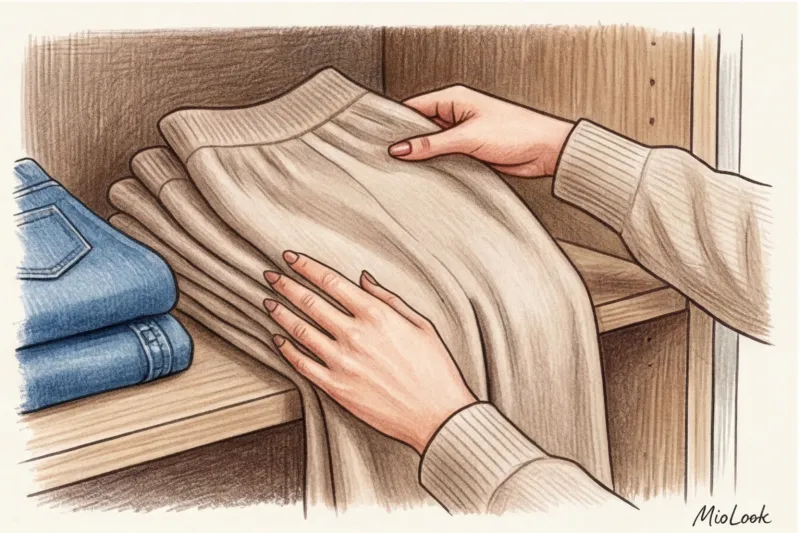
Instead of suffering, I propose to implement Transit Wardrobe Protocol — an engineering approach to choosing items that look like perfect tailoring but feel like pajamas. When people ask me, What jeans should I wear after giving birth? , I answer: those that adapt to you, and not the other way around. We discussed the physiology and psychology of this period in more detail in our A complete guide to dressing stylishly and comfortably after giving birth.
The Old Wardrobe Trap: Why Maternity Jeans Don't Work Anymore
The concept of the "fourth trimester" implies that your body needs a gentle transition. According to the WGSN Global Apparel Market Research (2024), the average woman goes up 1.5 to 2 clothing sizes in the first six months after giving birth. Keeping those "motivational" old jeans visible isn't a motivator, but a daily blow to self-esteem.
But there's another trap here. Many people solve the problem simply: they continue wearing maternity jeans with a wide elastic insert over the belly. I am categorically against this approach.
An elastic maternity support band is designed to continually expand. As your belly shrinks, the fabric begins to slide down relentlessly, distorting your silhouette and forcing you to constantly pull up your pants. Worse, it psychologically keeps you in "pregnancy mode," preventing you from moving forward.
What you need is not a compromise, but a full-fledged transit base.
Your perfect look starts here
Join thousands of users who look flawless every day with MioLook.
Start for freeWhat jeans to wear after giving birth: the anatomy of the ideal transition pair
The main rule for choosing during this period is to avoid the "caterpillar effect." This is when a tight belt compresses the soft abdominal tissue when sitting on a chair, creating bulges even where there shouldn't be any. To avoid this, we should look not at the size on the tag, but at the technical specifications of the product.
Fabric and elastane: an engineered formula for comfort
Forget about 100% rigid denim for a while. But don't go to extremes when buying jeggings. The golden ratio of denim, according to textile engineering standards, requires strict adherence. 2-3% elastane (or spandex/lycra) in the composition.
Why exactly this much? If there's 1% elastane, the fabric will feel tight in the evening due to natural swelling. If there's 5% elastane or more, the jeans will be low-waist. recovery rate (recovery rate). This means that after two hours of wear, they will hang like bubbles around the knees and buttocks. You can check the recovery rate right in the store: stretch the leg strongly with your hands and then release. The fabric should instantly snap back to its original shape without any ripples or creases.
Fit and sutures: considering cesarean section and diastasis
According to the American College of Obstetricians and Gynecologists (ACOG) guidelines, complete internal tissue healing after a cesarean section takes up to 12 weeks. During this period, microtrauma from a rigid belt is unacceptable.
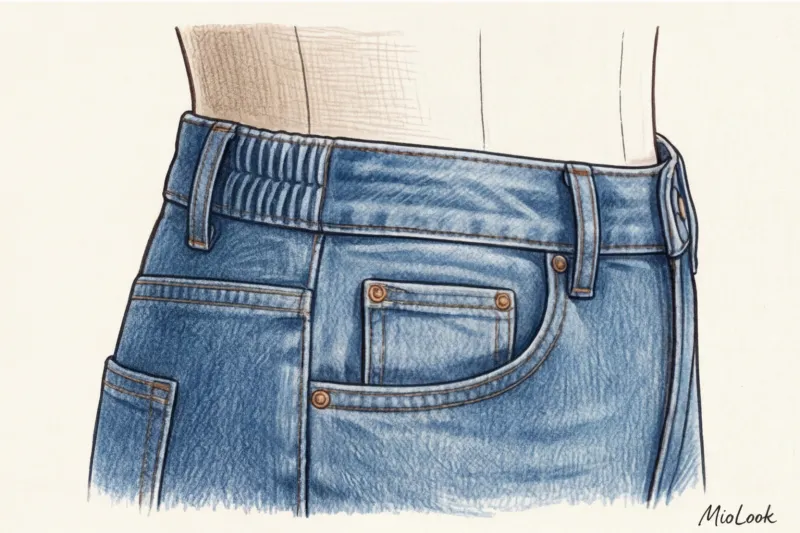
- Rise: A mid-rise is your worst enemy. It ends right at your C-section incision or at the fullest point of your belly. Look for a super high-rise (28 cm and above), which will gently hug your waist at the level of your lower ribs, providing gentle support without compression.
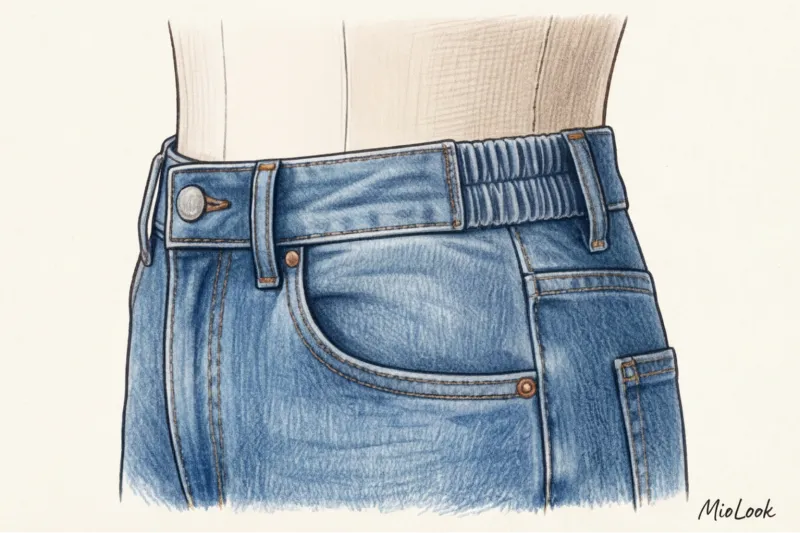
- Hidden comfort: Look for models with hidden elastic waist (with a hidden elastic band). The waistband looks like a classic denim one, but inside, a soft elastic band is sewn in, giving you an extra 3-4 centimeters of freedom after lunch.
Top 4 Jean Styles That Work for Your New Figure
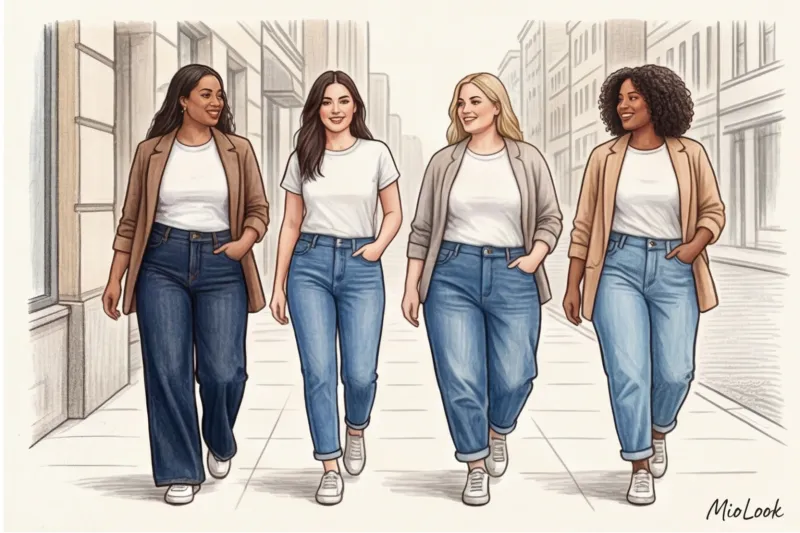
Skinny jeans are temporarily out of fashion—they'll only highlight the disproportion between a bulky top (due to breastfeeding) and a shifting bottom. We need silhouettes that create architectural balance.
Mom Jeans and Slouchy: The Right Volume
A loose fit through the hips (like the Slouchy or proper Mom styles) brilliantly compensates for the temporarily increased hip volume. But there's a fair limitation: This doesn't work for petite girls. With wide hips. If you're shorter than 160 cm, too much tapering at the bottom will create a "carrot-shaped" appearance and visually shorten your legs. In this case, choose the next option.
Straight jeans with the right waistband
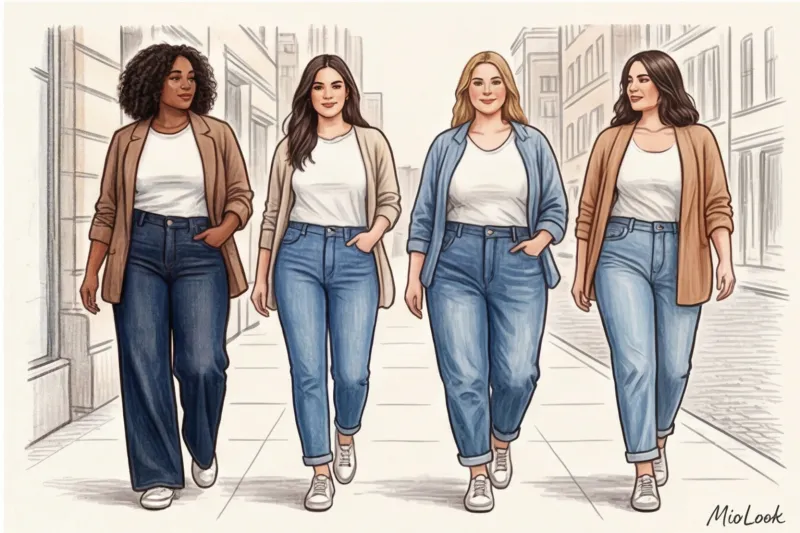
This is the best investment in capsule wardrobe , because straight pipes are always in style. They create that all-important vertical line. Styling secret: wear them with unbuttoned long shirts or soft chunky knit cardigans. Two vertical lines of an unbuttoned top over a T-shirt visually "cut" 5 centimeters off the sides.
Wide-leg: elegant camouflage and status
Wide-leg jeans are a brilliant way to visually elongate your height and hide any potential swelling in your legs. For them to work, the right length is crucial: the leg should almost cover your shoes to the ground. Therefore, wide-leg jeans require a chunky sole (like platform sneakers) or a small, stable heel if you're already back to work meetings and opting for smart casual for women.
Ready to get started?
Try the MioLook plan for free—no commitments required. Create your perfect wardrobe in just a few clicks.
Start for freeThe Denim Alternative: Trousers You Can Live In (and Look Expensive)
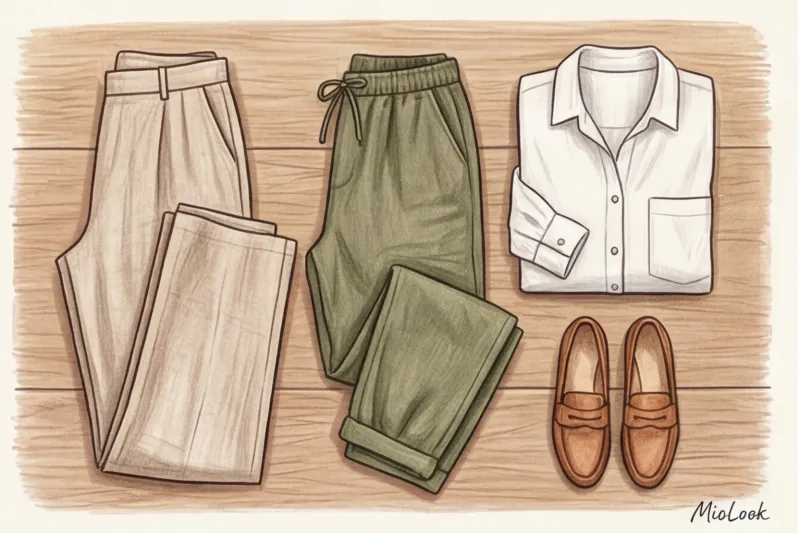
I analyzed anonymous statistics from users' transition capsules in the MioLook app and discovered a striking fact: hidden stretch pants are worn 40% more often than classic denim in the first months after childbirth. If you want to learn more about how to create stylish looks from comfortable pieces, check out our article. about the secrets of an expensive wardrobe.
Here are three alternatives to jeans that will save your style:
- Knitted palazzo trousers made of thick viscose. Important: the fabric should be heavy and flowing (at least 250 g/m²). Fine knitwear will highlight even the slightest unevenness, while heavy viscose will create perfect folds. They look like office pants and feel like your favorite pajamas.
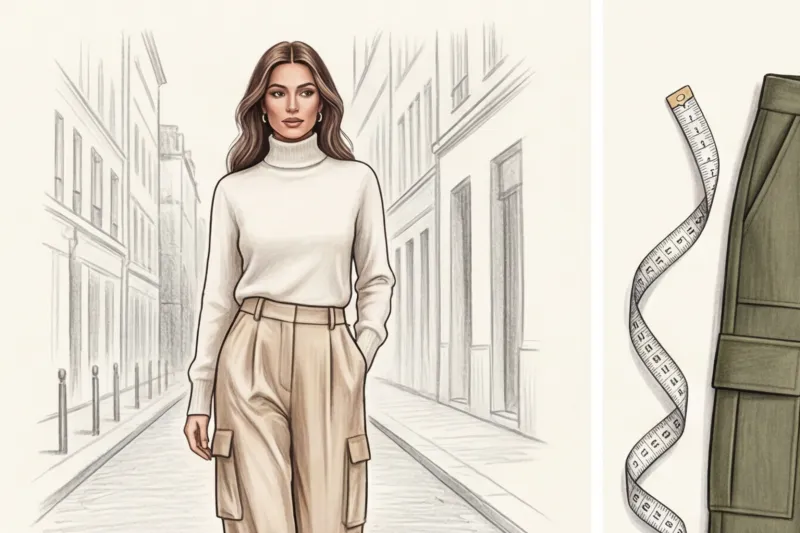
- Tencel (lyocell) cargo pants. Forget stiff cotton. Tencel is a material made from eucalyptus wood. It's soft, cool to the touch, and drapes beautifully. Patch pockets on the side draw attention away from the midriff.
- Joggers made of cashmere or wool blend. These are a classy alternative to regular cotton sweatpants. Paired with a matching cashmere sweater and a structured coat, they create a quietly luxurious look for strollers.
Digitizing Your Transitional Wardrobe: How to Avoid Buying Unnecessary Items
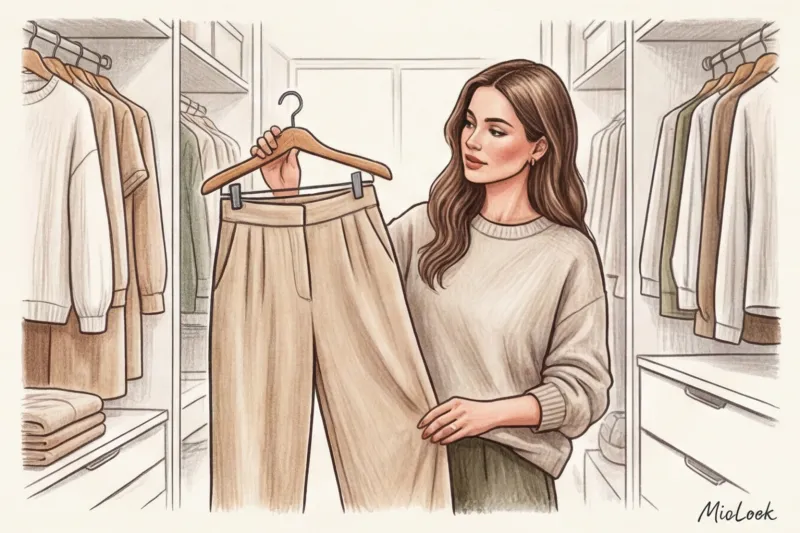
I personally tracked my looks for six months and discovered that 80% of the time, we wear only 20% of our clothes. For transitional periods, you don't need to buy 10 pairs of new jeans. Three or four perfect bottoms are enough.
To avoid buying unnecessary things out of emotion, I highly recommend digitizing this process. Upload your comfortable pants to MioLook app The AI stylist algorithm will analyze your items and show you how to combine these three pairs of jeans with your existing tops, jackets, and shirts to create a new look every day.
Use the rule Cost-Per-Wear (cost per outing). A transitional wardrobe lasts about six months. Buying a pair of $100 jeans and wearing them twice a week (about 50 times) will only cost you $2. That's cheaper than a cup of coffee for a daily boost of self-confidence.
Try MioLook for free
A smart AI stylist will select the perfect look from what you already own and help you create a shopping list.
Start for freeChecklist: Test-drive jeans and trousers in the store (or at home)
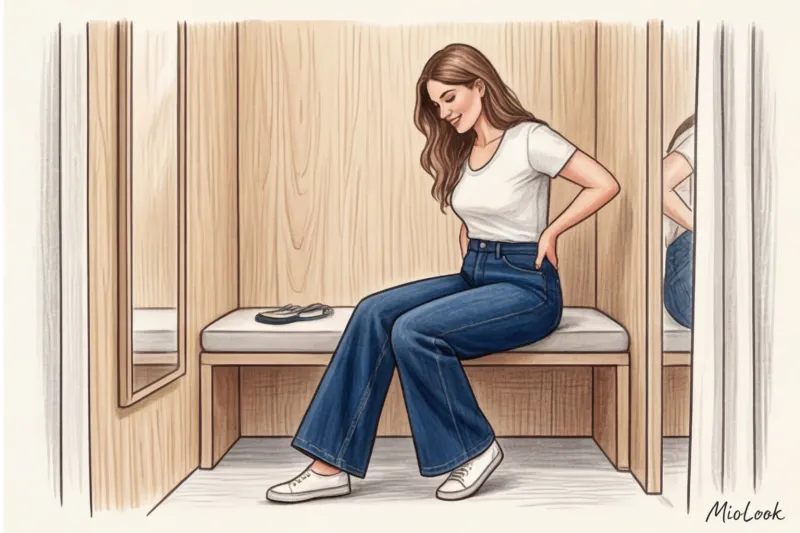
Don't cut off the tags right away! Before you put your new jeans away, give them a thorough but necessary three-step test drive:
- "Stool Test": Sit on a firm chair or bench in the fitting room and lean forward, mimicking the motion of picking up a baby. The belt shouldn't dig into your ribs or twist. Your breathing should remain free.
- Seam test: Run your hand along the inside of the waistband and fly. Mass-market manufacturers often skimp on finishing the inner seams, leaving hard edges that will chafe the skin around your scar or sensitive belly after a couple of hours of walking.
- Squat Test: Do a deep squat. This will reveal the true elasticity of the fabric (the aforementioned recovery rate) and the rise in the back—does the lower back open up too much when you bend over?
Your body has done a tremendous amount of work, and now it deserves careful treatment and a beautiful finish. Stop putting off style "for better times" when you're back to your old weight. Put together a smart capsule wardrobe of 3-4 smart pants right now, and you'll see how comfortable clothes instantly restore your confidence.