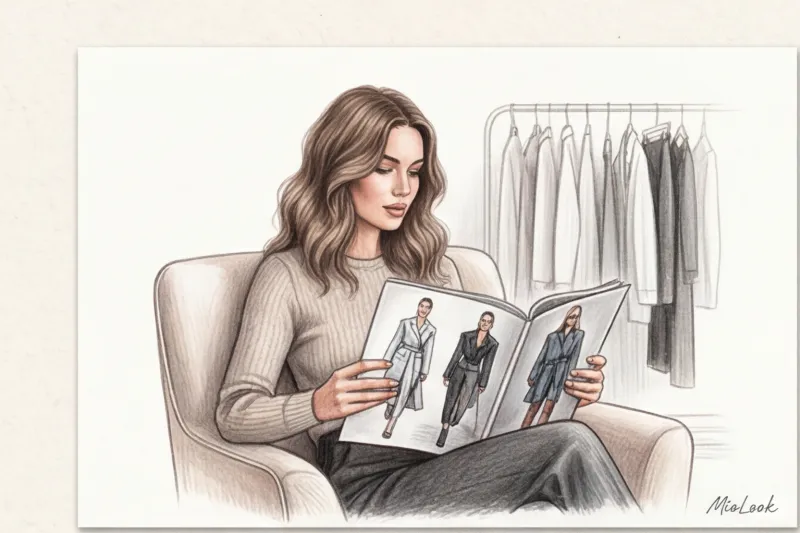
Backstage at Paris Fashion Week in 2023, I witnessed a curious scene. A top model, having just closed the show in a stunning, yet completely gravity-defying, complex dress, pulled it off with a sigh of relief and changed into simple straight-leg jeans and a cashmere sweater. This reveals the biggest secret of the industry, rarely covered in the glossy magazines: about 80% of Haute Couture and even Ready-to-Wear runway looks are pure marketing, not intended for everyday wear.
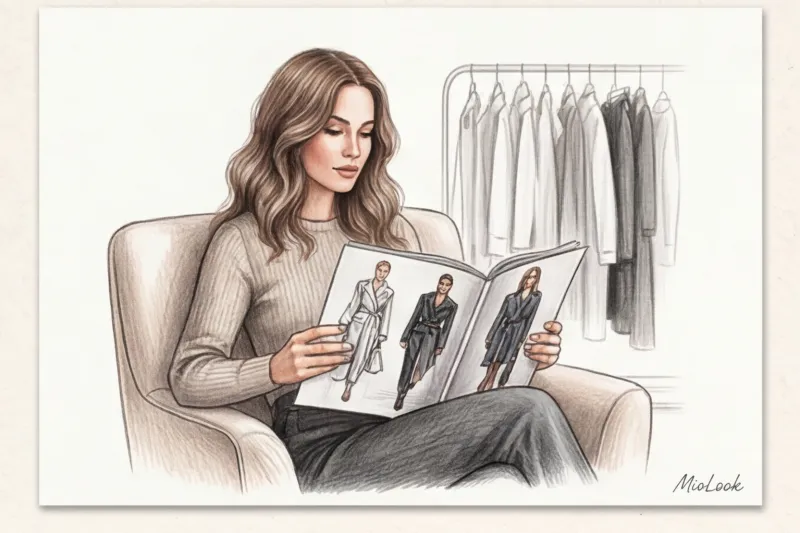
The catwalk is a mood board, a theatrical performance, not a direct instruction manual. We've covered more about how to decipher these designer messages in our the complete guide to adapting catwalk trends But what if you saw a piece on the runway, fell in love with it, and want to incorporate it into your wardrobe? How can you tell if this complex, deconstructed jacket will suit you without buying it blind?
From the Catwalk to Reality: Why We're Afraid of Challenging Trends
For most women, complex designer pieces evoke two opposing emotions: a keen desire to try on something avant-garde and a paralyzing fear of looking like a "city nut." And this fear is entirely justified. When we order a basic white T-shirt, the risks are minimal. But complex cuts—draping, asymmetry, exaggerated shoulders—cannot be adequately assessed from a photograph.
Especially if the model in the photo has measurements of 90-60-90 and is 180 cm tall. The average price for a designer item with a complex cut starts at €1,500. The cost of a mistake when shopping online is prohibitively high. This is where technology, which many still underestimate, comes in.
Try MioLook for free
A smart AI stylist will select the perfect look and help you try out complex trends without risking your wallet.
Start for freeVirtual Dressing Room: Your Personal AI Stylist
There's a common misconception that virtual clothing fittings are only for sizing—choosing between S, M, or L. As a practicing stylist, I can say that's just the tip of the iceberg. The main value of AI fittings lies in verifying geometry and proportions.
Modern neural networks have evolved from clunky, flat 2D overlays to complex algorithms that understand fabric physics and body volume in space. According to a 2024 Business of Fashion report, the implementation of high-quality virtual fitting rooms reduces return rates by 30–40%. This saves not only brands' budgets but also customers' nerves.
In the appendix MioLook This feature works like a true "stylist's sandbox." You can upload a photo of a piece straight from the runway and "wear" it on your digital avatar. You get a safe space to deconstruct daunting trends without the slightest financial risk.
How to Properly Test Runway Silhouettes Using AI
Professional stylists never look at a garment as a whole. We mentally break it down into lines, volumes, and textures. This same approach should be followed when working with AI.
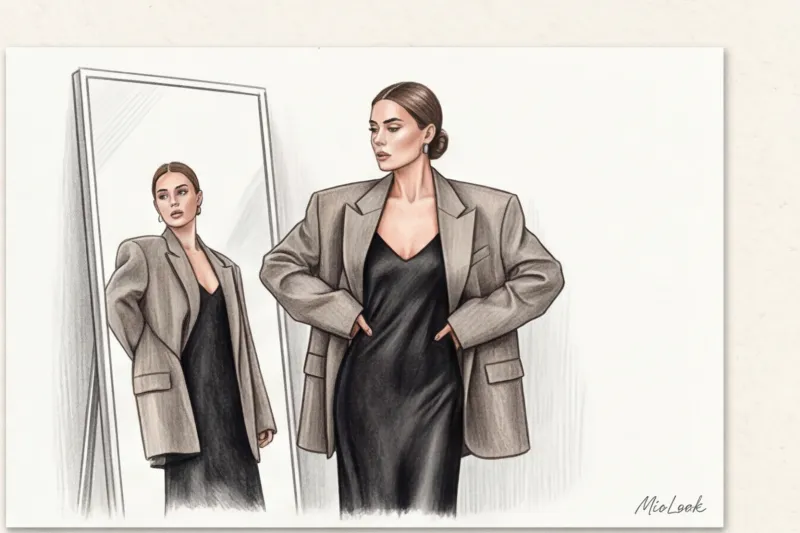
Analysis of proportions and volumes
Take, for example, the hyper-oversized style, which has been a staple on the runways for several seasons now. If you wear an oversized jacket with dropped shoulders, there's a risk it will visually "sweep" your height and shorten your legs. A virtual fitting room will instantly highlight this distortion. If you notice that a voluminous top makes your figure appear boxy, AI will help balance the look by suggesting you try the same jacket with fitted bottoms from your current wardrobe—for example, stirrup leggings or a pencil skirt.
Playing with complex textures
The texture of a fabric is often more important than its color. Neural networks have learned to brilliantly imitate the rigidity of form-fitting leather, the fluidity of liquid metal, or the weightlessness of sheer chiffon. When I first tested latex pants through the app, I noticed an important detail: the AI accurately rendered the reflections of light on the material. These reflections visually added about 3 centimeters of volume to my hips. Without a virtual fitting, I would have ordered the item and been extremely disappointed with the result in the mirror.
Your perfect look starts here
Join thousands of users who look flawless every day with MioLook, testing out their boldest ideas.
Start for freeRookie Mistake: Why You Shouldn't Copy the Total Look
A total catwalk look looks like a carnival costume in real life. This is a rule I repeat to all my clients. Loewe creative director Jonathan Anderson once noted: "My collections are meant to be taken apart. I don't expect anyone to walk out looking exactly like the model on the runway.".
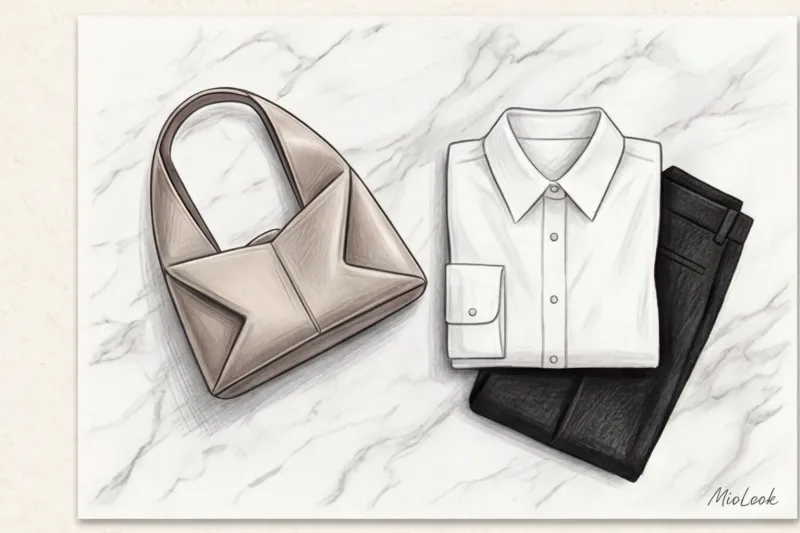
One of my clients fell in love with a Miu Miu runway look: an extreme low-waist micro skirt paired with a cropped sweater. She was ready to spend a hefty sum on this outfit. We ran the look through our AI try-on tool. The results were sobering: for her body type and lifestyle, this outfit looked inappropriate. But we didn't abandon the idea entirely. By keeping only the cropped sweater and pairing it in the app with her favorite wide, mid-rise palazzo pants, we achieved a perfect, wearable, and very stylish look.
The golden rule of styling: use the 20/80 formula. Let 20% of your look be an avant-garde runway trend, and 80% be your tried-and-true, understated base.
Practical analysis: trying on the season's 3 main trends
Let's look at how to use AI to adapt three of this year's most challenging trends, often written about but rarely explained how to wear.
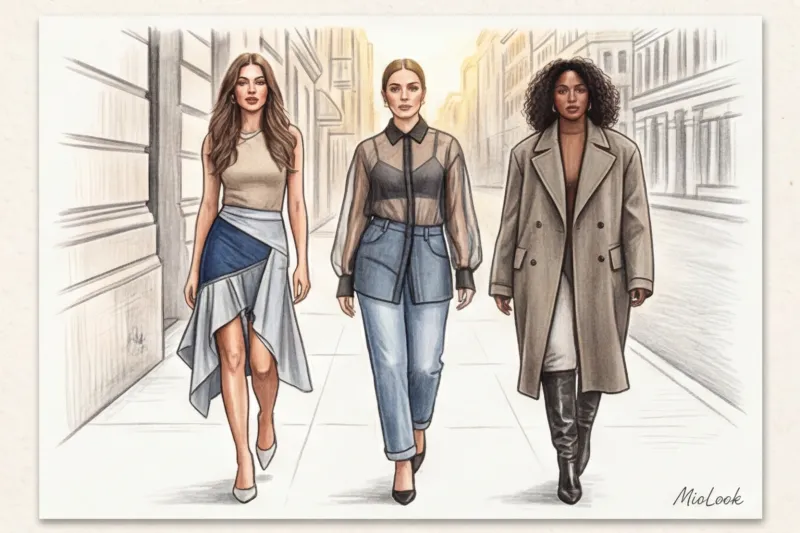
- Trend 1: Architectural shoulders (Saint Laurent style). This trend looks incredibly powerful, but it can make you look bulky. When trying it on virtually, pay attention to your waistline. If the jacket hides your waist, try adding a wide belt in the app. The AI will tell you whether this will restore your proportions or make your silhouette look like an inverted triangle.
- Trend 2: Complex layering and transparency. Organza and mesh are beautiful, but the question of "what to wear underneath" can be a deterrent. At MioLook, you can try out a sheer Prada blouse over a variety of base layers, from a sports bra to a thick silk top with thin straps. You'll immediately discover what level of revealing you're comfortable with.
- Trend 3: Deconstructivism and asymmetry. Asymmetrical skirt hems or misaligned buttonholes on shirts disrupt the body's natural geometry. After loading such a garment into the AI, observe where the visual center of gravity shifts. If the asymmetry widens the widest part of your hips, you might want to look for a style where the diagonal line moves in the other direction.
Let me be clear: this method has its limitations. It does NOT work when it comes to tactile sensations. AI will perfectly visually show how an item will fit, but it won't warn you if the fabric is itchy or staticky. Therefore, virtual fitting doesn't replace the need to read the fabric labels (look for cotton with a weight of at least 180 g/m² or viscose, not 100% polyester).
Ready to get started?
Try the free plan—no commitments required. Upload a photo of a complex trend and see how it will look on your body.
Start for freeChecklist: How to Prepare for an AI Try-On of a Complex Item
For the algorithm to work as accurately as possible and avoid giving you distorted results, the input data must be perfect. Here are three technical rules I've learned while working with the app:
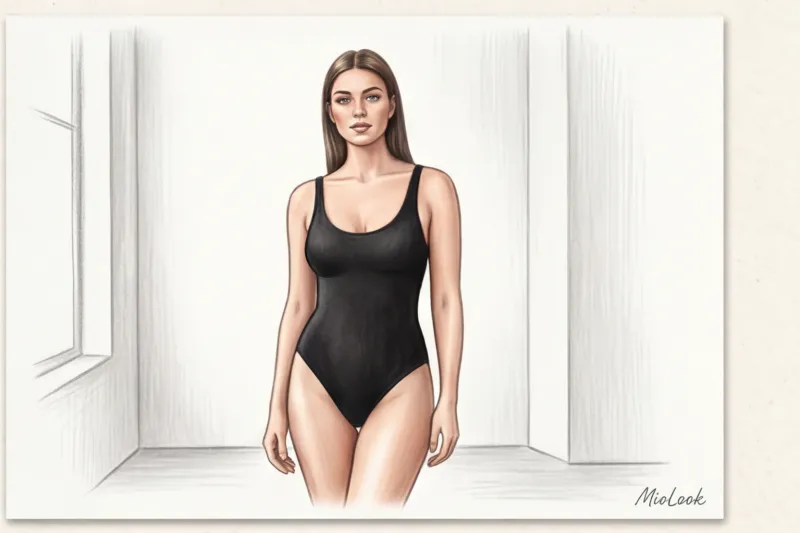
- Correct source. The algorithm needs to understand your actual measurements. Wear form-fitting clothing like leggings and bodysuits when taking photos. A baggy T-shirt will confuse the neural network, causing it to "draw" extra volume under your virtual jacket.
- Uniform illumination. Avoid harsh side light or deep shadows. AI can interpret a harsh shadow on the stomach as a fold or a fabric defect. The best option is diffused daylight from a window in front of you.
- An honest perspective. Don't ask a friend to take a photo of you from the bottom up to elongate your legs—save that trick for social media. For a virtual fitting room, the camera should be positioned exactly at waist level, parallel to the floor. Otherwise, you'll get a false impression of where the hem of a complex skirt will end.
Summary: Invest in style, not mistakes
Buying designer clothes with complex cuts is always an investment. And a virtual fitting room is your insurance against bad investments. It allows you to develop your eye, experiment with daunting textures, and try out the wildest combinations without breaking the bank.
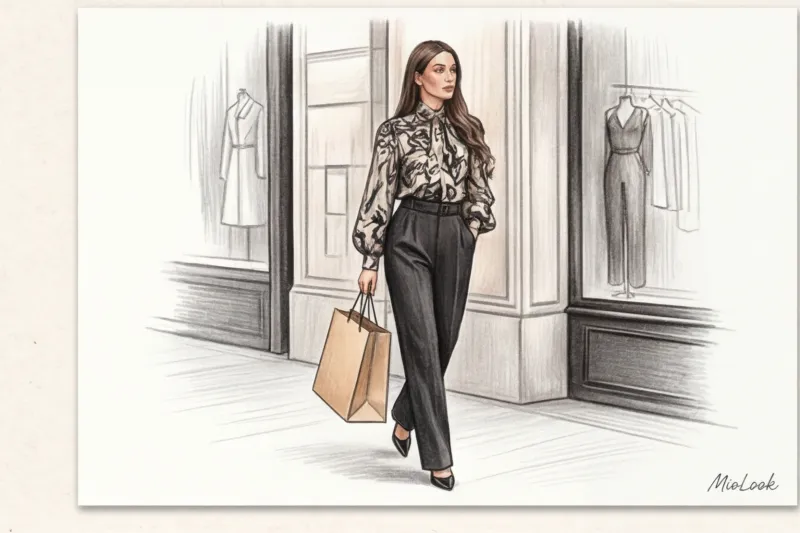
Technology has finally made high fashion accessible to everyone, democratizing the work of a personal stylist. You no longer have to guess whether asymmetry or hyper-oversized styles suit you.
Right now, find a saved photo of that "too weird, but beautiful" runway look you've been wanting to try but been afraid to. Upload it to MioLook and see how it unfolds on you. Perhaps your new favorite silhouette is waiting for you right there.