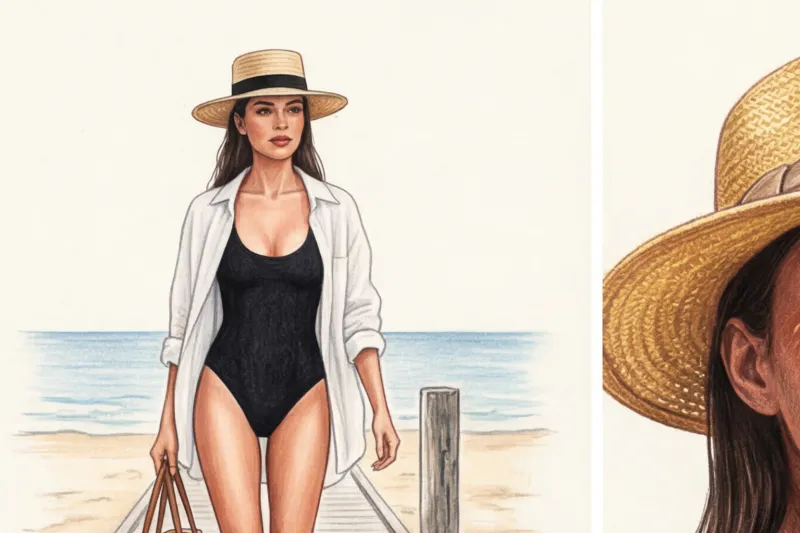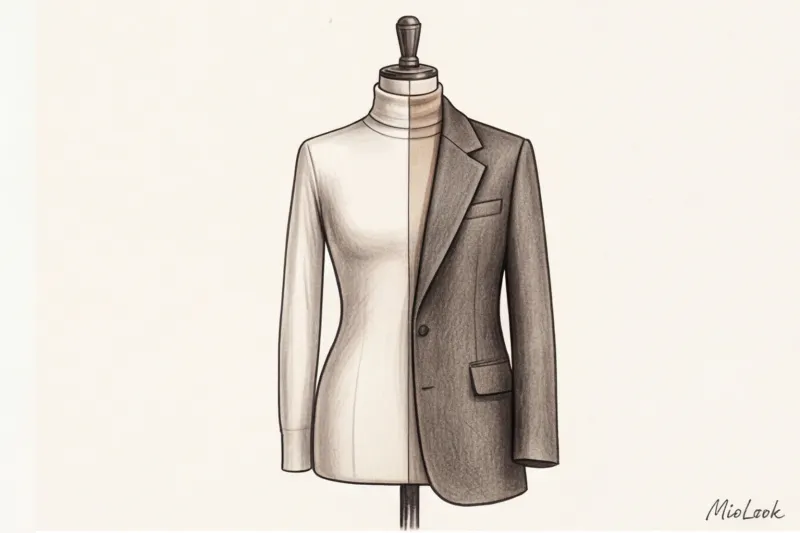
I vividly remember my first experience at The Row show in Paris. The Olsen sisters sent models down the runway clad in three, sometimes four, layers of heavy wool, cashmere, and thick silk. Yet the silhouettes remained incredibly fluid and airy, without a single creased waist. It was then, sitting in the second row and gazing at the movement of textures, that I realized: the art of putting together layered clothing looks It's not so much a matter of aesthetic taste as it is a matter of actual physics. Today, technology allows us to calculate this "physics" before making a purchase. We've covered in more detail how algorithms help us dress consciously in our The complete guide to virtual try-ons online for modest fashion.
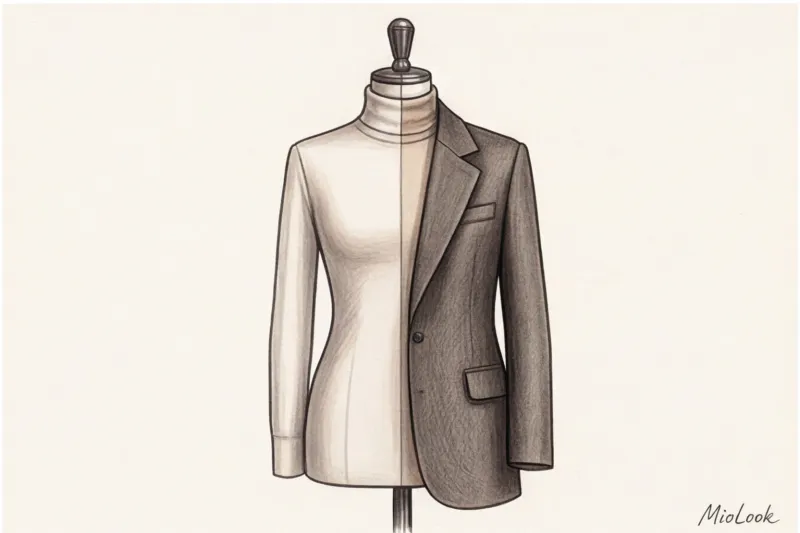
The Anatomy of the Perfect Layer: Why Do Layered Outfits Often Make You Look Fat?
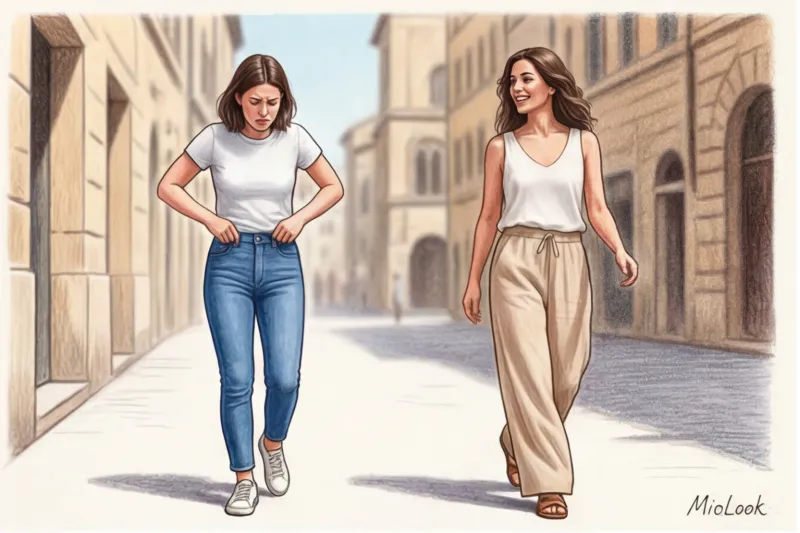
Let's get this straight: modest fashion has long since lost all connection with shapeless robes. Take a look at the strict, precise architecture of the COS or Massimo Dutti collections—a triumph of geometry and pure lines. However, when we try to replicate these closed-off looks in real life, we encounter a major aesthetic pitfall: uncontrollable volume, or the aforementioned "cabbage effect."
Women often shy away from elegant combinations simply because three pieces make them feel two sizes too big. The problem lies in the conflict between weight and drape. When you layer one piece over another, the fabrics begin to rub against each other. If the characteristics aren't chosen correctly, the friction creates air pockets that visually add extra pounds.
The GSM Factor in Modest Fashion
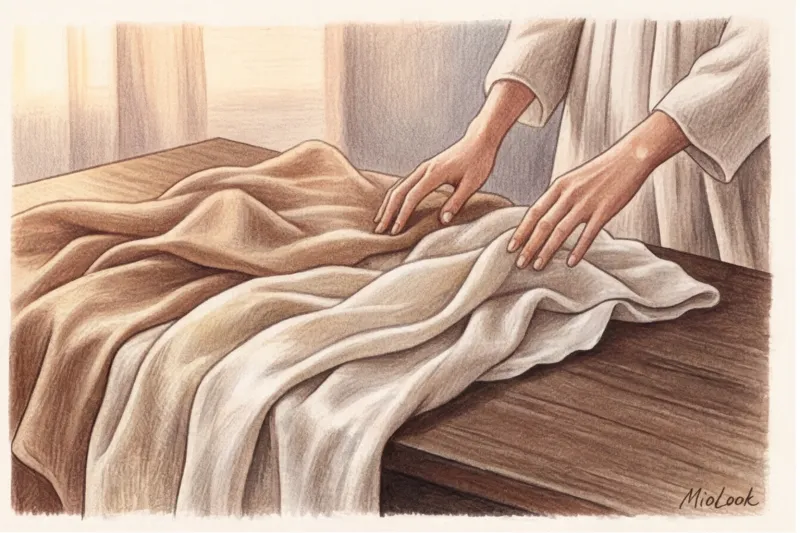
In the textile industry, there's a technical standard called GSM (grams per square meter). Professional stylists and clothing designers always keep this standard in mind. The higher the GSM, the denser and heavier the fabric.
This is where the most common misconception lies: "To avoid looking fat, the base layer should be as thin as possible." In practice, wearing an ultra-thin viscose turtleneck (around 120 GSM) under a heavy wool jacket (from 350 GSM) is a disaster.
Thin fabric lacks its own structure. Under the pressure of a heavy top, it creases, bunching up into an untidy accordion at the elbows and underarms. To ensure perfect layering, I use the "50 GSM rule": the difference in density between the base and top layers should be at least 50 units, but the base layer must still hold its shape. Two structural layers of medium weight (for example, a dense cotton poplin under a cashmere sweater) will create a much slimmer silhouette than a sheer mesh under tweed.
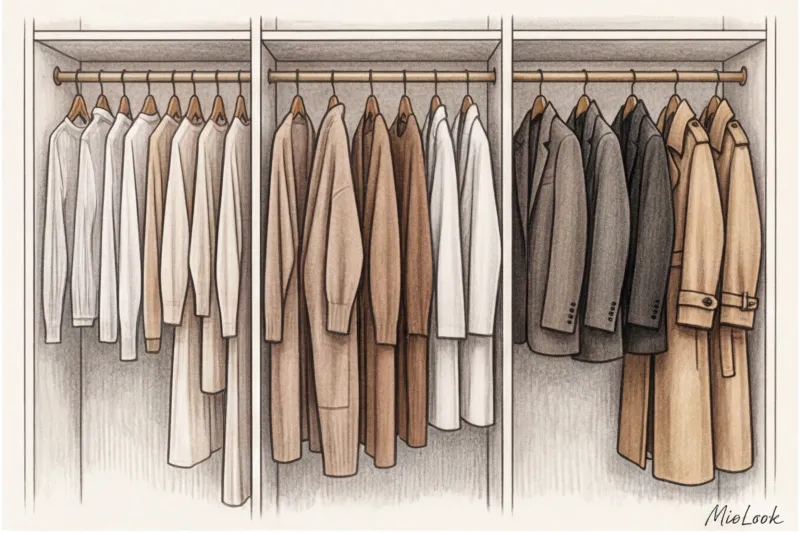
The "Cabbage Effect" is Abolished: How Online Try-Ons Save the Budget
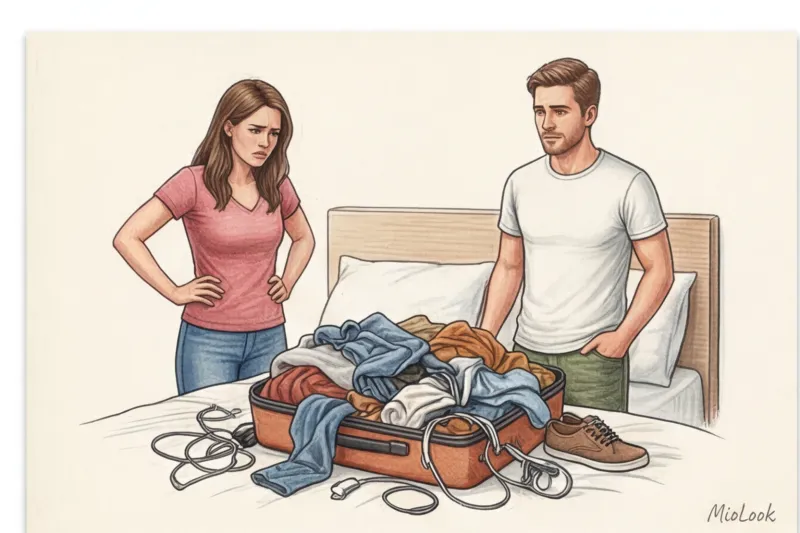
Buying clothes online without the ability to assess their thickness often turns into a lottery. Catalog photos in online stores are carefully retouched: on the model, the shirt fits perfectly under the sweater because the stylists pinned everything unnecessary down the back.
I had a client, Anna, a corporate lawyer. She was constantly returning items to high-end stores. She'd buy luxurious shirts for €150 and try to wear them under her favorite chunky knit cardigan, but the buttons and collar would stick out unattractively, violating the strict dress code. We solved this problem when we started using AI try-on algorithms. Artificial intelligence analyzes not just images, but also texture compatibility. It mathematically calculates how a fabric with a certain composition will fit your body shape and how it will behave under other layers.
Try MioLook for free
A smart AI stylist will select the perfect look and check layer compatibility before purchasing.
Start for free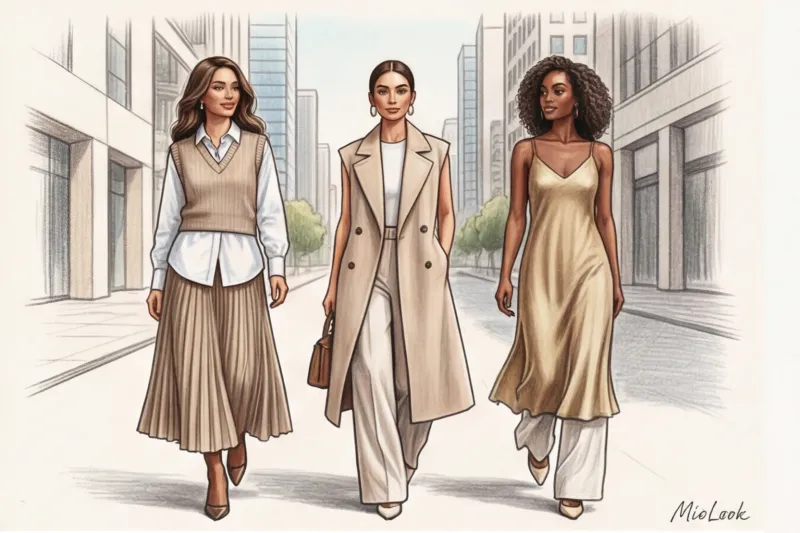
Closed Wardrobe Architecture: 3 Win-Win Formulas
Layering is a powerful attention-grabbing tool. In closed-off looks, it creates a sense of status and intellectualism. According to a 2024 McKinsey & Company study, demand for minimalist, covered-up clothing among women over 30 in professional settings has increased by 34%. Modern corporate dress codes demand poise, not skin exposure.
Formula 1: Smooth structure + volumetric geometry. It's a classic. Imagine a crisp poplin shirt worn under a crisp, straight-cut wool vest. The smooth texture of the cotton allows the wool to glide without snagging, and the difference in volume creates airiness within the look, camouflaging any figure flaws.
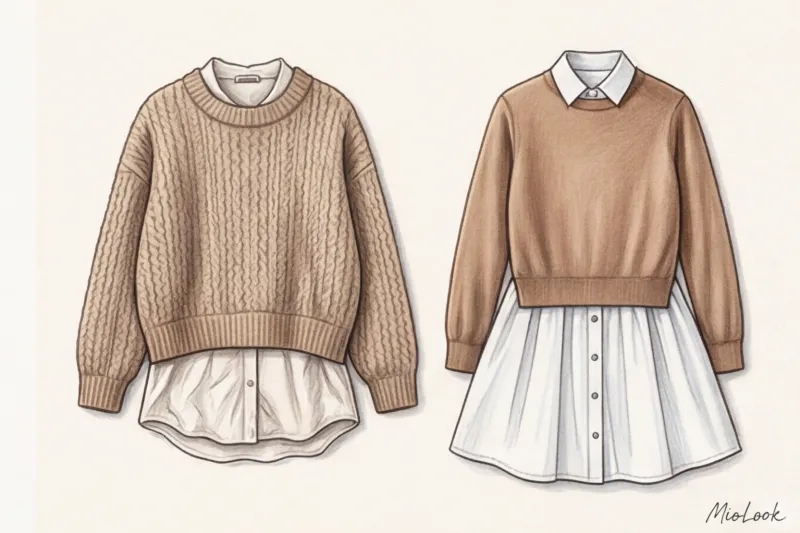
Formula 2: Playing with Lengths (Maxi + Midi)
Long vests and shirtdresses worn over wide palazzo pants are a style beloved by Italian fashionistas. The secret lies in creating a continuous vertical line.
Even if your body is completely covered, the correct layered clothing looks They can visually elongate a person's height. The rule of thirds applies here: the bottom layer (trousers) should take up two-thirds of the visible length, and the top, accent layer, one-third, or vice versa. Never split the silhouette in half. A long, sleeveless jacket ending mid-calf over flowing trousers creates a dynamic gait and looks incredibly expensive.
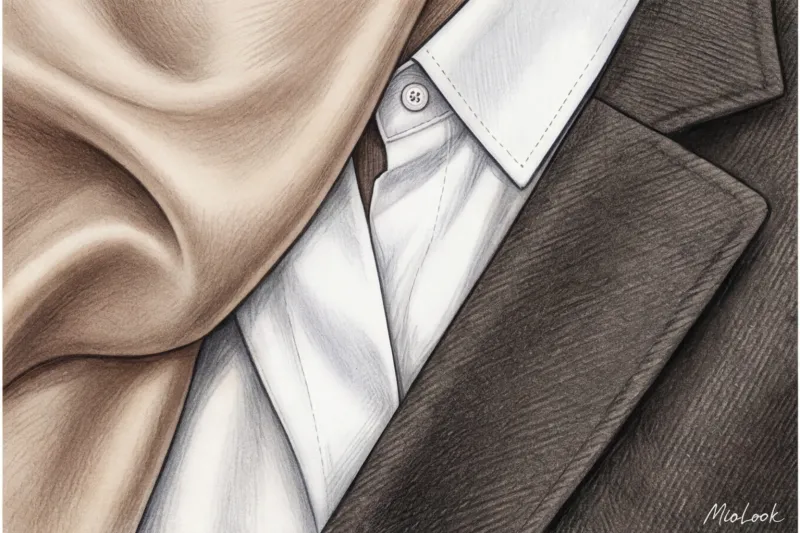
Formula 3: Monochrome Volume
Putting together a look in a single color will automatically neutralize the extra bulk that layers can add. But to avoid the look looking like a painter's uniform, use three to four different textures within a single shade: matte silk, fluffy mohair, smooth leather, and textured ribbed fabric.
When shopping online, putting together such an outfit is especially challenging due to the differences in color rendering on different monitors. A cool beige sweater will overpower the warm sand-colored pants. This is where virtual try-ons become invaluable, allowing you to compare the color temperature on a single screen before placing your order.
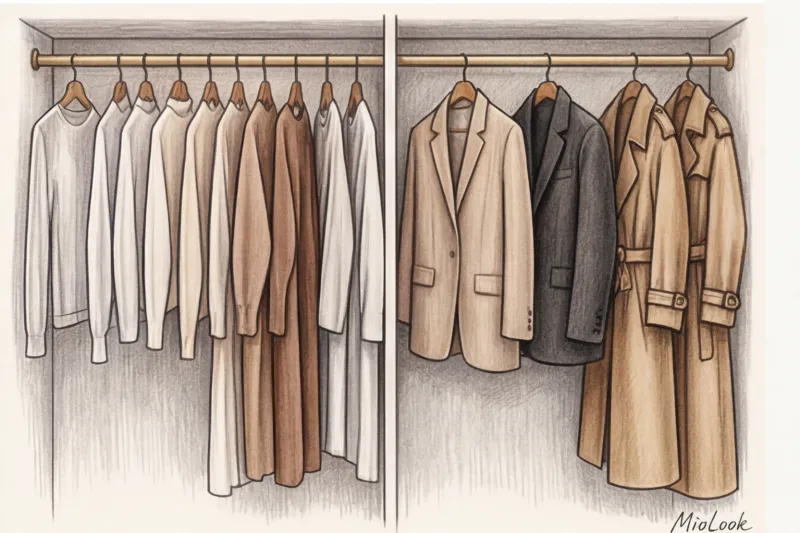
Smart Layering: 4 Mistakes to Avoid When Combining Items
Even the most expensive cashmere and silk items can look sloppy if the basic principles of combining them are violated. Over 12 years of experience, I've developed a checklist of mistakes that immediately reveal a lack of attention to detail:
- Error 1: Cutout conflict. A V-neck cardigan worn over a round neck T-shirt visually breaks the neckline. Necklines should either match each other or contrast dramatically (for example, a turtleneck under a deep V-neck).
- Error 2: The layers are of the same length. If your sweater and the shirt peeking out from underneath end at the same line, you'll create a "cropped" torso effect. The shirt should be at least 5-7 centimeters longer.
- Error 3: 3D decoration on the bottom layer. Ruffles, patch pockets, or voluminous embroidery on a basic shirt will inevitably distort the outer jacket. The base layer should be simple.
- Mistake 4: Too tight a base layer. A turtleneck that bursts at the seams and highlights even the slightest relief of lace lingerie will ruin the magic of a modest look. The base should have air between the body and the fabric (a semi-fitted silhouette).
To be fair, there is an exception to this rule. If you're creating an avant-garde look and intentionally use a sheer mesh (second skin) with a vibrant print as a barrier layer underneath, it can be tight-fitting. But for a classic, closed-off wardrobe, this won't work.
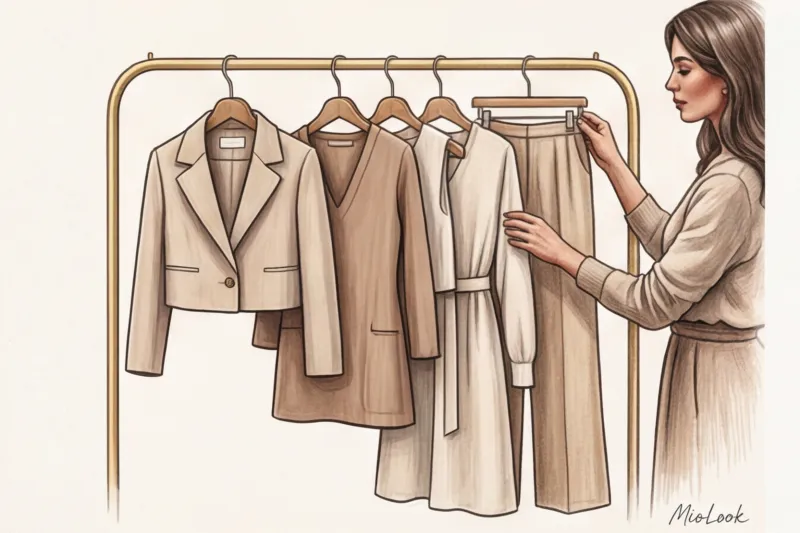
Your perfect look starts here
Join thousands of users who look flawless every day by combining clothes with the help of algorithms.
Start for freeTesting textures: what the AI stylist will show you before you buy
Modest fashion is, above all, about protecting your personal boundaries and choosing the fit that's most comfortable for you. In regular fitting rooms, we often make poor decisions. Why? Rushing, distorting yellow light, a poorly chosen mirror, fatigue.
An AI stylist is free of these shortcomings. The algorithms don't simply "glue" a picture of a sweater over a photo of pants. They take into account your actual body type and provide an objective silhouette. You can take your favorite basic turtleneck that you've been wearing for years, upload it to the app, and "try it on" with that trendy €180 jacket from the new collection to see if this combination will make your shoulders look too broad.
Checklist: Create Layered Outfits with an App
To make sure the theory doesn't just remain text, let's move on to practice. Here's how I recommend my clients work with smart wardrobe MioLook To create perfect layers:
- Digitization of the database. Add your tried-and-true base layers to your virtual wardrobe: cotton shirts, basic turtlenecks, and sleek long sleeves. These are your foundation.
- Finding the accent layer. Select from the catalog or add a photo of your desired oversized item—an elongated jacket, a thick cardigan, or a vest.
- Virtual test drive. Layer the layers on top of each other. Pay attention to collar clashes (does the shirt collar fit into the sweater neck?) and cuff lengths (do they extend the correct 1.5 cm?).
- Silhouette assessment. Look at the look as a whole. If the vertical structure is correct and the proportions are maintained, stick with the capsule ensemble.
Conclusion: Awareness in Every Layer
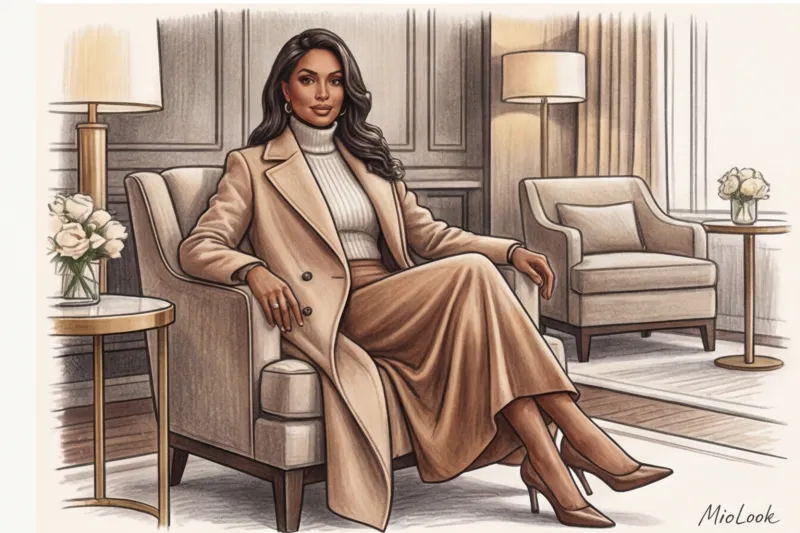
Cover-ups and modest fashion aren't about limitations, but about deep respect for yourself and your own physical comfort. When you master the art of layering textures, your wardrobe begins to convey a sense of intelligence and status that transcends any flashy logo.
Understanding the physics of fabrics and using modern AI technology eliminates the fear of looking bulky. Right now, take a photo of five of your favorite basic pieces, upload them to the virtual fitting room, and try pairing them with something new. You'll be surprised how many stylish, sophisticated, and durable looks are hiding in your closet.