Have you ever wondered why the same hat looks like the epitome of "quiet luxury" on a Copenhagen influencer, but in the mirror of a mass-market fitting room it makes you look like a tired teenager heading to the skating rink? The difference isn't in the appearance, but in three millimeters of yarn thickness and a couple of centimeters of cuff.
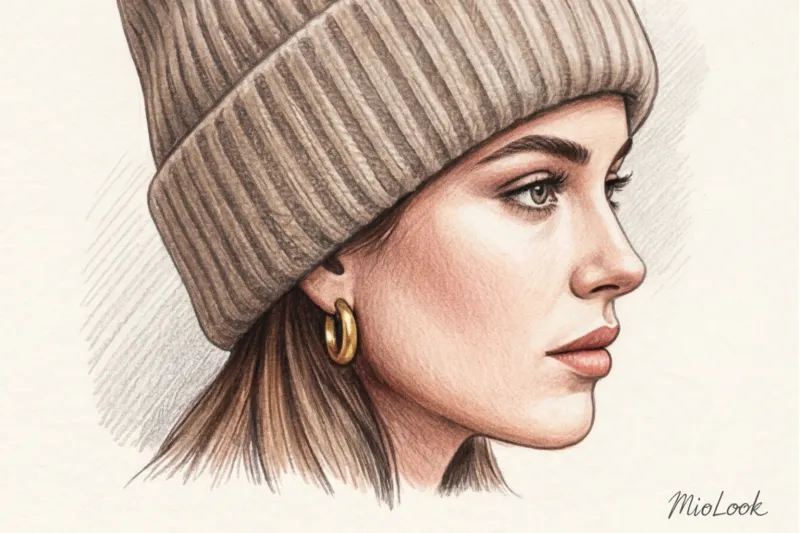
As a practicing personal stylist, I constantly encounter women who underestimate the importance of accessories for their portraits. We're willing to invest hundreds of euros in a coat, but then wear a thin beanie that instantly detracts from the overall look. I've written more about creating a proper base in our The Complete Guide to Essential Hats and Scarves: A Stylish Capsule , but today we will focus on the main hero of the demi-season.
The question is, What to wear with a beanie hat Fall and winter aren't just a matter of choosing a jacket. It's a conversation about silhouette architecture, volume balance, and wardrobe math. Let's explore how a basic knit hat can visually correct a face shape and elevate even the simplest outfit to a new stylistic level.
The Anatomy of the Perfect Beanie: Why 80% of Hats Ruin Your Look
When you talk to someone, their gaze focuses on your most prominent features in the first three seconds: your face, neck, shoulders, and headwear. That's why accessories placed near your face are unmistakable.
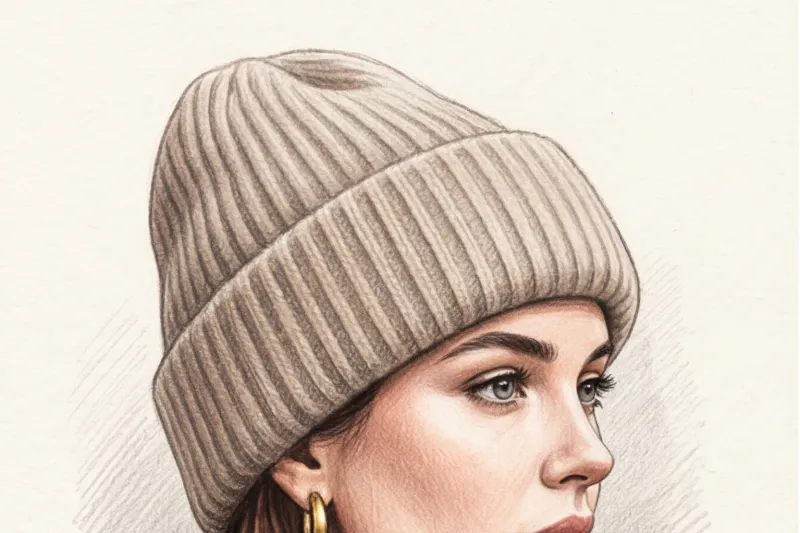
The main enemy of female beauty is a thin, clinging beanie without a cuff. This style works like a swimming cap: it visually reduces the volume of the skull, making the cheeks, jaw, and nose appear more massive and heavy by contrast. The width of the cuff is your main tool for sculpting. The ideal width for a proportional face is 6 to 8 centimeters. This extra volume in the forehead creates the perfect frame, making the lower third of the face appear more graceful.
"I had a telling case: a client with a round face categorically refused to wear hats, claiming they made her look fat. When we replaced her thin acrylic hat from an old H&M collection with a voluminous 100% merino beanie from Arket with a thick 7-centimeter cuff, her face visually lengthened. The right texture is more effective than contouring."
Wardrobe math is no less important. McKinsey's 2023 consumer behavior study confirms that conscious shoppers are shifting to cost-per-wear (CPOW) pricing. Let's do the math together:
- Acrylic hat from mass-market: It costs around €15. After 3-4 weeks of active wear, it becomes covered in pilling, loses its shape, and creates static. You'll wear it a maximum of 30 times per season before it loses its marketable appearance. Cost per use: €0.50.
- Cashmere beanie or thick merino (for example from COS): It costs around €80. With proper care, it stays in perfect condition for at least four seasons, is scratch-resistant, and keeps you warm. For 360 uses, each costs just €0.22.
An investment in quality yarn pays for itself twice as fast, not to mention the comfort and visual luxury.
Your perfect look starts here
Join thousands of users who look flawless every day with a smart wardrobe. An AI stylist will help you put together a capsule wardrobe with the perfect beanie.
Start for freeWhat to wear with a beanie in the fall: from a trench coat to a leather jacket
Fall is the perfect time for stylistic experimentation, when we can play with a mix of styles. Beanies have long ceased to be exclusively a sporty accessory or a "weekend" item. Today, their main purpose is to tone down the pretentiousness of formal or overly formal pieces.
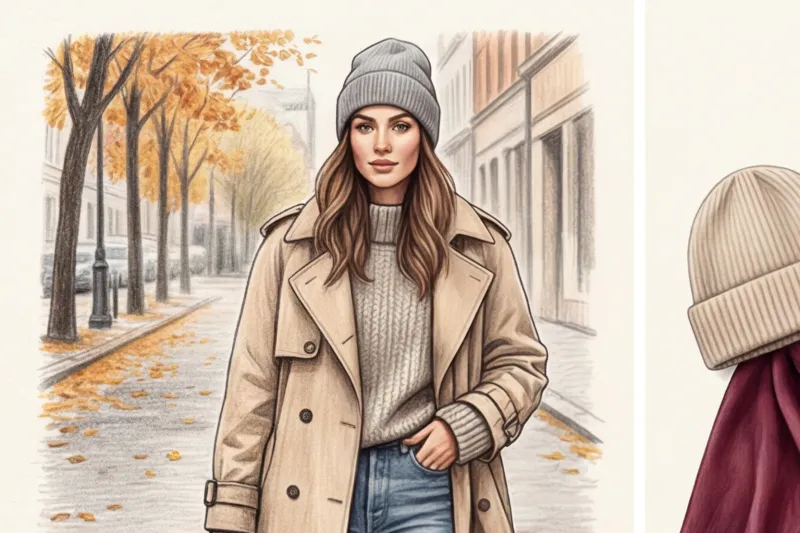
Take a classic double-breasted beige trench coat. On its own, it might look too conservative and grown-up. But pair it with a gray cashmere beanie, an oversized sweater, and leather loafers, and the look instantly becomes relaxed, in the spirit of Scandinavian street style.
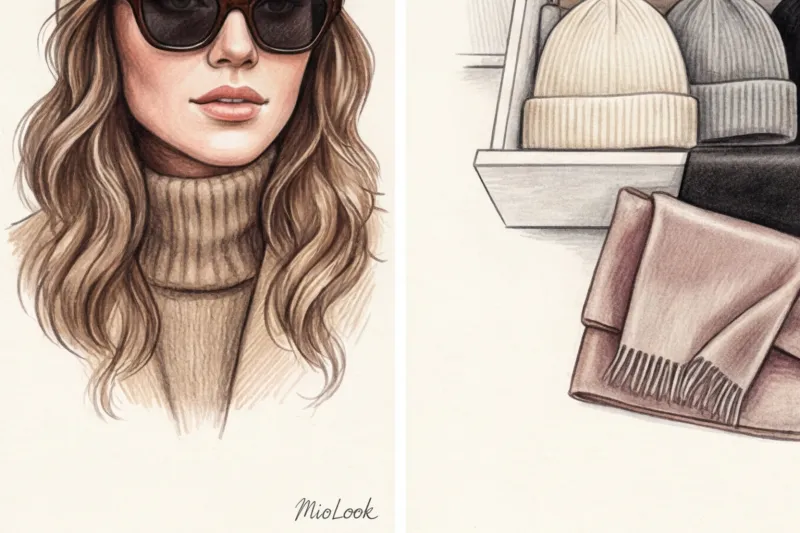
Another favorite trick of mine is contrasting textures. Pair a rugged leather biker jacket with a soft, slightly fuzzy alpaca-wool blend beanie. The smooth sheen of the leather and the matte, tactile knit create that visual interest that separates a well-thought-out outfit from a casual one. For smart casual office wear, try pairing a thin, yet form-fitting beanie with a voluminous herringbone wool men's blazer. The key rule: don't button the blazer all the way up; let the layering work for you. To test these combinations on your own clothes, I recommend loading them into MioLook and visualize the images before going out.
What to wear with a beanie in winter: rules for pairing with warm outerwear
Winter styling requires attention to silhouette architecture. As the WGSN (2024) report on winter trends notes, the modern urban silhouette is built on exaggerated outerwear volumes. If you're wearing a blanket-like puffer jacket or a wide coat, your head shouldn't look like a tiny pin. A beanie helps balance these proportions.
Beanie + classic coat: play with textures
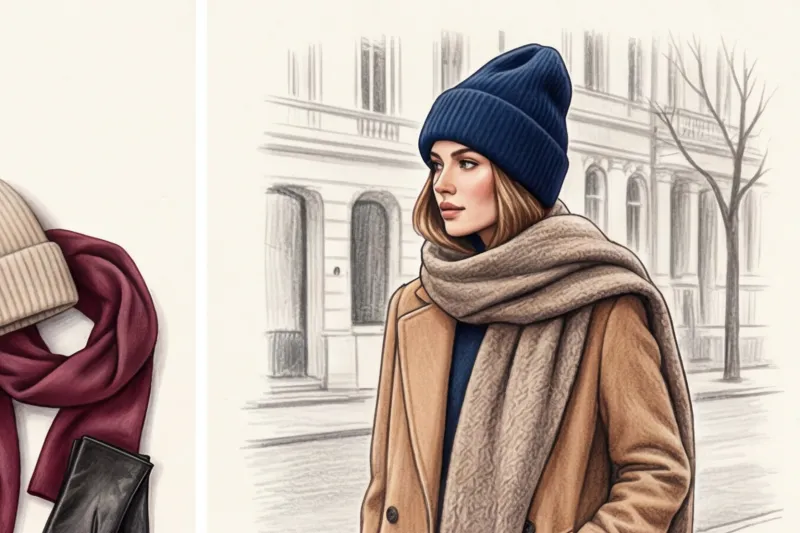
A smooth drape or cashmere coat calls for a chunky knit hat (such as a rib knit). This contrast in texture is vital. Wearing a thin, smooth, sporty-cut hat with a classic coat will create the "I was about to go skiing but changed my mind" effect. Choose styles with pronounced ribbing in deep, elegant shades: navy, burgundy, or graphite.
Beanie + down jacket: how to avoid looking like a teenager
The biggest danger when pairing a down jacket with a beanie is going all-out sporty-chic, which can cheapen the look. To add a touch of class to your puffer jackets, avoid hats with large logos, pom-poms, or neon colors. A minimalist beanie in a deep neutral shade is your best bet. Balance this look with a structured leather bag and the right footwear—for example, chunky smooth leather Chelsea boots rather than sporty puffers.
Beanie + faux fur coat
Faux fur itself has a very vibrant texture and a high degree of glamour. A beanie works as the perfect neutralizer. It does the job better than silk scarves or felt hats, which can make the look too theatrical. Pair your fur coat with a smooth-knit hat: the two fluffy textures (fur and, say, mohair) will clash.
Try MioLook for free
Not sure if a beanie will go with your favorite fur coat? Our smart AI stylist will find the perfect look based on your wardrobe in just a few seconds.
Start for freeColor Combinations: Why Hat and Scarf Sets Are Hopelessly Outdated
Let's bust one of the most persistent myths once and for all: items near your face should NOT be knitted from the same yarn. The ready-made "hat and scarf matching" set is an outdated technique. In professional circles, we call it "stylist fast food"—when someone didn't want to spend time choosing and bought a ready-made solution. It looks flat and betrays a lack of attention to detail.
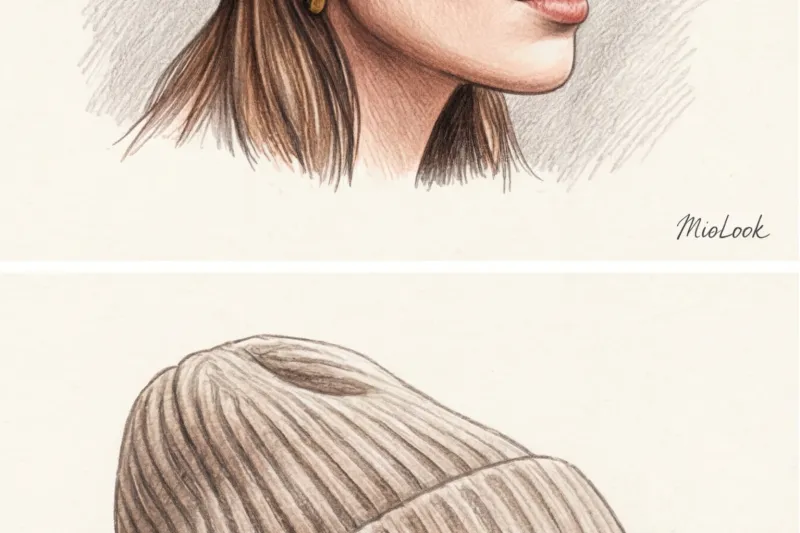
Modern styling calls for tonal shifts and textured play. How can this be achieved in practice?
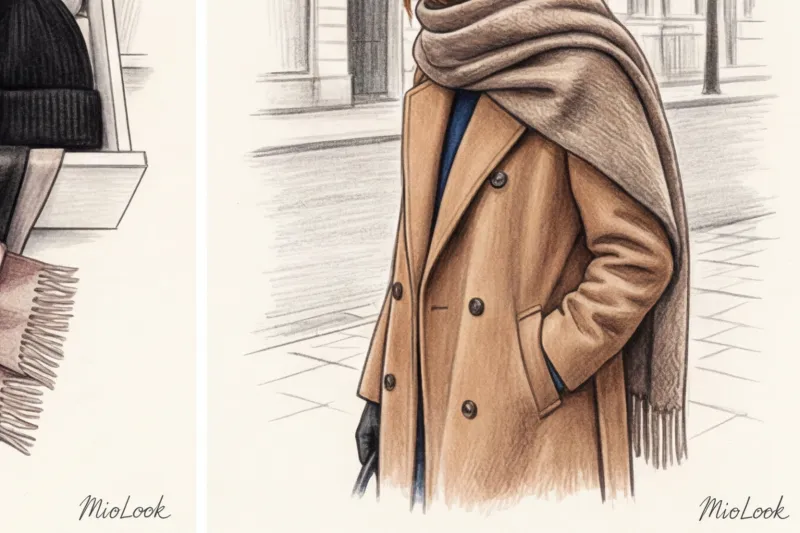
- Tonal dressing: Combine similar shades of the same color palette. For example, a beige hat with a camel scarf, or a cappuccino hat with a chocolate snood. A half-tone difference adds a sophisticated and luxurious touch to the look.
- Complementarity rule: Mix textures. Pair a ribbed hat with a perfectly smooth, thin cashmere scarf in the same temperature range (warm with warm, cold with cold).
- Bright accent: In a completely monochrome black or gray winter outfit (coat, pants, shoes), the only pop of color can be a fuchsia or cobalt beanie. This is a classic look that never goes out of style.
Beanie Hairstyles: How to Maintain Your Hairstyle and Facial Balance
Hair is the natural frame of your face. The biggest mistake I regularly see on the street is women hiding all their hair under a hat, leaving their face completely exposed. This visually widens the cheekbones and jawline.
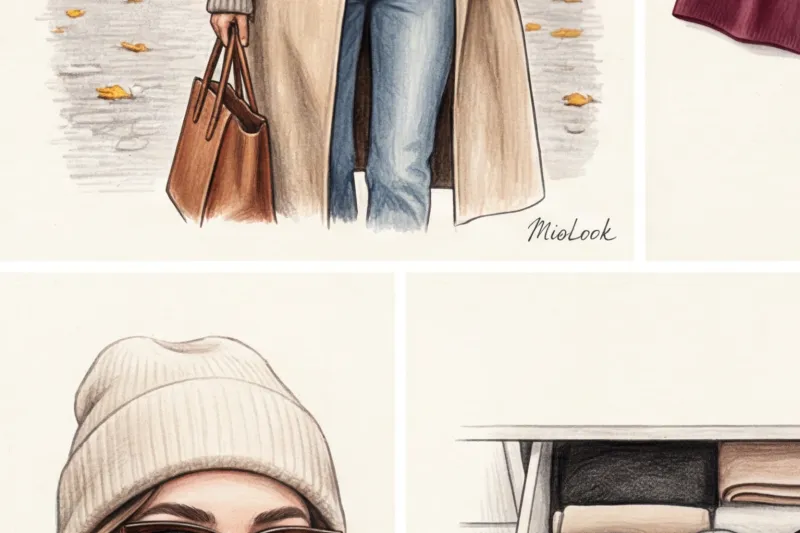
Always leave at least a few strands of hair out around your face. If you have a bob, the ends should peek out slightly from under the lapel. If your hair is long, toss it forward over one shoulder.
Algorithm for the correct fit of a beanie: Don't pull the hat down to your eyebrows. The ideal fit is when the hat is slightly pulled back, revealing 1–2 centimeters of hairline. This maintains volume at the crown.
Important limitation: This advice doesn't work for those with ultra-short pixie cuts. In this case, you'll need to wear the hat a little lower, but the lack of a "frame" should be compensated for with chunky sunglasses and large hoops, which will add dimension to the face.
Checklist: 5 Steps to Your Perfect Beanie
To summarize, let's formulate a clear action plan for mindful shopping. Before buying a new beanie, run it through this checklist:
- Composition check: Look for 100% wool, merino, cashmere, or alpaca blends on the tag. A maximum of 20–30% polyamide or acrylic is allowed—these are needed solely to ensure the garment maintains its shape and does not stretch after washing.
- Volume test ("air effect"): There should be some space between the crown of your head and the seams at the end of the hat. The beanie shouldn't fit tightly around your skull like a helmet.
- Density rating: The hat should hold its lapel securely. If it hangs down at the back like a shapeless "sock," it's not a beanie, but a slouchy style, which is currently out of fashion.
- Database revision: Think about your most common winter garment. If you have a smooth down jacket, go for a ribbed one. If you have a textured bouclé coat, go for a smooth knit.
- Golden rule: It's better to buy one cashmere hat for €80 that will last five years than to buy five cheap acrylic trends every season that will make your head sweat and your hair frizzy.
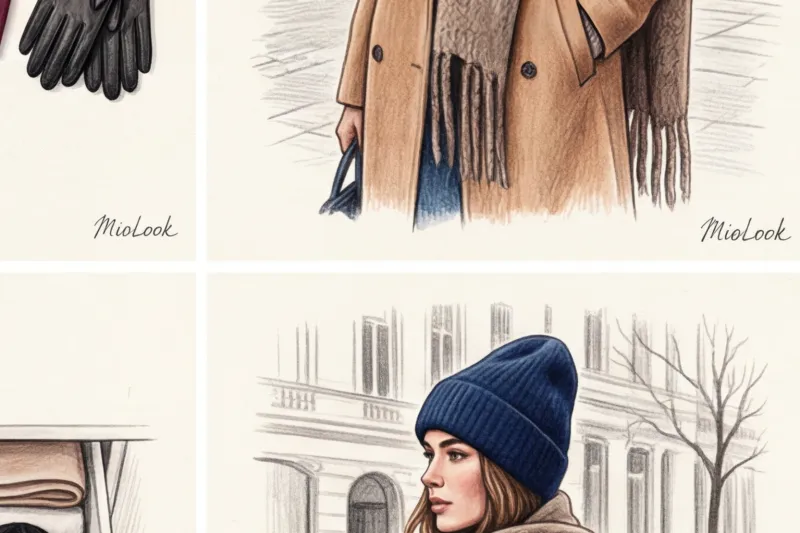
Treat portrait accessories with the same respect you would for choosing the perfect pair of jeans. The right beanie doesn't just keep your ears warm—it ties your look together, makes it modern, and shows others that you have a keen eye for style.