Recently, Anna, a 42-year-old product director at a large IT company, approached me. Her question was, "I'm no longer being taken seriously in investor meetings." When we opened her closet, the diagnosis became clear. It was filled with thin knit cardigans, "comfy" viscose tops, and soft, shapeless trousers. Her clothes projected a soft, homey air where authority, structure, and distance were required. We ruthlessly replaced the flimsy knits with impeccably tailored, architectural jackets. The result? Three months later, she brilliantly defended her new budget. Clothes don't change your intelligence, but they dramatically change how quickly people listen to you.
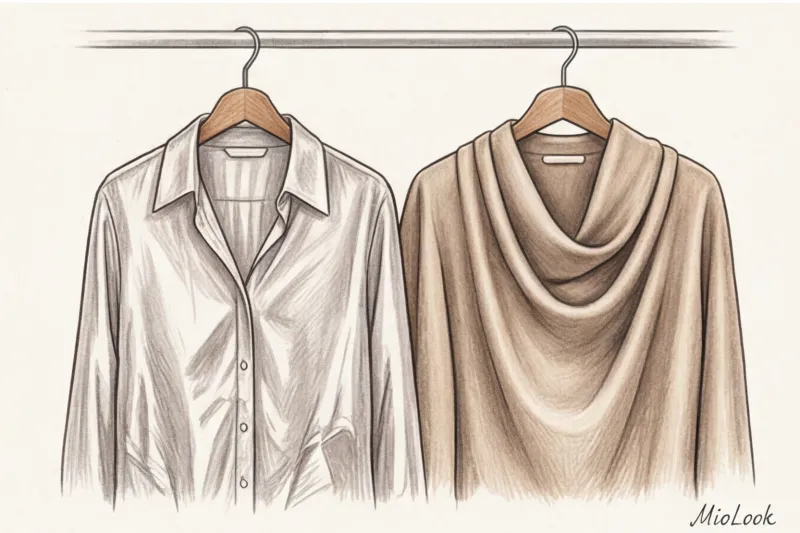
That's why the question of how to dress at 40 to look expensive isn't about finding a magic pill for aging or concealing wrinkles. It's about creating a dignified, strong frame for your established character. We've already discussed the basic principles of this approach in more detail in our A complete guide to creating a status wardrobe in adulthood , and today we will delve into the physics of fabrics, the geometry of cutting and the rules of “hidden luxury”.
The Anatomy of Status: What It Really Means to Look Expensive
According to the global trend agency WGSN and the PANTONE Color Institute (2024–2025 study), the main marker of luxury today is the concept of "visual tranquility." Expensiveness is no longer measured by the number of zeros on the price tag or the complexity of the cut. It is measured by how harmoniously and confidently the fabric interacts with your body.
At 20, a girl can forgive cheap fabric—her youthful skin and youthful angularity compensate for the material's shortcomings. At 40, cheap fabric becomes a traitor. It accentuates the slightest nuances of the figure, wrinkles at the folds, and creates a feeling of "visual noise."
I call this the "cut architecture" rule. Think of a building: if the frame is weak, the façade will inevitably "float." High-quality clothing constructs the silhouette. A jacket with a thick interfacing on the chest and a defined shoulder line works like an exoskeleton—it physically forces you to straighten your back, lifts your bustline, and pulls your look together, even if you haven't slept all night.
What gives away your age and cheapens your image: the main mistakes
Over 12 years of personal styling practice, I've discovered several things that are guaranteed to ruin even the best-thought-out image of a mature woman.
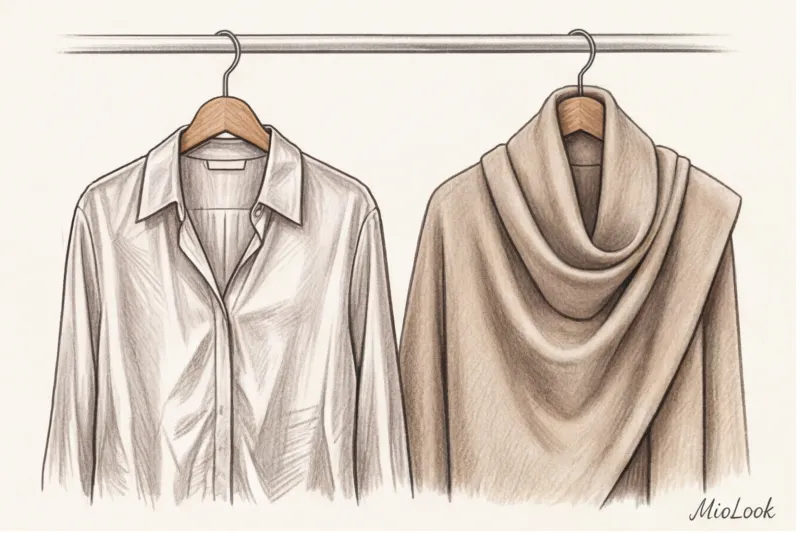
- Flimsy knitwear and thin viscose. According to a textile drape analysis, thin viscose knits accentuate body contours 40% more than dense wool blends. They hug where air is needed and hang where support is needed.
- Cheap glitter. Polyester, desperately imitating silk, always has a plasticky sheen. This unnatural sheen instantly betrays the mass-market nature of the material. Choose matte textures or the elegant, muted satin sheen of dense, natural silk.
- Extremes in fit: baggy oversize or hyper-tight. Oversized clothing requires careful styling—it requires meticulously exposed wrists and ankles, otherwise you'll look like a monumental mass. A tight fit should have a certain amount of air (leaving at least 2-3 centimeters between the fabric and your body).
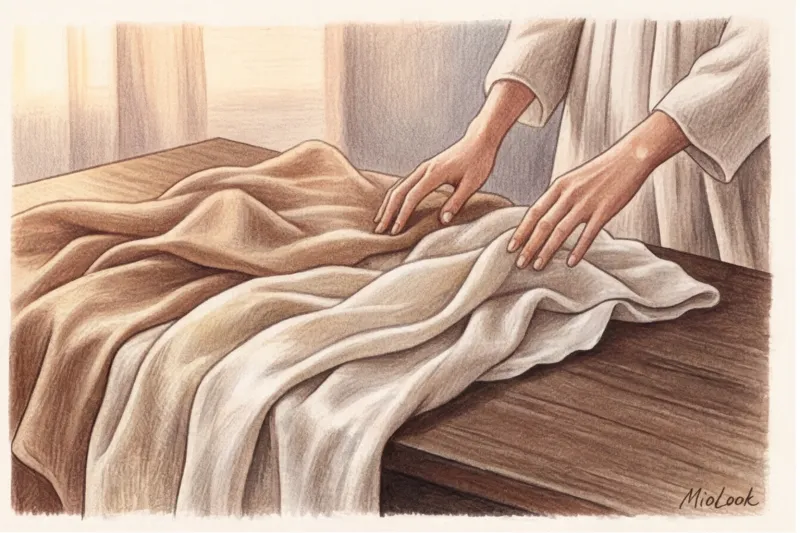
"To check fabric in the store, I always use the pinch test. Squeeze the edge of the fabric in your fist for 10 seconds. If after releasing it, it's still heavily wrinkled and hasn't regained its shape, leave it on the hanger. It will ruin your day."
The Logo Trap: Why Flashy Luxury Works Against You
My biggest pet peeve as a stylist is seeing successful women spend huge sums on belts with giant Gucci buckles or bags covered in Louis Vuitton monograms, thinking it's an investment in status. In reality, the psychology of perception works differently: a huge logo is often interpreted as an attempt to prove one's importance to others.
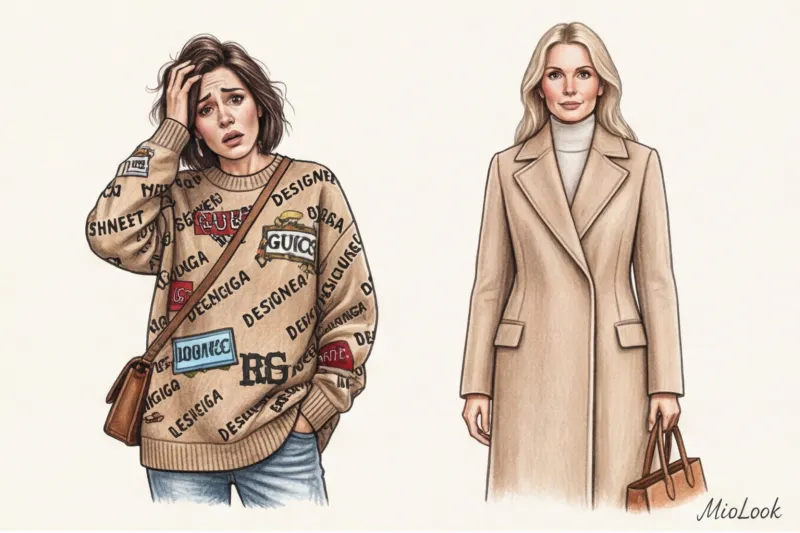
True elegance is Stealth Wealth. These are anonymous, yet phenomenally well-crafted pieces. An anonymous cashmere sweater in the perfect shade of ivory will say far more about your well-being than a T-shirt with a luxury brand's print.
Your perfect look starts here
Join thousands of users who look flawless every day with MioLook. A smart AI stylist will analyze your appearance and create the perfect capsule look.
Start for freeAn Architectural Wardrobe: How to Dress to Look Expensive at 40
Let's get down to business. How exactly is this notorious expensive look constructed? The answer lies in three basic principles.
1. The "rigid frame" rule
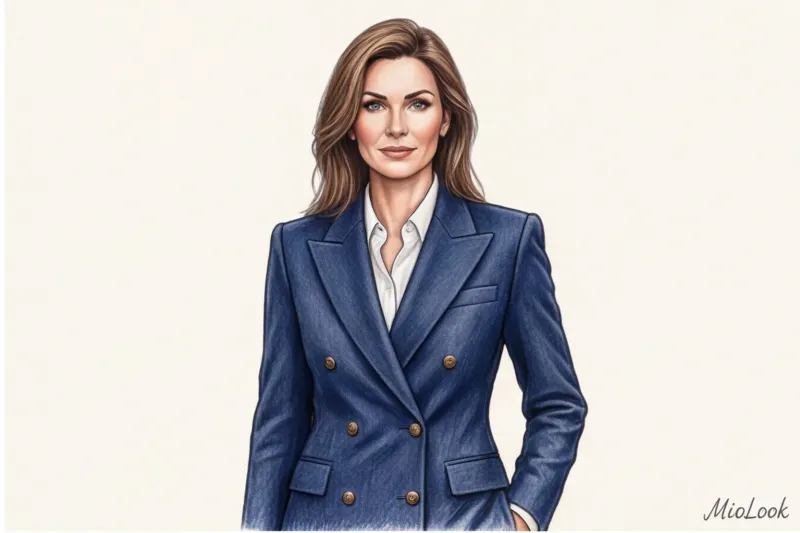
Your wardrobe should have at least three pieces that hold their shape even when hung on a chair. These are a structured jacket with set-in sleeves and shoulder pads, a heavy, straight-cut coat, and a well-designed bag. These are the ones that truly define your status.
2. Matte textures as a base
The older we get, the more attention we pay to texture rather than color. The base should consist of dense cotton (at least 180 g/m²), cashmere, cold-spun wool, and natural silk with a weight of at least 22 momme. They absorb light, creating that visual calm and depth of color.
3. Monochrome and play of halftones
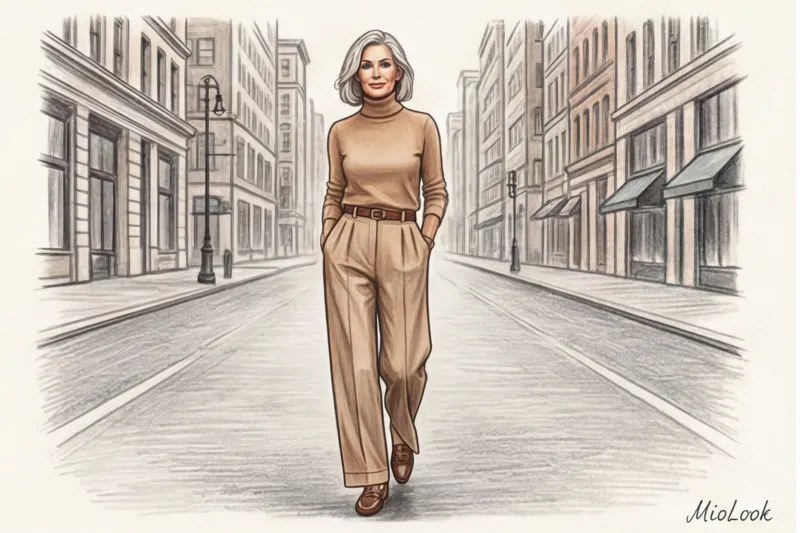
The quickest styling trick to looking like a million bucks is to create a total look in one color, but play up the radical differences in texture. For example: sleek caramel leather pants + a fluffy, oversized angora or cashmere sweater in the same shade + suede shoes. It's the same color, but the refraction of light creates an incredibly complex look.
Busting the Myths: Why Trying to "Look Younger" Is a Bad Strategy
There's a huge difference between "looking modern" and "looking like a teenager." Many women, fearing aging, are beginning to integrate age-defying trends into their wardrobes: ripped-knee jeans, micro shorts, childish Mickey Mouse prints, or neon sneakers.
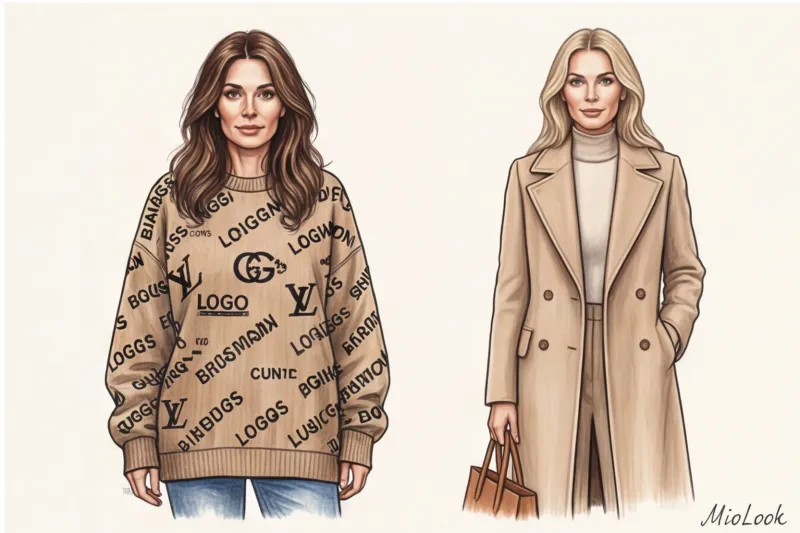
The paradox is that these items create a stark visual dissonance with a noble, mature face. The contrast between youthful clothing and a mature look only further emphasizes age, making the look less stylish and more desperate. The elegance of maturity possesses a power and confidence that 20-year-olds simply lack.
To be fair, I should point out: This rule doesn't work the other way around either. If you decide to dress exclusively in formal, buttoned-up classic suits from the 1950s, you'll turn into a retro caricature and add a decade to your age. The secret is in adaptation. We take a modern, relaxed silhouette (for example, wide-leg trousers and a voluminous shirt), but we craft it from uncompromisingly expensive, mature fabrics (wool and silk).
Investing Wisely: What You Shouldn't Skimp On After 40
Building a status wardrobe is a math exercise. I always teach my clients the cost-per-wear formula.
What's more profitable: buying a luxurious cashmere coat in a basic shade for €1,000, which you'll wear for 5 years straight, 100 days a year, or five fashionable polyester jackets for €150, each of which will lose its appearance after just one season?
In the first case, the cost per appearance (€1,000 / 500 times) is €2. In the second (€150 / 30 times), it's €5. You're overpaying for cheap things, while looking mediocre every time.
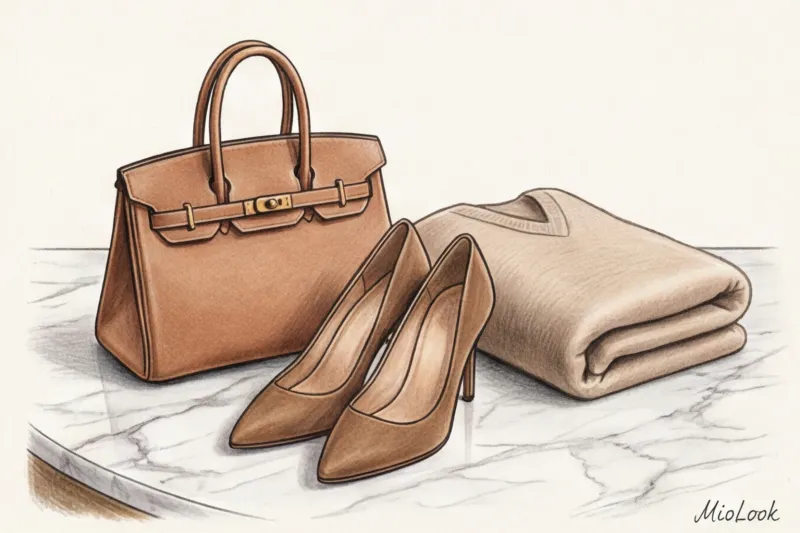
My main rule: "First the tailor, then the brand."
You don't necessarily need to buy €800 trousers. Buy a pair of high-quality wool trousers in the mid-price range (say, €100-€150) and take them to a reputable tailor. For €30, they'll tailor them to your waist and length perfectly. A garment tailored or adjusted exactly to your measurements looks bespoke and luxurious, regardless of the tag on the collar.
Try MioLook for free
Start creating perfect looks with the help of artificial intelligence. Upload your items and let the algorithms create stylish outfits for every day.
Start for freeGrooming as part of a wardrobe
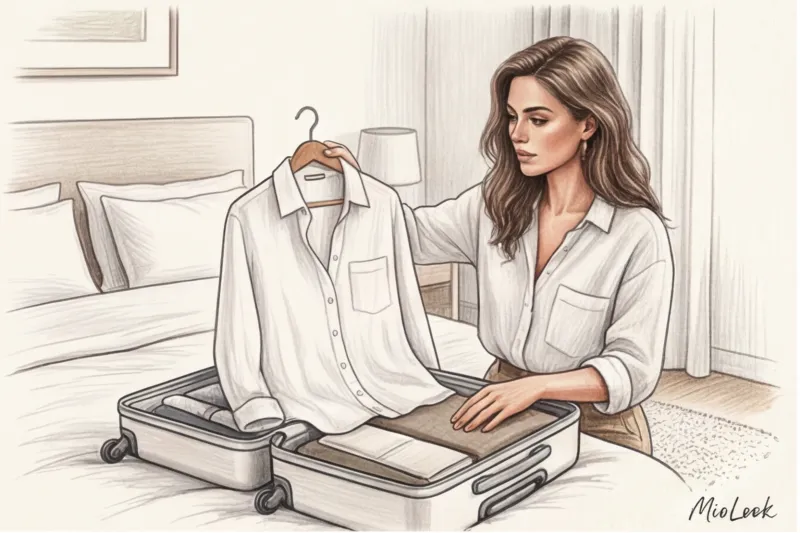
No silk blouse will save an outfit if it's poorly ironed. Status is all about attention to detail. A sweater with no pilling, perfectly clean shoe soles, a fresh manicure without half a centimeter of gel remaining. This also applies to a modern, dynamic haircut (forget about lacquered "helmets") and minimalist makeup that creates the effect of fresh, luminous skin.
Checklist: A Basic List of Status Items for Women Over 40
If you want to audit your closet right now, make sure you have these functional units:
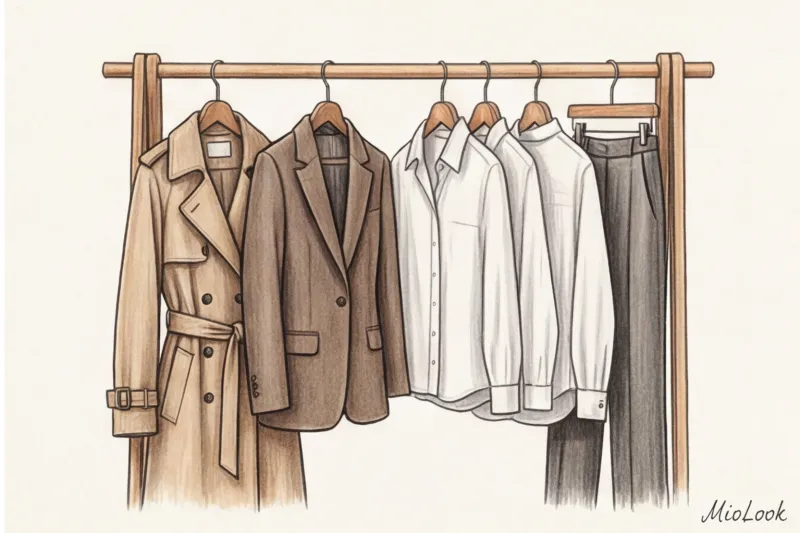
- Structured straight-cut jacket: made of blended fabric (wool + silk), elongated, covering the widest part of the hips.
- Perfectly fitting palazzo pants or straight trousers: Made of thick wool crepe with a crease. The crease visually elongates the legs and adds a formal touch.
- Silk blouse or shirt: classic shirt cut, without childish frills, bows and flounces.
- Quality coat: Midi or maxi lengths. Short, knee-length coats cut off the silhouette and are long out of fashion.
- Closed toe shoes: smooth leather loafers, elegant ankle boots or shoes with an architectural, stable heel of 5–7 cm.
Conclusion: Elegance as a Mindset
A truly luxurious look isn't a display of financial superiority, but a reflection of your inner worth, a deep understanding of yourself, and respect for others. When a woman knows exactly who she is, she no longer needs to prove anything with neon colors or oversized logos.
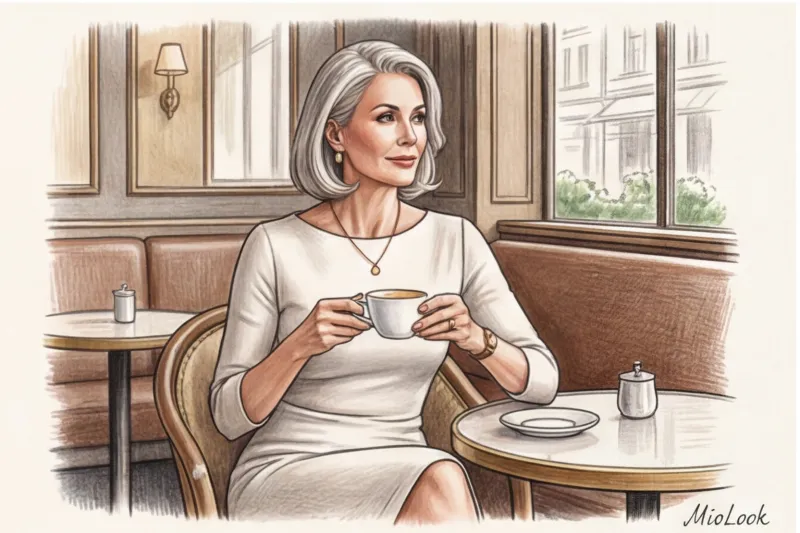
I recommend setting aside the next weekend to conduct an honest audit of your closet through the lens of "architecture and texture." Remove anything flimsy, worn, or insecure. And if you need help digitizing your wardrobe and creating new, iconic outfits, use the app's smart wardrobe feature. MioLook will take care of this math. Remember: after 40, your style is just beginning to acquire its true, unique depth.