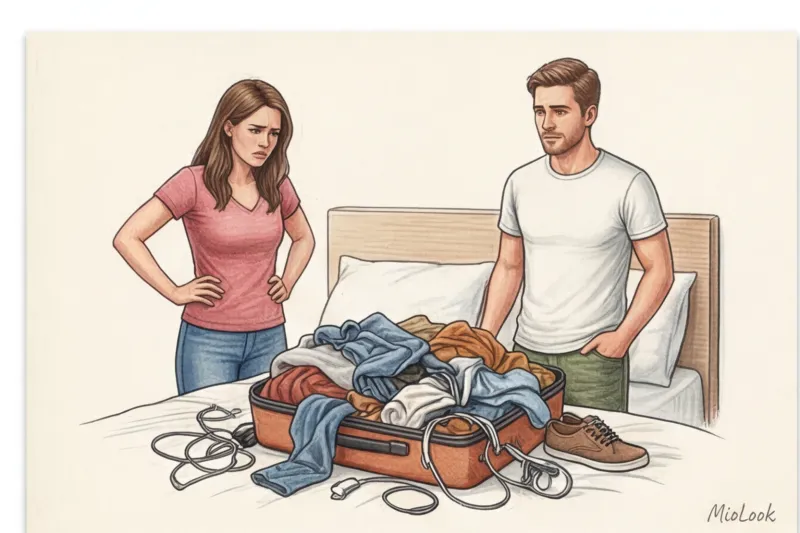
In my 12 years as a personal stylist, I've heard the phrase "I have absolutely nothing to wear" thousands of times. And you know what? More often than not, it was spoken against the backdrop of a closet literally bursting with clothes. When one of my new clients showed me her collection of fifteen "bargain" polyester blouses bought on sale, we conducted a simple math experiment. It turned out that for that money, she could buy three luxurious silk shirts that would last her for years. It's at this point that we begin to talk about... How to calculate cost per wear and why the price tag in the store is the greatest optical illusion.

We have already discussed the basics of this approach in more detail in our The Complete Guide to Investment Wardrobes , but today I want to dig deeper. We won't simply divide the price by the number of days. We'll debunk the myth that basic clothing always pays for itself, add "emotional cushioning" to the equation, and prove that a bright Mediterranean jacket can be a much smarter investment than yet another gray skirt.
What is Cost Per Wear and Why is the Price on the Tag an Illusion?
The concept of Cost Per Wear (CPW) is a key tool for any stylist and the foundation of a conscious approach to style. It's an indicator of how much a garment actually costs each time you wear it.
Our brains love discounts. The "instant gratification" psychology compels us to buy a trendy top for €20, convincing ourselves of an incredible deal. But according to a 2022 study by the Ellen MacArthur Foundation, the average number of times an item is worn has decreased by 36% over the past 15 years. We buy more, wear less, and throw them away faster.
A wardrobe, like finances, has liabilities and assets. Liabilities are items that last only a few days: a trendy dress for a single party or uncomfortable shoes that suck up your money and closet space. Assets are investments that work for you every day. That's why the Pareto principle works perfectly here: we wear 20% of our clothes 80% of the time. Our job is to ensure that these 20% are of impeccable quality.
Hard Math: How to Calculate Cost Per Wear with Real-World Examples
Many people think the CPW formula is simple: just divide the tag price by the number of days of wear. But as an expert, I insist on a more precise formula:
CPW = (Item Cost + Care and Fitting Costs) / Number of Actual Wears
Most women forget to include the cost of dry cleaning, tailor-made shortening, or special underwear in this calculation. Let's look at the numbers.
Scenario 1: Bargain Polyester vs. Investment Cashmere
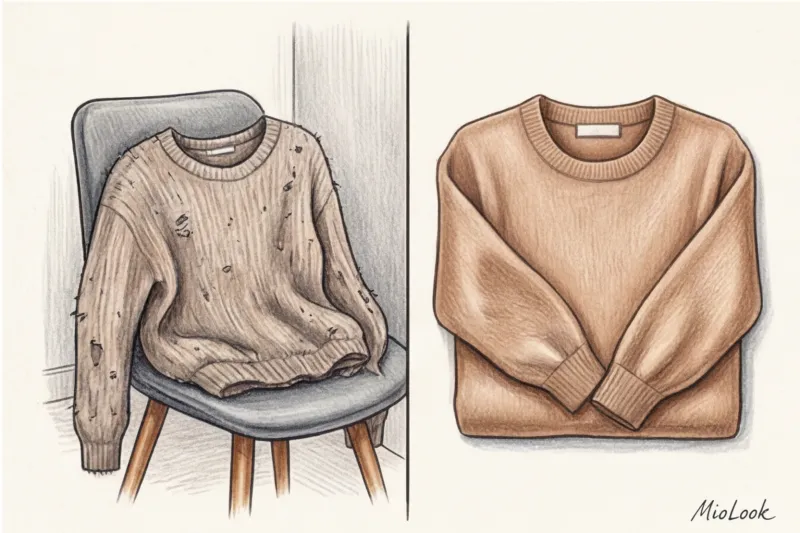
Imagine a trendy acrylic sweater from a mass-market store for €40. You wear it four times, after which it becomes covered in pills, loses its shape after washing, and ends up in the trash (or in the bin).
His CPW = 10 € per outing.
Now let's take a basic 100% cashmere jumper for €250. You wear it for three seasons, about 40 times per season (120 times in total). Add €30 for delicate detergents during this time.
His CPW = (250 + 30) / 120 = 2.3 € per outing!
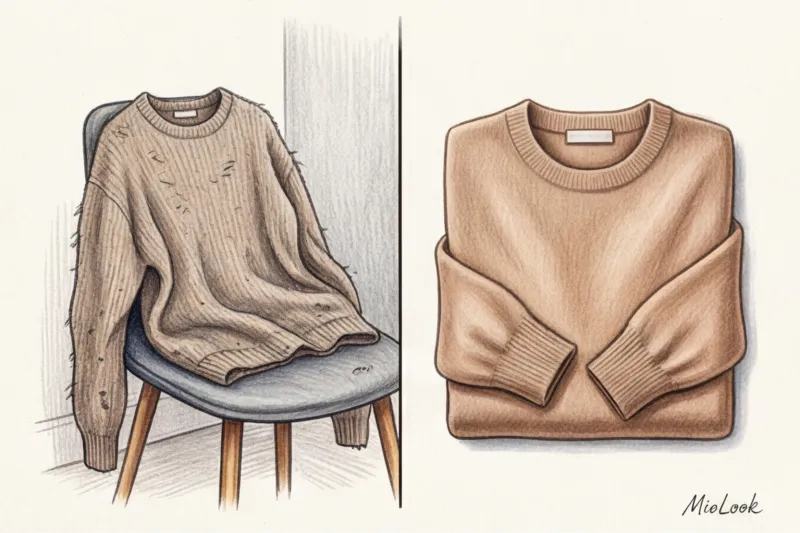
Mathematics is ruthless: being frugal means buying expensive things.
Scenario 2: Hidden Tax on Cheap Fabrics
Cheap items come with a hidden cost—they cost you time and effort. A cheap viscose blouse wrinkles just by looking at it, requiring 15 minutes of steaming every morning. €50 faux leather shoes don't withstand temperature fluctuations and crack within a season, requiring a new pair. Meanwhile, €200 leather ankle boots, with proper care (cream and €20 preventative), will last you four years. The depreciation of a quality item always works in your favor.
The biggest myth among stylists: why the "base" doesn't always have a low CPW
Now, forget the fashion advice from the glossy magazines of the 2000s. The biggest myth is: invest in a basic black pencil skirt and a white shirt; they'll pay off. This is wrong.
A boring basic bought "because I need it for work" can have a horribly high CPW if it doesn't suit your personality. One of my clients, a vibrant woman with a creative profession, bought the "perfect" pair of classic trousers for €180. She wore them exactly twice in a year—to formal meetings. Their CPW was €90.
At the same time, we picked out a luxurious terracotta pantsuit for her in my favorite Mediterranean style: relaxed yet elegant. It cost €350. She wore the jacket with jeans, the pants with sweaters, and the entire suit to dinners. She wore elements of the suit over 70 times over the course of a year. CPW = €5.

In fashion psychology (as Professor Carolyn Mair notes in her book "The Psychology of Fashion" (2018)) there's a concept called "emotional discomfort." We subconsciously avoid things that don't make us feel like ourselves. You tend to wear things that make you feel like a goddess, rather than what's considered "proper basics." That's why leopard-print loafers sometimes pay for themselves faster than black pumps.
Your perfect look starts here
Join thousands of users who look flawless every day with MioLook. Our AI stylist will help you create outfits from what's already in your closet.
Start for freeHow to Predict ROI Before Purchasing: 3 Expert Rules
To take the guesswork out of it, I give my clients three strict filters that every item must pass through before we reach the checkout.
- Lifestyle audit. Draw a pie chart of your actual week. If you work from home and walk the dog 70% of the time, and go to the theater 5% of the time, invest in a luxurious cashmere suit for walking, not your fifth evening dress. Buy things for your real , and not a fictitious life.
- The Rule of Three Images. My favorite formula is: Blazer + midi skirt + loafers = instant polish If you pick up an item and can't think of three outfits from your current wardrobe within 10 seconds, put it back on the hanger.
- Test for "Morning Ease". Does this skirt require seamless underwear, a perfect abs, and a cool, wind-free environment? If it's too "fussy," you won't wear it in the morning when you're running late and want comfort.
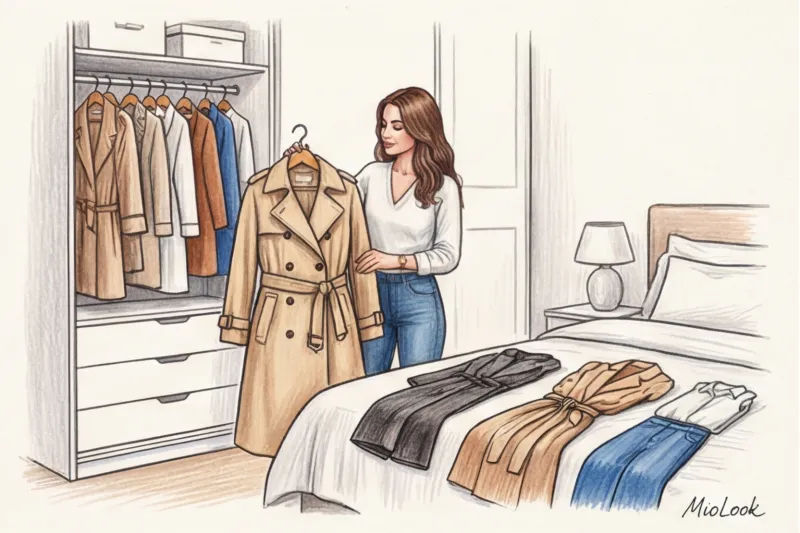
Fair Limit: These rules don't apply to highly specific clothing. A wedding dress or a ski suit are purchased for a specific purpose, and their CPW will always be high. This is normal—it's the price you pay for functionality at the time.
5 Wardrobe Categories Where a High Price Tag Guarantees to Reduce CPW
If you've decided to start investing in your wardrobe, start with these five categories. This is where premium materials show the greatest advantage over mass-market products.
- Outerwear. A structured wool-cashmere blend coat or a trench coat in heavy gabardine (from 250 g/m²) provides a defined shoulder, instantly elevating the look.
- Status accessories. A framed bag made of thick leather and a high-quality belt with a simple buckle can elevate even simple jeans and a white T-shirt.
- Shoes. Leather loafers, brogues, or ankle boots with the perfect last. Your feet won't forgive you for skimping.
- A perfectly tailored jacket. The foundation of layering. A good jacket is distinguished by high-quality piping (the inner layer that holds its shape) and a well-defined armhole.
- High quality knitwear. Merino wool, heavy cotton, cashmere. No acrylic or polyester content greater than 20%.

Ready to digitize your wardrobe?
Try MioLook's free plan—no commitments required. Upload your items, and AI will show you which ones really work for you.
Start for freeSmart Wardrobe: How to Calculate Cost Per Wear in Practice
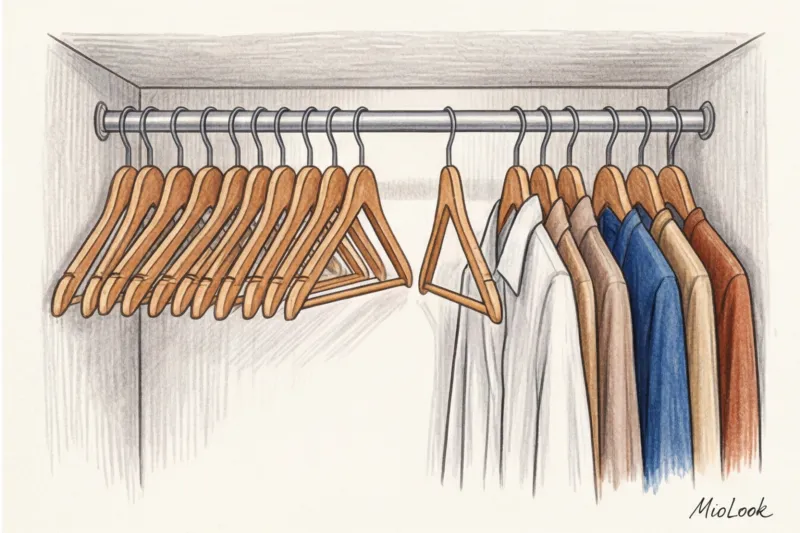
Theory is great, but how can you truly understand the state of your closet right now? I recommend starting with an analog method that's become a hit with my clients: inverted hanger method.
Hang all the hangers in your closet with the hooks facing you (wrong way). When you wear an item, wash it, and return it to the closet, hang it with the hooks facing away from you (correct way). After three months, you'll clearly see the "dead zone" of your wardrobe—the items that are still hanging incorrectly. Their CPW approaches infinity.
But we live in the 21st century, and numbers love precision. Digitizing your wardrobe is a game changer for personal style. I recommend using MioLook Like your personal pocket manager. You simply upload photos of your items, and the artificial intelligence not only suggests stylish combinations for every day, taking into account the weather, but also keeps track of your wear. The app automatically counts how many times you've worn a particular jacket and shows its true return on investment.
Checklist: 5 questions that will save your fitting room budget
The next time you reach for your card to pay for that "incredibly good deal" on sale, stop in front of the dressing room mirror and honestly answer these questions:
- What exactly from my current closet will I wear this with tomorrow morning?
- Am I willing to pay €15-20 to dry clean this item every season, or will it sit in the laundry basket forever?
- Does the fabric cause the slightest discomfort? (If it's slightly itchy, slightly staticky, or slightly tight in the shoulders, you won't wear it, I guarantee it.)
- Is this thing for my real life or for the fantasy me who goes to contemporary art exhibitions every evening?
- Divide the price by 30 (the minimum number of times a good item can be purchased). Is this amount comfortable for one day of joy?
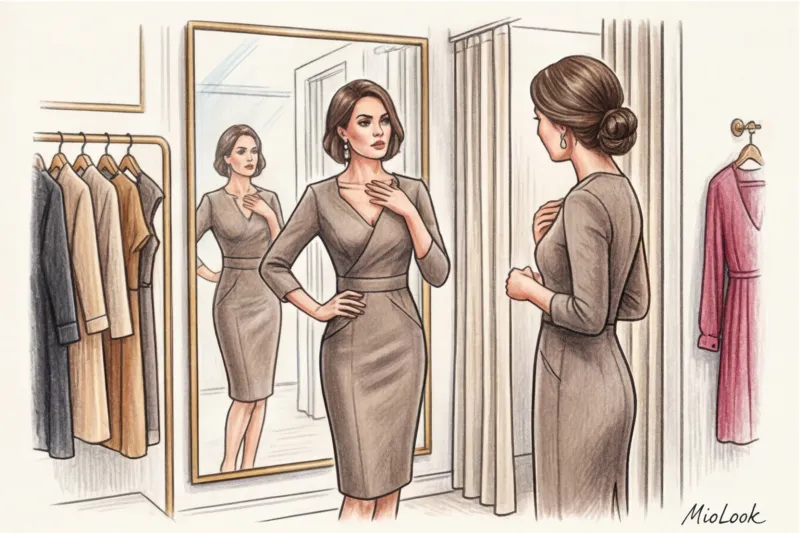
True elegance isn't about the number of hangers, but about the confidence that comes from perfectly fitting clothes. Stop subsidizing fast fashion with your emotions. Choose pieces that serve you, reflect your personality, and cost you less each year. Invest in yourself wisely—you're worth it.