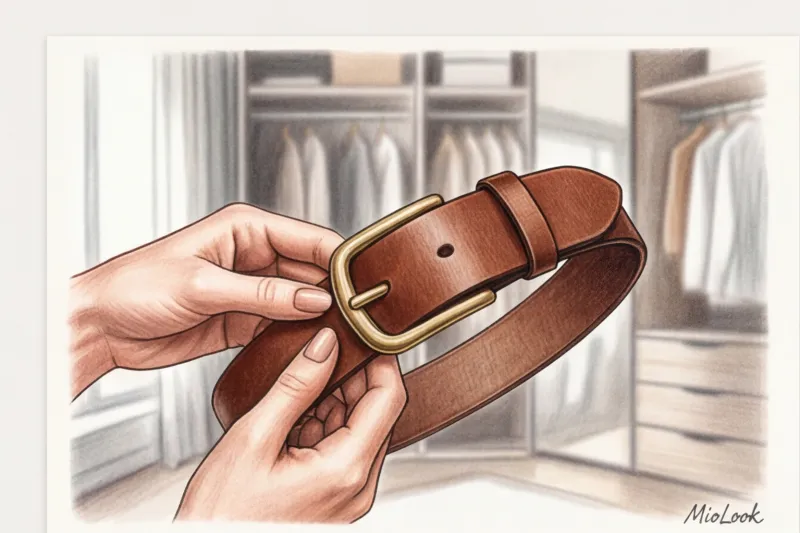
Just the other day, I was reviewing the closet of one of my clients, the CFO of a large European company. She was wearing a stunning wool jacket from Max Mara and perfectly tailored trousers. But the whole look was hopelessly cheapened by one element: a thin, cracked-at-the-edges polyurethane belt from a mass-market store with a peeling buckle. When we replaced it with a thick, dark chocolate-colored leather belt, the silhouette instantly came together, and the look began to look like it was worth its weight in gold. Many women are willing to invest hundreds of euros in bags and shoes, but buy belts with their spare change. And completely in vain.
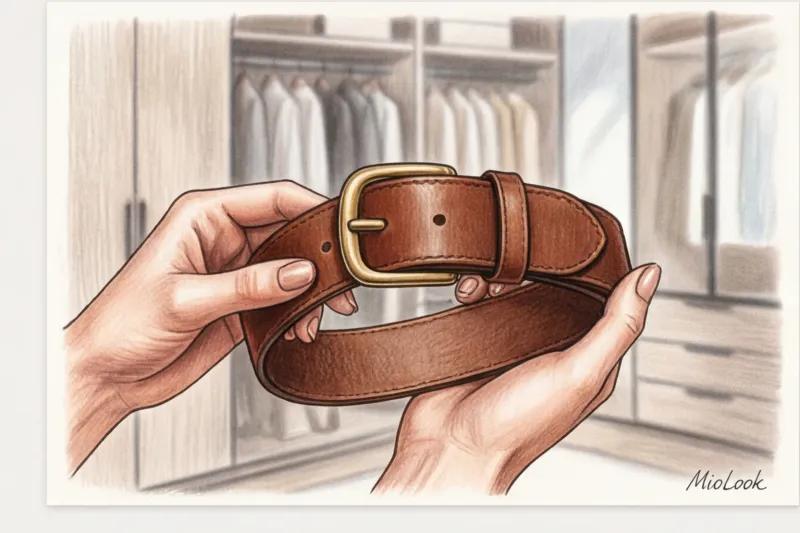
When people ask me, What should basic women's belts be like? In a modern wardrobe, I always start with the most important rule: a belt isn't a rope for holding up trousers. It's an architectural tool that directs focus and adjusts proportions. We covered this in more detail in our complete guide to How to choose the right women's belt for your figure.
Why Basic Women's Belts Are an Investment, Not a Consumable
Let's do the math. A typical fast-fashion belt made of pressed PU leather costs around €15-20. Because its core is made of cardboard and the edges are simply coated with cheap rubber edge paint, it loses its presentable appearance after just 3-5 months of daily wear. You'll see creases around the holes, peeling film, and tarnished metal. Over three years, you'll replace at least six of these belts, spending around €90-120.
A high-quality vegetable-tanned leather belt will cost you €80–120. It will last 7 to 10 years, and over time, this leather doesn't deteriorate, but rather develops a refined patina.
"The cost-per-wear concept works better with belts than with any other item. A quality €100 accessory that you'll wear 500 times costs only €0.20 per wear. It's the most cost-effective investment in your wardrobe," notes Sophia Müller.
Moreover, the environmental aspect cannot be ignored. According to reports Leather Working Group (LWG) By 2023, the production of polyurethane accessories causes colossal environmental damage due to microplastics, while certified leather is a biodegradable byproduct of the food industry. By choosing one quality belt instead of a dozen cheap ones, you're taking a huge step toward a more sustainable wardrobe.
Try MioLook for free
A smart AI stylist will select the perfect look and help you create a capsule wardrobe with your accessories.
Start for freeThe Perfect Capsule: Basic Women's Belts You Should Have in Your Wardrobe
To cover 100% of your styling needs, you don't need a separate accessory drawer. The three-belt rule is sufficient. A minimalist approach saves you from the agony of choosing in the morning and allows you to focus on quality.
The first thing I strongly recommend avoiding is buying exclusively black belts. In its research on universal primary shades, the Pantone Color Institute emphasizes that pure black has the highest level of contrast. If you wear a black stripe over light-colored trousers or a beige dress, you'll visually "cut" your figure in half, shortening your height. Complex primary shades, such as dark chocolate, taupe, deep burgundy, and muted olive, are much more elegant.
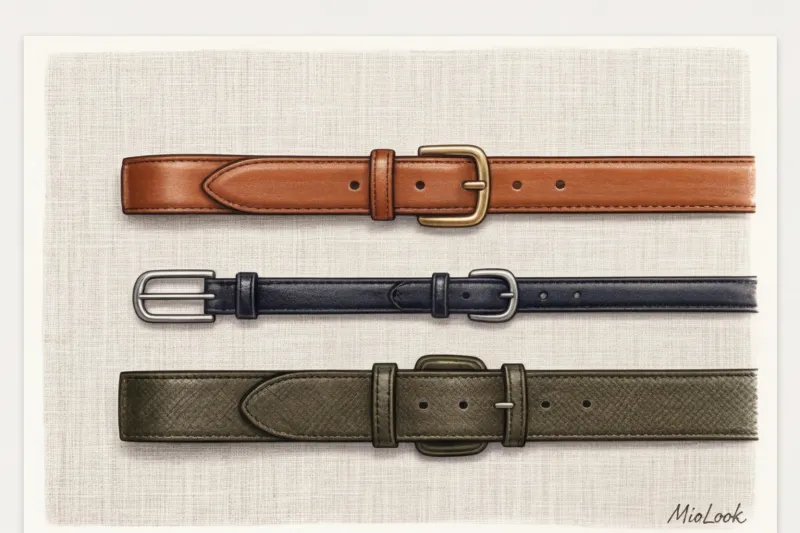
Medium width belt (3–3.5 cm): the basis for trousers and jeans
This is the workhorse of your wardrobe. Did you know that the standard belt loop width for classic jeans (like the iconic Levi's 501) is exactly 4–4.5 cm? This dictates strict style rules: the belt shouldn't dangle in the loops. A narrow, two-centimeter belt in wide denim belt loops looks lonely and sloppy.
For jeans, thick cotton shorts, and pantsuits, a width of 3–3.5 cm is ideal. As for texture, I always opt for smooth matte leather. Pebble leather is too casual for men's style and doesn't pair well with delicate fabrics. This belt will fit perfectly with the perfect Old Money capsule.
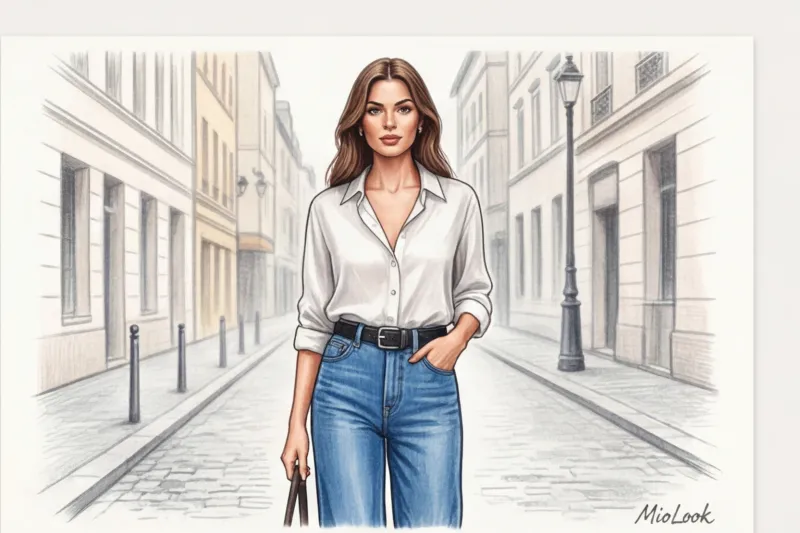
A thin belt (1.5–2 cm): a delicate accent for dresses and jackets
Thin belts aren't designed to hold clothes up, but to frame the silhouette. They're perfect for silk dresses, chunky knit cardigans, and oversized blazers. They should be placed exactly at the natural waistline or a centimeter above to create the illusion of endlessly long legs.
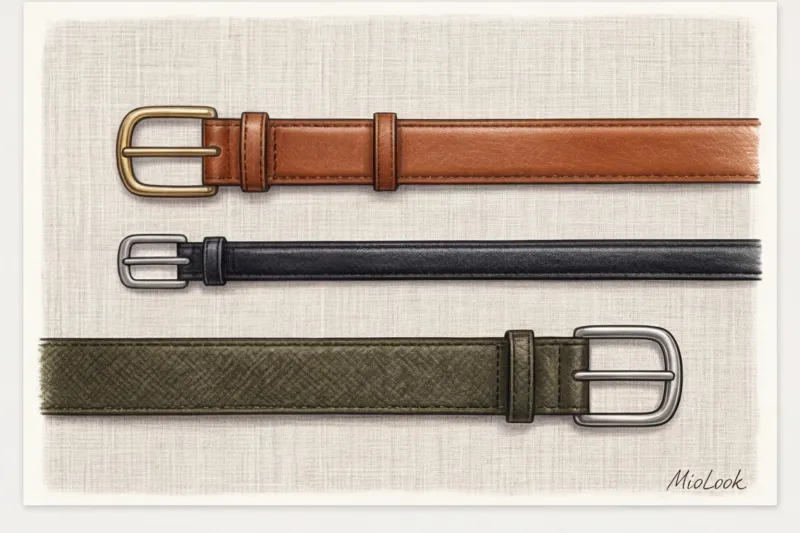
But there is an important limitation here: This technique is extremely dangerous for plus-size or apple-shaped figures. A thin strip of leather cutting into a voluminous silhouette creates a "stretched sausage" effect and only accentuates the belly. In such cases, it's better to use medium-width belts made of soft suede and not tie them too tightly.
Structural wide belt (from 4 cm): working with outerwear
My favorite styling trick that transforms any basic look: remove the soft fabric belt from your beige trench coat or oversized overcoat and replace it with a stiff, structured leather belt 4-5 cm wide. This simple gesture instantly elevates an outfit from "everyone else's" to street style staple. A wide belt is also indispensable when a basic becomes a trend—for example, the trendy corset belts or peplum belts.
Your perfect look starts here
Join thousands of users who look flawless every day with MioLook.
Start for freeThe Anatomy of Quality: How to Choose a Belt That Will Last 10 Years
As a textile expert, I often see brands use marketing ploys. The biggest pitfall is the "Genuine Leather" label. For most buyers, it's a sign of quality, but in the professional world, it's practically a dirty word.
How the classification works:
- Full-grain leather — the top, most durable layer of the hide with a natural texture. This is the standard.
- Top-grain leather — the top layer has been sanded to remove imperfections. A little thinner, but still excellent.
- Genuine Leather - often these are simply pressed remnants and inner layers (split leather), generously coated with polyurethane to give it texture.
- Bonded Leather — leather dust, glued together with synthetic resins. It lives for exactly three months.
To recognize quality right in the store, try Sofia's tactile test: look at the edge of the product (at the buckle or at the tip). A good belt is a solid, thick piece of leather. Its edge is polished with wax and burnished (a burnished edge). If you see a belt that resembles a layer cake with white cardboard inside, and the edge is generously coated with a thick layer of matte rubber paint, return it to the shelf. This paint will crack at the first sharp bend.
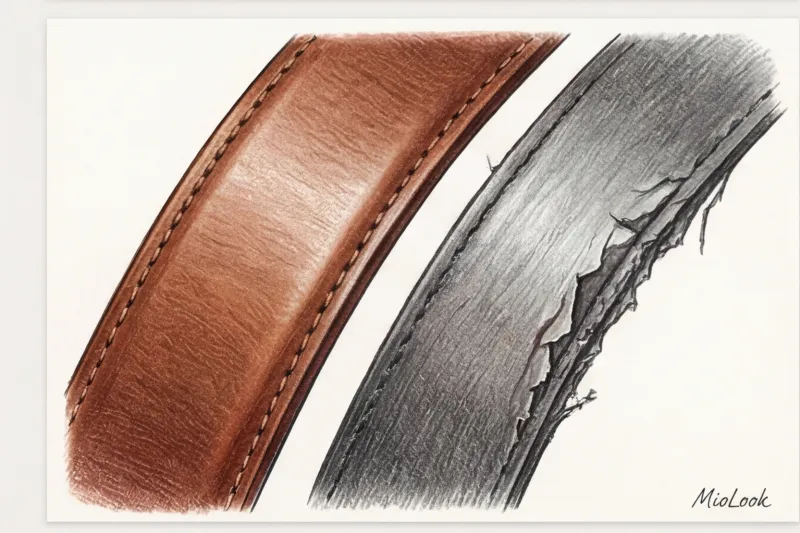
Hardware: Why the buckle is more important than the leather itself
Cheap hardware will ruin even the most expensive leather. Mass-market brands 90% use a galvanized alloy called TsAM (zamak—zinc, aluminum, and copper). This coating inevitably scratches, revealing the dull gray metal. Look for buckles made of solid brass or stainless steel. They feel heavier and age beautifully.
In the "quiet luxury" aesthetic, the ideal buckle is minimalist. A soft square or classic horseshoe shape, free of logos, rhinestones, and excessive glitter. The hardware should whisper your status, not shout it.
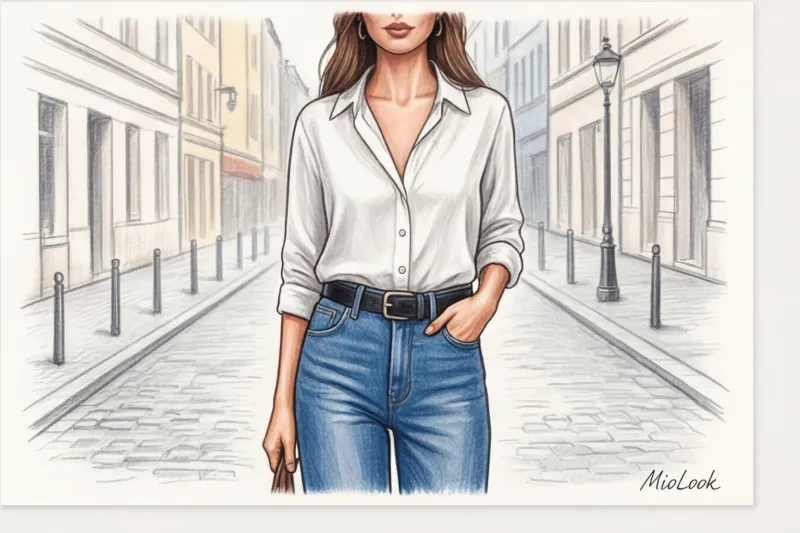
The main myth of style: should you match your belt to your shoes?
In 12 years of working as a stylist, I've never encountered a more persistent and harmful myth than the rule that "your handbag, shoes, and belt should all be the same color and texture." Let's be honest: today, such rigid matching is hopelessly outdated and visually adds at least 5-7 years to your age.
It looks overly elaborate, as if you spent three hours getting ready. Modern pairing rules, confirmed by the latest reports from trend bureau WGSN, are based on the harmony of color warmth rather than exact copying. For example, a warm cognac belt looks great with burgundy loafers and a navy bag. The key is to match the contrast level and temperature (warm tones with warm, cool tones with cool).
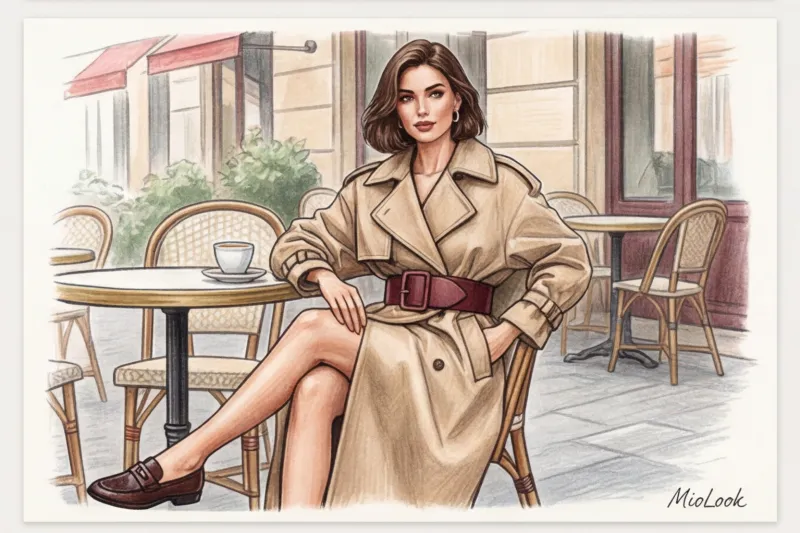
What about metals? Should a gold belt buckle match your rings? No. Eclecticism and mixing metals (gold and silver) are a sign of confident, relaxed style. Don't be afraid to wear a belt with a brass buckle, even if you're wearing a silver watch.
Checklist: Auditing Your Belt Wardrobe
I recommend doing it wardrobe analysis before shopping , starting with accessories. Take out all your belts and ruthlessly get rid of any that fit these three criteria:
- Deep creases and cracks near the hole you use most often.
- Delamination of materials (if the belt “comes apart” into two parts).
- The buckle hardware is tarnished and has become copper or grey in colour.
If you're left with nothing after the cleanse, here's a step-by-step shopping plan for a basic capsule:
- Step 1: Smooth leather belt 3-3.5 cm wide in a dark chocolate shade with a matte brass buckle.
- Step 2: A thin belt (1.5-2 cm) in taupe or burgundy for dresses and blazers.
- Step 3: An accent wide belt (from 4 cm) with an interesting texture (for example, crocodile embossing, but in a muted matte color) for outerwear.
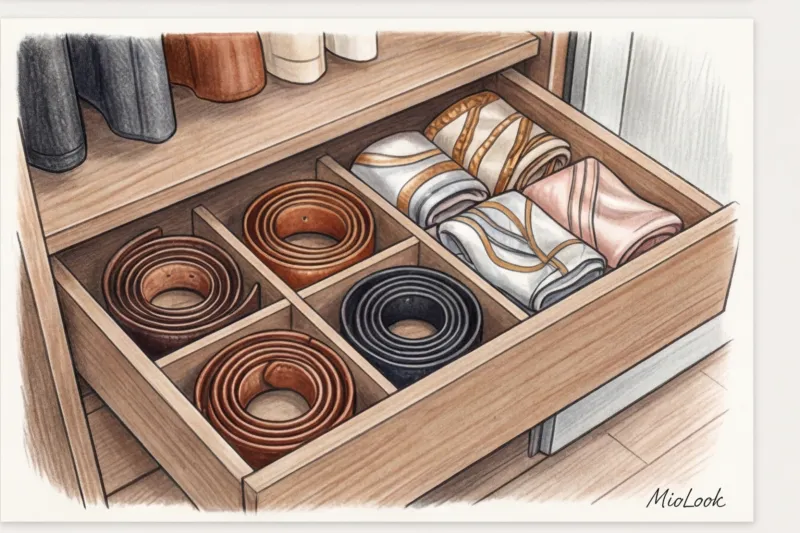
Last but not least: proper storage. Never store belts threaded through trouser belt loops. Hanging or folded trousers in the closet can cause a severe dent in the leather. Also, avoid wrapping belts too tightly. Ideally, roll them up loosely with the buckle facing outward and store them in dedicated compartments.
Results: The power of one accessory
A belt isn't just a finishing touch you think about before leaving the house. It's a structuring element that can change the fit of trousers, tie together disparate layers, and accentuate a silhouette. Conscious consumption starts with the little things: invest in two or three premium belts that will last you a decade, instead of accumulating plastic waste in your closet.
And to make sure your new accessories work at 100%, use MioLook app By digitizing your belts, you can have an AI stylist create dozens of new combinations with your existing clothes, discovering unexpected and stylish combinations every day.