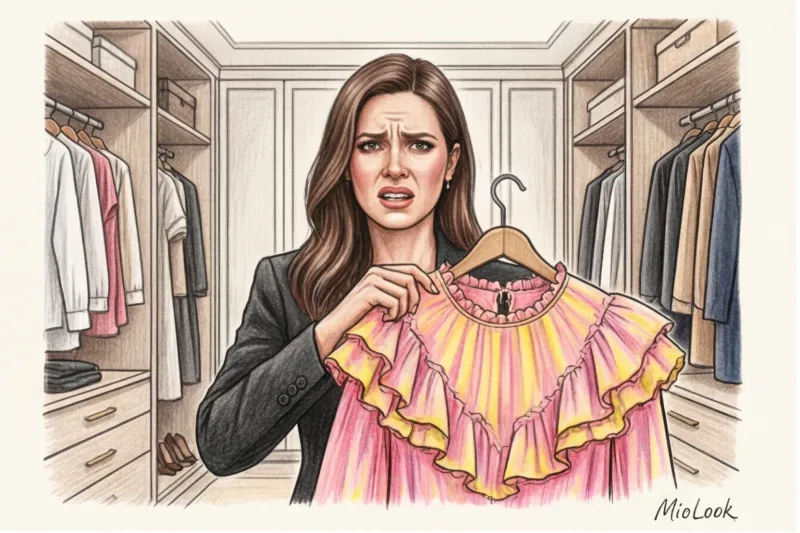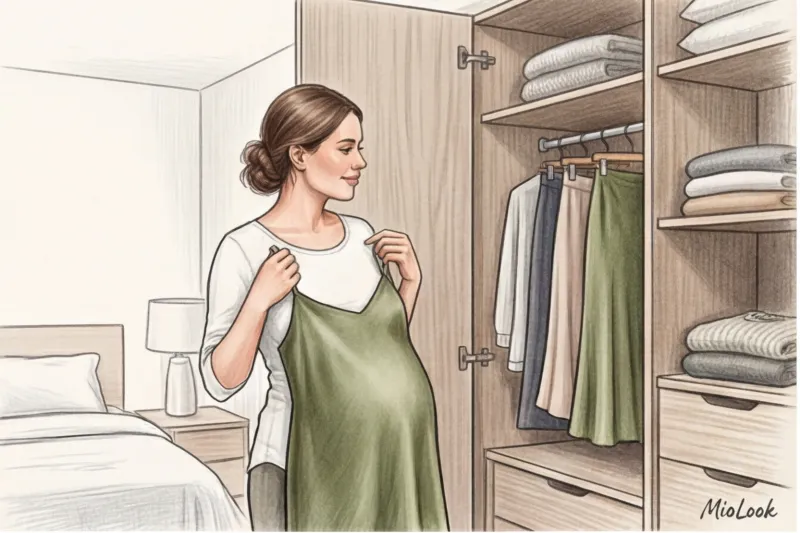
Do you know what purchase my clients find most disappointing a year after giving birth? Maternity skirts. Those with the wide, often awkward knit insert over the belly, which visually cuts off the silhouette, shortens the legs, and creates a permanent "kangaroo effect."
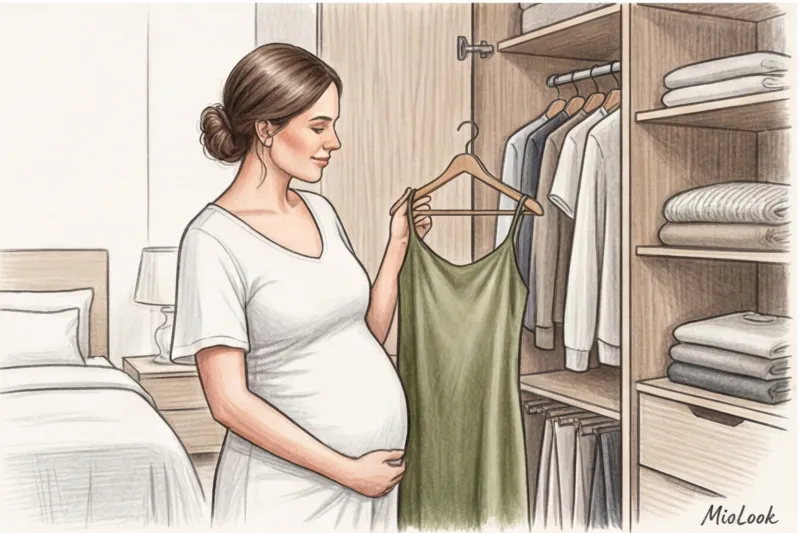
Instead of buying clothes that won't last forever, I always encourage women to look inside their own closets. The main question I hear during consultations is: How to wear regular skirts while pregnant , so it's stylish, safe for baby, and comfortable for mom? We've already covered the basic principles in our complete guide. Life hacks: how to wear regular clothes while pregnant , but the topic of skirts requires a separate, almost engineering approach.
Industrial Myth: Why You Don't Need Special Skirts
The maternity clothing industry actively convinces us that the moment two lines appear on the pregnancy test, we should throw out our entire wardrobe. This is marketing, not necessity. According to Business of Fashion (2023), approximately 70% of specialized maternity clothing is made from cheap synthetics. Brands skimp on fabric composition to offset the cost of complex cuts with inserts.
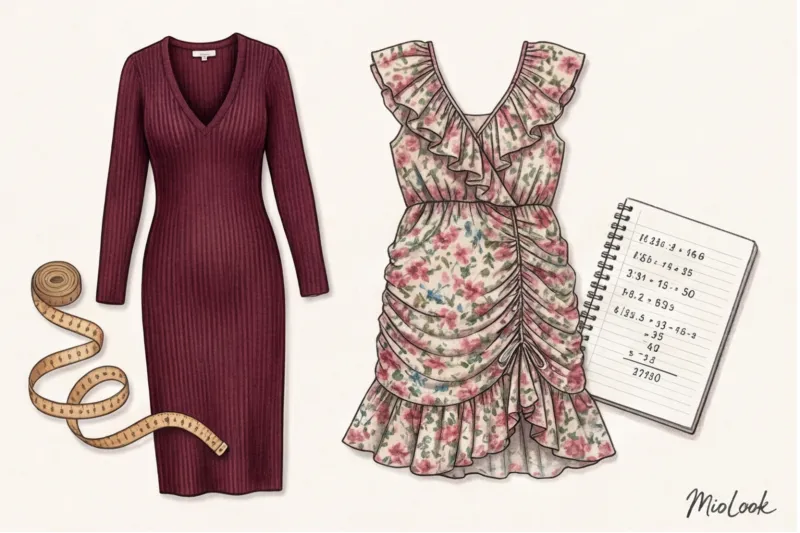
As a stylist, I always rely on wardrobe math - the formula Cost Per Wear (price per wear). Let's do the math. A specialized skirt from a mass-market store will cost you around €80. You'll wear it for a maximum of 4 months (about 120 days). The cost per wear is €0.66.
On the other hand, a high-quality basic skirt from a regular store (for example, a silk one from Massimo Dutti) for €100 will last you through pregnancy and for another 5 years afterward. With 300 wears over those years, the cost per wear will be only €0.33. Buying quality, everyday items isn't just stylish; it's also financially wise.
Your perfect look starts here
Join thousands of users who look flawless every day with MioLook. Create a capsule look from what's already in your closet.
Get access — €0.99 onceThe Anatomy of a Fit: 3 Ways to Style Regular Skirts
During pregnancy, a woman's waist size and center of gravity change. The silhouette's architecture requires new solutions. Over 12 years of practice, I've developed three effective ways to make a regular skirt fit a changing figure.
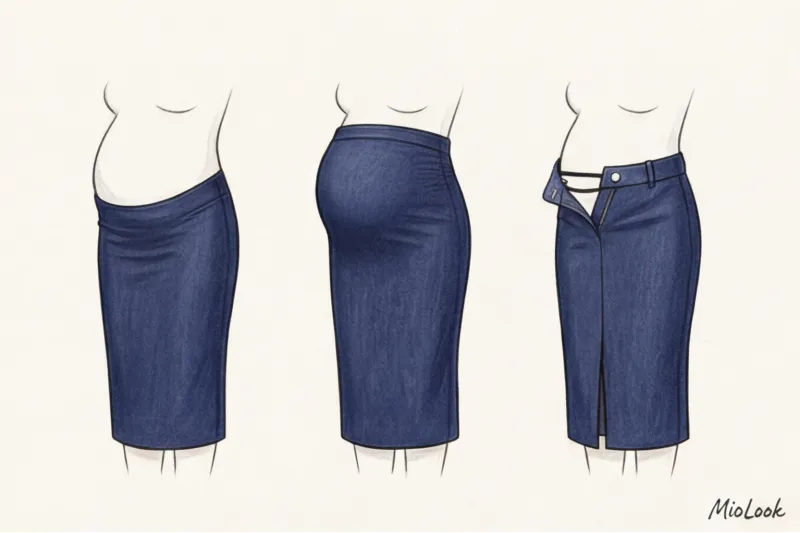
Method 1: Under the belly (for silk and viscose)
This method works perfectly for lightweight, flowing fabrics like slip skirts and thin viscose skirts. You simply pull the waistband of the skirt down to fit your growing belly.
Asymmetry life hack: Because of your belly's volume, the front of your skirt will inevitably appear shorter than the back. Don't try to fix this—make it the highlight of your look! To balance this asymmetry, choose a confident midi length (below the knee) and complete the look with flat shoes, such as chunky loafers.
Method 2: On the stomach (for knitwear and ribbed fabrics)
My favorite trick for creating a stunning, slimming vertical line is to take a regular knit tube skirt and pull it high, right over your stomach. This visually lengthens your legs and flatters your silhouette.
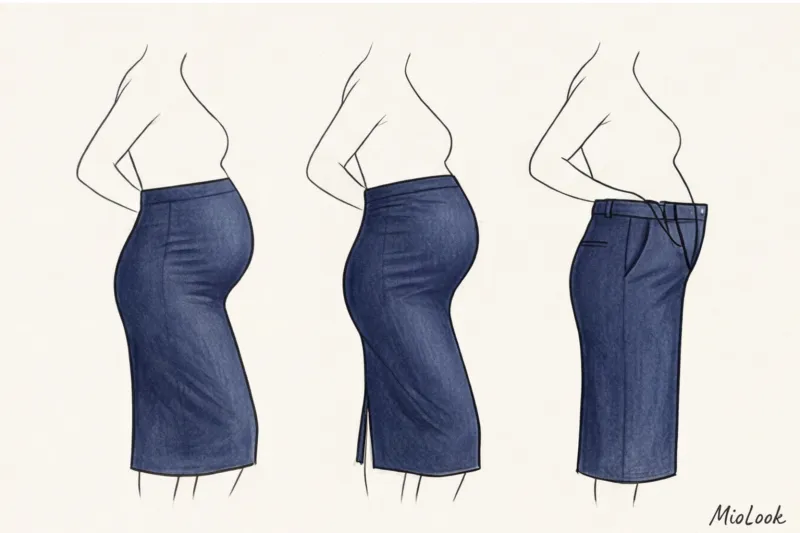
Many clients worry about whether the elastic band will harm the baby. If you choose the right knitwear (not a tight elastic band, but a soft knitted waistband), it's completely safe. The amniotic fluid reliably protects the baby, and the soft fit provides a gentle, supportive bandage effect.
Method 3: The Hair Tie Trick (for Suiting Fabrics)
How can you extend the life of your favorite thick office skirt during the first 5-6 months? A good old styling trick can save the day.
- Take a strong but elastic hair tie (matching the color of your skirt).
- Thread it through the button hole on the waistband of the skirt.
- Place both ends of the elastic over the button.
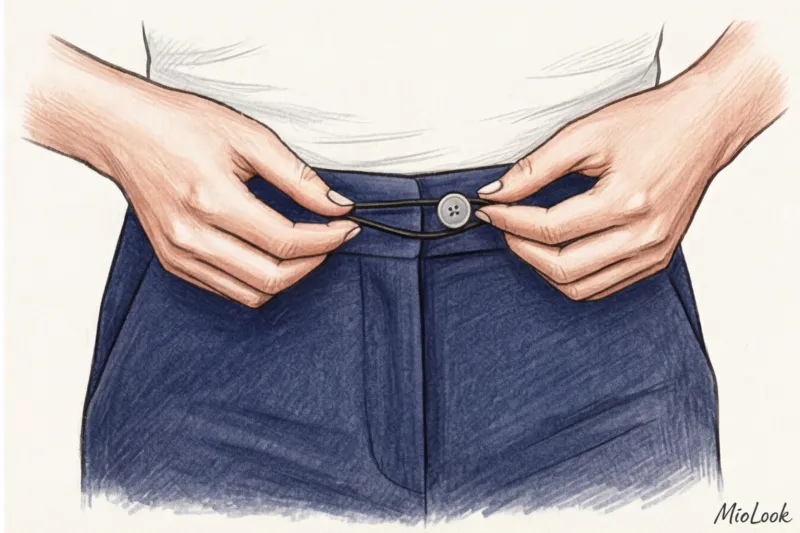
You'll gain an extra 3-5 centimeters of waist volume. An unzipped zipper can easily be hidden with a longer basic top or a wide, elastic black bandage worn over it.
Wardrobe Overhaul: Which Pre-Pregnancy Skirts Are Ideal
Last fall, I was putting together a capsule for a client who was 7 months pregnant. We didn't buy any not a single one items in the maternity section. The entire capsule collection was built around her regular skirts from COS and Zara. Let's take a look at your closet—look for the following styles.
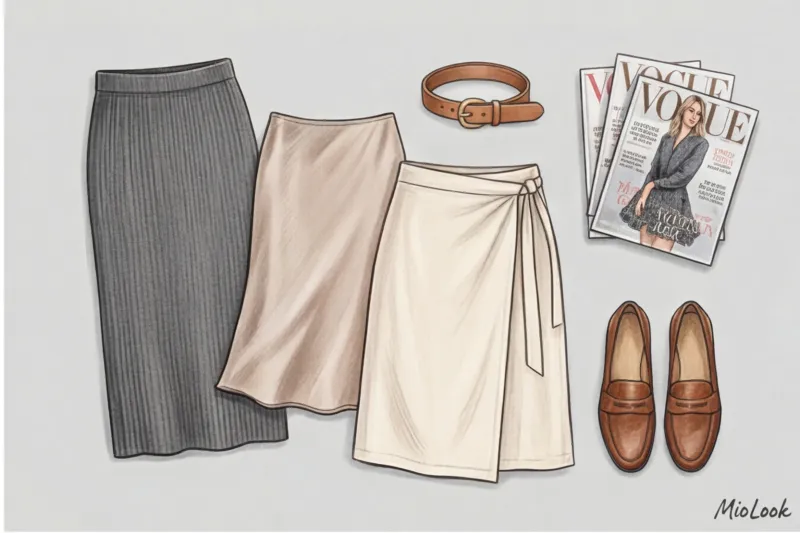
Silk slip skirts (bias cut)
In the 1920s, French fashion designer Madeleine Vionnet popularized bias cut — bias-cut fabric (at a 45-degree angle to the grain). This is a brilliant invention! Fabric cut this way acquires natural elasticity even without the addition of synthetics. A silk slip skirt will gently cling to your stomach, stretching diagonally just the right amount, and will return to its original shape after washing. Wear them with oversized cashmere sweaters.
Knitted midi and maxi
Density is key here. A thin, flimsy jersey for €15 will highlight every fold of your underwear and stretch out at the knees. Look for a dense ribbed fabric with the right composition: viscose or thick cotton with added 3–5% elastane Elastane ensures that the skirt doesn't turn into a shapeless sack. The midi length is crucial here: a miniskirt paired with a large belly throws off proportions and makes the figure look boxy.
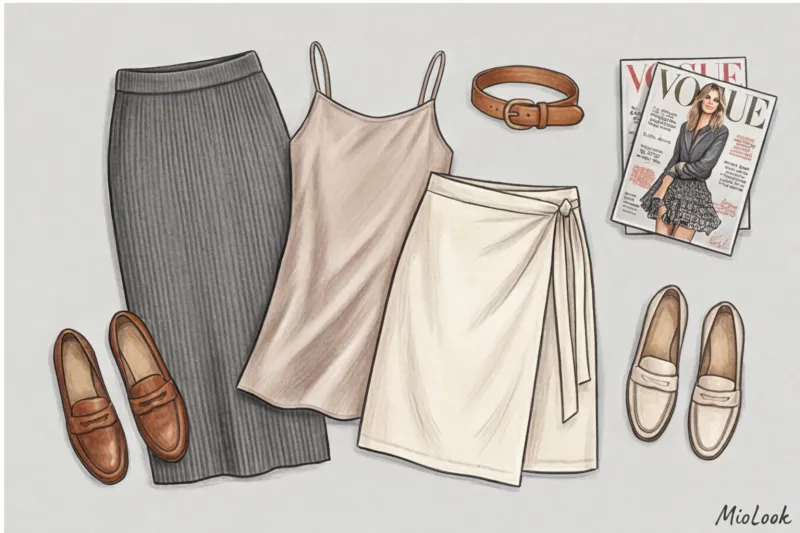
Wrap skirts
An ideal option for those who want complete control over their waistline. You can adjust the waist width yourself using the ties. The only drawback you'll encounter in later stages is that the skirt may open up significantly in the front when you walk due to the size of your belly. To avoid embarrassment, simply secure the skirt hem with a hidden safety pin at mid-thigh level.
Ready to get started?
Upload photos of your skirts to MioLook. Our AI stylist will suggest how to pair them with oversized jackets and the right shoes.
Get access — €0.99 onceWhat You'll Have to Say Goodbye to: A Skirt Anti-Rating
The truth of my approach lies in honestly acknowledging my limitations. Not every skirt can be adapted. There are some pieces that are best shelved immediately.
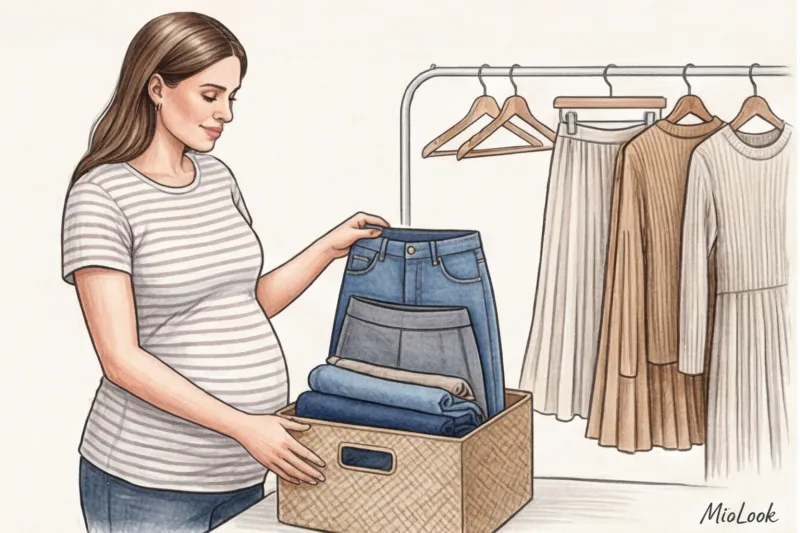
- Rigid denim (100% cotton) without stretch: No elastic band tricks after the fifth month. If you aggressively stretch the stiff fabric over your changing hips, the patterns will become permanently distorted.
- Pencil skirts made from dry suiting fabric: Especially models with a high back slit. They're designed to fit a narrow waist. If the slit moves up toward the hips, it will split unattractively. One of my clients ripped the lining of a luxurious €150 skirt this way while trying to squeeze into it at six months pregnant.
- Skirts with accent decoration on the belly: Large buttons, centered zippers, and front patch pockets. Your goal now is to create a sleek silhouette, not draw attention to the hardware, which will stick out unnaturally.
Stylist's advice: Take vacuum-sealed bags and put all your "stiff" skirts in them. Don't leave them hanging in the closet. There's nothing worse for a pregnant woman's mood than looking at clothes she physically can't fit into every morning. Make room for what works here and now.
How to Balance Proportions: Styling Rules
When we adapt regular clothes for pregnancy, the main danger is turning into "sleeper clothes." This happens when women start wearing oversized clothes everywhere: top and bottom.
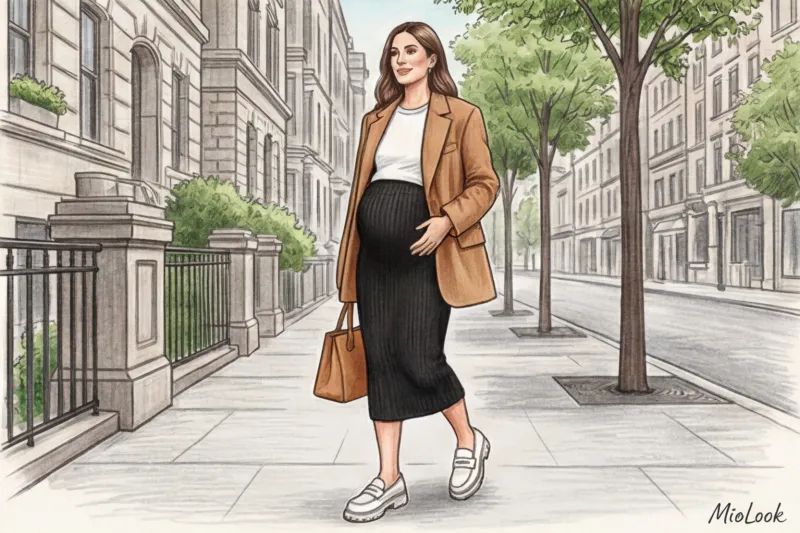
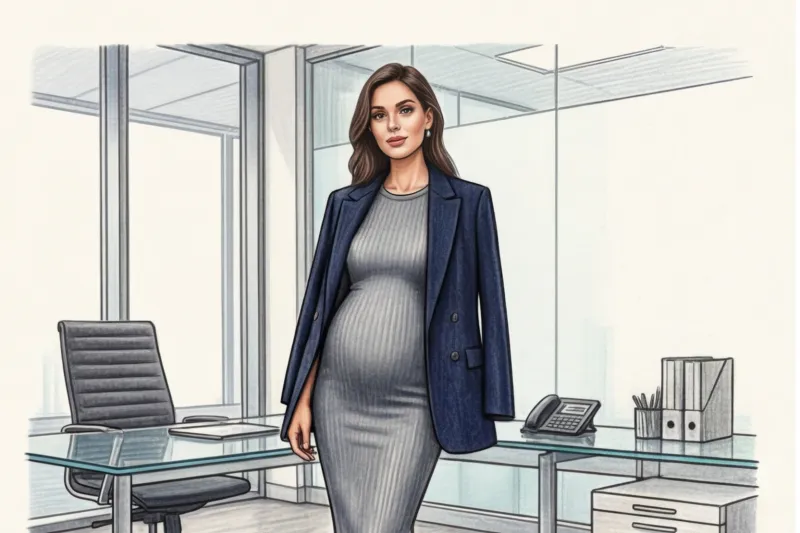
Remember the golden rule of architecture: Volume + Fit If your knit skirt is tight around the stomach (fitting), the top should be voluminous. Wear a men's shirt made of thick cotton or a structured oversized jacket.
Wear jackets and cardigans unbuttoned The two flaps of an unbuttoned jacket, falling over a fitted skirt, create two long vertical lines. The eye reads this distance between the flaps of the jacket, making the figure appear more compact and slim.
A few words about shoes. Avoid stilettos—aside from being unhealthy for your back, a thin heel paired with a large belly looks comical (like a lollipop on a stick). Heavy, chunky loafers, mules, or ankle boots with a stable micro-heel (kitten heel) are ideal with midi skirts. They add just the right amount of visual weight to the bottom, balancing out the figure.
Checklist: Adapting a pre-pregnancy skirt in 5 minutes
Now for a practical guide. Before you run to the store, take out your skirts and run them through this algorithm:
- Step 1: Stretch test. Pull the waistband with both hands. If the fabric gives at least 4-5 cm and is easily pulled back, the skirt will move on to the next round.
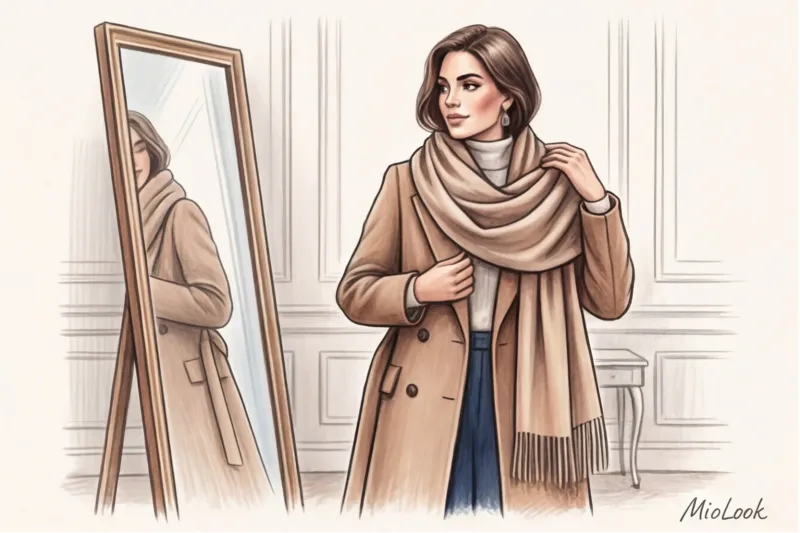
- Step 2: Select a position. Try on a skirt. Try tucking it under your belly and then pulling it up high on your waist. Take a profile selfie in front of a mirror. You'll immediately see which style is the least distorting.
- Step 3: Checking the rear. Turn your back. If your skirt has ridden up in the back, revealing more thighs than in the front, pull it down lower (under your belly) or put it away for later.
- Step 4: Camouflage. Choose a basic, long, ribbed top that overlaps the waistband of your skirt by at least a hand's breadth. Throw an unbuttoned jacket over it.
Your wardrobe is ready for change. Pregnancy isn't a reason to put your style on hold and settle for shapeless, tagged garments. Allow yourself to think outside the box, embrace the laws of fabric physics, and you'll see that your favorite pieces can grow with you.