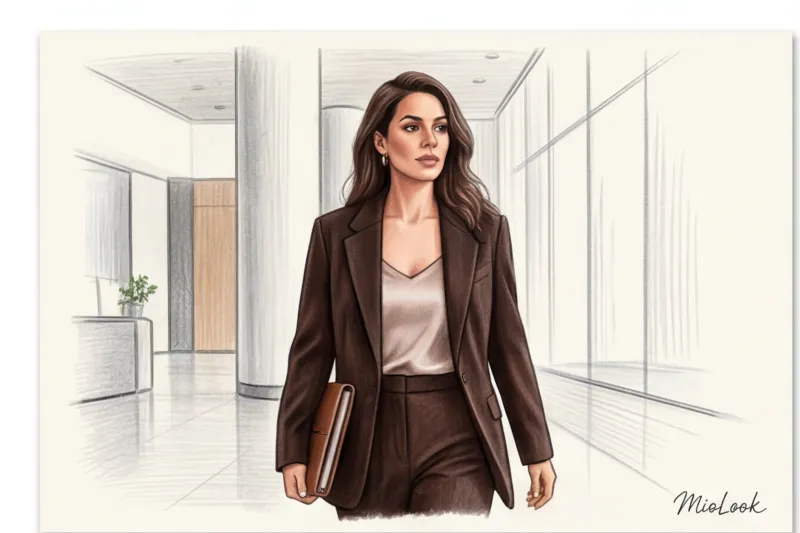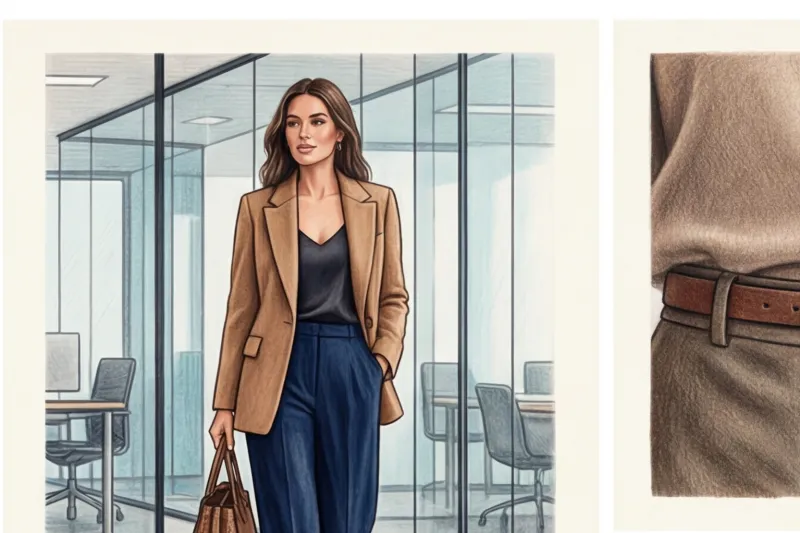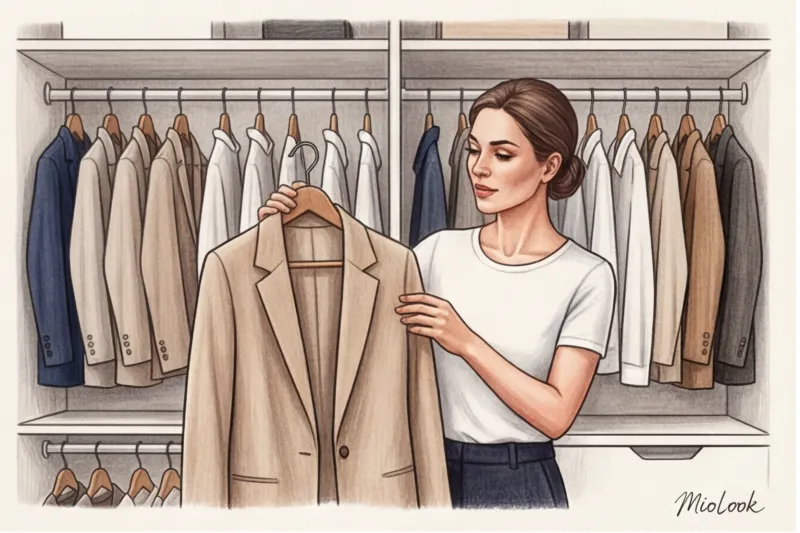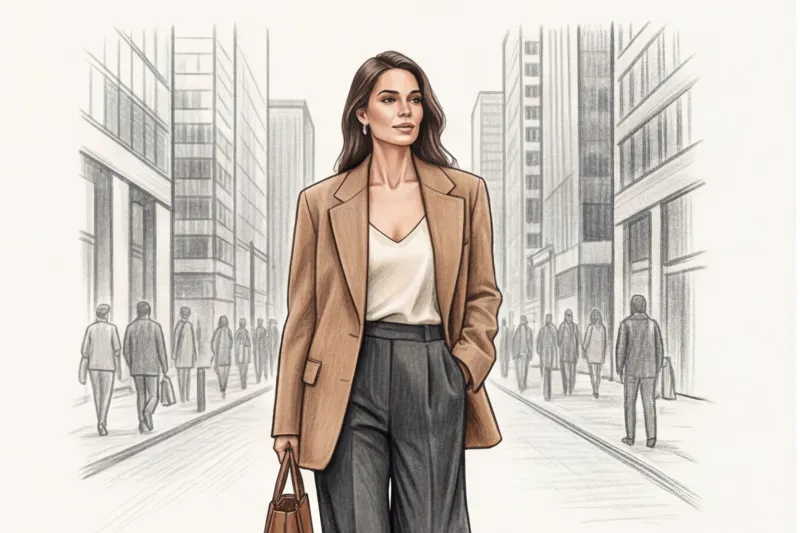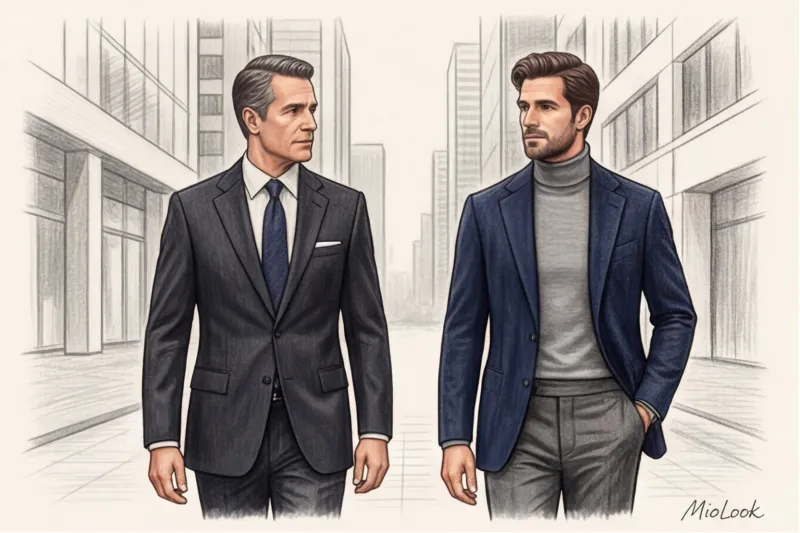
I'll say something that would make conservative Savile Row tailors pelt me with stones: a crisp white cotton shirt is the worst investment in a modern man's wardrobe. It looks flawless for exactly five minutes in front of the mirror. But the moment you get in the car or spend a couple of hours at your desk, it treacherously wrinkles, restricts movement, and looks unkempt. You constantly adjust the collar, tug at the cuffs, and wait until evening to remove this "armor."
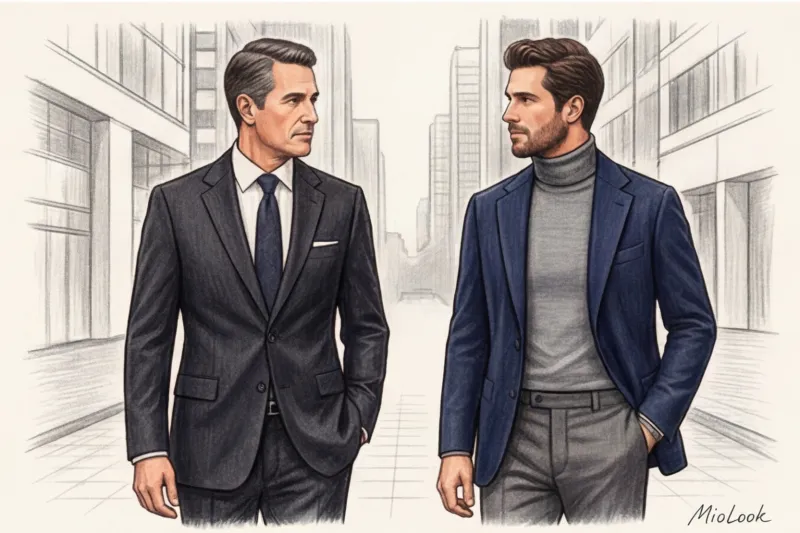
The statistics are relentless: modern men use only 20% of their wardrobe, while stiff, status-conscious, but ultimately uncomfortable items sit like dead weight in their closets. We've shared more about how to get rid of this dead weight and make things work for you in our A complete guide to a man's basic wardrobe without any mistakes Today, men's business attire is built on entirely different principles. We'll discuss the concept of unstructured tailoring and "quiet luxury," where authority is measured not by the stiffness of a tie knot, but by the correct geometry of soft fabrics.
Men's Business Attire: Evolving from Hard-Body Suits to Smart Comfort
A classic three-piece suit with a sharp panel is now appropriate only in courtrooms, conservative banks with a strict dress code, and on the red carpet. In the other 90% of cases, a person in a formal suit at a casual business meeting looks like they're trying too hard to impress.
According to McKinsey's 2024 Fashion Industry Report, sales of classic suits continue to stagnate, giving way to the "soft tailoring" segment, which grew by 35%. This doesn't mean men have stopped wanting to look classy. It's just that status has changed form.
"At the recent Pitti Uomo shows in Florence, where the main trendsetters of classic menswear gather, I noticed a clear shift. Even the most renowned buyers have swapped ties for cashmere turtlenecks, and crisp jackets for chunky knit cardigans or unlined jackets. This is Italian sprezzatura (the art of deliberate nonchalance), adapted to the speed of the 21st century."
The psychology of comfort directly impacts self-confidence. I once had a client, the CEO of a successful fintech startup, contact me. He complained that he felt awkward in classic suits during investor negotiations but was afraid of looking insufficiently serious in jeans. We replaced his shirts with thick knit polo shirts with stand-up collars and his crisp jackets with unstructured blazers. His physical stress level decreased, his body language became more open, and his image became more modern and authoritative.
Your perfect look starts here
Join thousands of users who look flawless every day with MioLook. Its smart algorithm will help you digitize your wardrobe and create professional capsule wardrobes.
Get access — €0.99 onceThe Anatomy of a Modern Office Look: 3 Golden Rules
It's important not to confuse modern smart tailoring with the outdated concept of "business casual" from the 2010s, which often boiled down to the dull combination of wrinkled chinos and a checkered shirt without a tie. This new approach requires an architectural understanding of silhouette.
Rule 1. Deconstruction: soft lines instead of hard cuts
The foundation of the new wardrobe is the rejection of rigid shoulder pads and dense inner lining of jackets. We take the Neapolitan cut (in particular, the technology) as our basis. spalla camicia (The "shirt shoulder"). This jacket follows the natural anatomy of the body. Visually, it works flawlessly: you convey a relaxed, status-conscious person who doesn't need to hide behind the square shoulders of a suit to assert their authority.
Rule 2. Knitwear as a new classic
Poplin and Oxford cotton are giving way to jersey, merino, cashmere, and heavyweight pique cotton. Why is this brilliant? Firstly, high-quality knitwear is forgiving of slight weight fluctuations—you won't have to take your shirt to the tailor if you've gained or lost a few pounds. Secondly, it doesn't require aggressive ironing in the morning.
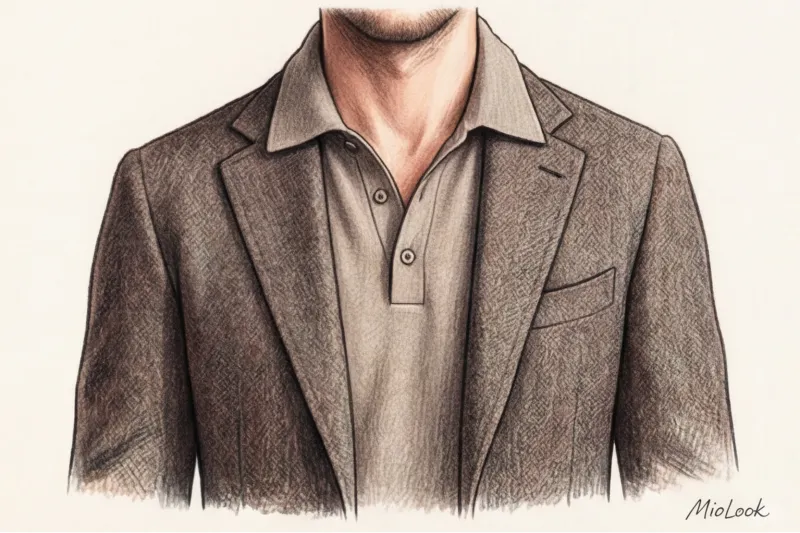
But there's a strict rule: the knitwear must be premium. Thin, loose cotton will make you look like a schoolboy in gym class. Look for a weight of at least 180 g/m² or the finest merino wool (12–16 microns), which looks expensive and elegant.
Rule 3: Monochrome and texture instead of prints
Loud patterns, bright contrasting checks, and printed ties are a thing of the past decade. Modern business attire for men is built on complex, deep shades: classic navy, graphite, taupe, dark chocolate, and olive.
The dynamic of the look is created not by color, but by the play of textures. The smooth worsted wool of the trousers contrasts stunningly with the textured cashmere of the turtleneck or the matte finish of the suede loafers.
Basic wardrobe items that will replace a classic suit
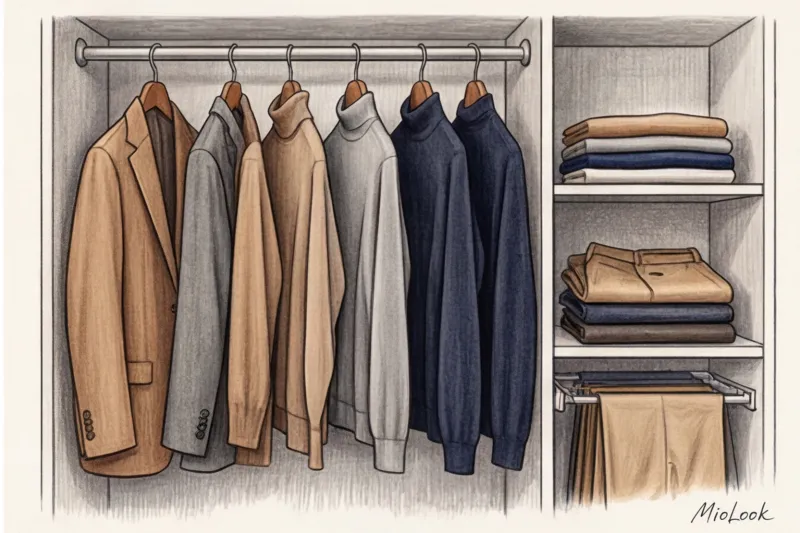
Let's put together a specific business capsule. These items can be easily mixed and matched, covering the needs of both a top management meeting and a business dinner.
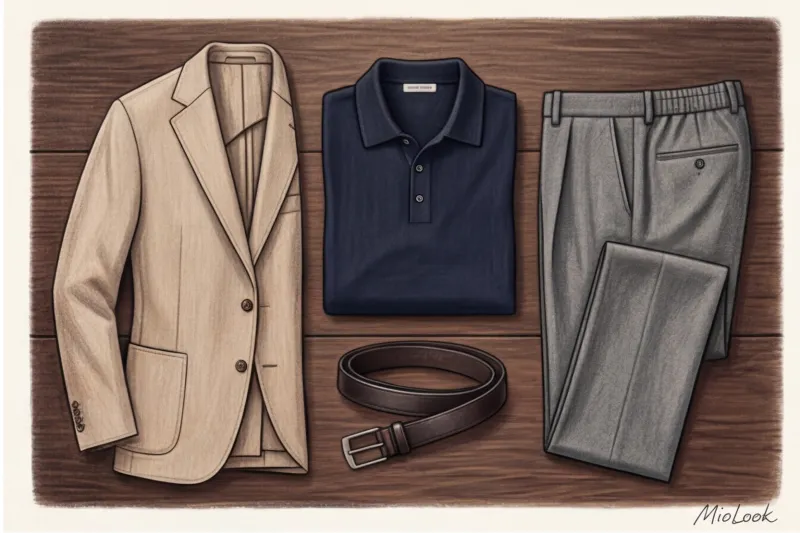
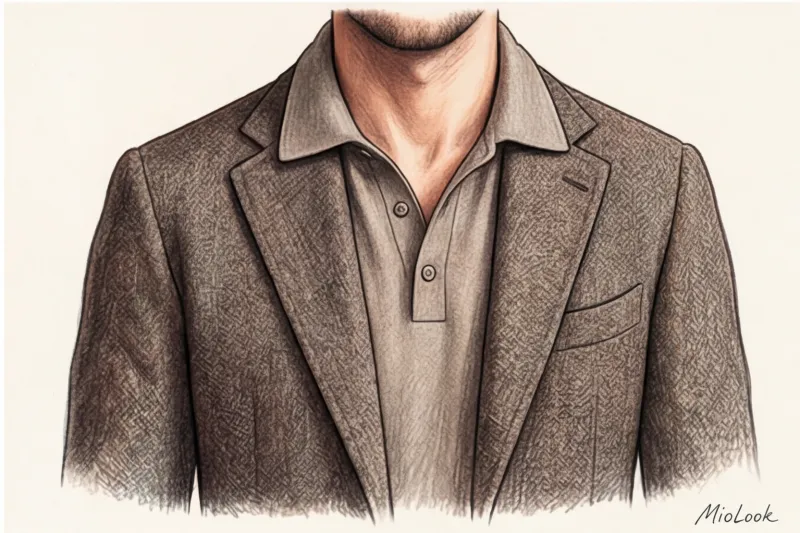
Unlined blazer
This jacket is unlined (or lined only in the sleeves for easy sliding) and has no rigid frame. Choose textured wool (flannel) for winter, cotton twill for the transitional seasons, or a blend of wool, silk, and linen for summer.
What to look for when buying: Sleeve length is critical. The jacket cuff should reveal 1-1.5 cm of the shirt or polo sleeve. A good unstructured blazer from brands like Boglioli or LBM 1911 can cost between €400 and €800, but excellent options can also be found in the mid-price range (Massimo Dutti, COS) for €150-250.
Trousers: From chinos to wool joggers with creases
Regular blue jeans aren't the best choice for the office. And heavy raw denim is best left to streetwear fanatics—sitting in it for eight hours at a computer is simply painful.
Your arsenal:
- Chinos with creases Made of thick cotton with 2-3% elastane. The crease makes them more formal.
- Drawstring trousers (drawer-fastening trousers). This is a modern hit: from the front, they look like classic suit trousers, but the back has a soft elastic waistband. They're literally "legal sweatpants" for the boardroom.
Polo shirt with a cap collar and turtleneck
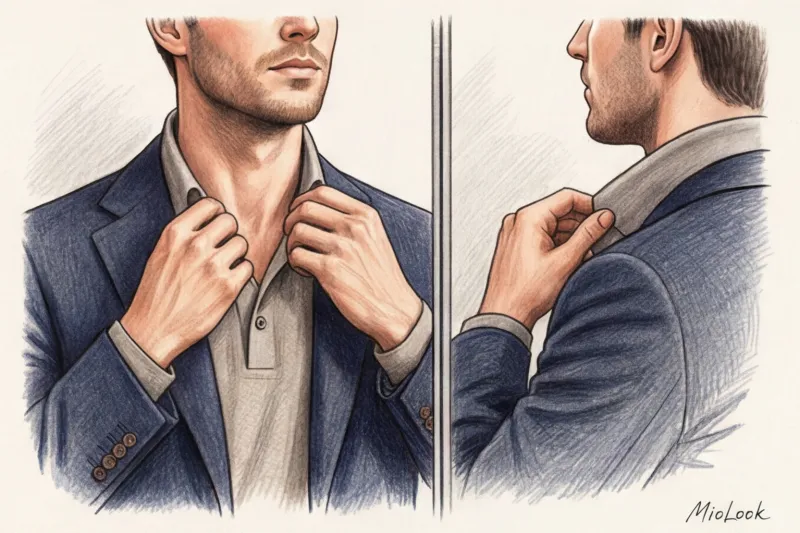
This is where the most common mistake lies. A regular summer polo shirt made of soft pique cotton does NOT go well with a jacket. Its collar will wrinkle pitifully and fall under the lapels.
You need shirt-collar polo — a knit polo with a stiff collar (like a dress shirt). This collar stands up confidently and frames the face. A turtleneck made of fine merino is ideal for the cold season—it visually elongates the silhouette and is traditionally associated with the intellectual elite (think Steve Jobs, but in a more premium style).
Access to MioLook for €0.99 — one-time payment
A smart AI stylist will create the perfect look for you. Simply upload photos of your items, and the app will create dozens of outfits.
Get access — €0.99 onceShoes and Accessories: Status Markers of the New Era
The biggest pitfall of modern casual wear is footwear. Many men buy soft, unstructured jackets and chinos, but then wear classic black closed-laced Oxfords. This creates a stylistic dissonance. Oxfords require a formal suit, and with knitwear they look ridiculous.
Your new status markers:
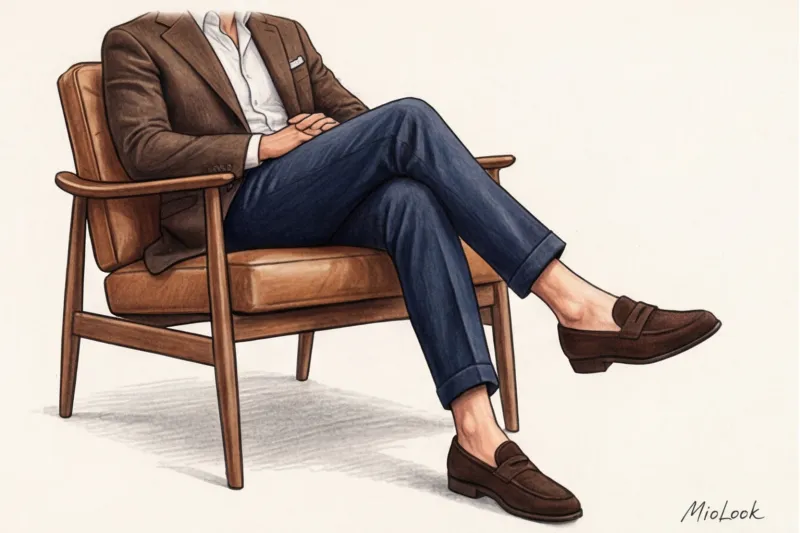
- Loafers (penny loafers or tassel loafers). Made of smooth calfskin or suede (suede always looks less formal but more expensive). The price range for quality shoes starts at €200 and goes up to infinity.
- Minimalist leather sneakers. Strictly no logos, no colored inserts, flat soles. White, dark blue, or black.
- Chelsea. An ideal choice for the cold season, they look chic with wool trousers without creases.
Also, ditch the bulky hard briefcases. They've been replaced by leather backpacks with a minimalist design (without a million outside pockets) or soft men's totes made of grained leather.
Why "Modern Casual" Sometimes Looks Sloppy: Integration Mistakes
In my work as an image consultant, I constantly see how a great idea is ruined by small details. The line between "I'm dressed in a relaxed chic style" and "I look like I just came from the dacha" is very thin.
- Error 1: Stretched knitwear. If your t-shirt or polo shirt shows through (or hangs loosely), the look is ruined. Always check the fabric's density (weight in grams). A good basic t-shirt weighs at least 200 gsm.
- Mistake 2: Incorrect pants length. This ruins 80% of men's silhouettes. Trousers shouldn't gather over the shoes like an accordion of three folds. The modern length is no break (the trouser leg barely touches the shoes) or half break (one light pleat at the front). If you wear cropped chinos with loafers, the ankle should be visible (use invisible socks).
- Mistake 3: Sports elements in the office. Yes, the boundaries are blurring, but not to this extent. Running shoes with chunky soles, logo-embossed hoodies, and nylon duffel bags are unacceptable in a business environment, even if you work in IT.
This rule doesn't work in just one case: if you're the founder of a billion-dollar tech company. They get away with anything. Everyone else is better off striking a balance.
Checklist: Building a Modern Business Wardrobe from Scratch
To avoid haphazard shopping, use the capsule formula. Here's the algorithm I give my clients. This base will cover 95% of work situations.
Capsule formula:
- 2 jackets: one basic dark blue (navy), the second - textured gray, brown or with a houndstooth pattern.
- 3 pairs of trousers: Navy blue chinos, beige/olive chinos, grey wool drawstring trousers.
- 5 tops: 2 long-sleeved jersey polos (shirt-collar), 1 thin turtleneck, 2 thick T-shirts or cotton oxford shirts (worn without a tie).
- 2 pairs of shoes: suede loafers and minimalist leather sneakers.
Stylist's advice: Start shopping from the bottom up. Start with the right shoes and trousers of the perfect length. These will create proportions for the entire silhouette. Only then should you choose tops and, finally, jackets that will tie the look together.
Conclusion: Investing in comfort and freedom
Modern business attire for men isn't a rejection of elegance. It's a smart evolution. Today, we don't need to hide our insecurities behind the rigid framework of a suit. Premium fabrics, a soft cut, and precise proportions communicate your status far more loudly than any tie.
Take the first step this weekend: open your closet and put away all the shirts that are too tight and the jackets that make you feel too tight to lift your arms. Keep only what makes you feel like yourself. Invest in comfort—it's the only fashion trend that never goes out of style.
Ready to get started?
Try MioLook's free plan—no commitments required. Upload your wardrobe, and AI will suggest what you need to create the perfect business capsule wardrobe.
Get access — €0.99 once