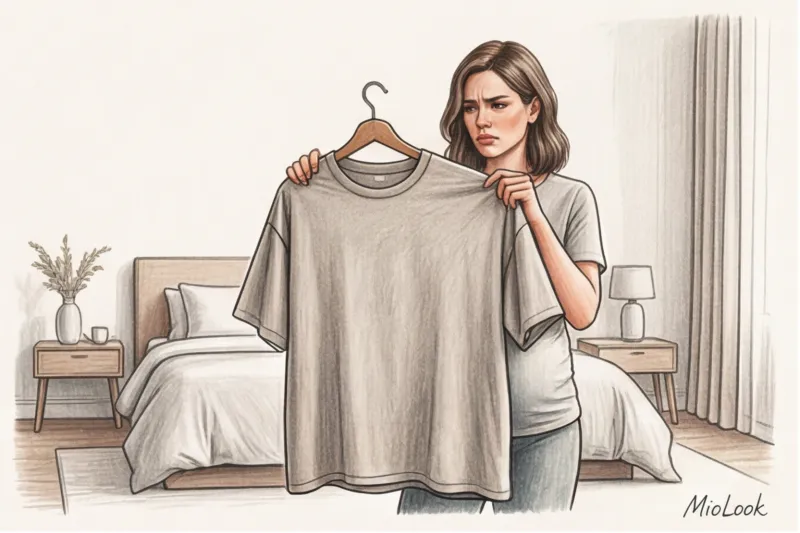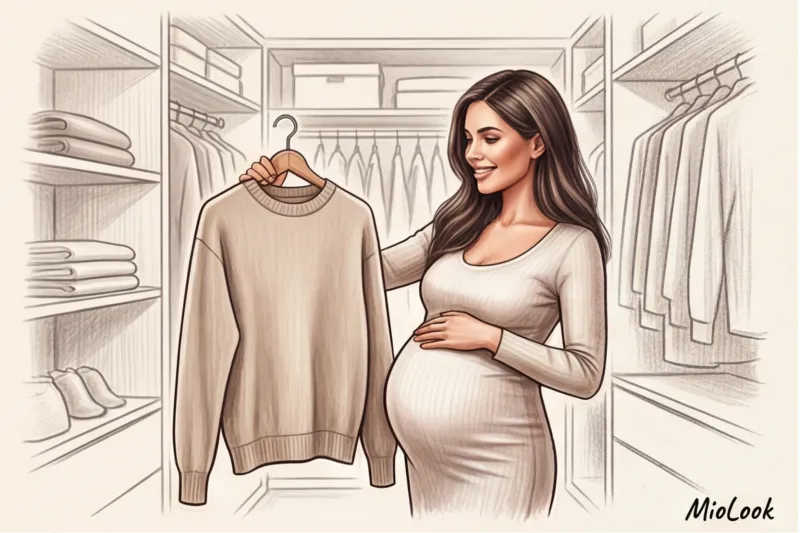
I still remember my client Anna standing in the middle of her spacious walk-in closet, tears in her eyes. She held a pair of shapeless, synthetic pants, freshly delivered from a popular maternity store. "Isabella, why should I wear this polyester, tent-like nightmare just because I'm expecting?" she asked. And she was absolutely right.
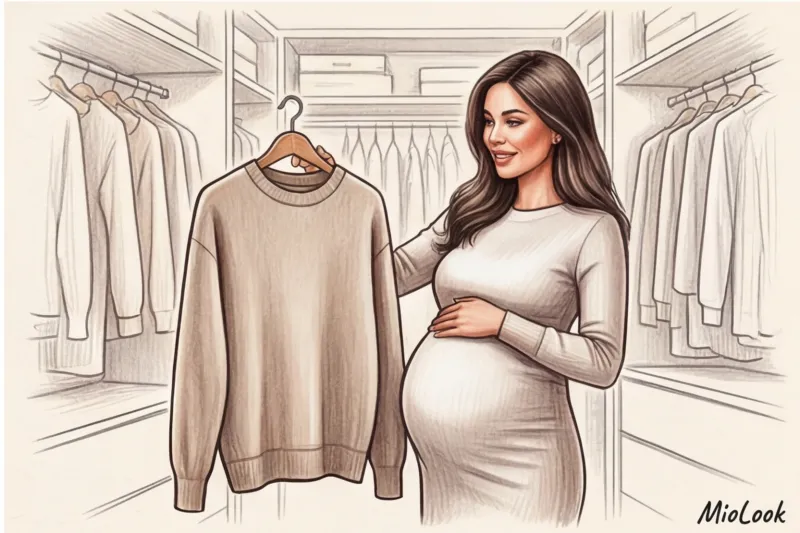
Women often panic as soon as they see two lines on a pregnancy test. We think our bodies will change beyond recognition in a couple of weeks, and we rush to buy weird clothes with elastic inserts on our stomachs. But the truth is, the ideal maternity home clothes made from ordinary clothes It's already on your shelves. You just need to look at it from the right angle.
Instead of spending your budget on temporary items, I suggest you audit your current closet. We've covered this philosophy of maintaining personal style in more detail in our A complete guide to adapting your regular wardrobe for expectant mothers Today, we'll focus on the home capsule—a place where comfort meets elegance.
Industrial Myth: Why Homemade Maternity Clothes Made from Regular Items Are Your Best Choice
The maternity fashion industry operates under the laws of aggressive marketing. According to a 2023 report by Grand View Research, the global maternity clothing market is valued in the billions of dollars, with women spending the average of €400 to €800 on maternity wear. The most disappointing part? These clothes are only actively worn for 4-5 months.
We spend a huge amount of time at home, especially in the third trimester or if we work remotely. What you wear directly impacts your self-esteem. Classic "maternity" loungewear often features childish prints, awkward drawstrings, and cheap fabrics. This is a blow to self-confidence for a woman who, before pregnancy, was accustomed to wearing silk, cashmere, and minimalist cotton.
Stopping the purchase of special home items is also a step toward sustainable fashion. You extend the life of your favorite pieces from basic collections of brands like COS, Uniqlo, or Massimo Dutti simply by changing the way you style them. To simplify this process, you can upload your items to electronic wardrobe - application MioLook will help you take a fresh look at combinations of what you already have.
Your perfect look starts here
Join thousands of users who look flawless every day with MioLook.
Get access — €0.99 onceCounterintuitive Rule: Why You Shouldn't Just Buy Clothes Two Sizes Bigger
"Just buy a regular size XL instead of your average size" is perhaps the most harmful and destructive advice given on forums for expectant mothers. Remember: plus-size patterns, oversized silhouette patterns, and the pregnant woman's figure are three completely different geometric shapes.
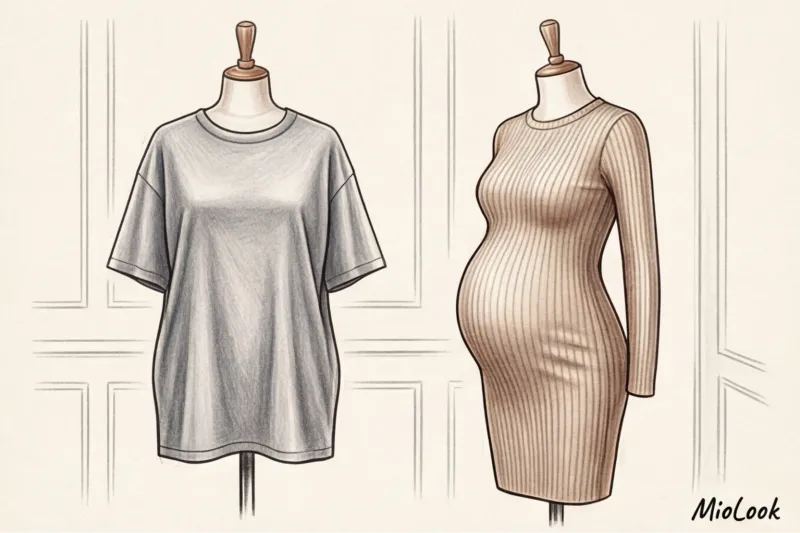
If you buy a basic T-shirt or lounge suit two sizes too big, the garment doesn't just become wider at the waist. The shoulder seam slips. The armholes drop almost to the waist. The neckline bulges out uncomfortably. The result is a "I'm wearing someone else's clothes" effect, which visually adds 10 kilograms and makes you look hunched.
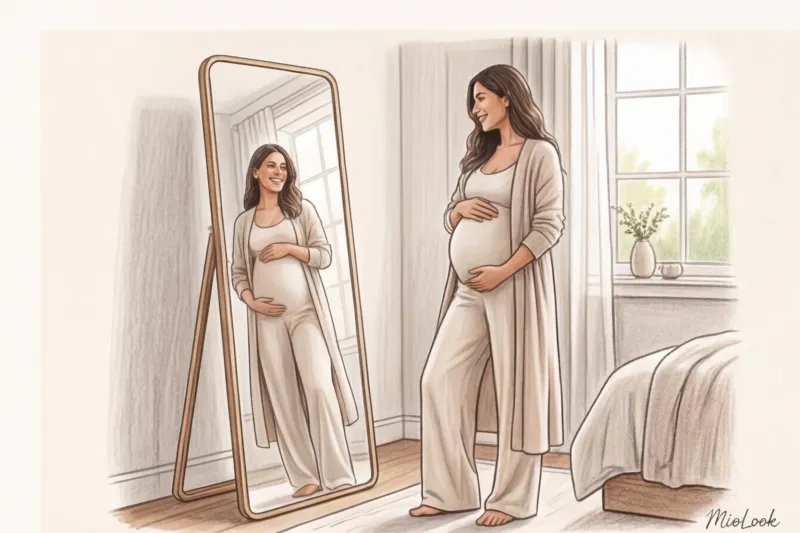
My secret, based on the Mediterranean approach to style: clothes should embrace the changing body, emphasizing the architecture of the figure. You need your ordinary size, but in the right cut. A-line silhouettes, wrap-style pieces, a high waistline under the bust (empire style), or simply high-quality ribbed knitwear—that's what saves the proportions. The shoulder must remain in place, otherwise the whole look falls apart.
Global revision: what ordinary things are ideal for pregnant women
Set aside an evening and ruthlessly pare down your wardrobe. Put away the stiff denim, sheath dresses, and trousers with a formal belt. Our goal is to assemble a new capsule wardrobe according to the rules. creating a wardrobe of basic items , but with an adjustment for comfort.
Look for the "soft waistband" rule. Any joggers, leggings, and wide drawstring pajama pants can be worn. under Place them on your stomach. Don't try to pull them up. The most important thing is that the elastic is soft and doesn't leave marks on your skin. Also, put all items with front fastenings in a separate pile: shirts, button-down cardigans, and shirt dresses. These will become your uniform not only before delivery but also during the first months of breastfeeding.
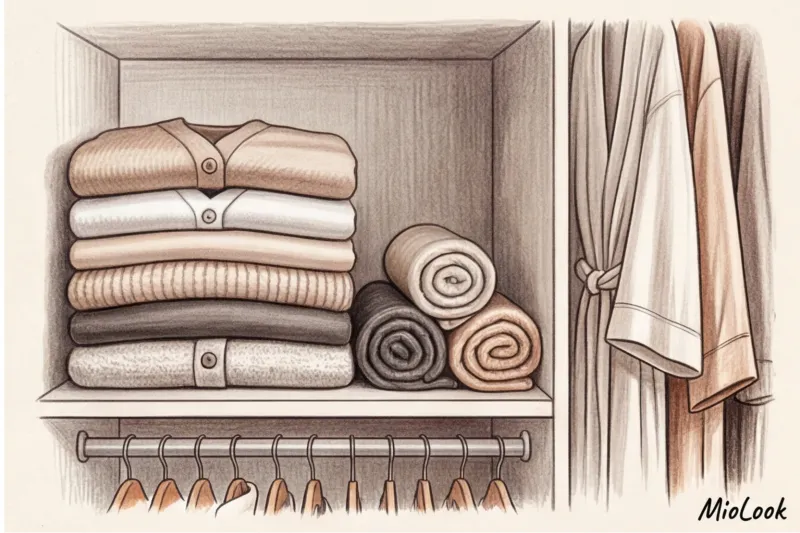
Knitwear and cashmere: luxury essentials for the second and third trimesters
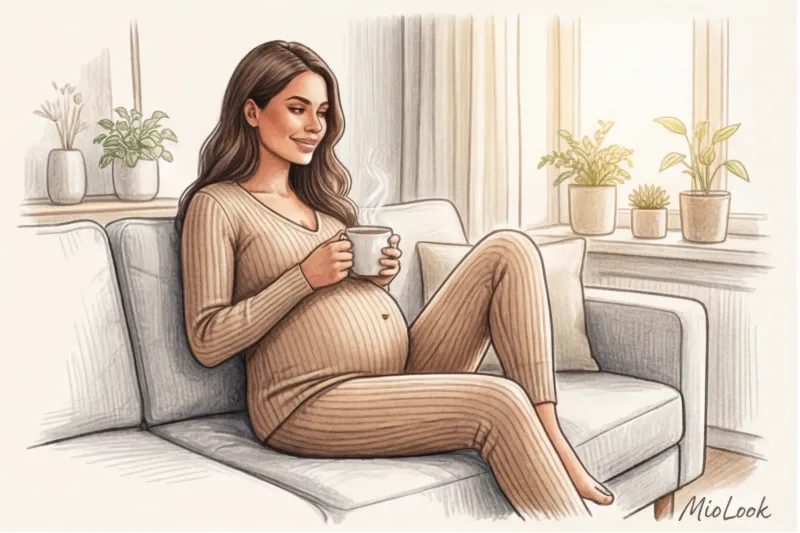
Your favorite ribbed knit suit (also known as "noodles") is a brilliant invention of the textile industry. The unique feature of ribbed knitting is that it expands horizontally, with virtually no distortion of the vertical fiber structure. When you take the suit off, it will return to its original shape.
Over 12 years of working as a stylist, I've learned that high-quality cashmere or merino wool blends perform better than any synthetic support bandage. They regulate body heat (critical during hormonal fluctuations) and look expensive. That same client, Anna, whom I mentioned at the beginning, ended up spending the last months of her pregnancy in her favorite Massimo Dutti cashmere joggers, simply slung under her belly.
Men's Shirts and Oversized Cardigans: The Art of Layering
Borrow a couple of linen or cotton shirts from your partner (or pull out your favorite oversized ones). Here we'll use my favorite technique: "Italian layering."
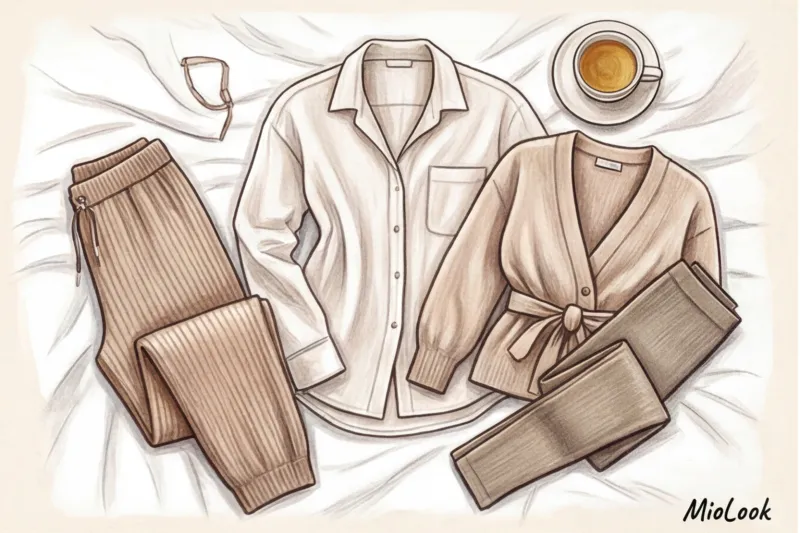
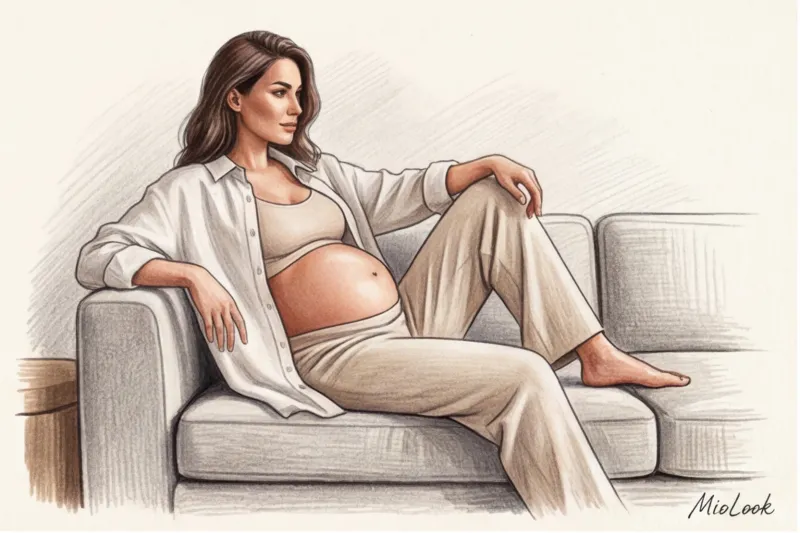
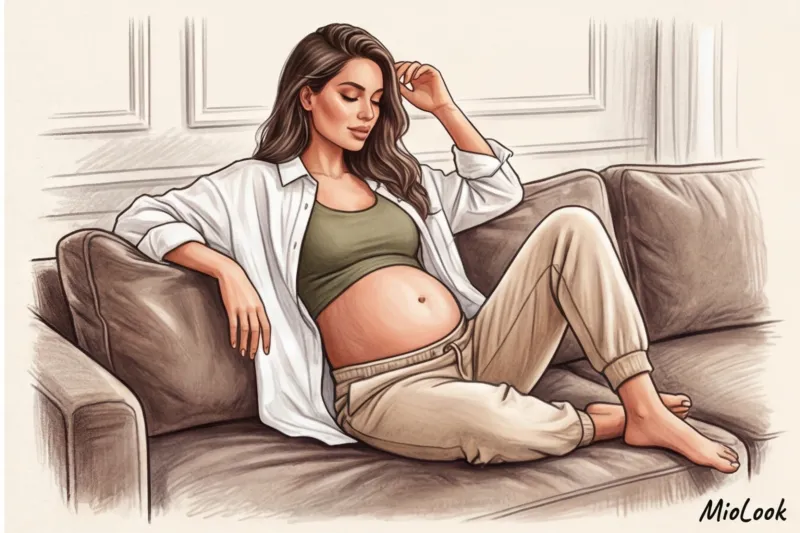
The formula is simple: put on a fitted, stretchy top that flatters your midriff, and layer an unbuttoned shirt or cardigan over it. What does it do? Two vertical lines (the sides of the unbuttoned shirt) visually elongate your silhouette, conceal your hips, and add instant polish to even the most relaxed loungewear look. It looks like you stepped straight out of the pages of Vogue Living.
Access to MioLook for €0.99 — one-time payment
A smart AI stylist will select the perfect look from your items in just a few seconds.
Get access — €0.99 onceFabrics that hug: What to look for on labels
A beautiful cut is useless if the fabric betrays you. Let's look at the technical side of the issue. Why do some clothes stretch out permanently around the stomach, turning into a bubble, while others return to their original shape?
The secret lies in elastane (spandex, lycra). According to technologists at international textile laboratories (2024), high-quality fabric containing just 3-5% elastane can stretch up to 30% of its volume and regain its structure without loss. Look for tags that indicate: dense cotton (from 180 g/m²) or viscose with the mandatory addition of 5% elastane.
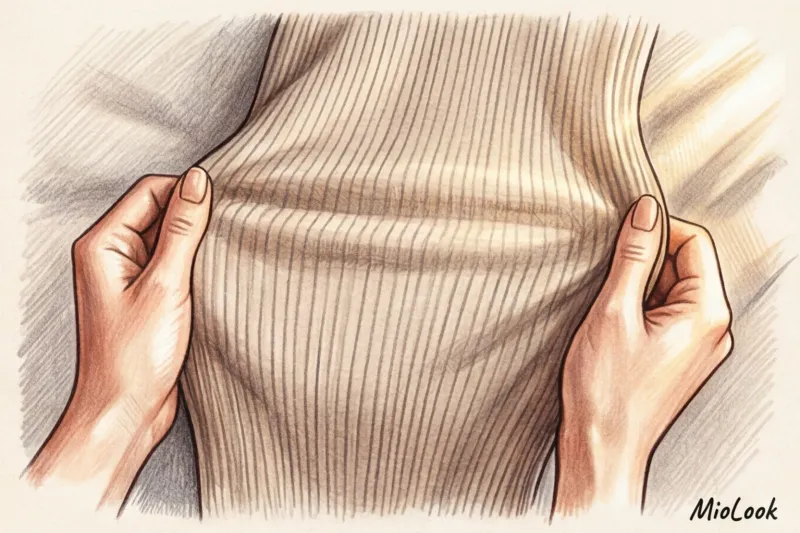
Modal and lyocell (Tencel) are your best friends for your home. These are man-made fibers of natural origin (from eucalyptus or beech wood). They are incredibly silky, drape beautifully, and have antibacterial properties. Affordable basic modal T-shirts from H&M or Zara often survive pregnancy better than their more expensive pure cotton counterparts.
Fair Limit: When This Advice Doesn't Work. Any items made of 100% linen, heavy denim, or silk without any elastane should be put aside. They have absolutely no stretch. If you try to wear linen pants in your size at home, they will cut into your body, and the seams will simply burst from the strain. Accept this fact and temporarily switch to knitwear.
At-Home Look Formulas: Styling the Capsule
I don't like abstract advice. Let's put together three concrete mathematical style formulas that you can apply right now, using items from the regular mass market or mid-range segment.
Formula 1: Cozy Elegance
Microfiber leggings (worn under the belly) + Long basic top + Oversized chunky knit cardigan.
Microfiber (think seamless underwear) stretches endlessly. The top covers the belly, and the cardigan creates a cozy cocoon. It's the perfect look for a chilly weekend.
Formula 2: Romantic Comfort
Straight cut slip dress + cropped sweater over it (waist length).
We all have a silky slip dress. During pregnancy, a straight dress hugs your belly beautifully. Layer it with a sweater that ends just above your belly—this will create the right proportions and accentuate your waistline (which is now slightly higher).
Formula 3: Relaxed Chic
Sporty joggers (under-the-belly fit) + Ribbed tank top + Husband's unbuttoned cotton shirt.
Roll up your shirt sleeves to the elbow (this reveals delicate wrists and adds a touch of delicacy to your look). Add a pair of pretty mules, and you're ready for even a surprise visit or a Zoom call.
Ready to get started?
Try the MioLook free plan—no commitments. Collect your formulas in the app.
Get access — €0.99 onceChecklist: How to Repurpose Your Favorite Home Items (Without Sewing)
On film sets, we stylists often use micro-tricks to tailor a garment to your figure without the need for a tailor. Here are a few life hacks for your at-home capsule wardrobe.
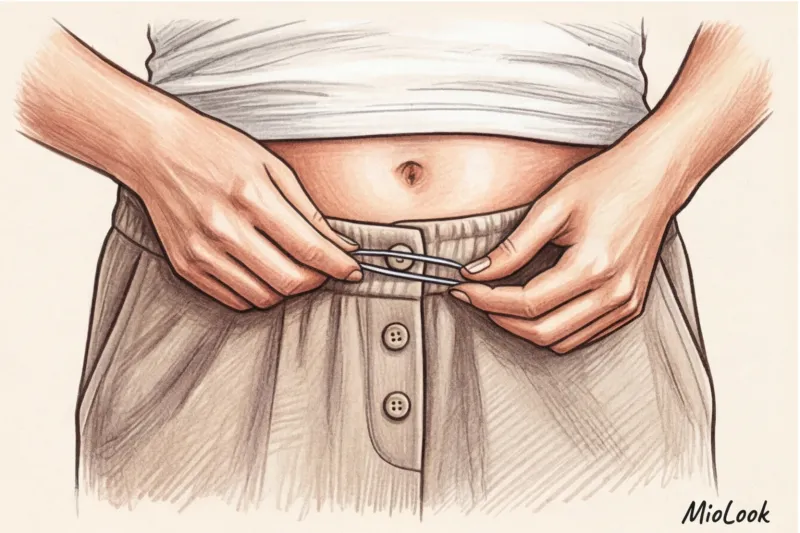
- Hair Tie Trick: If your favorite button-down sweatpants stop buttoning in the second trimester, don't rush to put them away. Thread a strong elastic hair tie through the buttonhole and loop it around the button. This will give you an extra 3-5 centimeters of freedom without any discomfort.
- Belt folding: Wide elastic waistbands on knit skirts and trousers can be simply folded in half and tucked under the belly. This relieves pressure on the front and provides firm support at the bottom.
- Silk kimono: Use long silk kimono robes not as a bathrobe, but as a stylish top layer (cape) over leggings and a top.
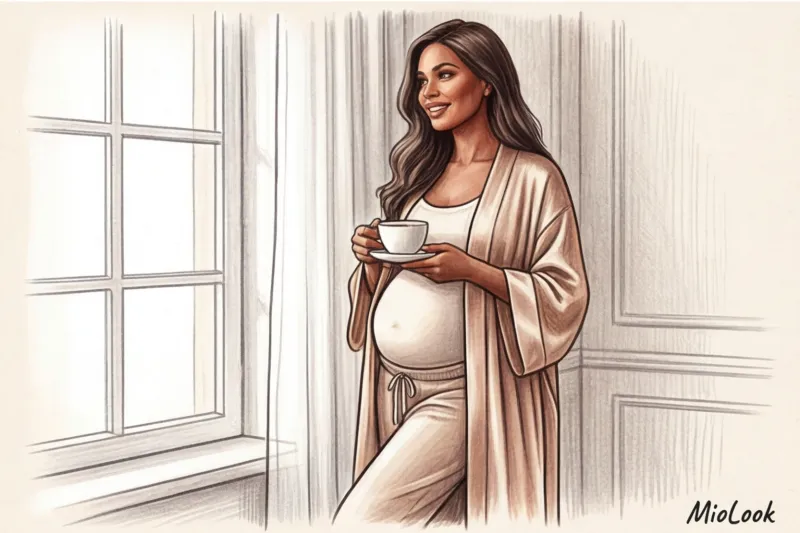
And don't forget about accessories. How you look at home is determined by the little things. Beautiful, soft angora or cashmere socks (in the €15-€30 range), stylish open-toe slippers, and a clean, neat hairstyle can completely transform your self-image. You no longer feel "sick"—you feel like a goddess carrying a new life.
Stylist's Resume: Your Home, Your Rules
Pregnancy isn't a pause in your life, and it's certainly not a reason to put your style on hold. You don't have to betray yourself and dress in shapeless teddy bear costumes just because your body is changing.
If you choose your clothes wisely, regular loungewear during pregnancy will not only save you hundreds of euros but also be environmentally friendly. The key is to carefully consider fabric composition, layer, and wear your normal size.
My advice to you this evening: open your closet. Remove everything stiff, prickly, and constricting. Get out your softest ribbed knits, flowing dresses, loose cardigans, and shirts. Put them together to create your new, smart, home capsule. And remember: you are beautiful in each of these nine months.