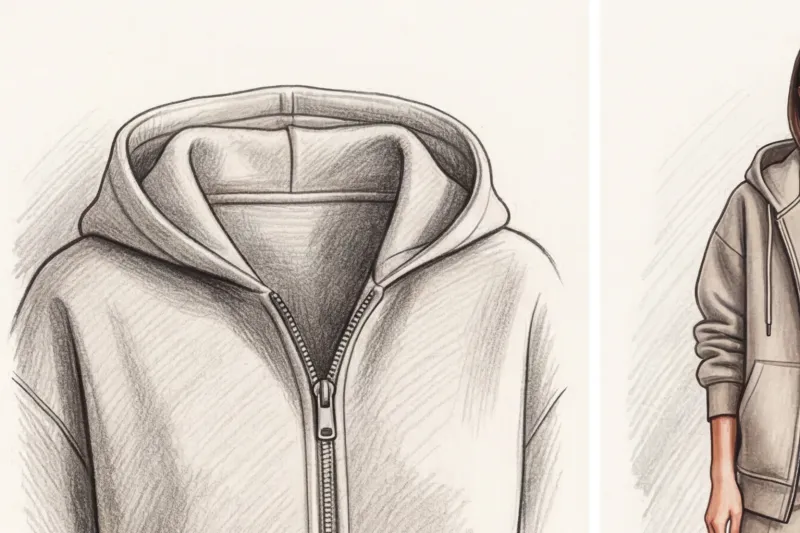
Over the 12 years I've worked as a personal stylist, I've reviewed wardrobes hundreds of times. And every time I reach the knitwear aisle, I hear the same phrase: "This is my lounge sweater; I throw it on when I'm too lazy to dress up." It was always about that zip-up sweatshirt. We've become accustomed to treating it like a stylistic fast food. But what if I told you that the right zip-up hoodie isn't just for lazy weekends, but a fully fledged replacement for an architectural jacket?
Unlike classic sweatshirts, the question is, What to wear with a zip hoodie , requires an understanding of body geometry. Zippers create a rigid vertical line that can either elongate a silhouette or mercilessly break it. We've covered the basic rules of working with knitwear in more detail in our The complete guide to hoodie styling , but models with a clasp require a separate, almost engineering approach.
The Anatomy of the Perfect Base: Why 90% of Zip Hoodies Cheapen the Look
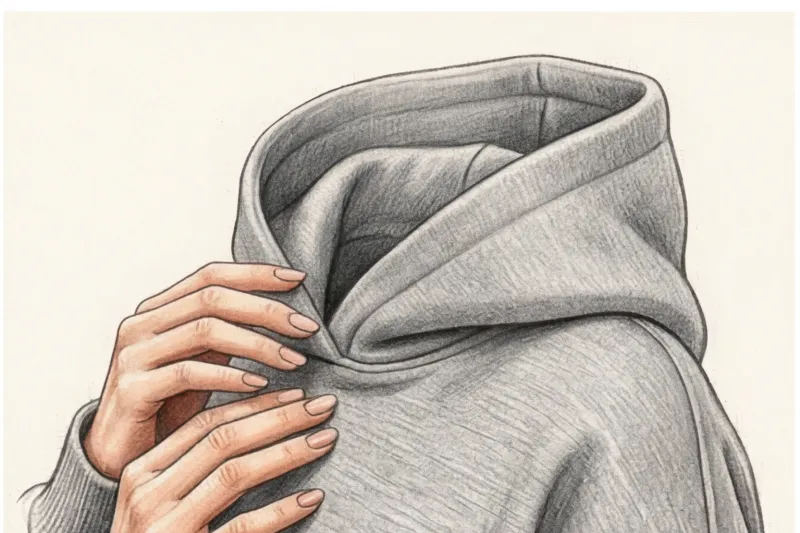
In my experience, eight out of ten clients buy sweatshirts that lose their shape after just three washes. The problem isn't careless wear, but the simple physics of fabric. A quality garment starts with density—that same GSM (grams per square meter) value. For a zip-up hoodie to hold its shape like a jacket and not hang like a rag, the density of cotton French terry should be between 350 and 450 GSM.
But the main enemy of cheap knitwear is the hardware. Have you ever noticed how, over time, the zippers on inexpensive items develop characteristic bulges? Stylists call this the "wave effect."
"The wave on the zipper is caused by differences in shrinkage. The natural cotton base shrinks up to 3-5% after washing, while the synthetic tape that the plastic zipper is attached to doesn't shrink at all. The excess length simply has nowhere to go, and it distorts the garment."
That's why I always recommend investing in styles with heavy metal hardware (like those from COS or the premium Uniqlo U lines). The metal adds weight to the front panel, forcing the fabric to fall downwards, creating that alluring vertical line.
Your perfect look starts here
Join thousands of users who look flawless every day with MioLook.
Get access — €0.99 onceThe Biggest Mistake: Why Zip-Up Hoodies Are Harder to Style
There's a common myth: a zip-up hoodie is a one-size-fits-all, throw-on-and-go staple. It's counterintuitive, but styling one is MUCH more challenging than a classic kangaroo hoodie. A one-piece hoodie creates a monolithic color block, while a zip-up hoodie splits the front panel in two.
If the fabric is thin (less than 300 GSM) or contains too much elastane, the slightest movement or attempt to sit on your stomach will create a "caterpillar effect." The fabric will bunch up in small folds, and a stiff zipper will stick out inconspicuously, visually adding extra pounds to your figure around the waist.
One of my clients couldn't figure out for a long time why she looked sloppy in her relaxed outfits, despite buying expensive brands. We simply swapped out her thin cashmere zip-up sweatshirt for a thick cotton menswear-inspired one. Her silhouette instantly came together.
What to wear with a zip hoodie to the office: smart casual without sacrificing status
Integrating a sporty element into a business dress code requires a delicate touch of context. The 2024 report by WGSN's "Elevated Comfort" analysis agency confirms that the line between office formality and home comfort has been completely blurred, but expectations for neatness have only increased. Today, the zip-up hoodie is a legitimate replacement for the thin knit cardigan (which, let's be honest, rarely flatters anyone).
Layering with an architectural jacket
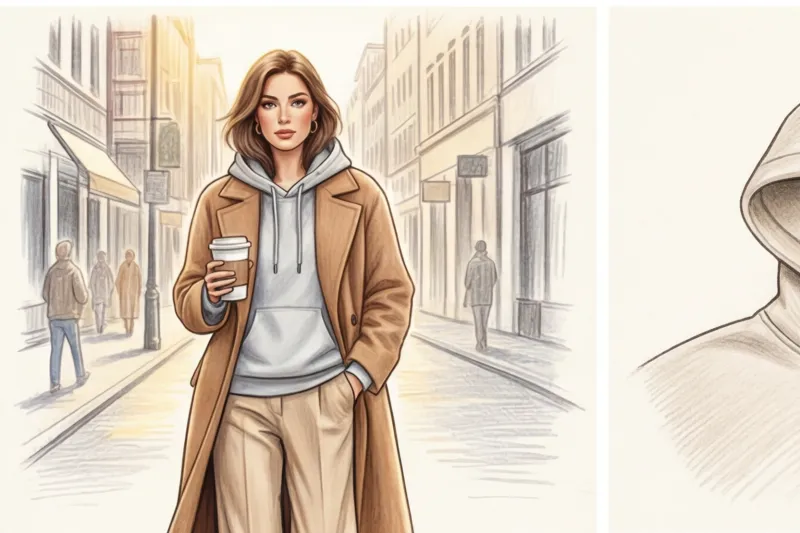
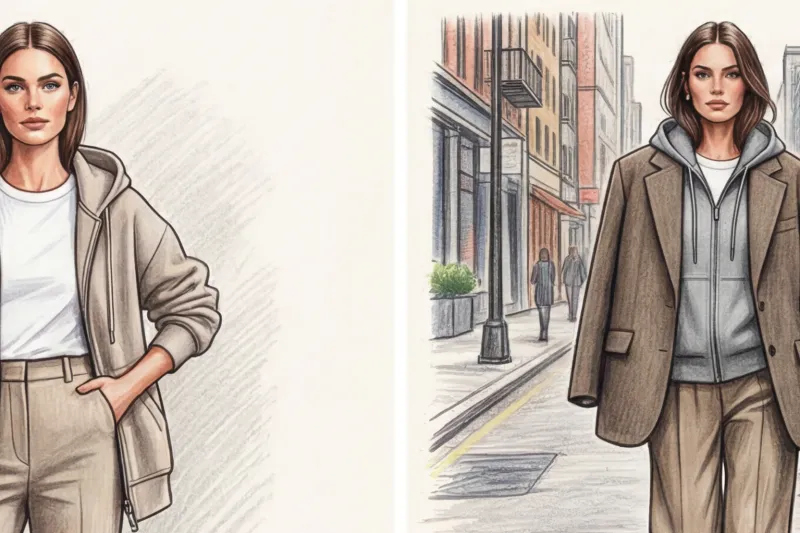
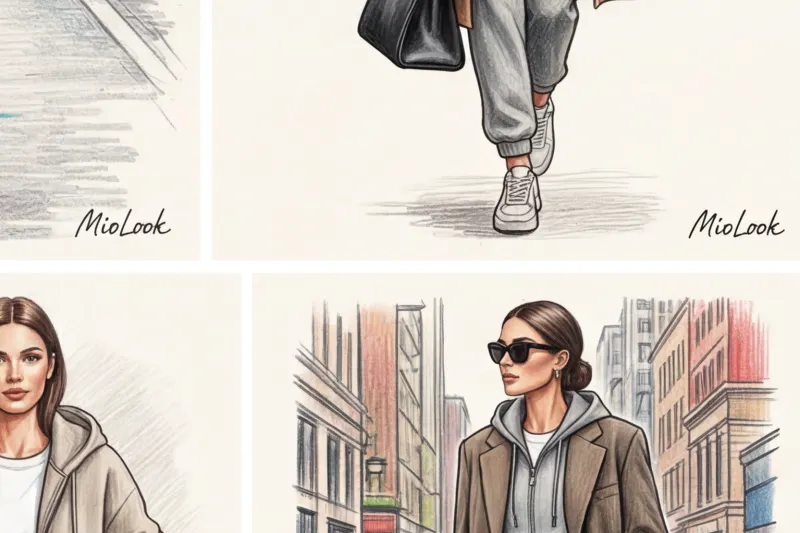
The most effective formula for a Friday dress code: a basic white T-shirt + an unbuttoned zip-up hoodie + an oversized, man-sized jacket. The secret is in the details.
- Hood: It should be thick enough to sit comfortably over the lapels of your jacket, rather than bunching up into a miserable lump underneath.
- Sleeves: Release the hoodie cuffs from under the jacket sleeves by 1-2 centimeters. This will tie the layers together.
- Color: Grey melange under a dark blue or black jacket is a timeless classic.
Monochrome formulas with palazzo pants
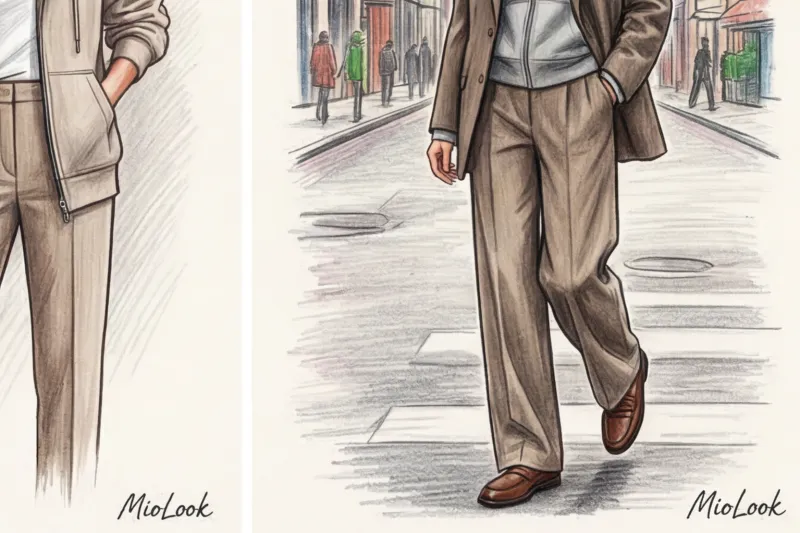
To avoid the jogging look, ditch the jeans for wide-legged, pleated suit trousers. Create a monochromatic color palette: for example, a graphite hoodie to match graphite palazzo pants. Footwear is key here. No sneakers—only chunky loafers, derbies, or square-toe ankle boots. The rigid shape of the shoes pulls together the relaxed upper.
Access to MioLook for €0.99 — one-time payment
A smart AI stylist will select the perfect look from your items, taking into account current trends.
Get access — €0.99 onceA play on contrasts: silk, leather and heavy cotton
There's a golden rule in styling that always makes an outfit look more expensive: the high-low principle. By juxtaposing a rough, sporty texture with decidedly feminine or aggressive materials in the same outfit, you create depth.
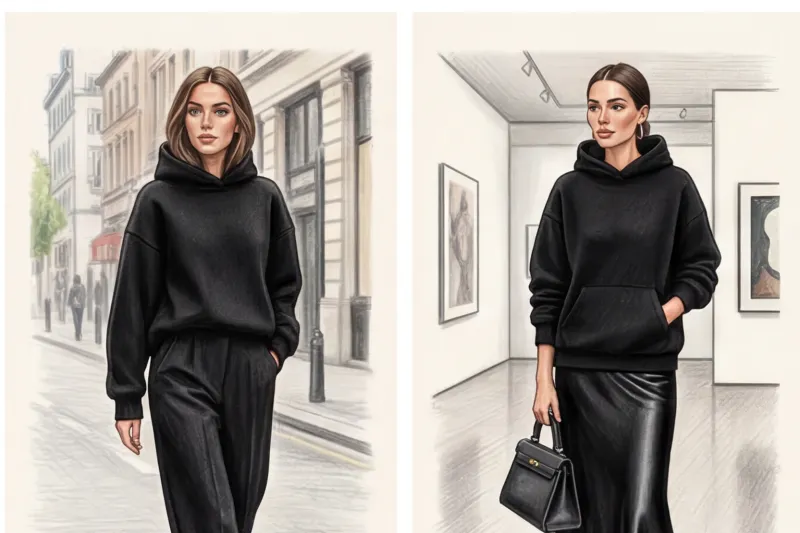
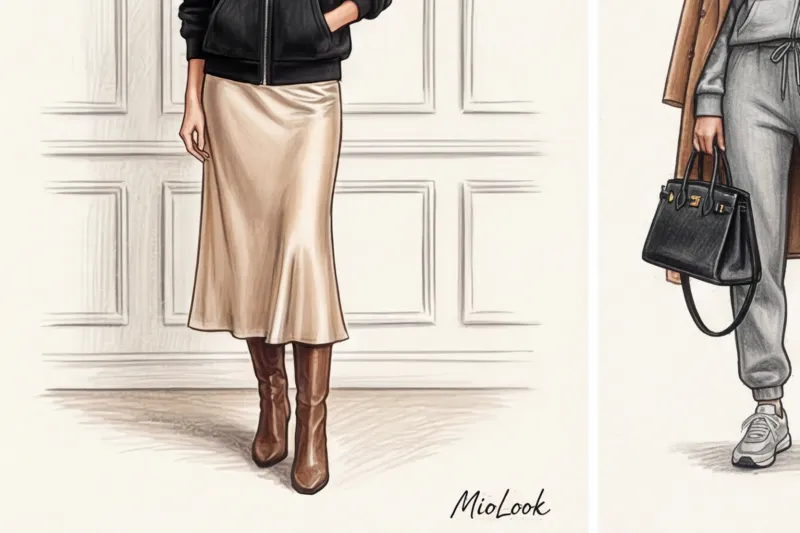
Try pairing a voluminous zip-up hoodie with a delicate silk midi-length slip skirt. The smooth, flowing silk and matte, light-absorbing heavy cotton create a stunning visual contrast. To balance the proportions, leave the hoodie half-undone, revealing your collarbone and the basic top underneath.
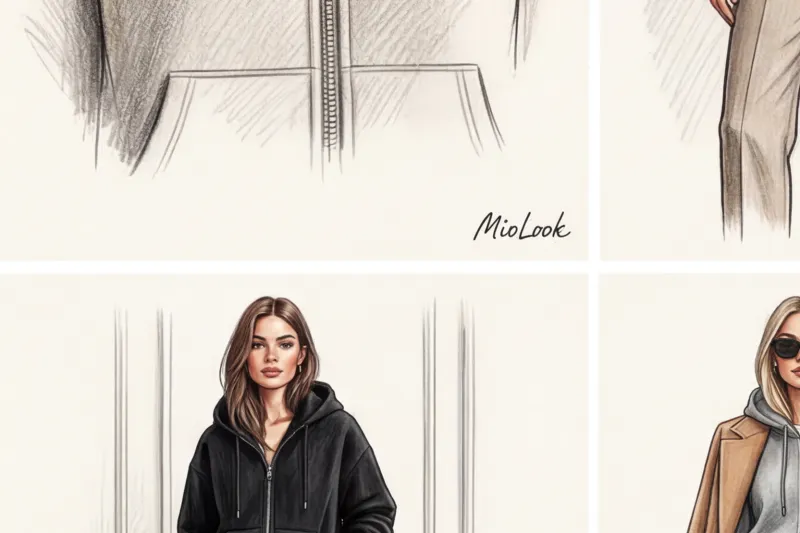
Another surefire option is leather pants. But there's a catch. I highly recommend using matte leather rather than glossy or patent leather. Glossy leather paired with sportswear often looks too theatrical, à la 2000s. Matte leather (or high-quality faux leather) maintains the ruggedness of heavy cotton but adds an urban aesthetic.
Sporty Chic: How to Avoid Looking Like You Just Left the Gym
A tracksuit (joggers + zip-up sweatshirt) is the uniform of modern megacities. But to ensure this outfit feels like a deliberate stylistic decision, rather than like something you'd wear to the grocery store, I use the "80/20" rule.
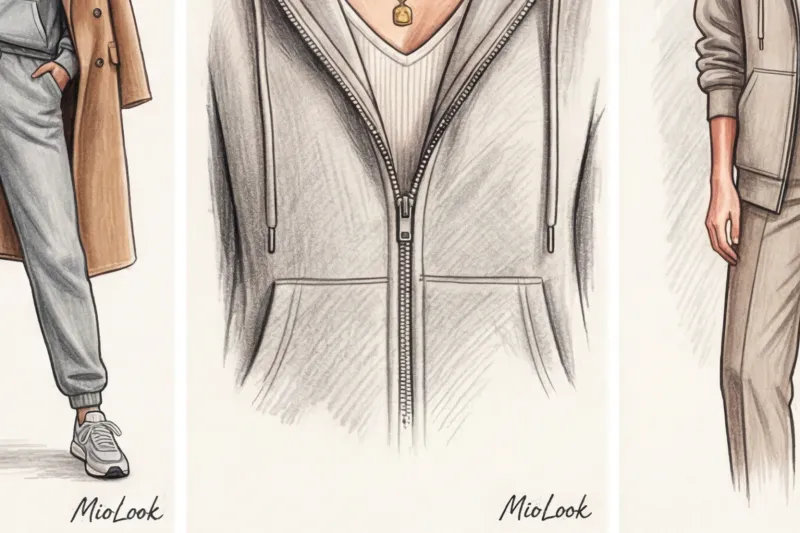
The gist of the rule: only 20% of your outfit should be overtly sporty, while the remaining 80% should be classic, romantic, or dramatic. If you're already wearing a tracksuit (that's your 20%), all other elements should be formal.
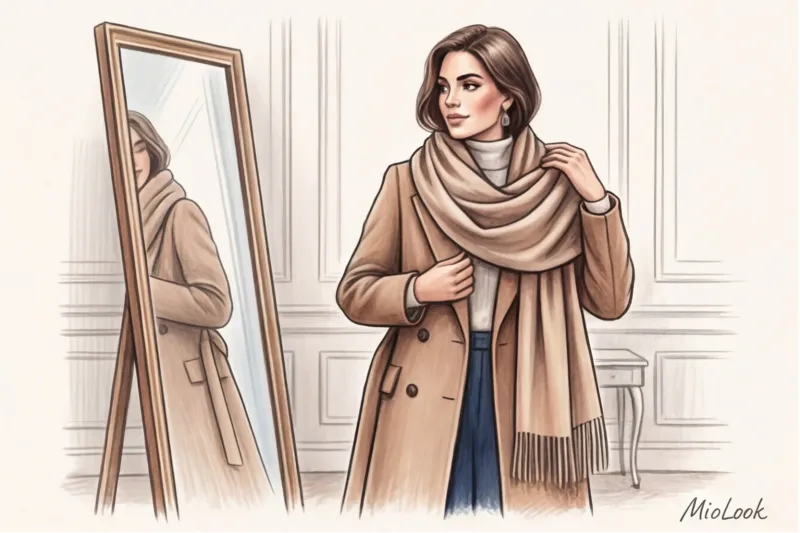
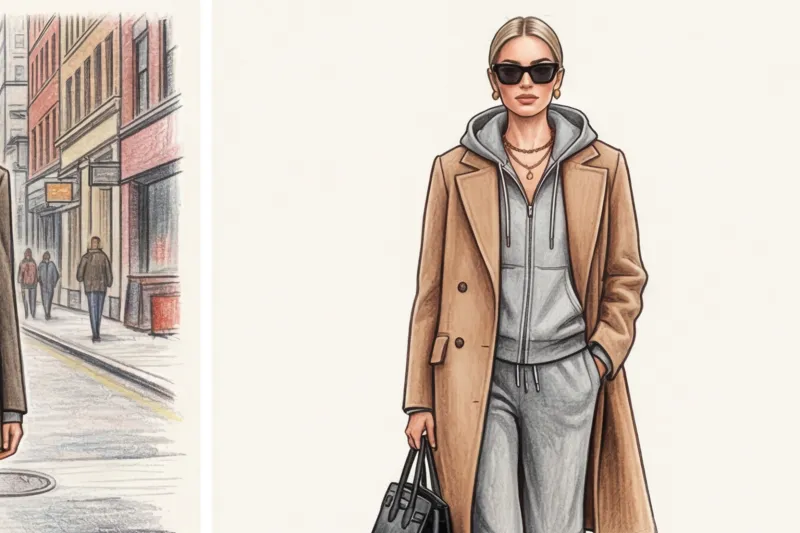
Layer a structured, double-breasted camel coat or a crisp English trench over the hoodie. Add a crisp, geometric bag (no soft shoppers!) and chunky-framed sunglasses. The contrast between the soft body of the suit and the rigid frame of the outerwear and accessories creates that quiet luxury effect in a relaxed way.
Stylist Checklist: 5 Rules for Integrating a Zip-Up Sweatshirt
To save you from having to remember dozens of formulas, I've compiled 5 engineering rules for planting for you. If you're unsure in the mirror, just go through this list (or upload a photo to MioLook for quick analysis of proportions):
- Degree of freedom: There should be at least 5-7 cm of air space between your body and the hoodie's fabric. If the hoodie is too tight, it automatically turns into thermal underwear.
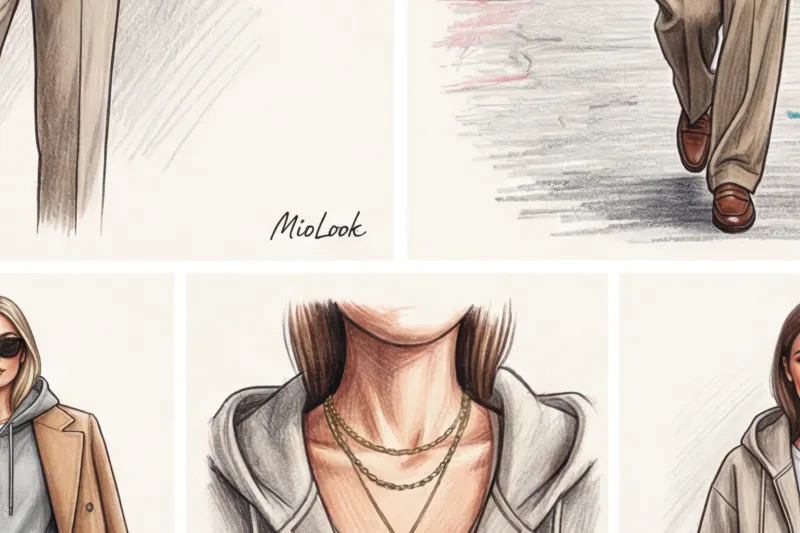
- Cutout control: Never zip up a hoodie unless you have a long, swan-like neck. A zipper left halfway open (about a third of the way up or halfway up the chest) creates the perfect V-neck, elongating the neck and allowing you to show off layered jewelry.
- Length control: Cropped styles work great with high-waisted trousers. But here lies the limitation: This technique is absolutely not effective if you have a soft stomach and your pants are made of thin fabric—you'll end up with extra horizontal lines. In this case, choose a longer style that covers the groin.
- Refusal of prints: A basic, solid-color style without logos or lettering is 10 times more effective in a wardrobe. Solid color feels like luxurious minimalism.
- Wave test: When buying a hoodie, zip it up and lay it on a flat table. If the zipper is already rippled in the store, don't buy it. Washing it will only make it worse.
A zip-up hoodie is a litmus test for your wardrobe. It instantly reveals the quality of the materials and your mastery of proportions. Stop treating this item as something for cleaning or the garden. Choose the right weight, add a structured jacket or silk skirt, and you'll see how this utilitarian piece becomes the most architectural element of your everyday looks.