In twelve years of working as a personal stylist, I've learned one paradoxical rule: the most stylish detail in an outfit is the one you seemingly added "by mistake." If you still think that chunky shoes with aggressive tread are made exclusively for conquering mountain peaks or trips to the countryside, I have news for you. Outdoor aesthetics have completely taken over the metropolis, and now we wear technical sneakers not with cargo pants, but with formal office two-piece suits. We discussed the origins of this trend in more detail in our complete guide to gorpcore style.
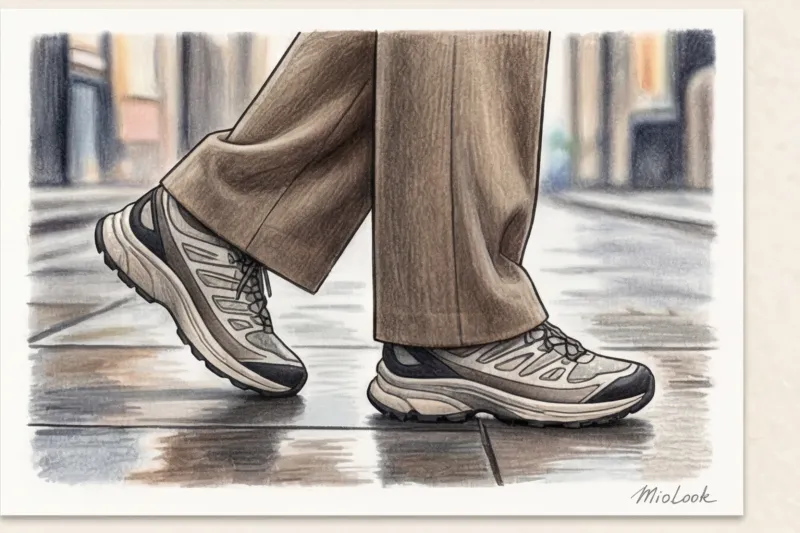
Today we'll explore how to stop fearing complicated shoes and make them work for your wardrobe, saving time in the morning and preventing tired feet.
Why Outdoor Shoes Have Become the New Urban Base
The average woman in a large city walks between 8,000 and 12,000 steps a day. Now let's be honest: stiff leather loafers or flat-soled ballet flats are stylish, but from a biomechanical standpoint, they're a disaster for your feet over distances longer than five kilometers.
According to the Lyst Index 2024 report, searches for technical footwear (specifically brands like Salomon, Roa, and Hoka) in the women's fashion category have grown by 45%. This isn't just a TikTok microtrend. It's a global shift toward functionality.
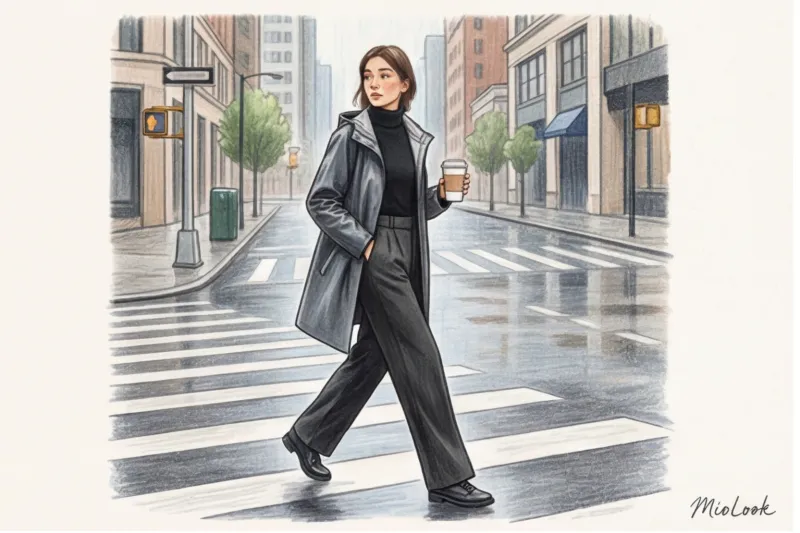
Orthopedists have long been concerned about flat urban shoes, which can trigger plantar fasciitis. Trekking shoes solve this problem with ease: shock-absorbing EVA foam absorbs the impact of asphalt, a rigid heel counter secures the heel when running on subway escalators, and a Gore-Tex membrane allows you to ignore puddles. We're no longer willing to tolerate pain for the sake of beauty, especially when technology offers us impeccable comfort.
The "Wrong Shoe Theory": The Main Secret of Styling
In 2023, Hollywood stylist Allison Bornstein coined a concept that revolutionized everyday styling—"Wrong Shoe Theory." The idea is ingeniously simple: to create a modern and fresh look, shoes should stylistically clash with the outfit.
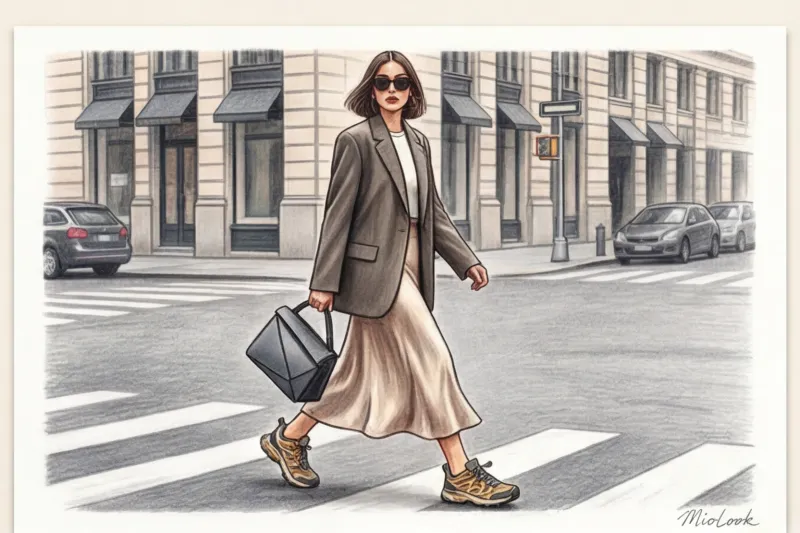
"If you're wearing a romantic floral dress, don't ruin it with the expected dainty sandals. Add rugged hiking boots. The clash of textures and meanings is what makes an outfit interesting," says Bornstein.
Contrast works better than sterile harmony. Aggressive sneakers with studded soles instantly take the edge off formal suits. However, there's a strict rule of volume balance. Chunky shoes visually weigh down the bottom, so they require compensation: either expose slender ankles, lengthen the trousers to an extreme maxi, or add a voluminous top (for example, an oversized jacket with accent shoulders).
Your perfect look starts here
Join thousands of users who look flawless every day with MioLook. Digitize your wardrobe and let AI create stylish combinations.
Get access — €0.99 onceTrekking sneakers: what to wear with women's models for every day
When new clients timidly type in a search engine or ask me directly, What to wear with women's trekking sneakers In everyday life, to avoid looking like a lost tourist, I always suggest starting with capsule integration. One pair of shoes should seamlessly cover three completely different life scenarios.
With a pantsuit and a formal coat
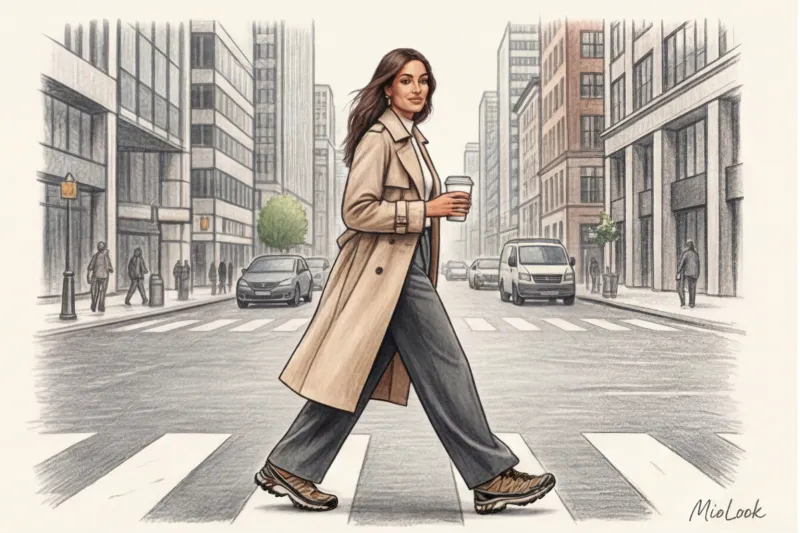
A story from my recent work: Anna, a top manager from Berlin, approached me with a request for a "presentable yet durable" wardrobe. She spends 10 hours a day on the move. We ruthlessly removed her stiff brogues and replaced them with Salomon XT-6s in a graphite shade. Paired with an oversized suit made of thick wool (around 400 g/m²) and a basic white T-shirt made of heavy cotton, the result was impeccable next-generation power dressing.
The secret lies in the length of your trousers. You have two options:
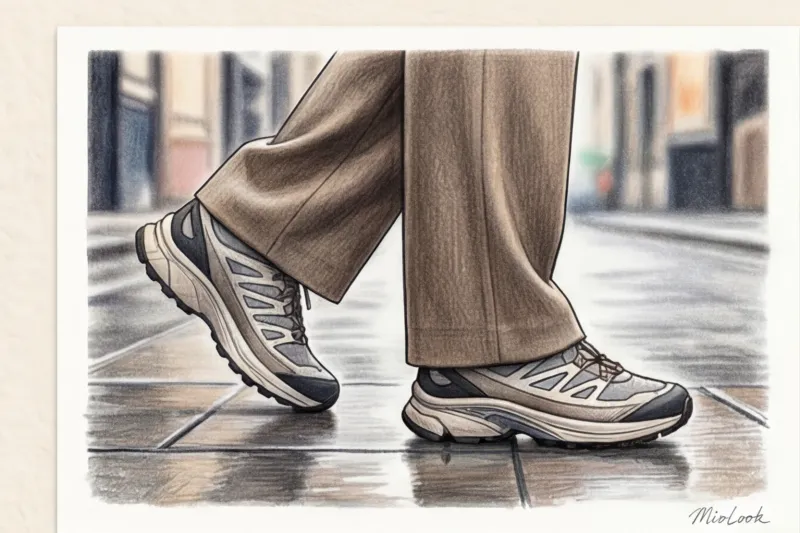
- Full length (puddles): The wide legs should fit softly over the massive toe of the sneaker, hiding the lacing.
- Shortened models: If your trousers expose your ankle, be sure to add thick ribbed socks that match your shoes or trousers. No bare legs in a business setting.
With a silk skirt or slip dress
This is my favorite technique for dates or exhibitions. The flowing Mulberry silk and the rugged Vibram tread create incredible visual tension. To prevent the look from falling apart into two disconnected parts, we need "glue"—a connecting element.
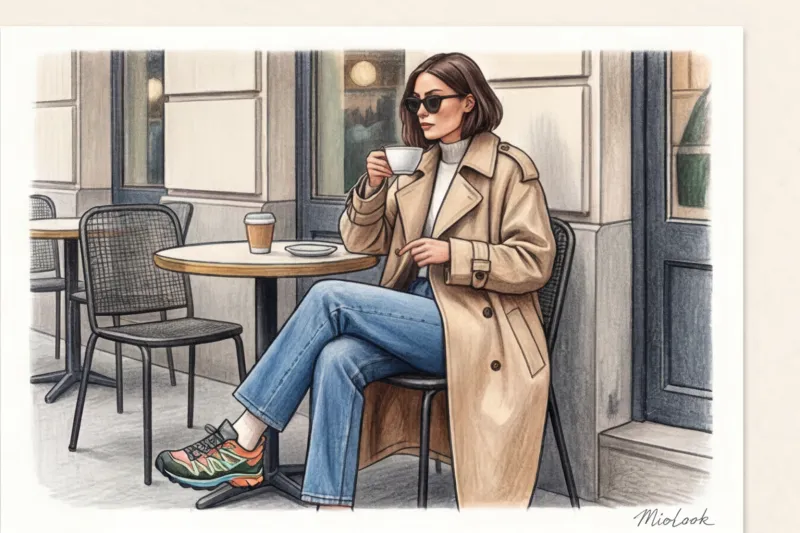
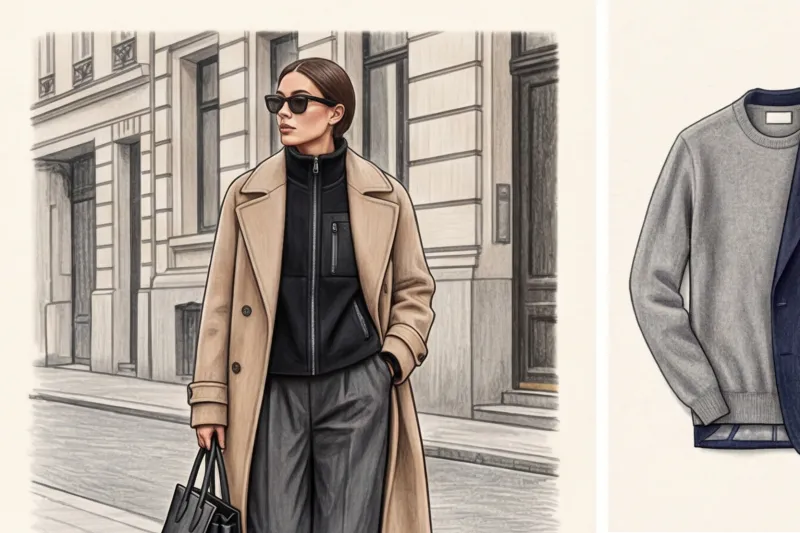
A chunky, chunky cashmere sweater or a men's jacket thrown over a dress perfectly complements this look. The layering on top balances out the heavy footwear underneath.
With basic jeans and knitwear
Herein lies the main pitfall. Never, never, never wear chunky outdoor sneakers with skinny jeans unless you want to end up with Mickey Mouse proportions (enormous feet on thin legs). This is precisely the limitation that glossy magazines often gloss over.
For the perfect silhouette, choose straight-leg or wide-leg jeans made of thick, non-stretch denim. Add a men's-cut shirt (such as poplin), casually roll up the sleeves, and complete the look with a minimalist watch or a bracelet. This elevates your hiking boots to the smart-casual category.
Mistakes That Turn Gorpcore Into a Mushroom Hunt
The biggest and most fatal mistake is Total Outdoor. Combining trekking boots with a fleece, a windbreaker, and a sports backpack is only acceptable in one case: if you're actually going to the mountains.
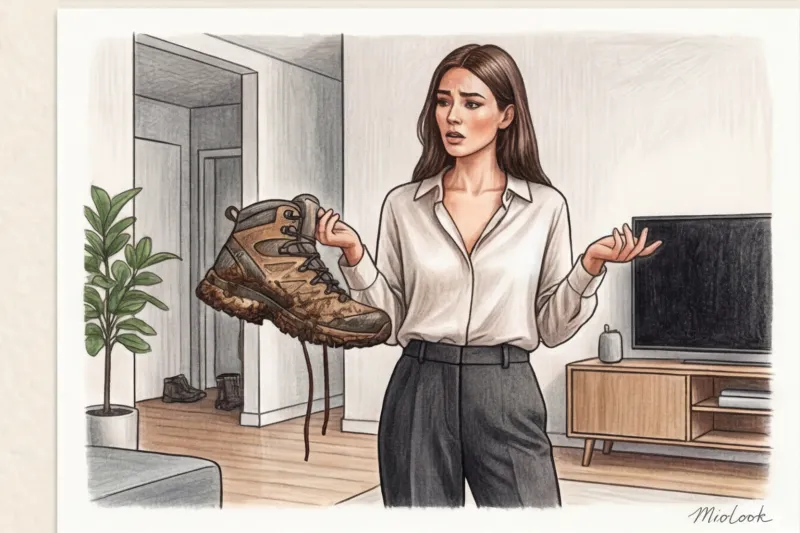
One of my clients bought a luxurious pair of technical sneakers for 300 euros, but insisted on wearing them with black leggings and a cropped track jacket. As a result, on the streets of Moscow, she looked like she'd just escaped a CrossFit workout and forgotten to change. Once we swapped the jacket for a classic double-breasted midi trench coat, the look instantly took on the look of Copenhagen Fashion Week street style.
Two more common mistakes:
- Wrong socks. Short athletic socks, treacherously peeking out from under the shoe's bulky tongue, cheapen the look. Opt for high ribbed socks (white, gray, black) or thick matte tights.
- Overload of details. If you've chosen sneakers with neon accents and a complex speed-lacing system, the rest of your outfit should be as simple as possible in color and cut.
How to choose the perfect "city" pair
If this is your first pair in this aesthetic, I strongly recommend avoiding bold colors. Monochromatic styles are ideal for a basic wardrobe: all-black (triple black), graphite, taupe, or khaki.
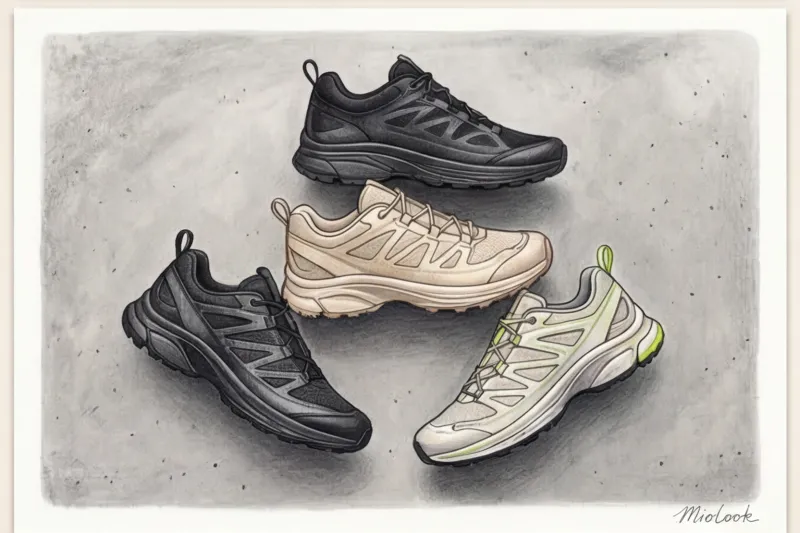
Pay attention to the materials. The Gore-Tex membrane is a lifesaver for slushy autumn and winter weather, as it's completely waterproof. However, it has a significant limitation: if you plan to sit in these sneakers in a warm office (23°C) for eight hours, your feet will go on strike—the membrane doesn't conduct heat well. For summer and office wear, choose models with a breathable mesh upper.
In terms of silhouette, low-top sneakers (trail running shoes) are much easier to incorporate into an everyday wardrobe than high-top trekking boots (high-tops), which often cut off the proportions of the foot.
Access to MioLook for €0.99 — one-time payment
A smart AI stylist will select the perfect look based on your preferences and the items you already have in your closet.
Get access — €0.99 onceCapsule Integration: Smart Checklist
Before buying, do a mental audit. Can you create at least three different looks with your new pair using what's already in your closet? If the answer is "no," the shoes will sit in the box like dead weight.
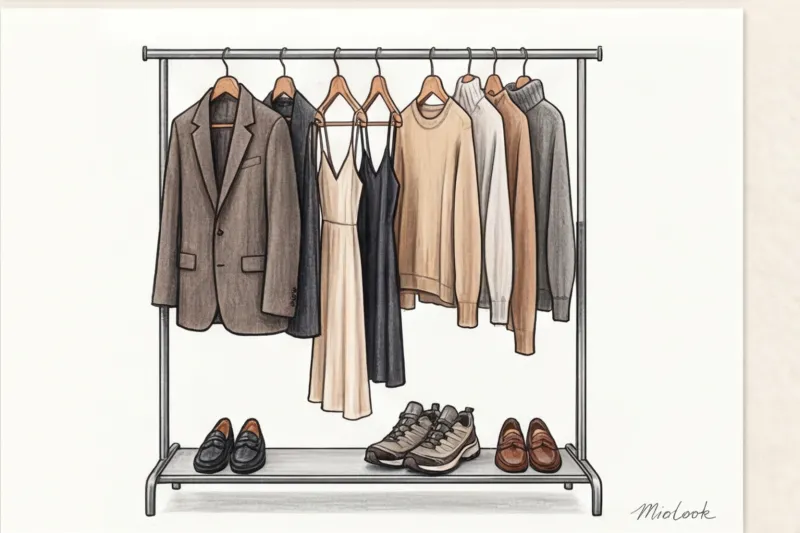
Personal experiment: I recently did a complete digitization of my fall wardrobe in an app MioLook Artificial intelligence analyzed my belongings and returned a surprising result: my gray trekking sneakers matched 80% of my basics in style, outperforming even my classic white leather sneakers in terms of versatility.
An important detail: balance in accessories. Since outdoor footwear has complex, detailed shapes, bags to go with them need to be as rigid, structured, and geometric as possible. Shapeless, soft shoppers will turn relaxed chic into banal sloppiness.
Caring for outdoor footwear in urban conditions
High-tech materials are expensive and require specialized care. The main rule: never wash membrane shoes with regular washing powder in the washing machine. Powder crystals clog the Gore-Tex micropores, permanently losing the shoes' water-repellent and breathable properties. Use only special liquid detergents for sportswear fabrics.
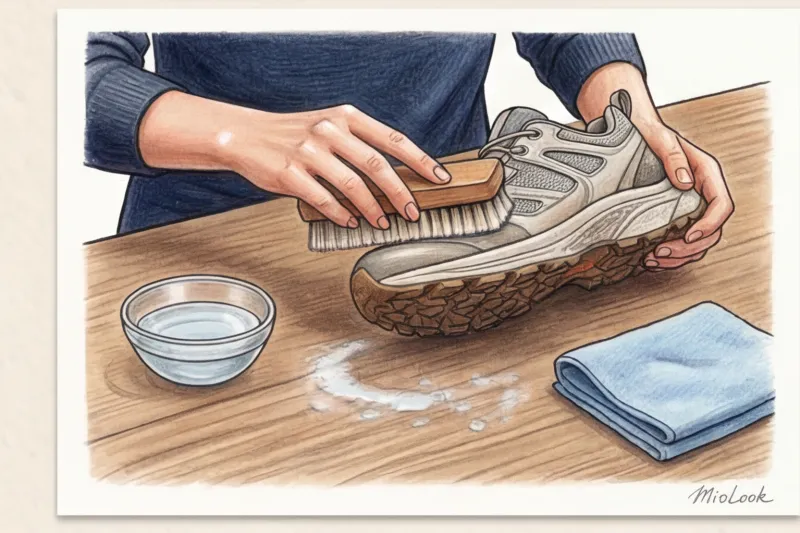
In winter, the main threat is urban chemicals. Salt corrodes the adhesive and foam soles. Get into the habit of wiping your shoes with a damp microfiber cloth every evening and treating the uppers with a silicone-free water-repellent spray every two weeks.
And finally, drying. A central heating radiator is the worst enemy of EVA foam. Direct heat can deform the sole and cause it to lose cushioning. Dry your sneakers only at room temperature, removing the insoles.
From trend to comfortable reality
Hiking shoes in the city aren't a passing fad that will disappear next season. They're the new norm, born of our desire to get more done without sacrificing the health and comfort of our feet.
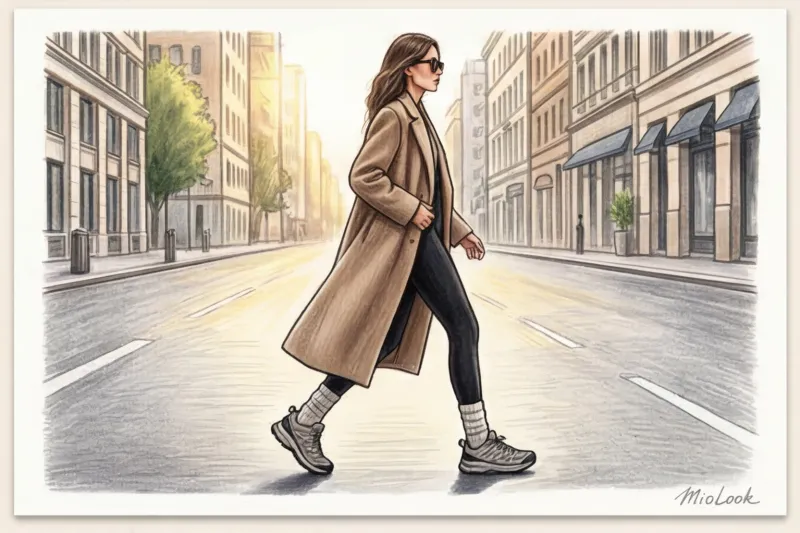
Treat them the same way you treat your favorite white sneakers—just let them add a little sass and character to your look. My advice for tomorrow morning: pull out your most formal, most "boring" office suit and wear it with hiking sneakers. I guarantee you'll feel completely different.