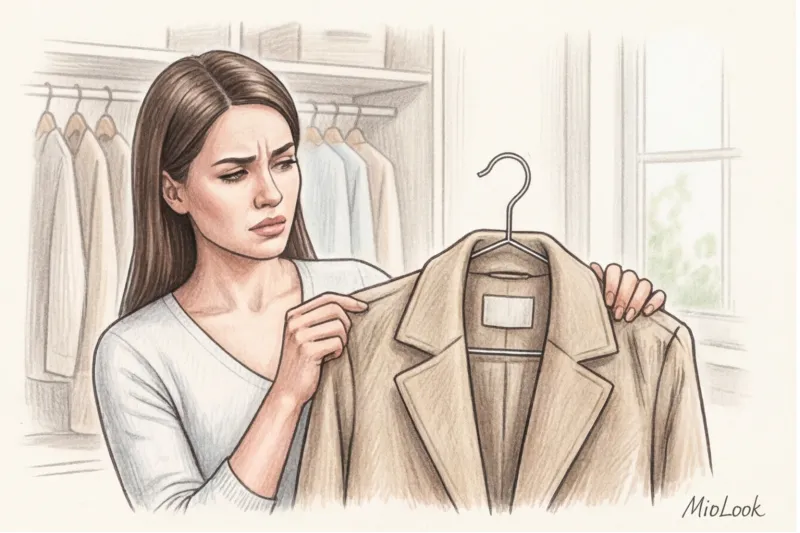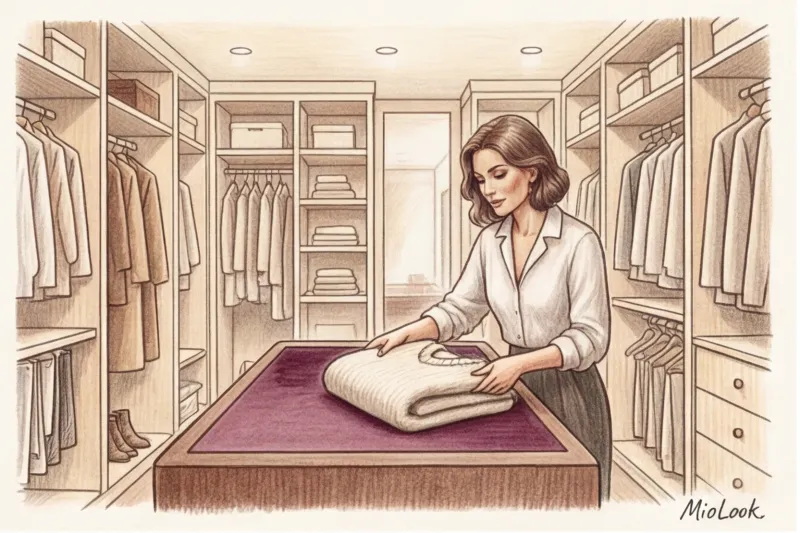
One day, a client came to see me in tears. She pulled out a flawless $2,000 Max Mara camel coat from its case. It had been hanging in the closet all spring and summer on thin wire hangers left over from the dry cleaner. The shoulder line was irreparably deformed—the heavy fabric had stretched under its own weight, creating pointed "ears." The fabric had frayed where it was stretched, and even professional steaming at a premium tailor couldn't correct the distortion.
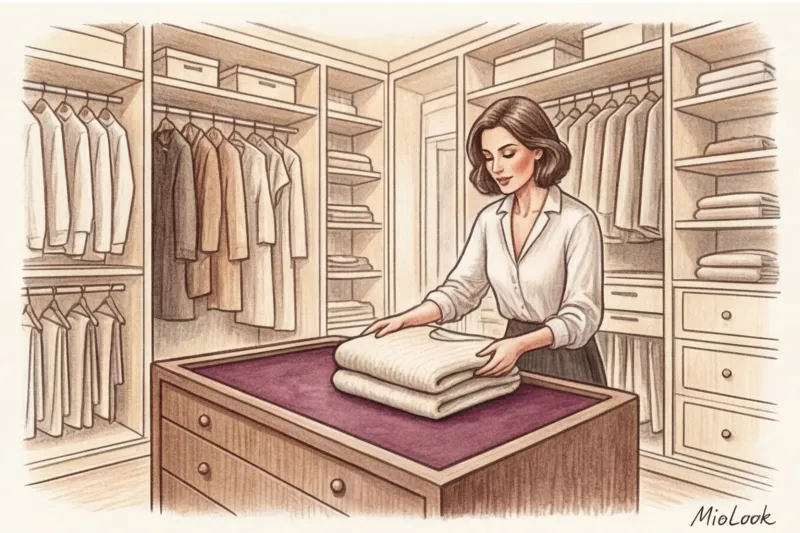
This case is a great illustration of why the question of How to store winter clothes in summer , requires a strategic approach. For me, seasonal wardrobe changes aren't a boring household chore or Tetris with boxes on the attic. It's a full-fledged "spa vacation" for your investment purchases, a time when structured fabrics regain their shape after months of wear. We discussed the philosophy of careful handling in more detail in our the complete clothing care guide Instead of typical advice on extreme closet space savings, today we'll take a detailed look at how to preserve the cuticle of natural fibers without ruining the cut of your most prestigious pieces.
Investing in the Future: Why Proper Wardrobe Preservation Is More Important Than Shopping
There's an incontrovertible rule in professional styling: a basic item in perfect condition always looks more expensive than a heavy, pilled, and tired luxury item. This is where the key metric of a conscious wardrobe comes into play: Cost per Wear.
Let's do the math. If you buy a luxurious cashmere sweater for $500 and, due to improper storage, it develops yellow stains or becomes misshapen within one season, its CPW is $500. But if, thanks to proper summer preservation, it lasts 10 years without losing its shape, the cost per season drops to $50. Proper storage literally saves you thousands of dollars by eliminating the need to replace your sweater annually.
The main goal of summer preservation is to relieve gravitational and mechanical stress on the fibers. Natural wool, silk, and heavy cotton have a "memory" effect. If left to rest in a proper horizontal position for 4-5 months, micro-creases at the thread level will naturally straighten out. The garment will regain its original volume.
The Main Enemy of Prestigious Fabrics: Why You Should Throw Away Vacuum Bags
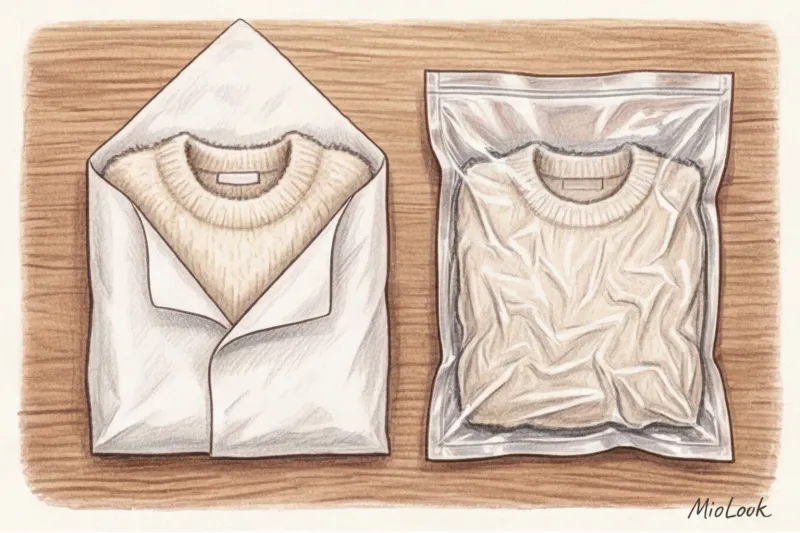
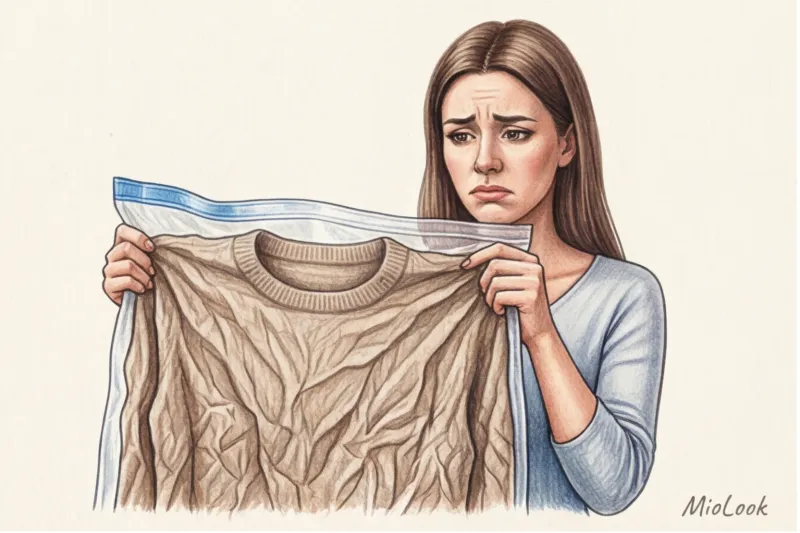
If I were asked to name a stylist's absolute nightmare, it would be vacuum bags. Viral videos love to show how a mountain of winter clothes effectively transforms into a flat pancake, freeing up half the closet. But let's look at the physics of the process, which cleaning bloggers often gloss over.
According to the Cashmere and Camel Wool Institute (CCMI), vacuum compression compresses natural fibers by 80%. Under prolonged, aggressive pressure, the cuticle of animal hair (which all wool is made of) physically breaks. So-called "dead kinks" form, and the air cushion between the strands, which is what keeps the wool warm, is destroyed. Take out such a sweater after six months, and you'll have a stiff, shapeless fabric that has lost its heat-regulating properties.
Furthermore, temperature fluctuations create a greenhouse effect inside the dense plastic. The lack of air circulation causes a musty odor that cannot be eliminated even with ozonation.
What can and absolutely cannot be vacuumed
To avoid losing the premium pieces in your wardrobe, I strongly recommend dividing your items into two strict categories before packing:
- Red list (never vacuum): Premium cashmere, fine merino, alpaca, natural silk, leather and suede items, as well as any items with a rigid cut (jackets, coats, suit trousers with creases).
- Green list (vacuumable): Down jackets with synthetic filling (note: natural down breaks just like wool!), membrane ski pants, fleece sweatshirts and polyester hoodies.
Access to MioLook for €0.99 — one-time payment
A smart AI stylist will select the perfect look.
Get access — €0.99 onceMolecular Cleaning: 3 Steps Before Packaging

"I only wore this cardigan for a couple of hours to brunch, and it's perfectly clean"—that's the phrase I hear from every other client. This is the most dangerous illusion in clothing care. According to statistics from major dry cleaners, about 70% of clothes moth damage occurs due to invisible organic residues on the fabric.
Microscopic particles of sebum, invisible drops of perfume, traces of deodorant, or micro-splatters of coffee—all of these are a veritable smorgasbord for insects. But even if moths don't reach your closet, after four to five months in a closed, dark space, organic matter begins to oxidize. I had a tragic experience: the remnants of an expensive niche perfume burned a persistent yellow stain on the collar of a cream-colored Loro Piana sweater in one summer. Professional colorists confirm that invisible stains alter the pH of the fabric, irreversibly distorting the elegant light shades.
Mandatory ritual before packaging:
- Total wash. Take everything you plan to put away to an eco-dry cleaner or carefully launder it. The rule is simple: only items with 100% molecular purity are allowed to go into hibernation.
- Depilling. Use a high-quality pilling machine and go over areas of greatest friction (underarms, inner sleeves, and the area where the garment touches a crossbody bag on your hip). It's important to remove pilling before storing: over the summer, pilling accumulates more densely, making it much more difficult to remove in the fall without damaging the main thread.
- Dry brush cleaning. Brush the nap of coats and heavy jackets with a special brush made of natural boar bristles. This will lift the nap and remove street dust from the deep layers of the drape.
Wardrobe Architecture: Rules for Storing Coats and Knitwear
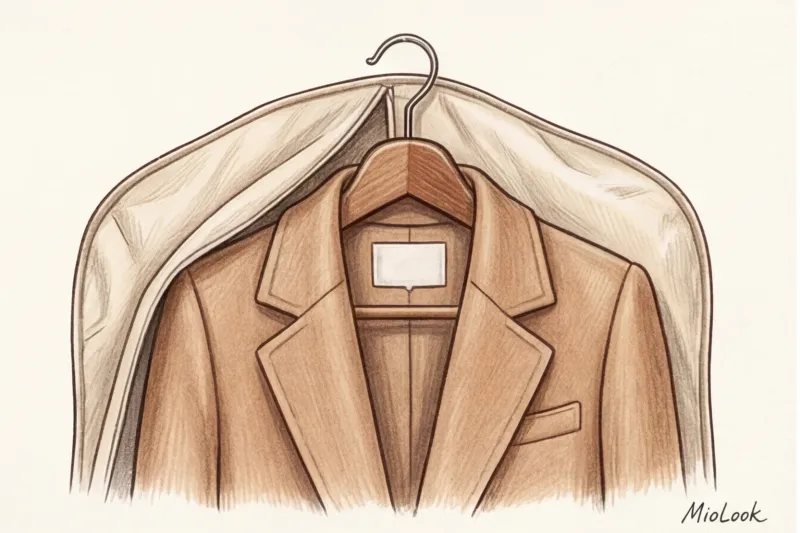
Italian tailors who create bespoke suits use the term la struttura — the architecture of the cut. An expensive coat or structured jacket isn't simply made from dense fabric. It conceals a complex engineering system: interlining, horsehair padding, and multi-layered shoulder pads. The seasonal storage process should maintain, not destroy, this geometry.
Cashmere Spa: How to Fold Heavy Knits
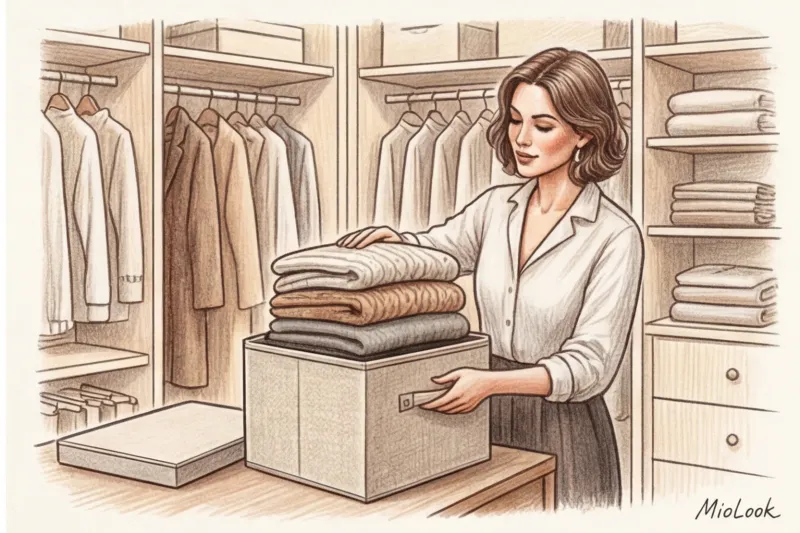
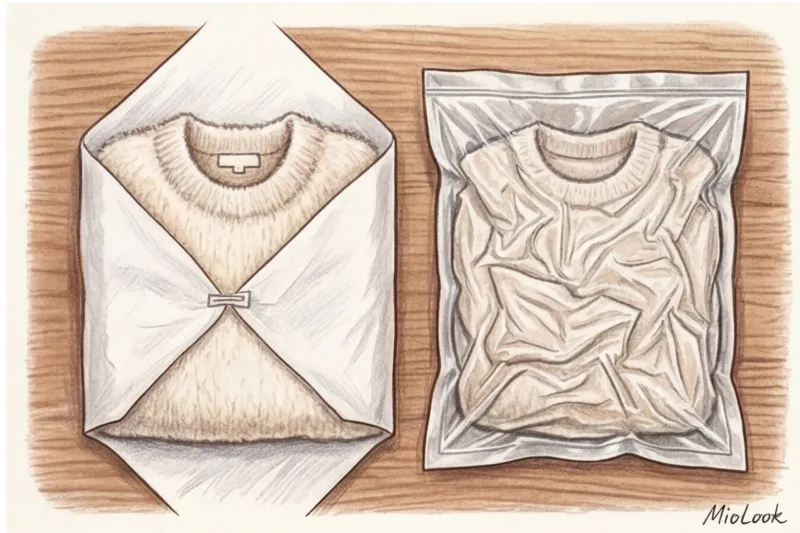
Rule number one: heavy wool sweaters should never be hung on hangers. Their own weight will inevitably stretch them 1-2 sizes in just a month. In premium boutiques, knitwear is stored exclusively horizontally using acid-free tissue paper. Regular paper will yellow over time and can transfer the acidity of the fabric, so invest in the right kind.
Lay the sweater face down on the bed. Place a piece of tissue paper along the back and carefully fold the sleeves to form a neat rectangle. The tissue paper prevents the delicate fibers from rubbing against each other and absorbs residual moisture from the air. Place the sweaters loosely in the fabric bags, leaving some space for air to circulate.
Fair Limit: This elegant tissue-folding method is completely unsuitable for chunky knit sweaters. With paper, they will become so stiff and bulky that they will take up half the shelf. It's better to simply roll them neatly and place them in individual organic cotton bags.
How to keep jackets and coats in shape
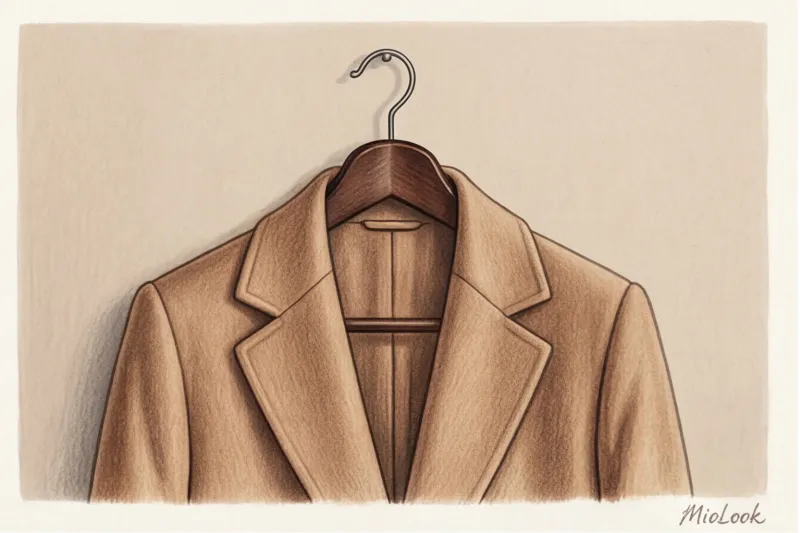
For outerwear, you'll need the right hangers. Forget the thin velour or plastic ones from the mass market—you need anatomically shaped wooden hangers with wide wings (4 to 6 cm) that accurately mimic the shape and curve of the human shoulder.
My personal testing of storage systems showed that store-bought plastic bags used to return items from the dry cleaners are literally killing clothes. Plastic accumulates static, attracts dust, and doesn't breathe at all. Immediately upon returning home, remove the plastic and hang your investment outerwear in thick cotton or linen bags. And the most important rule, often forgotten: before putting your coat in the bag, be sure to fasten all buttons and zippers. This will secure it in place. la struttura and will prevent the sides from warping.
Your ideal image
it begins Here
Join thousands of users who look flawless every day with MioLook.
Get access — €0.99 oncePerfume wardrobe: aesthetic protection from moths and odors
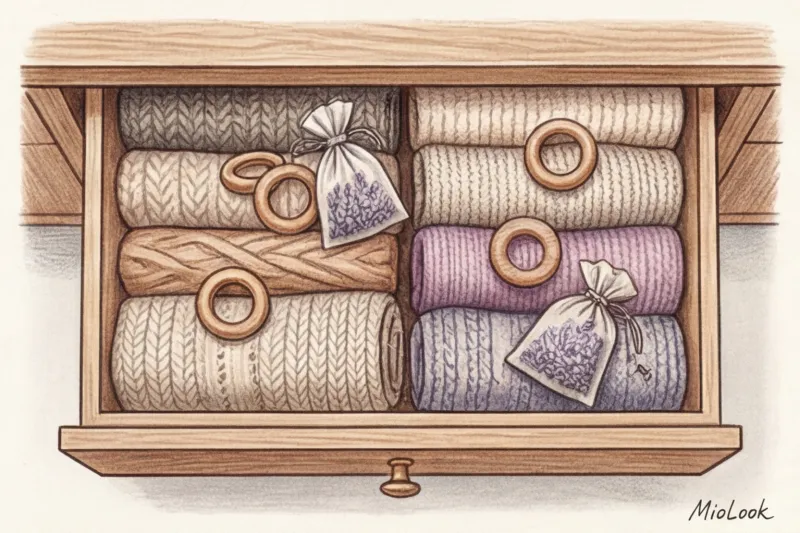
The pungent, toxic smell of mothballs wafting from a coat is a relic of the past that instantly cheapens any look, even the most carefully crafted. Modern insect protection relies on natural repellents, which also serve as an exquisite interior fragrance for your dressing room.
The best basic investment is blocks and rings of natural American red cedar. But there's a trick that only professionals know. Over 12 years of working as a stylist, I've noticed that many clients complain about the ineffectiveness of cedar ("the moths still get in!"), simply forgetting to renew it. The fact is, cedar only works as a repellent while it's releasing its active essential oils. Every season, before storing your items, be sure to lightly sand the cedar blocks with fine sandpaper. The wood will be renewed and will once again exude its intense aroma.
Complement the cedar base with fabric sachets filled with dried lavender, cloves, and rosemary. Important safety rule: never allow fragrances to come into direct contact with clothing, as the concentrated essential oils will leave permanent stains. Place sachets in the corners of fabric boxes or hang them directly on a rod over cotton covers.
Checklist: How to Properly Store Winter Clothes in Summer
To prevent the seasonal rotation process from descending into chaos, I recommend following this clear algorithm. Take a screenshot or save this list before the weekend begins:
- Hard sorting: Divide the entire winter pile into three piles. The first is "to be repaired" (sew on a button, replace heels, remove a snag). The second is "to be dry cleaned" (coats, down jackets, complex compositions). The third is "gentle wash at home."
- Surface preparation: Wash with special liquid detergents for wool, dry strictly horizontally on a towel, final depilling.
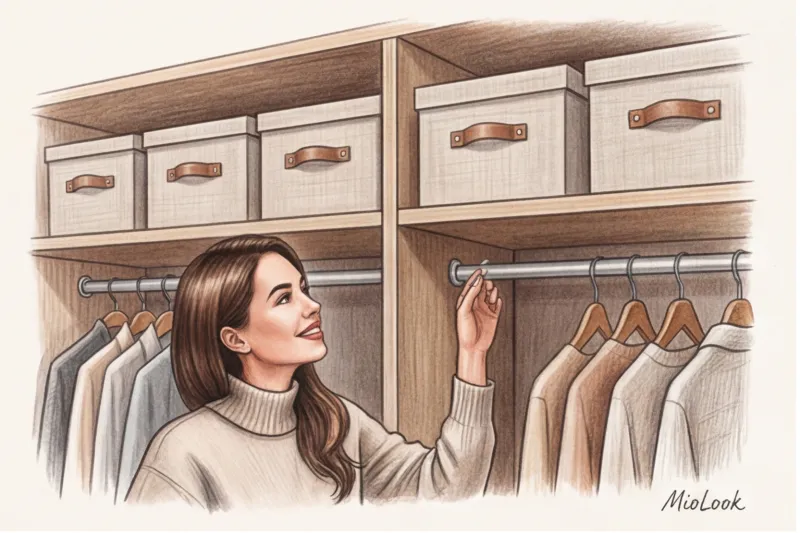
- Inventory audit: Check for the availability of anatomical hangers of the right size, acid-free paper, breathable cases and fabric boxes with a rigid bottom (cardboard boxes can attract insects).
- Packaging according to the rules: We put the knitwear in boxes, interleaving the layers with tissue paper; we hang the coat on wide hangers, having first buttoned it up.
- The final touch: placing sanded cedar blocks and perfumed sachets in closed boxes.
Digitize before Preserve: Smart Wardrobe Management with MioLook
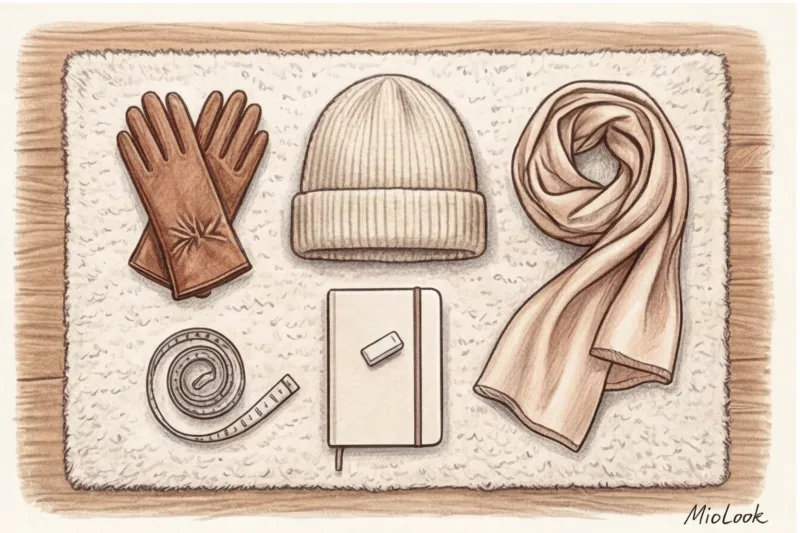
Have you ever noticed this: every autumn, on the first cool day, you go shopping and buy yet another identical black turtleneck sweater or gray wool pants? This happens because our brain operates on the principle of "out of sight, out of mind." Items securely packed away in the far corners of the closet for six months are simply erased from our working memory.
That's why, before you zip up your panniers, I highly recommend digitizing your belongings. Lay out your clean, prepared sweaters, scarves, and coats in good daylight, photograph them, and upload them to MioLook.
This habit elevates you from a simple consumer to a conscious stylist of your own life. Digitization solves two major problems at once. First, you get an accurate inventory: in August, when brands begin releasing their pre-fall collections, you'll be able to open the app and clearly see your belongings. You'll realize you already have three perfect merino sweaters, and your budget would be better spent on the perfect ankle boots.
Secondly, the "smart wardrobe" feature allows you to plan stylish capsule wardrobes in advance, generating fresh new combinations from your saved collection using artificial intelligence. Proper storage is half the battle. The other half is always knowing exactly what's in your beautiful cotton trunks and making these investments work for your impeccable image.