"Don't worry, they're natural—they'll definitely break in!" Over 12 years as a stylist, I've learned that this phrase is the most expensive lie ever invented by marketers and sales associates. Shoes should fit perfectly from the first second you try them on. If you feel pain or discomfort now, there's no way to make a miracle happen in a week or a month.
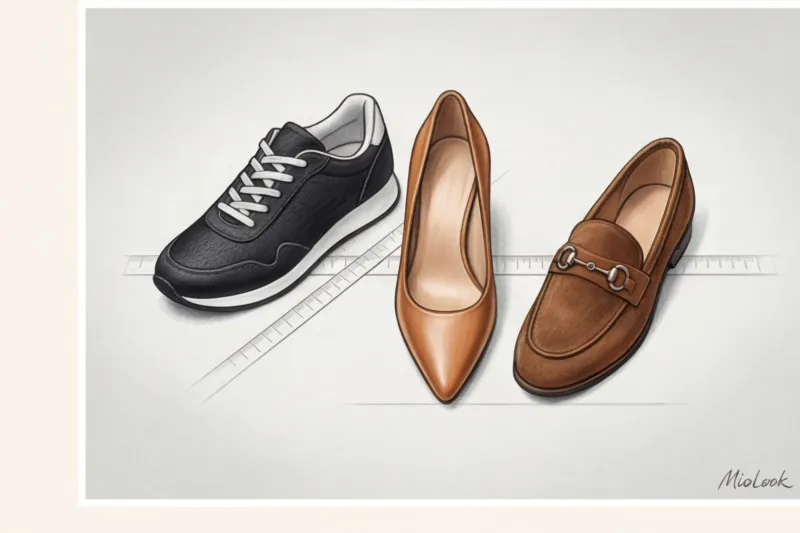
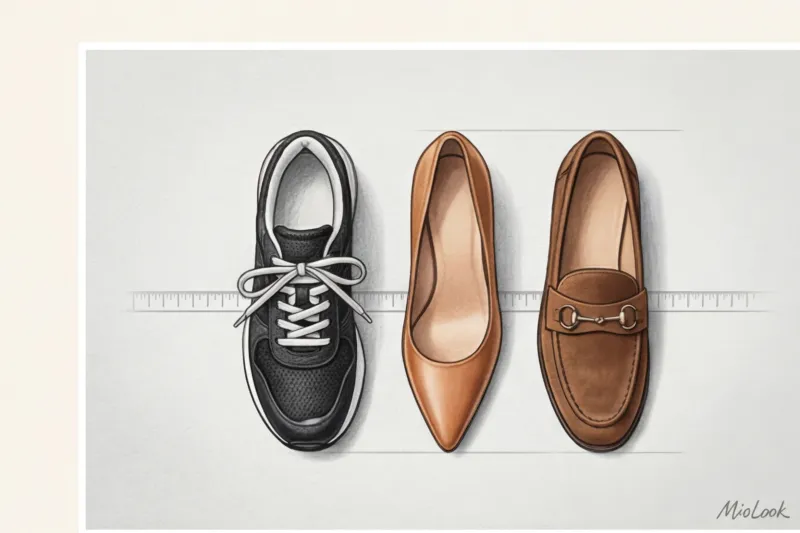
I recently conducted a personal experiment: I ordered three pairs of autumn ankle boots in my "iron" size 38 from different mass-market and premium brands. When I measured the length of their inner soles with a tape measure, the difference between the smallest and largest pair was a shocking 1.5 centimeters! That's why the question of How to choose shoe size online , requires not intuition, but cold mathematical calculation.
We have already discussed the systematic approach to online wardrobe in more detail in our The complete guide to buying clothes without returns Today, we'll explore footwear—the most complex e-commerce category, where millimeters matter.
The Illusion of a Standard Grid: How to Choose Your Shoe Size Online and Avoid Mistakes
According to the National Retail Federation (NRF, 2023), nearly 30% of shoes purchased online are returned to warehouses. The main reason is the buyer's blind faith in the number on the sole. I had a client, Anna, whose closet peacefully housed size 37 shoes and size 39 sneakers. She sincerely believed her feet were "problematic" until we analyzed the physics of shoe lasts.
Your "usual 38" is a phantom. There's no single standard in the industry. Italian shoemaking has historically focused on a narrow, graceful foot. German brands (such as Caprice or Gabor) include a larger volume in the same 38 size for comfort. Asian manufacturers often design lasts for shorter toes and a wider metatarsus.
When reviews say a pair is "too small," in the language of technologists, this most often means not a lack of length, but a narrowed toe box, due to which the foot simply cannot move forward all the way.
Focusing solely on insole length is the biggest mistake you can make when shopping online. Length is only 30% of success.
Your perfect look starts here
Join thousands of users who look flawless every day with a smart AI stylist.
Get access — €0.99 once3D Anatomy of Foot Position: Three Parameters That Are More Important Than Foot Length
Shoes are a three-dimensional architectural structure, not a flat outline on a piece of paper. Back in 1927, Charles Brannock invented his famous foot measuring device (the Brannock Device), which remains the gold standard among orthopedists. Its genius lies in the fact that it measures the foot in 3D. Online, we'll have to evaluate these parameters visually.
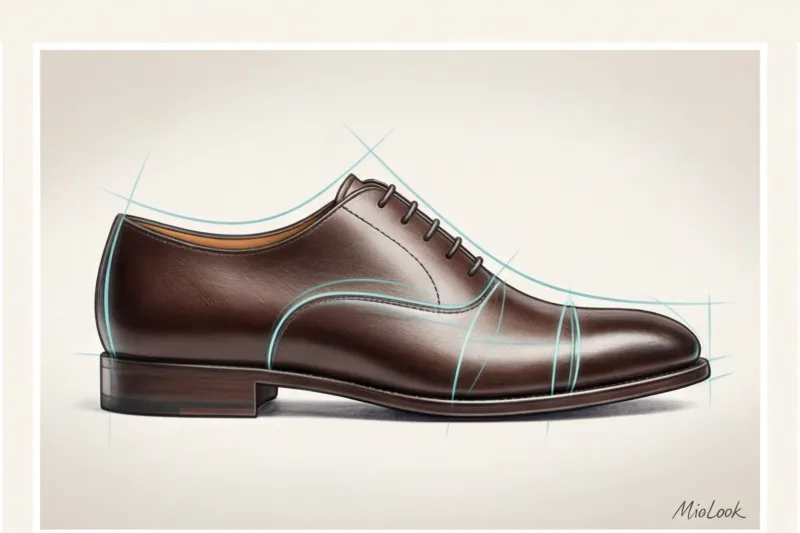
Foot width
Width is the circumference of the foot at its widest point (the so-called "foot bundle"). In international standards, it is designated by letters (from narrow A to extra-wide EE) or numbers (from 1 to 12). Unfortunately, mass-market shoes often use the average width of F (normal) or G (slightly wide) without indicating this on the product data sheet.
Buying shoes a size too big just to avoid side-to-side pressure is a surefire way to see an orthopedic surgeon. The arch support in these shoes shifts relative to your natural arch. This results in distorted gait mechanics, knee pain, and the development of hallux valgus (a bunion).
Lifting height
The riskiest shoes to buy without trying them on are loafers, classic closed-laced Oxfords, and Chelsea boots without a side zipper. If you have a high instep, you simply won't be able to fit your foot through them, even if the length is perfect.
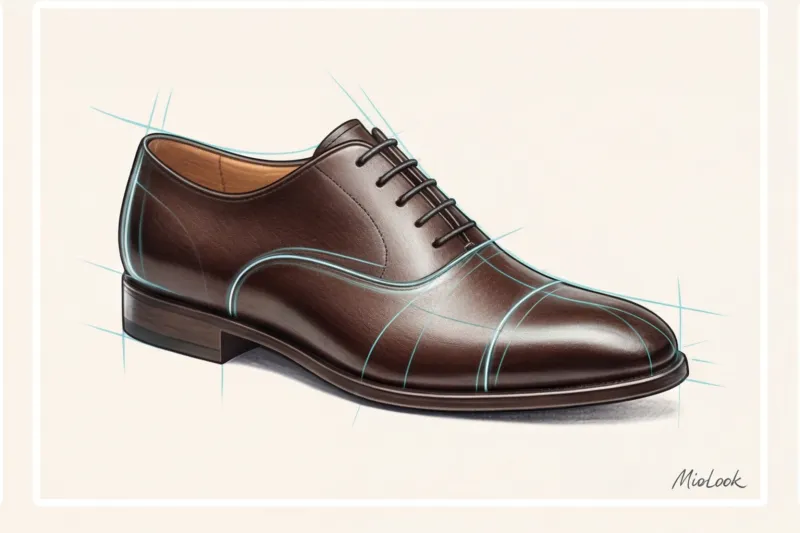
How to recognize a high-instep shoe from a photo? Look for design details: derbies with exposed lacing, hidden elastic bands on the sides of the tongue, and deep V-shaped cutouts on the vamp. These will provide that coveted 5–7 millimeters of freedom when putting them on.
Features of the brand's last
The shape of the toe cap dramatically changes the actual toe space. If you're buying pointed-toe shoes, you need to add at least 1–1.5 cm of "air" to your foot length. A square or round toe cap allows you to buy true-to-size shoes. Keep this in mind when exploring the selection of an unknown brand.
MioLook Algorithm: How to Measure Your Feet at Home
About 60% of adults wear the wrong shoe size. This is partly because most people measure their feet while sitting on the couch. This is a fatal mistake.
According to the American Podiatric Medical Association (APMA), by evening, a healthy person's foot swells and increases in size by 5-8%. Furthermore, 80% of people have foot asymmetry—the right and left feet can be up to half a size different. Always use the larger foot as a guide.
Step-by-step instructions for accurate measurements:
- Wait until evening (after 5:00 pm).
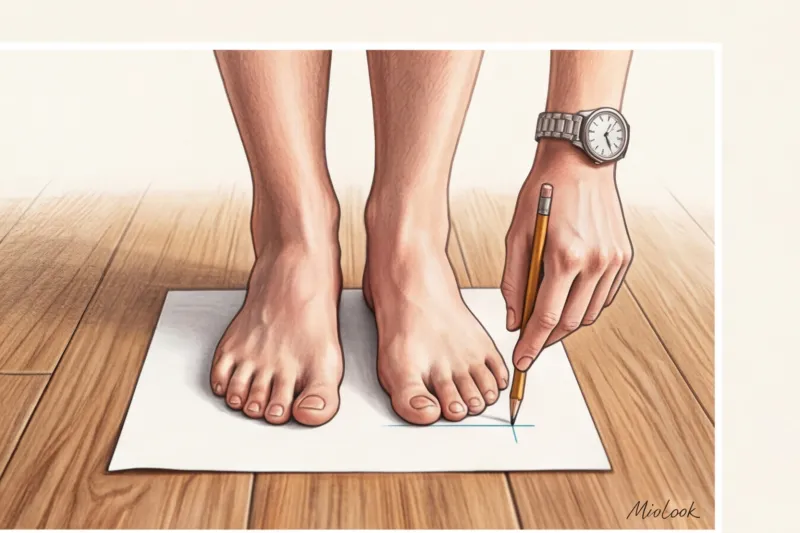
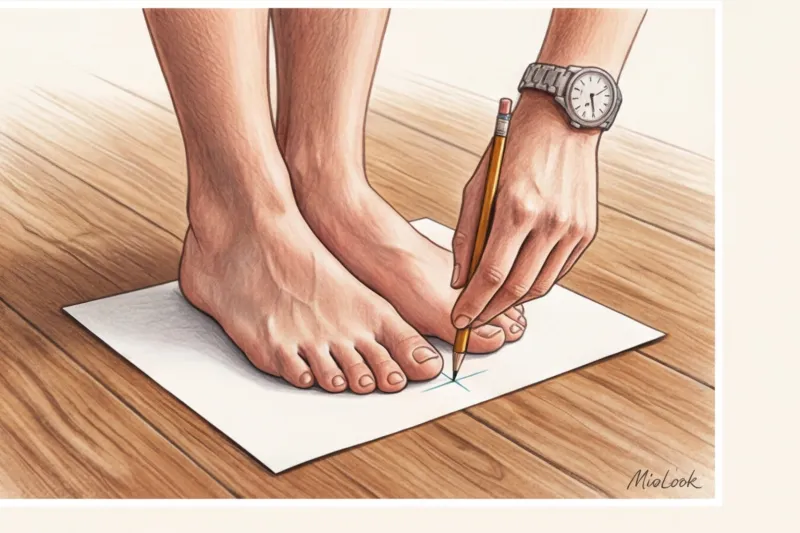
- Place an A4 sheet of paper on a hard floor (not a carpet) close to a flat wall.
- Stand on the sheet of paper with your heel lightly touching the wall. Transfer your body weight to this leg.
- Take a thin pencil. Critical: Hold it strictly perpendicular (at a 90-degree angle) to the floor. If you tilt the marker under your foot, you'll "cut off" up to 0.5 cm of the actual length.
- Mark the point at the longest finger (this is not always the thumb, often the second).
- Measure the distance from the edge of the sheet to the mark with a ruler in millimeters.
Additionally, use a tape measure to measure the circumference of your foot at the widest part of your toes. This information will be useful when contacting the online store's customer service if you decide to check the shoe fit before ordering.
Access to MioLook for €0.99 — one-time payment
A smart AI stylist will choose the perfect look for you and help you digitize your wardrobe.
Get access — €0.99 onceHidden Clues: How to Read Photos in an Online Store
Informed online shopping requires data analytics skills. We're not interested in a beautiful studio photo with highlights—we're looking for technical details.
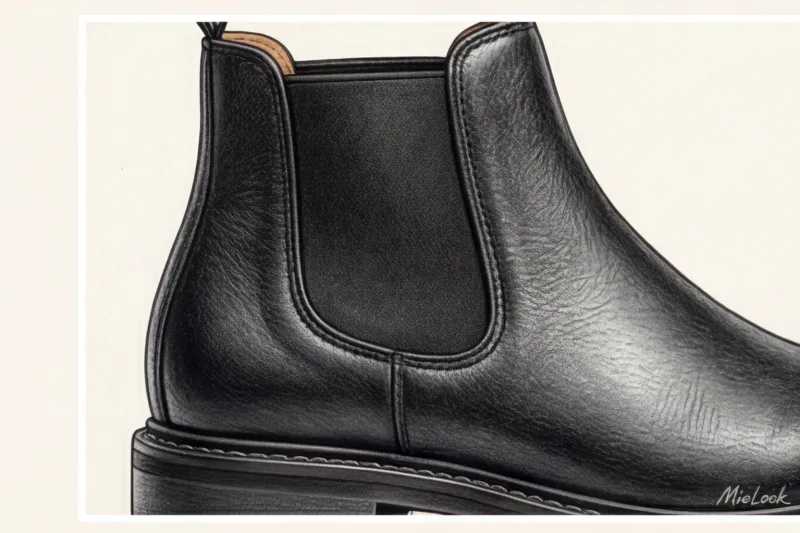
Look closely at the photos of the shoes on the model. If you see the heel trailing slightly as she steps, the last is too wide in the heel area (a typical problem for narrow European feet). Notice how the material stretches around the big toe.
Insider Stylist Trick: I always zoom in on the seams on the toe and heel as much as possible. If the toe is reinforced with a dense backing material (often visible by the rigid outline), the shoe won't stretch even a millimeter. Genuine suede or soft nappa leather will shrink after 2-3 wears, but patent leather or synthetic faux leather will retain their concrete-like rigidity forever.
When reading reviews, ignore emotional praise like "they're so beautiful, I took them to a wedding." Look for key planting indicators: "squeezes fingers" , "on a narrow leg" , "the heel is squelching" If three people write about a hard back, believe them, not the pretty description on the product card.
Shoes for the office and performances: a status choice without trying them on
When I'm choosing looks for clients who are speakers or top managers, comfort becomes a matter of professional reputation. It's impossible to confidently present a development strategy if the strap of a €400 shoe is cutting into your tendon.
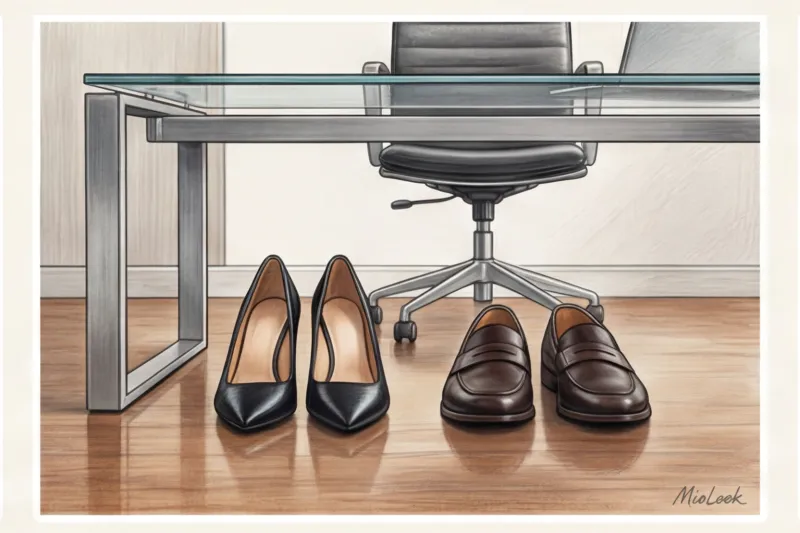
Shoes for long performances or a full 8-hour office day always require 0.5 cm (about half a size) of extra room. By mid-day, gravity and weight bearing will take their toll: the arch will flatten slightly, making the leg appear longer.
When choosing the perfect classic pumps online, consider two factors:
- Vamp Depth: The more exposed the base of the toes (the so-called "shoe cleavage"), the less the shoe fits on your foot, causing you to instinctively curl your toes when walking.
- Heel position: The center of the heel should be directly under the center of your heel. If the heel is too far back (often the case with extreme stilettos), the fulcrum is compromised. You'll feel excruciating pain in your calves within 20 minutes.
Opt for finely crafted materials. For shoes priced between €100 and €250, look for leather made from chevroil (goatskin, incredibly flexible) or calfskin. We wrote in detail about how classy shoes fit into a dress code in our article about Royal shoes and their style secrets.
Checklist: 5 questions before clicking "Pay"
To minimize risks and stop funding courier services with returns, run your selected pair through this quick filter.
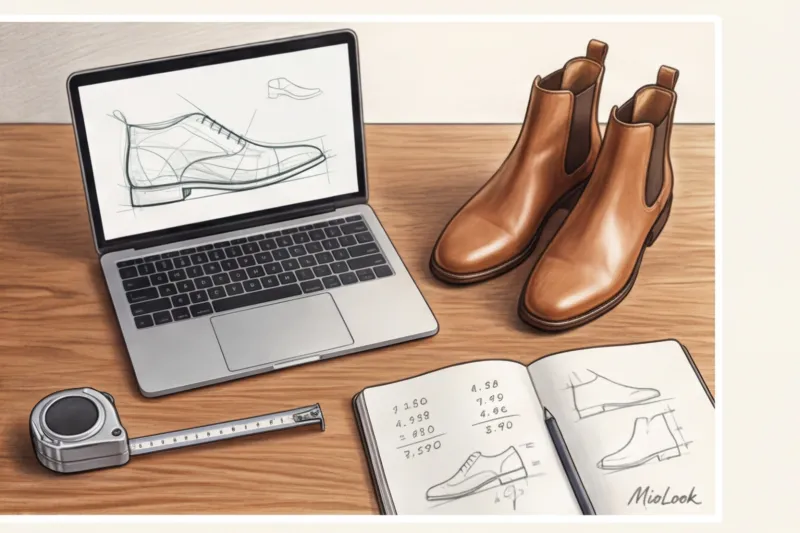
- Have I checked my larger foot against the mesh of THIS PARTICULAR brand? Don't rely on the marketplace's general size guide; visit the manufacturer's official website and find the millimeter chart.
- Does the design take my anatomy into account? Does the lace-up design accommodate my high instep? Is the toe shape suitable for my toes?
- Does the material meet my expectations? Am I prepared for this hard polish to never stretch?
- Did I check the reviews as an analyst? Have you found any mentions of the pad's fullness and rigidity from real people?
- Do I understand the store's return policy? If the couple still doesn't go to jail, will I be able to get her back without going through bureaucratic hell?
Fair Limit: This algorithm works for 90% of standard situations. BUT, it's useless if you have a complex orthopedic foot deformity, severe asymmetry of more than one size, or diabetic feet. In these cases, online shopping should give way to custom tailoring or in-person fittings for orthopedic lines.
Shoe discomfort isn't a sign that something's wrong with your feet. It's a sign that the shoe last was designed for a different geometry. By stopping chasing the usual size on the tag and starting to analyze the actual measurements of shoes, you'll forever change your approach to shopping. Choose shoes with your head, so your feet feel comfortable.