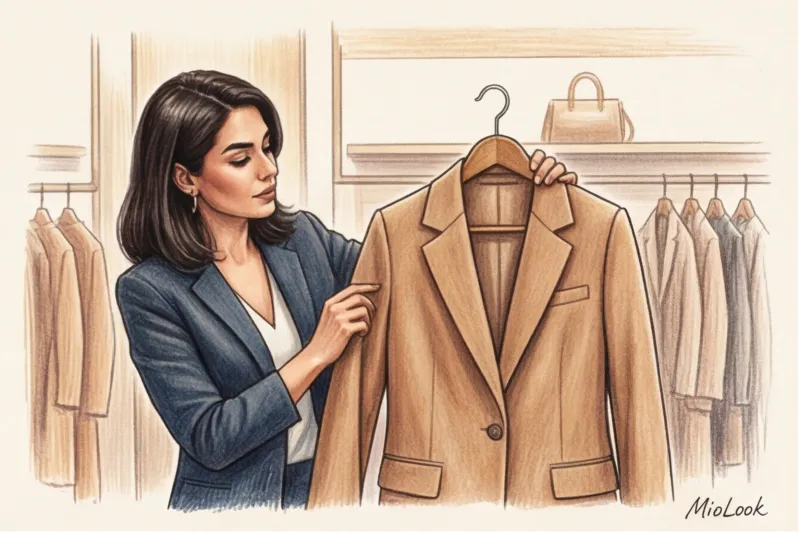
One day, a client of mine brought in a stunning $500 silk blouse for a wardrobe review. She wore it exactly once, to an important presentation, after which the sheer fabric literally began to unravel at the back seams from the slightest stretch. In the same pile was a structured wool-blend blazer from a typical high-street store for $80, which had served her faithfully for five years, maintaining its perfect shape. Sound familiar?
We're used to thinking that a high price tag automatically guarantees durability. But in 14 years of working as a personal stylist, I've learned one hard lesson: these days, we're more likely to pay for marketing, rent for a boutique in the city center, and a pretty paper bag than for actual durability. That's why the question of How to choose quality clothing , does not come down to knowledge of brands, but to the ability to read things with your hands and eyes.
We've already discussed the philosophy of a conscious approach to your purchases in more detail in our complete guide to rational wardrobe Today, I suggest focusing on purely practical matters: the physics of fabrics, proper cutting, and tests that will take you no more than 30 seconds right in the fitting room.
The Price Illusion: Why Expensive Doesn't Always Mean Quality
According to a McKinsey study on the state of the fashion industry (2024), in the premium segment, up to 60% of a garment's cost is made up of advertising, logistics, and the status of the logo itself. The fabric and tailoring themselves may account for only a tiny fraction of this total.
I regularly see expensive T-shirts from luxury fashion houses in my clients' closets that warp after the first wash because they're made from cheap, poorly stabilized jersey. Conversely, I find brilliantly tailored trousers in the mid-price range, where the manufacturer skimped on advertising but invested in the fit.
The key skill of the modern shopper is the ability to distance themselves from brand hype. Imagine an item without a name tag at all. Would you pay the asking price for that material and those stitches? This simple thought experiment is the most sobering.
The Biggest Fabric Myth: Why 100% Natural Isn't Always a Good Thing
"Look only for 100% cashmere, 100% wool, or 100% cotton!"—this advice is repeated from one glossy magazine to another. And it's this very advice that causes women to spend huge amounts of money on items that will lose their appearance within a month.
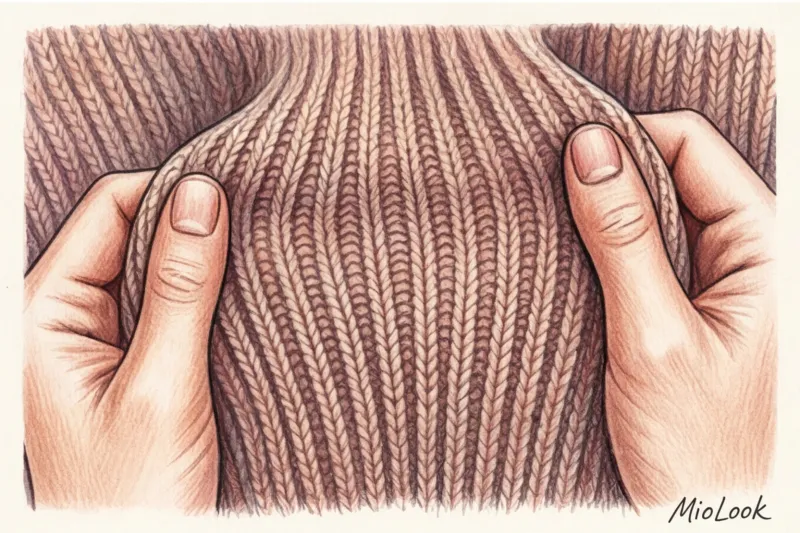
As a practitioner who sees clothing dynamically, I often discourage clients from using 100% natural fibers for basic, everyday items. Why? Pure cashmere has a short pile—with constant friction (for example, against a bag strap or outerwear), it will inevitably begin to pill. 100% cotton in jeans or T-shirts will stretch mercilessly at the knees and elbows, and after washing, can shrink up to a full size.
According to fabric testing standards (specifically, the Martindale abrasion test), adding a small percentage of high-tech synthetics dramatically extends the life of a garment.
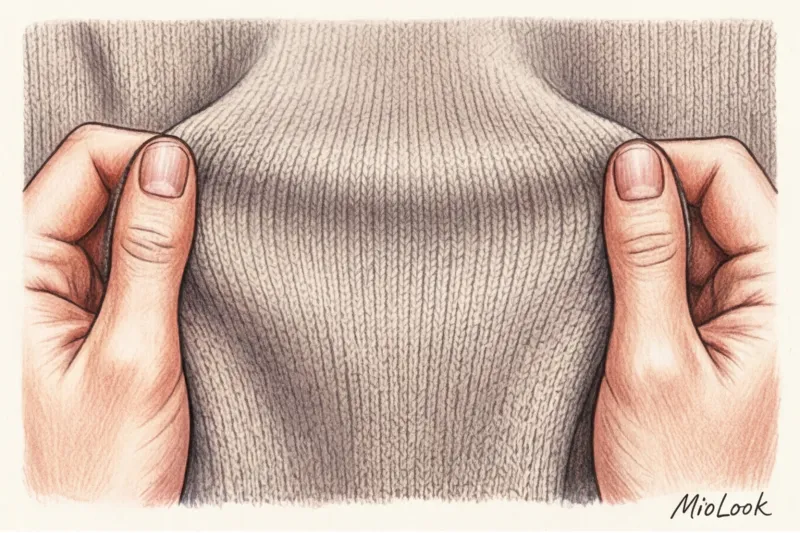
Here's the "golden ratio" of ingredients that I recommend looking for on labels:
- For coats: 70-80% wool and 20-30% polyamide or nylon. The synthetics act like reinforcement in concrete—they hold the heavy fabric in place and prevent the wool from fading on sleeves and pockets.
- For everyday trousers and jeans: 95-98% cotton and 2-5% elastane. This is enough for the garment to spring back to its original shape after sitting.
- For knitwear: An admixture of 10-15% high-quality acrylic or nylon to wool will make the sweater indestructible.
"It's important to distinguish between cheap polyester, which creates a greenhouse effect, and high-quality synthetic fibers like viscose, modal, cupro, or Tencel. The latter are as breathable as cotton but drape luxuriously like silk."
Of course, there are exceptions to this rule. If we're talking about extreme summer heat (30°C and above), 100% linen or the finest muslin cotton really does work better. They may wrinkle terribly, but in this case, protection from heatstroke is more important than a flawless appearance.
Organize your wardrobe wisely
Try MioLook for free: A smart AI stylist will select the perfect look from your items and suggest what's missing for the perfect capsule wardrobe.
Get access — €0.99 onceFitting Room Guide: How to Choose Quality Clothes by Touch
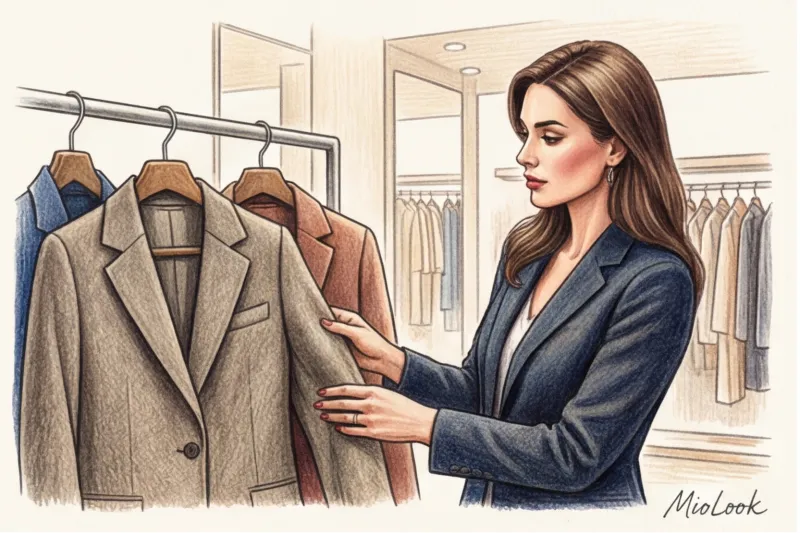
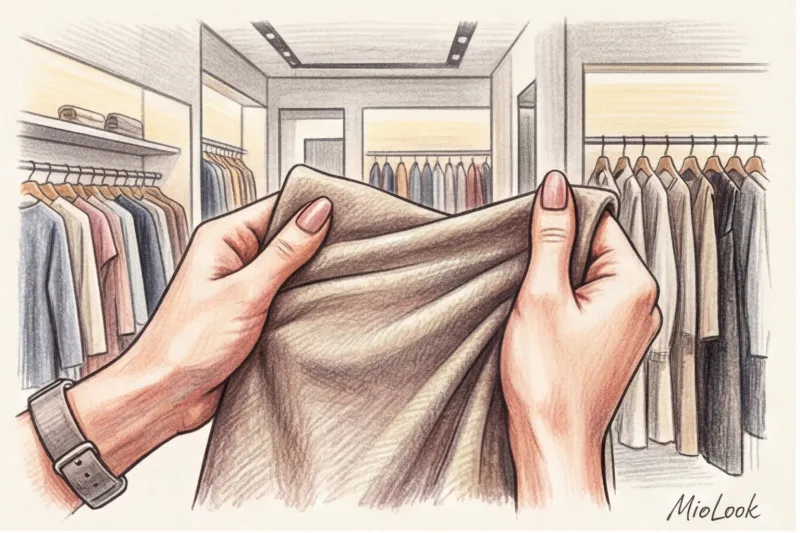
Online shopping is convenient, but it deprives us of our most important tool: tactility. A quality garment almost always has weight. Even a good-quality silk blouse has a good density (measured in momme, a good rating is 19 and above), it flows beautifully and heavily, rather than standing upright or becoming staticky at the slightest breeze.
To understand how to choose quality clothing in a store, you don't need laboratory conditions. Two quick tests are enough.
Crease and light test
My absolute favorite is the "fist test." Take the edge of the garment (preferably in an inconspicuous place, like the hem) and squeeze it tightly in your fist for 10-15 seconds. Release your hand. If the fabric is still crumpled and deeply creased, return it to the hanger immediately. You'll be exhausted ironing it, and half an hour later, it will look unkempt again at the office.
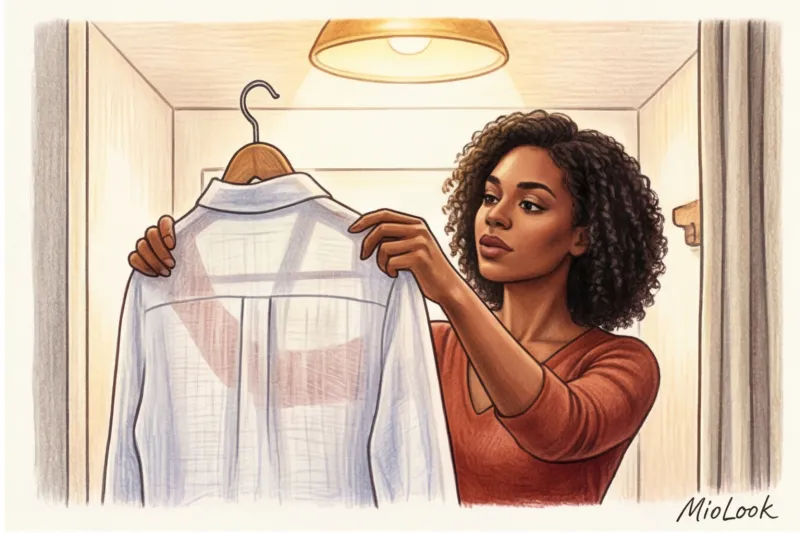
The second step is the light test. Hold a cotton T-shirt or linen shirt up to the overhead light in the fitting room. You should see a uniform, tight weave (for a high-quality cotton base, the thread weight should be at least 180 g/m²). If you see bald spots, knots, uneven thread thickness, or excessive sheerness, you're looking at a cheap, short-fiber fabric. Such a fabric will warp in the washing machine drum after the first cycle.
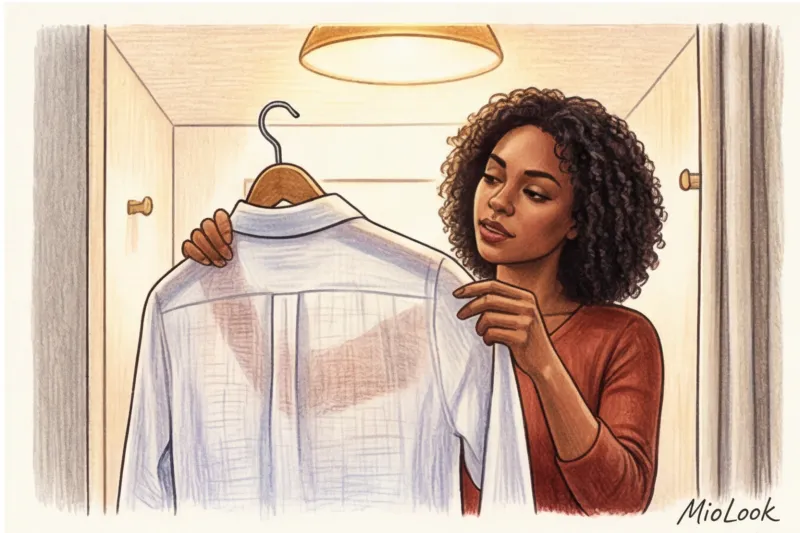
Seams, fittings and print joining
Never judge an item solely by its front. The back tells you much more about the manufacturer. What are we looking for there?
- Closed seams: If you turn a blouse or jacket inside out and see threads sticking out from the overlock, it's mass-market. In higher-class items (and things that look expensive ) the seams will be closed (French or lapped seam) or edged with bias binding.
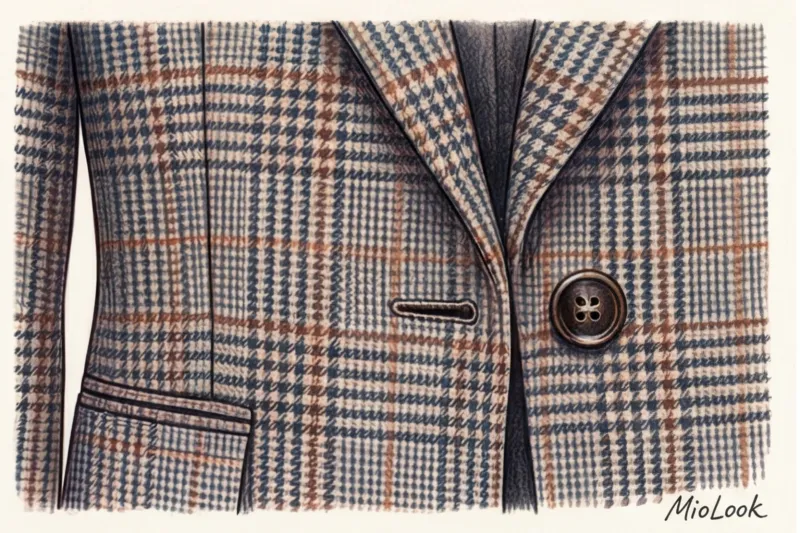
- Joining the drawing: Look at the side seam of a checked jacket or striped shirt. The lines should match perfectly, creating a continuous pattern. Cheap brands cut the fabric in a layered fashion, saving every centimeter, so the checkered pattern "dances." Matching the print requires 15-20% more fabric—a sign of high-quality production.
- Fittings: A high-quality zipper (look for YKK or riri engraving on the pull) should move smoothly. Buttons should be sewn on a shank (a loose thread wrapped under the button) to prevent the fabric from wrinkling when fastened, and a spare hardware should be attached to the inseam.
Invest or save: the Cost Per Wear (CPW) formula
In the world of styling, there's a universal math formula called the Cost Per Wear formula. It's calculated simply: the cost of an item plus the approximate cost of care (dry cleaning, repairs) divided by the number of days you've worn it.
Let's compare. You buy a trendy rhinestone top for 3,000 €. You wear it to a corporate event and a friend's birthday party. Two socks. CPW = 1,500 € per outing.
Or you invest 15,000 € in a perfectly tailored pair of basic trousers made of a heavyweight viscose blend. You wear them to the office twice a week for two years (about 190 times). CPW = 78 €.
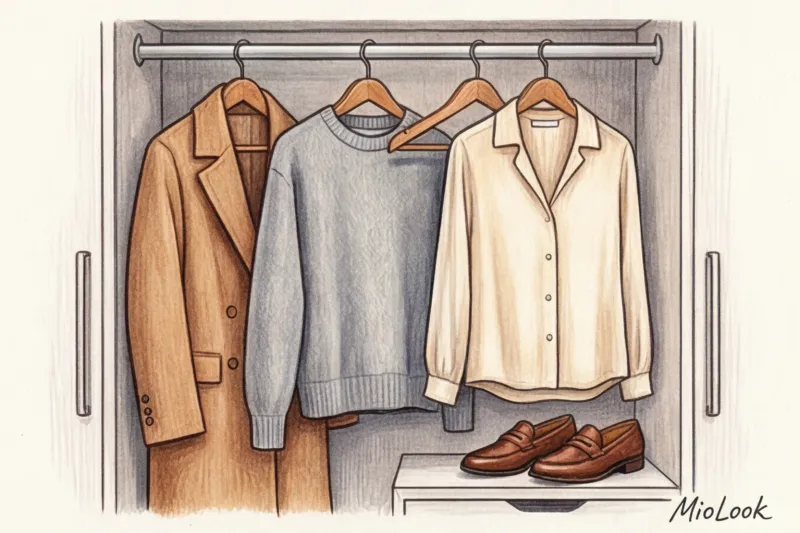
This math clearly shows where you need to spend and where you need to save. Invest It's always worth choosing structured items that shape the silhouette and are worn frequently: outerwear, quality shoes, bags, a good suit set (jackets, trousers).
Save You can and should invest in fleeting, one-season trends, basic white T-shirts (no matter how expensive they are, the snow-white color eventually turns gray from antiperspirants and washing) and summer vacation clothes that are soaked with sea salt and sunscreen.
Ready to start shopping mindfully?
Try MioLook for free: Upload your items to the app, and AI will show you what looks you can create without making any purchases.
Get access — €0.99 onceKnitwear and outerwear: the most challenging categories
When I review new clients' wardrobes, it's in these two categories that we find the most expensive, yet frustrating, mistakes.
When choosing knitwear The key is the knitting density. Take a sweater and stretch the collar or cuff slightly. The elastic should instantly return to its original shape with a soft "click." If it shrinks slowly and reluctantly, the sleeves will stretch out and look sloppy after a month of wearing. Also, pay attention to the joints where the sleeves meet the armholes: in high-quality knitwear, the pieces are knitted according to the pattern (you'll see the characteristic decrease knots), while in cheaper knitwear, they are simply cut from knit fabric and sewn with an overlock.
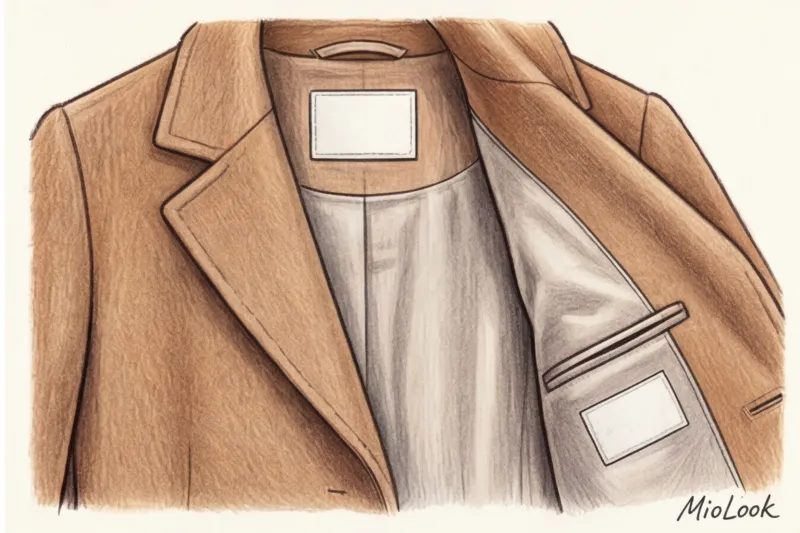
Outerwear A coat hides its secrets inside. Be sure to check the lining. Even a 100% wool Loro Piana coat will be pointless if the lining is 100% polyester. You'll sweat on the subway or in the car, and when you go outside, you'll instantly freeze due to the moisture. A proper lining is always made of viscose, acetate, or cupro. Also, feel the collar and lapels of your coat or trench coat—they should be thicker than the rest of the fabric (lined with a special material on the inside) to hold the garment firmly in place.
Smart Shopping Checklist: 5 Questions to Ask Before You Buy
To reinforce this skill, I suggest you keep this short checklist. Next time you're standing at the checkout with a beautiful item, honestly answer these five questions:
- Can I create at least 3 looks with this item right now from what's already hanging in my closet? If you need to buy special shoes or new trousers for it, it’s not an investment, but a financial hole.
- Did the fabric pass the fist test and the light test?
- Does this item fit my lifestyle today? Not for a fantasy future where you lose 5 kilograms and start going to the Bolshoi Theater every Friday, but for real life with trips to the office, walks with the dog, or meetings at a coffee shop.
- Am I prepared for the special care requirements? If the tag says "dry clean only" and the item is light-colored and casual, budget for dry cleaning every two weeks. Ready?
- Am I comfortable moving in it right now? Raise your arms, squat down, and hug your shoulders. If the armholes are cutting in and the belt is digging into your waist, no amount of stretching will help.
Ultimately, a truly high-quality item is one you forget you're wearing immediately. It doesn't require tugging, doesn't wrinkle at the first touch, and allows you to focus on your day, not your clothes. Invest in the right textures, be meticulous in the fitting room, and your wardrobe will start working for you, not the other way around.