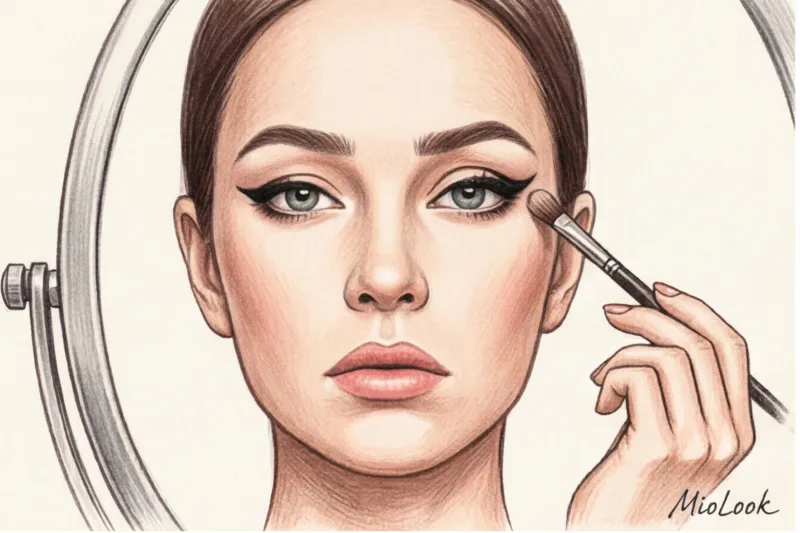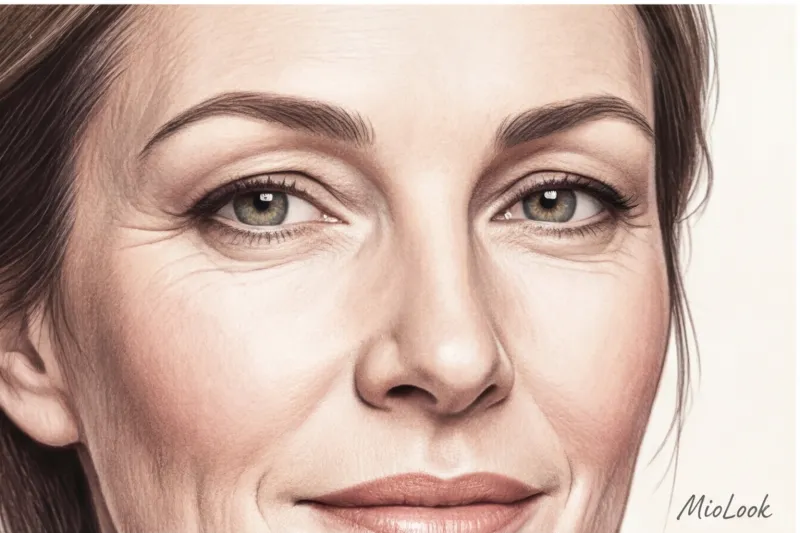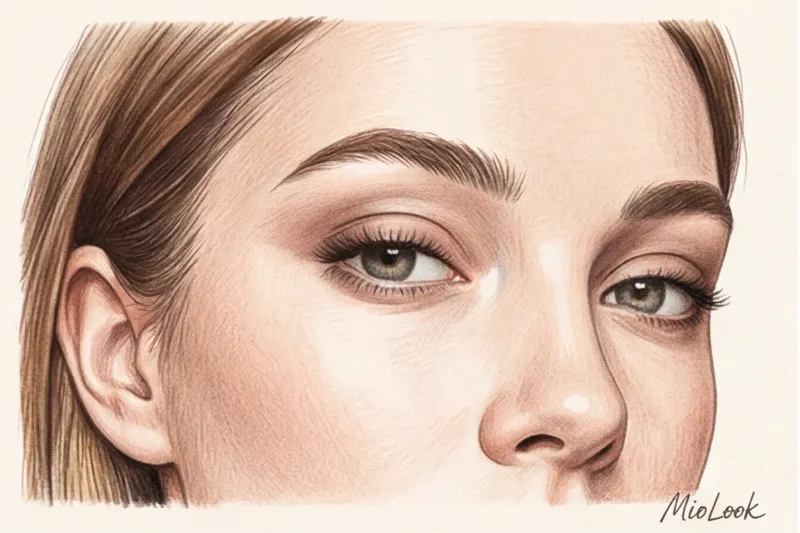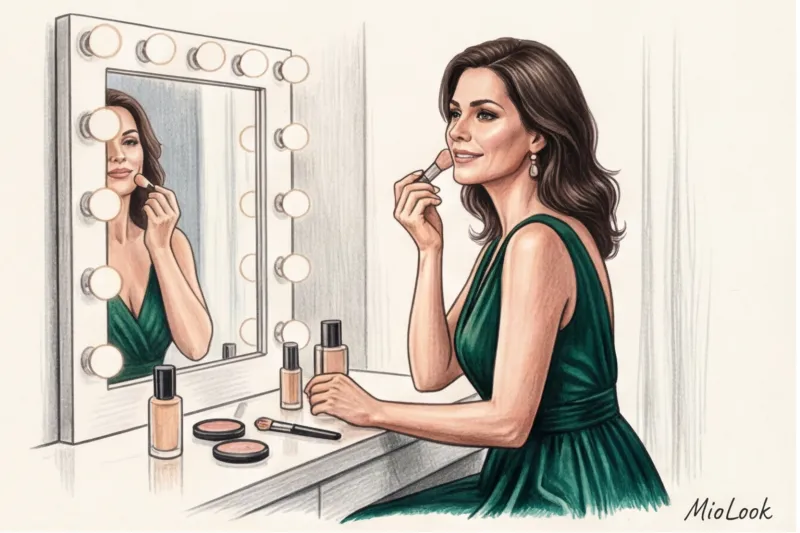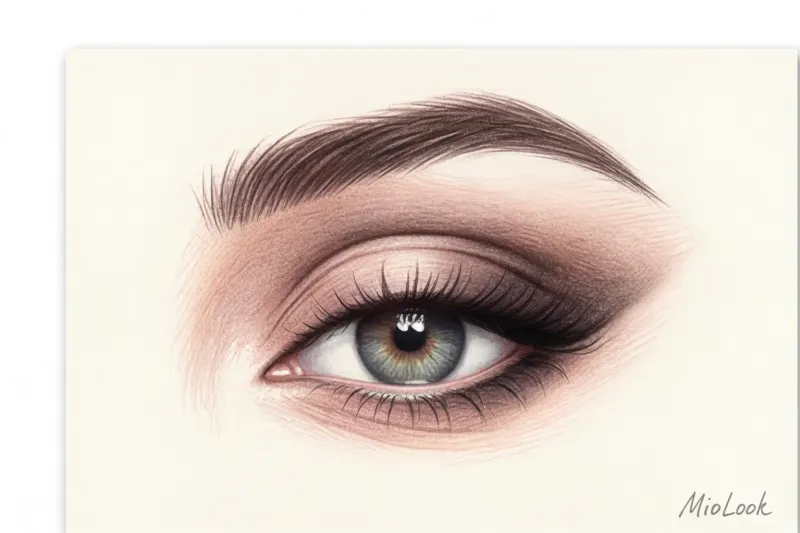
Have you ever noticed how that gorgeous smoky eye that took forty minutes to create disappears into the crease of your eyelid on the way to a party? For those with hooded eyelids, this isn't just a rhetorical question, but a harsh beauty reality. You painstakingly blend your eyeshadow and apply eyeliner, but the moment you open your eyes, all your hard work disappears beneath the crease, and the mascara leaves a telltale imprint under your brows.
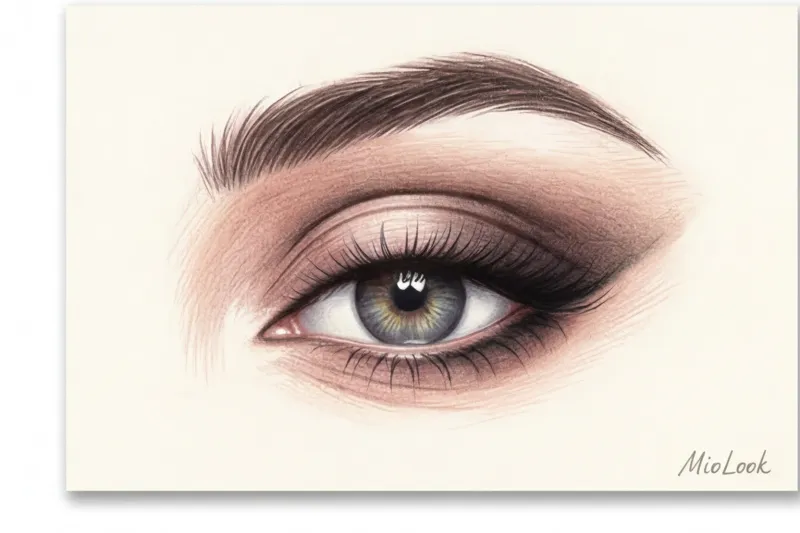
Many of my clients have avoided complex looks for years, limiting themselves to mascara alone. Spoiler: it's not the shape of your eyes, but outdated techniques. Properly applied evening makeup for drooping eyelids can create the effect of a surgical lift, if you understand the laws of optical illusion. We've already covered the fundamental rules for working with complex textures in detail in our the complete guide to wedding makeup , because that's where longevity is at its highest. But today, I want to offer you a completely different, "cinematic" approach that will change your beauty routine forever.
The Architecture of the Eye: Why Evening Makeup for Drooping Eyelids Requires Engineering
Let's face it: the skin on our eyelids is the thinnest on our body, measuring only about 0.5 millimeters thick. Beneath it, there's virtually no subcutaneous fat, but the sebaceous glands are working overtime. Drooping eyelids expose us to constant mechanical friction (up to 15,000-20,000 blinks a day!). Add sebum to this, and you have the perfect solvent for any cosmetic product.
Moreover, evening artificial lighting in restaurants or theaters reduces color intensity by up to 30%. What seemed bright during the day turns into a dull gray blur in the evening. This is why special occasion makeup is based on the principles of polymer chemistry and architecture. We don't simply "paint" the eyelids; we create a new framework of light and shadow.
Access to MioLook for €0.99 — one-time payment
A smart AI stylist will select the perfect look based on your individual characteristics.
Get access — €0.99 onceThe biggest myth of the beauty industry: why matte eyeshadow doesn't always save the day
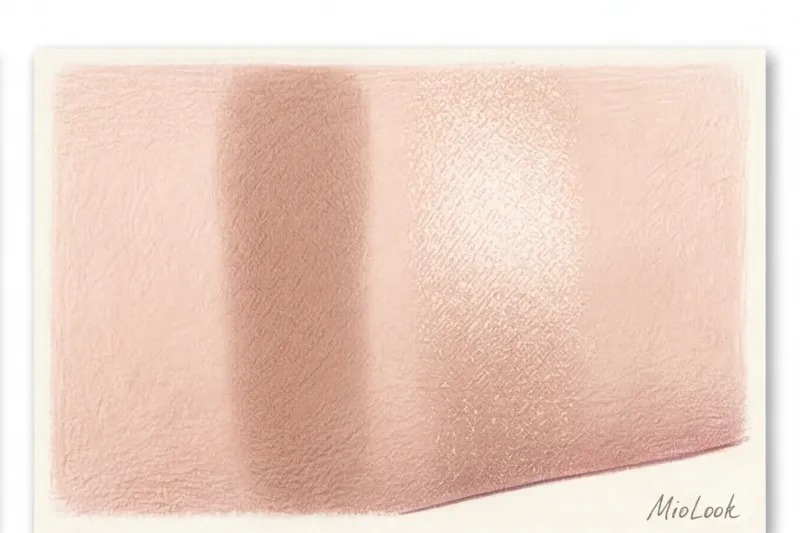
If you ever searched YouTube tutorials in the 2010s, you probably remember the cardinal rule: "On hooded lids, use only completely matte eyeshadow." Makeup artists recommended drawing a sharp, graphic crease (the so-called cut-crease) to simulate depth. I can confidently say: in 2024, this rule is hopelessly outdated.
A hard, matte cut-crease looks stunning in ring-lamp photos, but in real life, when applied dynamically, it looks heavy and unnatural. Matte textures, especially dry ones, accentuate even the slightest texture of the skin, making the eyelid appear dry and aged.
"Using exclusively matte textures on hooded lids is the way to create a flat, 'papery' texture. A modern approach requires the play of light," notes Hollywood makeup artist Hang Vanngo, known for his work with eye anatomy.
Instead of a dense matte, I use a "smart satin." I'm not talking about the large glitter from the 2000s (which should really be avoided), but rather finely dispersed shimmering particles with a wet-look effect. Strategically applying this satin directly to the drooping crease creates the optical illusion of soft focus: the light is diffused, the crease line is blurred, and the eyelid appears flatter and lifted.
Step-by-step technique: creating evening makeup for drooping eyelids with a lifting effect
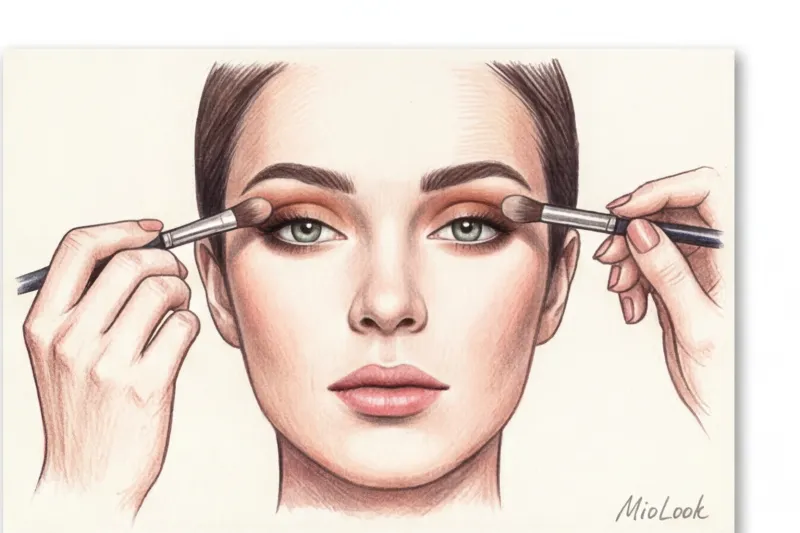
I was once preparing a 45-year-old client for an important gala dinner. She was in a panic: the previous makeup artist had applied makeup that had run and made her eyes look sad within an hour. I saved the situation by adjusting the blending angle by just 2 millimeters. How does this work?
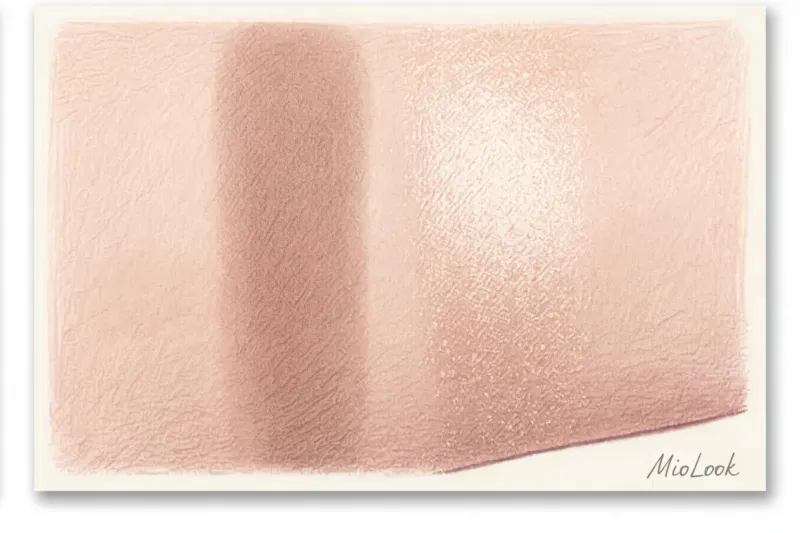
The main, ironclad rule: build a form only with open eyes You should look straight ahead in the mirror. If you close your eye, draw a perfect crease, and then open it, the overhanging skin will simply swallow the entire design.
We're creating what's called a "fake crease." Take a fluffy brush and apply a transition (medium) shade of eyeshadow 2-3 millimeters above your natural crease, directly onto the brow bone. It's crucial to relax your brows! Women often reflexively raise their eyebrows in the mirror. If you base your shape on raised brows, the makeup will fall with them when you stop posing.
A shaded arrow instead of a strict graphic
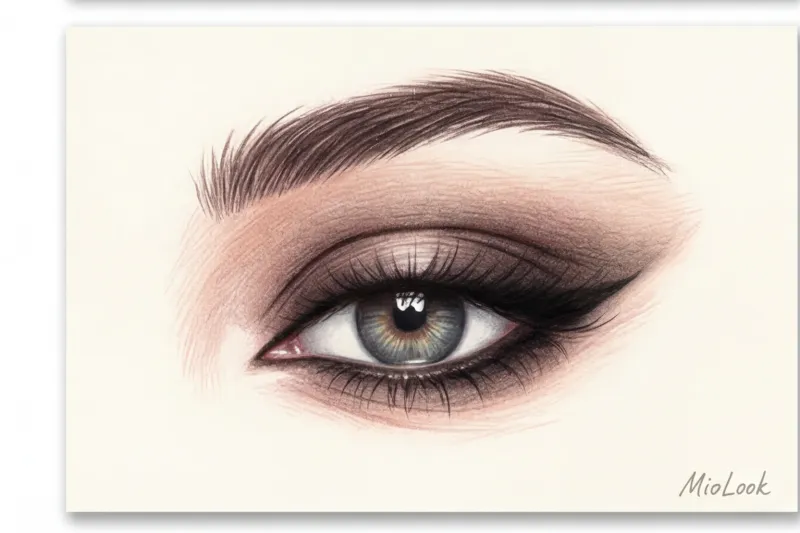
Forget classic liquid eyeliners. On drooping lids, they inevitably break at the crease, creating an unsightly "comma" or stair-step effect. Instead, we use the shadow-liner technique—creating a soft, smoky line using shadows and a gel pencil.
Extend the shape according to the 45-degree rule: the lower border of your wing should be an imaginary continuation of the lower lash line, extending toward the temple. This mathematically precise angle provides the maximum lifting effect. We discussed how to adapt this technique for the office in the article about business makeup for executives , but for evening wear, you can safely double the color intensity. And don't forget to fill in the space between your lashes with a black waterproof pencil—it's the invisible framework for any evening look.
Ready to get started?
Try the MioLook plan for free—no commitments required. Create your perfect beauty capsule!
Get access — €0.99 onceAll-night wear: chemical barrier against creasing
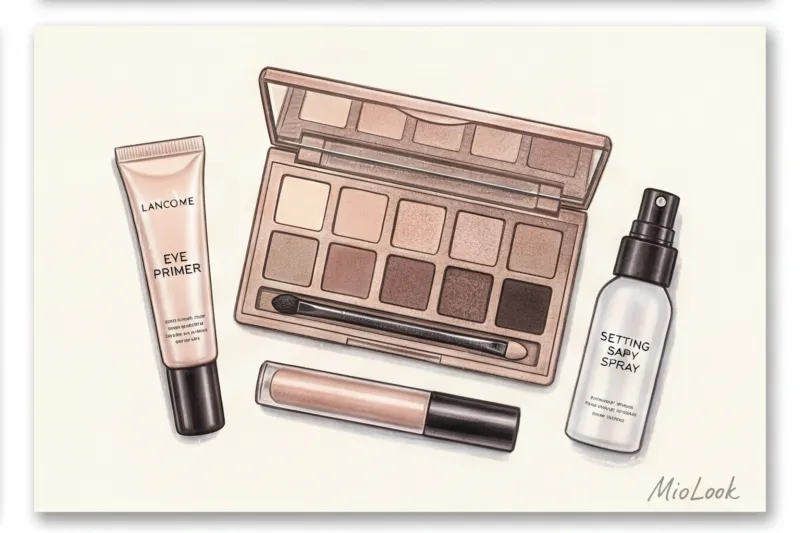
I personally tested over 50 eyeshadow primers to find ones that could withstand humidity, intense dancing, and the rubbing of hooded lids. The popular TikTok advice to "use concealer instead of primer" is a guaranteed failure within two hours. Concealer contains oils and hydrating ingredients; it's designed to prevent drying out the under-eye area, not to set it.
You need primers based on volatile silicones (look for it in the ingredients) Cyclopentasiloxane or Dimethicone ). After application, the polymer evaporates, leaving a thin, waterproof film on the skin. It works like double-sided tape, preventing sebum from rising to the surface and pigment from rolling off.
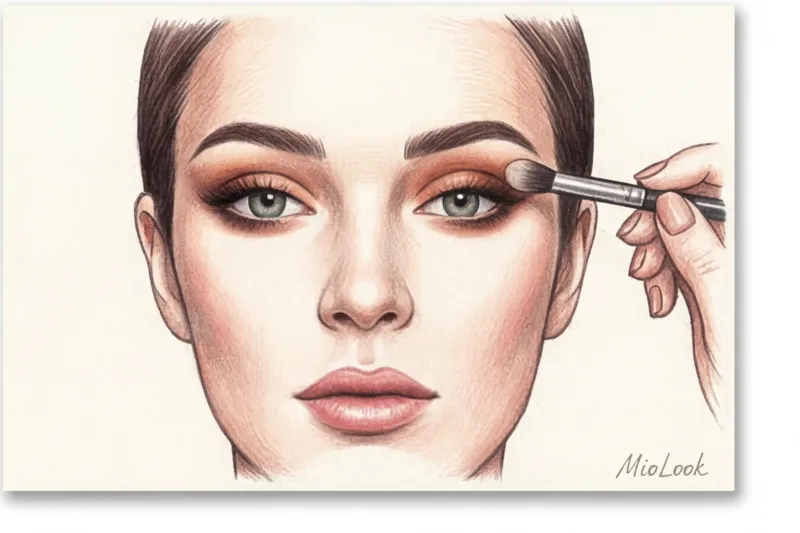
Apply the layered-cake rule. First, apply primer (let it dry for 30 seconds), then cream eyeshadow (for color density), and then dry textures for setting. Only this multi-layered armor will withstand an evening event.
Red Carpet Trends: Adapting to Your Anatomical Shape
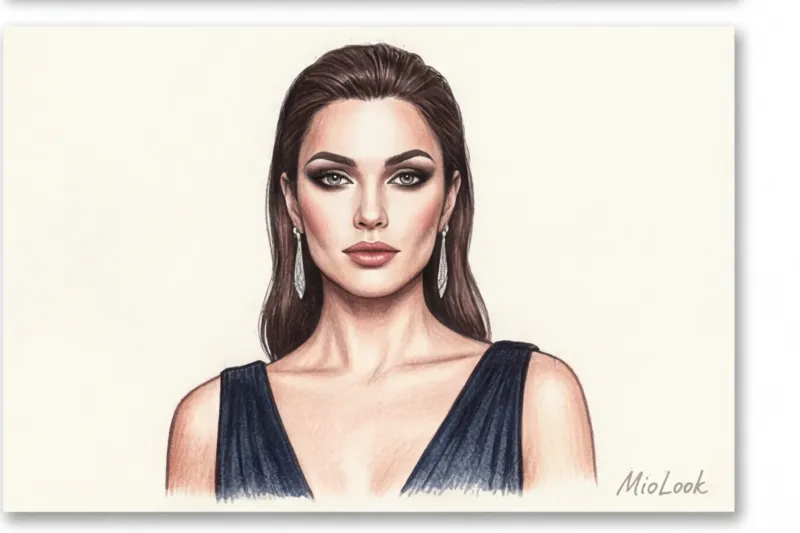
Many are afraid to try trends, believing they're only for models with perfect almond-shaped eyes. Just look at Blake Lively or Jennifer Lawrence (both with pronounced hooded lids) at the recent Oscars. Their makeup artists masterfully adapted runway hits.
Let's take the trend for example Siren Eyes ("siren look"). This is a great choice for drooping eyelids, as the focus shifts to horizontally elongating the inner and outer corners, drawing attention away from the heavy center of the eyelid. But with the popular Halo Eye (highlight in the center of the eyelid, darkening at the edges) you need to be careful: if you apply the highlight too high on the hood, you will only emphasize the swelling.
If you're unsure whether a particular technique will work for you, don't necessarily test it right before going out. Upload your portrait photo to MioLook app The virtual try-on feature helps you preview how eyeshadow and eyeliner will look based on your anatomy. This significantly reduces beauty anxiety before important events.
Checklist: 5 Fatal Mistakes That Are Ruining Your Look
Based on analyzing hundreds of my clients' makeup looks before they came to me, I've compiled a list of anti-techniques to avoid at all costs:
- Refusal to curl eyelashes. A curler is your main lifting tool. Long, upward-curling lashes physically reduce the volume of a drooping eyelid.
- The arrow is too wide. If the eyeliner line covers the entire lid (which is already short), it will make the eye appear even smaller. Draw the line as thinly as possible, pressing the brush into the lashes.
- Darkening of the inner corner of the eye. This instantly makes the look stern and heavy.
- "Comma" eyebrows or drooping tails. If the tail of the eyebrow falls below the level of its beginning, it visually pulls the entire outer edge of the eye downwards.
- Highlighter under the eyebrow. I want to be honest here: this rule has exceptions. A light pearlescent highlight under the brow bone works great on deep-set eyes. But on drooping eyelids, it's a disaster—the highlight literally pushes the problematic volume forward, making the eyelid appear even more droopy.
Your anatomy isn't a flaw to be hidden under layers of heavy matte makeup. Evening makeup for hooded eyes should be a play on light, soft shadows, and midtones. Learn to work with shape while keeping your eyes open, swap liquid liner for a smudged pencil, and you'll see your gaze take on that Hollywood-inspired wide-open, magnetic look.