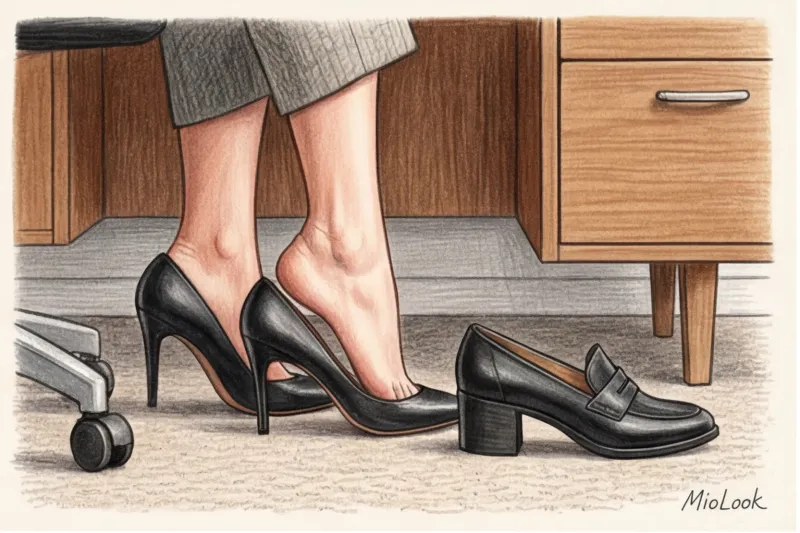
The End of the Stiletto Heel: How Soft Power Changed the Rules of Office Shoes
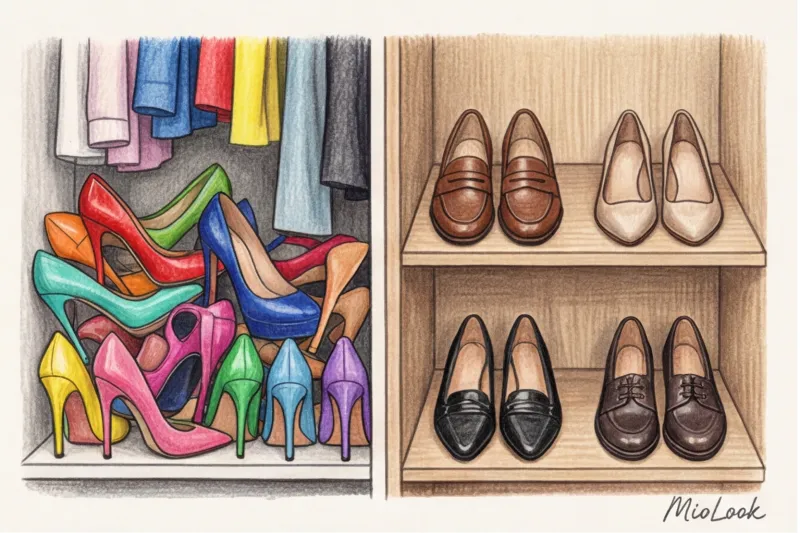
Over the 12 years I've been working as a personal stylist, I've thrown hundreds of pairs of classic 9-centimeter stiletto pumps into trash bags. Clients would bring them in for wardrobe decluttering with a guilty look: "They're so classy, but I only wear them until lunch." Spoiler alert: physical discomfort is no longer an indicator of your professionalism.
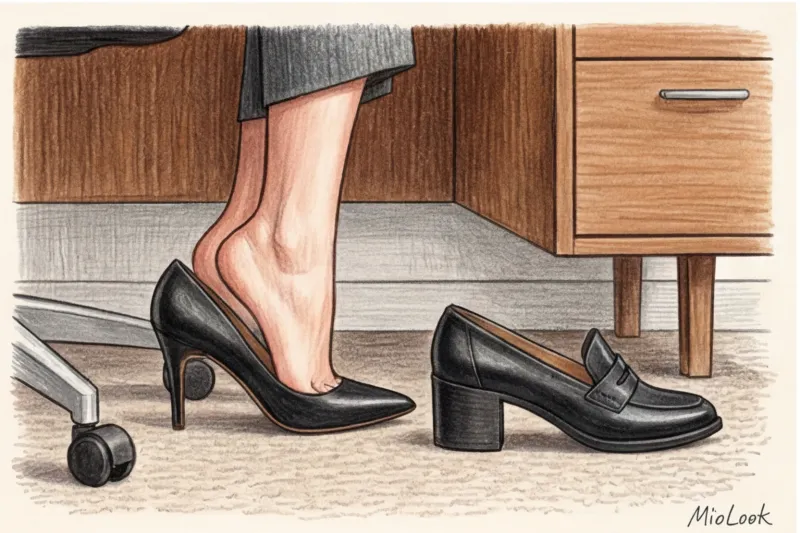
We're witnessing a global transformation in dress codes: from the aggressive Power Dressing of the '80s to a relaxed comfort that stylists call Soft Power. We've covered the evolution of business style in more detail in our The Complete Guide to Business Wardrobe for Women Today, the principles of "relaxed tailoring," established at The Row and Jil Sander shows, rule the roost. They demand a completely new shoe architecture—geometric, stable, and respectful of anatomical features.
According to the American Podiatric Medical Association (APMA, 2023), approximately 80% of foot problems in women are directly related to regularly wearing narrow lasts. True comfort for an 8-hour workday is built on three pillars: adequate forefoot width (toes should not overlap), arch support, and moderate sole flexibility.
Women's Office Shoes: Top 5 Stylish and Comfortable Everyday Shoes
Correct women's office shoes It doesn't have to be boring. Below, I've compiled a basic set that will cover 90% of your business wardrobe needs and can easily be adapted to suit a formal suit or casual denim. If you're unsure how to incorporate these pieces into your current wardrobe, creating dozens of outfits from your existing items will help. MioLook smart AI stylist.
Structured loafers: a wardrobe staple
Let me clarify an important rule right away: soft suede moccasins that roll up into a tube are for driving and country walks, not for the office. They look sloppy in a business attire and ruin the formality of a suit. Your choice should be stiff, structured loafers (penny loafers or models with a bit buckle).
They pair perfectly with cropped trousers, pleated skirts, and A-line dresses. In the office, I always recommend choosing smooth leather—it holds its shape better, is easier to wipe clean, and looks more classy than suede.
Mary Jane and Slingback with a Microheel (Kitten Heel)
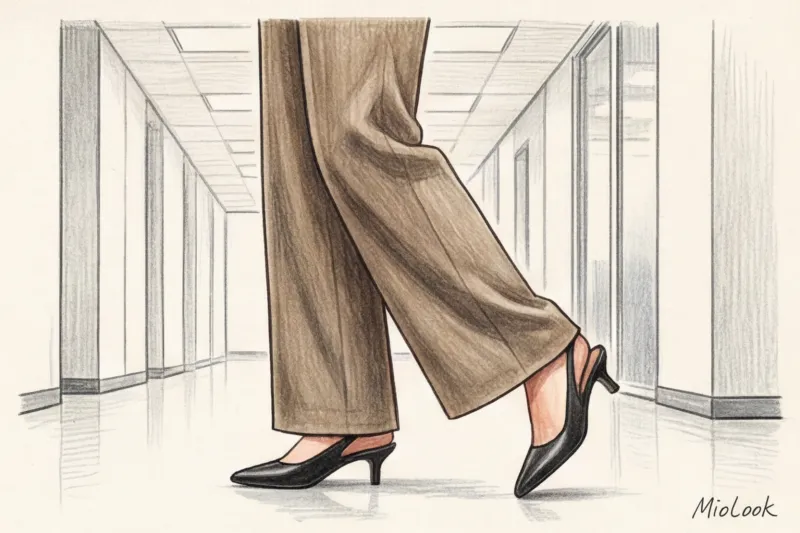
They're the perfect compromise between femininity and common sense. A heel height of 3-4 cm is unconditionally approved by orthopedists. Slingback styles (with an open heel and strap) visually lighten the ankle and pair perfectly with long, wide trousers.
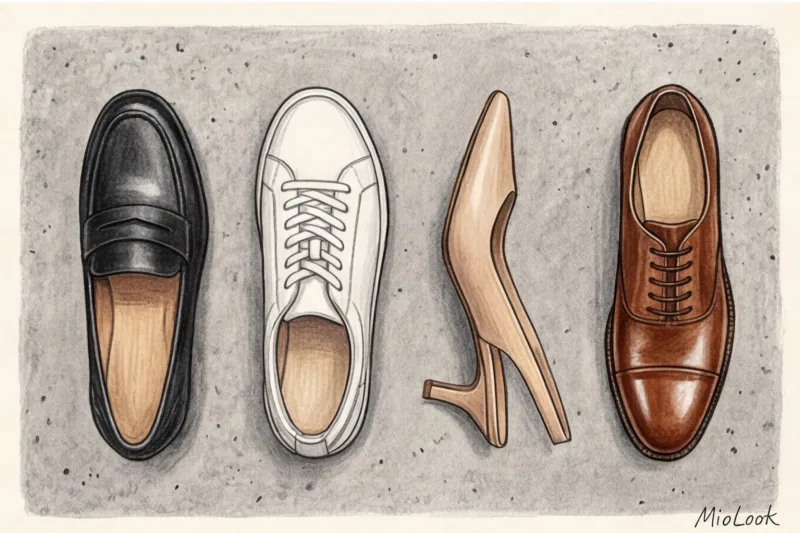
Mary Jane shoes (with a strap on the instep) are a real lifesaver for women with narrow feet and low insteps. The strap firmly secures the foot, preventing it from slipping while walking, which relieves tension in the calf muscles.
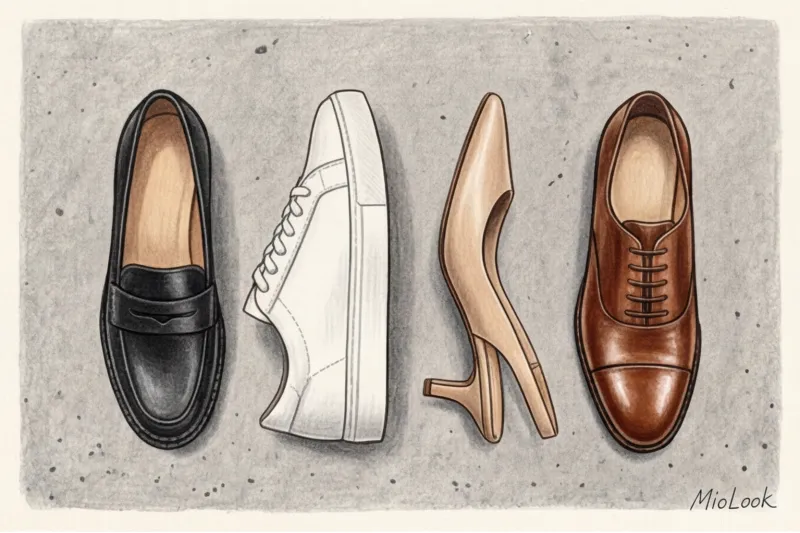
Brogues, Derbies, and Oxfords: Masculinity in a Feminine Style
Have you ever noticed that chunky "men's" shoes make women's legs look more fragile? Oxfords (with closed lacing) look more formal, while Derbies (with open lacing) are more relaxed and fit better on high insteps.
This is the perfect pairing for palazzo pants or tailored three-piece suits. The look is put together, sophisticated, and has a subtle hint of British classicism.
Minimalist sneakers: when sport is appropriate
Let me make it clear right away: this advice doesn't work , if you have a strict corporate dress code (for example, in a bank or the public sector). But for smart casual, minimalist sneakers have become the norm. More ideas for such looks can be found in the article about business casual for women.
The rules of integration are simple: only smooth matte leather, absolutely no logos, contrasting inserts, or perforations. The sole shouldn't be too thick. And most importantly, office sneakers should be spotlessly clean. Save mesh running shoes for the gym.
Ready to get started?
Try the MioLook free plan and start creating perfect looks with AI, no commitment.
Get access — €0.99 onceAnatomy of a Misconception: Why Classic Ballet Flats Are Killing Your Back
"I don't wear heels, I only wear flats, but by the evening my back just falls apart." Sound familiar? One of my clients, a top manager at an IT company, suffered from lower back pain for years. We simply swapped her favorite soft ballet flats for structured loafers with the right last—and within a month, the pain was gone.
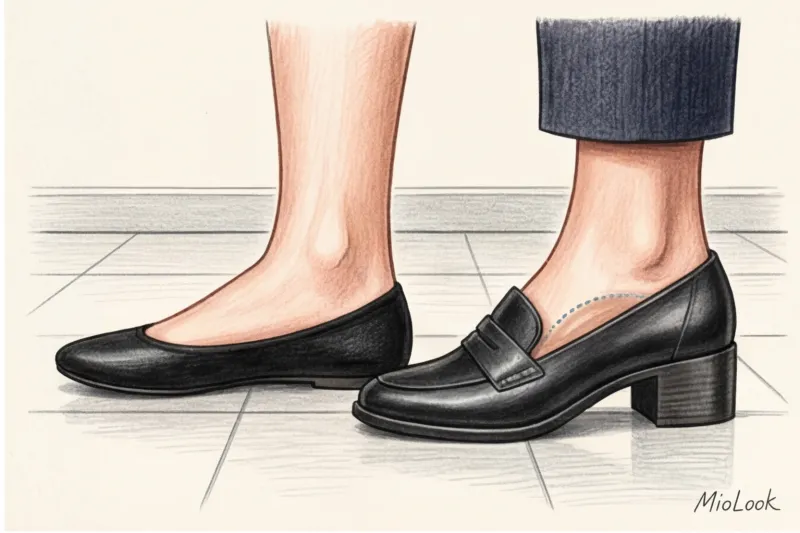
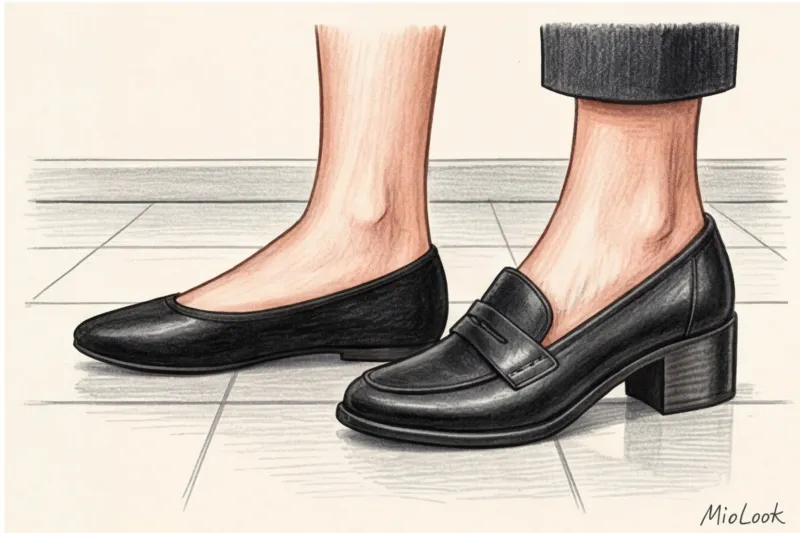
Let's debunk the biggest myth: "no heel means comfortable." A completely flat sole (classic ballet flats with a round toe and a thin elastic band) is the worst thing to wear to the office for eight hours. Hard office laminate or tile floors don't offer any spring. When walking in shoes with soles just a few millimeters thick, you literally bounce your heel with every step. The shock wave travels up the leg directly to the lumbar spine, and the plantar fascia of the foot becomes overstretched.
"Flat-soled shoes without heel support are more damaging to gait biomechanics than classic stiletto heels, leading to the development of heel spurs and plantar fasciitis," according to a report from the American Academy of Orthopaedic Surgeons (AAOS).
True comfort requires a micro-heel (1.5-3 cm), which slightly elevates the heel and redistributes body weight, and a rigid heel counter to prevent the foot from collapsing. Swap your ballet flats for almond-shaped ballet flats with a micro-heel and a structured shape—your back will thank you.
Investments and the Mass Market: A Stylist's Guide to European Brands
Shoes are a wardrobe item you can't skimp on. Cheap polyurethane lasts can deform your foot, and faux leather can create a greenhouse effect. I always teach clients to calculate Cost Per Wear (CPOW). A pair of €150 loafers that you'll wear 100 times a year (€1.50 per outing) is much more cost-effective than a pair of €40 plastic shoes that you'll wear twice and then throw away because your feet are sore. It's easy to track how many times you wear something and calculate its ROI. MioLook app.
If you're on a budget, you can find great options in the mass market if you know where to look:
- Massimo Dutti (Studio collection): The best fit in the mid-range segment. Shoes are often made in Portugal, and the lasts are adapted to the European foot. Excellent basic derbies and slingbacks.
- COS: The brand is renowned for its premium, dense leather and architectural minimalism. Their chunky-soled loafers are virtually indestructible and fit perfectly into smart casual.
- &Other Stories: The perfect place to find trendy yet comfortable Mary Janes and ankle boots. Great value for money.
- Zara: There is a strict buyer's rule here - buy only the line Leather The basic polyester line won't last even a season of active office wear.
Stylist's secret: Always look inside the shoe. Even if the manufacturer has skimped on the top layer (using eco-leather), the inner lining and insole obliged Be made of genuine leather. Otherwise, after three hours in a heated office, your feet will "boil."
Your perfect look starts here
Join thousands of users who look flawless every day with MioLook. Digitize your wardrobe in minutes.
Get access — €0.99 onceStyling: How to Pair Comfortable Shoes with Modern Office Wear
Buying the right pair is half the battle. It's important to properly incorporate them into the silhouette's proportions. The most common mistake I see on the street is wide-leg, heavy trousers paired with the round, short toe of ballet flats. This makes the leg look like a hoof, and reduces height.
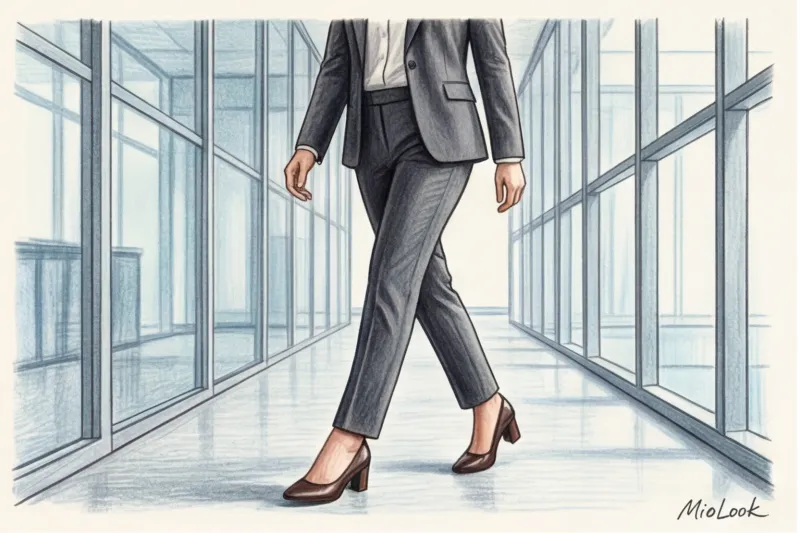
How to fix this? Wide-leg trousers require either a chunky sole (like brogues with a thick platform) or shoes with an elongated, pointed toe (like pointed slingbacks). The pointed toe should peek out from under the leg, continuing the vertical line of the leg.
One centimeter rule: The length of the right wide-leg trousers should end 1-1.5 cm from the floor when you're wearing shoes. If the trousers drag along the ground, it's sloppy, and if they expose the ankle (in the case of wide-leg trousers), you look like you've outgrown them.
A particular pain point in office style is tights and socks. To avoid looking like an overgrown schoolgirl when wearing loafers with a skirt, choose thick, opaque tights (60 denier and above) that match the shoes. If the dress code allows for a touch of irony, you can wear loafers with thin, slightly lowered ribbed cotton socks, but the rest of the look should be impeccably formal and masculine (for example, an oversized blazer and a pencil skirt).
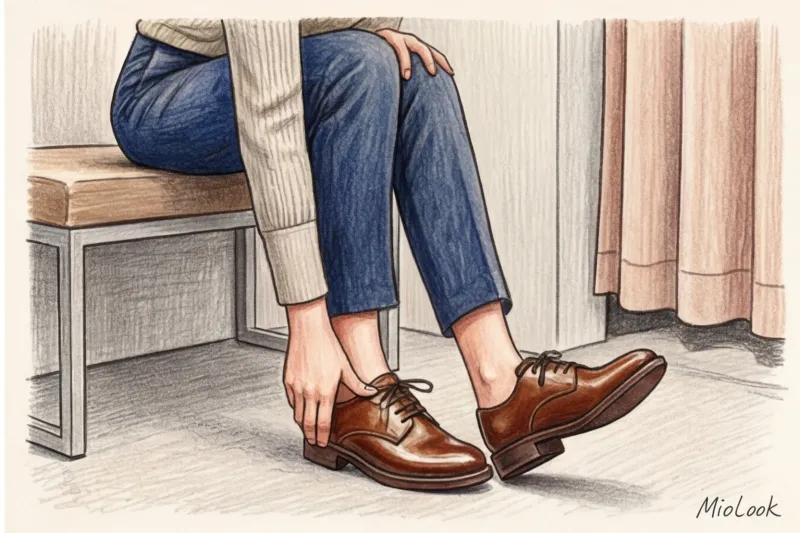
Fitting Checklist: 5 Steps to the Perfect Pair for Work
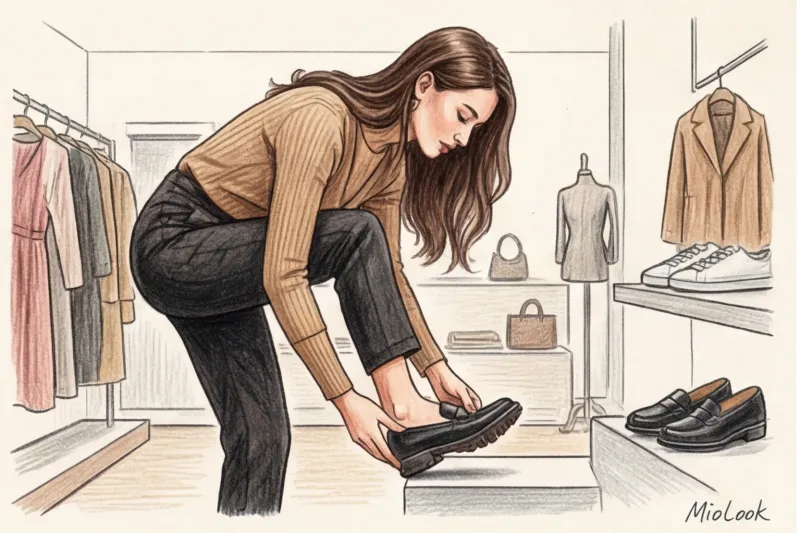
Never buy shoes "to break them in." Remember: high-quality leather will fit your foot, but the last won't expand, and the seams won't stretch. I make all my clients do this 5-step test drive in the fitting room:
- Time matters: Try on shoes only after 4:00 PM. By evening, feet swell and increase in size. Shoes bought early in the morning will look like Spanish boots by the end of the workday.
- Twist test: Grasp the shoe by the toe and heel and try to bend it slightly. The sole should bend easily in the front third (where your toes bend as you step), but remain rigid in the arch area. If the shoe bends exactly in the middle, your feet will hurt.
- Rule of thumb: Put on your shoes, stand up straight, and shift your weight onto your toes. Press your finger into the toe of the shoe—there should be a 0.5-1 cm gap between your big toe and the edge of the shoe. The air in the toe prevents blisters and ingrown toenails.
- Heel grip test: The heel counter should fit snugly around the heel, preventing it from slipping out, but the top edge of the counter should not dig into the Achilles tendon.
- Tough test drive: Stores often have soft carpets in the fitting rooms—they make any shoe feel like slippers. Leave the fitting room and walk for 3-5 minutes on the hard floor of the sales floor. Pay attention to the sensations in your knees and lower back.
The perfect office shoe is the invisible foundation of your confidence. When you're conducting important negotiations or giving a presentation, the only thing you should be thinking about is your argument, not a bandage on a sore heel. Invest in a comfortable last, and your gait will speak volumes about your professionalism more than any logo.