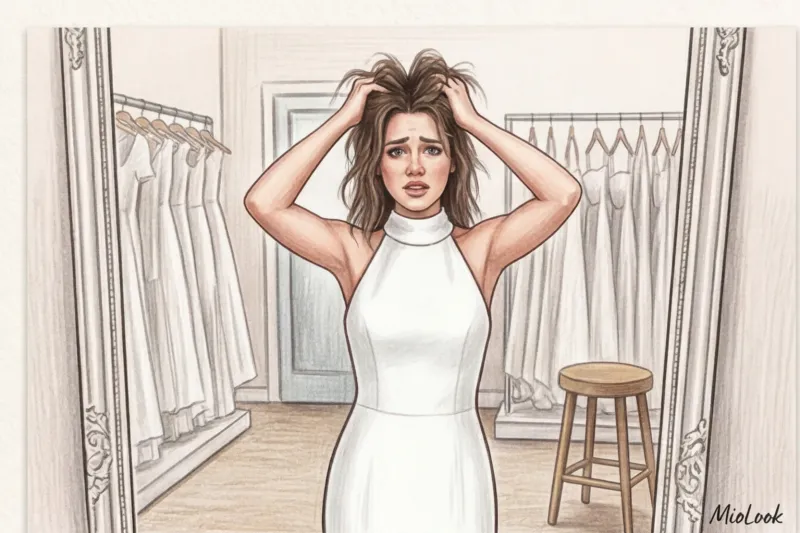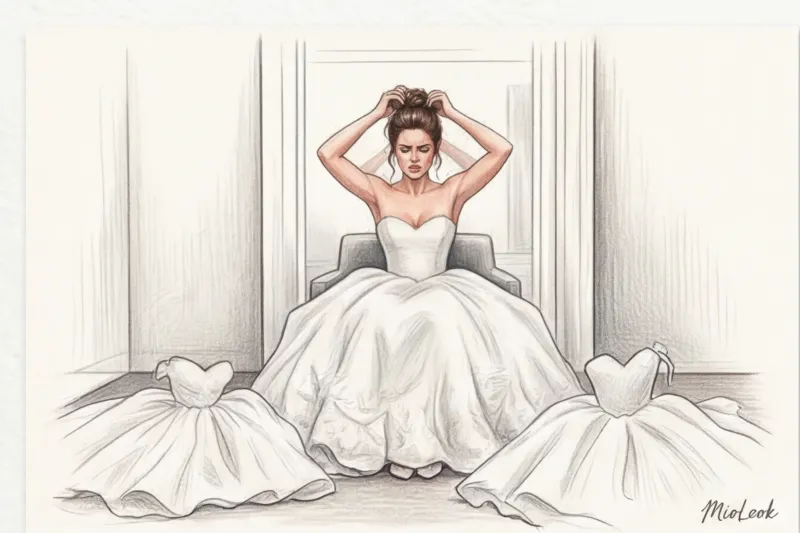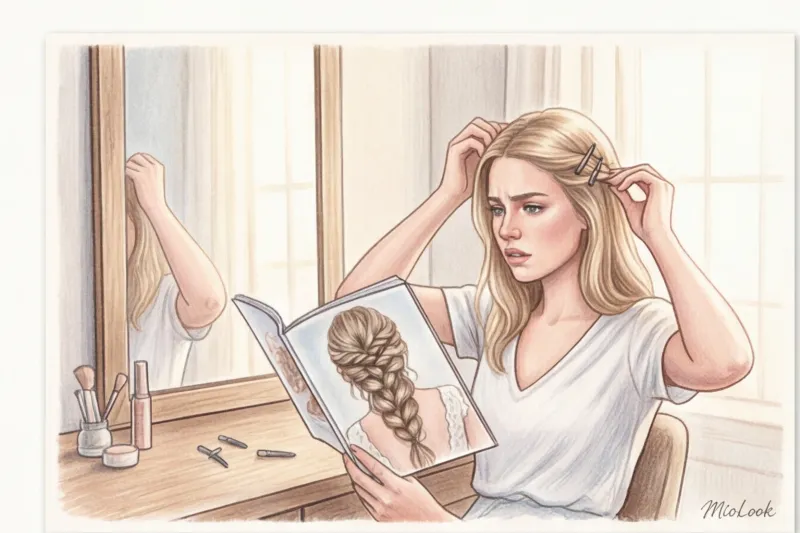
Have you noticed how every other bride, when she sits down in my chair for a hair trial, pulls out her smartphone and shows me the same picture from Pinterest? Usually, it's a messy, windswept bun or a perfect Hollywood wave cascading over her shoulders. And disappointment almost always follows when we try to recreate this "magic" in real life. Why? Because the picture shows a professional model with a different skull shape, skin tone, and hair thickness, on whom a team of stylists spent three hours pouring gallons of styling product.
After 12 years of working as an image consultant and colorist, I've realized one thing: emotionally choosing a wedding look based on someone else's photos is a lottery that's too expensive. Today, math and technology work better than intuition. If you want to save yourself stress and money, you should choose a wedding hairstyle online using biometric artificial intelligence before you book your appointment.
We have described the technical algorithms of this process in more detail in our a complete guide to virtual hairstyle try-ons In this article, I'll show you how to use AI from a stylist's perspective: to calculate ideal facial proportions, match your hairstyle to your dress's neckline, and ensure you look your best in wedding photos.
The Pinterest Trap: Why Other People's Pictures Ruin Your Wedding Look
Last wedding season, my client Alina came to me. She had thin, glassy dark hair and dreamed of a platinum Hollywood blonde with voluminous waves, "like that girl on Instagram." If we had followed that image, Alina would have ended up with burnt hair that wouldn't hold a curl for more than an hour.
Being inspired by other people's images is dangerous for three reasons:
- Distortion of reality. Photos on social media are heavily retouched. What appears to be "naturally careless" often looks like a mess in real life.
- Ignoring the base. Your natural volume, hair growth direction (cowls) and thickness dictate their own rules.
- Stress of anticipation. When the reality in the mirror doesn't match the picture on the phone, the bride starts to panic, thinking that the problem is in her, not in the reference.
That's why I always insist: stop trying on other people's faces. Trying on your own photo virtually transforms the process from intuitive fantasy to pragmatic mathematical calculation.
How to Choose a Wedding Hairstyle Online: An AI Algorithm for Brides
Let's forget about those old apps from the 2000s that simply pasted a stiff wig over your photo. Modern neural networks operate according to the laws of biometrics.
According to a McKinsey report on beauty technologies (2024), advanced AI algorithms today read up to 150 points on your face. They analyze the depth of your eyes, the tilt of your head, the shadows of your cheekbones, and even the texture of your skin. This means that virtual hair styling will be tailored to your individual anatomy.
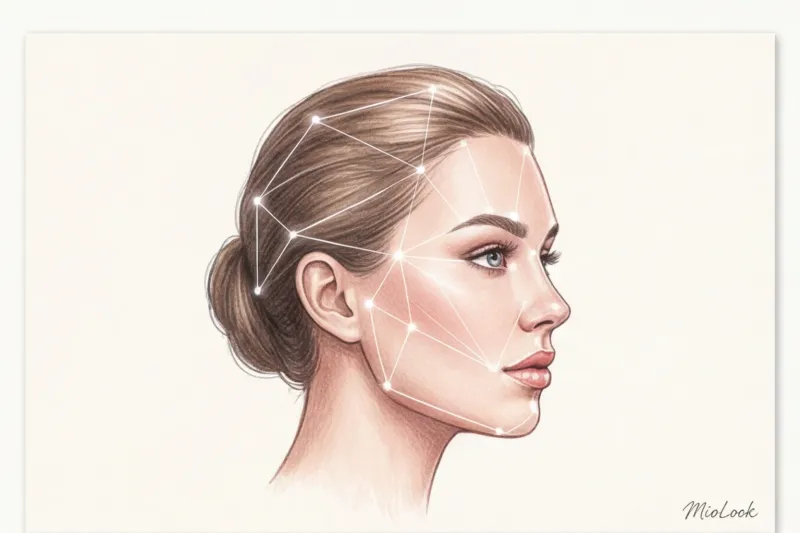
Analysis of face shape and eye position
When you upload your selfie, the AI applies the classic rule of thirds. If you have a long face (like Liv Tyler), the algorithm will suggest options with volume on the sides, visually expanding the proportions. If your face is round, it will show how a high updo or loose strands around the face will elongate it.
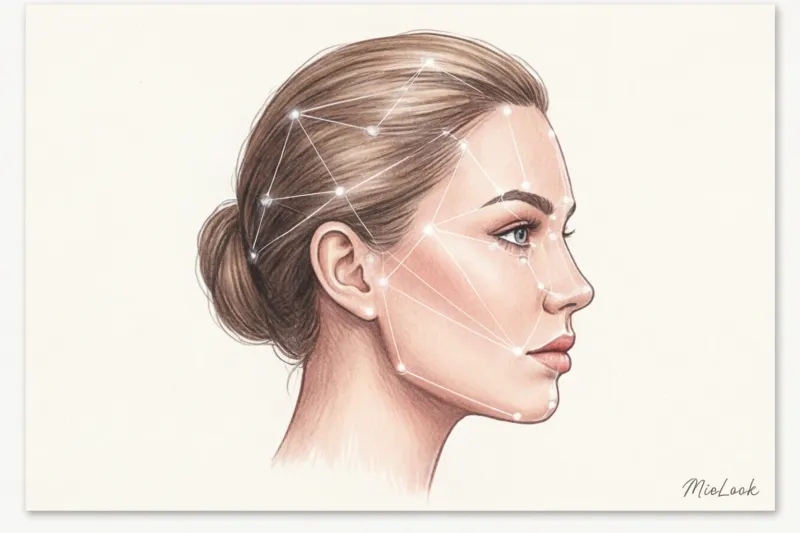
The neural network instantly shows whether you need a side parting to correct slight natural asymmetry (which 99% of people have), or whether you can afford a strict straight parting.
Taking into account the actual thickness and length of hair
There's a real limitation here: AI won't magically grow your hair. If you choose a luxurious waist-length braid in the app, and you have a bob, the algorithm will simulate the look, but you should understand that to bring it to life, you'll need extensions.
However, this visualization is invaluable. You'll clearly see whether it's worth buying expensive natural hair extensions for the volume, or whether an elegant, minimalist low bun made from your own hair suits you better.
Your perfect look starts here
Join thousands of brides who have already planned their perfect look stress-free. Upload your photo and find the perfect hairstyle.
Get access — €0.99 onceBridal Architecture: Linking Hair, Makeup, and Dress Neckline
The cardinal rule of any competent stylist is this: your hairstyle doesn't exist separately from your dress. It's a single architectural ensemble. If you get the proportions wrong, you can visually shorten your neck or make your shoulders look bulky.
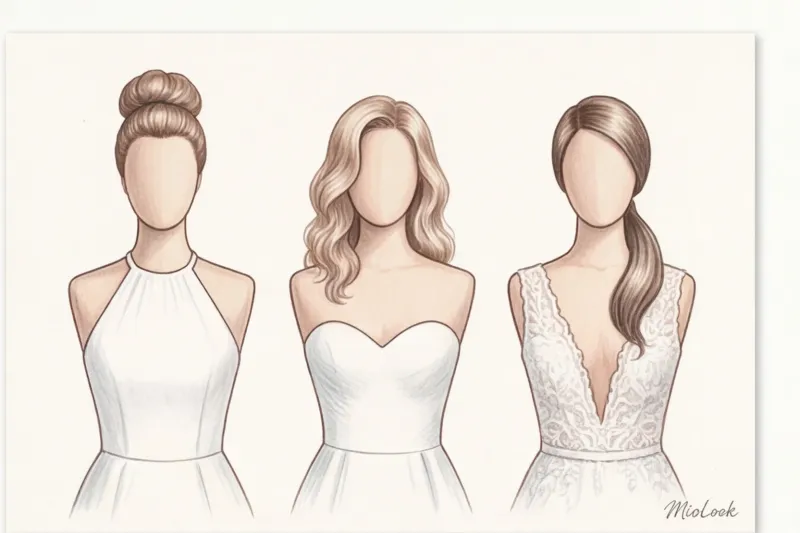
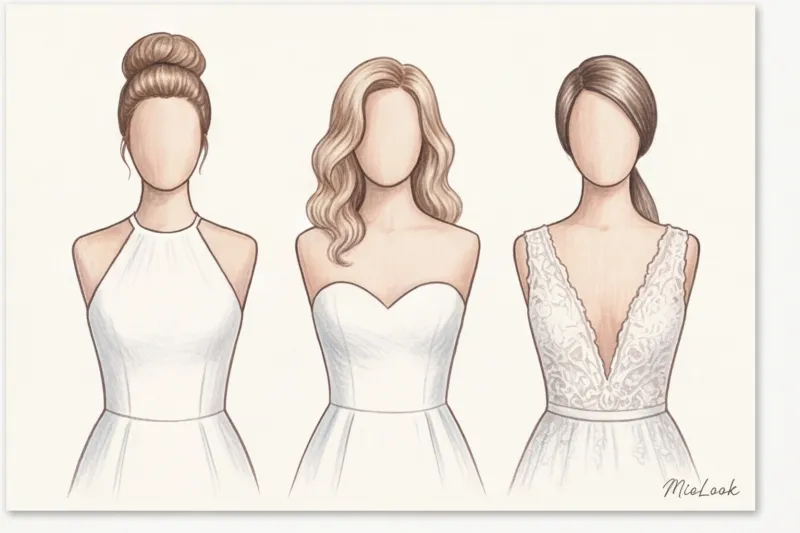
Using AI, you can upload a photo of yourself in your wedding dress from a fitting and try out different hairstyles. Here are the basic silhouette principles you'll immediately notice in the app:
- Halter neck (American armhole): This hairstyle absolutely requires hair to be pulled back. Loose curls will create a clash of lines and make your neck appear flatter. A high or medium textured bun is the ideal choice.
- Deep V-neck: Works great with loose hair, Hollywood waves, or an asymmetrical side-swept style. The vertical lines of the dress and hair will harmoniously elongate the silhouette.
- Boat neckline (like Meghan Markle's): It calls for a sleek look. A low, sleek bun or an elegant shell will highlight the collarbones.
I worked with a bride with a gorgeous backless dress who insisted on loose curls. We uploaded a photo of her in the dress to the app, tried on her curls, and she saw for herself: her hair completely covered the main feature of the dress. We chose a ponytail, and the look was complete.
Color Matrix: Test Makeup and Hair Shades Without Risk
Let's talk about color. A white or ivory dress isn't just fabric. It's a giant reflector that casts light directly onto your face. According to the PANTONE Color Institute (2024), pure white shades (Brilliant White) literally draw out the warm undertones of the skin, highlighting even the slightest redness or dark circles under the eyes.
And here we come to the main myth: "I want natural, subtle wedding makeup.".
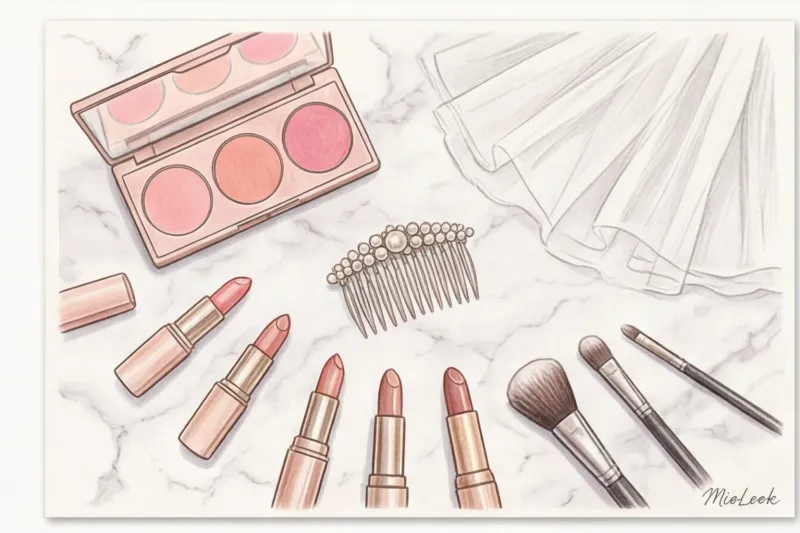
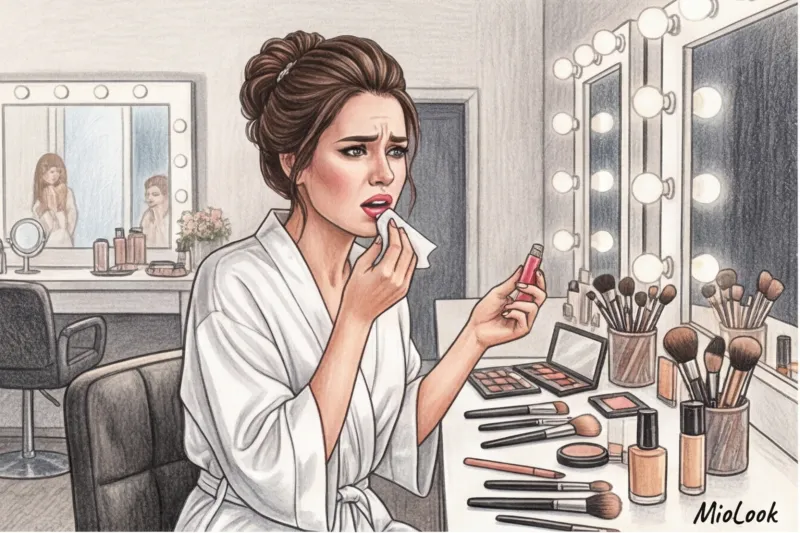
A contrasting insight that not everyone is prepared for: to make your makeup look natural in professional flash photos, you need a thick layer of foundation, heavy contouring, and three times as much blush as you wear in real life. Cameras can reduce color saturation by up to 40%. A subtle nude that looks stunning in the mirror in daylight will make you look like a pale moth against a white dress in photos.
A virtual try-on allows you to painlessly test temperature contrasts. You can try a cool platinum blonde with a peachy makeup look and see how they clash. Or try a warm shatush shade paired with bronzer—and find your perfect "luxury" look.
Access to MioLook for €0.99 — one-time payment
A smart AI stylist will select the perfect makeup and hairstyle based on your facial features and color type.
Get access — €0.99 onceCalculating your budget: how much money and stress can a virtual fitting save?
A wedding is always a huge expense. Let's put it in numbers. In European salons, the average cost of a high-quality hair and makeup trial ranges from €150 to €300. And that's just for one look!
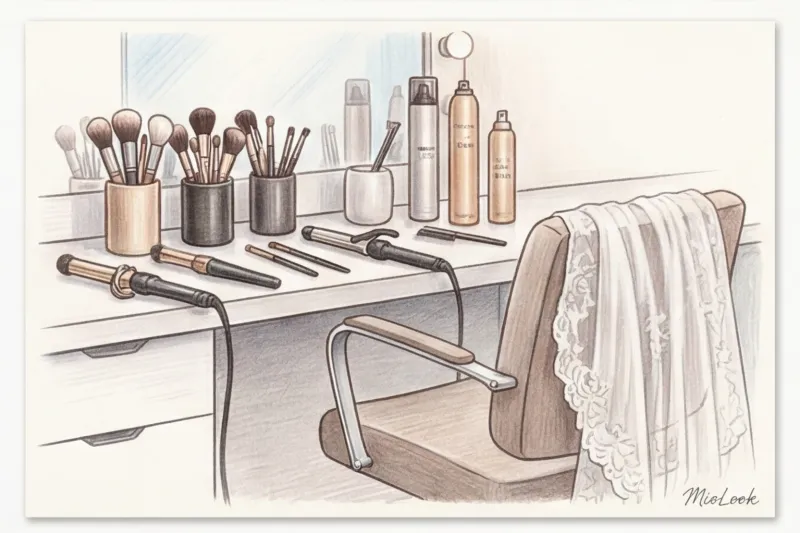
What happens if you come to an audition without a clear idea of what suits you?
- You pay €200 for a trial boho style styling.
- You understand that with your classic satin dress this looks ridiculous.
- Pay another €200 for a second try - a strict bun.
- You realize you need a different hair color. Removing and recoloring will cost at least another €250.
Using the AI app, you can test 50 different options in a single evening, for free (or for a nominal subscription fee), while sitting on the couch with a glass of wine. You'll eliminate 90% of the unsuitable ideas and come to the artist with only the two that are guaranteed to suit your facial geometry.
Checklist: From a neural network to a stylist's chair
To ensure the algorithm works perfectly and the live technician understands you, follow these step-by-step instructions. I give them to all my clients.
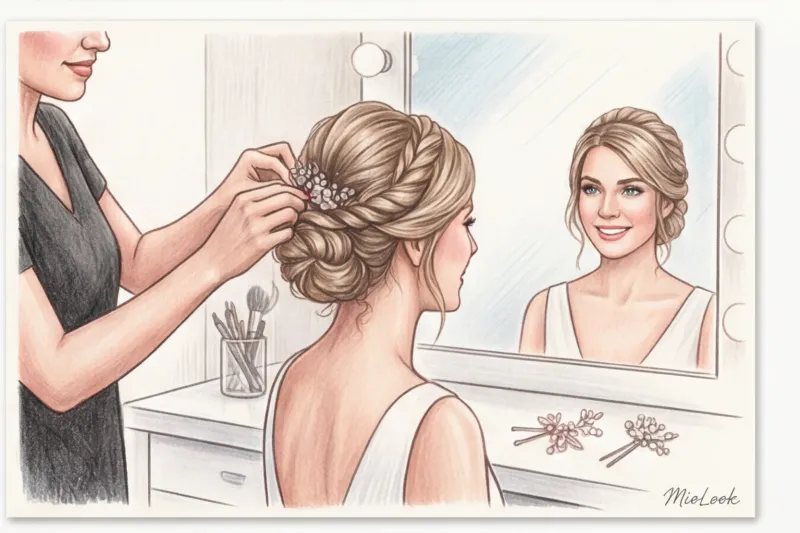
1. Correct original photo.
Take a selfie during the day, facing a window. Avoid overhead lighting—it will create harsh shadows under your eyes. Pull your hair back tightly, keeping your face as exposed as possible. Ideally, wear a white T-shirt that matches the color of your dress.
2. The rule of three contrasts.
Don't create 20 identical buns. Create three completely different renderings: a high, sleek updo, low, textured volume, and loose hair. Brides often fall in love with an option they never even considered.
3. Conversation with the master.
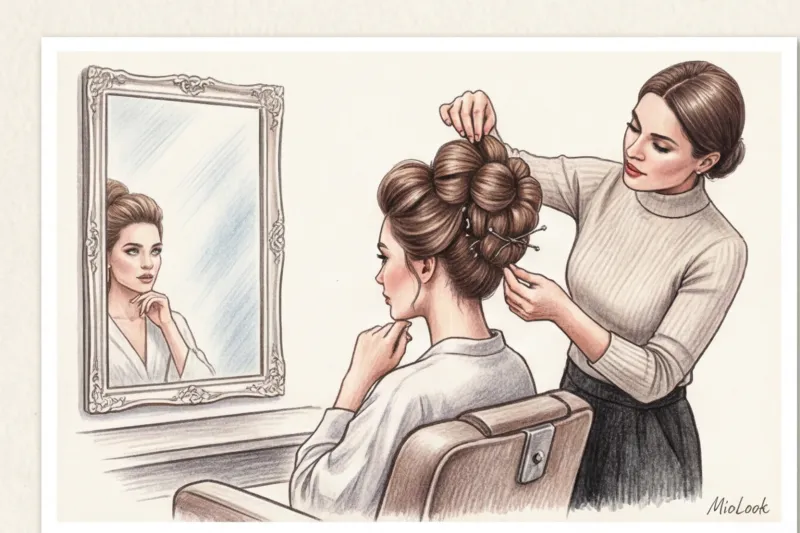
Once you've chosen your AI look, show it to your stylist, but be sure to clarify: "I love this shape and the distribution of volume. I understand that the texture may be a little different on my hair. Let's adapt this idea to my thickness." This takes the pressure off the stylist and moves you from the "insane Pinterest bride" category to the "conscious client" category.
Technology won't replace the hands of a talented hairdresser, but it will forever solve the problem of unmet expectations. Your wedding is too important an event to leave to chance. Start planning your look with precision, and on the big day, you'll be admiring your reflection instead of nervously re-pinning your hair in the ladies' room.