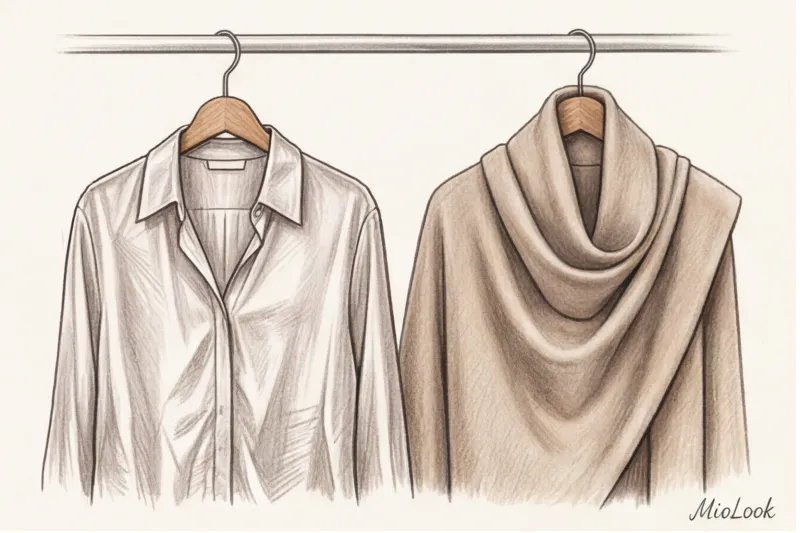


Recently, a top manager at a large IT company came to me for a consultation. Her request was: "My closet is overflowing with formal suits, but in them I look either like a tired school teacher or like an intern wearing her mother's jacket to her first interview." And this is a classic problem. Perfectly tailored Business style for women over 40 It's not about desperate attempts to hide age or disguise one's figure. It's about status, which is perceived on a tactile and visual level.
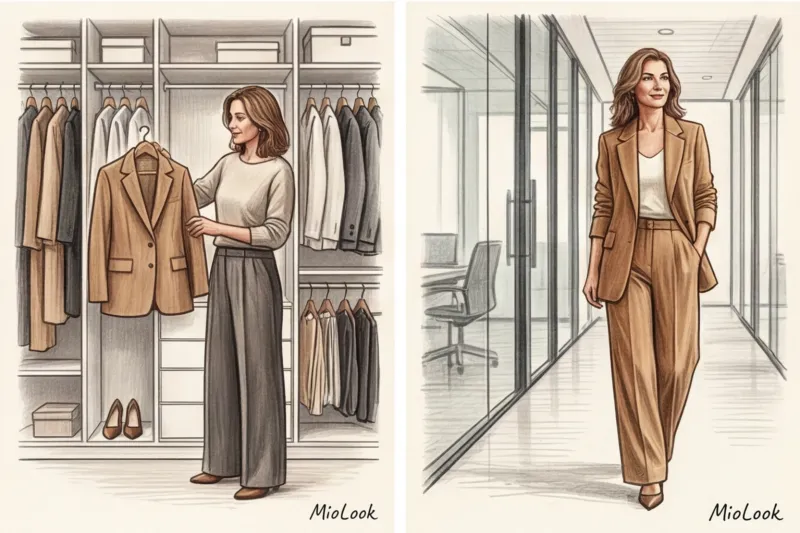
We have already discussed the basic principles of building an office wardrobe in more detail in our The Complete Guide to Business Attire for Women But today we'll dig deeper. As a textile expert, I want to show you the inside story of status pieces. We'll examine wardrobes through the lens of fabric density, cut architecture, and a rejection of toxic "fast fashion."
Business Style for Women Over 40: Evolution from Uniform to Quiet Luxury
Remember the aggressive power dressing silhouettes of the '80s and '90s? Huge shoulder pads, stiff fabrics, breath-stopping pencil skirts. Women had to adapt to the male rules of the game to have a say in the boardroom. Today, this armor is no longer necessary. True power lies in comfortable status.
According to a large-scale study by the Center for Talent Innovation (Coqual, 2023) on the concept of Executive Presence, 25% of the impression of your leadership potential is based on your appearance. Clothing acts as a primary filter for competencies. Once you're 40+, you no longer need to prove your worth to the world with flashy logos. Your authority is conveyed through refined textures and precise lines.
Your perfect look starts here
Join thousands of users who look flawless every day with MioLook.
Get access — €0.99 onceTextile Science of Status: How Fabrics Speak for You
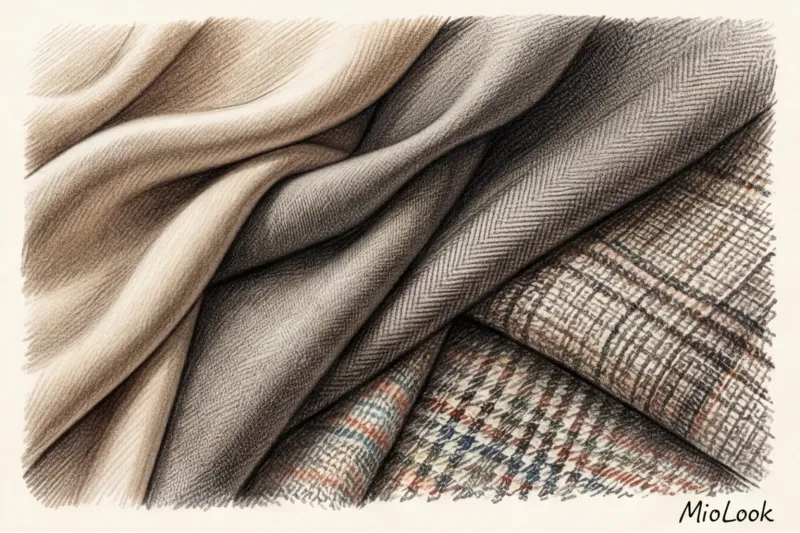
Status in a business wardrobe begins long before you utter your first word at a presentation. It begins with texture. Business style after 40 simply doesn't tolerate compromises in the quality of materials. Expensive fabrics are always identified by a matte finish, deep color absorption, and incredible ability to hold their shape without feeling stiff.
Natural fibers versus "premium" polyester
The statistics are stark: less than 15% of business clothing in today's mass-market stores is made from 100% natural fibers. Brands have masterfully disguised cheap materials under catchy labels like "eco-silk," "vegan silk," and "French crepe." Read the ingredients—most often, these terms hide ordinary polyester.
During my shopping masterclasses, I often ask clients to close their eyes and run their hands down a row of blouses. Synthetics always give away their presence with a slight squeak, an unnatural slipperiness, and a cheap sheen. In an office setting, synthetics not only create a greenhouse effect and discomfort, but also damage one's image in the form of static electricity, skirts clinging to the legs, and shiny creases at the elbows.
Density and drape: hiding nuances, highlighting advantages
The textile industry uses a specific density index. If you're buying a silk blouse for the office, it should be at least 19-22 momme. Anything thinner (for example, the popular 12-14 momme blouses) will be see-through, highlight even the slightest folds, and look sloppy by mid-work.
My favorites for a business wardrobe are tropical wool (cool wool) and heavy silk crepe. These fabrics have a wonderful quality: they respect the body's lines. They fall, creating a flawless vertical architecture, but without clinging anywhere.
"High-quality fabric doesn't try to reshape your body; it creates the right frame around it. That's the secret of luxury Italian brands."
Debunking the Myths: Why Black Is the Enemy of Elegant Age
Now we'll debunk the biggest stereotype about office wardrobe. Deep black is the worst choice for a business woman over 40. For years, we've been told that black is slimming, formal, and always appropriate. But from a purely aesthetic and color perspective, it works differently.
Black absorbs light and acts as a merciless reflector, casting harsh, graphic shadows on the face. As a result, it accentuates nasolabial folds and pigmentation, dulling the complexion and highlighting signs of fatigue. Instead of a confident, worn-out look, you get a haggard appearance.

I always offer my clients high-status alternatives that maintain a level of formality but illuminate the face. Try swapping out black for a deep navy, dark chocolate, rich graphite, or sophisticated dark olive. You'll be surprised how fresh your reflection in the mirror will look.
Of course, there is an exception. This advice does NOT work for women with a deep, contrasting complexion (for example, Snow White—porcelain skin and jet-black hair), on whom black looks natural at any age. However, for 90% of Slavic and European skin types, this color is contraindicated.
Access to MioLook for €0.99 — one-time payment
A smart AI stylist will select the perfect look based on your color type and body shape.
Get access — €0.99 onceA Sustainable Capsule Wardrobe: An Eco-Friendly Investment in Credibility
Constantly chasing fast-fashion trends is a losing game. True status lies in conscious consumption and a shift toward slow fashion. According to carbon footprint analysis, one high-quality natural wool suit that serves you faithfully for 10 years is more environmentally friendly than 20 cheap suits that you throw away after a season.
Invest based on cost-per-wear. A $500 jacket you wear 150 times costs you $3 per wear. A cheap $60 polyester jacket that will pill after three washes costs you $20 per wear. Is this really a savings?
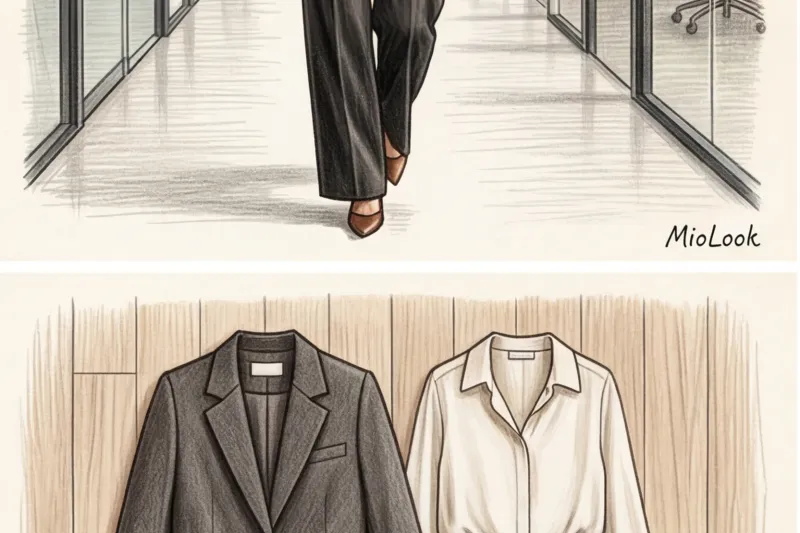
A jacket with the correct shoulder architecture
The shoulder girdle is the foundation of your business credibility. A modern jacket shouldn't resemble a hockey jersey. Look for styles with a soft yet structured cut. Modern horsehair padding (an inner layer that creates shape) allows the shoulder to appear defined while still maintaining natural movement.
Full length trousers in flowing wool
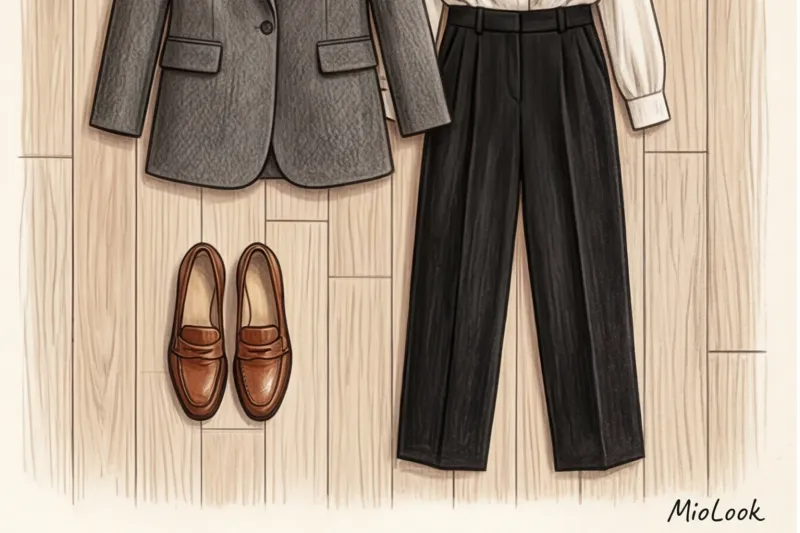
It's time to ditch those skinny, cropped skinny trousers. They visually cut off the leg, distort proportions, and make the look outdated. The hallmark of modern elegance is a wide-leg silhouette (wide from the hip) or straight, full-length trousers that cover at least half of the shoe. This cut visually elongates the silhouette and adds confidence to the gait.
The Anatomy of Cut: How Clothes Should Work with a Figure After 40
The body changes, and this is a completely normal and beautiful process. Trying to squeeze into the same clothes you wore at 25 at 45 always looks strained. The key to a stylish fit is to leave some air between your body and the fabric. Clothes shouldn't burst at the seams when you sit down or bunch up horizontally at the hips.
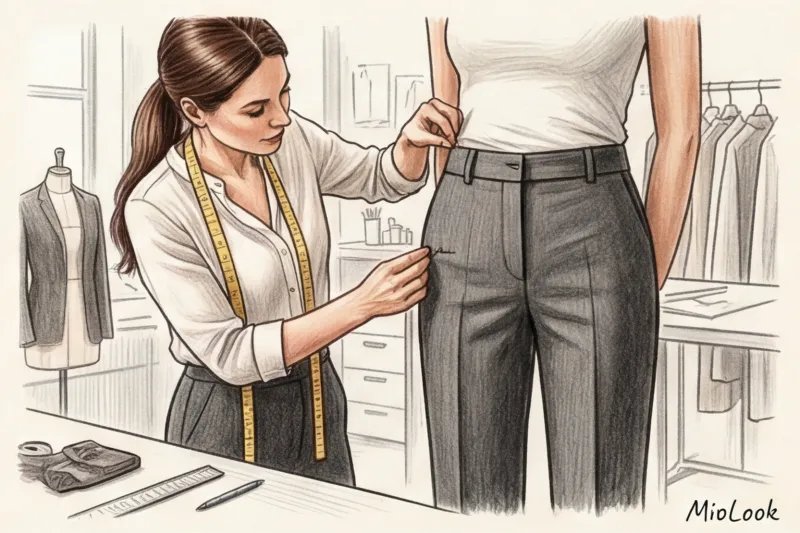
Herein lies the main secret: no item from the store—whether mass-market or heavy luxury—fits 100% of body shapes perfectly. We once bought a client a stunning suit, but it looked bulky. We took the jacket to a tailor and simply shortened the sleeve by 1.5 centimeters, revealing the delicate wrist bone. This micro-change changed everything! The look instantly became lighter, more elegant, and visually more expensive.
Tailoring isn't a luxury, it's a necessity. Hemming trousers to the correct heel height, trimming the waist of a jacket, or replacing buttons with more expensive ones (made of natural horn or mother-of-pearl)—these investments pay off many times over. And to pair your updated pieces wisely, you can digitize them through Smart wardrobe in the MioLook app , which will help you create dozens of combinations from one capsule.
Ready to get started?
Try the free plan—no commitments required. Start building your perfect business wardrobe now.
Get access — €0.99 onceEco-friendly care and durability as hallmarks of class
Even the most expensive cashmere suit will lose all its luster if not cared for properly. Well-groomed garments directly convey your organization and attention to detail in business. No one would entrust a million-dollar contract to someone with shiny elbows on their jacket.
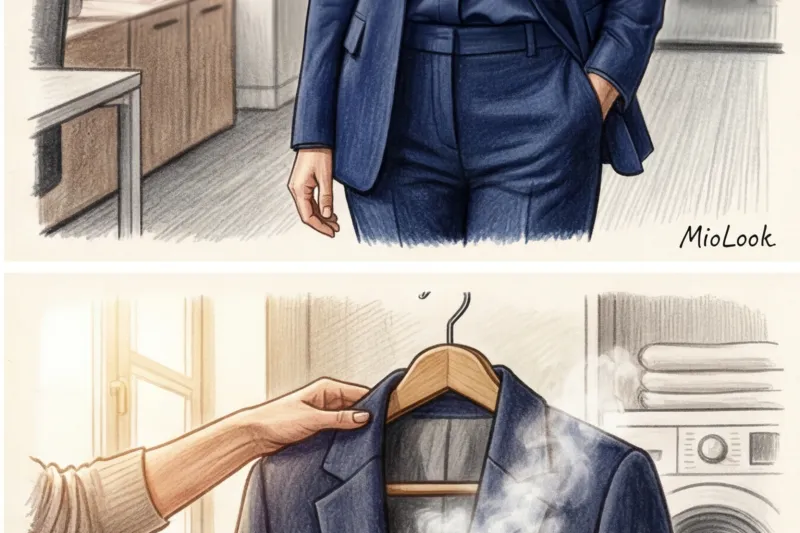
As a textile expert, I implore you: stop dry cleaning your woolen items after every wear. Perchloroethylene, used in dry cleaning, destroys the structure of the natural fibers. Wool becomes brittle, loses its shine and natural elasticity. Dry cleaning is necessary no more than once or twice a season (only if there are obvious stains).
For regular care you will need three things:
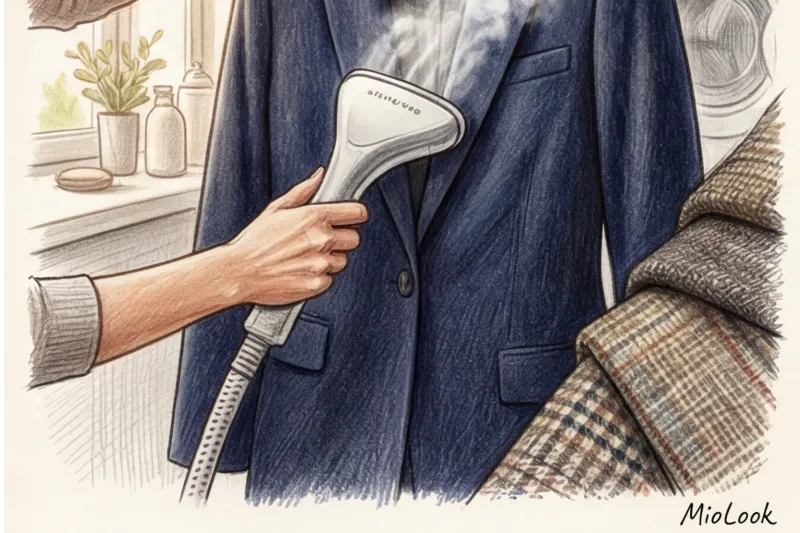
- Good handheld steamer. Forget about ironing—the hot soleplate flattens the lint and leaves cheap shine (shiny marks) on dark fabrics. Steam refreshes fabric, kills bacteria, and removes odors.
- Wide wooden hangers. Thin metal hangers from the dry cleaners will permanently distort the shoulder line.
- Cedar blocks or sachets. Natural wood protects against moths and absorbs excess moisture in the closet.
Checklist: A Wardrobe Audit Before a New Career Step
Theory is useless without practice. This weekend, I invite you to conduct a thorough audit of your office closet. This is the first step to creating a look that works for you.
- Perform a “crease test.” Squeeze the hem of your pants or skirt in your fist for 10 seconds and release. If the fabric remains crumpled, throw it away. You shouldn't leave your desk chair with it wrinkled.
- Check the fittings and lining. A stretched lining, torn buttonholes, and cheap plastic buttons all scream neglect. Either take it to a tailor tomorrow or throw it out of the closet.
- Get rid of your toxic wardrobe. Clothes you hope to lose weight in; jackets that restrict your movement; blouses that make you constantly tug at the hem. Clothes shouldn't drain your energy.
Business attire that's in good condition but no longer reflects your status shouldn't be thrown into the landfill. Donate it to charities (such as organizations that help women prepare for job interviews) or recycle it.
Your business wardrobe after 40 isn't about trying to please someone or fit into someone else's mold. It's your personal space of comfort, confidence, and expertise. Invest in quality fabrics, find your tailor, and remember: true status is always whispered, not shouted.